-
-
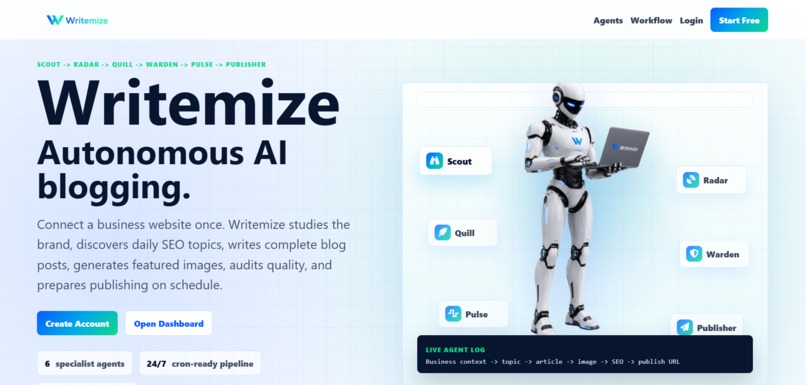
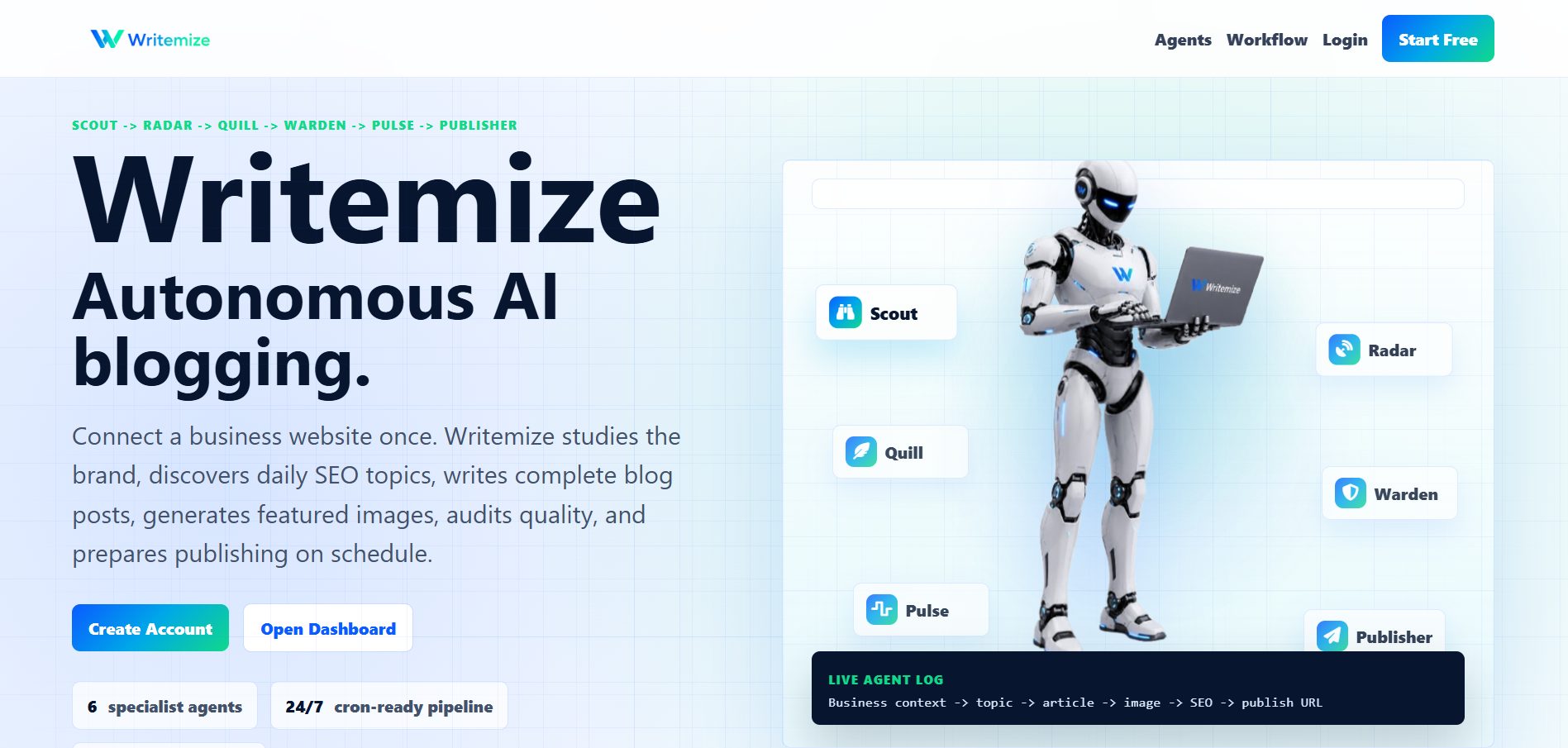
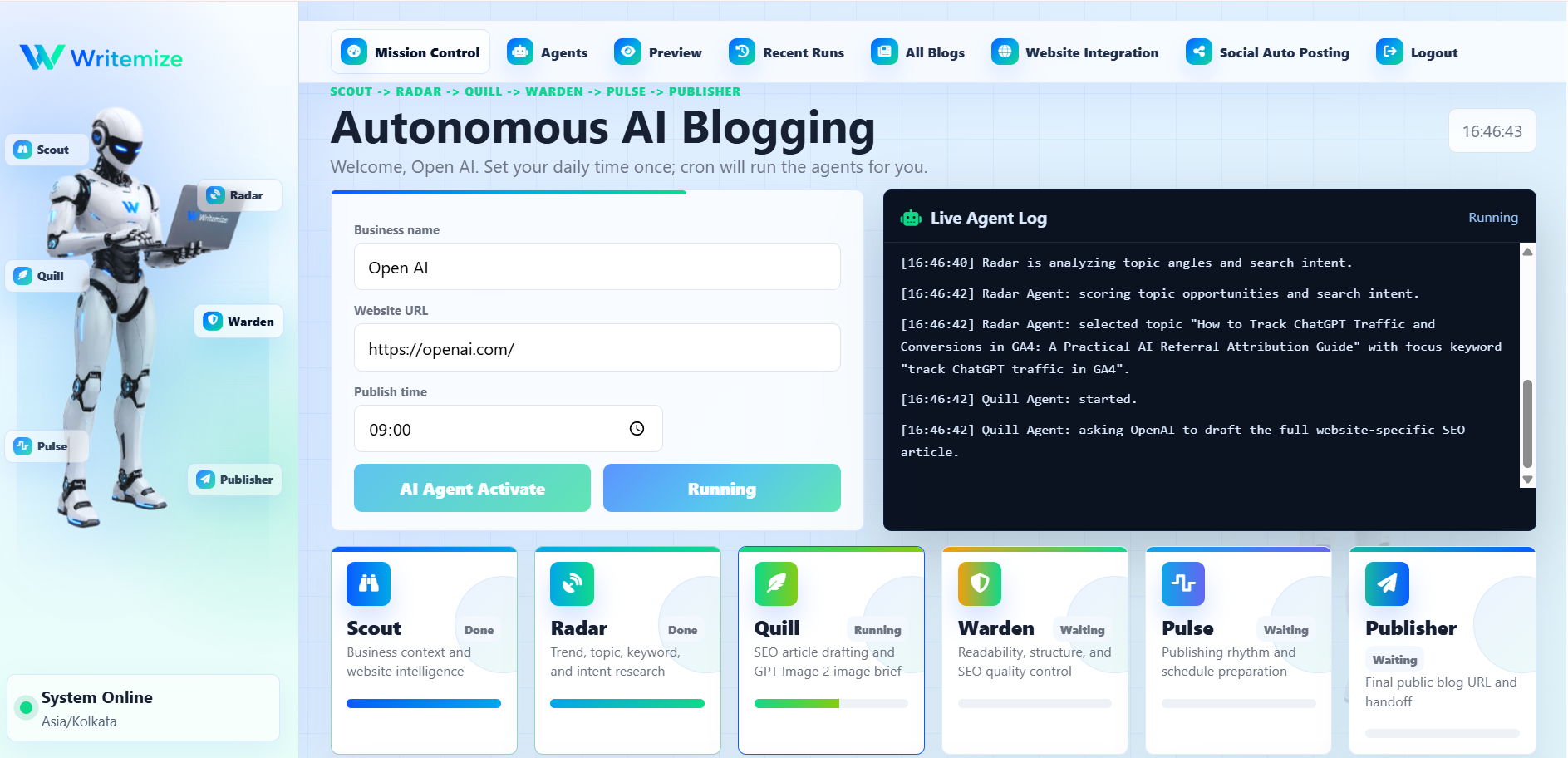
Writemize Homepage
-
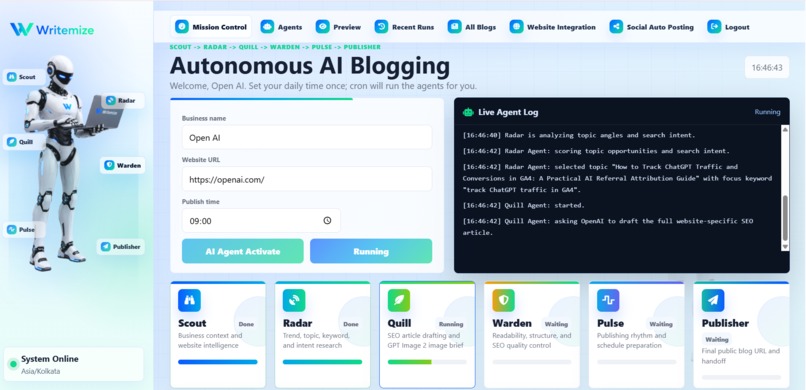
Writemize Dashboard Live Log
-
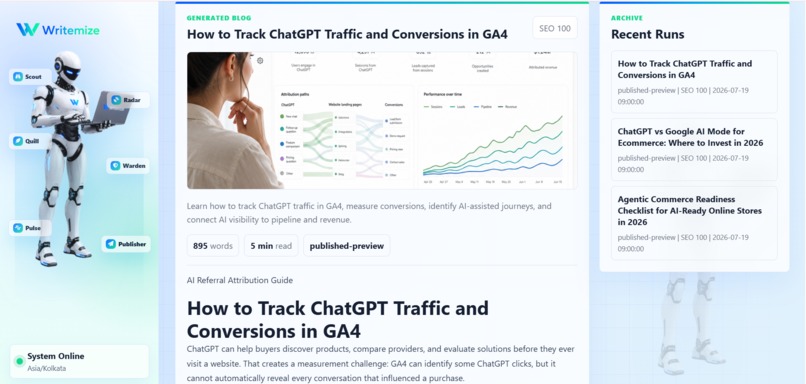
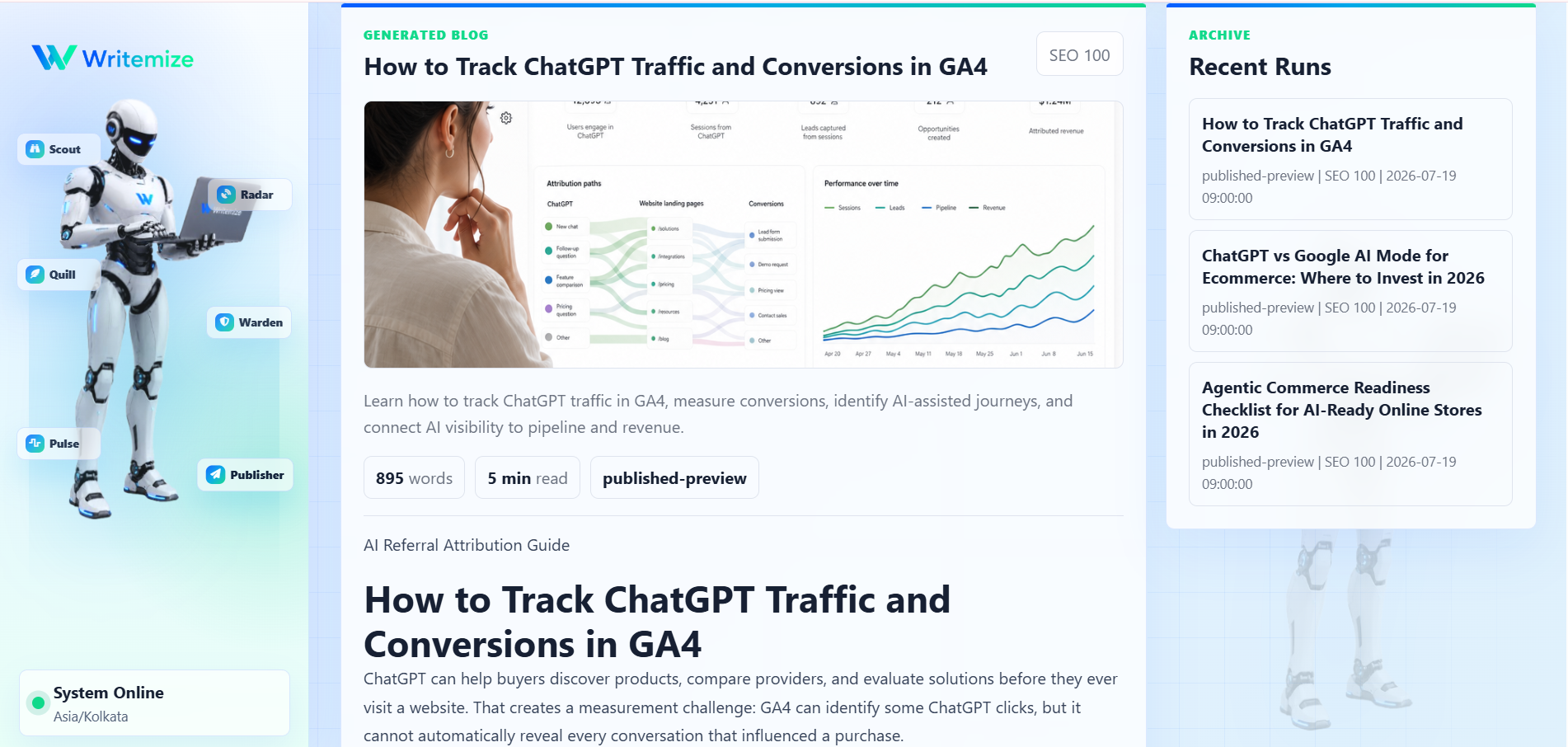
Writemize Blog Preview
Inspiration
Maintaining a consistent SEO blog pipeline requires heavy manual intervention. I wanted to engineer a system that replaces this manual loop with a fully autonomous, self-executing AI architecture. The goal was to build a system that acts as an independent multi-agent operational team, not just a writing assistant.
What it does
Writemize executes a daily automated workflow. It takes a target URL and triggers a multi-agent pipeline (Scout, Radar, Quill, Warden, Pulse, Publisher). The system sequentially scrapes site context, performs keyword research, generates a structured blog draft, audits the SEO score, generates a contextual featured image via GPT-Image-2, and inserts the final post into the live database with zero human intervention.
How we built it
I engineered this entire multi-agent system as a solo developer using conversational Hindi. I explained complex state management, PHP server routing, database schemas, and agent hand-offs in my native language, and the AI translated that logic into production-ready code.
The core reasoning runs on GPT-5.6. For example, the 'Warden' agent audits the generated drafts using a programmatic scoring system to ensure strict keyword density and formatting metrics are met before publishing. Visuals are handled by GPT-Image-2, and the entire backend is built on PHP/MySQL deployed on a live CyberPanel server.
Challenges we ran into
Orchestrating the multi-agent pipeline was highly complex. Passing output data from the 'Scout' agent to the 'Quill' agent required strict JSON formatting to prevent context loss and AI hallucinations. Dynamically generating accurate image prompts for GPT-Image-2 based on the generated text also required heavy prompt optimization. Additionally, securely managing environment variables (.env) for OpenAI API keys during a live server deployment required strict backend configuration.
Accomplishments that we're proud of
I am proud of successfully deploying a zero-click, multi-agent pipeline that runs flawlessly on a live server within the Build Week timeframe. Above all, I am proud of proving that complex SaaS architecture can be engineered entirely through native-language (Hindi) prompting, effectively breaking the English language barrier in software development.
What we learned
I learned how to utilize GPT-5.6 for complex logical reasoning and data routing within a multi-agent ecosystem, rather than just raw text generation. I also realized that clear system design and logic matter far more than the specific spoken language used to prompt the AI.
What's next for Writemize
The next step is implementing bulk domain processing, optimizing the cron job architecture for higher scalability, and adding webhook integrations for automated blog distribution.
Built With
- api
- codex
- css
- gpt
- html
- javascript
- mysql
- openai
- php
- phpmyadmin
- visual-studio
- wamp


Log in or sign up for Devpost to join the conversation.