Inspiration
Carpal Tunnel Syndrome (CTS) affects almost 10 million people in the USA and is one of the most common nerve disorders. In our research, we found that the risk of CTS development can be mitigated by adopting the appropriate behaviors, including taking frequent breaks and alternating between tasks. However, these behavior changes are tough to manage and execute. WristAssist, a device that monitors wrist strain and reminds users to take breaks, is a solution for the most at-risk individuals and those looking to avoid redevelopment of CTS.
What it does
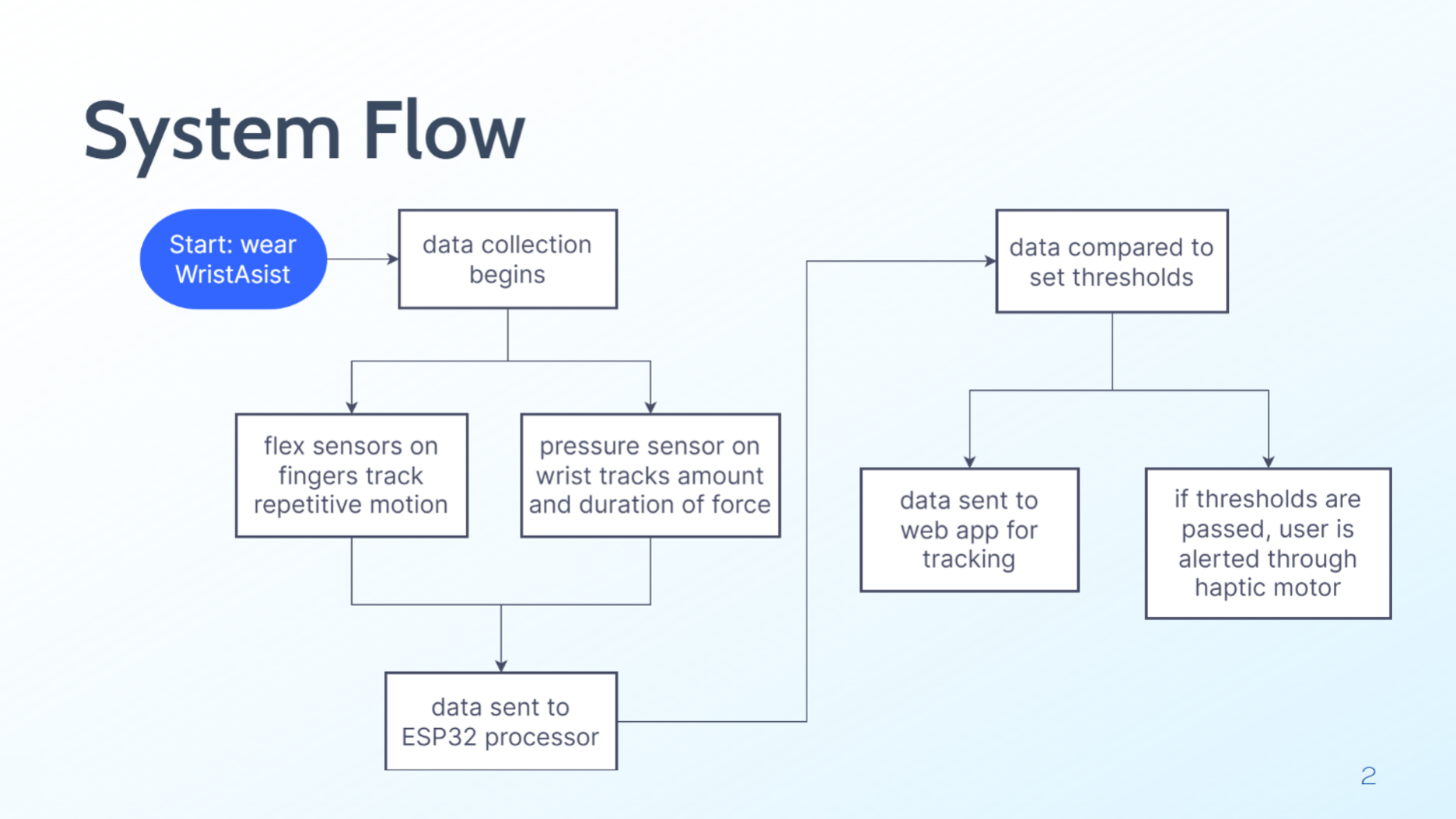
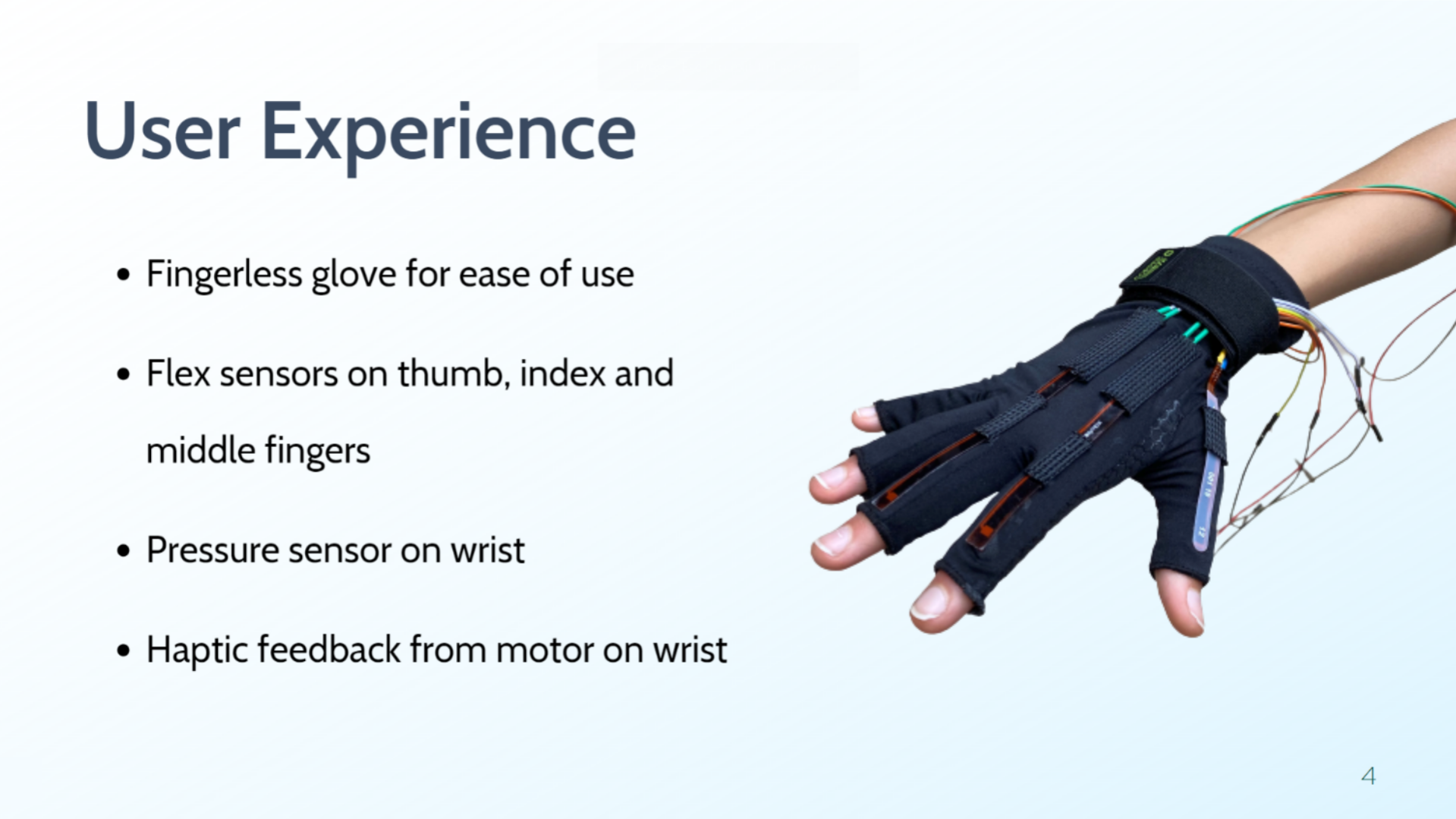
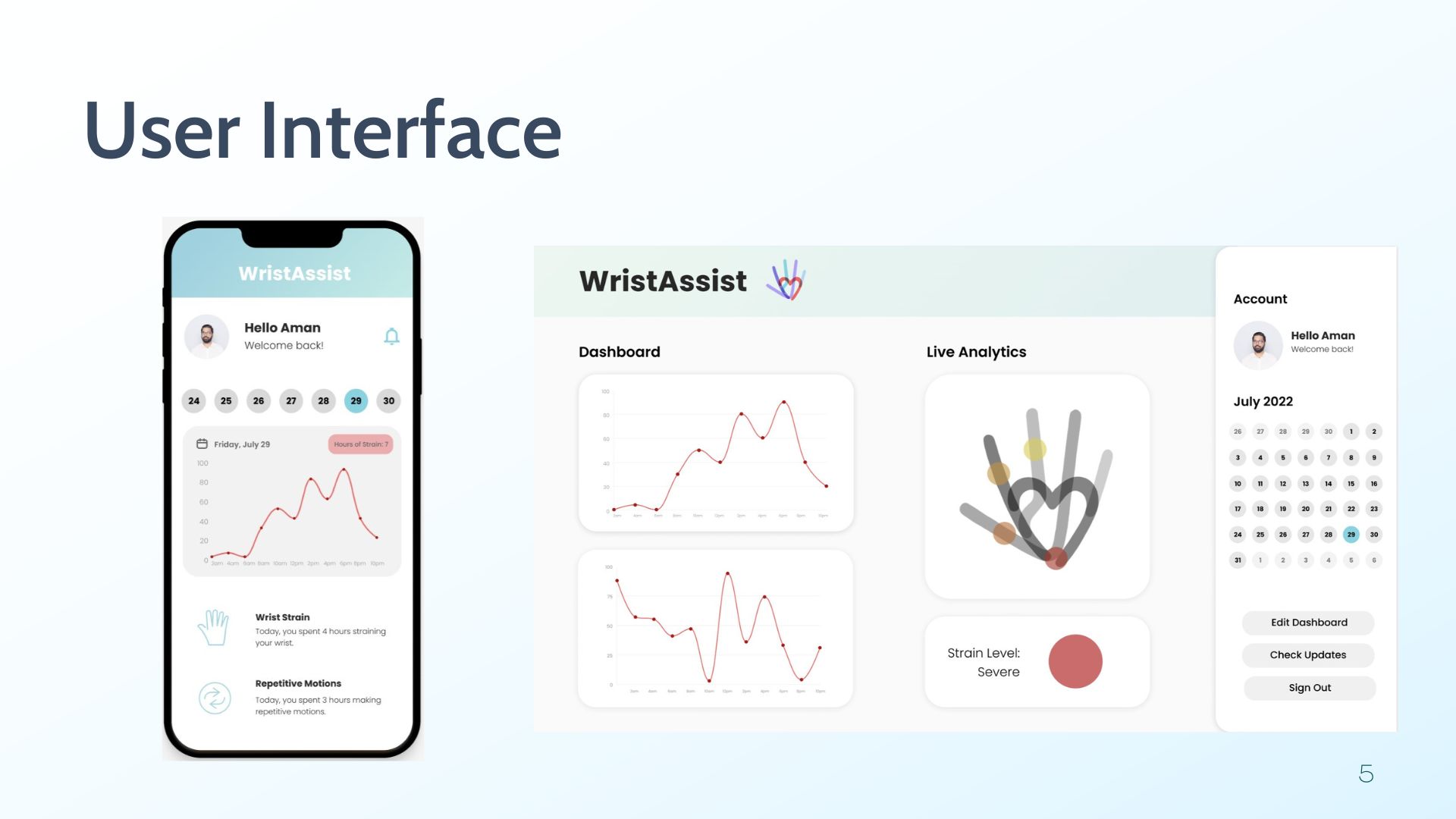
WristAssist is a fingerless glove that monitors two of the main contributors to Carpal Tunnel Syndrome: force placed on the wrist and small, repetitive motions. From the readings, it checks to see if either surpasses a certain threshold values. If so, WristAssist alerts the user by vibration, reminding them to take a break or alternate tasks. WristAssist stores data on wrist strain on a web app, allowing the user to view analytics on the time and amount the wrist undergoes significant strain.
How we built it
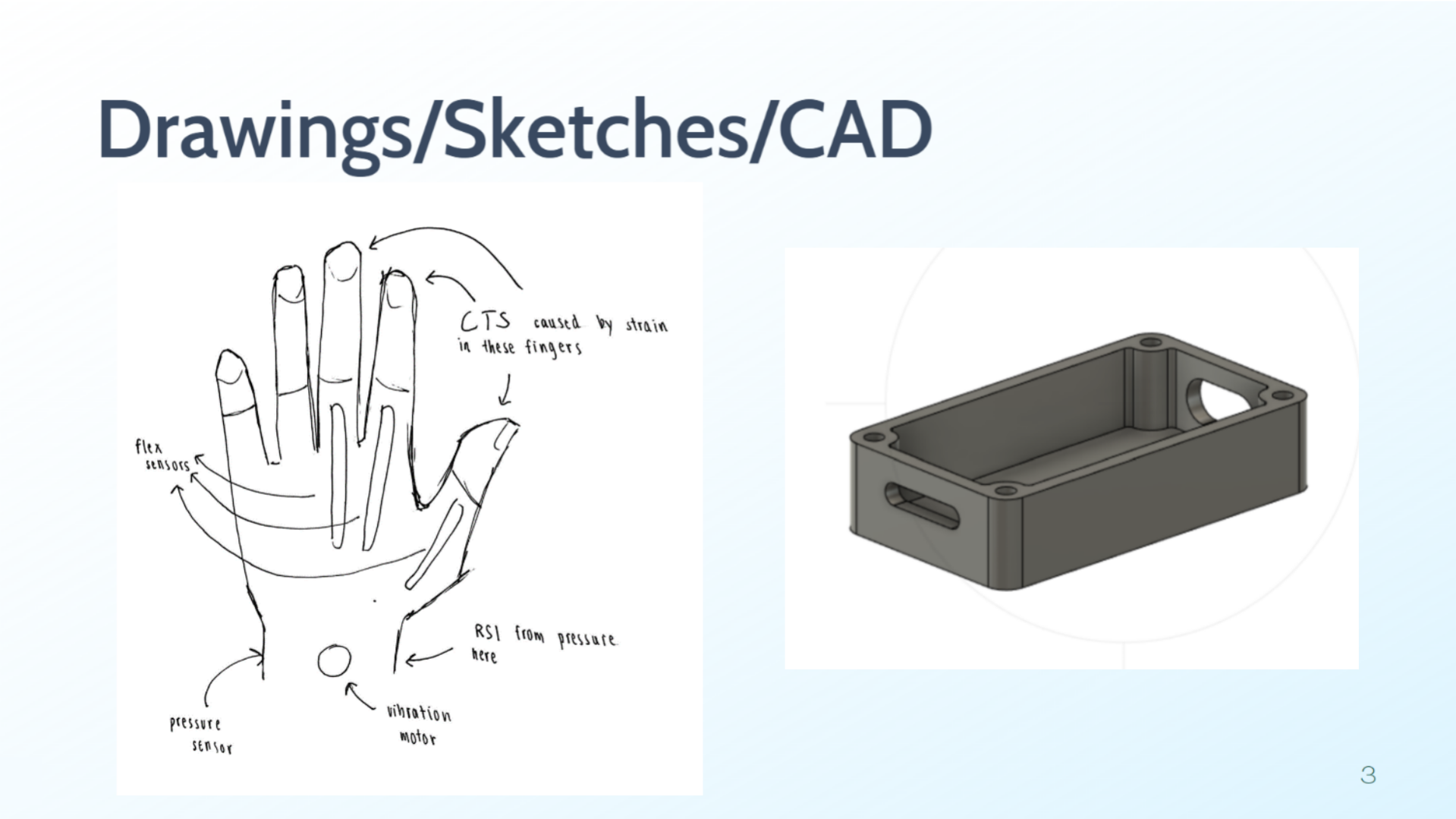
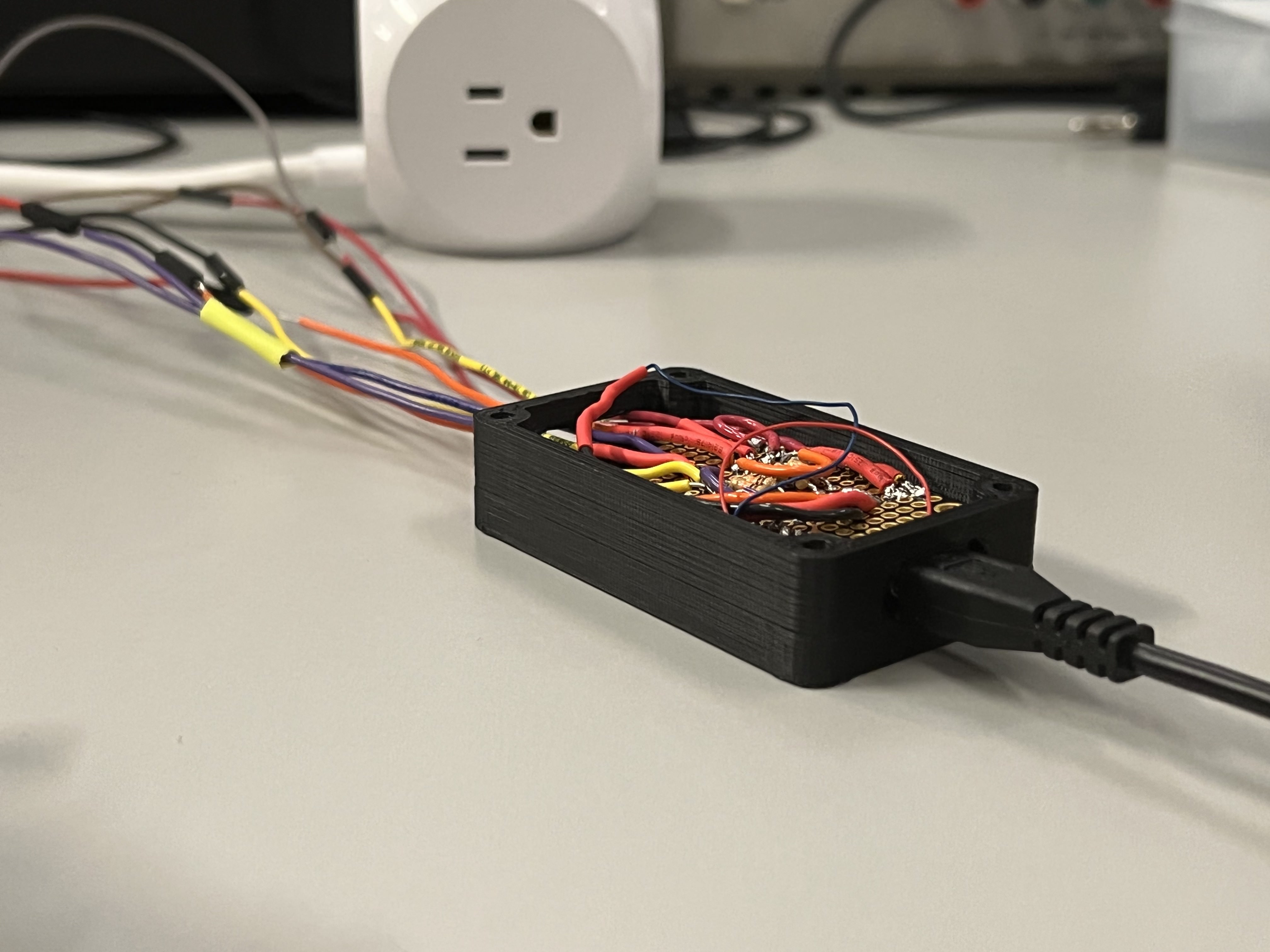
WristAssist features flex sensors that track the motion of the thumb, middle, and index fingers to track repetitive movement. A force resistive sensor is placed on the palm side of the wrist to track the amount of pressure being placed on the wrist. Using these inputs, an ESP32 Feather processor computes the data and compares it to set threshold values. If so, a mini vibrating motor placed on the back of the wrist alerts the user. The system is housed on a compressive fingerless glove, ensuring a sleek design without impeding on users' day-to-day activities.
Challenges we ran into
At times, it was challenging to arrange the wires to make sure that they allowed free motion and didn't come apart while it was being used. In order, to solve this we've soldered all wires and components to the board and housed them as close to the wrist as possible.
Accomplishments that we're proud of
We started this project a week and a half ago. In such a short time, we were able to develop a functioning prototype with a sleek design, establish the foundation of a business plan, create marketing materials, and show the design off to the public. We are incredibly proud of the speed in which we were able to bring it all together.
What we learned
The main thing we learned is how to combine business and engineering in order to create a comprehensive final product. From the business side, we conducted research to determine our market, create a value proposition, and develop a financial model. This then translated into our engineering where we took our marketing feedback and used it to influence the design of our product. By combining the disciplines, we were able to develop a stronger product that not only featured fantastic engineering elements but is also ready for the market and fits a business case.
What's next for WristAssist
The next step for WristAssist is to continue to refine the design. Then, once we're satisfied with the product we have, bring it to market and improve the lives and well-being of those who need it!


Log in or sign up for Devpost to join the conversation.