-
-
-

-
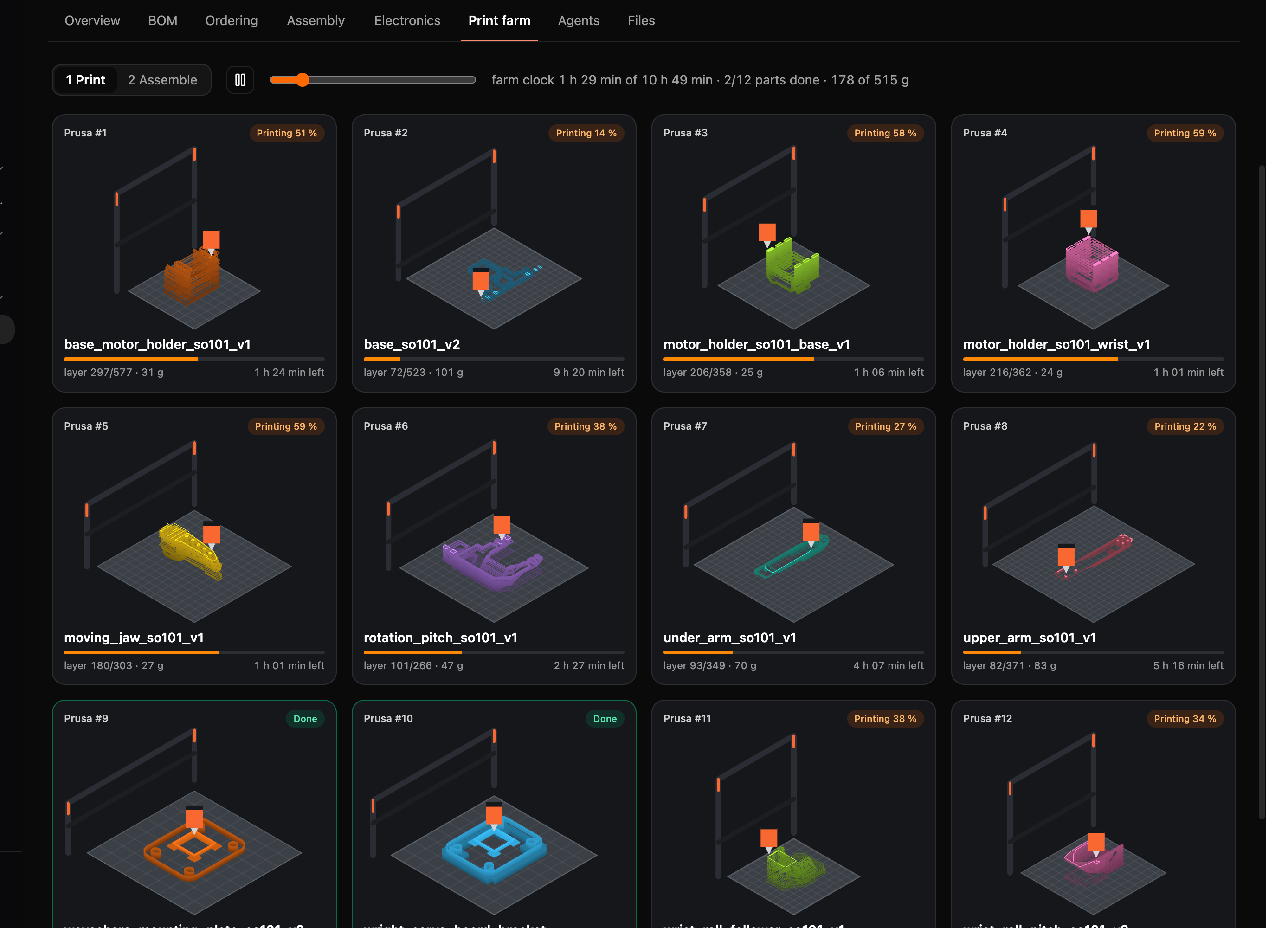
Print Farm
-

Wright
An AI hardware engineer for your cal hacks project | vibe harding your hardware projects w/ Rust, Haskell, and Lean
Inspiration
I’m on UCSB’s high-altitude balloon team, an activity which initially sounds like attaching a box to a balloon and subsequently reveals itself to involve most of engineering.
The mechanical design, electronics, power system, flight prediction, and sourcing all affect each other. Student teams work through these problems without an entire engineering department conveniently available in the club room.
I built Wright to give us one. Claude agents coordinate the engineering, operate real tools, and produce editable CAD, circuit boards, simulations, and manufacturing files.
What it does
Wright works on drones, student liquid rockets, high-altitude balloons, and circuit boards. It coordinates specialists across design, analysis, manufacturing preparation, and sourcing.
I tested it on our UCSB balloon. For $5.46 in model calls, Claude designed a flight train targeting 30 km, with a predicted burst altitude of 30,458 m. It passed all 31 configured checks.
Then the reviewer caught what those checks missed: the sliced rack weighed 295 g while the flight model assumed 151 g. The agents had also narrowed the temperature range to make the electronics pass. CalculiX subsequently found 41 MPa of landing stress against a 20 MPa limit.
Wright produced the design and identified what needed fixing before we printed it.
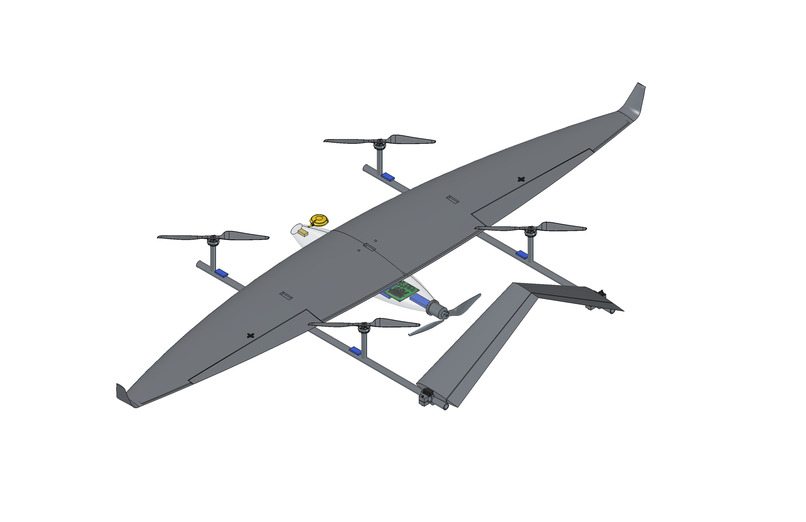
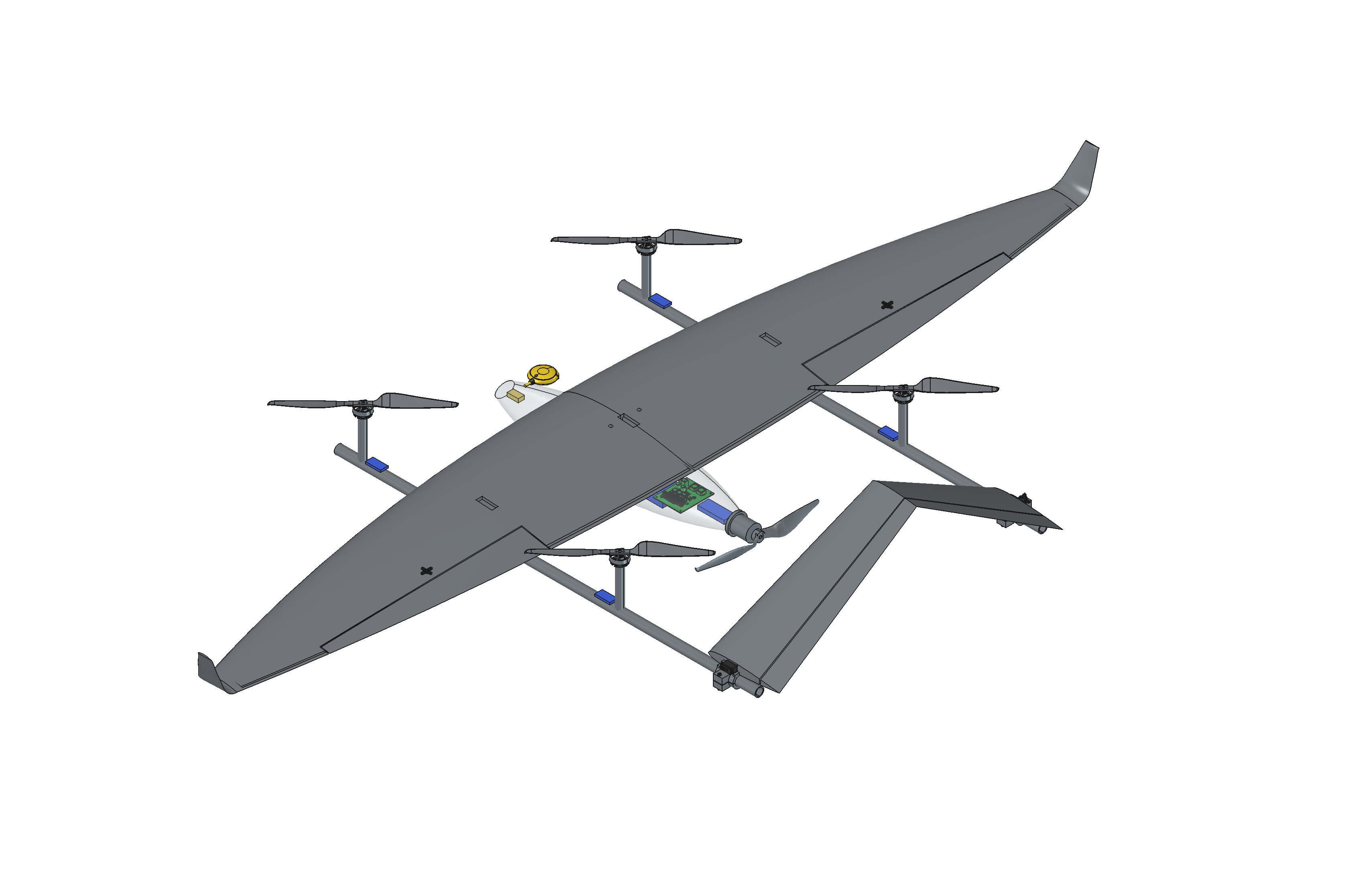
The VTOL workflow goes further through manufacturing: FreeCAD assemblies, KiCad schematics and boards, component-fit checks, sliced print files, CNC toolpaths, and aerodynamic analysis.
How I built it
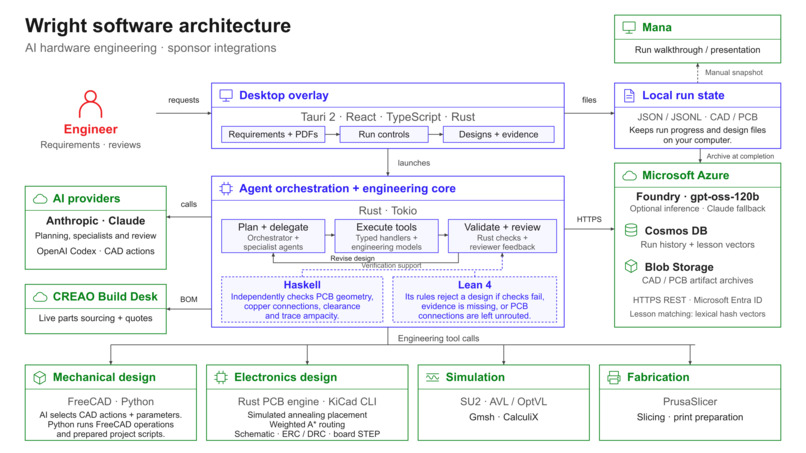
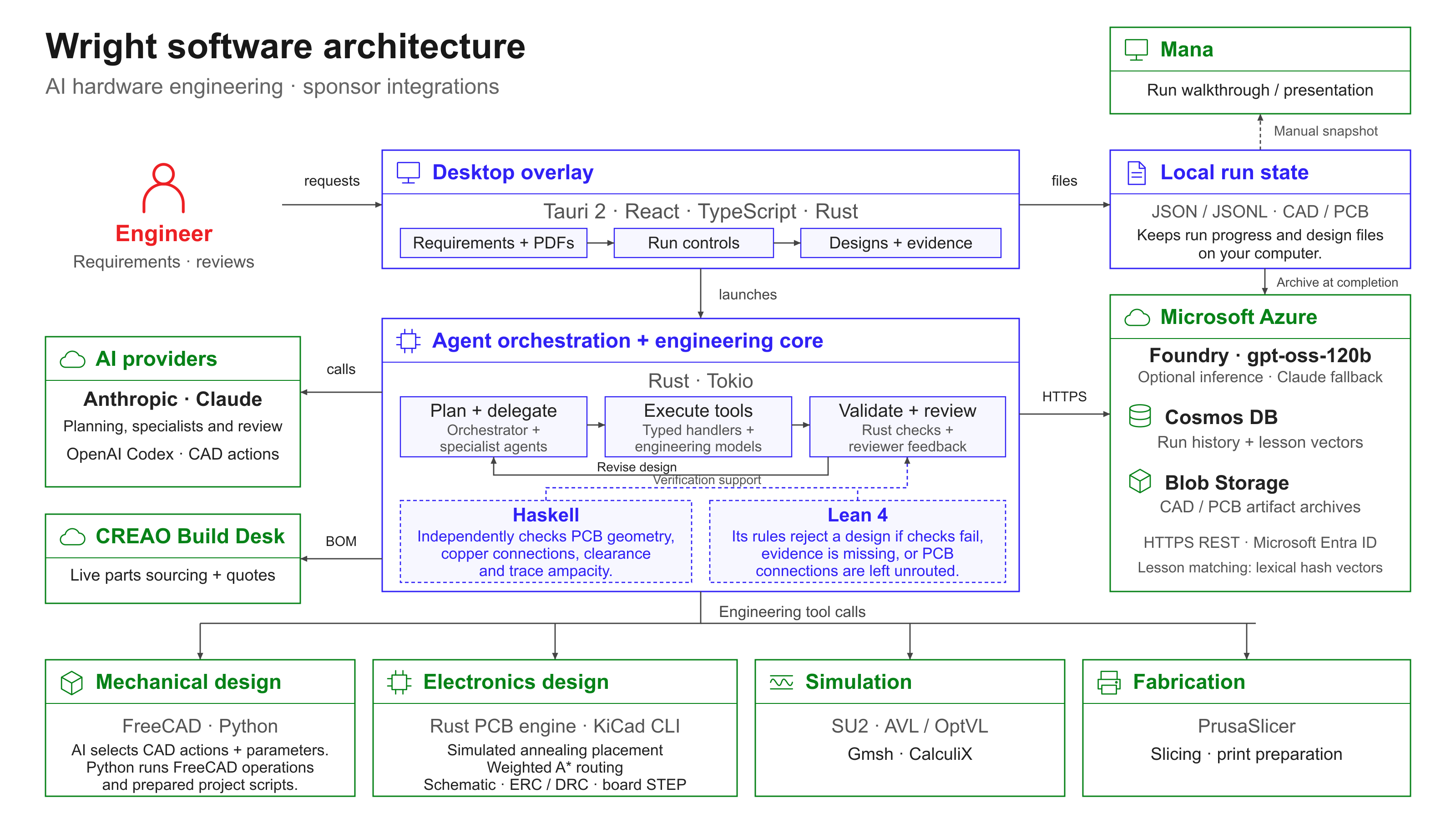
I built Wright solo at Cal Hacks with Claude Code: 21 Rust crates, an independent Haskell oracle, and 60 Lean theorems.
A Claude orchestrator delegates through a plan graph. Specialists work in parallel and merge changes as JSON Patches. An adversarial reviewer proposes executable attacks; confirmed failures become permanent regression cases.
The engineering underneath is a combination of search, geometry, and numerical methods:
- PCB placement: simulated annealing searches component arrangements for compactness and short decoupling loops, with a shelf-packing fallback.
- PCB routing: two-layer, eight-direction A* with per-class widths and rip-up routing. High-current nets use copper pours.
- Mechanical fit: fast bounding-box checks followed by exact OpenCascade boolean intersections. The VTOL’s exact pass identified four servo-to-skin collisions.
- Simulation: SU2 and AVL for aerodynamics; gmsh and CalculiX for structural analysis.
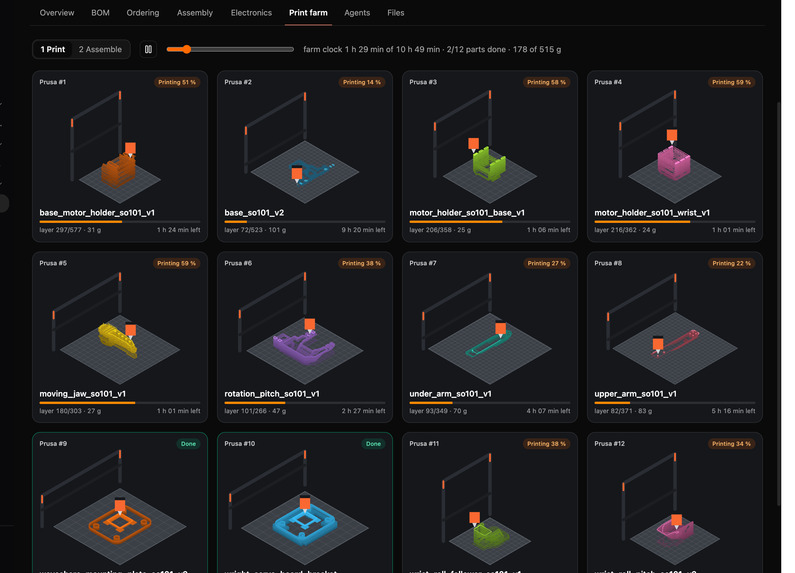
- Manufacturing: PrusaSlicer for print files and material estimates, and FreeCAD CAM for machining toolpaths.
One of the funnest things was creating a macro that the Rust Overlay uses to command the window/tab quadrant organization!
The agents cannot approve their own designs. Rust enforces the required checks, KiCad runs its own electrical and board checks, and Haskell independently recomputes selected physics and geometry. The reported suite makes 5,144 Rust–Haskell comparisons with none outside tolerance.
Lean formalizes the acceptance rules, including that missing evidence cannot pass. These proofs cover the acceptance model, not the entire application or physical design.
Sponsor tracks
Anthropic — Claude for Public Benefit
Claude is Wright’s engineering team: orchestrator, specialists, and adversarial reviewer. Claude Code also made it possible for me to build the system solo.
I’m starting with student hardware teams that lack access to experienced engineers across every discipline. Our UCSB balloon is the first practical test: Claude generated the design for $5.46 and uncovered problems before fabrication. Our next launch will compare predicted burst altitude, ascent rate, and landing location against actual measurements.
CREAO — Best One-Person Company / Best AI-First Disruptor
Claude handles engineering; a CREAO agent handles purchasing.
Wright’s Build Desk receives the BOM, KiCad footprints, and check results, then searches live listings. Wright validates the quotes before using them.
It caught a chip specified in the wrong package, an obsolete capacitor, and a regulator requiring more voltage headroom than the design assumed. For the balloon, it sourced 10 of 23 parts for $479.16 before tax and shipping and flagged unavailable components.
This is my working model of a one-person engineering company: specialized agents carrying work from design into sourcing.
Microsoft — Built for the Real World
Azure Cosmos DB stores Wright’s runs and findings; Blob Storage holds the engineering artifacts. The recorded deployment contains 32 runs and 436 artifact blobs, with public and shared-key access disabled.
New runs retrieve previous failures using Cosmos DB’s VectorDistance, currently with locally word-hashed vectors. A balloon query brings back the rack-mass discrepancy and structural failure, so the next design can use that evidence.
I also deployed gpt-oss-120b on Microsoft Foundry and evaluated it on seven real defect cases. It was roughly three times faster and one-tenth the cost on straightforward failing checks, but caught three of seven cases at best against Claude’s seven. That provides an empirical basis for using Foundry for inexpensive screening while retaining Claude for deeper review.
Mana — Best Use of Mana
I gave Mana’s agent our balloon run, and it built an interactive walkthrough using the actual specification, agents, checks, and structural results.
It also built a launch-day GO/NO-GO app from Wright’s checklist and a nine-slide pitch. The launch app puts the unresolved mass and structural problems first, opening at NO-GO.
Mana makes the engineering output accessible to teammates and judges without requiring them to navigate the run files. These are apps built from Wright’s outputs, rather than a direct API integration.
Interactive run · Launch checklist · Pitch
MLH Commit Fellowship
Wright is the company I want to build. I’m starting with student balloon, rocketry, and drone teams, then expanding to small hardware startups.
I have an immediate place to test it: our UCSB balloon project. The next milestone is completing a physical build and measuring where Wright saves work and catches mistakes.
Cal Hacks — People-First Social Impact
Wright helps student teams undertake projects beyond their existing expertise. It gives them engineering assistance, editable files, and specific explanations of what still needs work before they spend their budget on fabrication.
Cal Hacks — Planet-First Social Impact
Lost balloon payloads leave batteries and electronics behind. Wright uses real GFS wind forecasts to predict landing locations and support recovery.
It also catches problems before material is consumed: the balloon’s overstressed rack was identified before printing. Recovery and fabrication outcomes are part of what we will measure through physical testing.
Challenges and what I learned
My earlier prototype appeared to outperform a real long-range VTOL until review found errors in the calculations. Wright grew out of that experience.
Subsequent audits caught an overstated lift coefficient, a fin-flutter error of √2, and two aerodynamic implementations agreeing because they shared the same drag-model bug. I corrected the calculations and reran the comparisons.
The hardest problems were often between tools: a slicer invalidating a mass assumption, exact geometry invalidating a fit, or a supplier listing invalidating a footprint. Wright has to follow those consequences across the design.
What I'm proud of
I built an agent system that produces native engineering artifacts and applied it to hardware my team intends to fly.
The balloon run produced concrete findings before fabrication. The VTOL workflow connected CAD, electronics, manufacturing, and simulation. Underneath both is a combination of optimization algorithms, computational geometry, independent calculations, and formalized acceptance rules.
What's next
The next step is printing out the 6ft VTOL airframe and building it!!!
The goal is a small team taking a project from requirements through a working prototype with Wright helping carry the engineering.


Log in or sign up for Devpost to join the conversation.