-
-
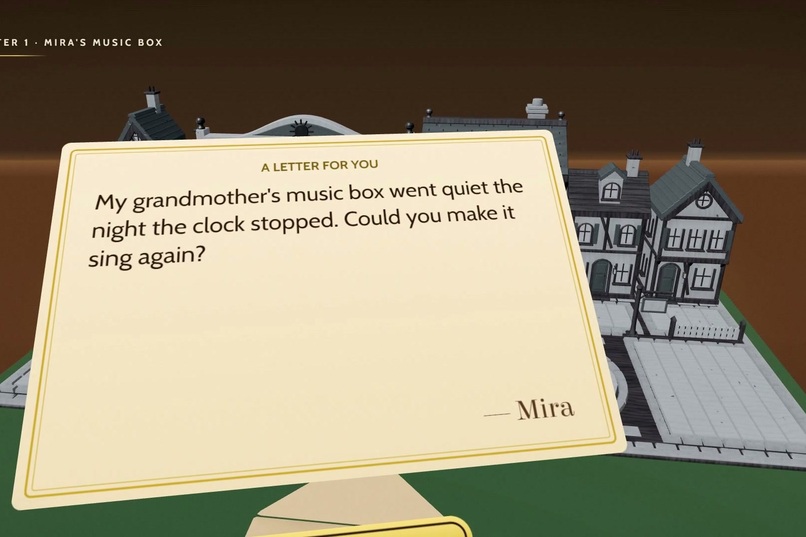
Mira's letter
-
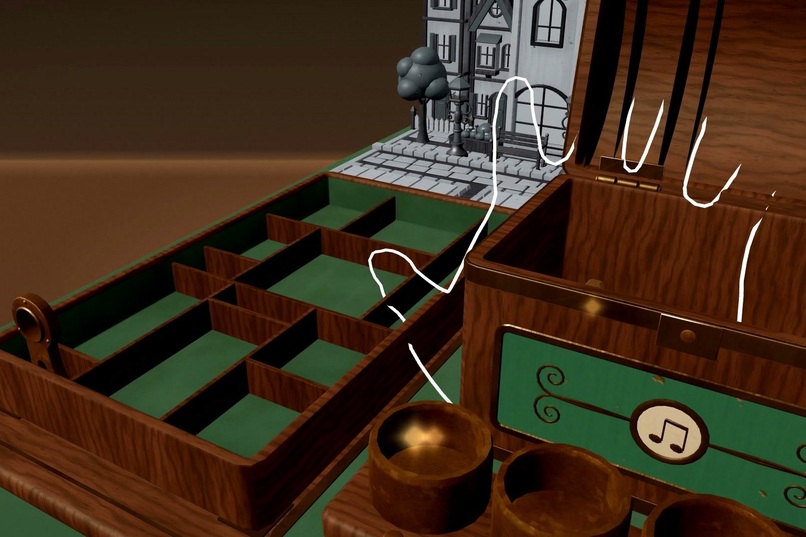
Building by hand
-
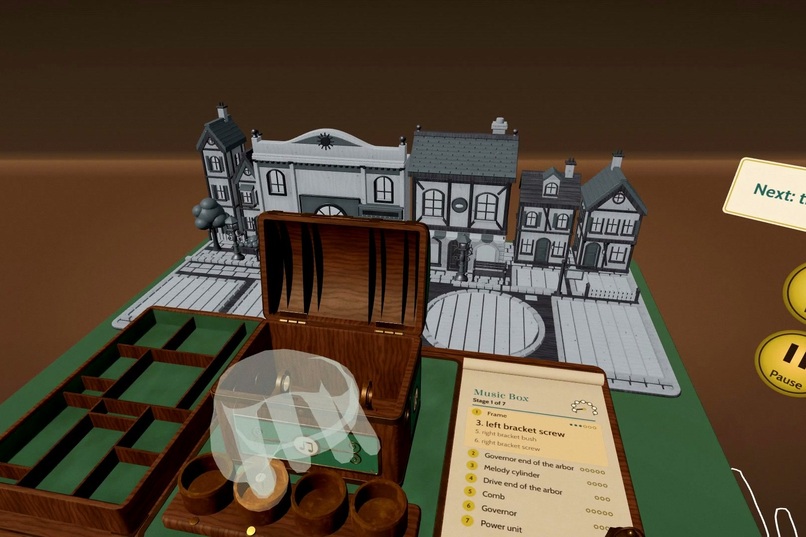
The Helper
-
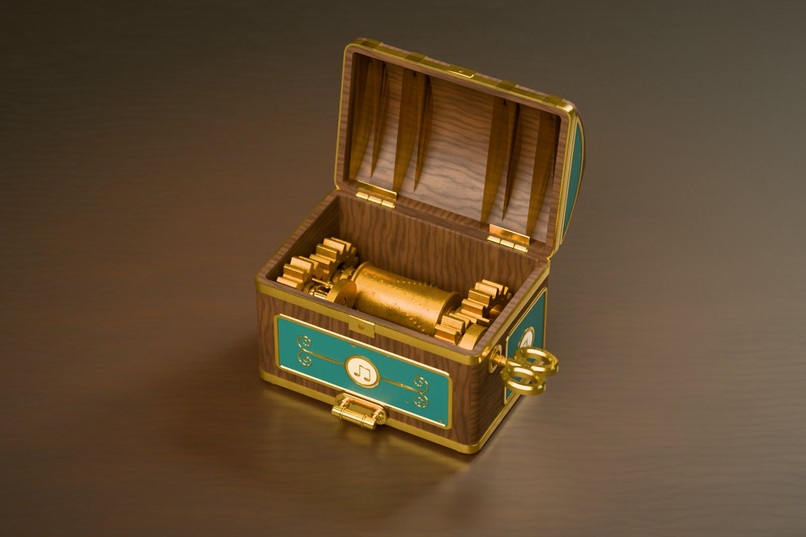
Music Box
-
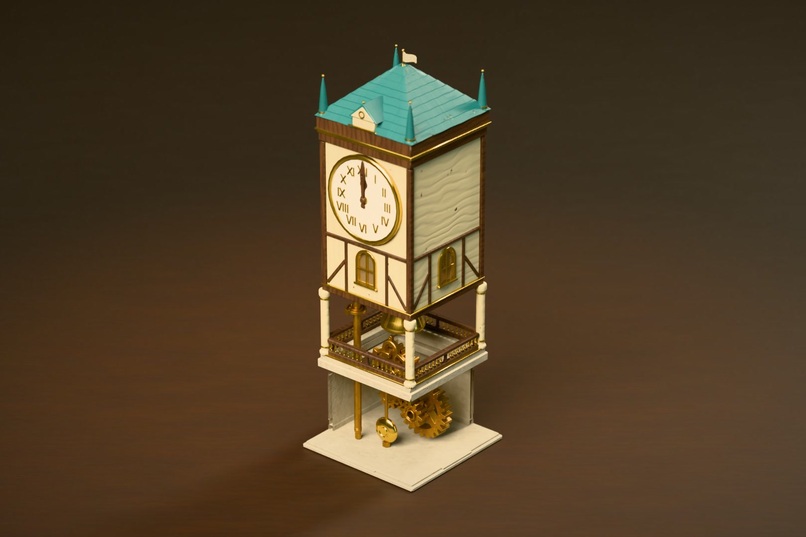
Clock Tower
-
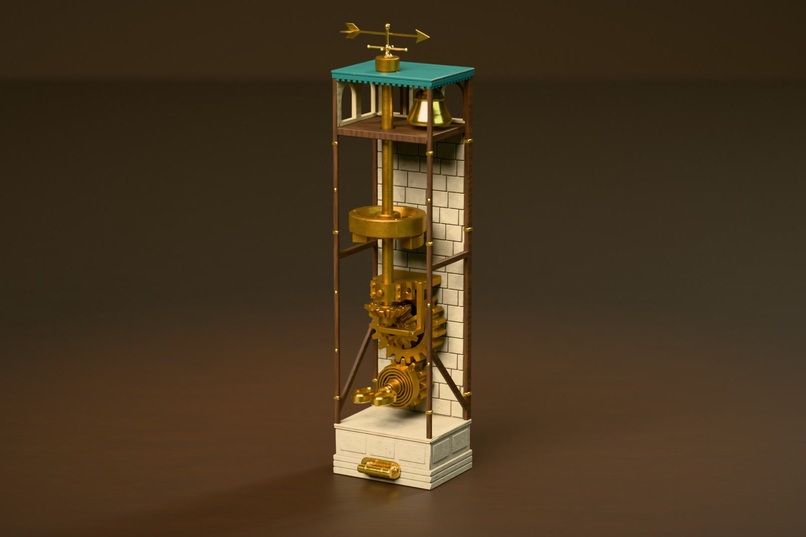
Belfry
-
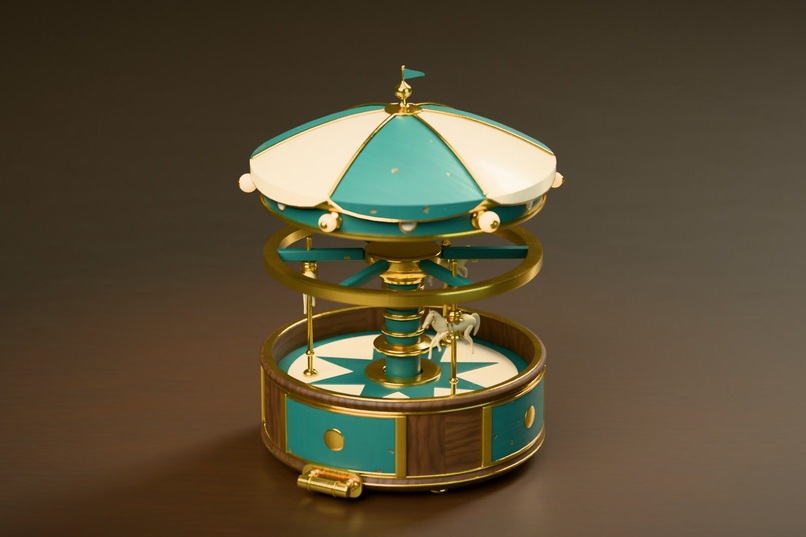
Carousel
-
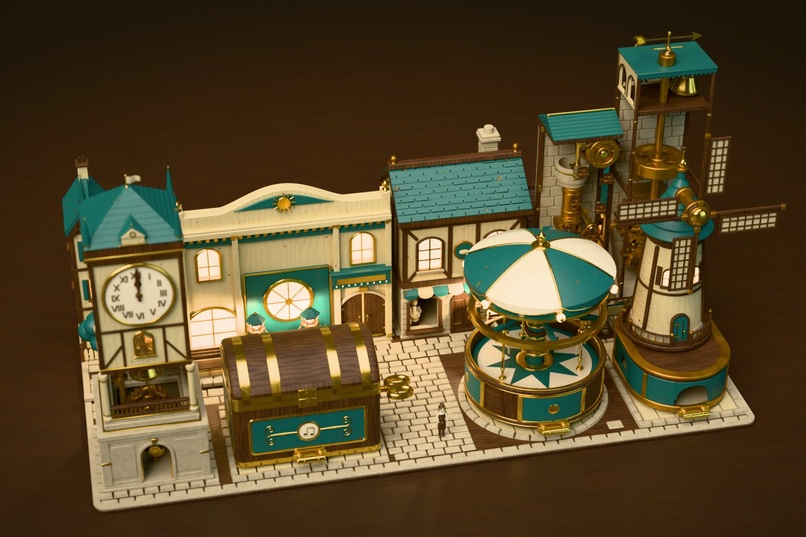
Tockton Awake
-
Parts Plate
-
The wake
-
Carousel Run
-
Building the well
-
Wrong Gear Repair
-
Whole Town awake
-
Night Mode
The night the clock stopped
It starts with a music box.
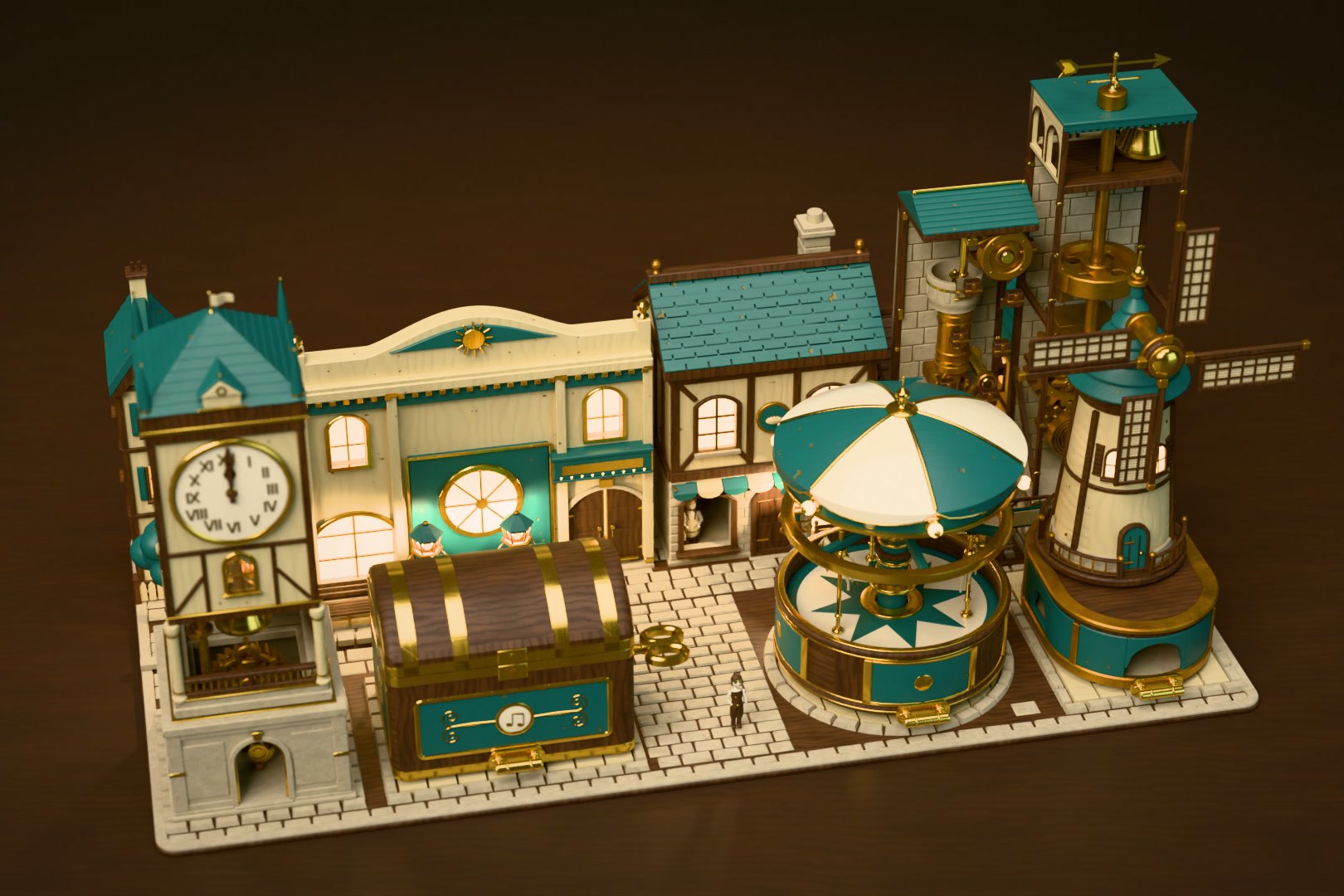
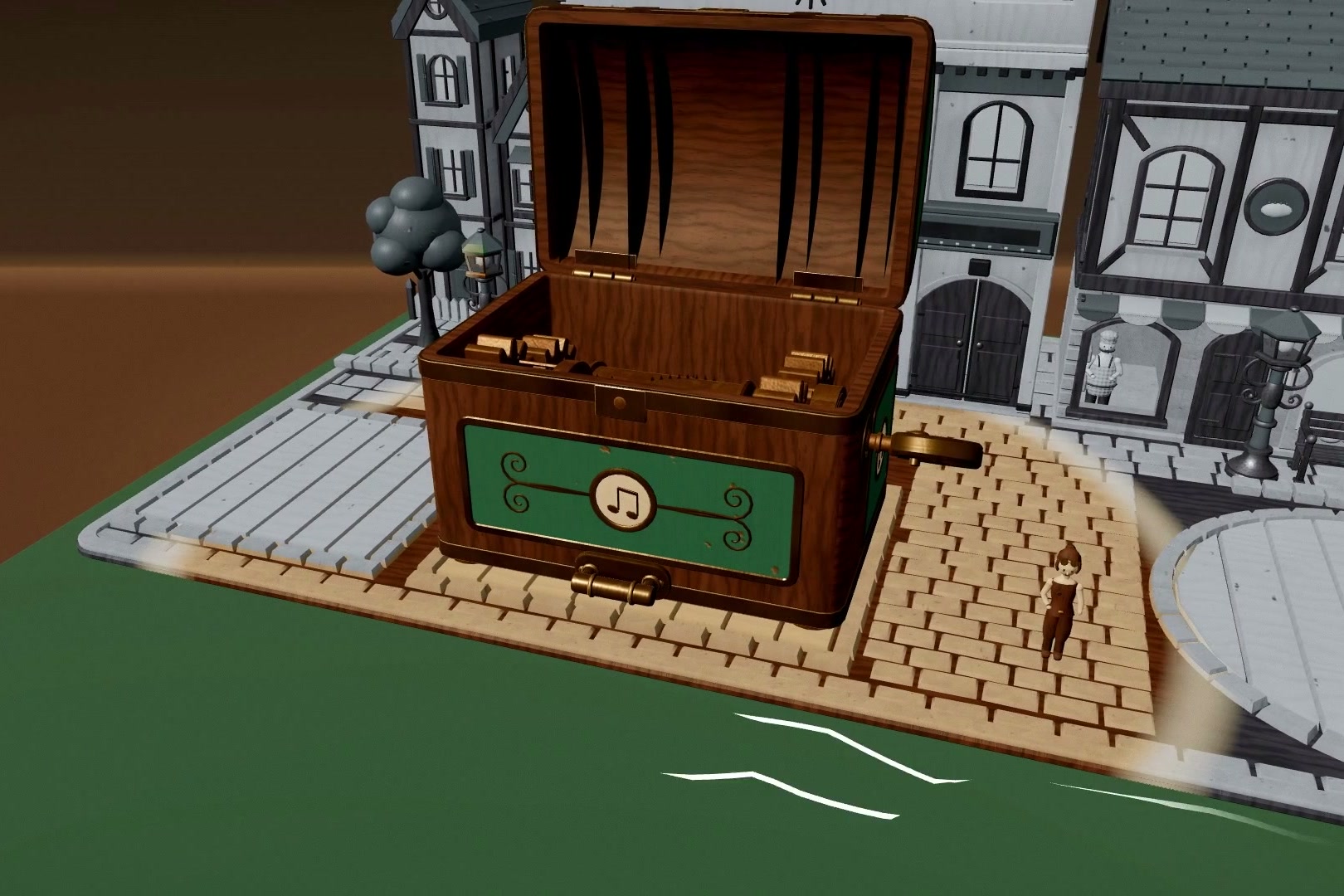
Somewhere in a small clockwork town called Tockton, a grandmother's music box went quiet on the night the town clock stopped. Everything stopped with it. The carousel froze mid-turn, the windmill stopped grinding, the fountain dried up, and the colour drained out of every street.
Now that town sits on your kitchen table.
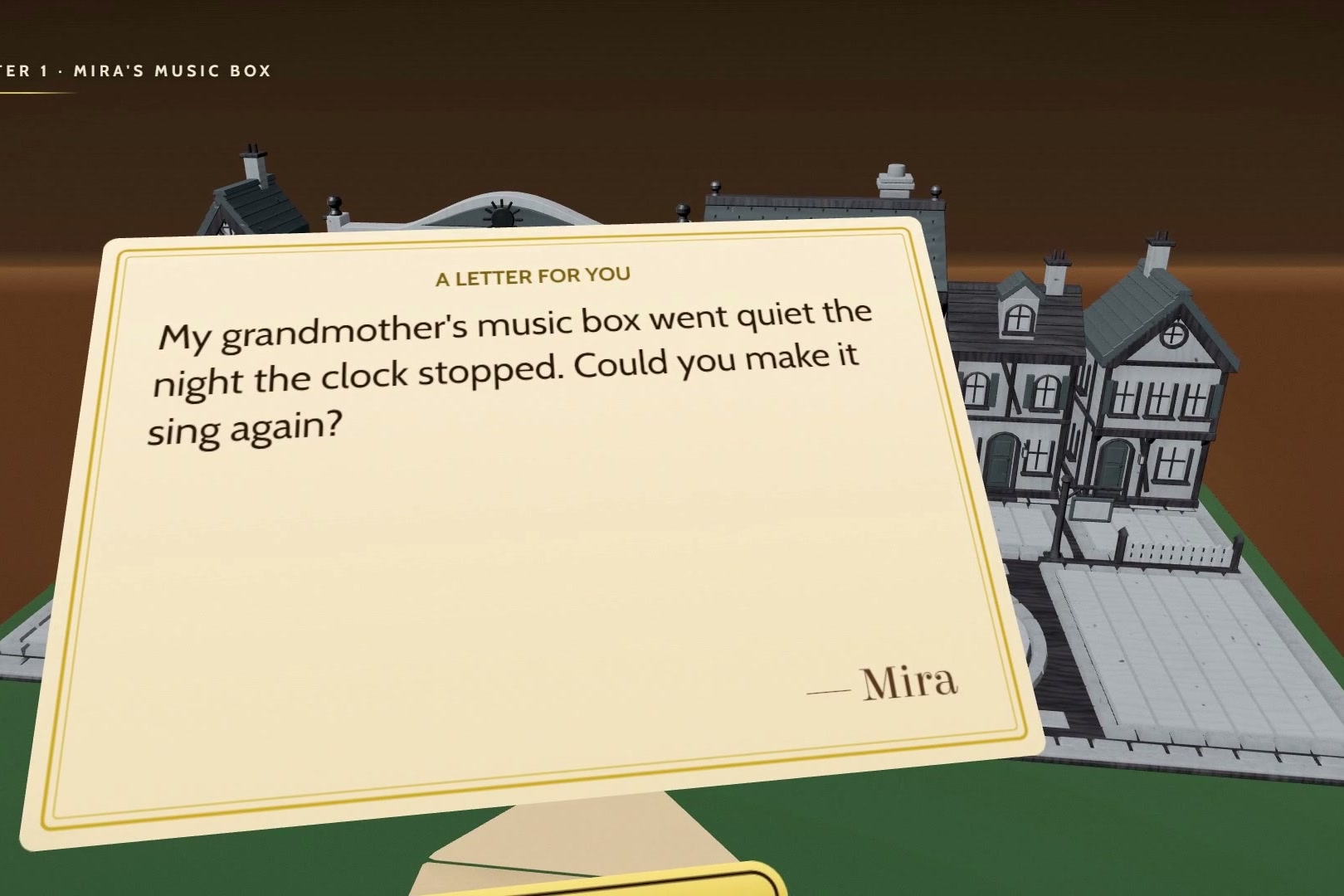
You put on a Meta Quest 3, sit down, and open an old wooden trunk. Tockton unfolds in front of you: grey, still and silent. A letter is waiting. It is from Mira: "My grandmother's music box went quiet the night the clock stopped. Could you make it sing again?"
Inspiration
We wanted to make something you build with your hands, not your thumbs.
Mixed reality is at its best when it turns the space in front of you into something you can touch. A table is the most natural stage there is: you sit at it, you lean over it, and you work on it with your hands. And nothing rewards careful hands like clockwork. Every part has a visible job, and when you get it right, the machine moves.
We kept coming back to two childhood memories: the feeling of clicking LEGO bricks together, and the quiet magic of winding an old music box. Wound Up began with one question: what if every brick were a real, working mechanical part?
What it does
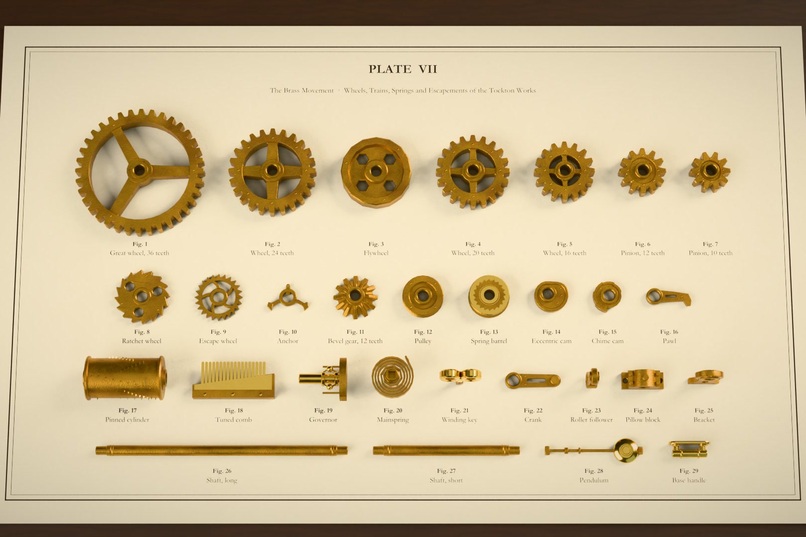
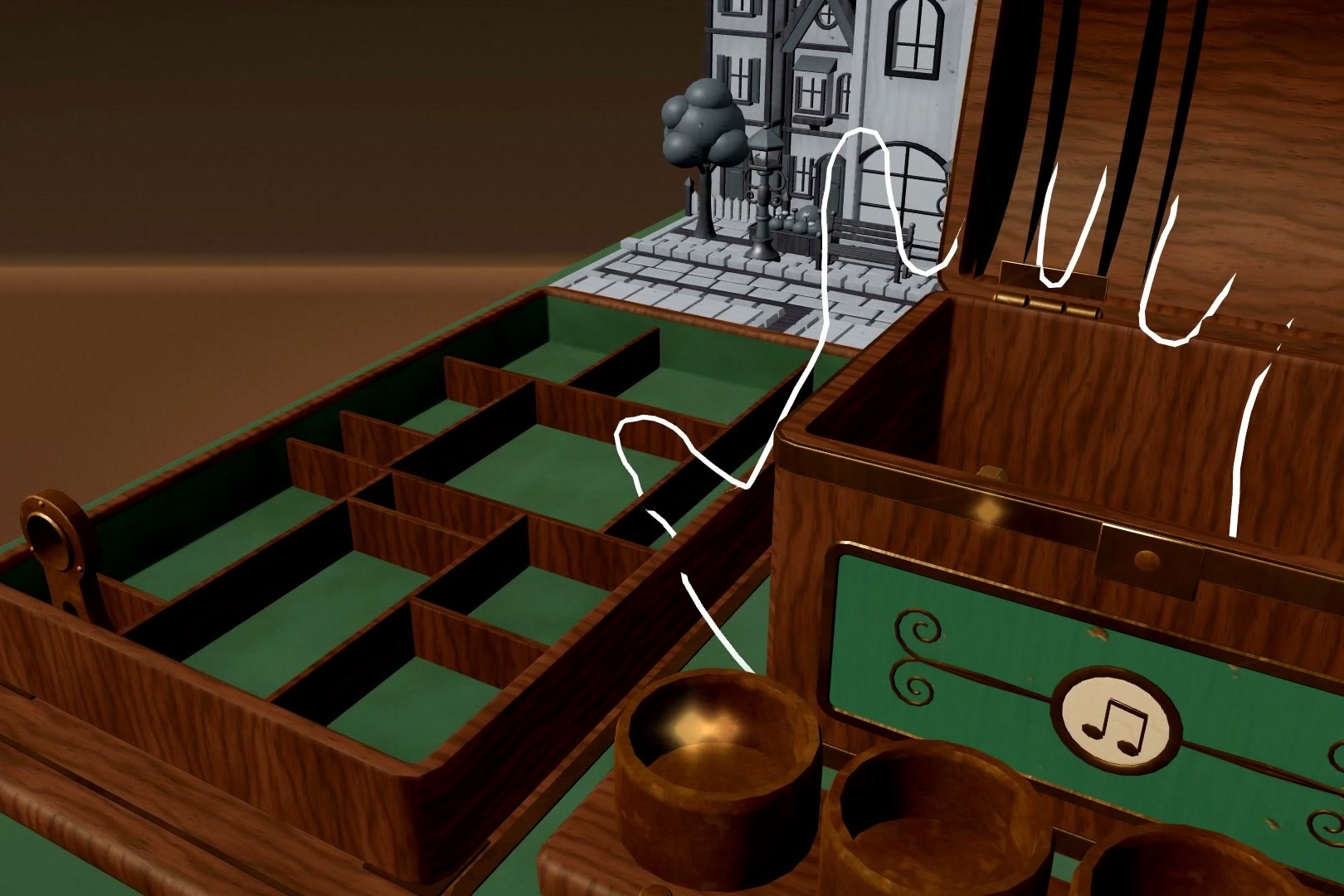
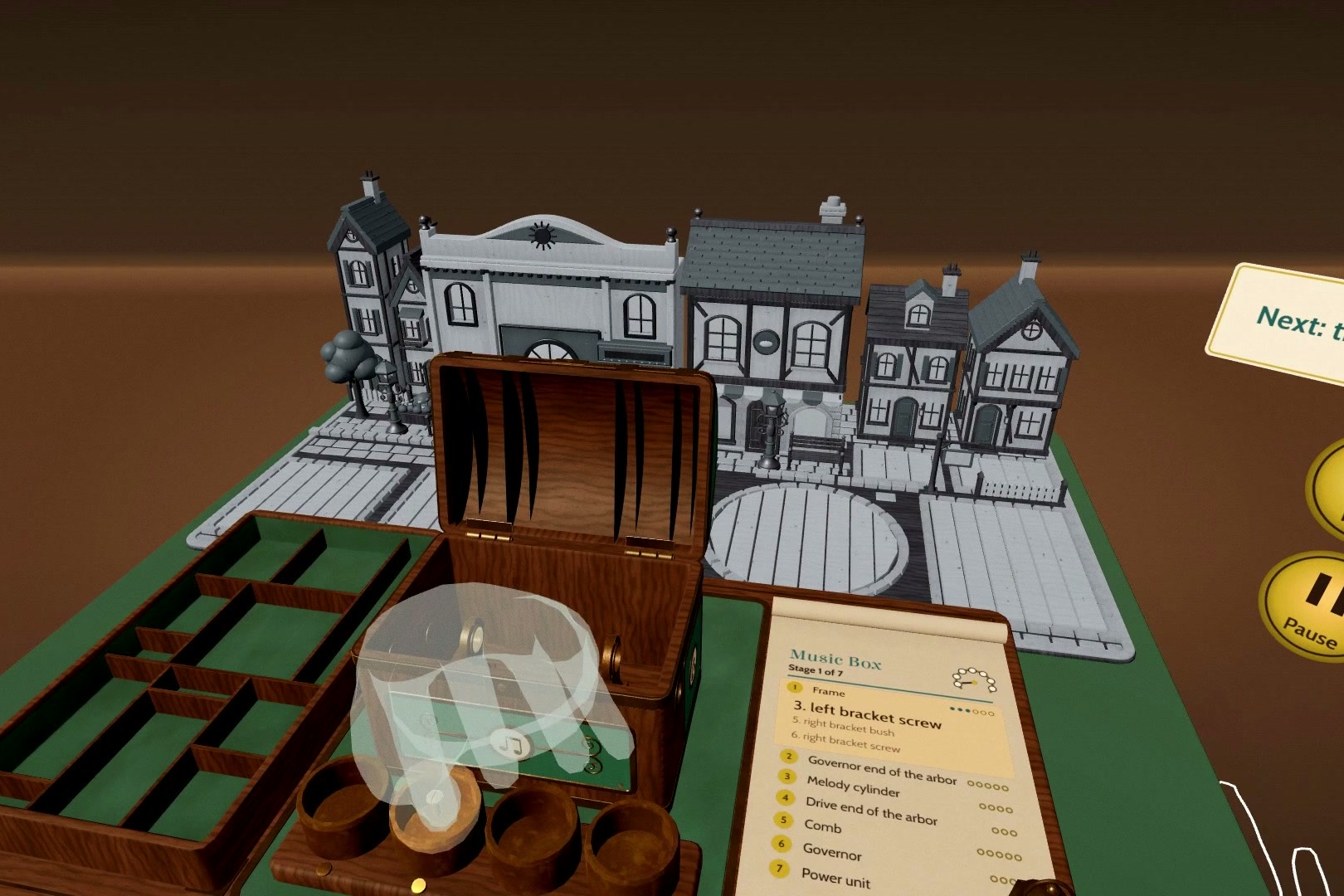
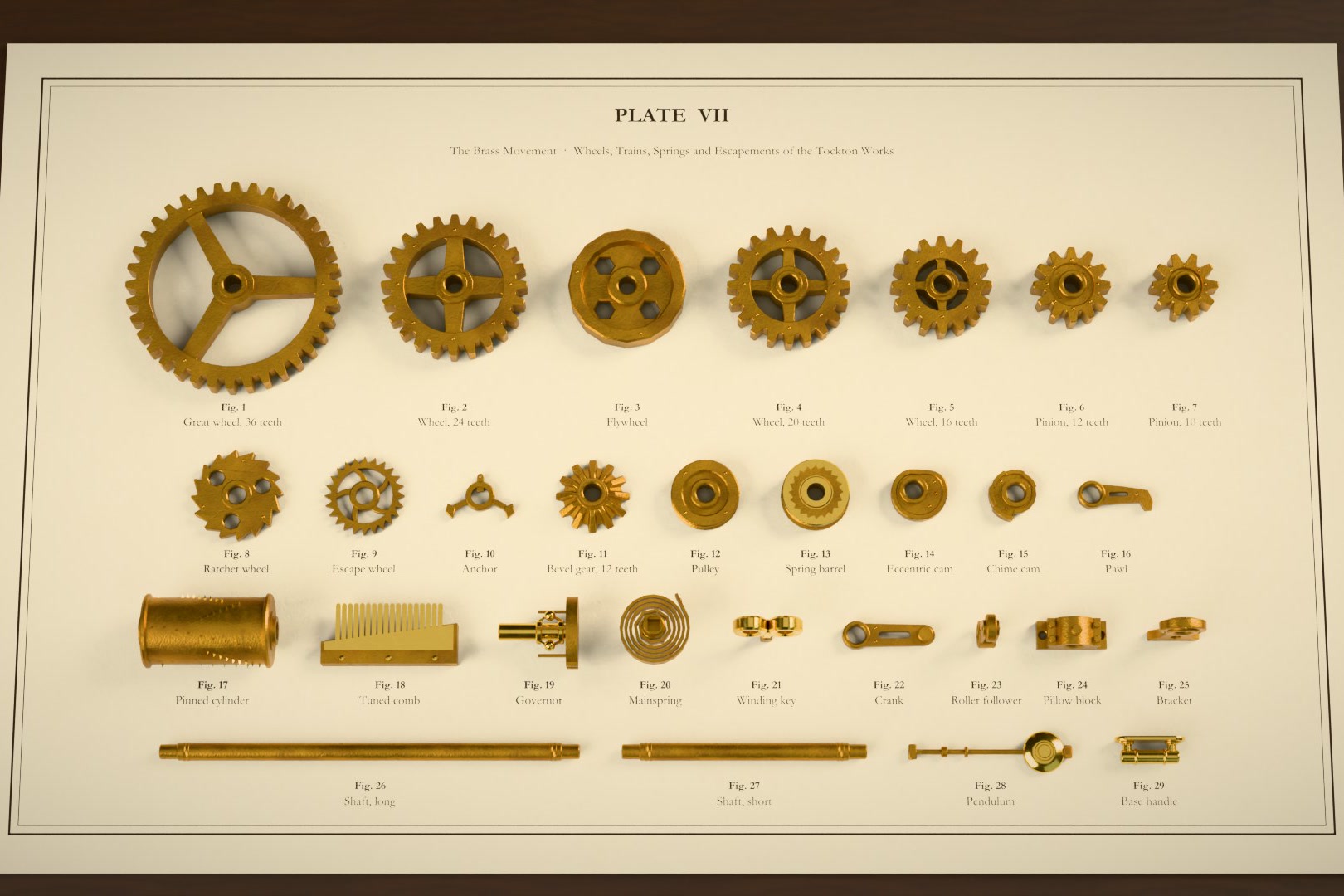
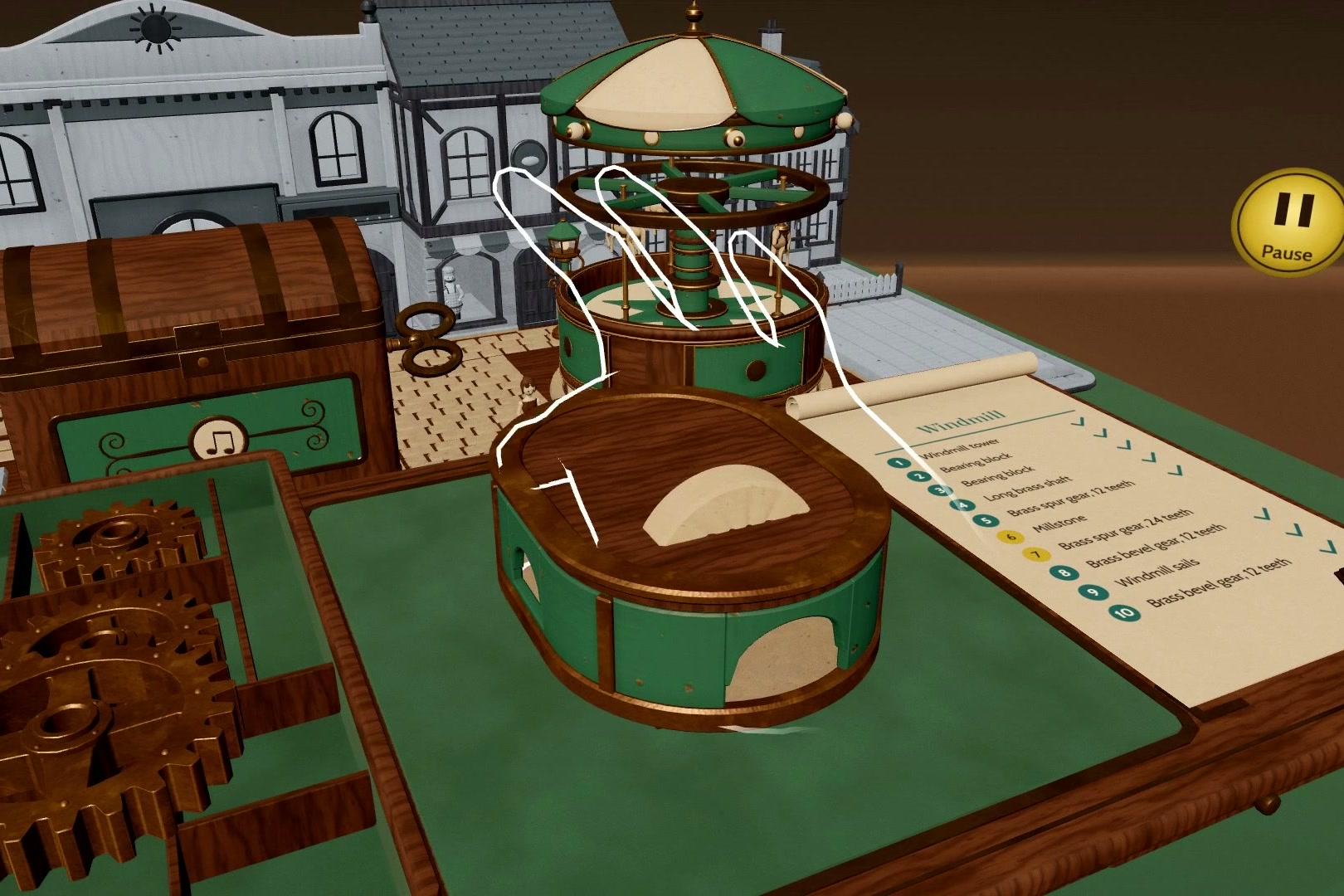
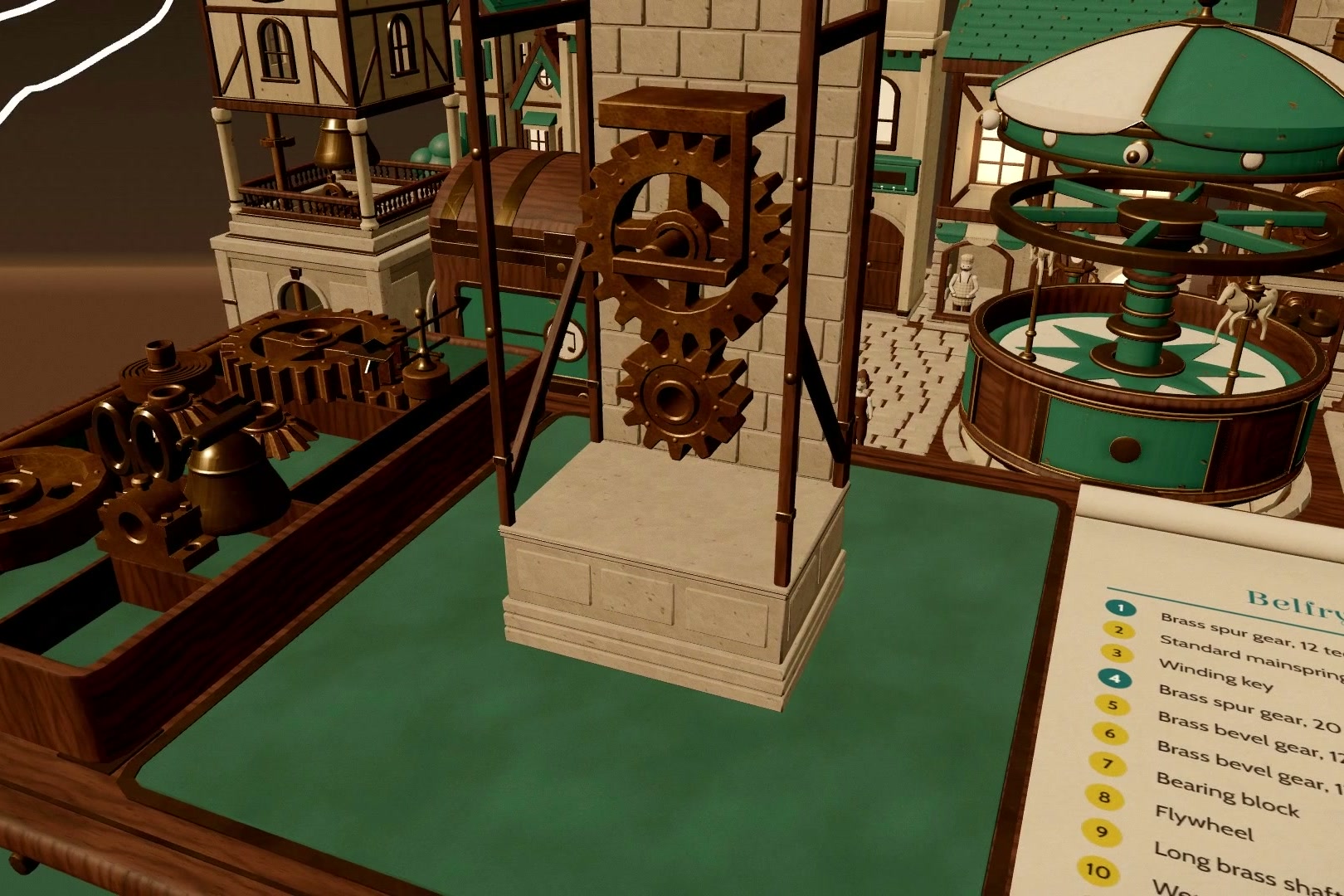
You open the parcel that came with Mira's letter. Inside are a blueprint, a tray of brass gears and a little caddy of pins, collars and screws. You pinch a gear, bring it toward its socket and feel it snap into place. You fit a tiny brass pin to hold it there. Stage by stage, the Music Box comes together under your fingers.
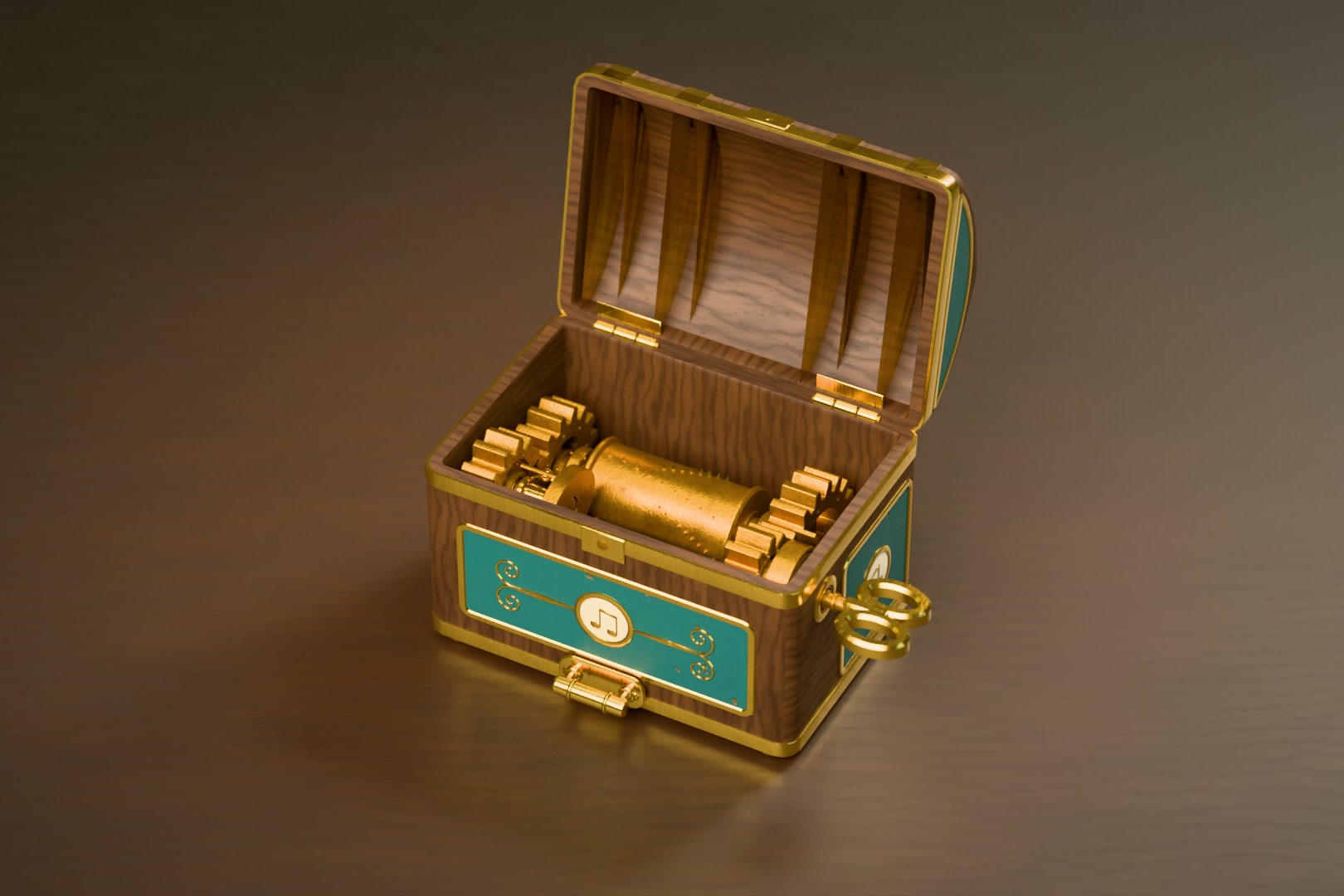
Then you twist your wrist to wind the key, press Run, and listen. The spring turns a 10-tooth pinion, the pinion turns a 20-tooth wheel, and the pinned cylinder sweeps across the comb. Grandmother's tune plays again.
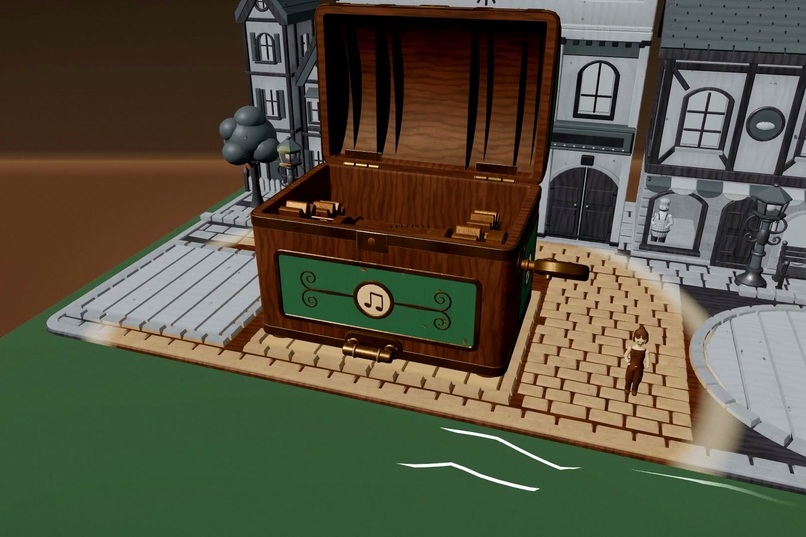
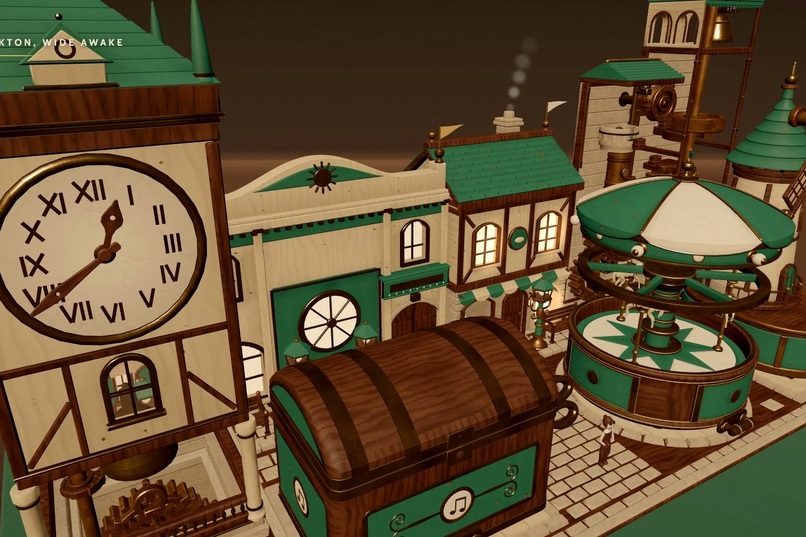
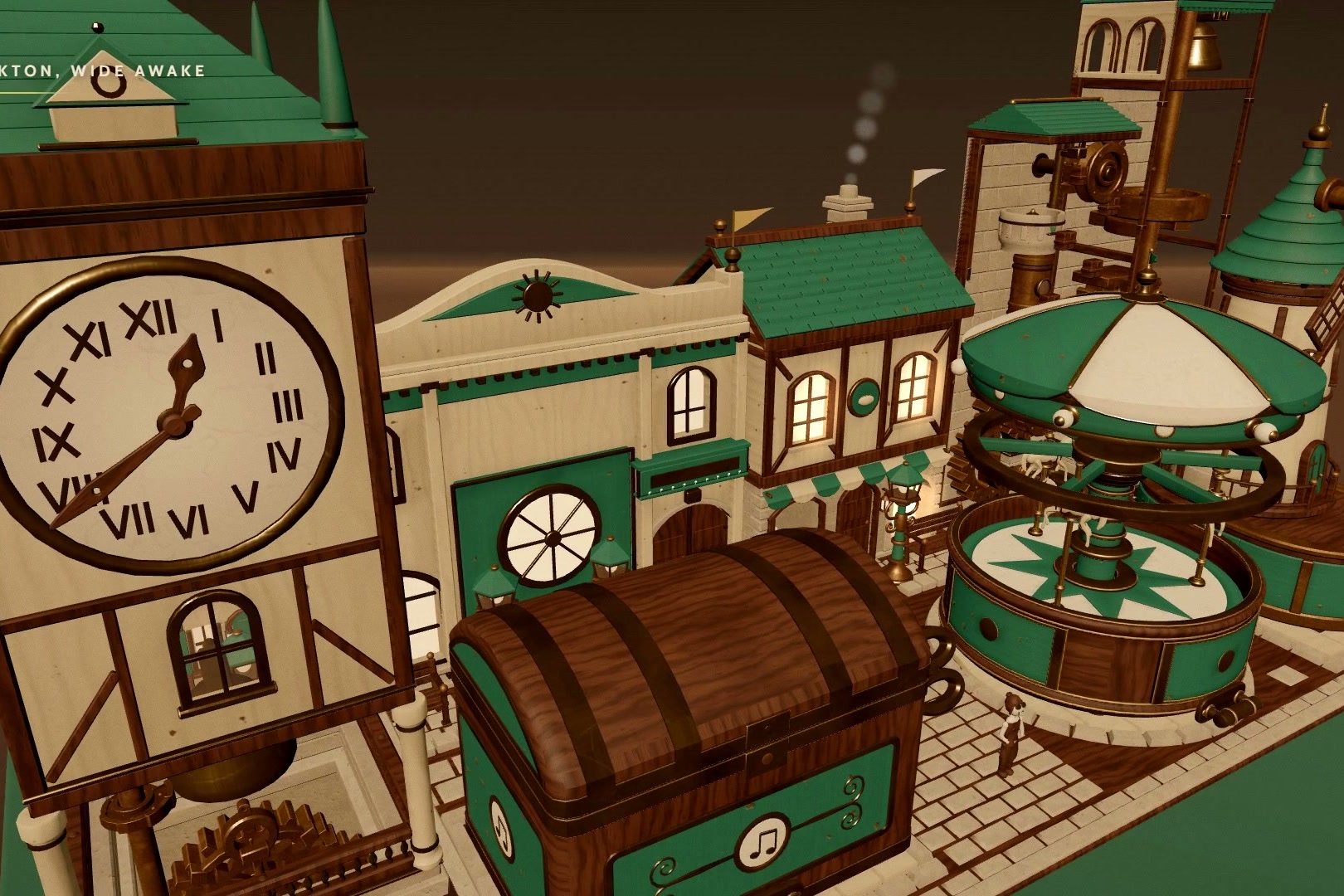
You carry the box to its place in the town. Colour ripples outward from it: windows warm, pennants flutter, chimneys smoke, and that corner of Tockton wakes up.
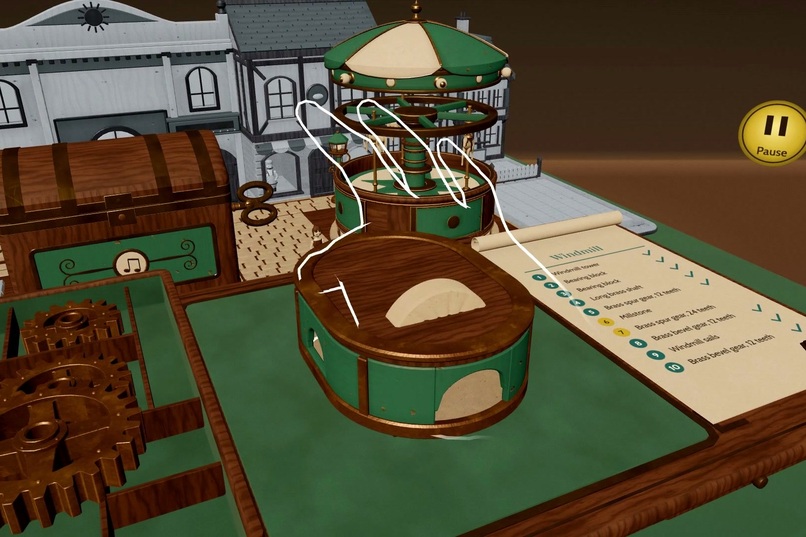
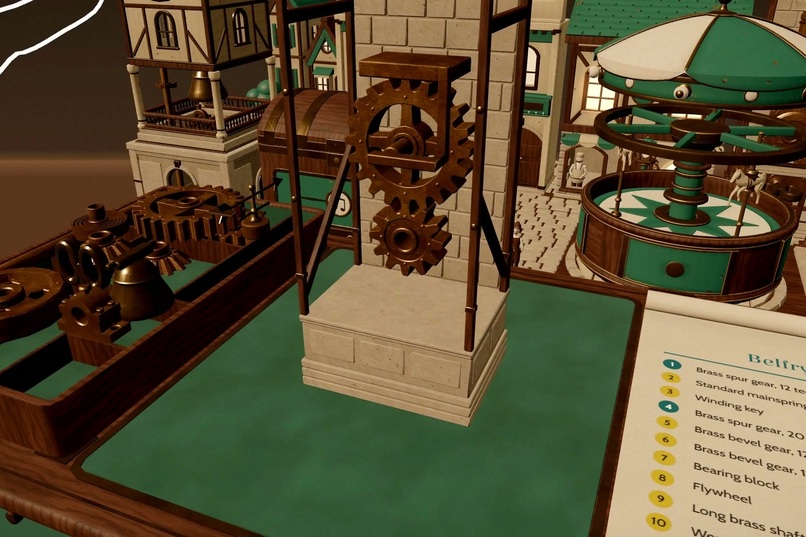
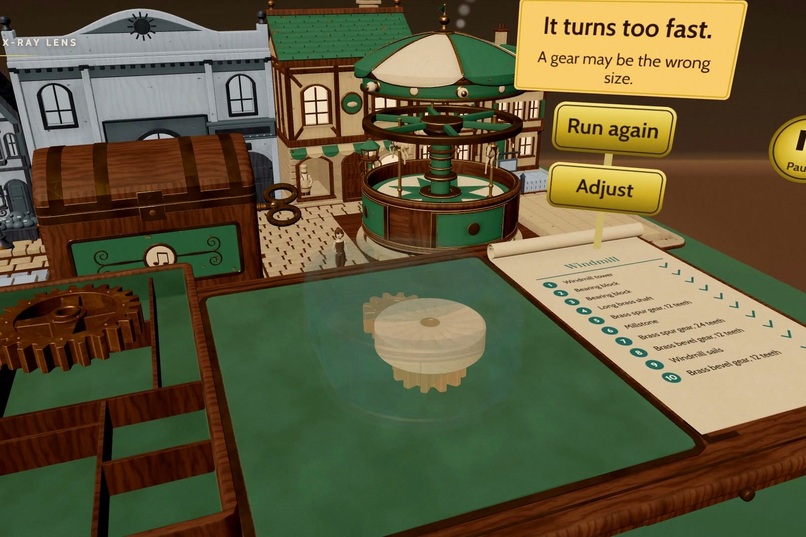
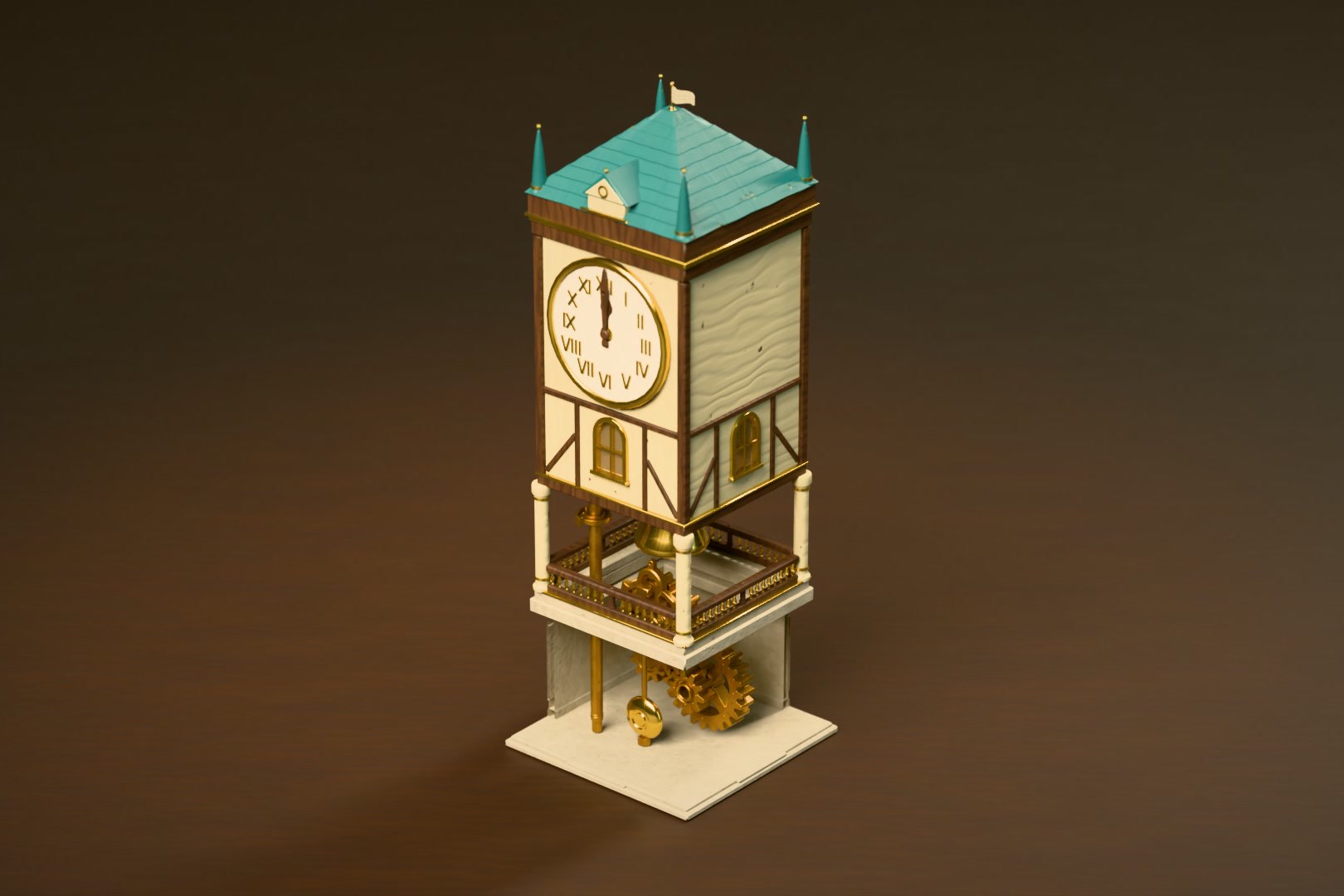
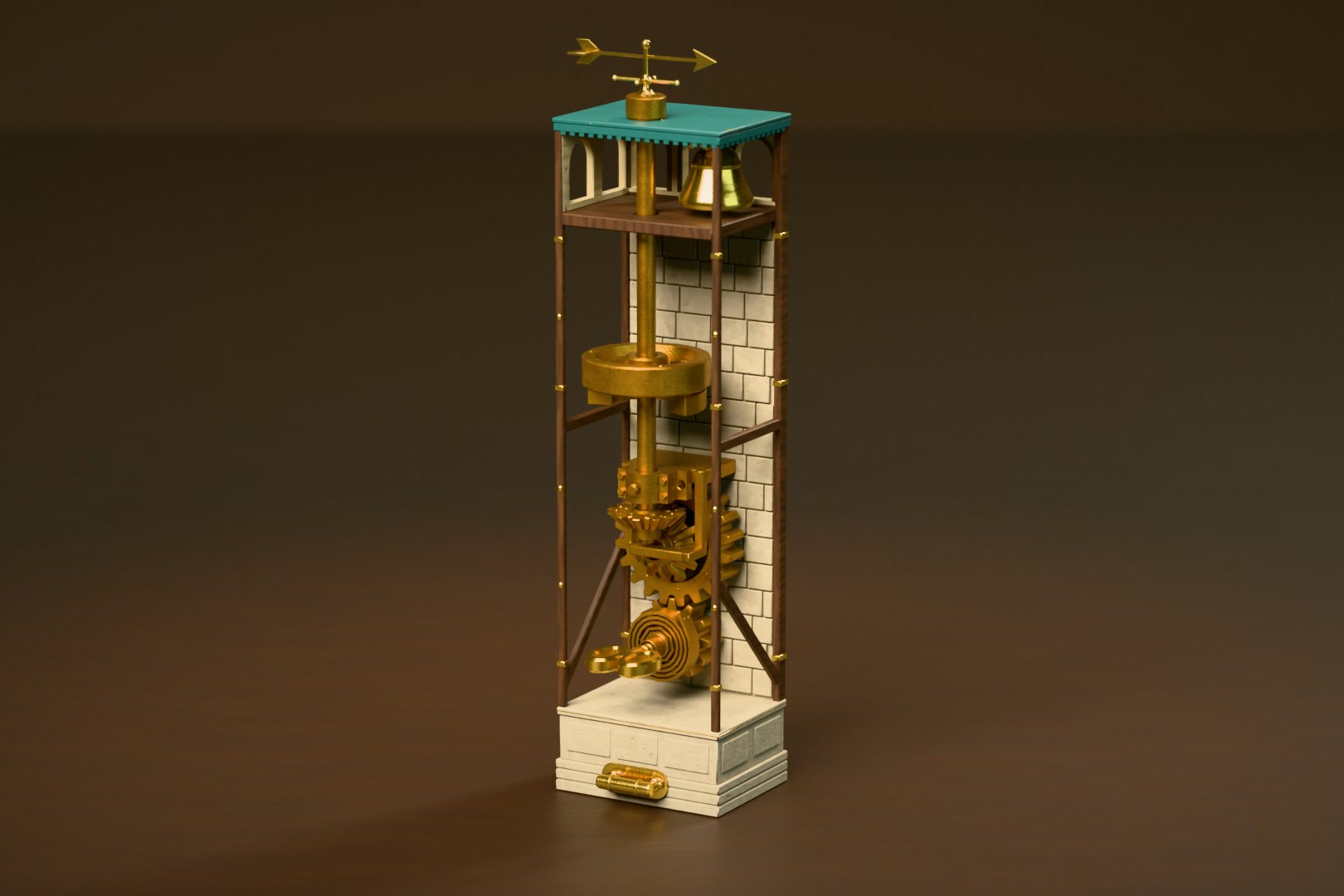
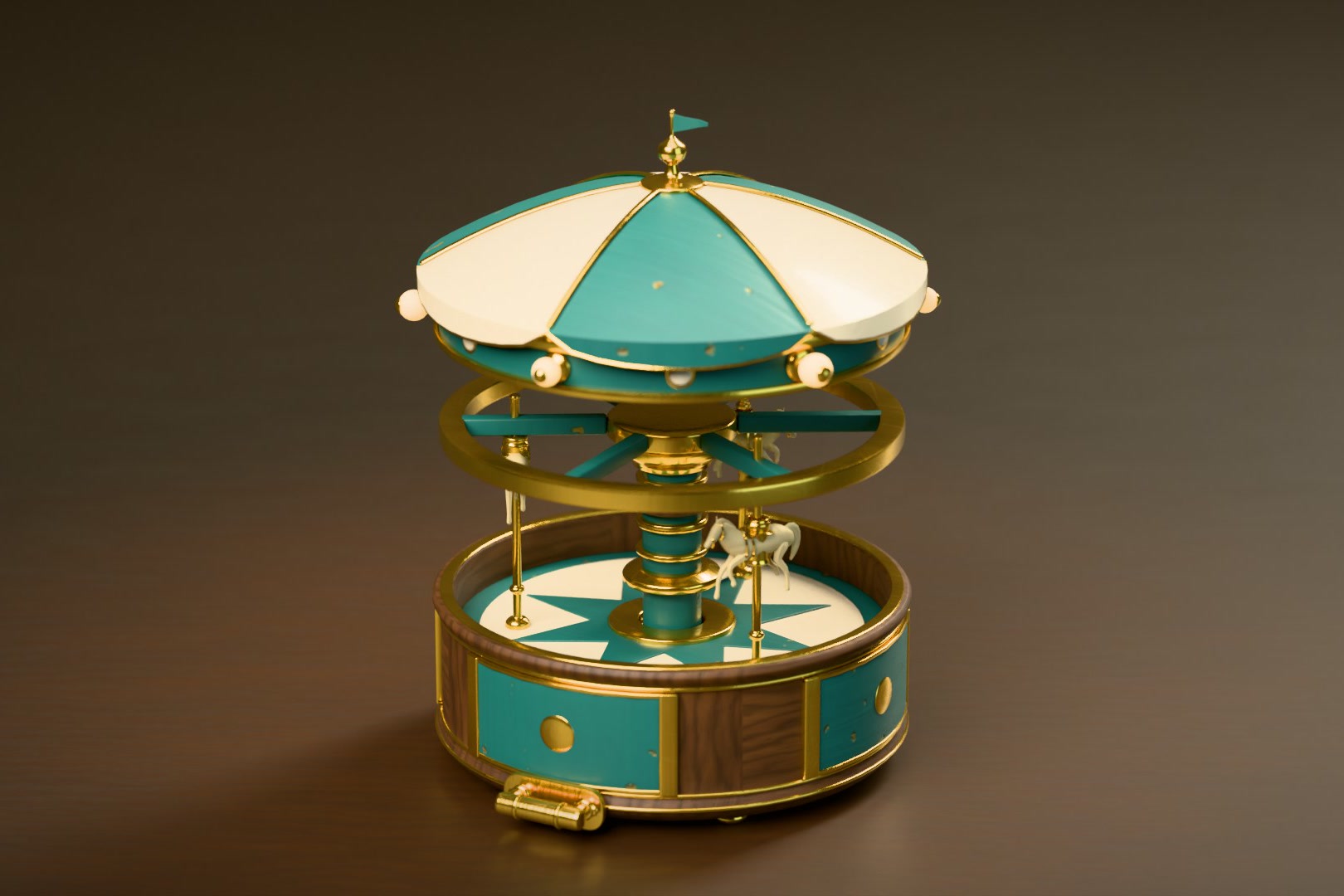
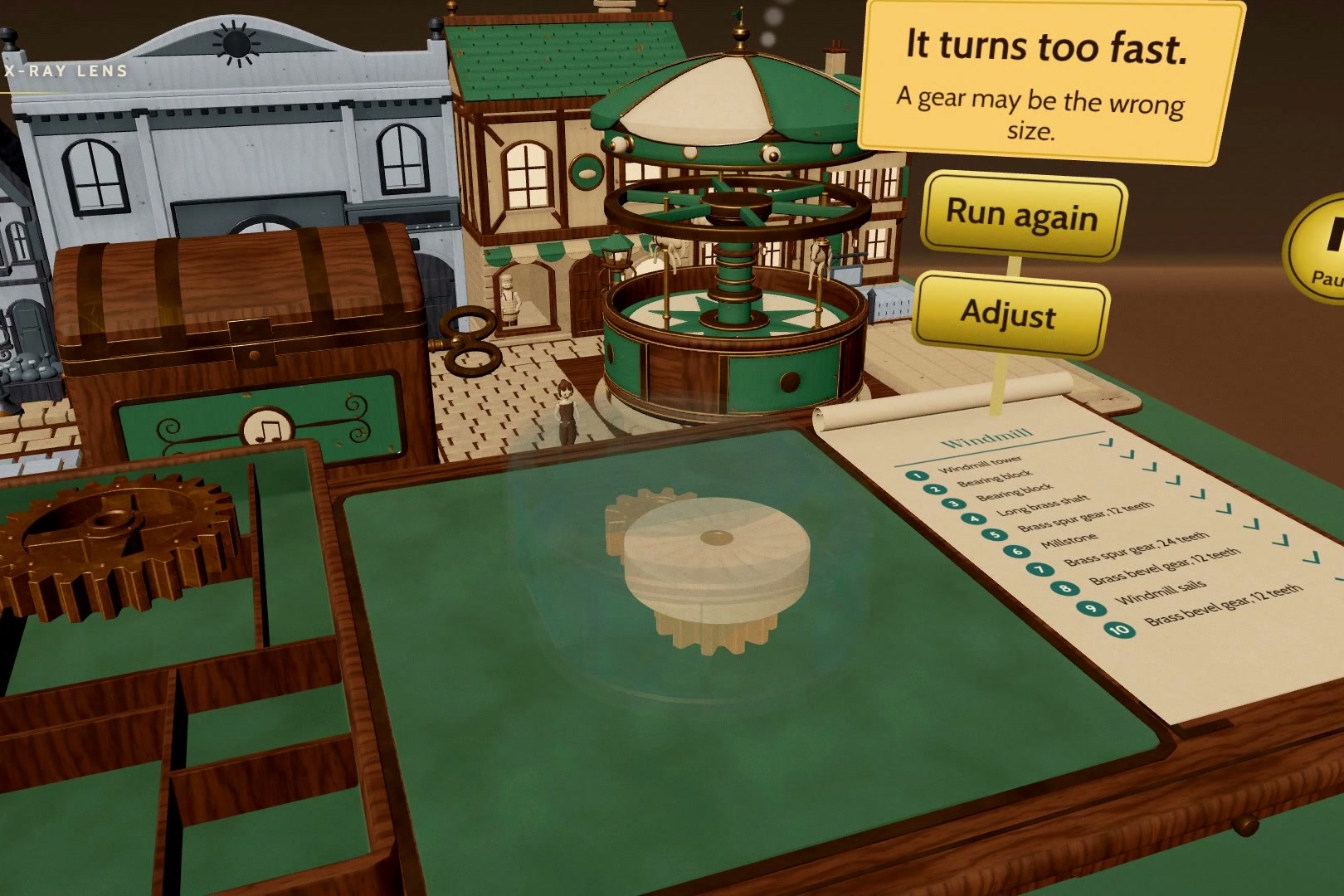
More letters follow, eight in all, from the schoolteacher, Otto the baker, the theatre keeper, the gardener and the bell-ringer. Each asks for a machine: the Carousel, the Windmill, the Clock Tower, the Well and the Belfry. Some letters bring trouble. The Music Box sighs and stops after a moment, because its spring is worn out. The windmill spins so fast that flour flies everywhere, because someone fitted the wrong gear. You find the faulty part, pull it out and fix it.
None of this is animation. Every machine is simulated from the parts you actually placed. Speed flows through each pair of meshing gears:
$$\omega_{\text{out}} = \omega_{\text{in}} \cdot \frac{z_{\text{in}}}{z_{\text{out}}}$$
So when a 12-tooth gear sits where a 24-tooth gear belongs, the millstone really does turn twice as fast, and the game tells you so: "It turns too fast."
The game is built so that anyone can finish it:
- Three difficulty levels. On Relaxed, the game seats the tiny hardware for you. Standard gives you the real kit. Master has caddy bins 3.8 cm apart, so you pinch with care.
- The Helper. A brass medallion for anyone who gets stuck. It glows the next socket, then shows you with a ghost demonstration, then places a single part. It never builds the machine for you.
- The X-ray lens. It fades a machine's casing so you can watch the mechanism turning inside.
- Comfort options. Ghost hands teach each gesture, and ray and gaze modes help players who cannot reach comfortably.
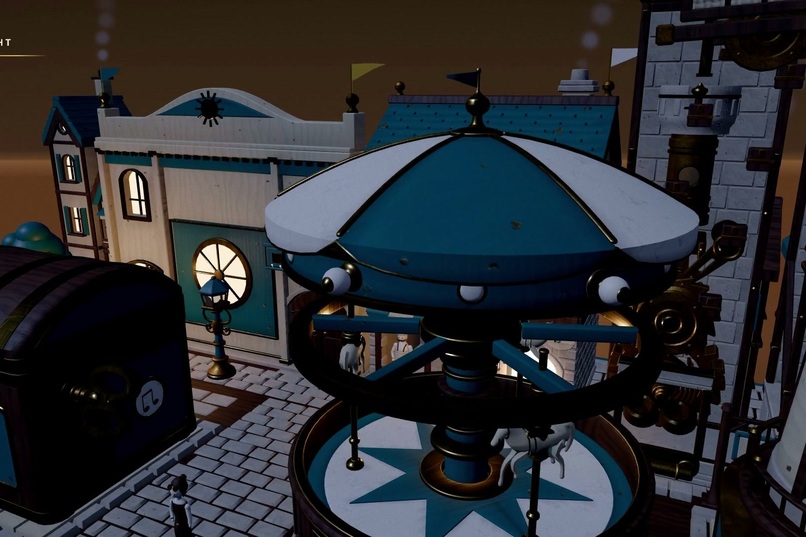
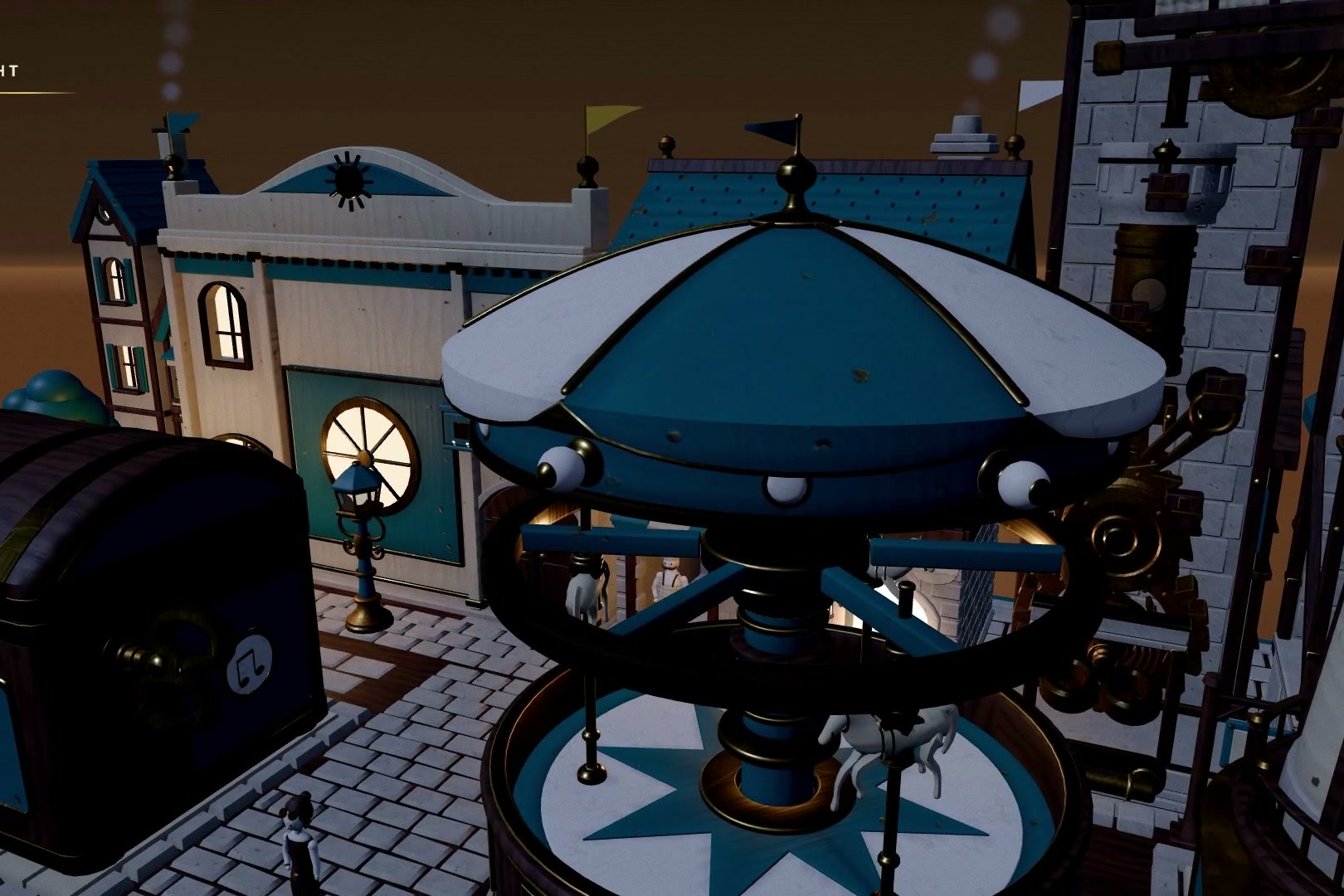
- Night mode lights the town's lamps and windows.
- A daily repair gives you one small fault to fix each day.
- Gift links let you send a machine you built to a friend.
When the last letter is answered, the whole of Tockton is awake again.
How we built it
We built Wound Up for the browser with WebXR and Meta's Immersive Web SDK, using its hand tracking, grab and poke interactions, and table detection. Rendering uses Three.js, and every line is strict TypeScript. There is nothing to install and no account to create. The game is a static website, so it sends no data anywhere.
The heart of the game is a small mechanical solver, written in pure TypeScript with no graphics code at all. It builds a graph of the parts you placed: shafts, gear meshes, belts, cams, ratchets and springs. It then works out what turns, how fast and in which direction, and whether anything jams. The animation, the sound, the repairs and the story progress all read the solver's answer, so there is exactly one source of truth for how a machine behaves.
Every model in the game is original, and every one was generated by code. Python scripts in Blender build the trunk, the town, the six machines, the residents and every single gear.
The mechanical parts are parametric families: change the number of teeth, and the gear is rebuilt to mesh correctly with every other gear in the game. A shared material library gives everything the same warm finish of aged brass, walnut, cream enamel and deep teal.
Even the sound is made in code. Every click, ratchet, chime and the music box's tune are synthesised live with the Web Audio API.
To keep it all honest, we wrote more than 1,900 automated tests. We also built browser journeys that play the whole game inside Meta's emulated Quest 3, with simulated hands that pinch, carry, snap and wind, just as a player would.
Challenges we ran into
Tiny parts in big hands. A brass pin is about a centimetre long, and hand tracking is not that precise. We tuned how strongly sockets pull parts in at each difficulty level, and added a gentle release assist for the smallest pieces. We also created the Helper, so the intricate build feels satisfying rather than frustrating.
Six detailed machines on a headset budget. Our first full town drew far too many objects every frame. We merged each machine's static parts by material, which cut the emulated two-eye draw count for four machines from 396 to 216.
That broke the X-ray lens, because the casing and the mechanism had become a single mesh. The fix was to keep two versions of each machine: a merged one for normal play, and a split one that appears only while you look through the X-ray lens.
"Everything is too dark." Early players told us the town looked gloomy. The baked shading was being multiplied straight into the colours, and the tone mapping crushed what was left of the shadows. We reworked the lighting so that the baked occlusion acts as light rather than paint, and switched to AgX tone mapping. That took the share of crushed, nearly black pixels from 48% to about 1%.
A slow first visit. The whole town once had to download before anything could happen. Now the start screen is ready in about two seconds and the town streams in behind it. If you open the trunk early, an honest "Waking Tockton…" message waits with you.
No headset on the desk. We did not have a Quest 3 during development. Instead we built the entire testing loop around Meta's IWER emulator, driving the game with scripted, emulated hands. Testing on a real headset is the first thing on our list next.
What we learned
We learned that hands-first design is a discipline. Every button, letter and part had to respect reach, line of sight and pinch size, so we turned those rules into tests that fail when something drifts out of reach.
We learned that keeping the simulation pure pays for itself. Once the solver was the single source of truth, repairs, faults, the X-ray lens and even the audio fell out of it almost for free.
And we learned that in XR, performance begins in the asset pipeline, long before the last week of the project.
What's next for Wound Up
The Music Box already has the full, hardware-level build: twelve major parts and up to twenty-two pieces of brass hardware, across seven stages. Next, we want to bring that same intricate build to all six machines, and to tune the game on real Quest 3 and 3S hardware.
And then the theatre doors open. The Clock Tower rings, the curtain rises, and Tockton puts on its first show in years.
Build the machines. Wake the town. Raise the curtain.
Built With
- blender
- gltf
- hand-tracking
- html5
- immersive-web-sdk
- iwer
- javascript
- meta-quest-3
- mixed-reality
- node.js
- playwright
- python
- three.js
- typescript
- vercel
- vite
- vitest
- web-audio-api
- webxr


