-
-
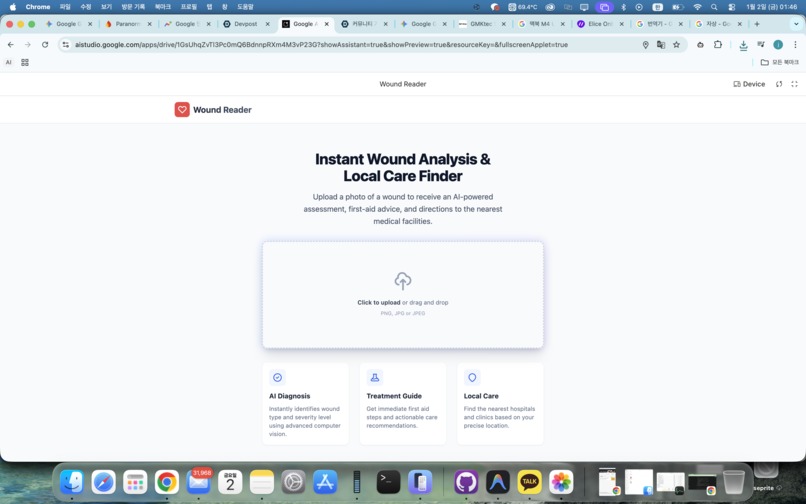
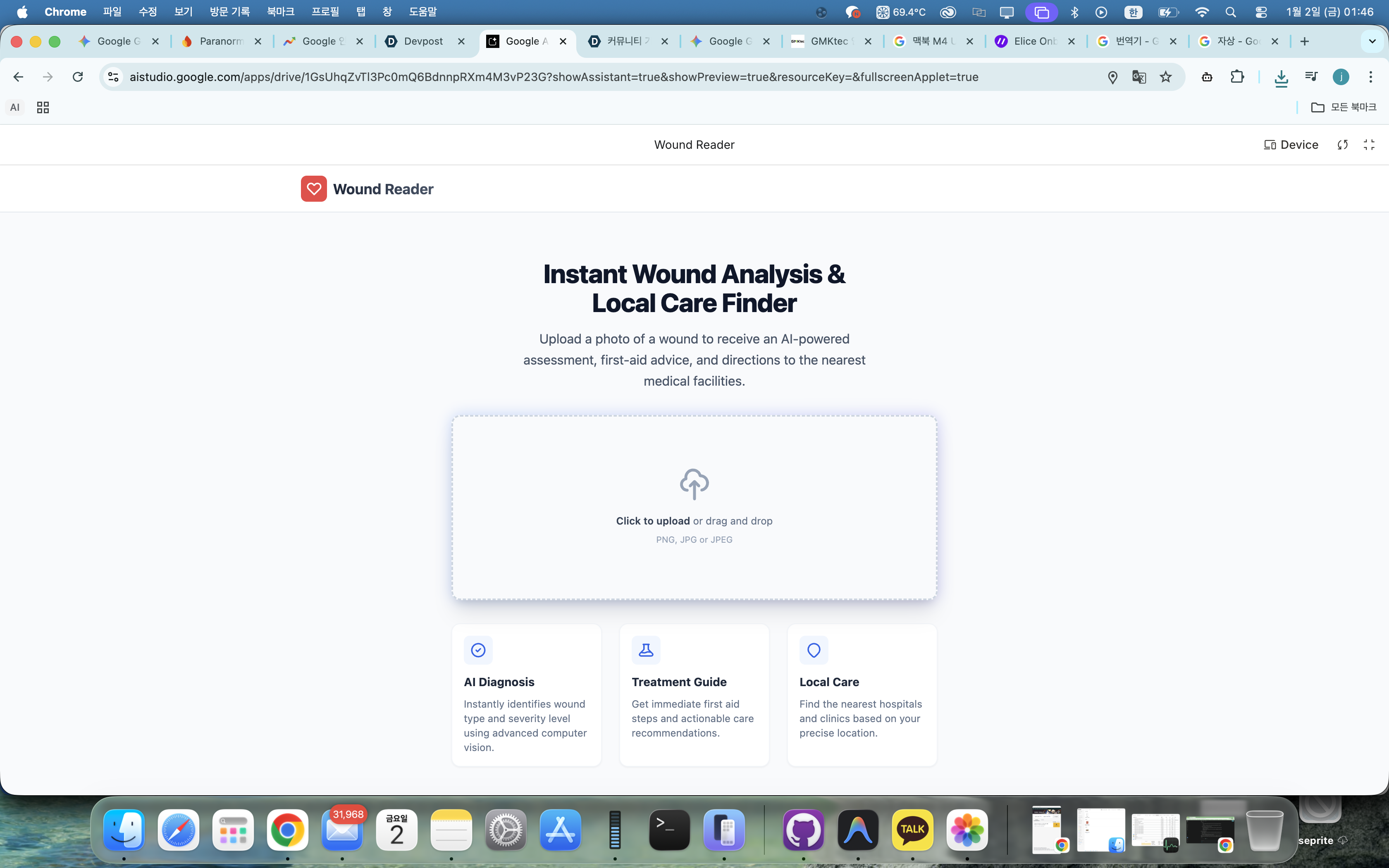
main screen
-
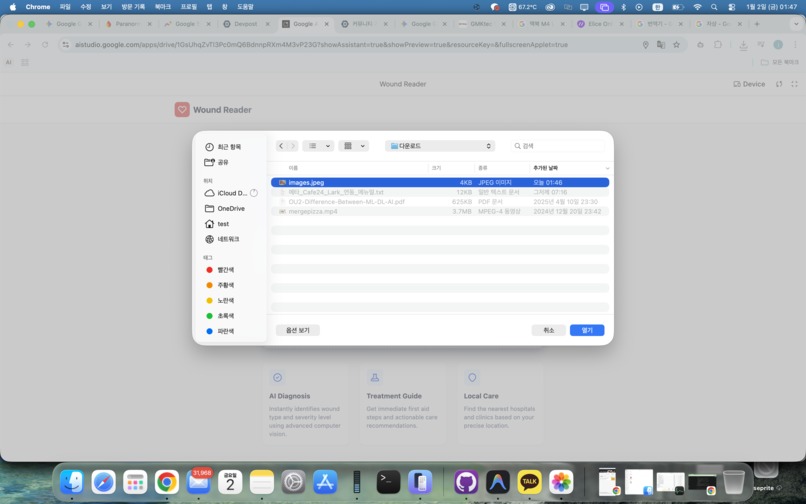
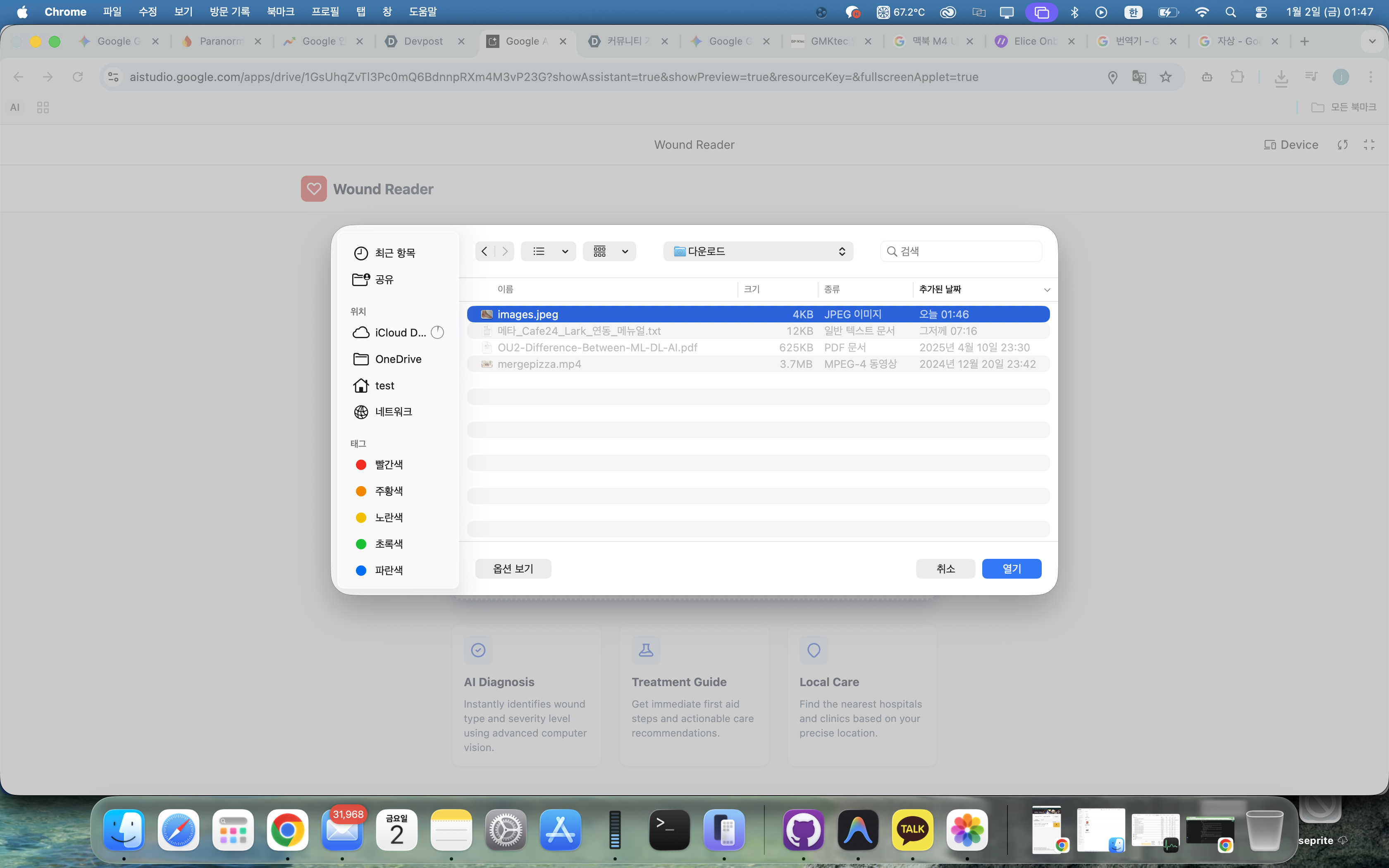
choose a image
-
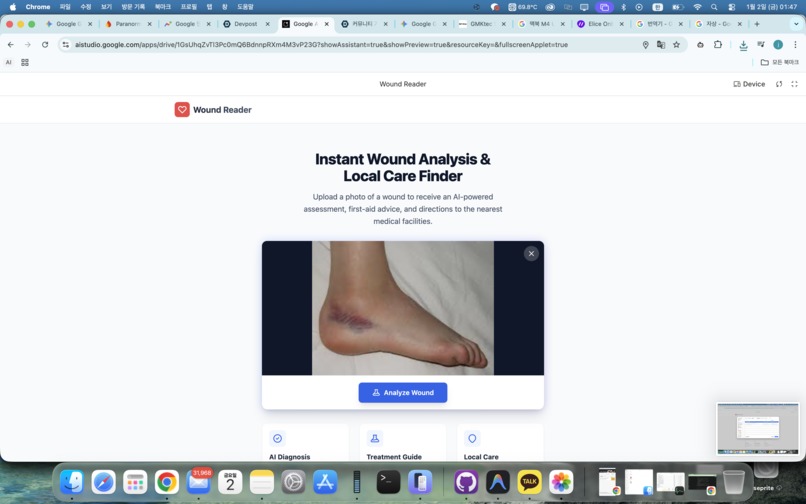
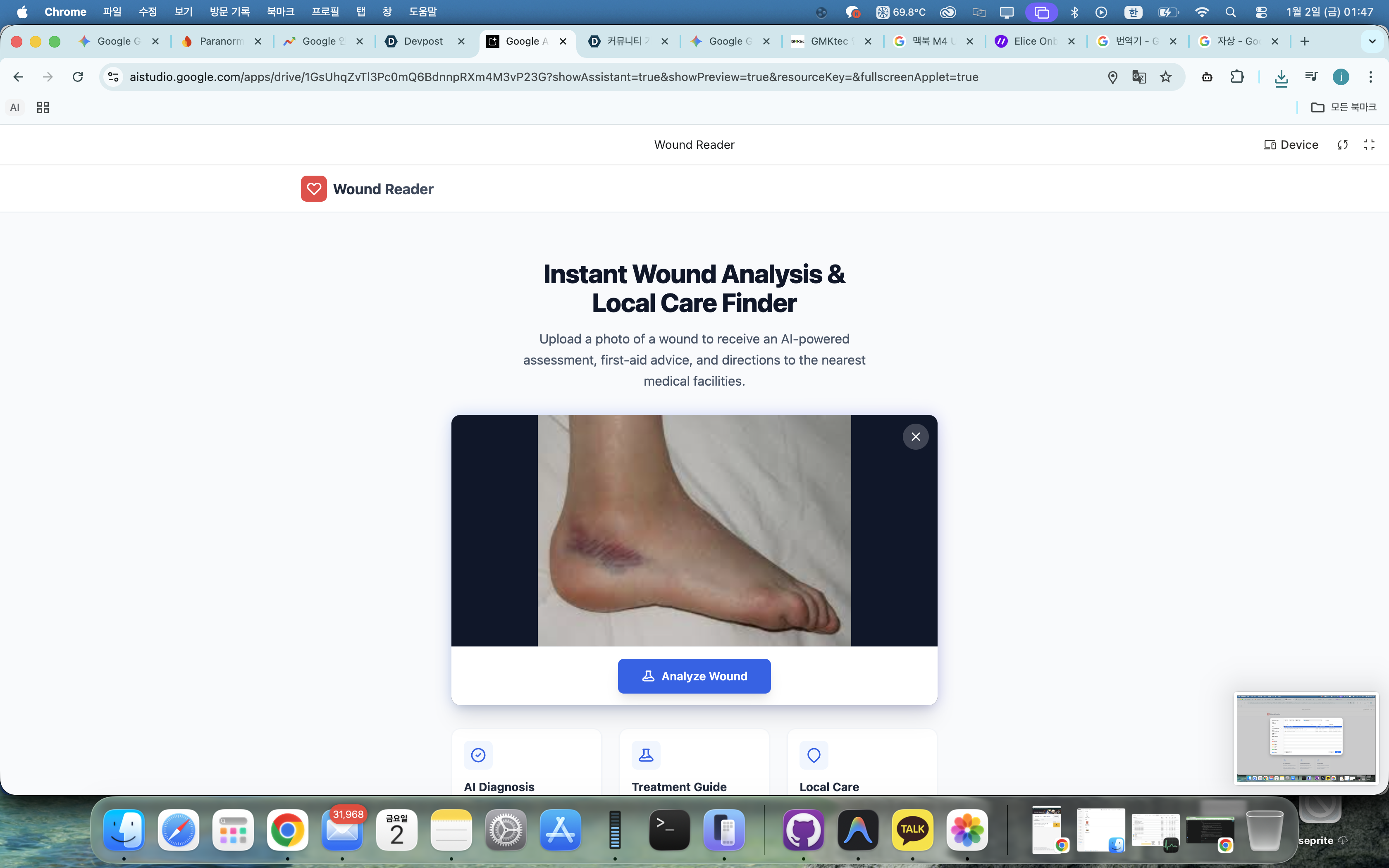
add a image
-
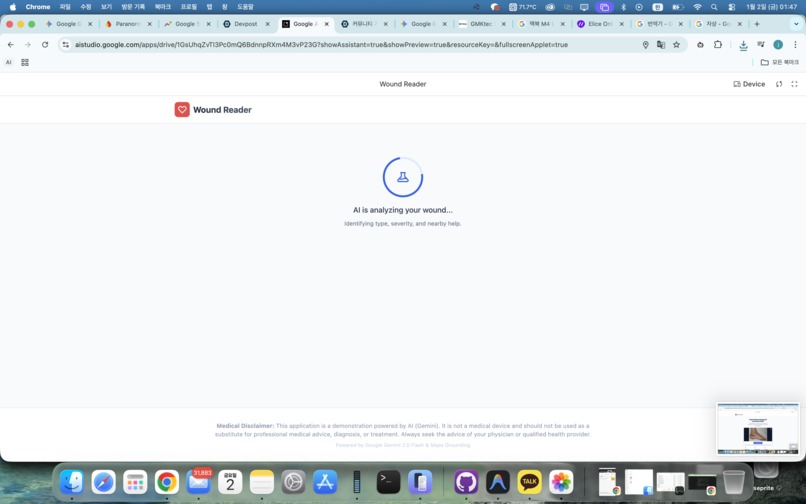
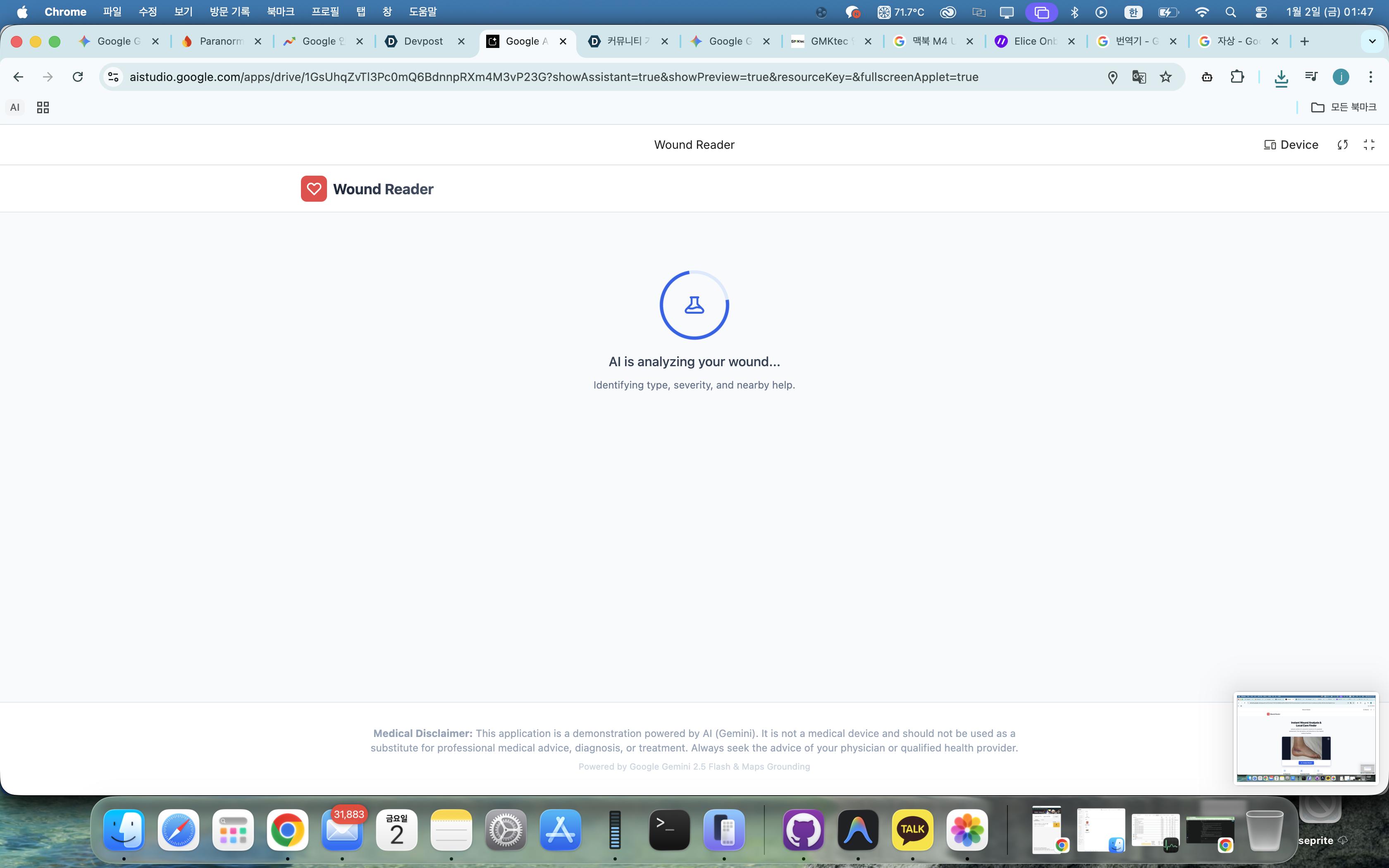
Anaylize
-
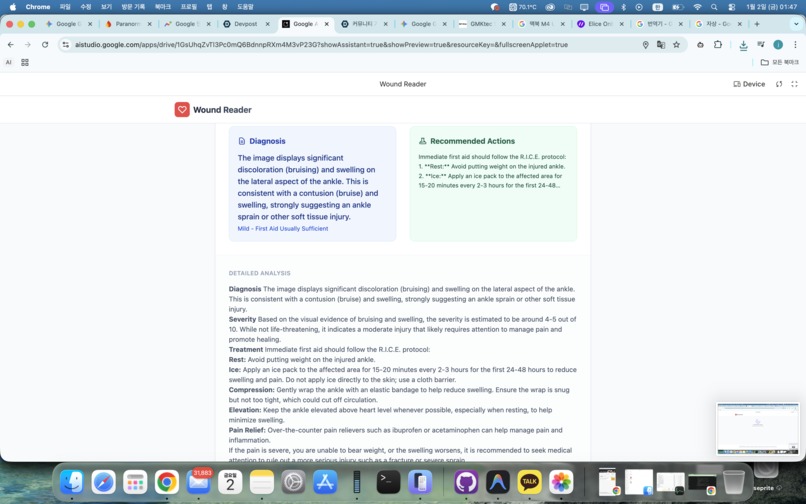
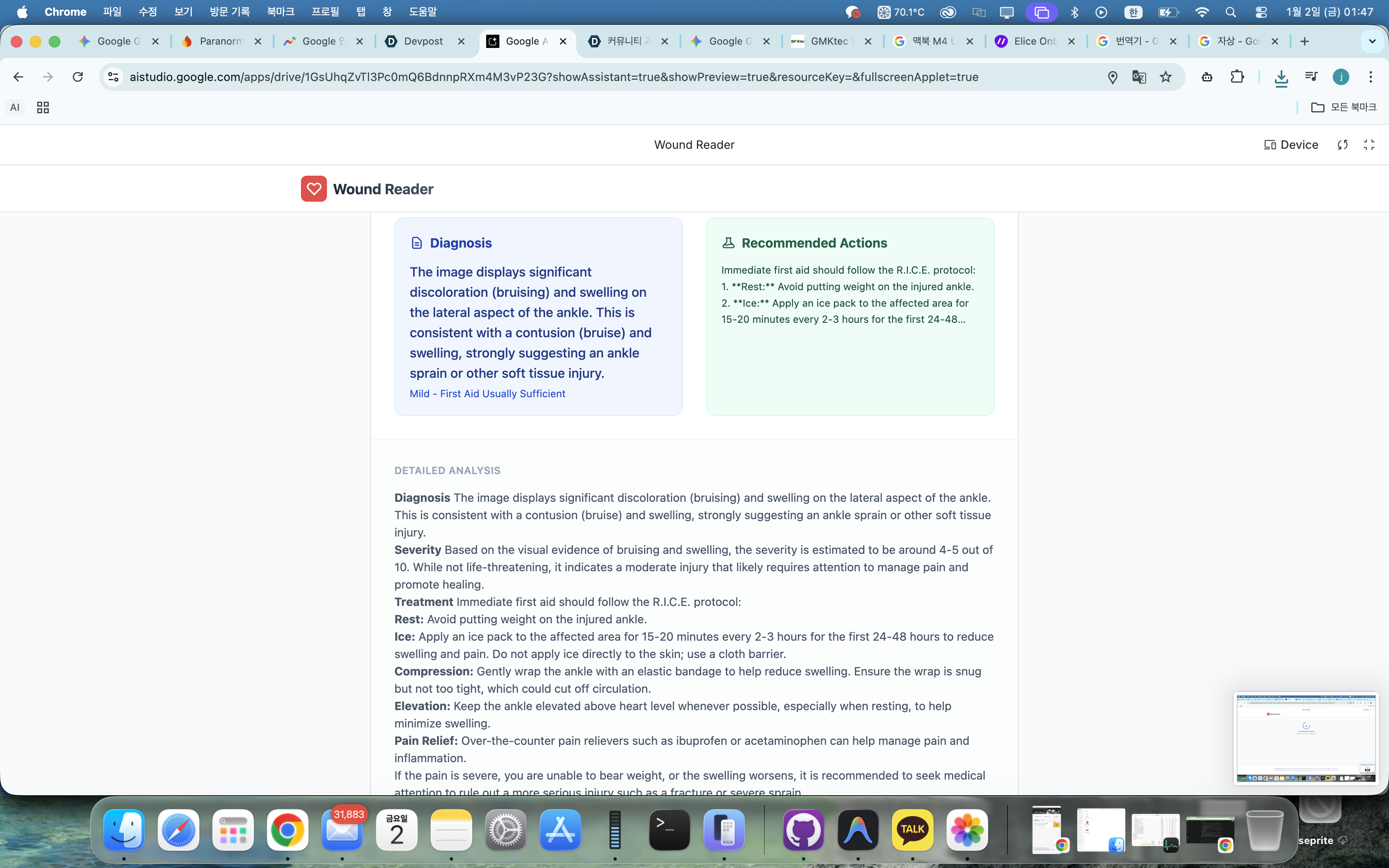
a result of image
Inspiration
Inspired by the South Korean app "My Doctor" and the rise of telemedicine during the COVID-19 era. While non-face-to-face medical care became a standard, we noticed a critical gap: there was no AI-driven system to objectively analyze physical injuries before a consultation. We wanted to bridge the gap between a patient’s uncertainty and professional medical action.
What it does
Wound Reader is an AI-powered diagnostic assistant that analyzes images of skin wounds. Once a user uploads a photo, the AI identifies the type and severity of the injury. It then provides immediate first-aid instructions via Google Search integration and utilizes the Google Maps API to locate the nearest appropriate clinics or emergency rooms for follow-up care.
How we built it
The application is built with a React frontend for a seamless user experience. We integrated Google Gemini to perform high-level image analysis. For real-time information and location services, we utilized the Google Custom Search API and Google Maps/Places API. The backend handles secure API orchestration to ensure data privacy.
Challenges we ran into
The biggest challenge was ensuring the accuracy of AI image recognition across various lighting conditions and skin tones. Additionally, filtering search results to provide only verified medical first-aid information, rather than generic or unverified web data, required sophisticated prompt engineering and API filtering.
Accomplishments that we're proud of
We successfully created a "one-stop" pipeline that takes a user from initial panic (injury) to a concrete action plan (hospital location) in seconds. Achieving a fast response time while maintaining a high degree of visual analysis accuracy was a significant milestone for our team.
What we learned
We learned the importance of UX in medical contexts—how critical it is to provide calm, clear instructions when a user might be in pain. Technically, we deepened our understanding of integrating multiple high-level APIs to create a cohesive service that solves a real-world problem.
What's next for wound reader
The next step is to implement a "Progress Tracker" that allows users to monitor their wound healing over time through daily photos. We also aim to partner with local clinics to enable direct appointment booking through the app, completing the full circle of medical care.
Built With
- aistudio
- antigravity

