
Inspiration
Fast and accurate wound diagnosis can greatly affect patient outcomes, but in many regions, practitioners are often not around. This project came to my mind based on the potential of AI systems to fill in the gaps of healthcare delivery, especially in underserved communities. This design envisioned an intelligent, affordable, and available tool for wound identification and treatment suggestions-anytime and anywhere.
What it does
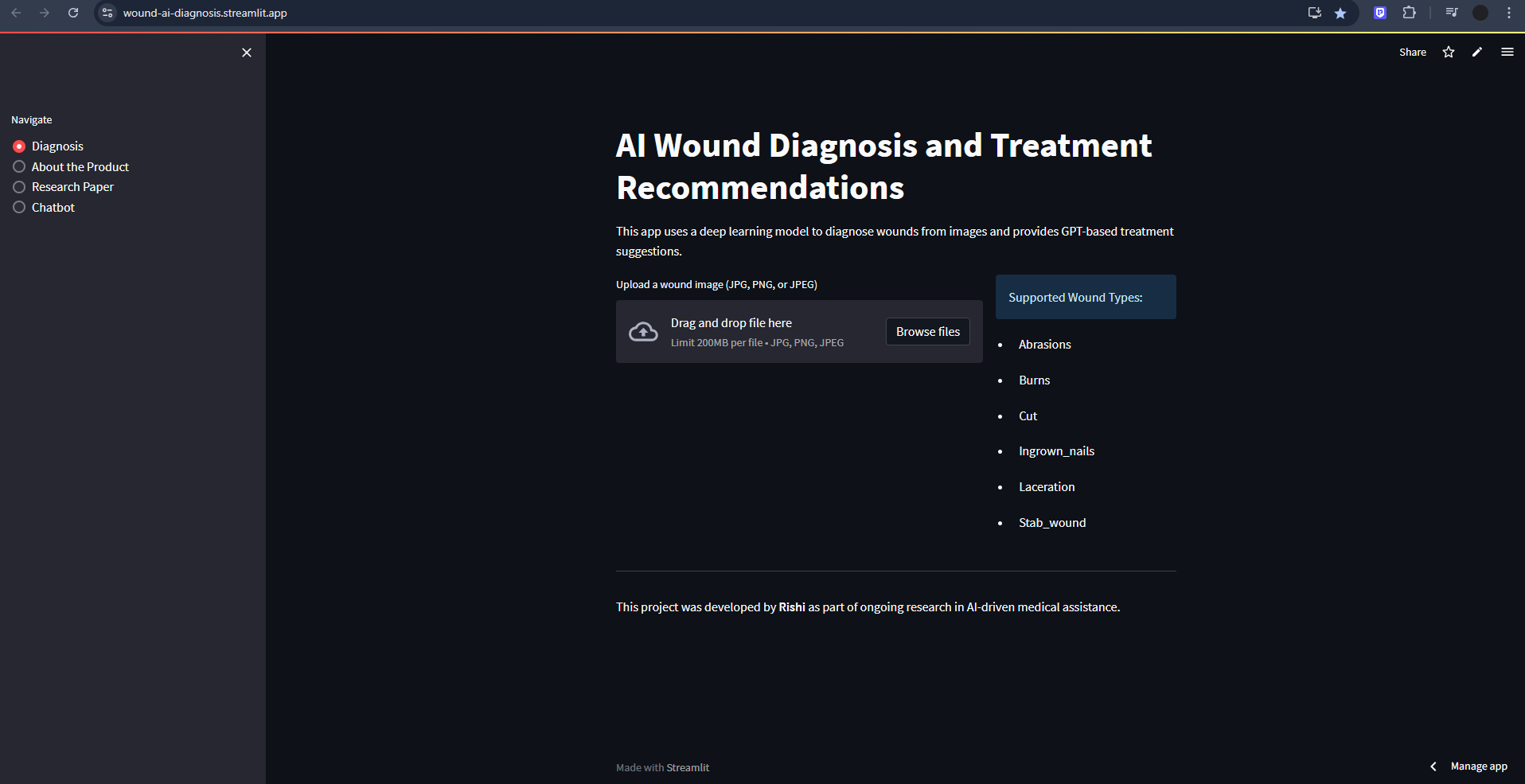
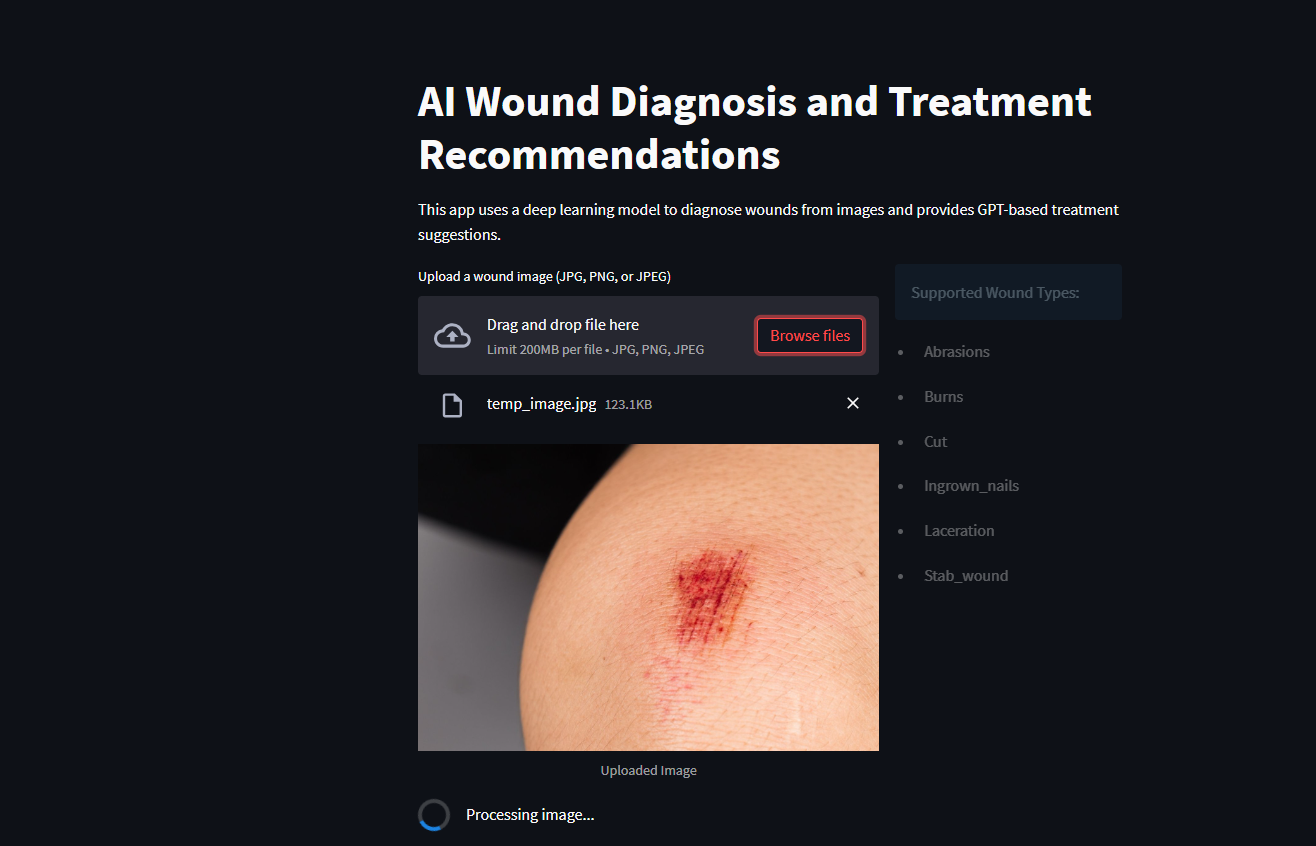
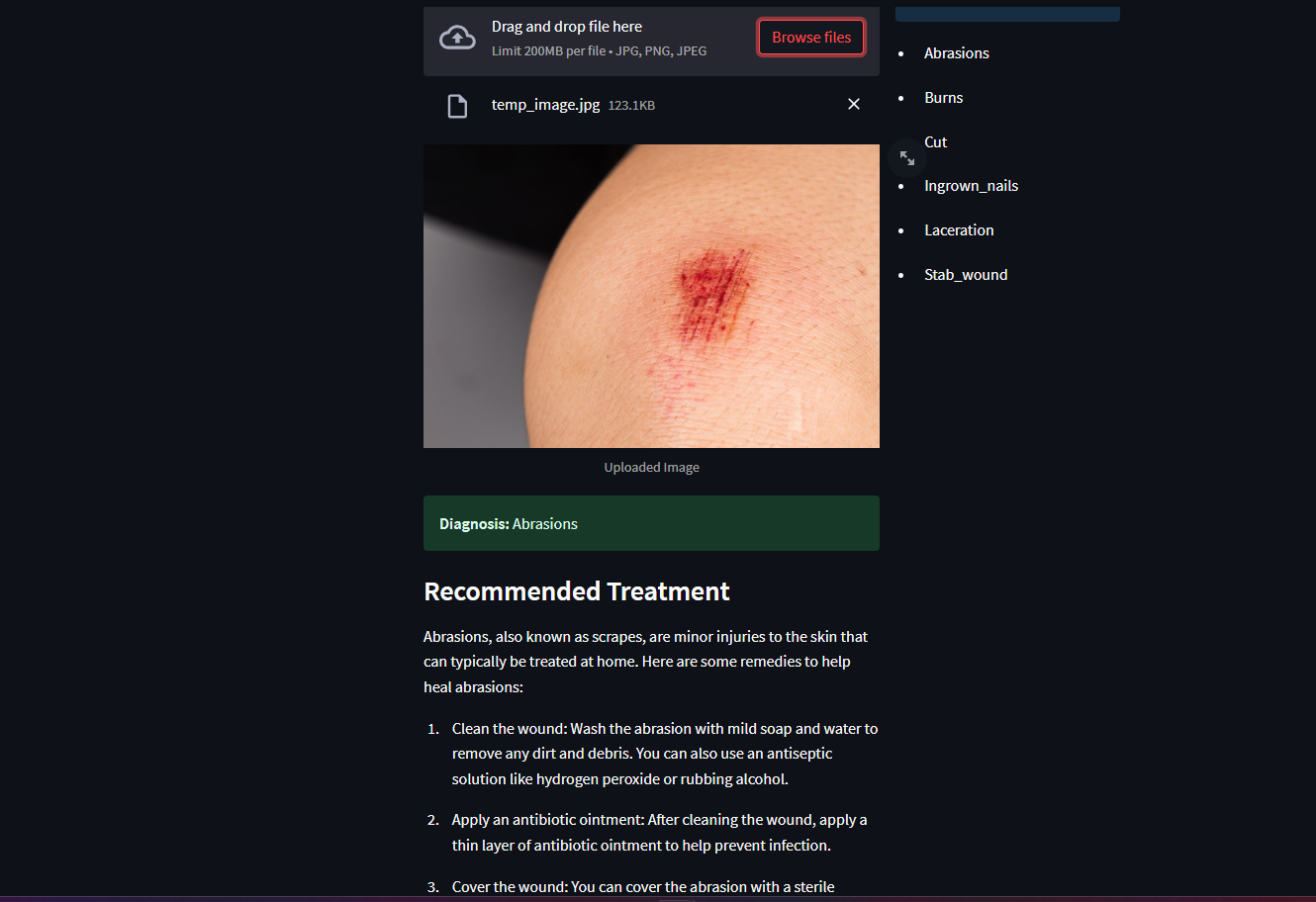
Wound diagnosis is an AI web application built using streamlit for identifying the kind of wound and any treatment that is suggested for that wound from an uploaded image. The application integrates an image classification model based on VGG16 with GPT-3.5 for contextual advice based on the label assigned to the wound. It is simple and easy to use by medical professionals and nonmedical people alike with quick credible advice.
How we built it
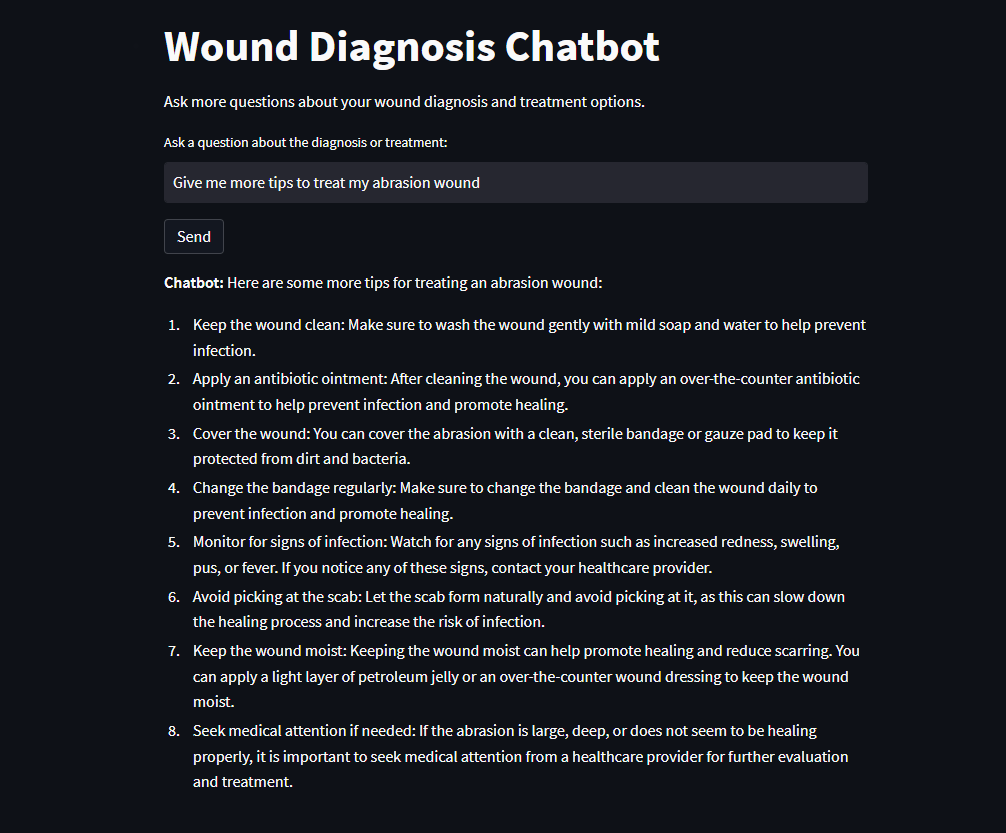
In fine-tuning the VGG16 neural network model with our wound images dataset (which include diabetic ulcers, burns, surgical wounds, etc.), we generated personalized recommendations depending on the form of the wound predicted by the system-integration along with GPT-3.5 API. The entire interface was developed using Streamlit for interaction and modular deployment in real time. App hosting for easy accessibility was done, including pages like 'About' clubbing the chatbot assistant that directs users with links to our research papers.
Challenges we ran into
-It took a great deal of effort to gather a diverse and relatively reliable dataset of wound images. -The early versions of the model had to handle overfitting with data augmentation and dropout. -We spent a good number of iterations to integrate GPT-3.5 while ensuring everything was within the context of medicine. -It had to be painstakingly balanced in terms of UI/UX to make the app as accurate as possible but easy to use.
Accomplishments that we're proud of
-Releasing two research papers on the wound diagnosis model and framework. -Completely designed and developed a fully functioning AI diagnosis-recommendation system for images and text. -Invaluable feedback from mentors from the domain including MIT's Inspirit AI. -Created a beautiful, responsive, and informative application that could serve as a proof of concept for more future health solutions.
What we learned
-The importance of balancing model complexity with interpretability—especially in sensitive fields like healthcare. -Techniques to reduce model overfitting and improve generalization in deep learning. -How to integrate large language models like GPT into a product responsibly. -Streamlit’s full potential for creating and deploying interactive AI tools with minimal friction.
What's next for Wound Diagnosis
-Expand the dataset by collaborating with medical institutions for more varied and accurate training samples. -Improve the interpretability of predictions by integrating Grad-CAM or SHAP visualizations. -Add multilingual support and offline capabilities. -Potentially work with healthcare providers to pilot the app in real-world settings.

Log in or sign up for Devpost to join the conversation.