-
-

LOGO_IMG
-
ICON_IMG
-
DEMO_IMG3
-
DEMO_IMG4
-
DEMO_IMG5
-

DEMO_IMG6
-

DEMO_IMG1
-
DEMO_IMG2



WoSo Brain
A women’s football learning trivia quiz game built with AI, research, and love for the beautiful game.
Inspiration
I still remember the first time I watched a women's football game. And even after so many years, it gives me the chills.
Women's football has a long history, remarkable players, excellent role models, different football cultures, and a rapidly expanding global audience, much to my delight. However, for new fans, the amount of information to digest can be overwhelming. Undeniably, women's football has experienced a significant growth over the years.
Stats that prove WoSo is going strong :D
FIFA reported the number of women and girls playing organised football increased by 24% between 2019 and 2023, reaching 16.6 million worldwide!
The 2023 FIFA Women’s World Cup drew a record 1,978,274 spectators and, according to FIFA, was watched on television by two billion people [1][2]!
European attendance exhibits the same trend. Total attendance at the UEFA Women’s EURO increased from 240,055 in Euro 2017 to 574,875 in Euro 2022 and then to a new record of 657,291 in Euro 2025! That is nearly three times the 2017 total [3]!
The sad side now :\
FIFA’s global survey found that only 34% of top-tier women’s domestic competitions had a dedicated women’s football sponsor.
In addition, women accounted for just 12% of member-association executive committee members and 5% of coaches [1].
The bright side now :]
Woso is here to stay! - Deloitte reported that the 15 highest-revenue women’s clubs in its 2026 analysis generated a record €158 million in 2024/25, up 35% year on year.
In conclusion:
Millions of people want to watch, play, and understand women’s football, but new fans simply don't know where to start from!
Legit example of a friend of mine:
As a new fan, she discovered the game through one player, and immediately want to learn more.
Then, the endless the questions begin flooding my inbox:
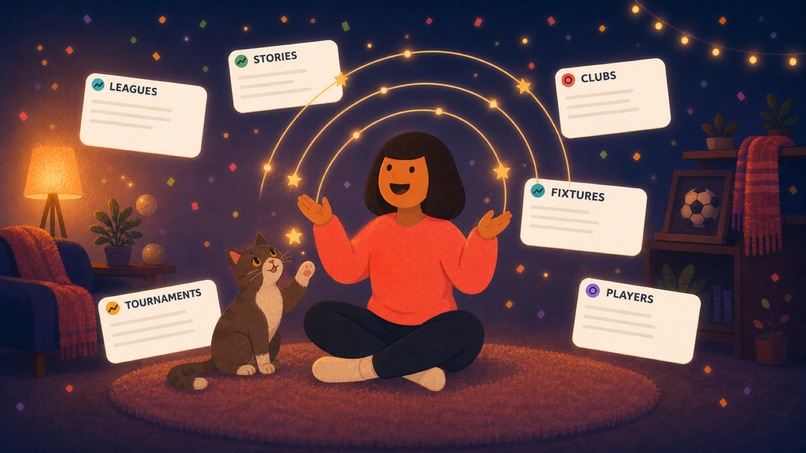
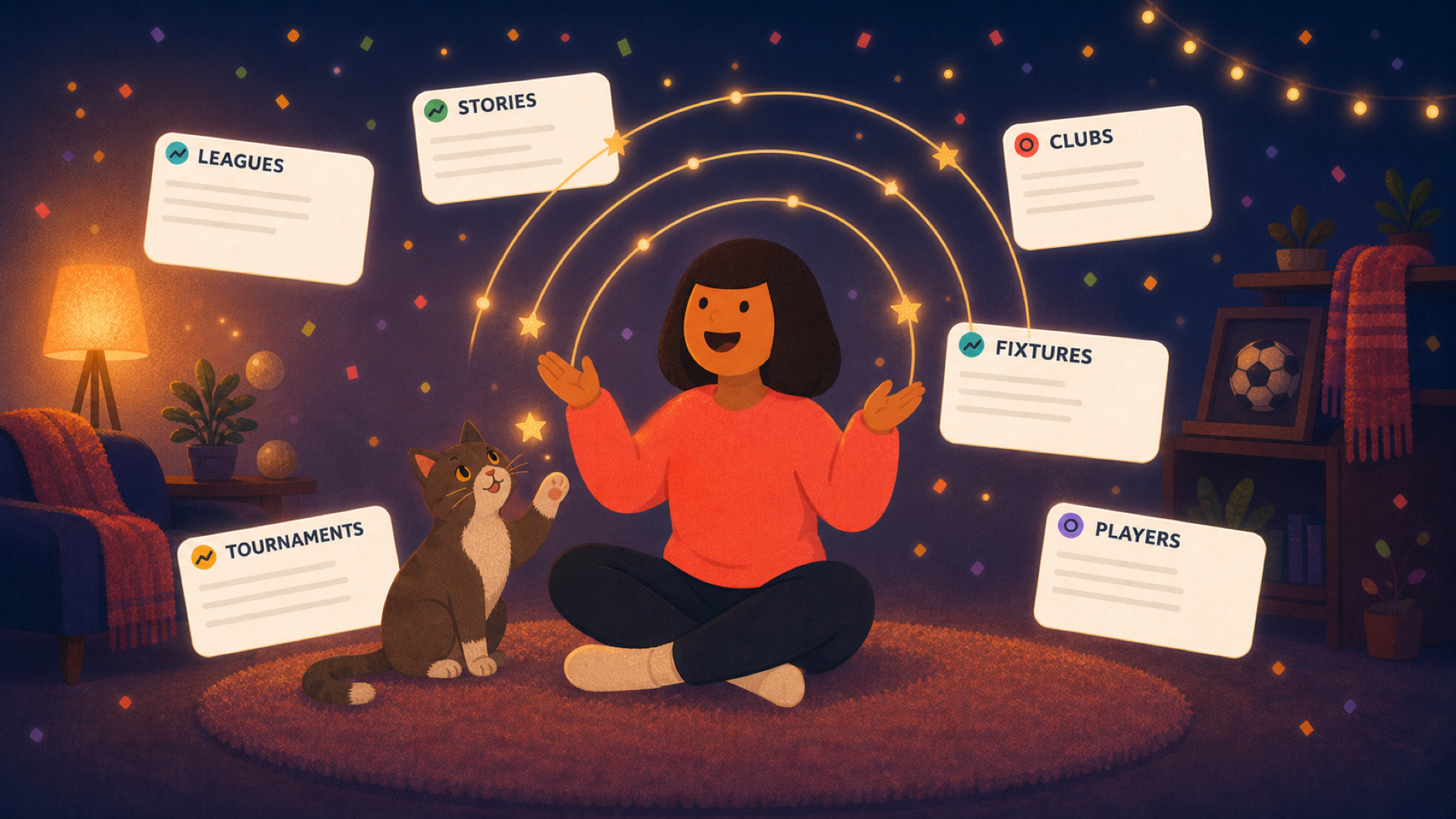
Which leagues should I follow?
Which clubs have been highly influential?
Who were the pioneers before today’s stars?
Where can I find reliable information?
Where can I watch the games?
When are the national tournaments taking place?
The answers are there!
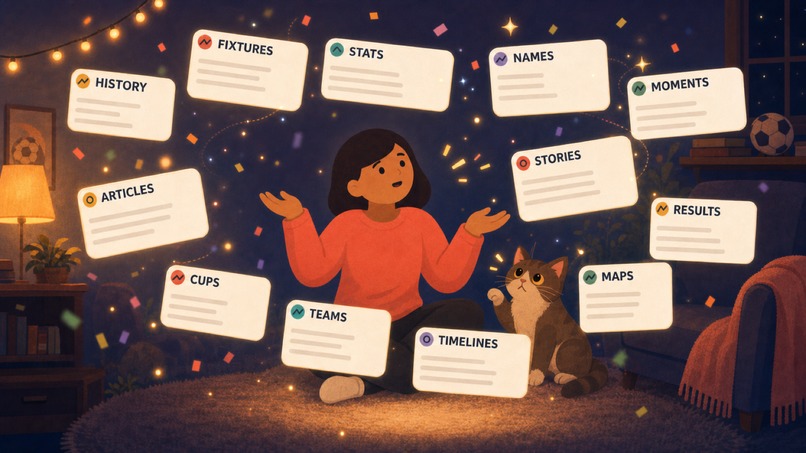
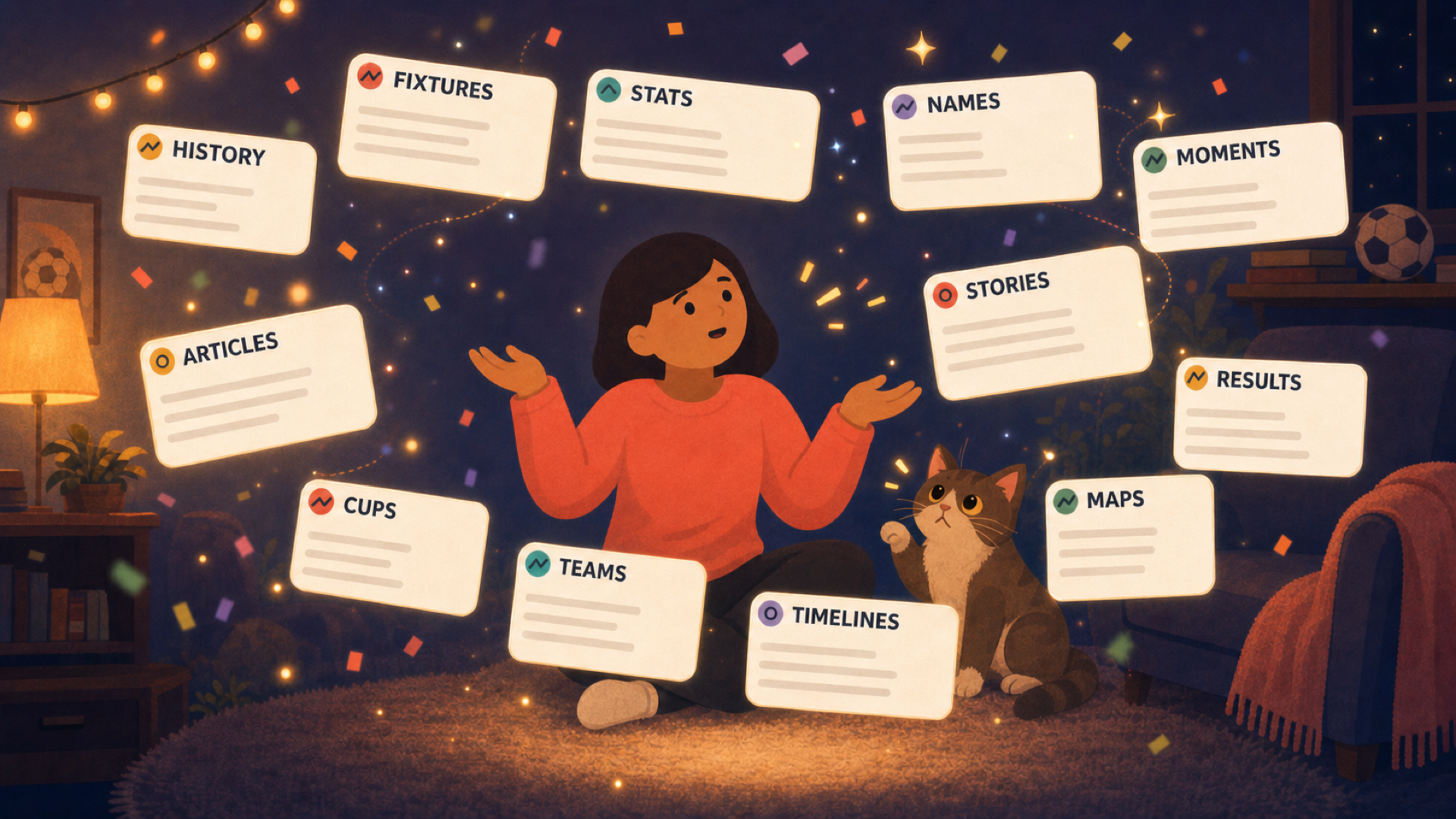
However, they are scattered across league and federation websites, databases, news articles, archives, match reports, and social media.
I created WoSo Brain to make that discovery easier, playful, and welcoming.
I am an academic researcher and computer scientist working across artificial intelligence, data science, and women’s football analytics. For me, this project brings together the parts of my work that matter most: technology, research, education, representation, and the desire to create something genuinely useful for the women’s football community.
What it does
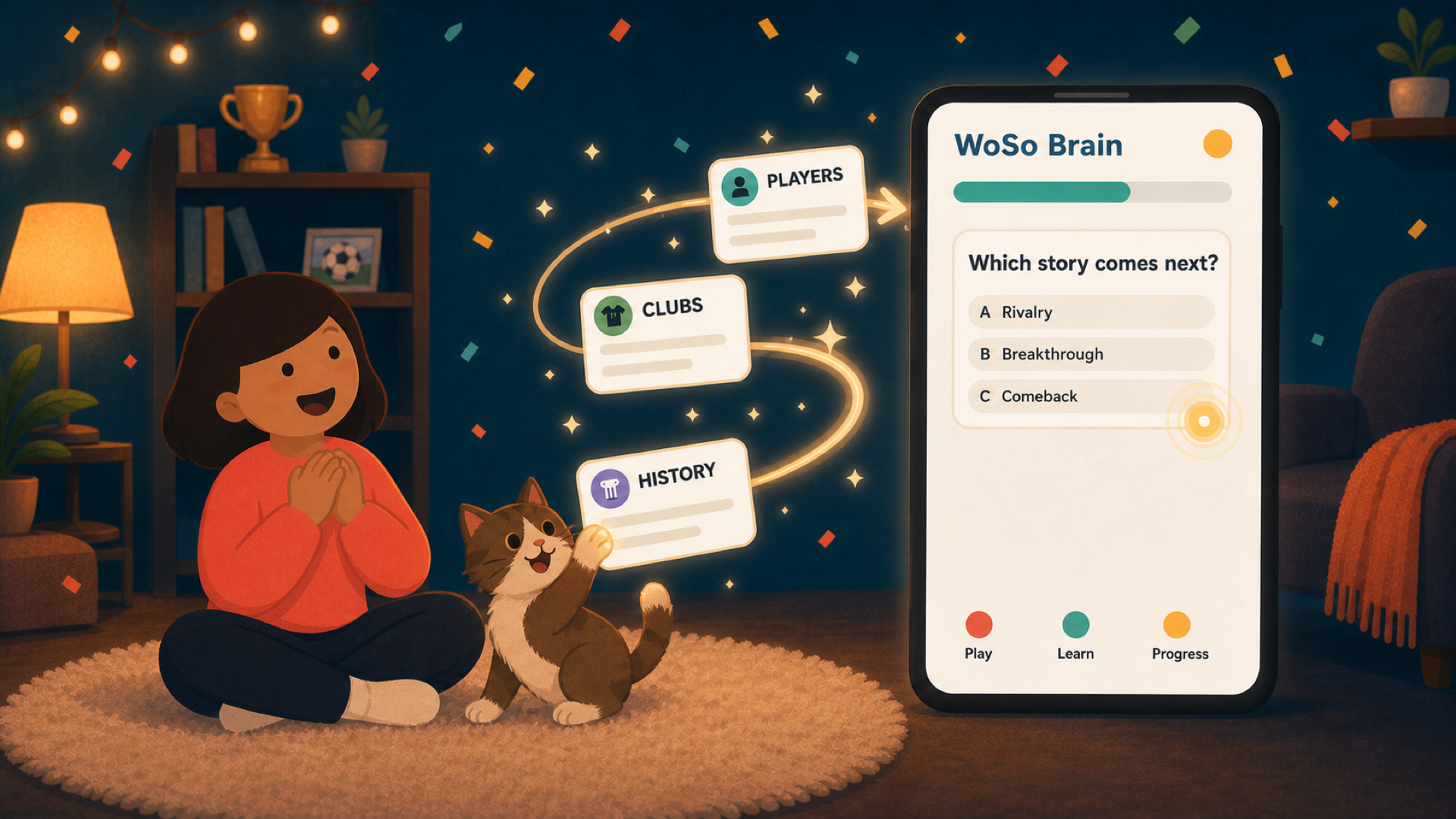
WoSo Brain is a game-based learning platform for the women’s football.
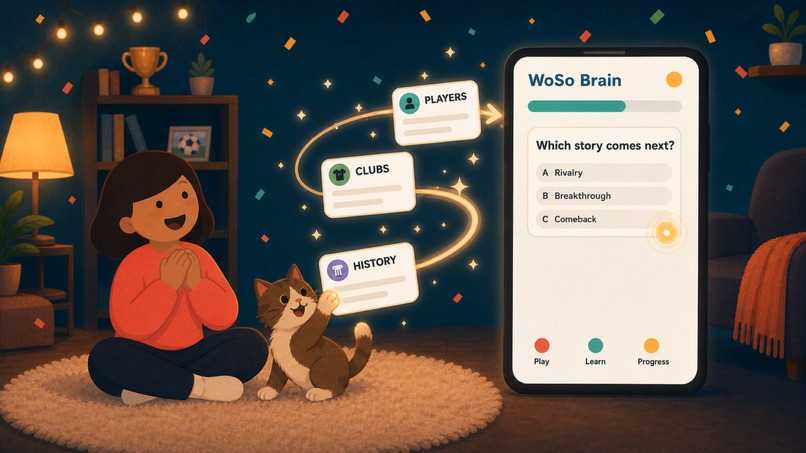
Players can create a profile, choose quiz rounds and challenges, answer source-backed questions, earn points, build streaks, collect trophies, and progress through a career-inspired experience.
The platform is designed to do more than test isolated facts. Explanations and additional info turn each answer into a small but rewarding learning moment, helping players understand the context behind the information rather than simply memorising trivia.
The goal is to help fans build a mental map of women’s football:
• Players, clubs, and coaches • Domestic leagues and cups • National teams and international tournaments • Continental club competitions • Historic achievements and defining moments • Football cultures across countries and regions
I created a rich content library that contains more than 21,000 questions spanning 137 competitions, 44 countries, nine global regions, 55 domestic leagues, 20 national-team learning tracks, and seven continental club tracks.
I also introduced different difficulty levels, daily and mini challenges, scoring, streaks, trophies, and progression moments. I believe this makes the player engaging more and being part of the overall WoSo ecosystem. The new fans no longer feel intimidated and the knowledgeable supporters enough depth to test and expand their knowledge.
How we built it
WoSo Brain is a Python and Streamlit web application supported by a local SQLite question database.
I used Codex, GPT-5.5 and 5.6, and ChatGPT for the following tasks:
• Application architecture and database design • Quiz mechanics and progression logic • Question-generation, review, and validation tooling • Interface refinement and visual consistency • Debugging, testing, and quality assurance • Demo planning and submission preparation
Together we decided on the the educational philosophy, global scope, competition taxonomy, content priorities, and research standards behind the platform. We also worked together on the algorithmic part, functionality part and overall user experience.
AI can help create at scale, but scale becomes meaningful only when it is guided by purpose, verification, and responsibility.
Challenges
One of the greatest challenges I was about to face was making the Woso Brain app feeling generally fun, engaging, and joyful for the players, while the content was treated responsibly, safely, and ethically. Women's football information is scattered across the internet. Some competitions have extensive official records, while others are documented through different archives, federation pages, local reports, or very old and outdated databases.
The quiz, therefore, needed a lot of cleaning, sensible explanations, and multiple reviews. So producing so many questions was not really the hardest part.
The real challenge was to actually cross-check and cross-validate all the information that was found, and provide an accurate, meaningful, varied, and presentable series of questions in the correct context.
Another challenge was to design the different levels of knowledge and difficulty. So a question that could feel obvious to an old fan may be very unfamiliar to a new fan who's just started. Therefore, the app needed difficulty levels and progression overall experience that could be used by both old and new fans.
Women’s football is global. Its learning tools should be global too.
Accomplishments
I am proud to say that WoSo Brain became my most rewarding summer project so far and perhaps one of the best decisions in my coding career. A player might enter WoSo Brain knowing just one famous footballer and leave curious about her club, her domestic competition, her national team, her country, or the generations who shaped the game before her. Creating those connections is what matters most to me, both as a fan as well as a computer scientist.
The Build Week version includes:
• Source-backed quiz play with explanations and attribution • Multiple difficulty tiers • Daily and mini challenges • Points, streaks, and trophies • Guest access and player profiles • Progression moments and a career-story experience • A large, structured global question database • A distinct visual identity created for women’s football fans
What we learned
WoSo Brain proved that a good educational game needs far more than just a bunch large of questions.
• Trust: so players can rely on what they are learning. • Structure: so a vast football landscape becomes manageable. • Progression: so learning feels rewarding rather than overwhelming. • Context: so people understand why an answer matters. • Curiosity: so every answer becomes a doorway rather than an endpoint.
I also learned how powerful AI can be for an individual creator with a large interdisciplinary idea. It allowed me to work across software development, data organisation, user experience, educational design, analytics, and storytelling within a very short amount of time.
However, it was never a case of “AI builds the project.” It was a continuous collaboration in which research knowledge, human intention, and AI-assisted development strengthened one another.
Living proof that when humans and AI are harmonically combined, evolution emerges!
Why it matters
Visibility in women’s football is not only about broadcasting more matches, selling more tickets, or attracting larger crowds.
It is also about whether people can learn the names, understand the competitions, follow the pathways, remember the pioneers, discover less-covered leagues, and connect today’s achievements to the history behind them so the game can be genuinely supported and grow.
WoSo Brain aims to help close the gap through play. It can become a starting point for new fans, a challenge for old fans, an educational resource for younger audiences, and an interactive way for clubs, leagues, and national teams to share their own stories.
People should not need to be perceived as experts before they are allowed to belong.
They should be able to arrive curious - and begin there.
What’s next
The next stages of WoSo Brain include:
• Hosted persistence and public accounts • Curated club, competition, and national-team learning paths • Adaptive difficulty based on player performance • Stronger question-review and validation tools • Expanded explanation and source cards • Improved accessibility testing • Multilingual questions and interfaces • Community and multiplayer challenges • Deeper historical and regional collections • Partnerships with clubs, leagues, educators, and researchers
The long-term vision is for WoSo Brain to become more than a quiz. I want it to grow into an interactive learning map of women’s football - a place where someone can discover a player, explore her club, understand her league, follow her national team, and learn about the generations who came before her.
It represents the work I want to continue throughout my career: bringing together artificial intelligence, academic research, education, and women’s football to create something useful, joyful, and lasting.
It is both a love letter to the game and a commitment to help its players, competitions, histories, and communities receive the attention, care, and imagination they deserve.
Start by playing - one quiz at a time. From the fans, to the fans. Get your game on.
References
[1] FIFA (2023). Women’s Football: Member Associations Survey Report 2023 [2] FIFA Annual Report (2023). FIFA Women’s World Cup Australia & New Zealand 2023: Beyond Greatness [3] UEFA (updated 2026). Biggest Women’s EURO crowds and UEFA women’s competition crowds [4] Deloitte (2026). Deloitte Football Money League - Women’s: Innovate to Grow
Source note: Statistics were checked against the linked FIFA, UEFA, and Deloitte sources. Figures describing WoSo Brain’s content and features are based on the project’s current Build Week implementation.

Log in or sign up for Devpost to join the conversation.