-
-
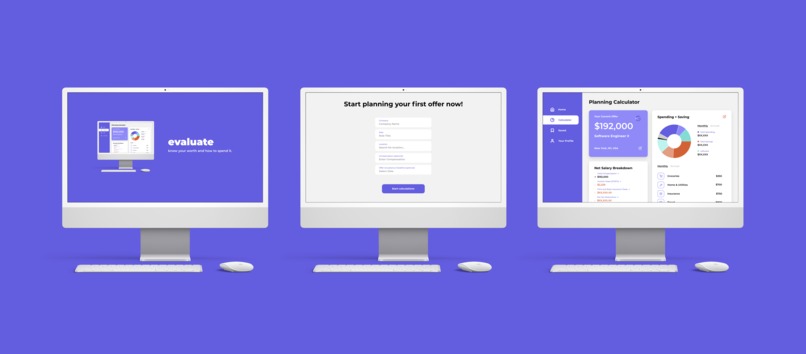
Figma Prototype
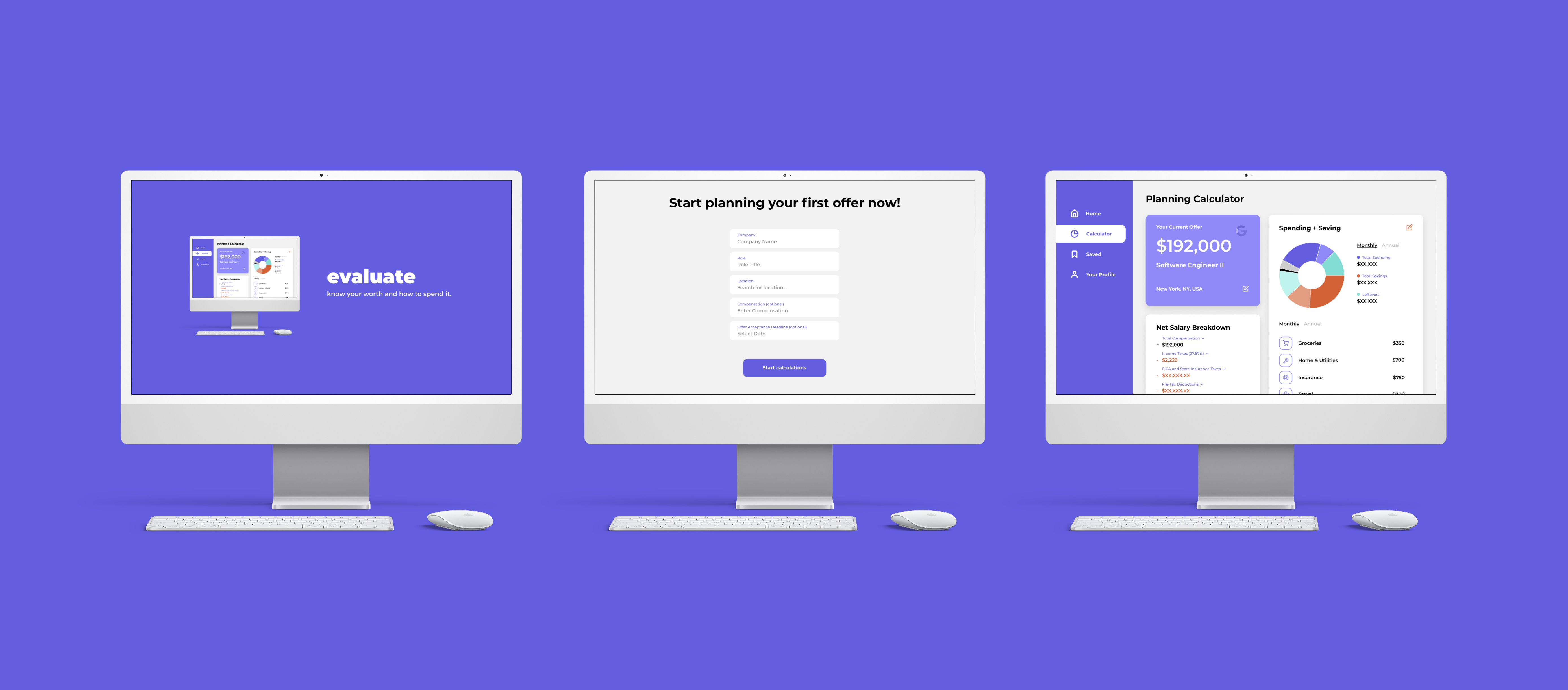
Inspiration
Our project is inspired by the strenuous yet essential process of full-time job hunting and the confusion young grads often experience while trying to compare various job offers across different locations. The kind of question we wanted to address looks like this:
How does a job offer for $80k in a location with a high cost of living (ie. Los Angeles, New York City) compare against a job offer for 70k in a location with a low cost of living?
Not only do living costs vary drastically by location, but different states also vary in tax rates, which impacts what employees actually get to take home at the end of the day. Each individual may also have personal financial circumstances, lifestyles, and goals that current generic budget calculators just cannot account for. We believe that there must be a more organized way that young grads can prepare for entering the workforce and taking control of their financial futures.
As we are all upcoming individuals in the tech industry, this was an area we all noticed a gap in. There wasn't enough transparency about compensation and how it can vary amongst roles, locations, and companies. We were all lacking that knowledge of how much of our salary is OUR money and how much goes to taxes and the government. Generally, we were all seeking more information about financial literacy and resources to learn about our income specifically. As a result, we created Evaluate to solve this problem and fill this gap.
What it does
Evaluate is a financial literacy app that:
- Helps job searchers (especially new grads) compare offers between companies across different locations
- Provides total compensation estimates based on crowdsourced salary data
- Increases pay transparency so job searchers can negotiate offers
- Tracks monthly expenses and compares against how much income or saving you can expect per month
All this information is consolidated into clear, concise, and digestible insights with just a company and a location! Adding an actual compensation offer can also provide users with even more accurate calculations.
How we built it
We built out our backend using Flask and used selenium to web-scrape crowdsourced salary data. We used React for our front-end, which we based on our Figma prototypes. Based on the input state, we also used the Taxee API to compute tax information based on location and their estimated salary. We then distilled this data down into a digestible format where we display how much users make per month post-tax while taking into account cost of living factors (ie. average cost of a bedroom in the given state etc).
Challenges we ran into
This was our first time using React so we had a lot of setup issues. We actually ran out of time and couldn't implement everything we wanted but we were happy with what we were able to get to.
Accomplishments that we're proud of
We're really proud of building a working web app that closely mimics our design in Figma, especially since this was our first time using React.
What we learned
How to build an app from scratch using new technologies.
What's next for Evaluate
- Adding salary support for other job positions (Product Manager, UX Designer, Accounting Associate, etc)
- Factor comparison beyond financials (happiness ratings by city, career growth, job satisfaction)
- Long-term financial planning support (ie. how much does it cost to buy a house with 2 bedrooms in WA state? Can I meet that goal if I invest 10% of my salary at this company over the next 10 years?)
- Customized career resources feed
Built With
- figma
- flask
- javascript
- python
- react
- selenium
- taxee


Log in or sign up for Devpost to join the conversation.