-
-
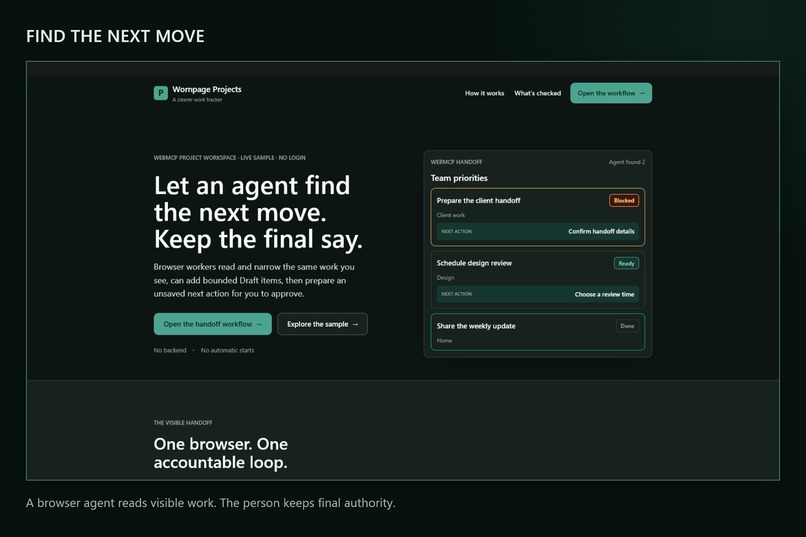
-
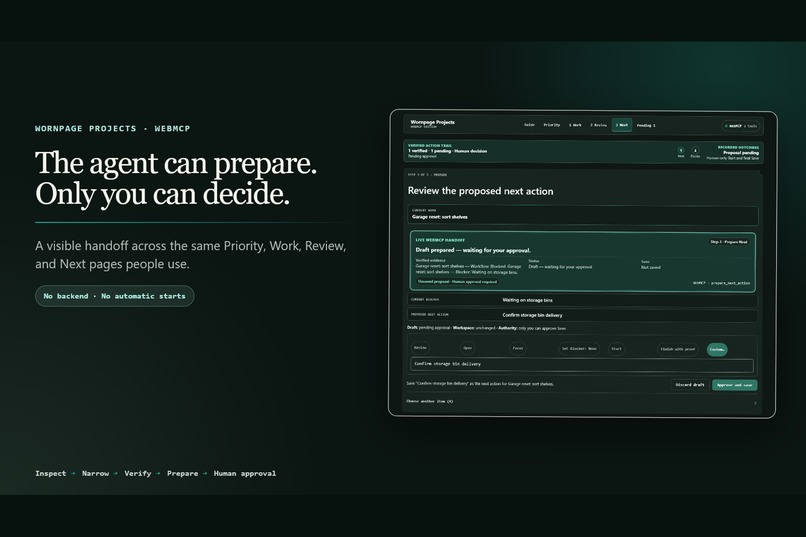
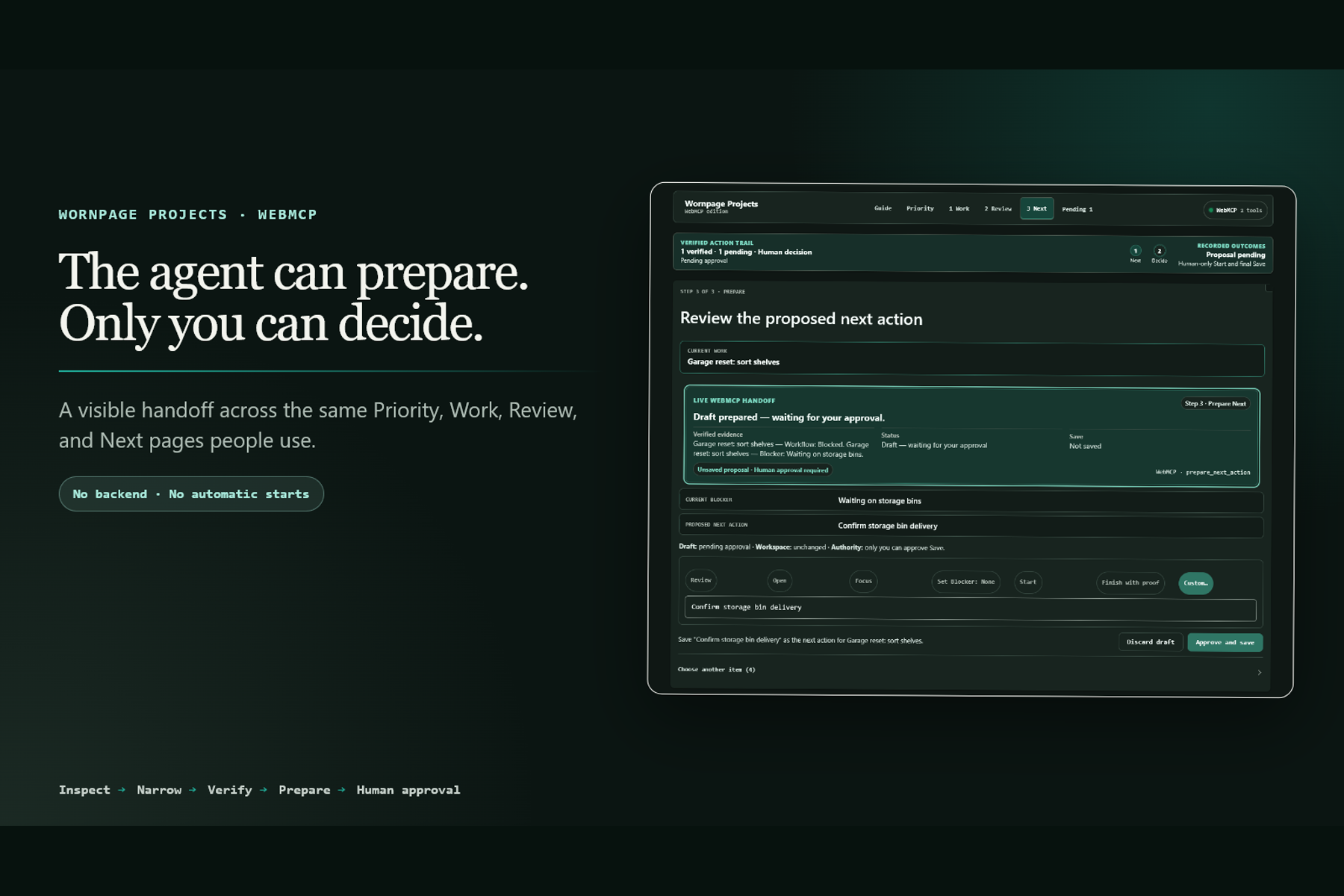
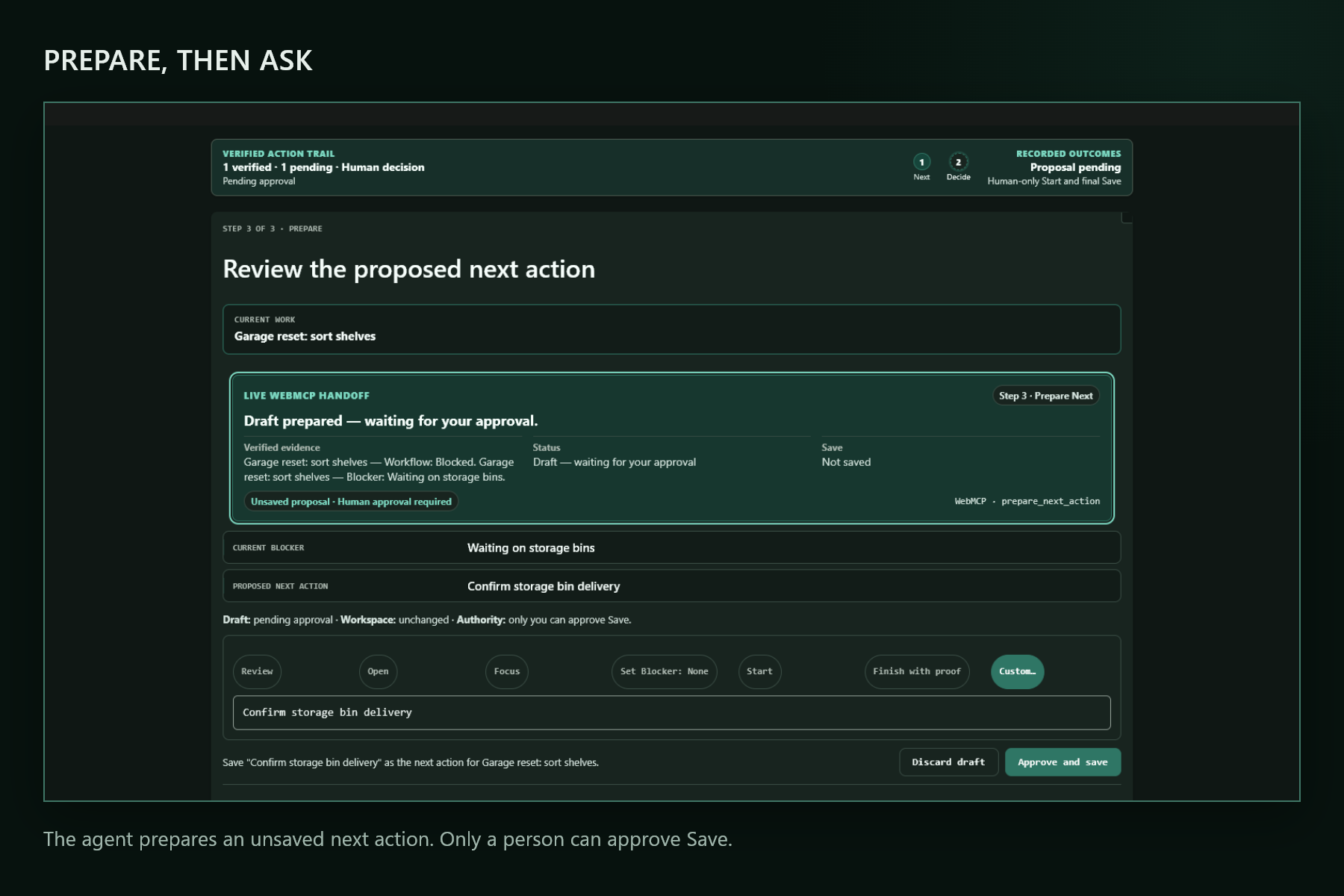
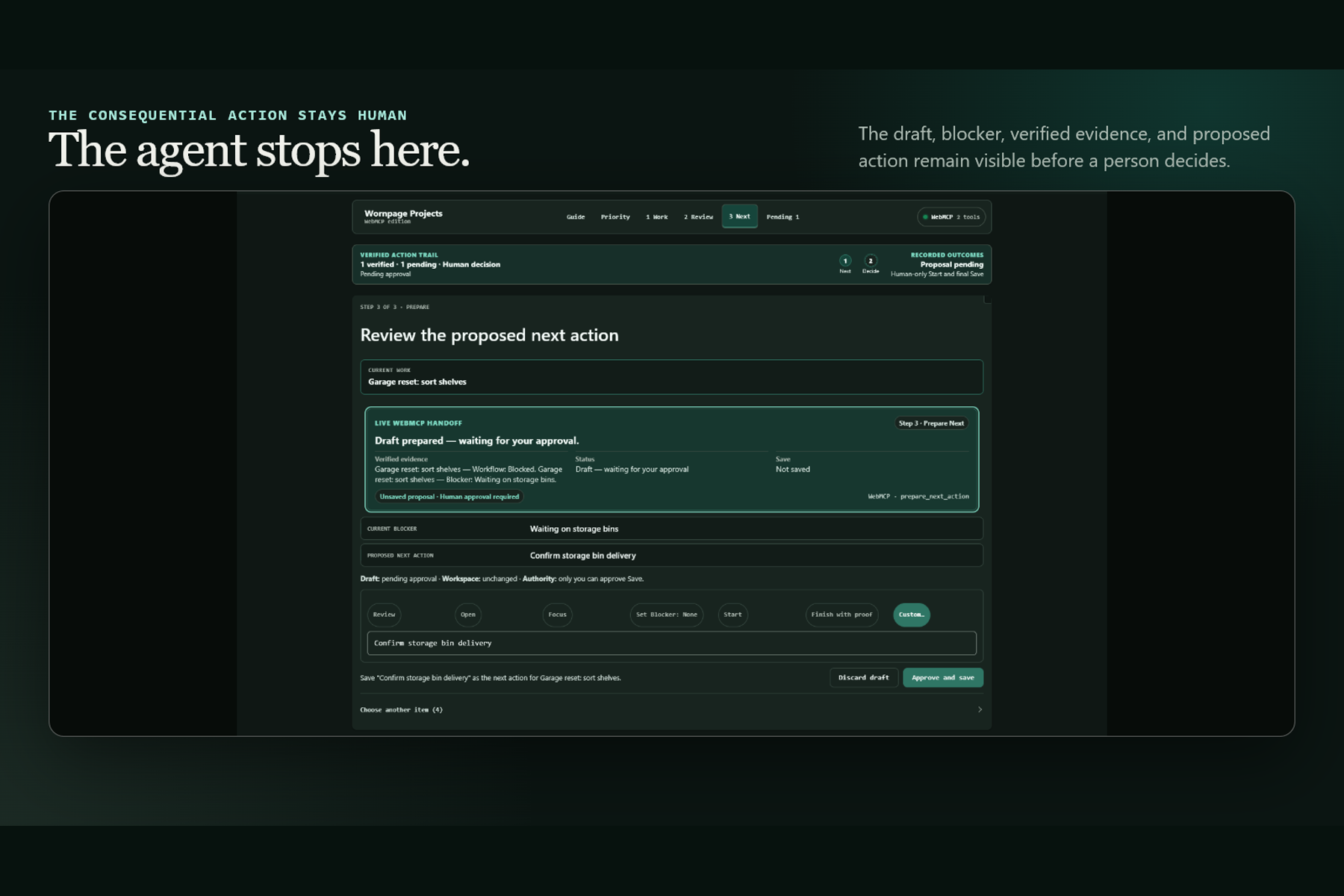
The agent can prepare. Only you can decide.
-
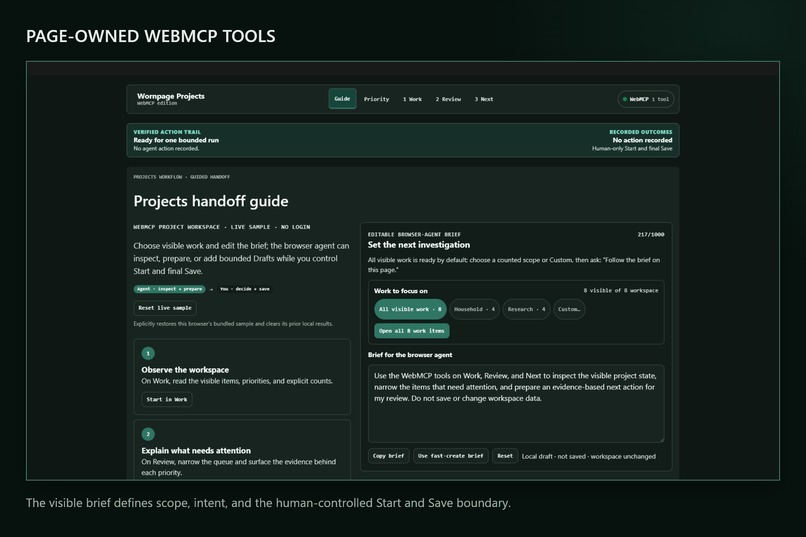
-
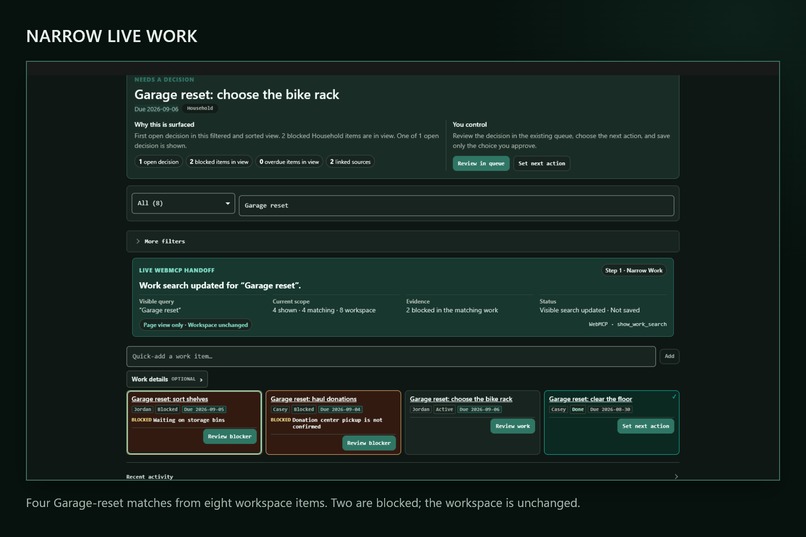
-
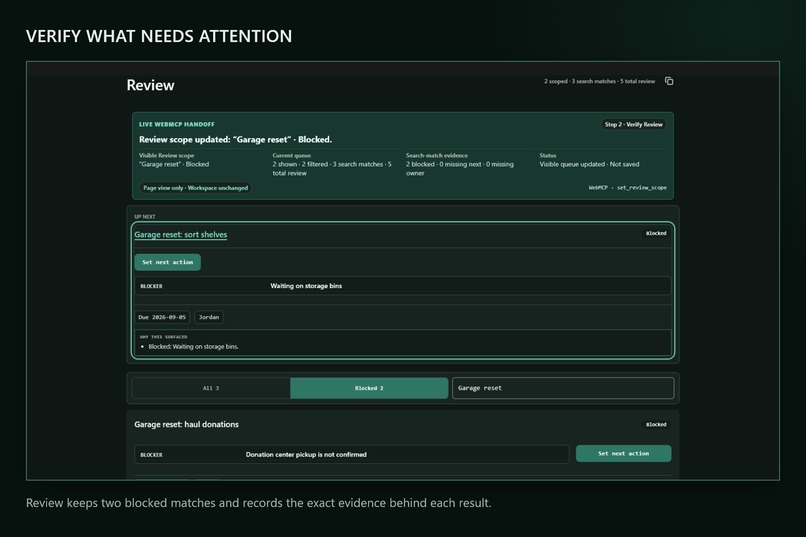
-
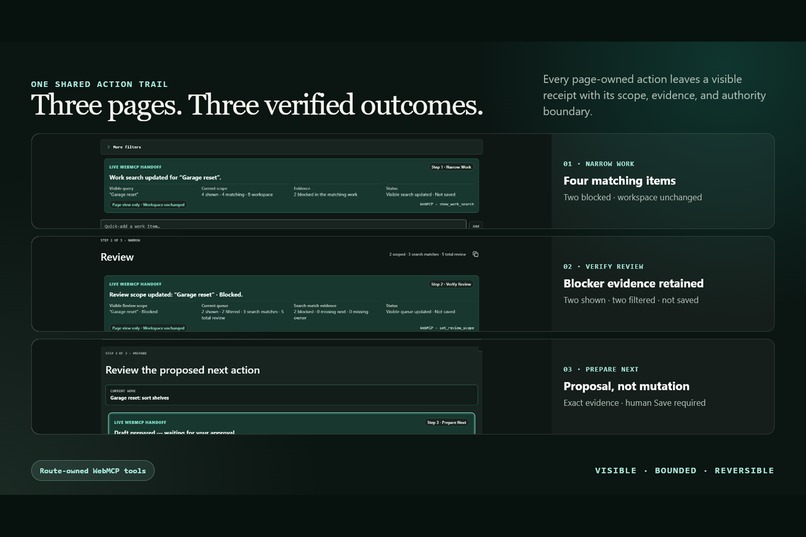
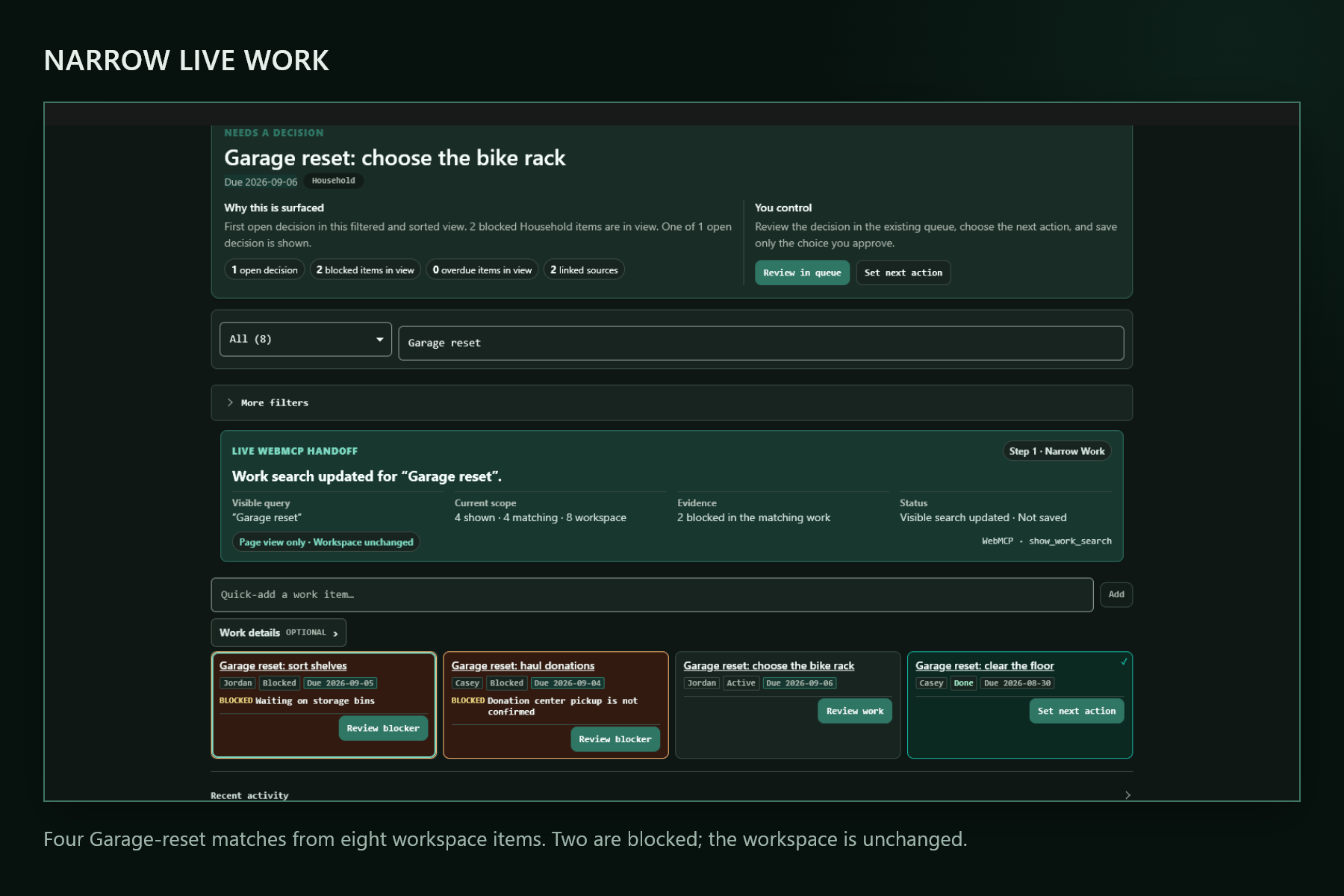
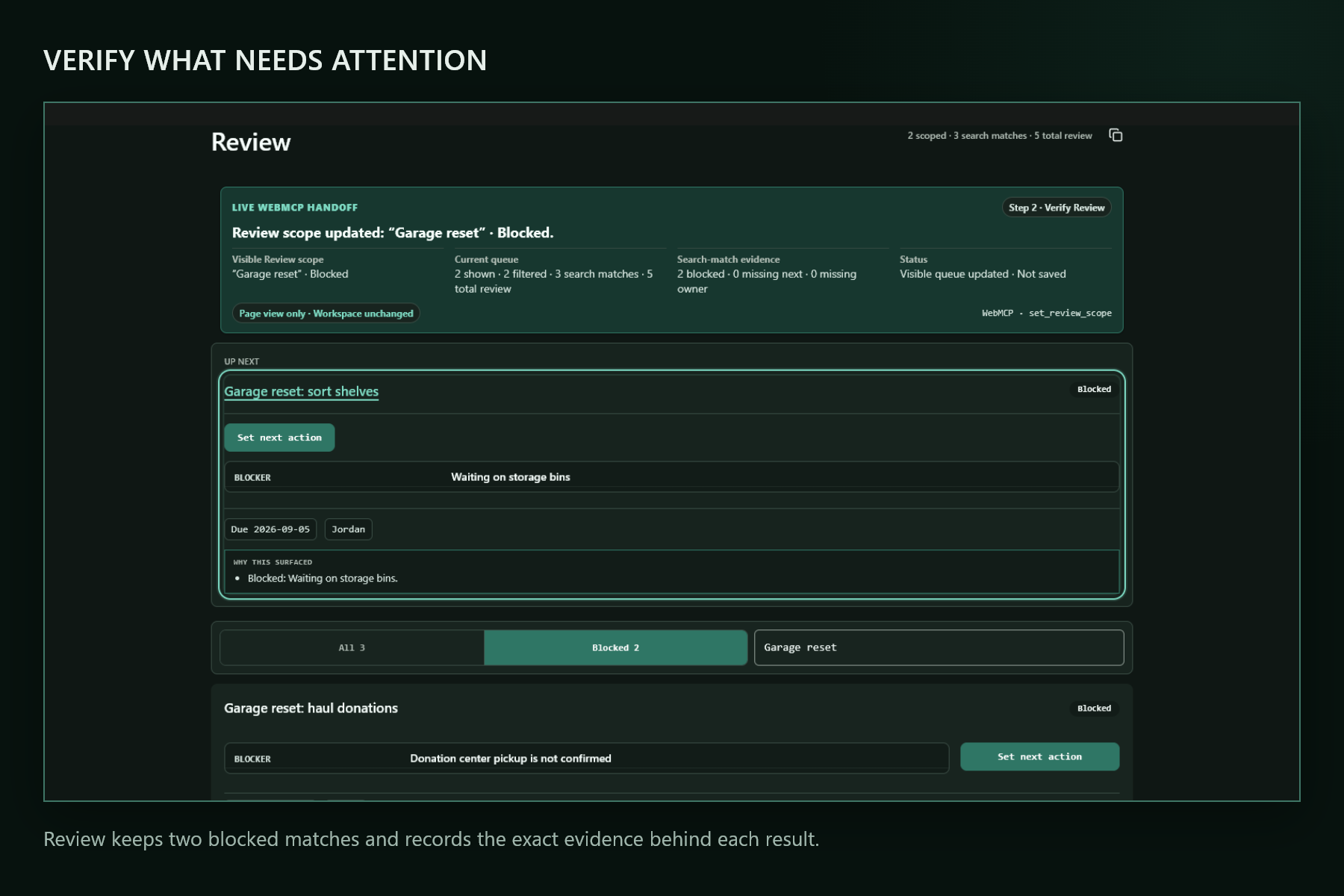
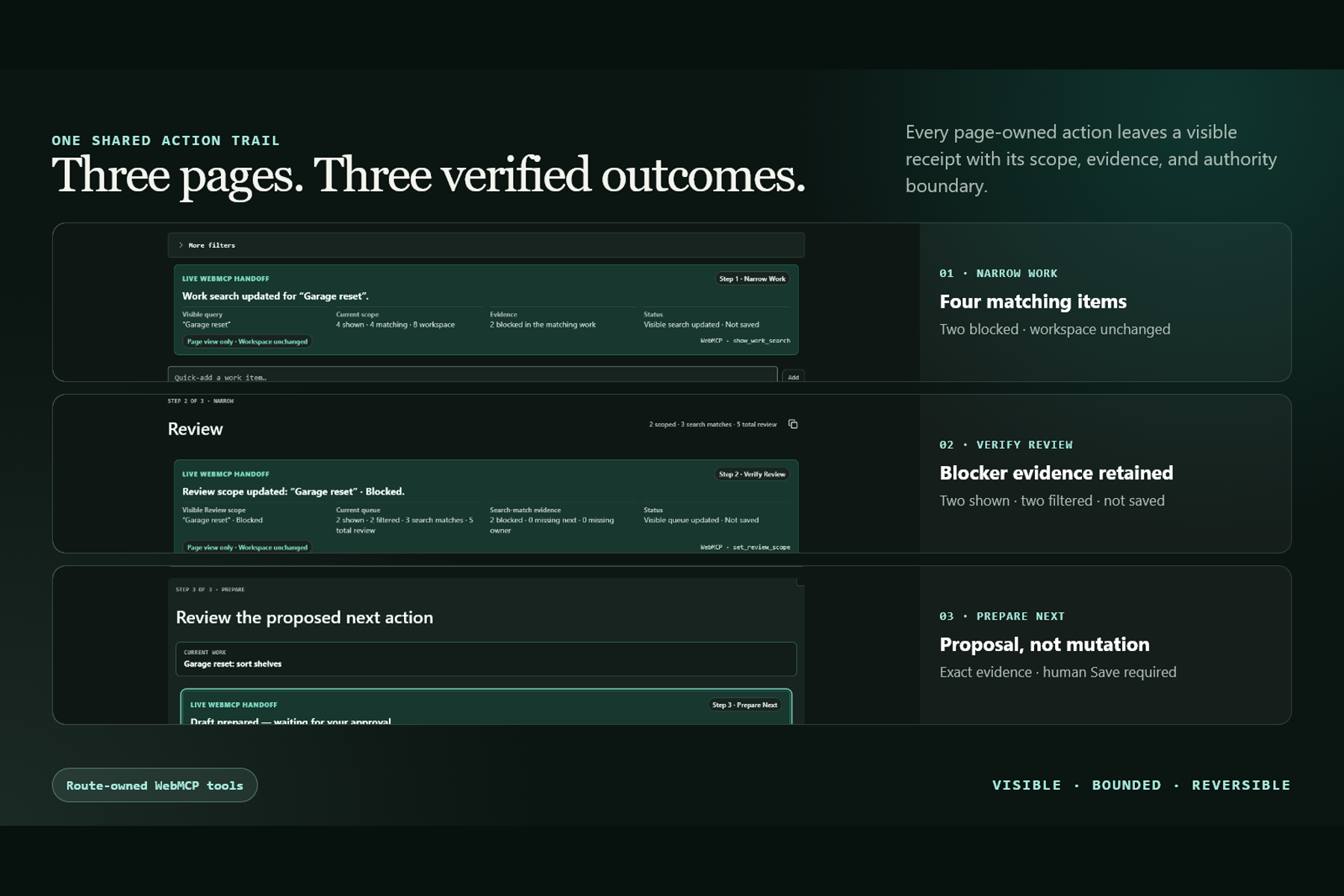
Work narrows, Review verifies, and Next prepares without hiding the evidence.
-
-
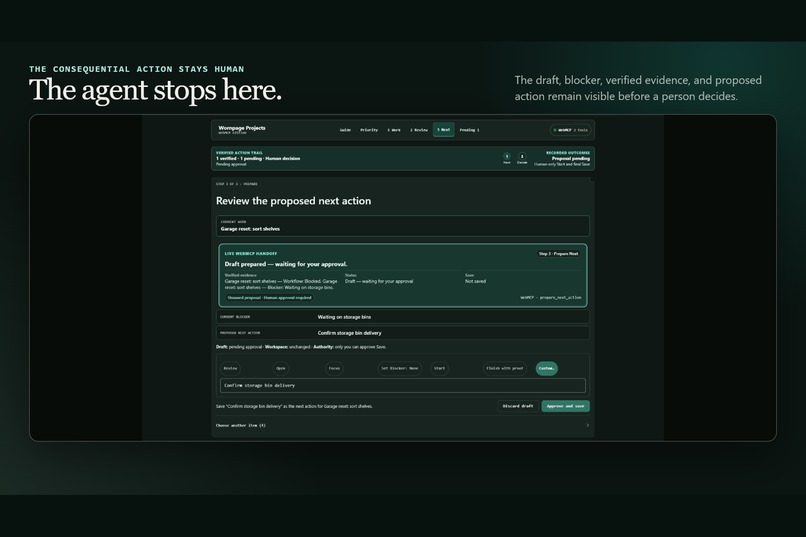
Consequential work ends at a visible human decision.
-
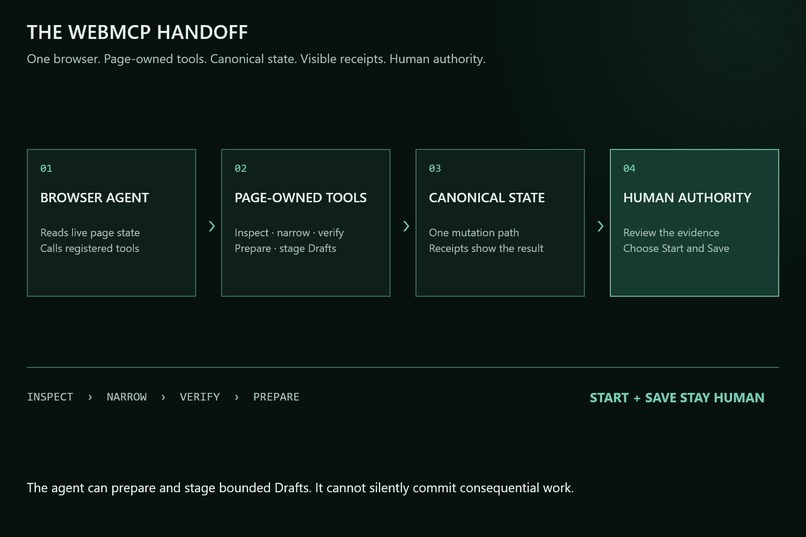
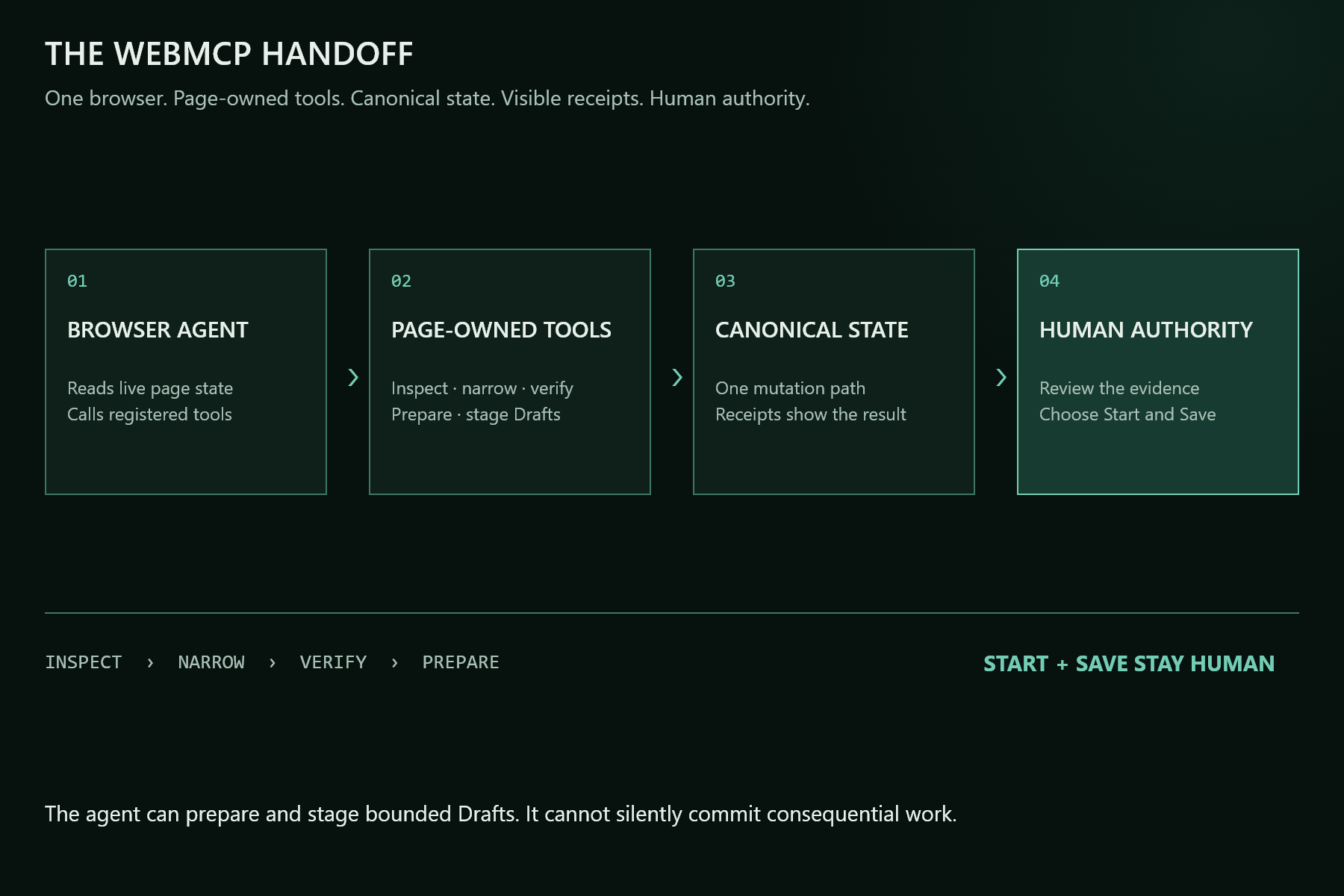
Page-owned tools connect the browser agent to canonical state while Start and Save stay human.
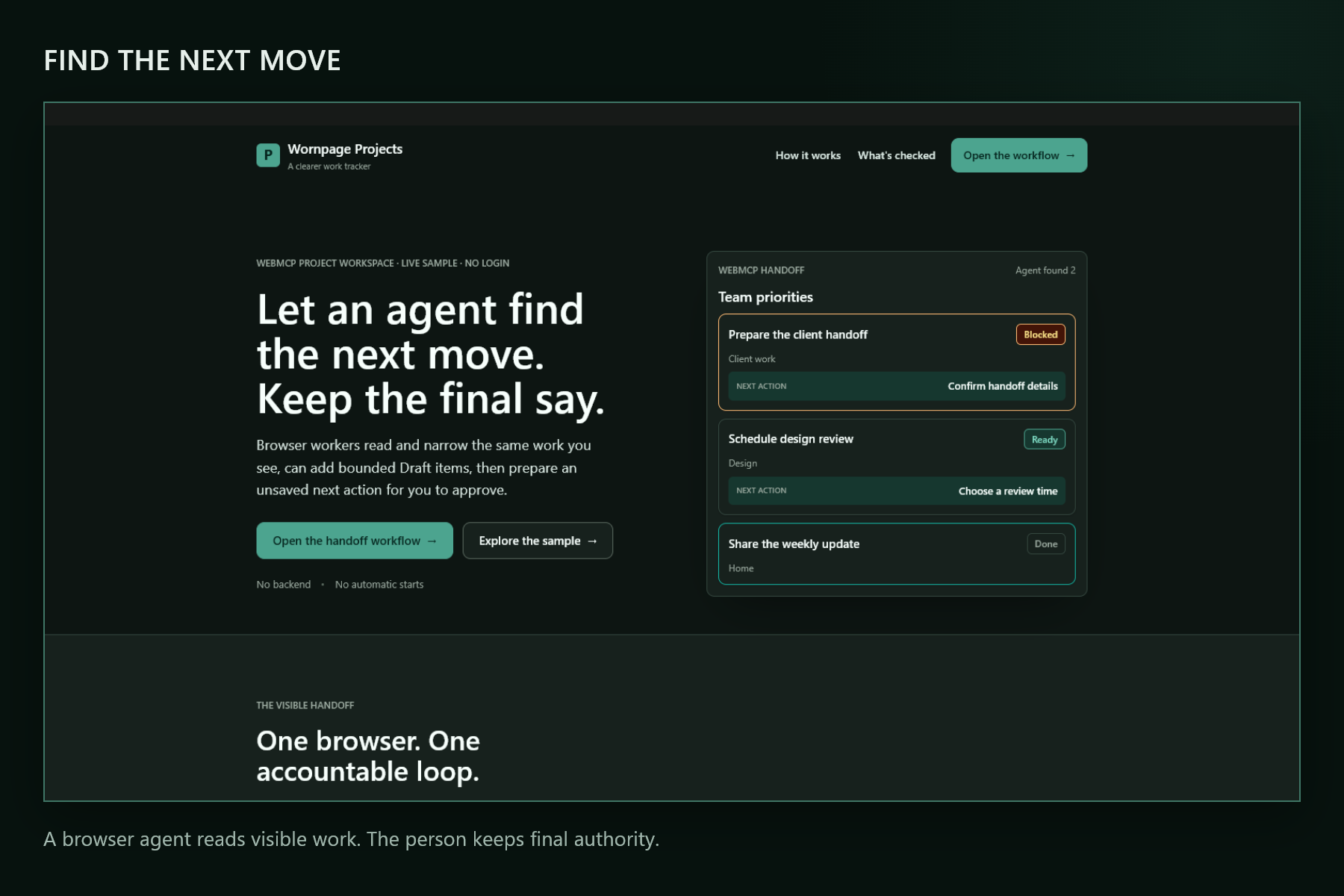
Portfolio description refreshed September 28, 2026, after the WebMCP Challenge. This page describes the public challenge edition.
Inspiration
I built Wornpage Projects around a simple question: when someone opens their workspace, can they see what needs attention and what to do next?
A useful work item needs more than a status. It needs an owner, a clear next action, and enough context to explain what is blocking progress. The name Wornpage reflects the experience I wanted: familiar pages and simple, repeatable steps that become useful through everyday work.
What it does
Wornpage Projects is a browser-based work tracker where people and agents use the same visible workspace. The public demo uses sample data to make the workflow easy to explore:
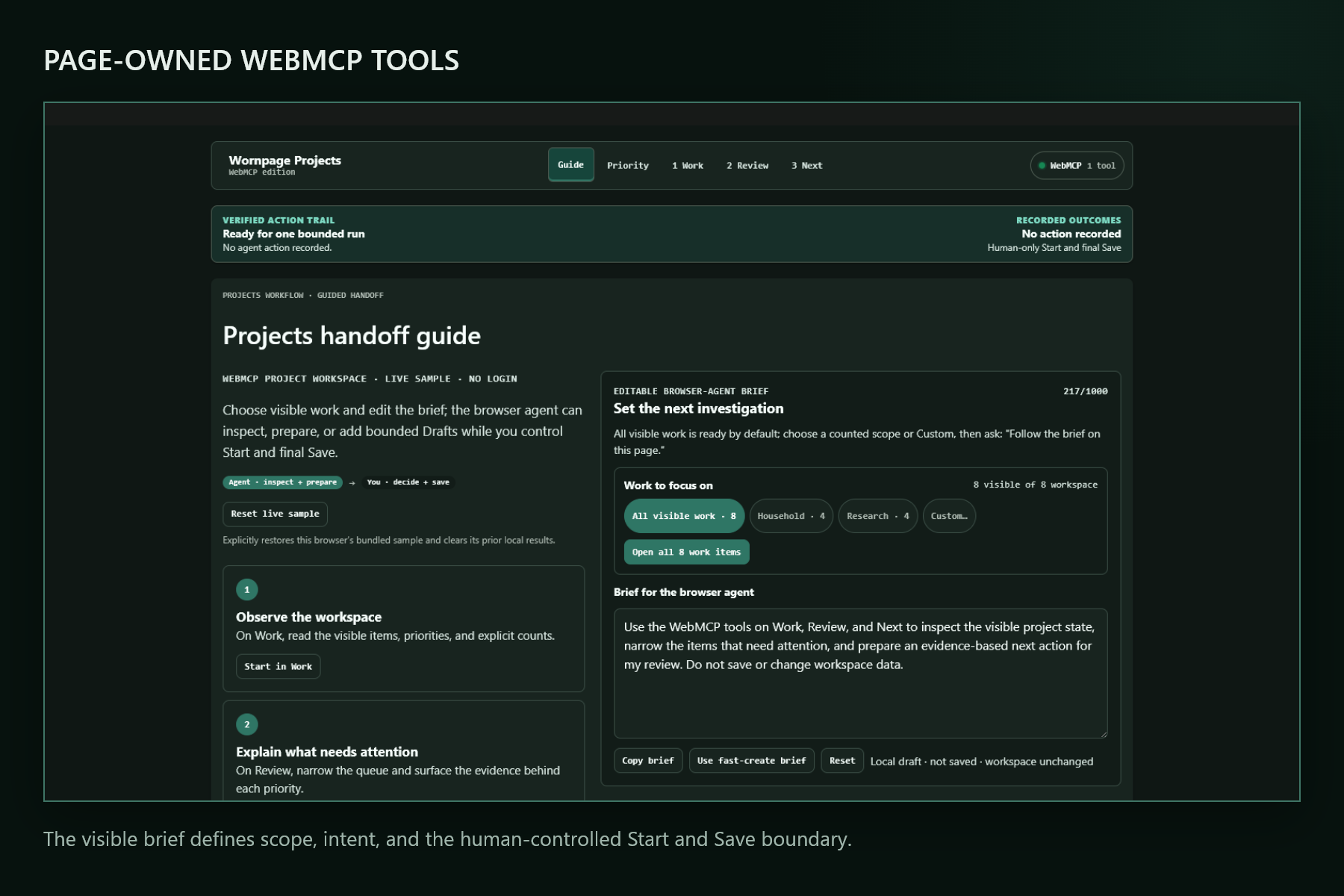
- Guide helps define the workspace scope and an editable brief for the agent.
- Priority surfaces a current recommendation about what needs attention.
- Work shows work items, owners, status, and next actions. An agent can narrow the list or create a small batch of Draft items.
- Review presents queue evidence with clear counts, so filtering does not hide the size of the remaining work.
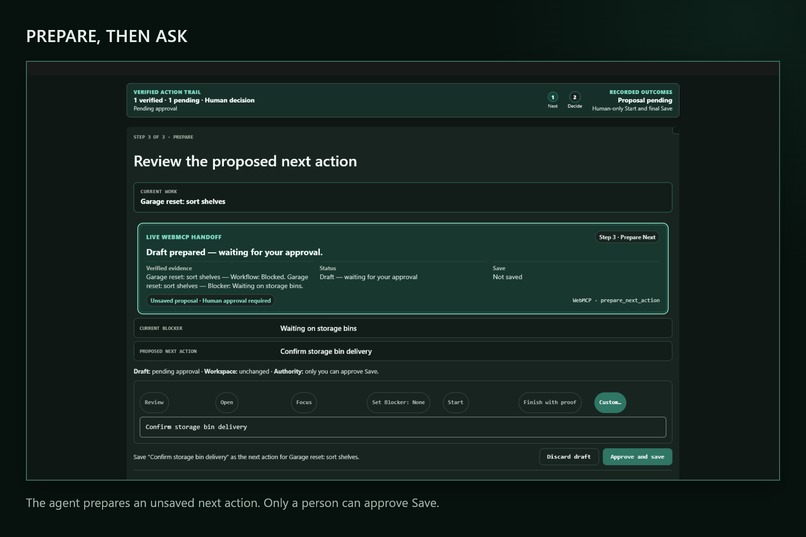
- Next lets an agent prepare a proposal grounded in current workspace facts. The proposal stays unsaved until a person reviews it and chooses Save or Discard.
For example, a blocked client handoff can lead to a proposed next action to confirm the missing details. The person can inspect the evidence, edit the proposal, or discard it before saving.
Why WebMCP fits
The work already lives in the browser. WebMCP gives a browser agent structured tools for the page the person is using, with a defined scope and clear limits on what each action can do.
The agent can help find relevant work, check the current evidence, and prepare a next step. The person can follow that work in the interface and retain control of Start and final Save.
How people and agents work together
A person can give the agent a goal, let it narrow the visible work, and review a prepared next action in the same workspace. Visible action receipts distinguish preparation from a completed human decision.
The interface also shows WebMCP availability and the tools registered on the current page. That makes the agent's available actions easier to understand and inspect.
How it was built
The challenge edition uses SvelteKit, JavaScript, Vite, and Wornpage design-system components, with a static build hosted on Cloudflare Pages. It is a standalone public demo derived from the broader Projects work tracker.
WebMCP tools are registered for individual pages with input validation and bounded access to the same state shown in the interface. Draft creation is limited to small batches, and preparing a next-action proposal does not save it.
I used Codex to help implement and refine the application. The repository includes focused contracts and browser preflight checks for tool registration, workspace counts, keyboard navigation, action receipts, and the boundary around human decisions.
Challenges and lessons
The central design challenge was making each step understandable: what the agent read, what it changed, what remains a draft, and what still needs a person to decide. Explicit counts, current evidence, and visible approval steps became the foundation of the workflow.
The public challenge source is available under the MIT License. The linked demo and repository provide a way to explore that workflow directly.
Built With
- cloudflare-pages
- css
- html
- javascript
- playwright
- svelte
- sveltekit
- vite
- webmcp

Log in or sign up for Devpost to join the conversation.