-
-
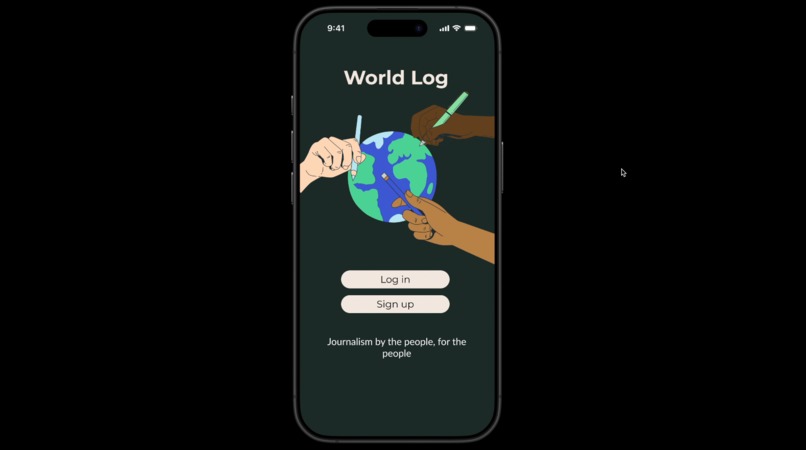
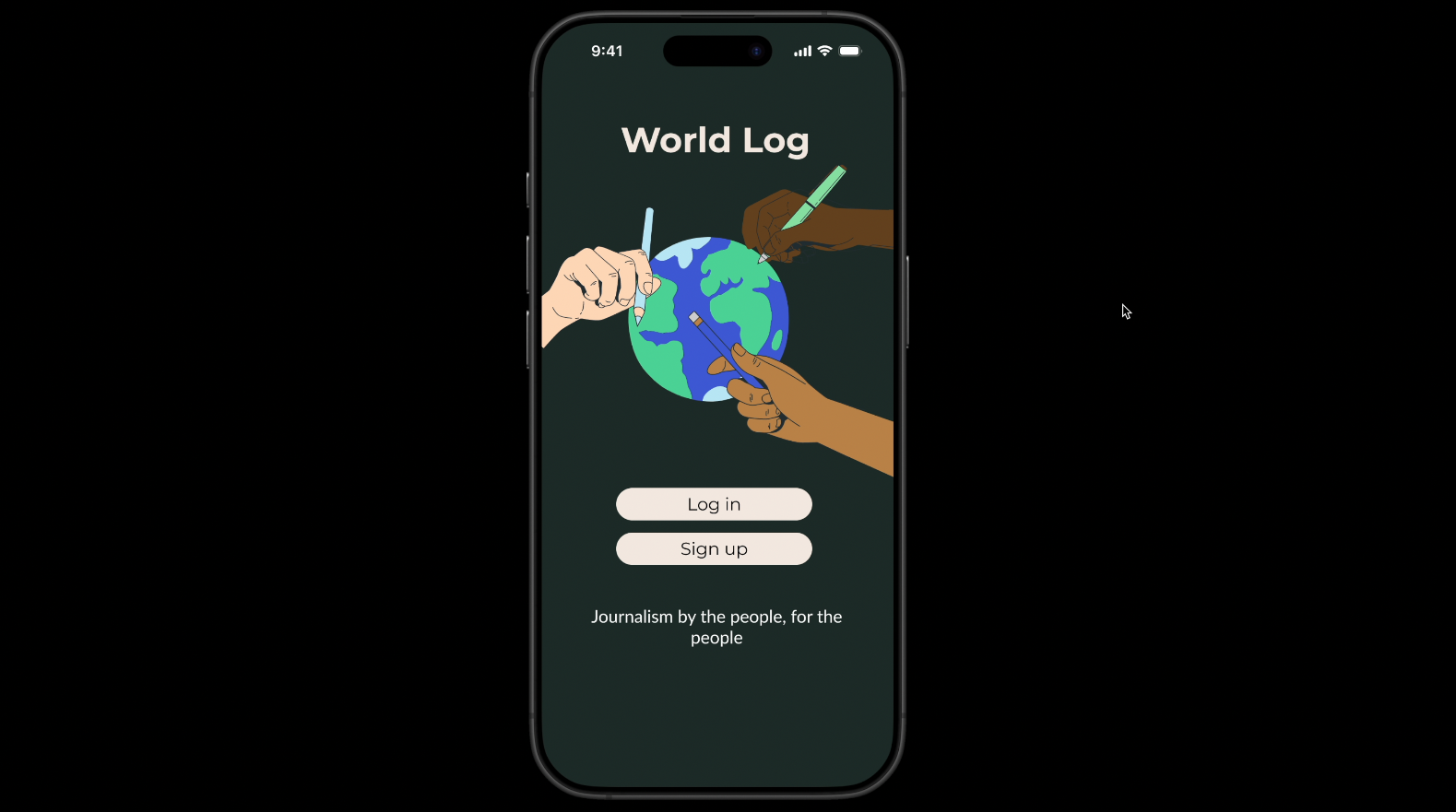
Comic ANS presents WorldLog! An app that allows people experiencing certain world events to provide their perspective without bias.
Prototype link (Please submit a link to a playable prototype, not a link to your design file) prototype link
Describe your project (max 150 words) Write your answer here. World Log is a platform through which users living across the world can take videos of what is happening around them, and post them, and these posts will be filtered and displayed by theme.
In an era where AI is becoming increasingly prevalent, maintaining human connection and empathy is more important than ever. To support this, we created World Log—a digital platform designed to bridge global communities through firsthand video and photo journalism. By sharing perspectives from individuals living near major world events, whether protests, natural disasters, or cultural celebrations, World Log offers an unfiltered, agenda-free view of the world. It’s journalism by the people, for the people, ensuring diverse voices are heard and authentic stories are told.
Through World Log, we hope to increase human connection and empathy for everyone, no matter where one lives.
Describe your research process and findings. If you conducted any surveys or interviews, please include the survey form and/or interview questions here. If you conducted secondary research by pulling from online sources, please include a link to your sources. (Max 500 words) Write your answer here.
When we began brainstorming this product, we started to think about how journalism can aid in human connection. We researched the importance of on-the-ground video journalism, and how it is an element of storytelling that allows the viewer to empathize with those undergoing hardship. Traditional journalism, while informative, leaves room to cultivate empathy. It also often alienates those we see on the news. We wanted to understand methods of journalism that would be better at facilitating human connection.
According to NewAmerica.org, journalist William Walkey emphasizes the value of on-the-ground conflict reporting, stating “when there are no reporters providing emotional context on the ground, the public tends to care less.” We hope to use this element of “on-the-ground reporting”, and give the power of documenting to those that are experiencing major events. Hopefully, this combination will allow users to feel more empathy for others.
Our user testing consisted of eight questions that revolved around hearing input from a range of users (high schoolers and adults) on how our users receive their news and connect with others. We wanted to establish a better understanding of how our technology can influence the spread of information in a positive or adverse way.
About 70% of our research pool recorded that they were highly interested in learning about other parts of the world as well. This measure was recorded by providing our users a numerical scale to rank their interests (1 most uninterested, 10 extremely interested). We then asked where our users receive their world news, and a whopping 86% of our users said social media. The media they often consume it in is videos, photos, and visual inputs (59.1% of our users). A major question of our research was that if our users feel as if their news has any sort of bias, with 81.3% of our research pool claiming yes. We wanted to understand the specific mediums our users leverage when sharing events they have heard about or witnessed, with the majority of our users sharing this information on the apps Instagram, Tiktok and Whatsapp.
Another portion of our research aimed to assess how much our users were informed about international events. We again used a numerical scale (1 not that informed about international events, 10 very informed about international events) to assess this question. Our results varied significantly, with the majority of our participants falling in the middle of the numerical scale (~40%), and 4.5% of our participants feeling fairly confident of staying informed of worldwide events.
Through our research, we gathered a more robust understanding of our participants’ knowledge about world events. We learned that the majority of our users wanted to stay educated on international events and preferred getting their news in a social media type of medium. This insight helped set a path for us to design World Log, where we address our users’ curiosity to learn more and connect with others by incorporating social media features and allowing our users see news in first-person perspective.
Linked here is our survey link that we sent out: google form survey
Describe your most important design decisions. What research findings and/or user testing results led you to make these decisions? (Max 500 words) Write your answer here.
We wanted to make this app as visual as possible, so the majority of our app is based on videos and pictures. Our Discover page is mostly thumbnails of videos that are taken internationally and regionally by witnesses across the world for our users to see a first-person perspective and get almost a live view of what is happening. It was also important for our main focus to be personal pictures/videos from individuals across the world to capture the lives of people living in other countries through their eyes. By physically seeing what is happening to those across the world, users are more likely to feel connected with and empathize with others. This aspect also helps reduce the bias that comes with various news outlets that tend to cater to certain perspectives, blurring out one or multiple sides of an event. Based on our survey, 81.3% of users tend to internalize the fact that lots of media being fed to them are biased in one way or another, so having the people showcase the events from their point of view can mitigate those separated ideologies.
Through our research survey, we found that 86% of our research participants preferred to get their news from social media. This is why we decided to add our trending and discovering pages to put these pieces of journalism together in a way that emulates a social media application. Many of the people we surveyed also stated that they preferred visual media as opposed to written communication or statistic-based communication for their news. This further solidified our emphasis on visual communication.
Around half of our survey respondents indicated that they were interested in learning about what was happening in other parts of the world. This prompted us to add the map aspect, one of our key components of our app. We wanted to emphasize the main purpose of our app, connecting nations and individuals across the world. By adding a scrollable map that indicated high points of activity and had pins where one could click and view what was happening, we were able to achieve this global aspect. In conclusion, we hope that through World Log, people are able to emphasize, connect, learn, and stay informed about events across the world in a time where authentic media outlets are scarce.
Built With
- figma


Log in or sign up for Devpost to join the conversation.