-
-

"Add northern lights." Change any world with a word.
-
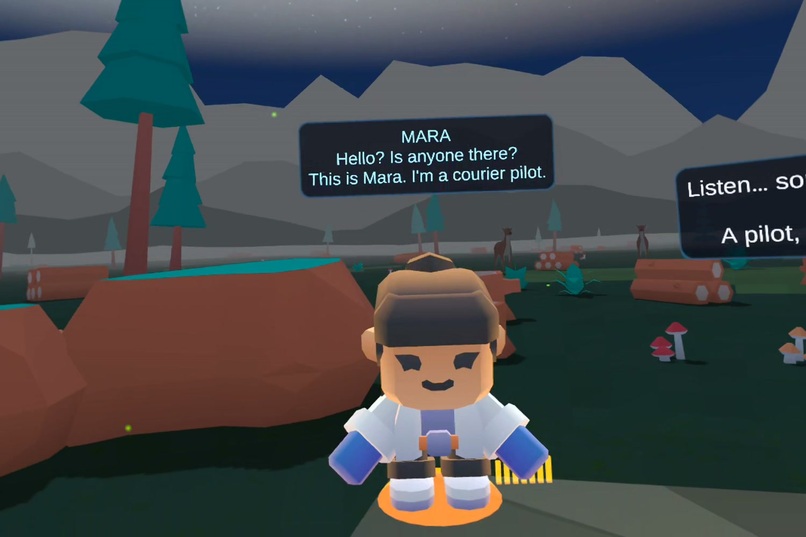
A faint call: Mara, a courier pilot, sees only your room's light.
-
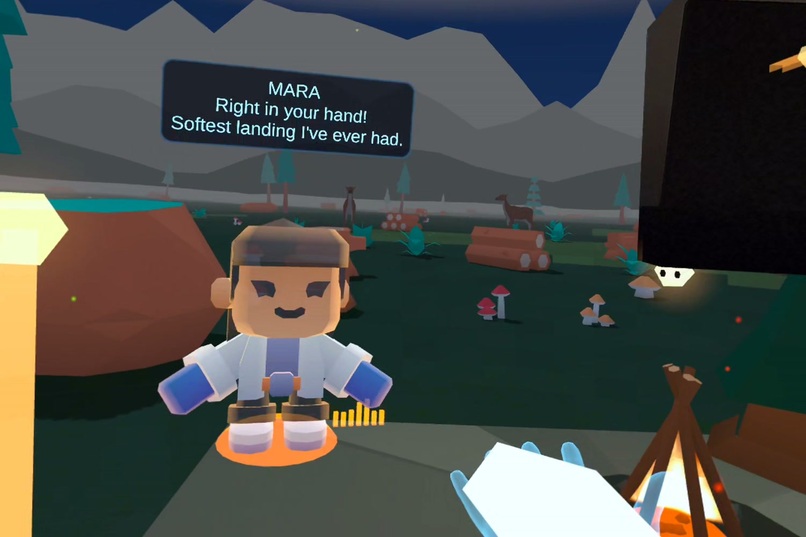
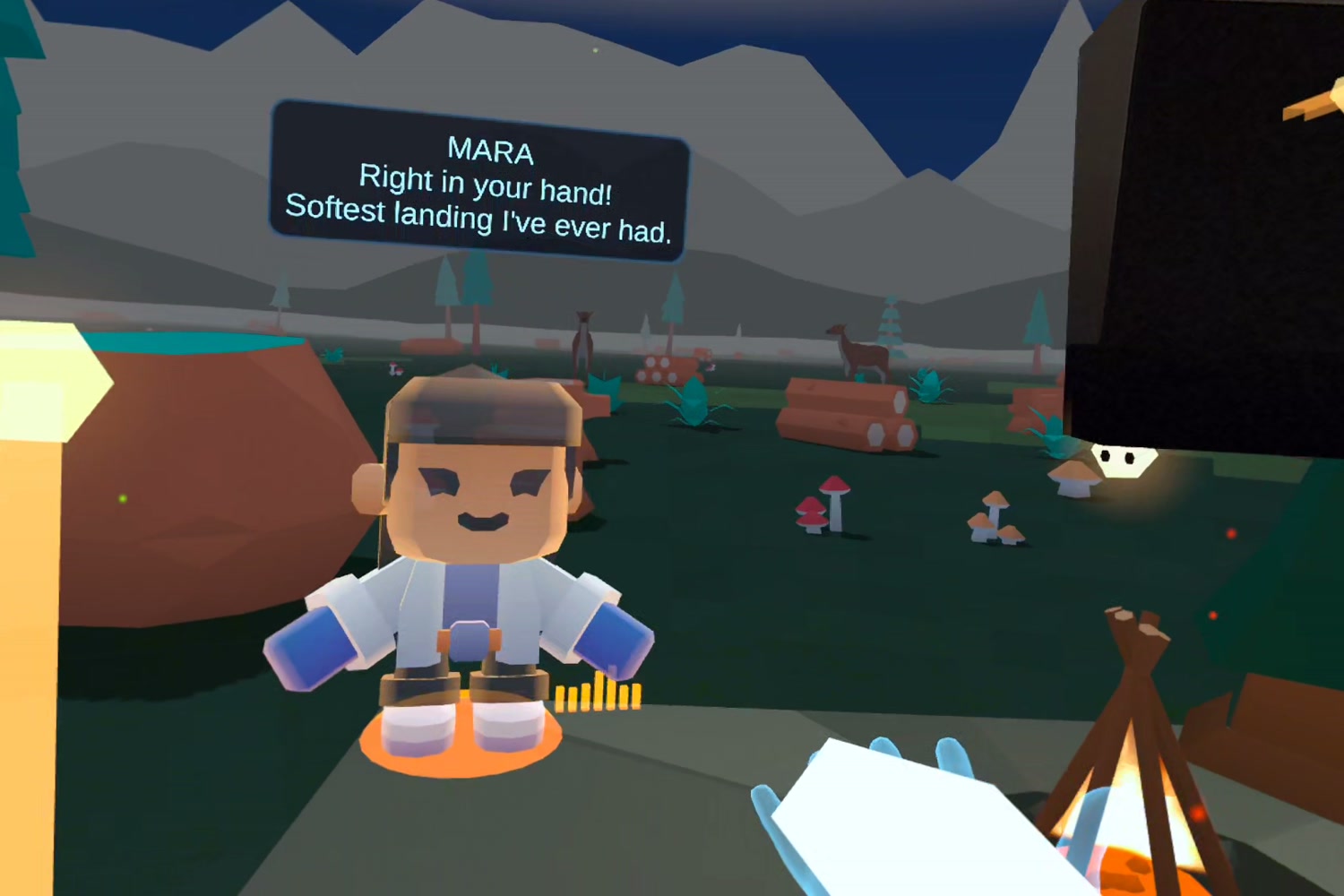
Mara's ship lands on your open palm, in your real hand.
-
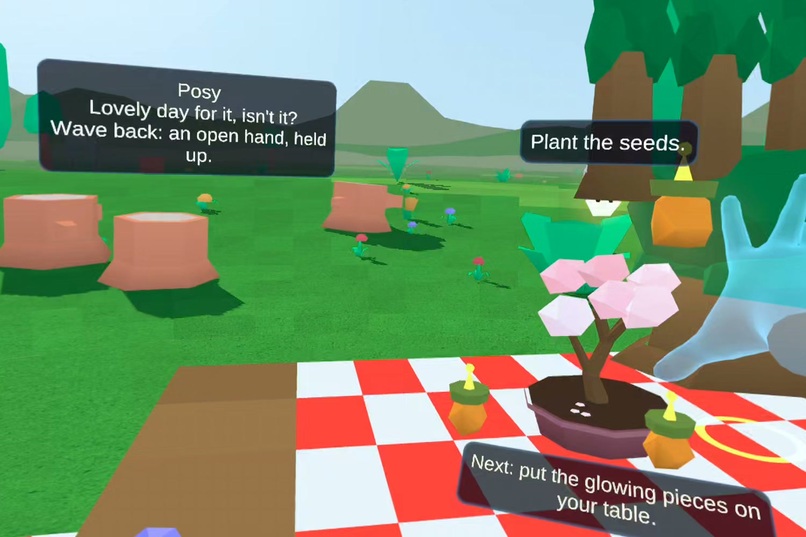
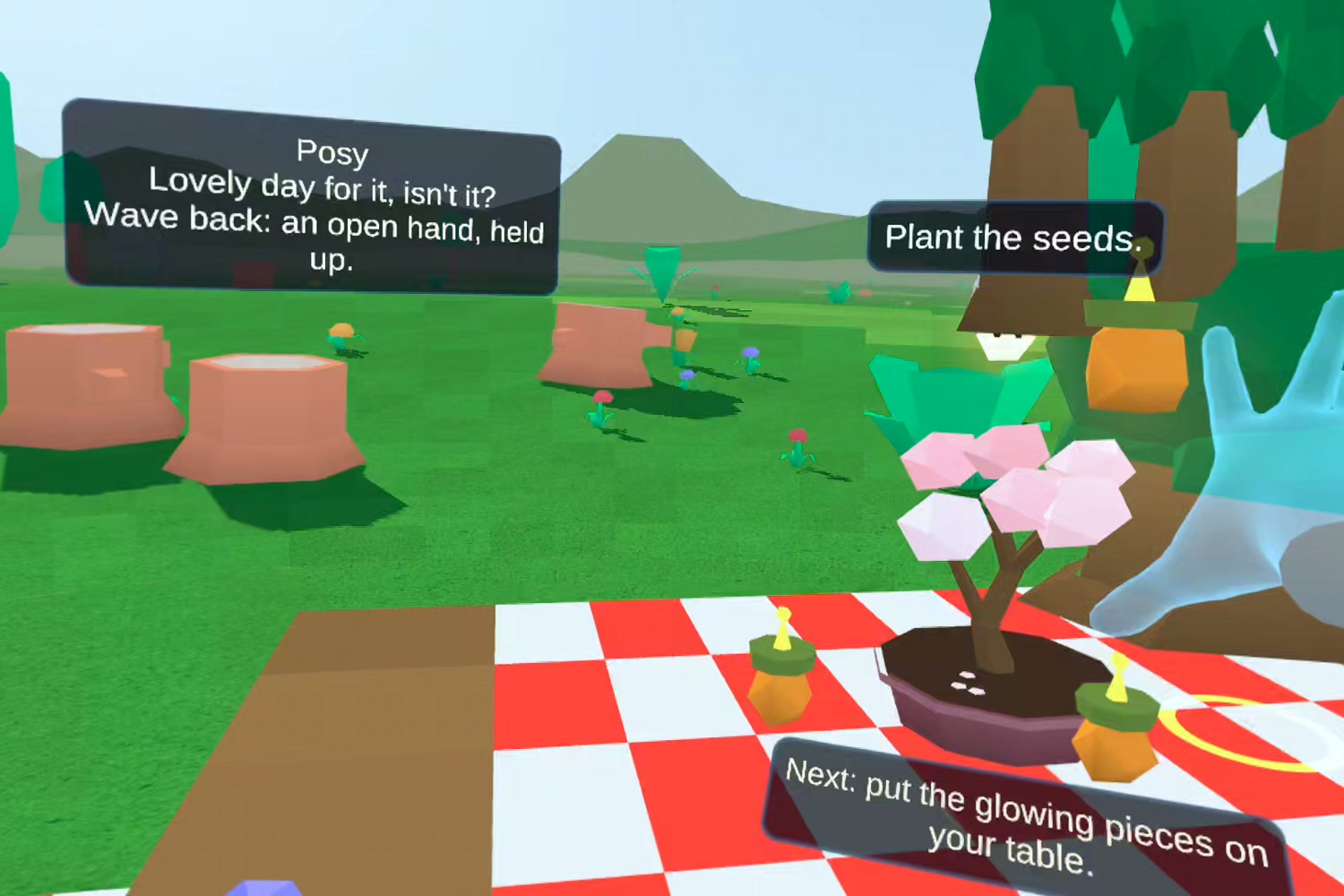
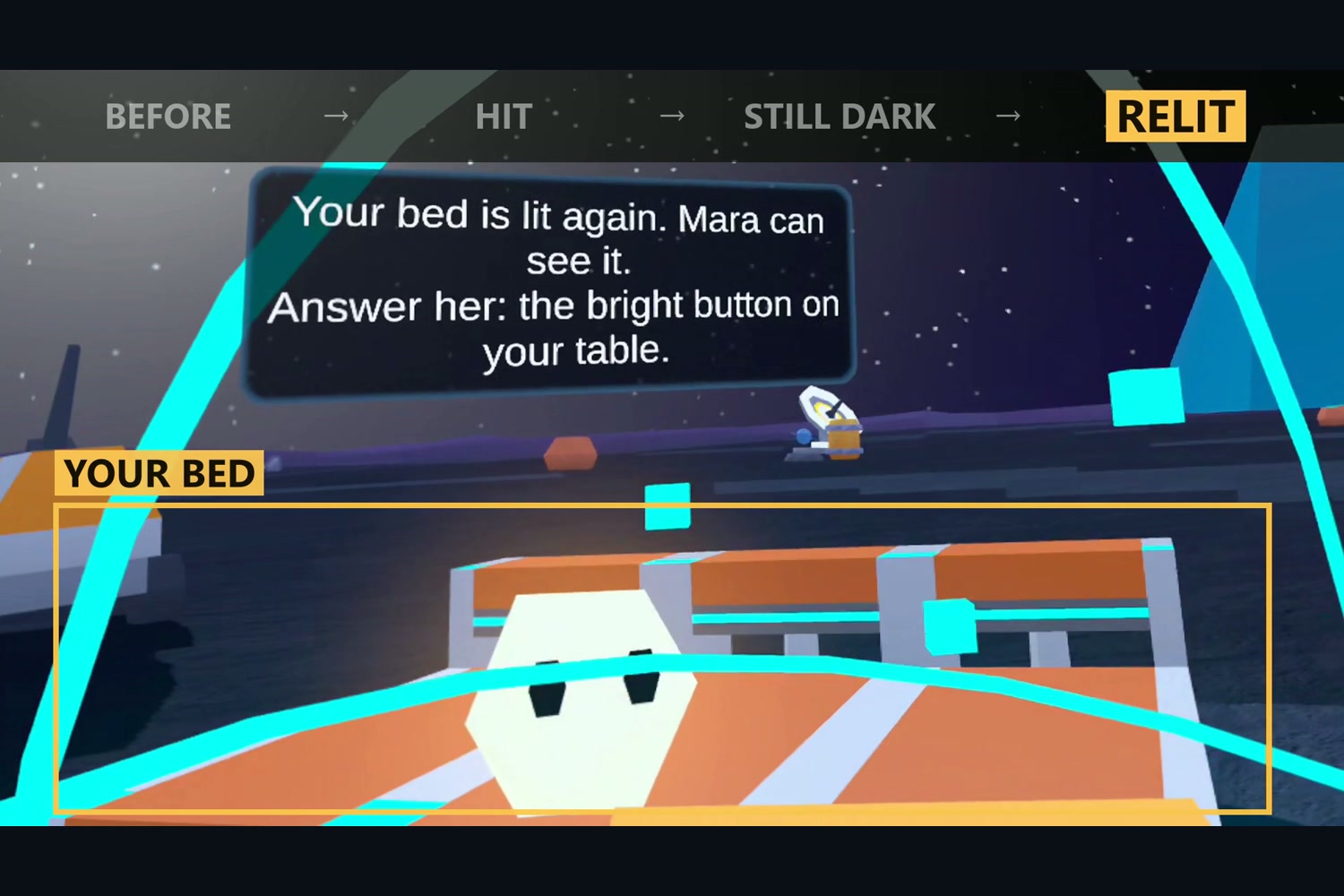
Gather the glowing pieces onto your table to light your room again.
-
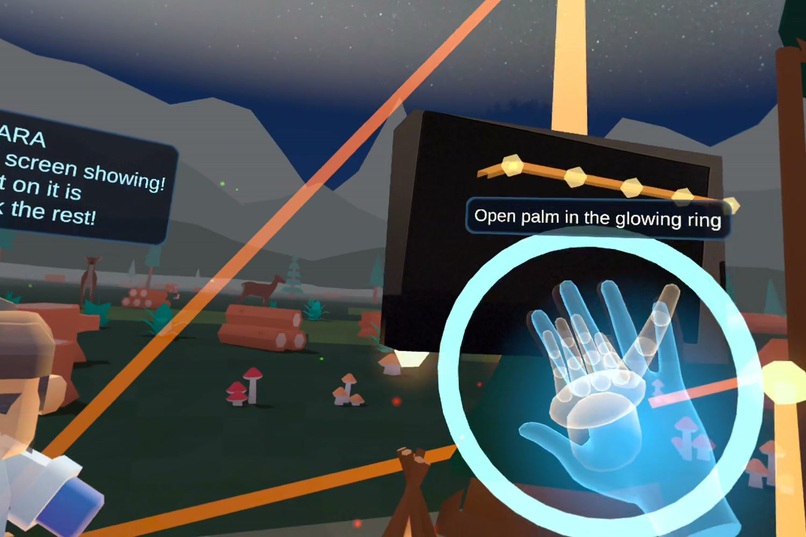
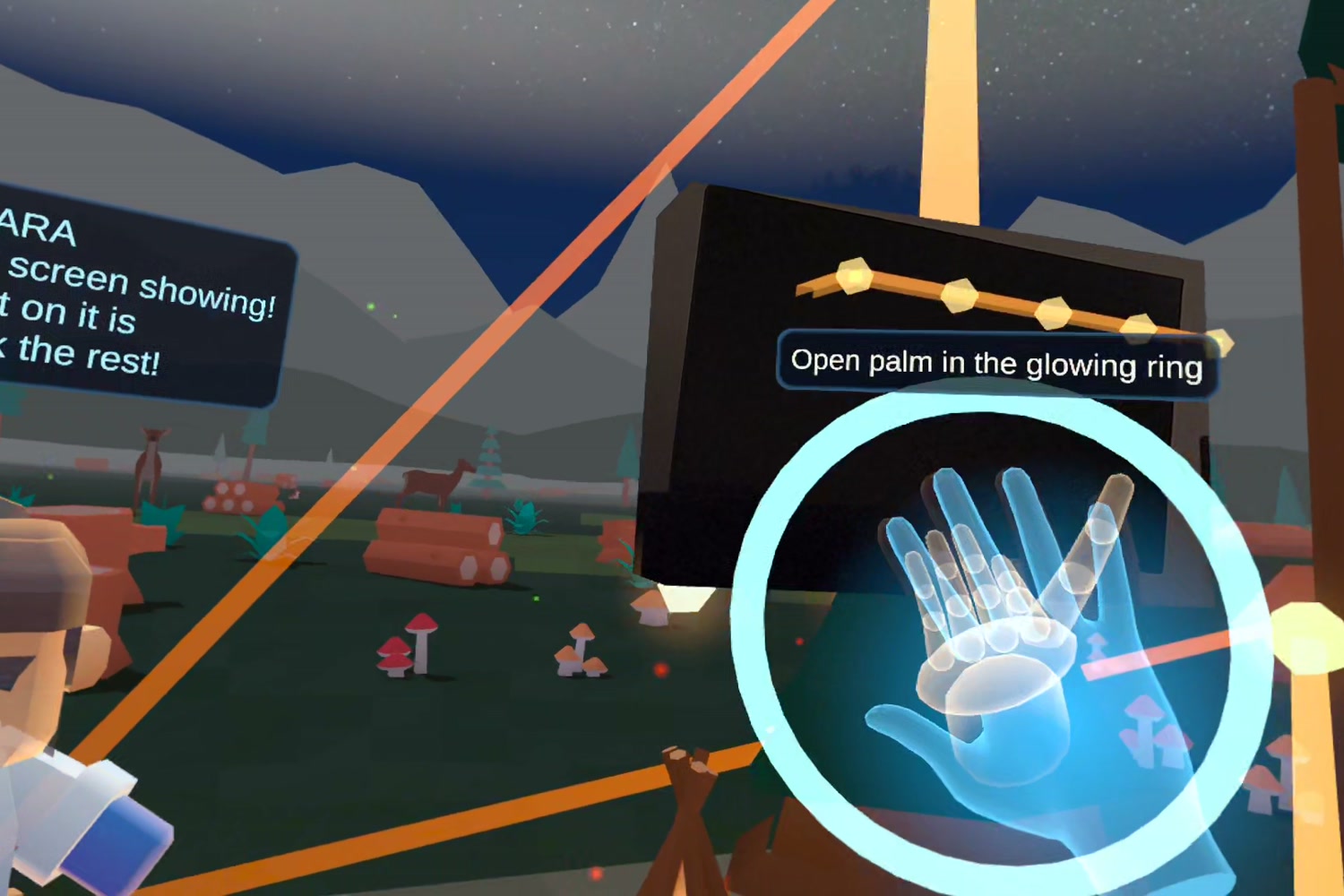
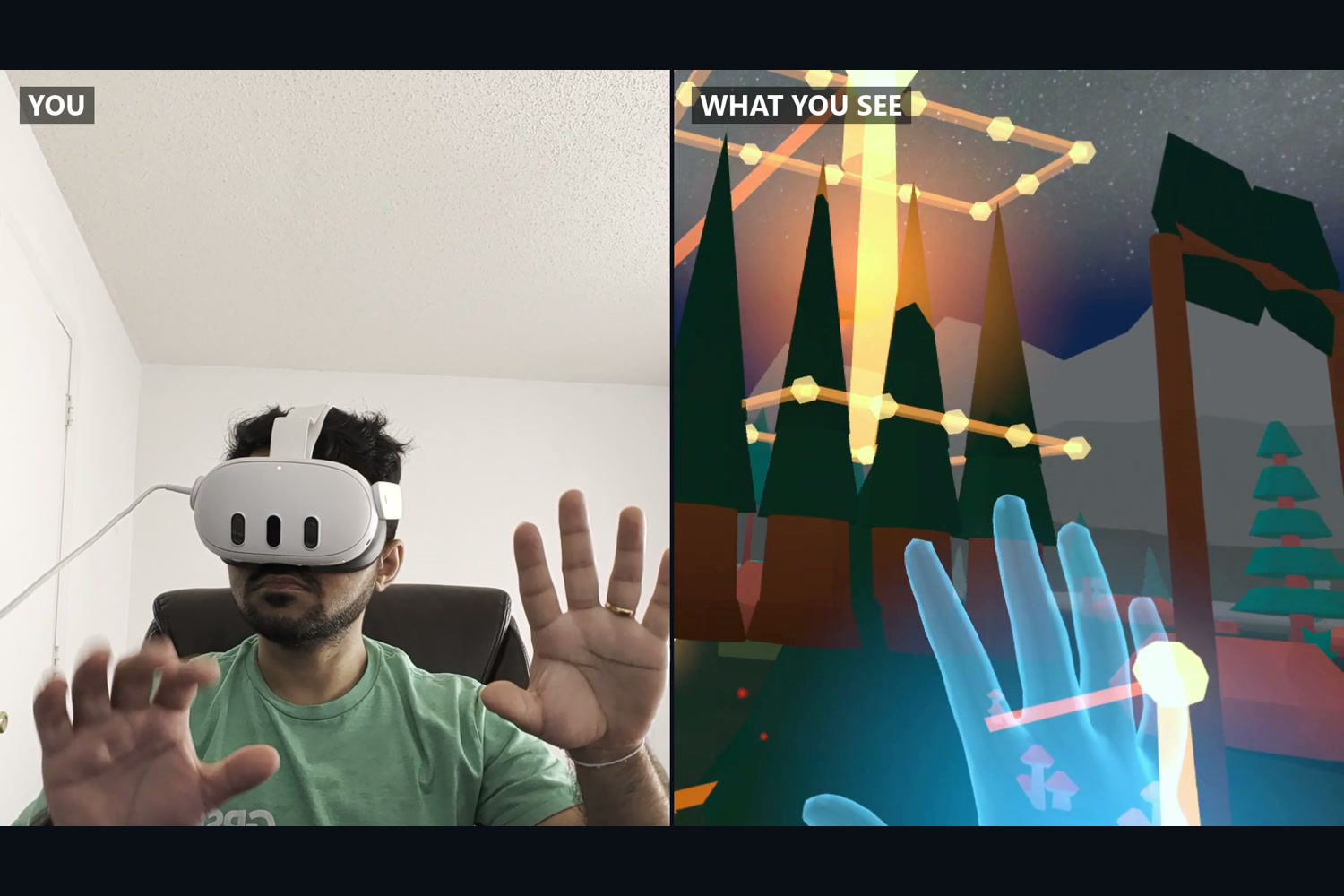
Block each meteor with an open palm in its glowing ring.
-
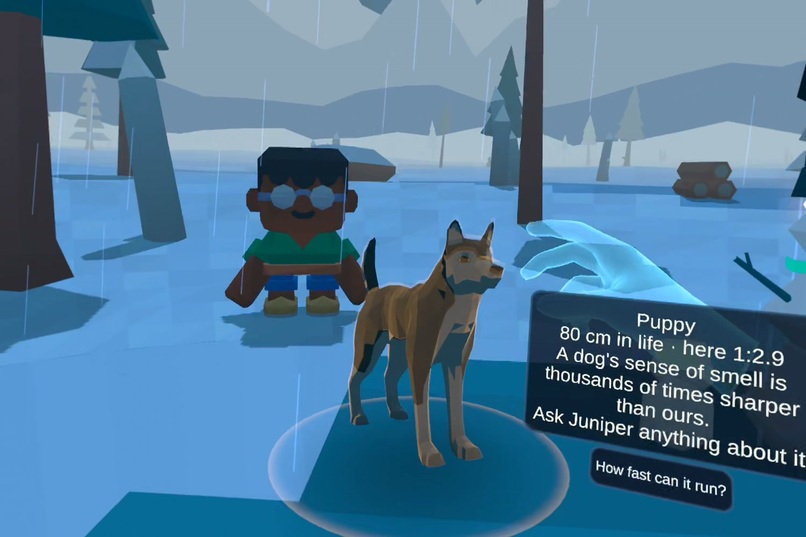
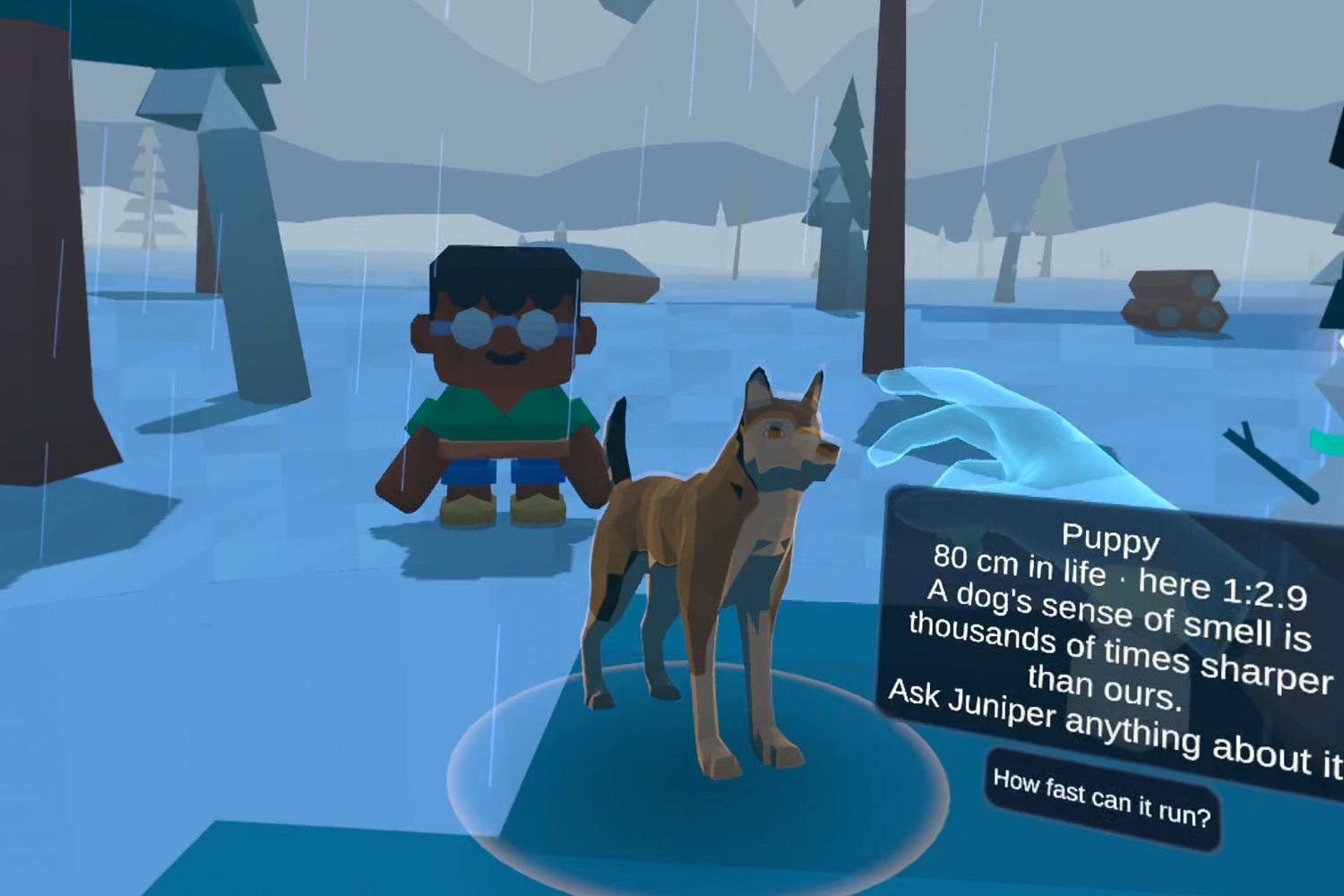
Ask for anything: every thing you make shows its real size.
-
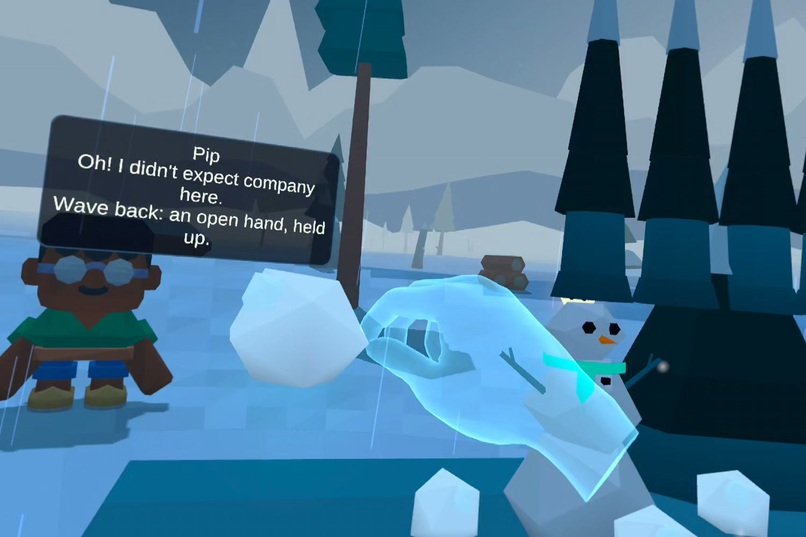
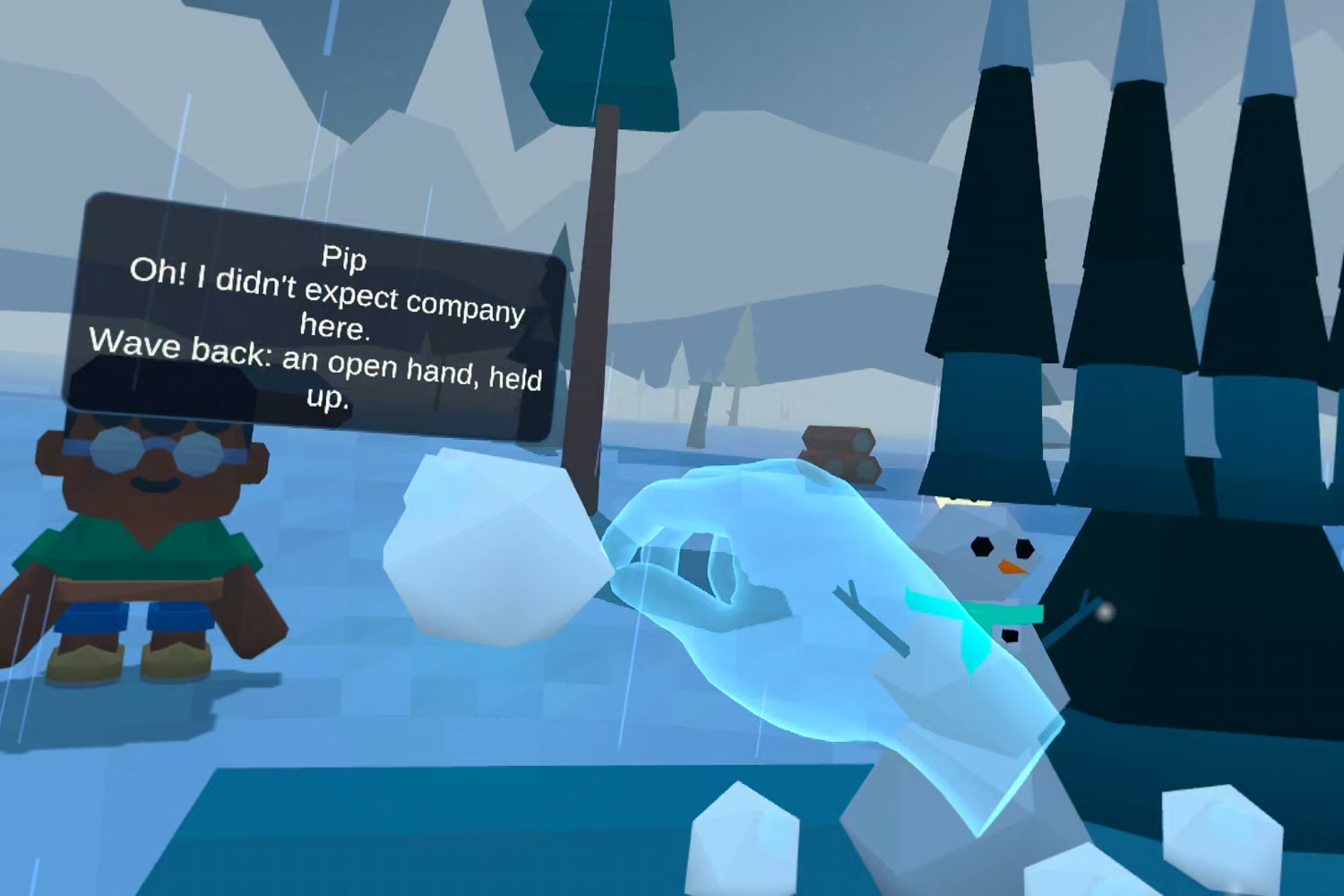
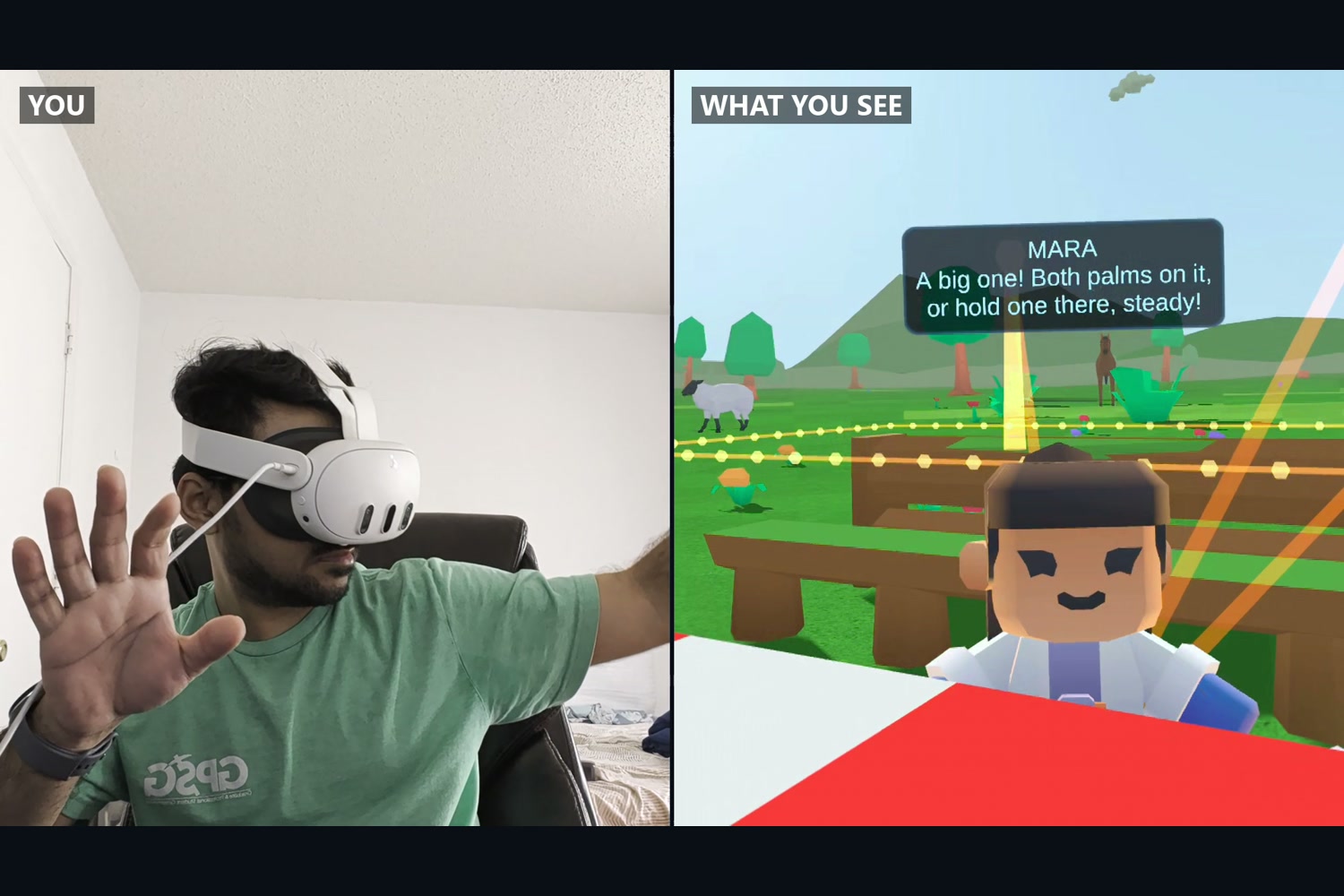
Someone lives in every world. Wave, and they wave back.
-
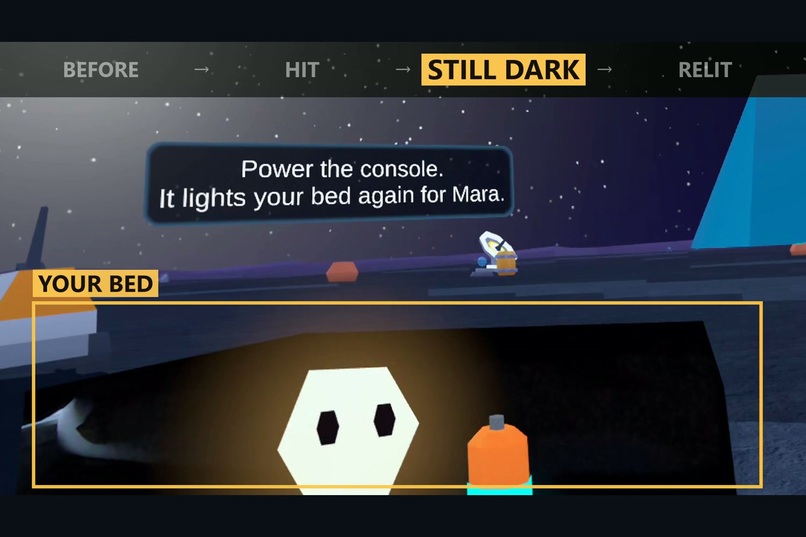
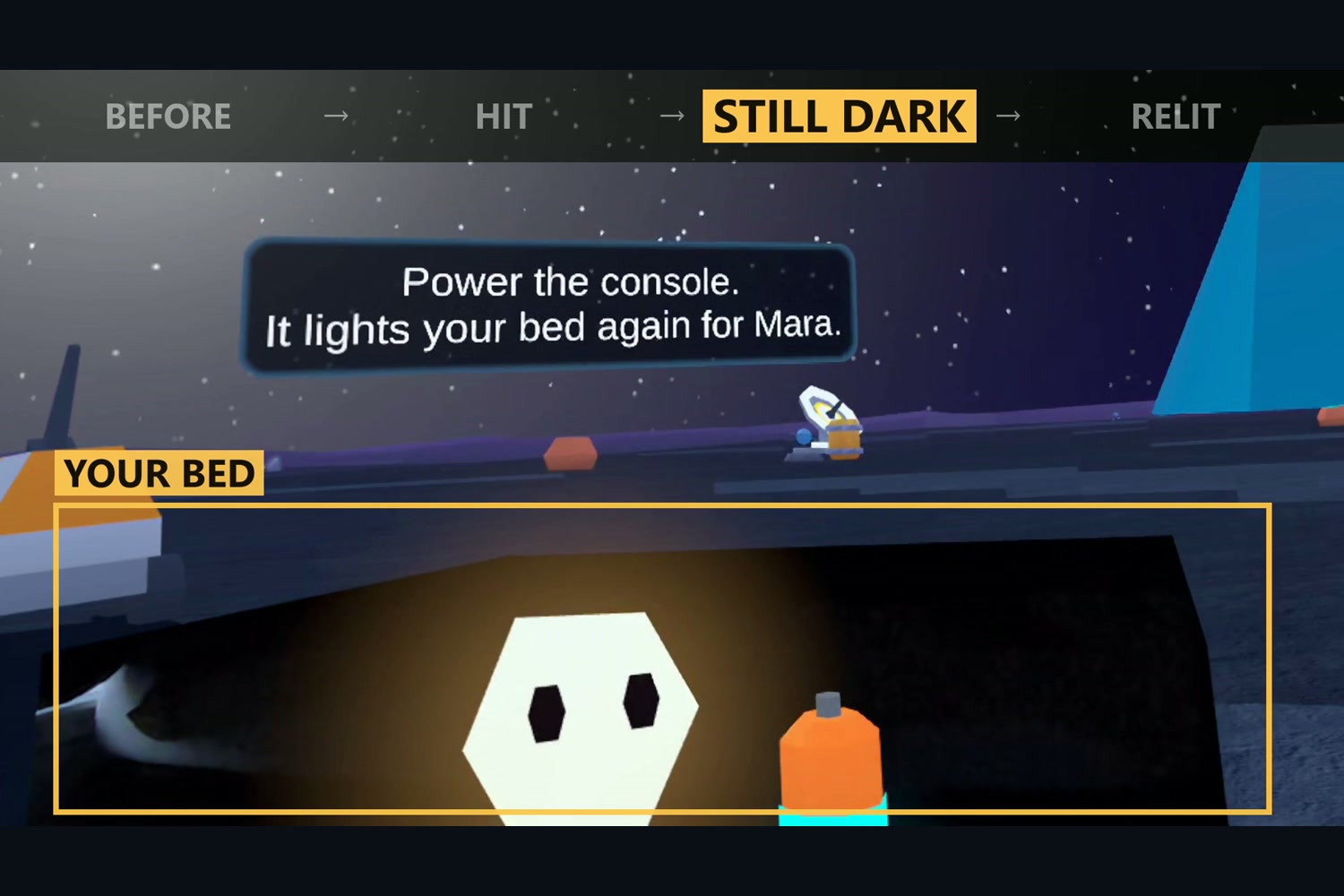
Your room remembers: the bed that went dark stays dark in the next chapter.
-
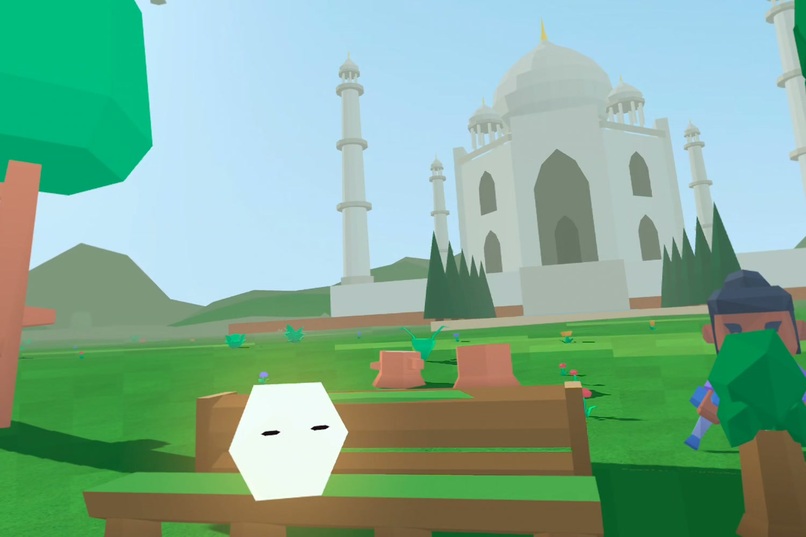
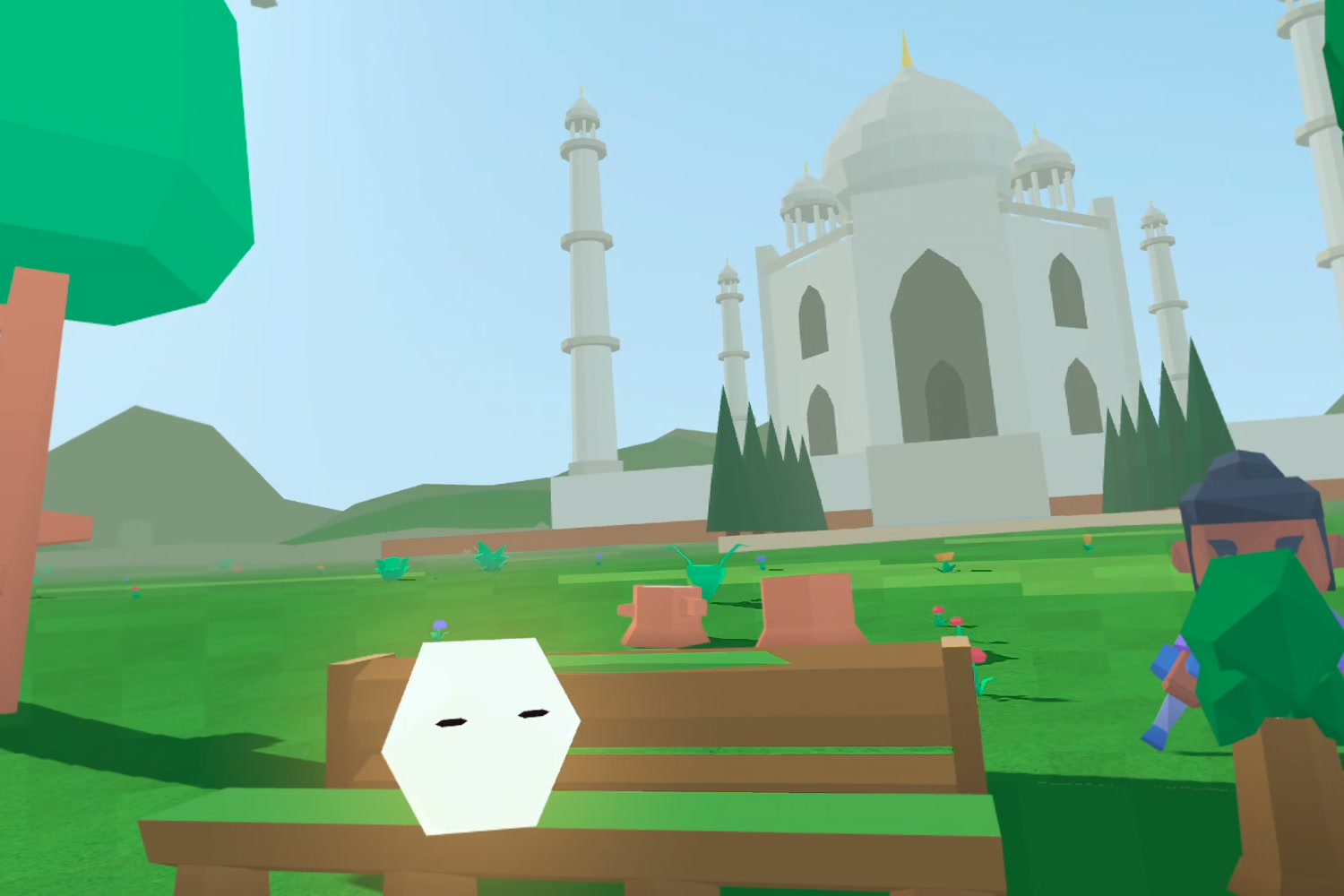
Say "India", and you're there.
-
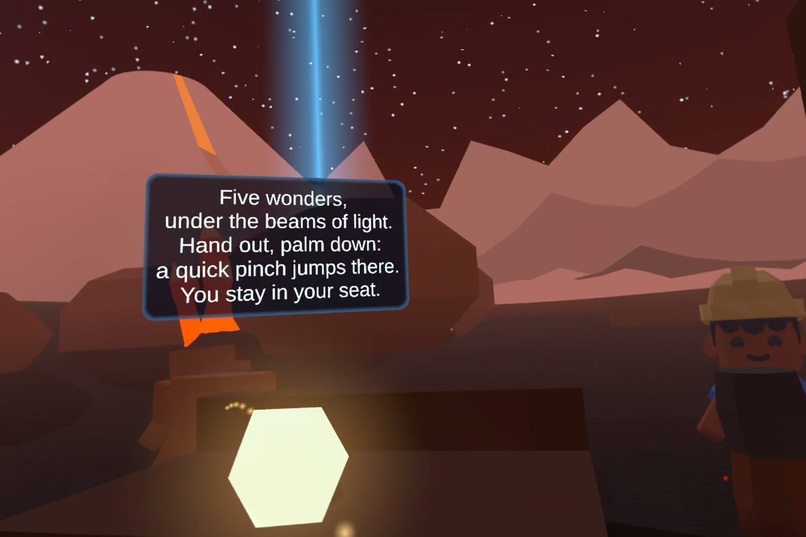
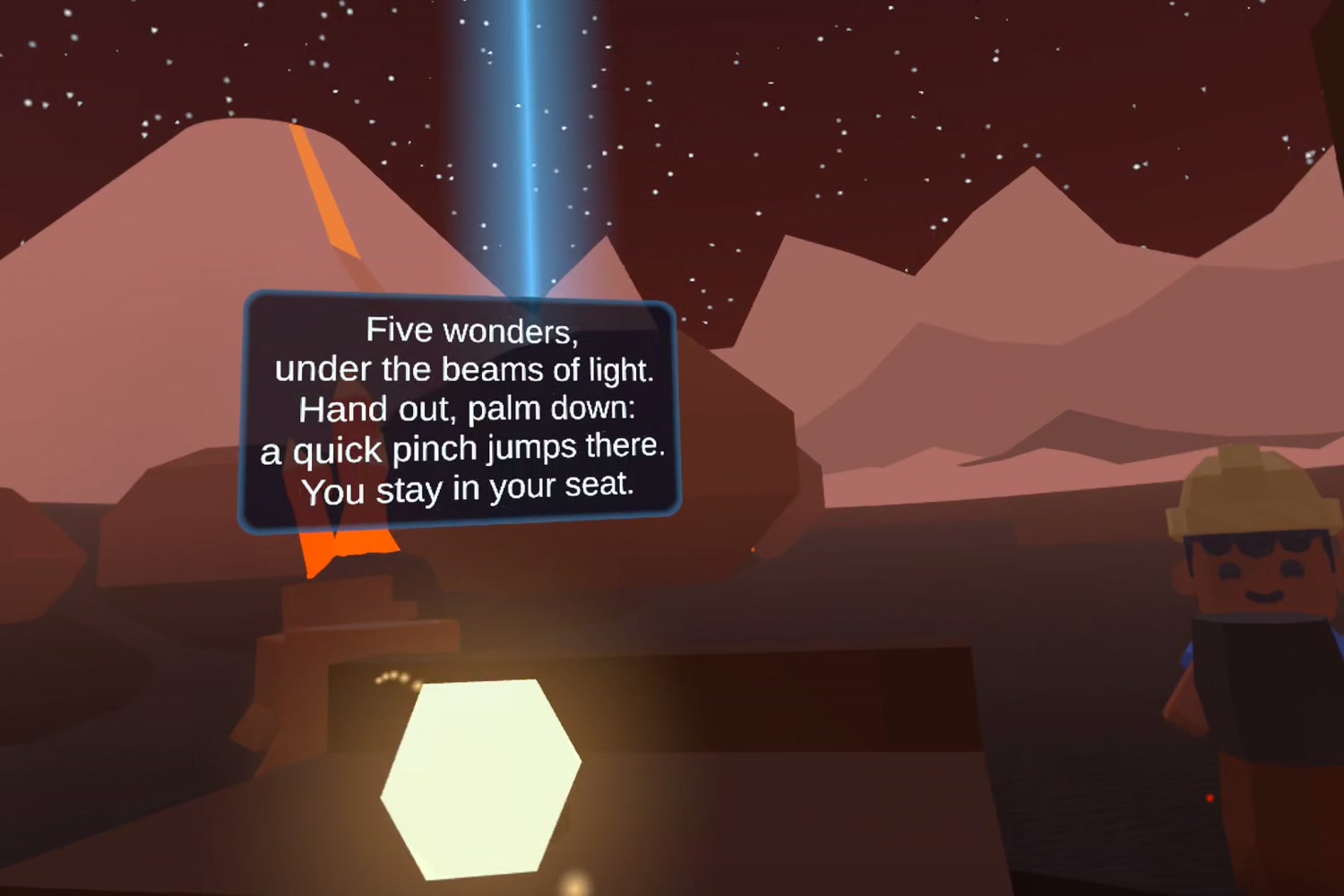
Five wonders beyond your table: point, pinch, and you're there.
-
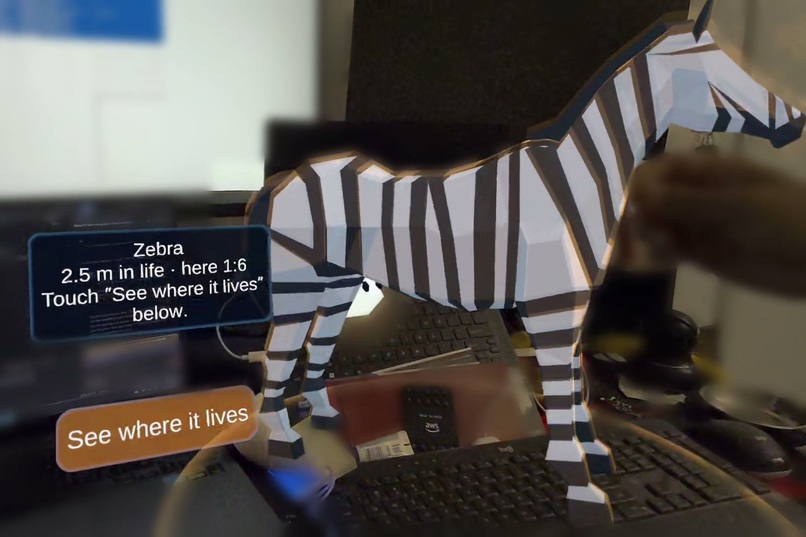
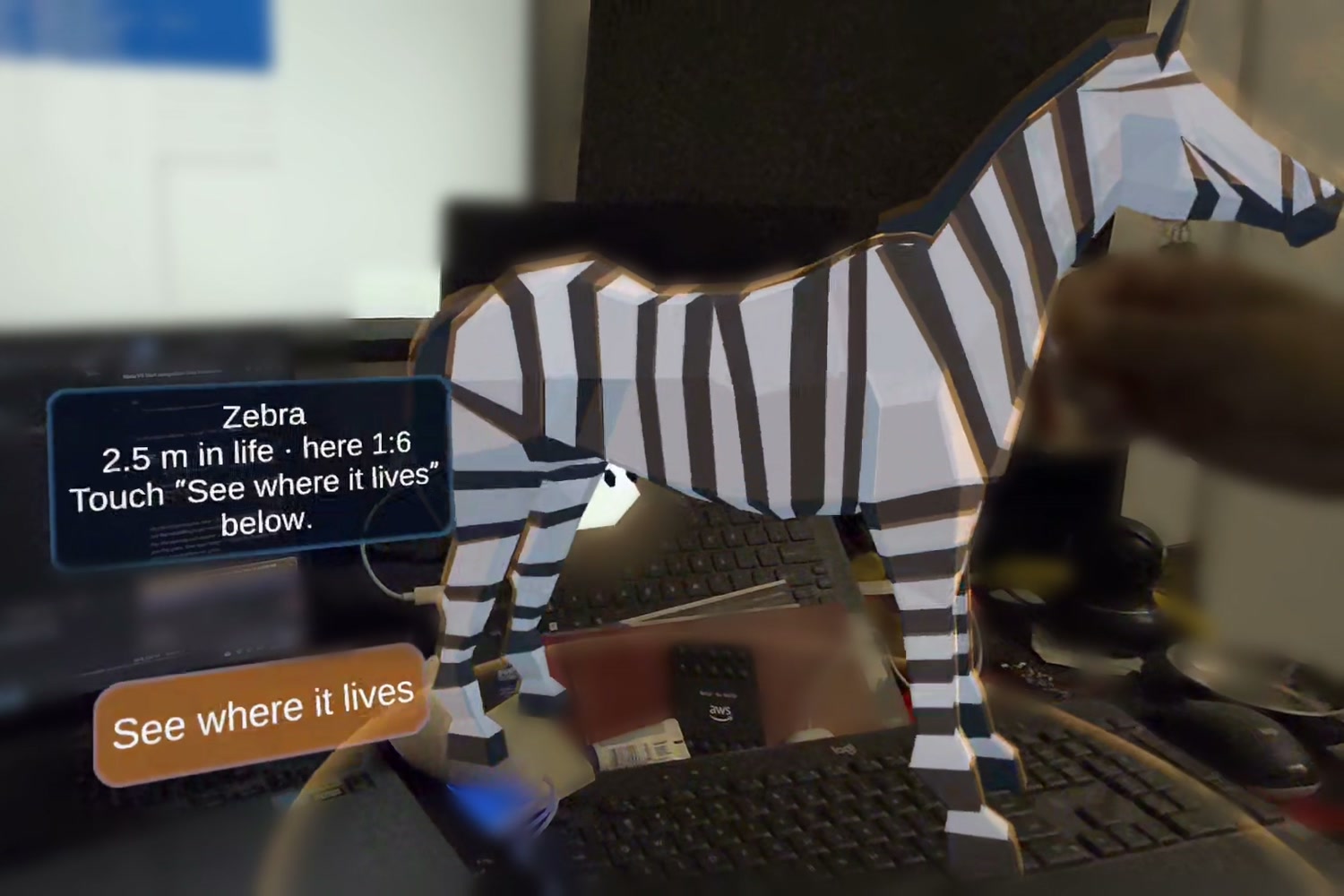
An animal on your real table: pick it up to see its size in life.
-
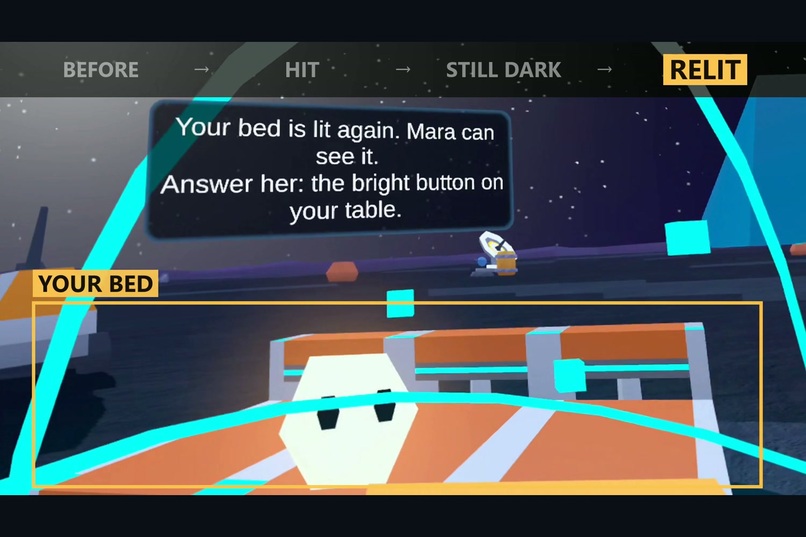
Gather the glowing pieces, and your bed lights her runway again.
-
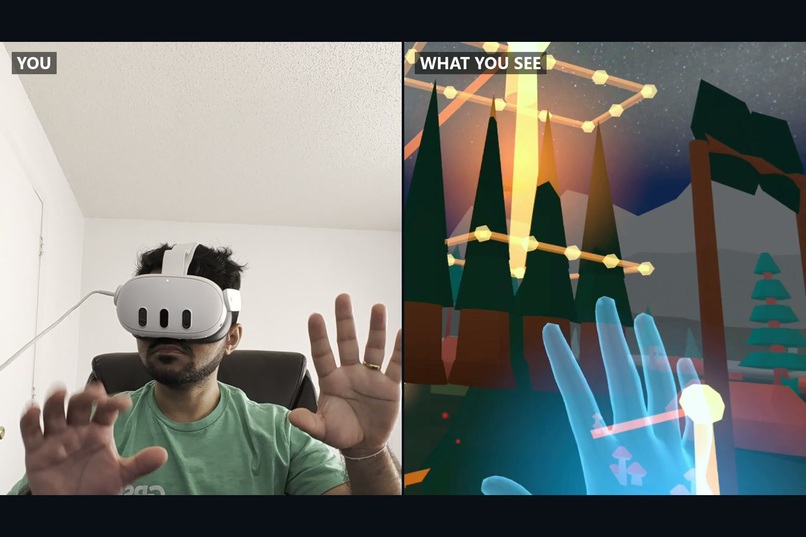
You and what you see: your real hands block each meteor.
-
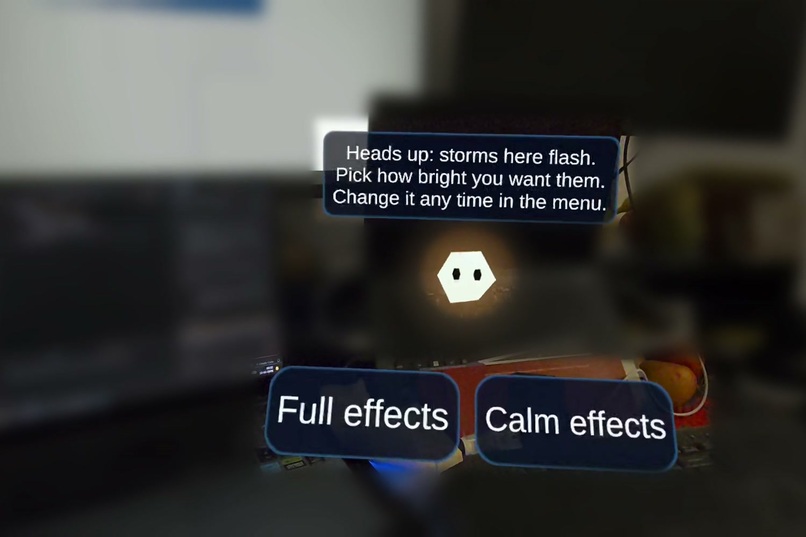
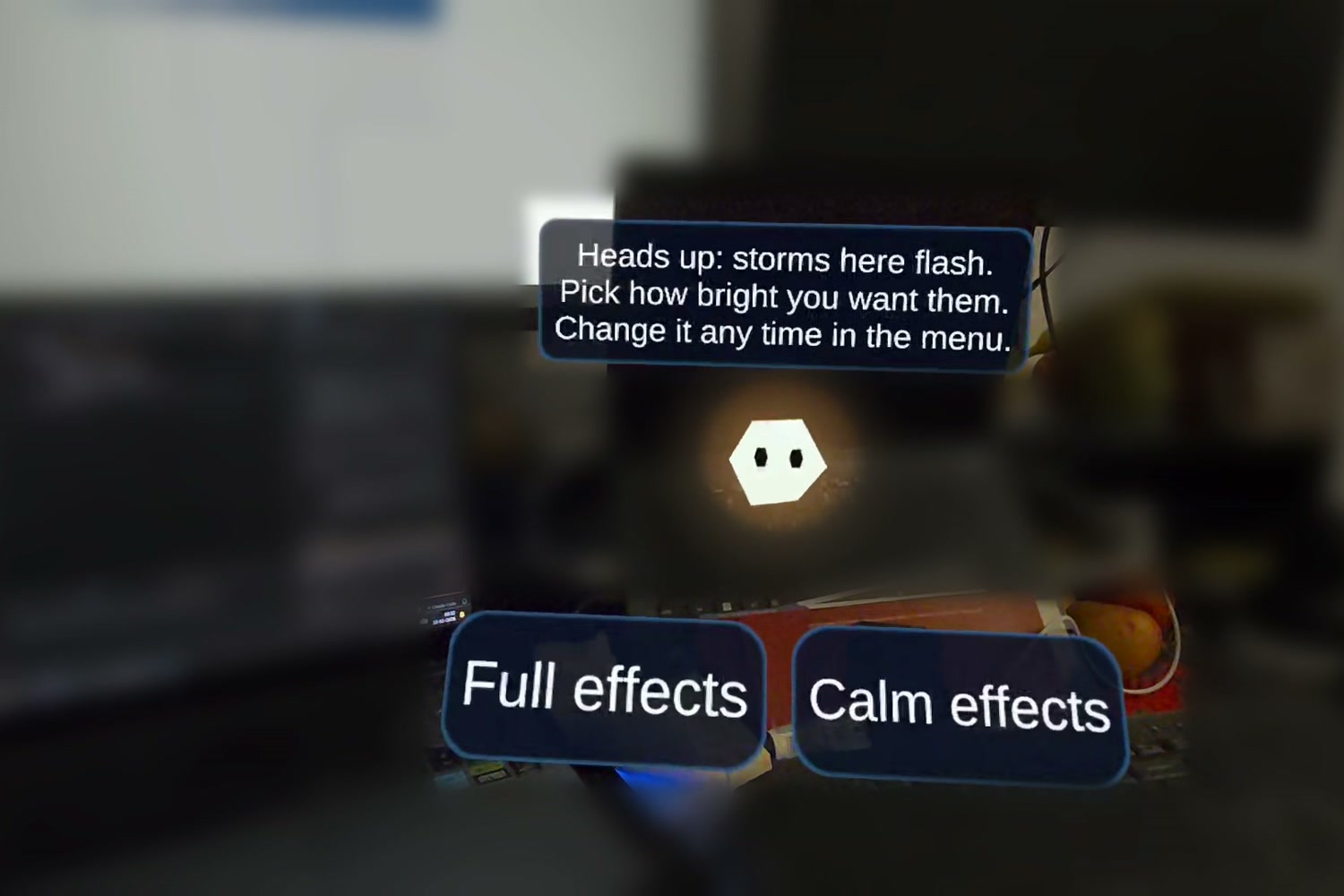
Light first: choose Full or Calm effects before any storm.
-
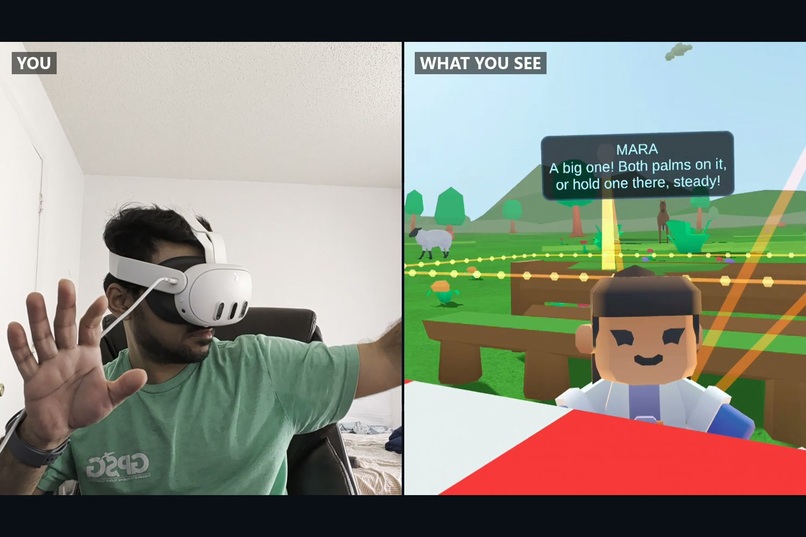
Mara's last storm: "A big one! Both palms on it!"

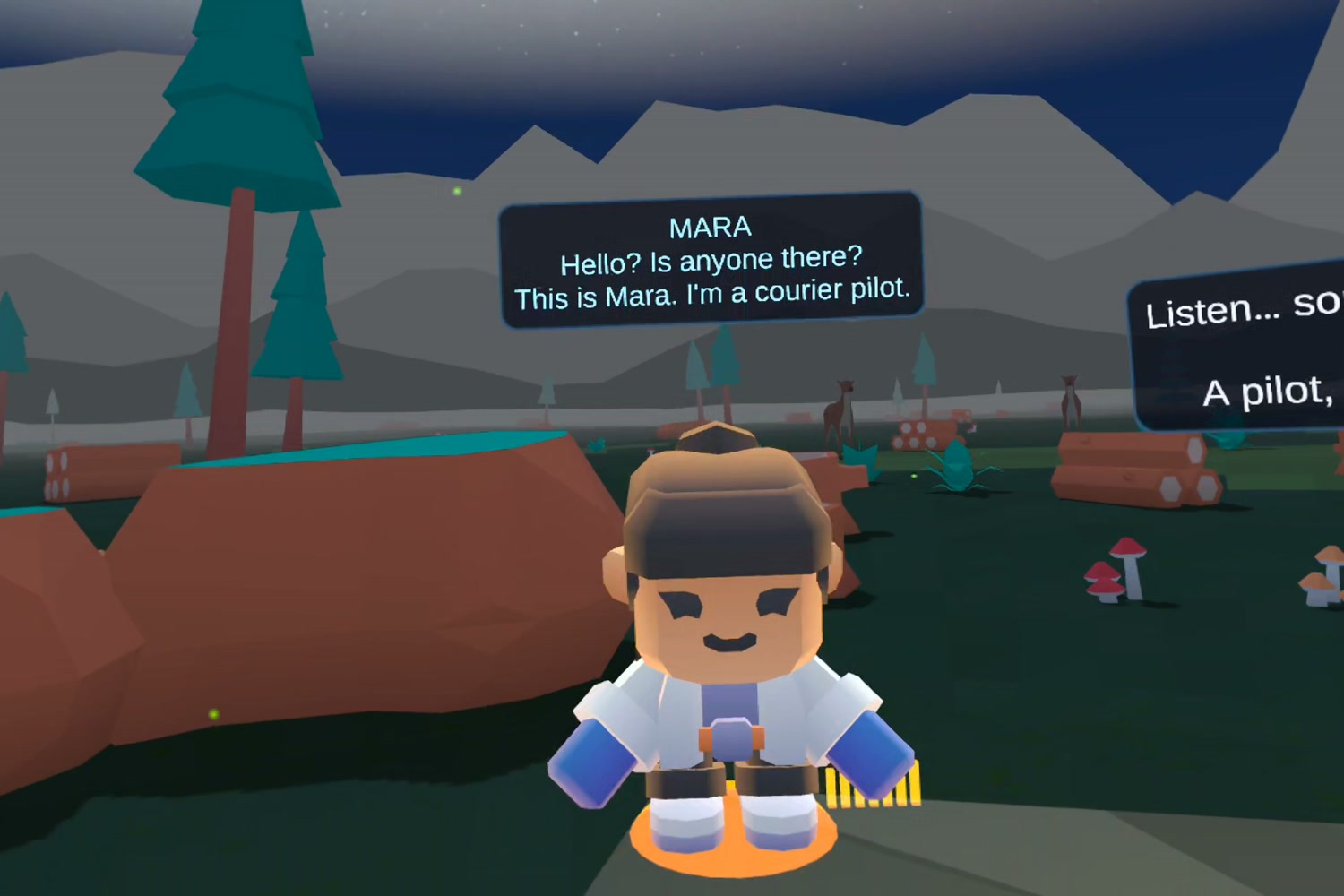
Every word is a door. Someone on the other side needs you.
You sit at your own table and put on a Meta Quest 3. You say "India", and your walls dissolve into a garden at dawn, while your real table and furniture are rebuilt where they stand. Then the radio crackles. A pilot is lost in a meteor field, and the only light she can see is your room.
Worldeck turns your real room into any world you name, and puts someone in it who needs you. Seated, hands only, no controllers.
Inspiration
Mixed reality usually treats your room as a backdrop. We wanted your room to be the game: what you protect, what you lose, what is remembered.
What you can do
- Say a place, and go there. Over 340 real places work offline, from India to Iceland, and Claude composes anything else from the app's own kit.
- Change it with a word. "Make it rain." "Make it night." "Add northern lights."
- Make things, and see their real size. "Make me a lion": pick it up, bring it to your face, and its card tells you how big it is in life. "See where it lives" takes you to its home, at life size.
- Meet the locals. Someone lives in every world. Wave, and they wave back. Next time, they remember you.
- Share a world as a short code that a friend can open around their own furniture.
The story: Mara
Mara is a courier pilot carrying medicine to a colony.
- Your furniture becomes her runway. Meteors fall towards each real piece, and you block them with an open palm.
- Miss one, and your real room breaks through the world. That piece's light goes out, and her voice breaks into static.
- Your room remembers. The piece stays dark in the next chapter until you gather that world's glowing pieces and light it again. When Mara calls, she can see it.
- She lands in your hand. Hold out your palm, and her ship touches down on it.
- Her story ends in your own room, with her keepsakes on your table.
Three chapters, about 15 minutes. After that, Mara flies every day with new cargo, and a new world opens each day.
The research behind it
We built on published research and Meta's own guidance:
- Your furniture as the world's objects. Substitutional Reality (Simeone et al., CHI 2015) showed that pairing each real object with a virtual one makes a virtual world feel physically present. Worldeck rebuilds every piece of your furniture: your table becomes a fire ring, your sofa a log bench.
- Real sizes that look real. We judge distance from continuous ground (Sinai et al., Nature 1998) and from the angle below the horizon (Ooi et al., Nature 2001). So each world's ground runs unbroken from your feet, and its horizon sits at your seated eye height, which makes a life-size lion look life size.
- Things that sit on your real table. Dark, simple shadows help people see that a virtual object touches a real surface (Adams et al., 2022). Everything you make casts one onto your table.
- One gesture, used everywhere. Meta's hands best practices say to teach one core interaction and reuse it. The open palm blocks a meteor, waves to a local and catches Mara's ship.
- Sessions that fit a day. Meta's guidance on session length shaped short chapters and a daily world.
- Light that is safe for everyone. Before any storm you choose Full or Calm effects, following Xbox Accessibility Guideline 118, WCAG 2.3.1 and South et al., Barriers to Photosensitive Accessibility in Virtual Reality (CHI 2024). Nothing ever flashes more than three times a second.
Made for everyone
- Hands-free mode: look at a button, a piece or a meteor to use it. You can finish the story without lifting a hand.
- One hand is enough, and a gentler storm is available.
- Every line is captioned, with big text.
- Stand up, and the world fades back to your room while the storm waits.
- Your voice never leaves the headset.
How we built it
- Unity 6 and Meta XR SDK v207: hand tracking and the Interaction SDK, passthrough, MR Utility Kit for your furniture, and spatial anchors for the pieces that go dark.
- On-device speech (sherpa-onnx with Moonshine), so voice works offline.
- Claude, through a small relay, composes new worlds and lets each local answer in character.
- Mara's 170 lines, recorded offline with Kokoro-82M, through a radio filter that breaks up as her signal fails.
- 72 fps on Quest 3, checked by 123 automated tests and a mode that plays the whole story on the headset.
What's next
There is so much more we want to build:
- Step inside real places at full scale, with photorealistic 3D tiles and 3D Gaussian Splatting (Kerbl et al., SIGGRAPH 2023).
- Play together, in one room or two homes, with Meta's Shared Spatial Anchors.
- Scenes from one sentence, following LayoutGPT (NeurIPS 2023) and Text2Room (ICCV 2023).
- Locals with long memories, following Generative Agents (Park et al., UIST 2023).
- More of Mara, more languages, and classrooms: visit a country, meet someone who lives there, and see a whale at its real size.
Launch
Quest 3S tuning, then Early Access on the Meta Horizon Store in 2027.
