-
Home
-
Matches
-
Standings
-
Randomize
-
Bracket


What we built
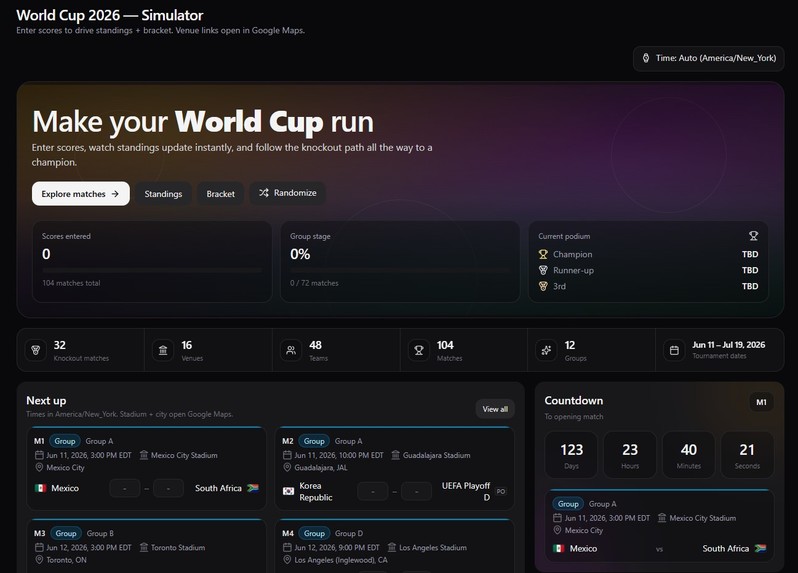
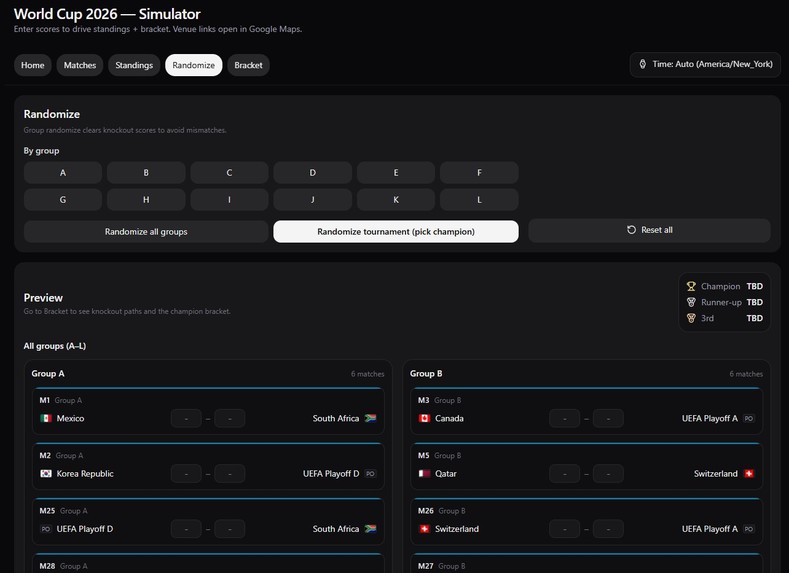
WC26 Simulator is an interactive World Cup 2026 tournament simulator. You can enter match scores and instantly see:
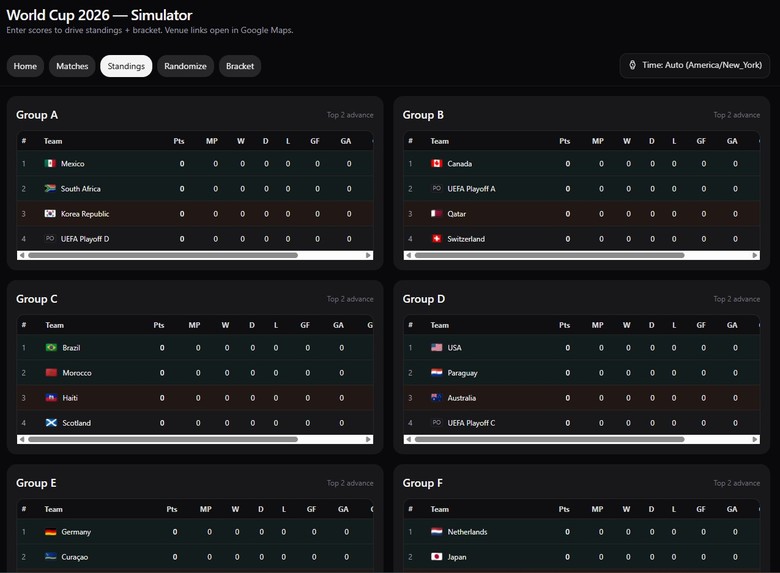
- Group standings update in real time (including tie-break ordering)
- The top 8 third-place teams qualify automatically
- Third-place group mapping is applied to fill the Round of 32 slots
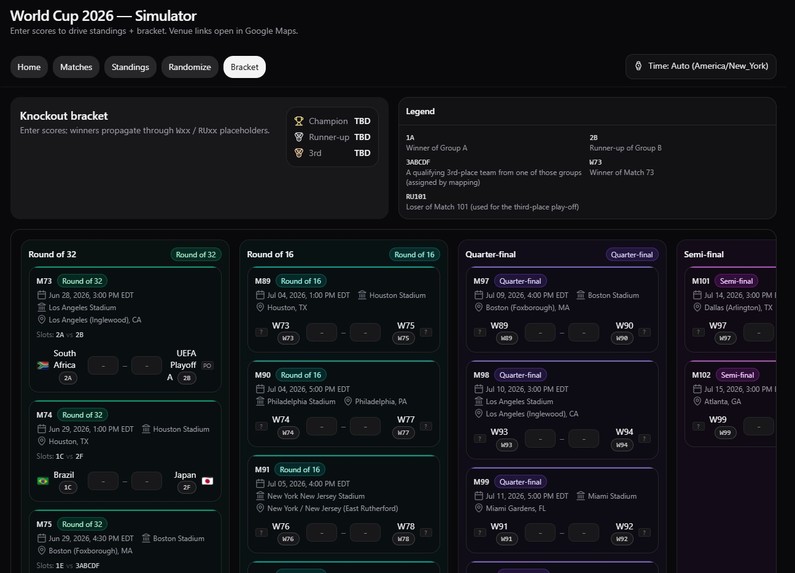
- Winners advance through a full knockout bracket all the way to a champion
The goal was to make a fast, clean “what-if” playground where fans can explore scenarios without spreadsheets.
Inspiration
We wanted something that felt like the best part of a tournament: debating outcomes, testing predictions, and watching the bracket change with every result. The expanded 2026 format (12 groups + third-place qualifiers) makes manual tracking harder, so we built a tool that does the bookkeeping instantly.
What we learned
- How to model tournament logic cleanly (group tables, ranking, and token-based knockout advancement)
- How to manage derived state in React using memoization and deterministic sorting
- How to design UI that stays readable even with lots of data (104 matches)
- How to ship a full frontend to production quickly using Vercel
How we built it
- React + Vite for the app and fast local development
- Tailwind CSS for styling and responsive layout
- Lucide React for icons
- Client-side state + localStorage so users don’t lose progress
- FlagCDN for country flags
- A small fetch to a Wikipedia API endpoint to obtain the official third-place mapping table, then caching it locally
The tournament engine:
- Stores match results (group + knockout)
- Computes standings per group from results
- Ranks third-place teams across all groups
- Assigns third-place groups into Round of 32 slots (using the official mapping when available)
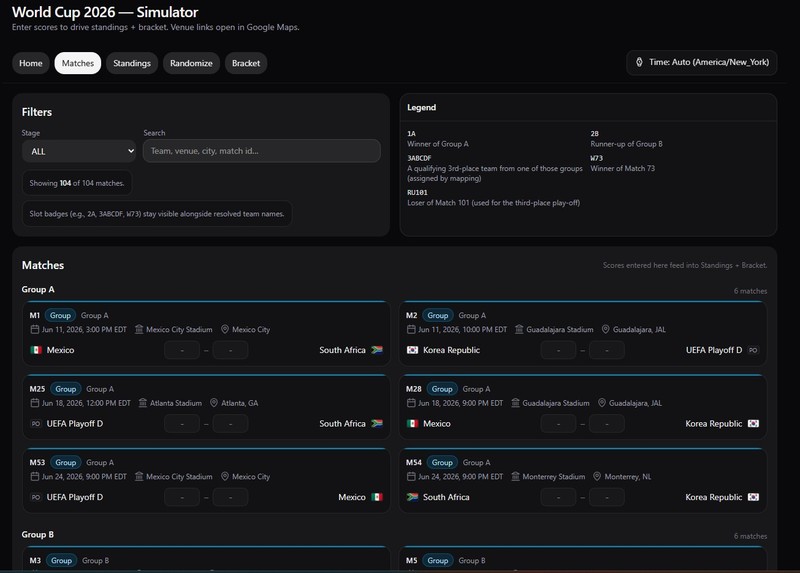
- Resolves bracket tokens like
1A,2B,3ABCDF,W73,RU101into actual teams as scores are entered
Challenges we faced
- Tie-break complexity: We needed stable, predictable ranking and a clear path through tie-break rules.
- We solved this by implementing deterministic sorting and resolving tied subsets step-by-step.
- Third-place qualifiers & mapping: The Round of 32 depends on which 3rd-place groups qualify.
- We solved this by computing the top 8 third-place teams, then mapping them into bracket slots using the official table (and a fallback solver if needed).
- Keeping the UI understandable: With many stages and matches, the interface can get overwhelming.
- We used consistent match cards, filters/search, a “Next up” section, and a legend that explains tokens.
What’s next
- Add shareable URLs for scenarios
- Add downloadable results (CSV / JSON)
Built With
- flagcdn
- javascript
- lucide-react
- react
- tailwind-css
- vercel
- vite
- wikipedia

Log in or sign up for Devpost to join the conversation.