Inspiration
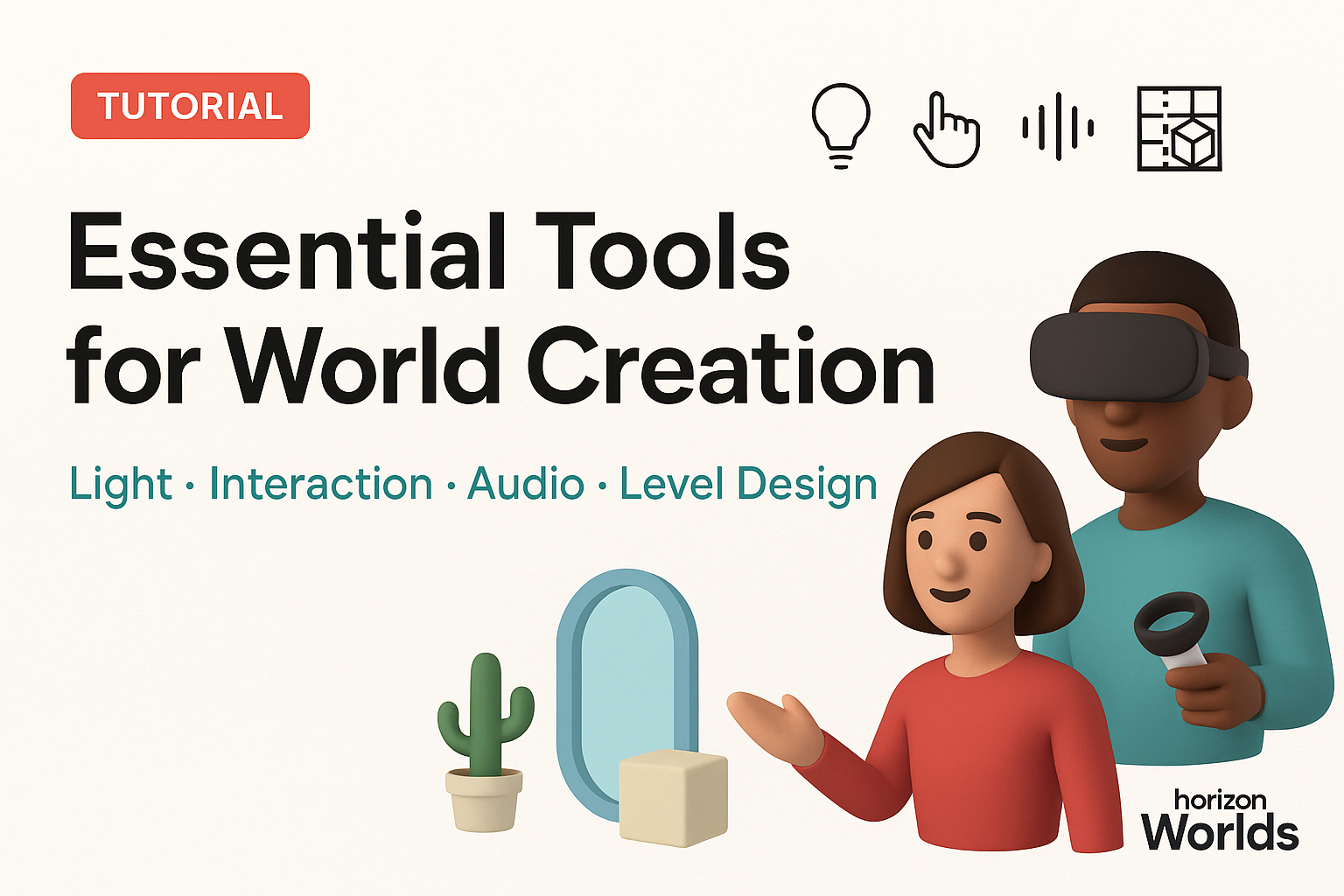
I wanted to bring together the four questions new Horizon Worlds creators ask most—lighting setups, collider/trigger-based interaction, adding audio, and a basic level-design flow—into one short, practical walkthrough. To do that, I show Environment / Dynamic / Static Light usage, Collider & Trigger Zone behavior, Sound / Sound Recorder settings, and the Worlds Desktop Editor tools step-by-step in a single example.
What it does
Lighting: Accesses light components from Build > Gizmos, explains Environment _ (sky, fog, exposure, VOIP) _, and walks through Dynamic/Static Light parameters with hands-on examples. Also covers Gen-AI Skybox and Custom Skybox imports.
Interaction: Shows how to add Colliders and Trigger Zones, and how to separate behaviors with Collidable and Collision Layers.
Audio: Tunes Sound components _ (Volume, Pitch, Global, Min/Max Distance, etc.) _, records with Sound Recorder, and fires sounds via trigger events.
Code Samples: Includes DynamicLightController, TriggerLightController, and TriggerSoundController scripts.
Level Design 101: Uses Q-W-E-R transforms, Pivot/Transform, Snap tools, view modes, simulation, and builds a Halloween Graveyard from blockout to polish.
How we built it
I used Meta Horizon World's desktop editor to learn. Then I went through everything and presented it as a tutorial in a way that was as simple, clear, and detailed as possible.
Challenges we ran into
Performance vs. Dynamic Lights: Too many dynamic lights hurt framerate in VR. We used dynamic lights only for critical moments and static lights for general fill, auditing with Overdraw/Collision views.
Trigger Accuracy: Oversized trigger zones caused unintended events. We switched to smaller, purpose-built zones and clarified “Selectable in Screen Mode” where relevant.
Audio Balancing: Overlapping loops and hot levels created noise. We layered music/ambience/SFX with distance falloff to keep the mix clean.
Collision Setup: Incorrect Collidable or Collision Layer choices led to unwanted interactions. We separated layers clearly and adjusted object scales in Attributes.
Accomplishments that we're proud of
Three ready-to-use scripts: DynamicLightController, TriggerLightController, TriggerSoundController _ (drop-in, copy-paste friendly) _.
End-to-end example flow: From skybox to lighting, colliders/triggers, audio, and testing in the Halloween Graveyard scene.
Clear control panels: The most important Environment/Light/Sound variables are summarized and explained in one place.
What we learned
“Key light + contrast” drives readability; warm/cool tones quickly shape mood.
Triggers guide players: flipping lights, opening doors, and firing music reinforce flow.
Layered audio _ (music/ambience/SFX) _ with distance-based rolloff greatly improves VR comfort.
Editor fundamentals _ (QWER, Snap, Pivot/Transform, View Modes) _ are crucial for fast iteration and tidy scenes.
What's next for Tutorial - Light, Interaction, Audio and Level Design
Add an Optimization 101 appendix: dynamic/static light budgets, quick health checks with Overdraw/Collision views, and object/simplified-collider counts.
Ship prefab packs: Environment/light rigs, trigger–audio–light combos, and example settings _ (packaged versions of the current scripts) _.
Advanced interactions: moving platforms, door locks, checkpoints, and sequenced audio/light choreography _ (Audio Complete/CodeBlockEvents) _.
VOIP & accessibility notes: deeper Environment VOIP scenarios and comfort options such as adjustable volume/captions.


Log in or sign up for Devpost to join the conversation.