-
-

App Icon
-
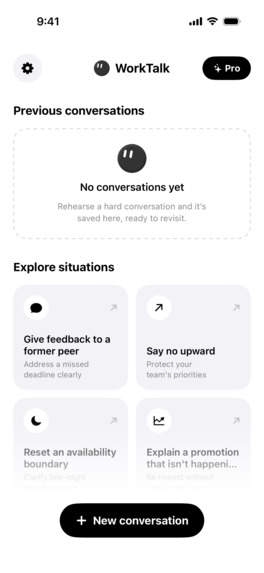
Home
-
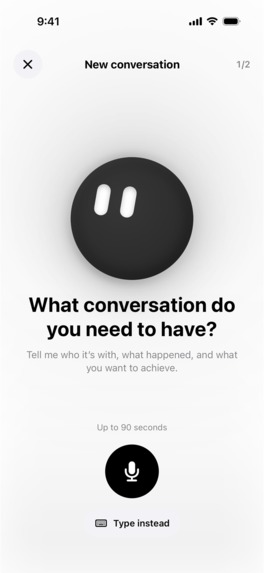
New conversation
-
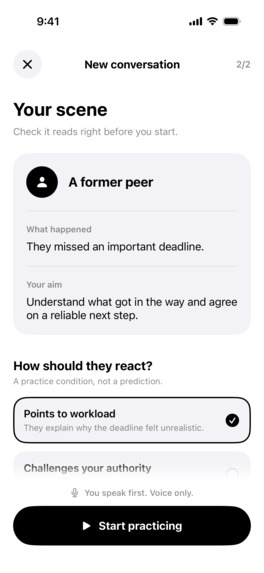
Scene setup
-
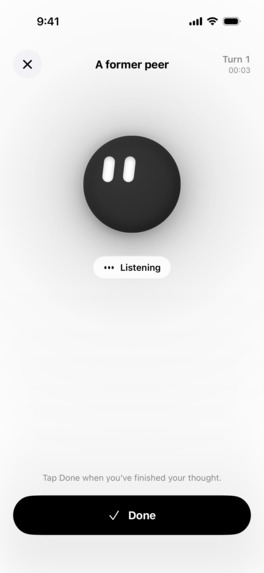
Starting conversation
-
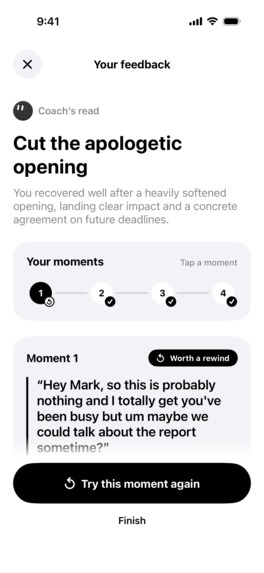
Getting feedback
-
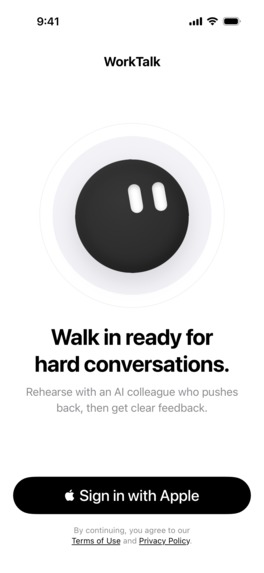
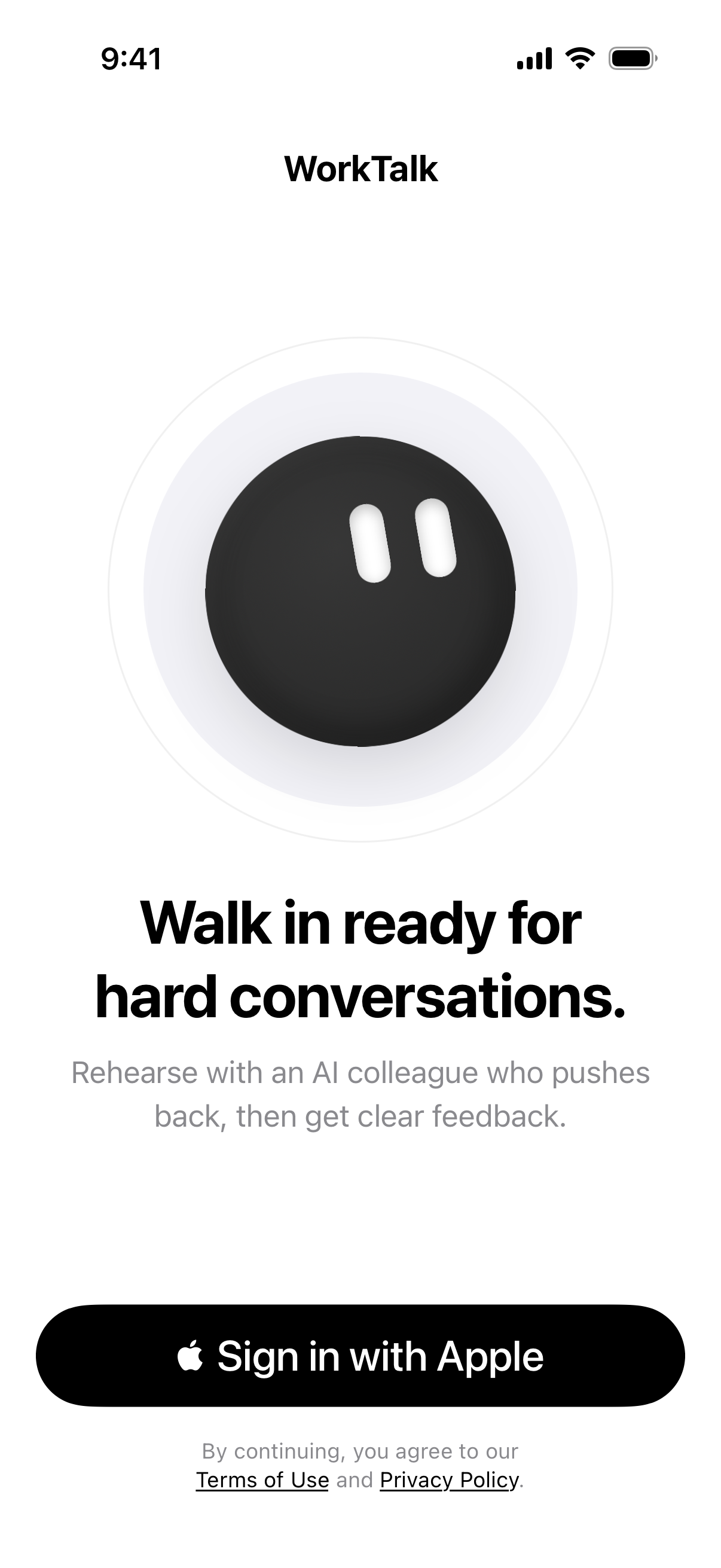
Login page
-
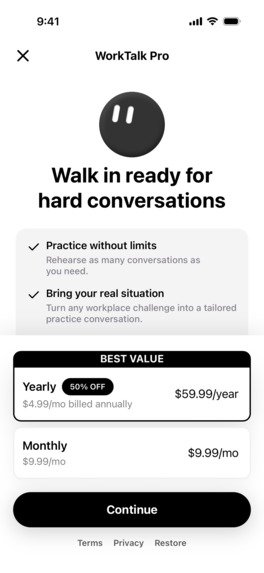
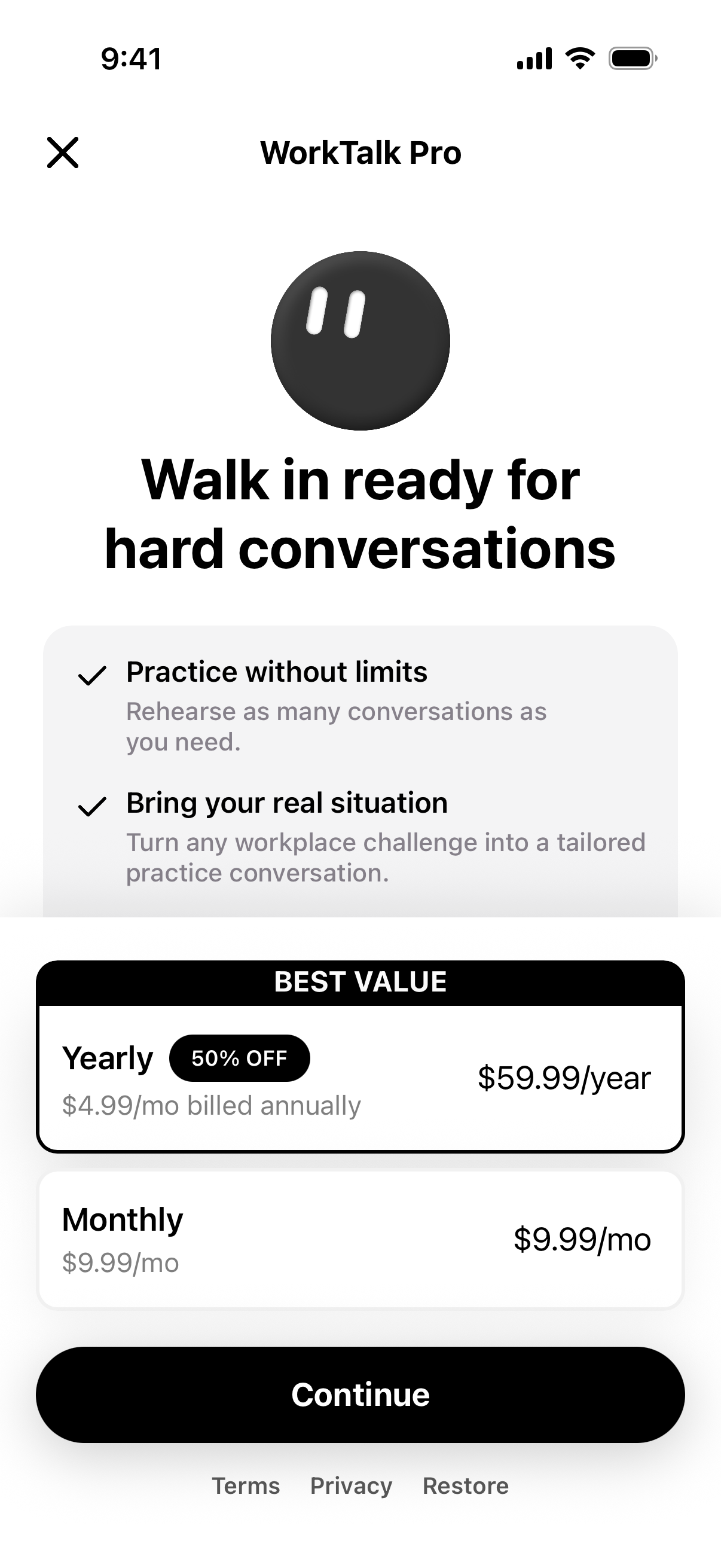
Paywall

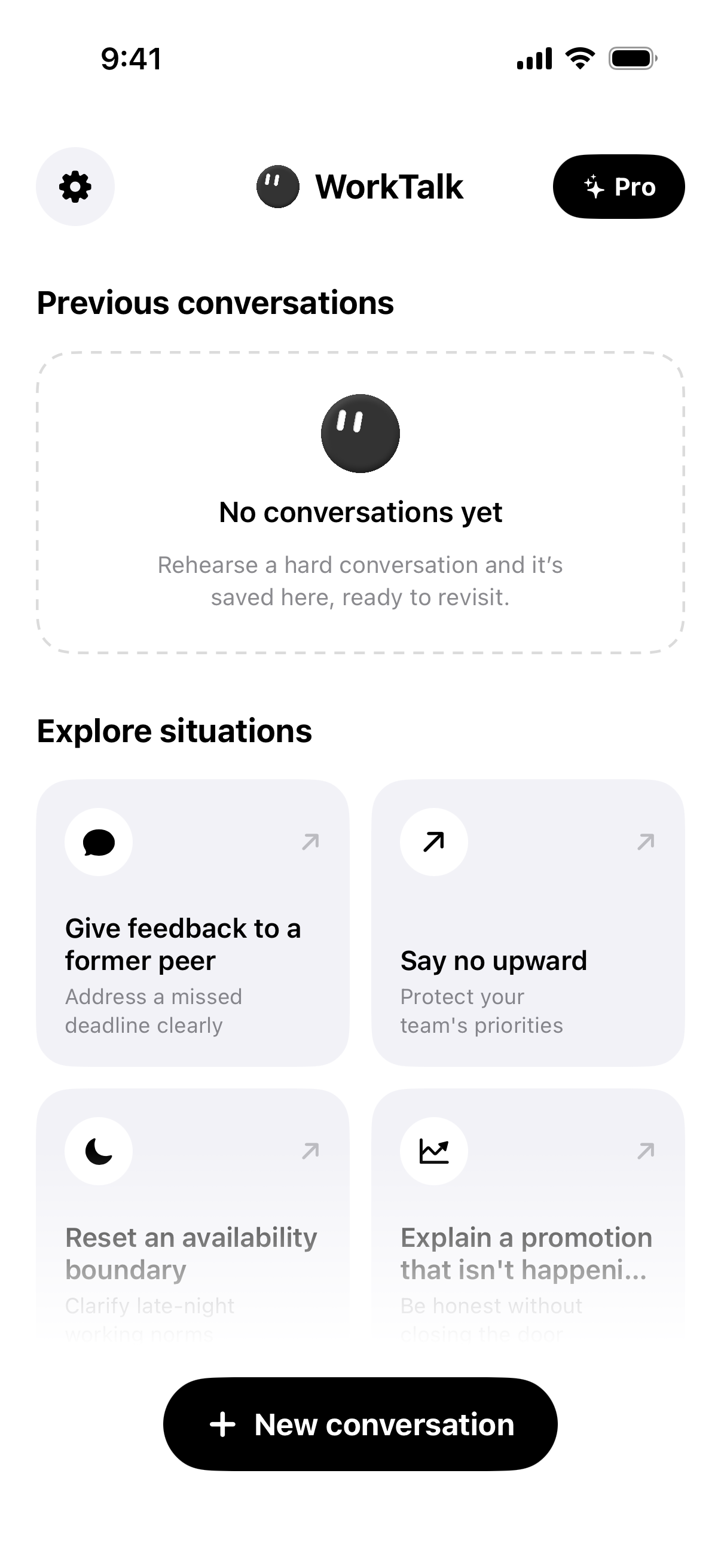
Inspiration
Knowing what you need to say and actually saying it out loud are two very different things.
For a new manager, giving feedback to a former peer, protecting a team's priorities, or setting a boundary can feel intimidating. Many are leading people who were their peers last month. They rehearse in their heads, then soften the message until it disappears, over-explain, or leave without agreeing on what happens next.
That's where the idea of a "flight simulator for hard conversations" came in: a safe place to try, stumble, adjust, and try again before the stakes are real.
What it does
WorkTalk lets managers rehearse difficult workplace conversations out loud, with an AI colleague who reacts to what they actually say.
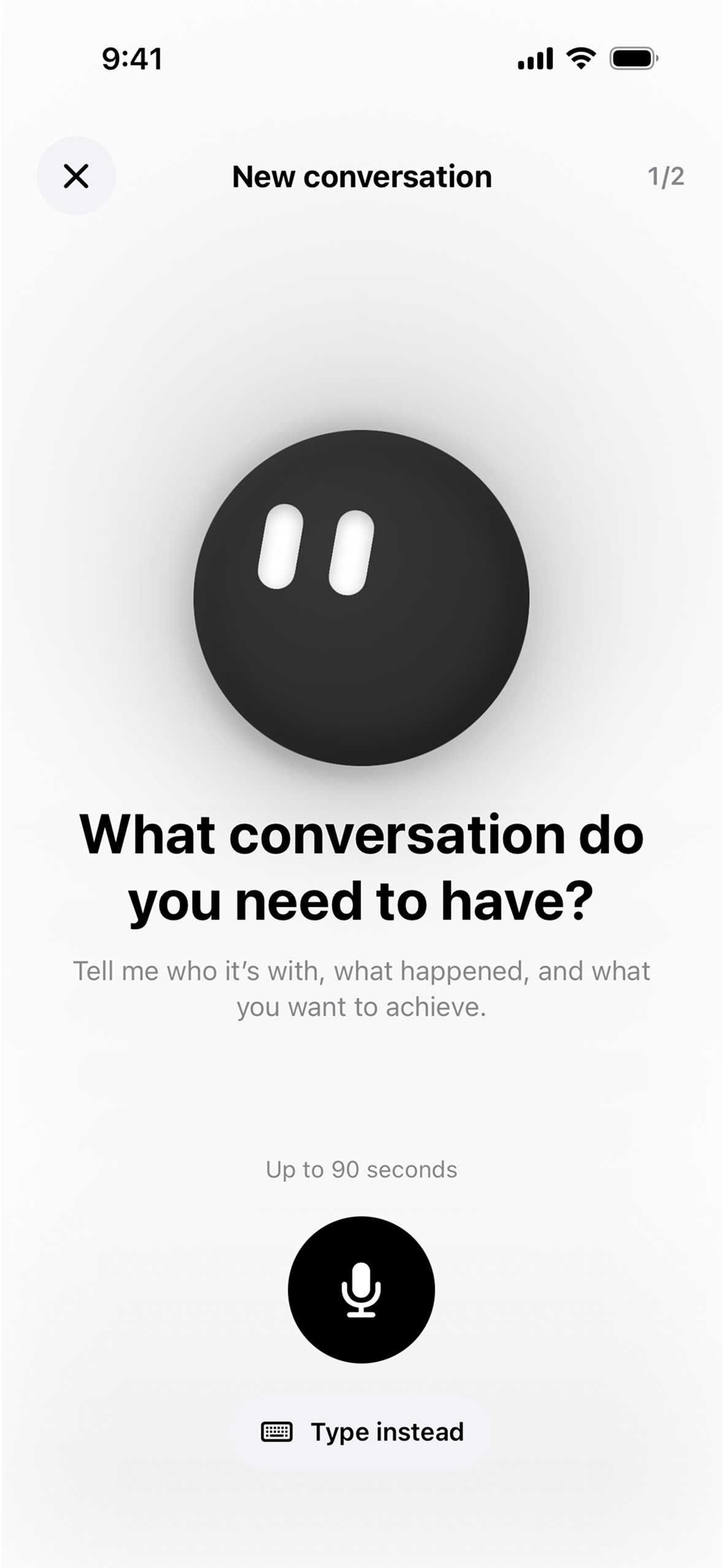
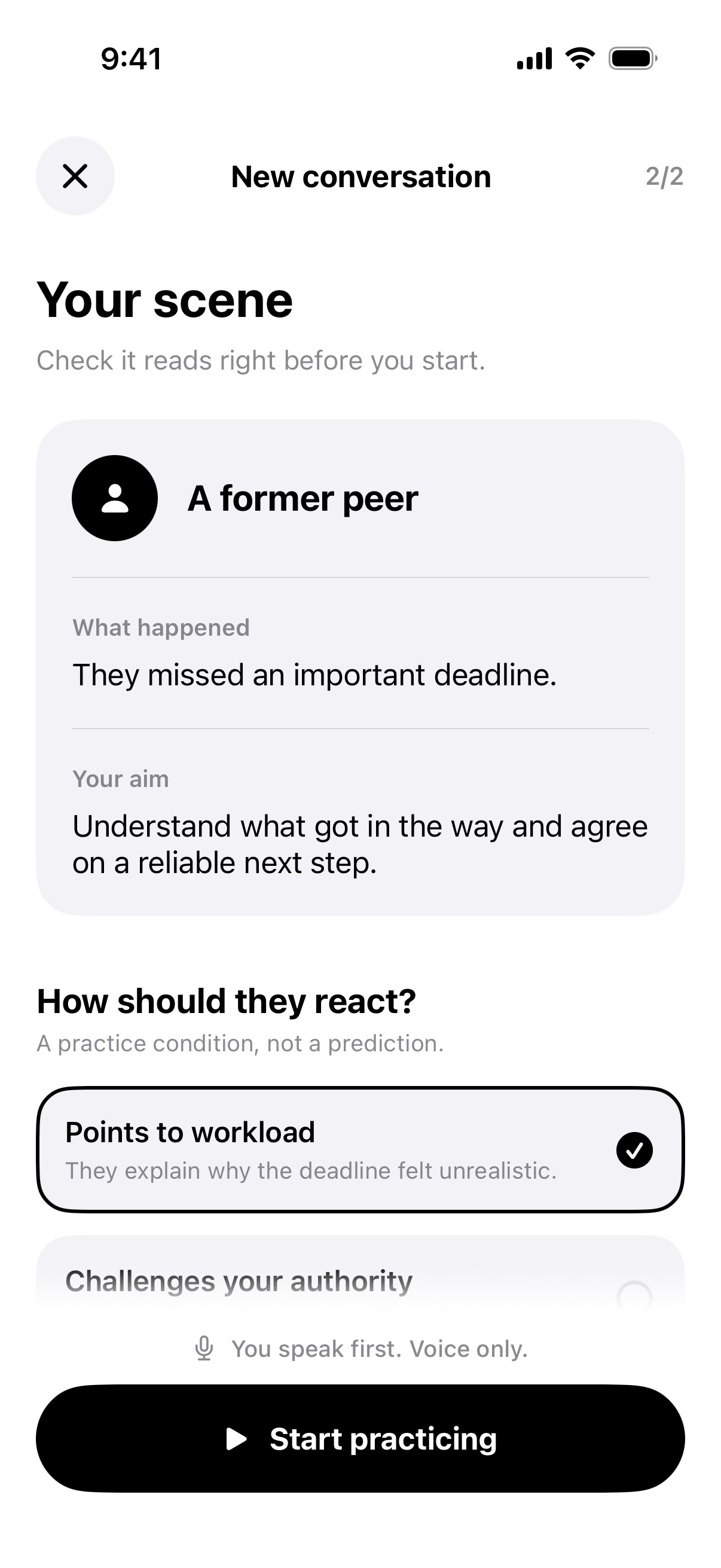
- Describe the situation in your own words, spoken or typed. WorkTalk turns it into a scene: who you're talking to, what happened, and what you want from the conversation.
- Pick how they'll react. WorkTalk suggests three realistic reactions for your specific situation, such as deflecting responsibility or agreeing only with conditions, and you choose the one you need to practice.
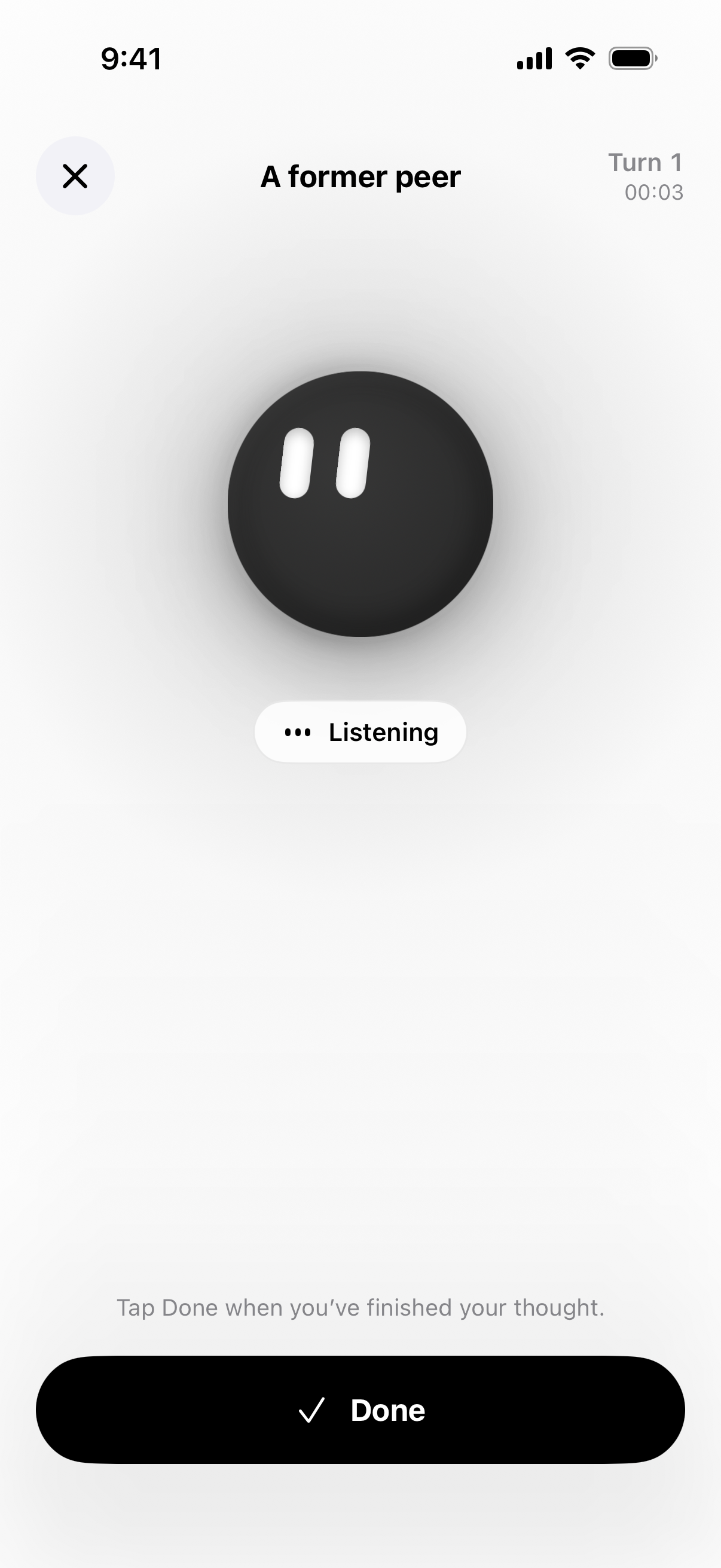
- Have the conversation, out loud. Rehearsals are voice-only on purpose: typing doesn't practice the hard part. The colleague answers in real time and adapts.
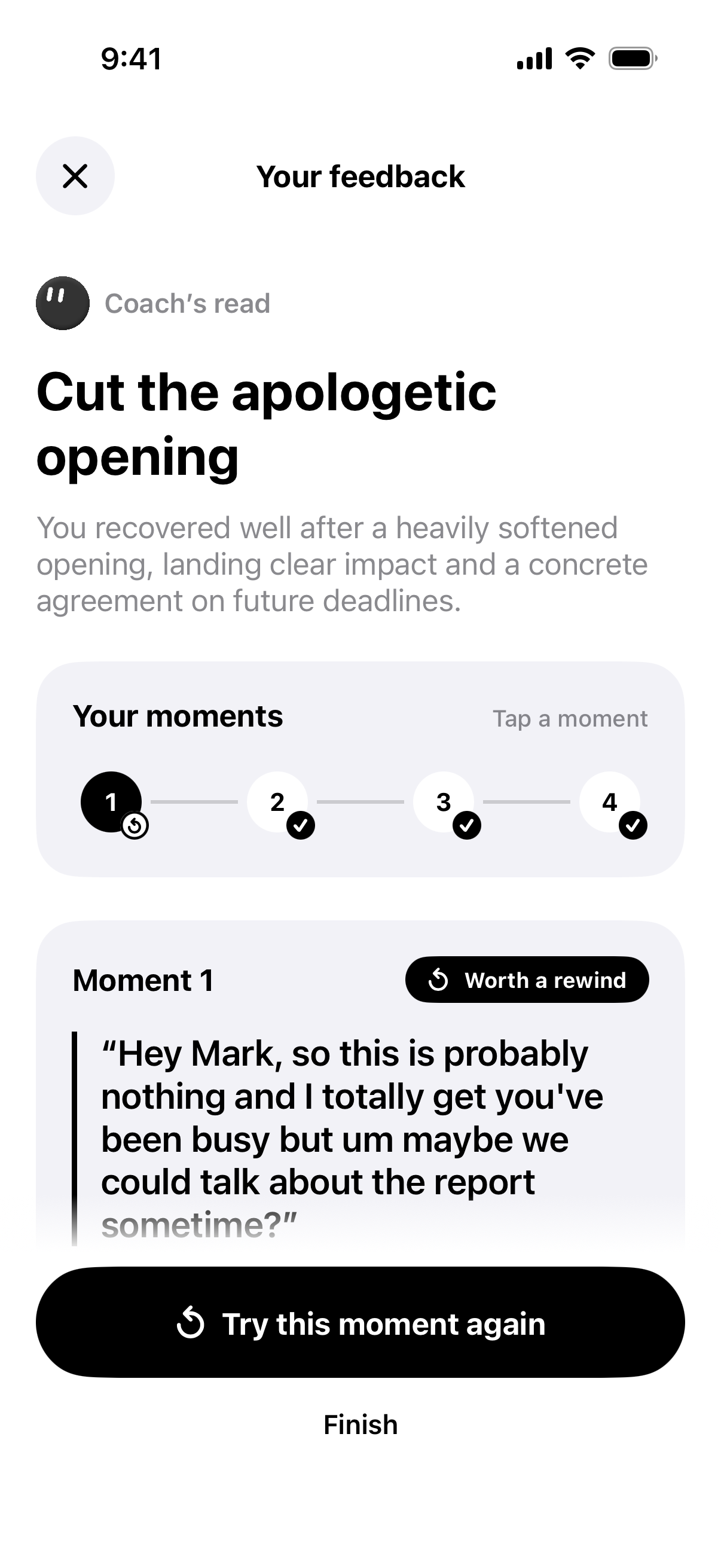
- Get feedback on every moment. A coach reads back each thing you said as landed, mixed, or slipped, with one concrete thing to try next. No scores, no perfect script.
- Rewind the wobble. Jump back to any moment that slipped and say it again, in your own words, until it lands.
- Keep your progress. Every conversation is saved and can be read back as a chat, with the moments you fixed shown in place.
Onboarding is built around where you are as a leader: how long you've managed, whether you lead former peers, and the habits you fall into under pressure. The coach uses those answers to watch for your specific patterns.
Free to start, Pro for unlimited practice. Your first rehearsal is completely free, with everything included: feedback on every moment, rewinds, and saved history. After that, WorkTalk Pro unlocks unlimited rehearsals.
How I built it
- iOS app built with Swift/SwiftUI.
- The backend runs entirely on Firebase: Auth, Firestore, Remote Config, App Check, and AI integrations.
- Gemini Live via Firebase AI Logic for the real-time spoken rehearsal.
- Subscriptions and paywalls are powered by RevenueCat.
- Code built with Claude Code and Codex.
Challenges I ran into
One of the hardest technical challenges was making spoken practice reliable. Quiet speech, speaker echo, Bluetooth headsets, and audio interruptions can all disrupt a conversation. I built audio handling and speech detection that account for those conditions, including recovery when voice processing delivers a silent microphone.
Another challenge was making the AI colleague believable. Too much agreement removes the useful tension; excessive resistance makes practice discouraging. I shaped the character around contextual reactions, brief replies, and clear safety boundaries.
Feedback needed similar care. The coach has to point to something the user actually said, offer a useful experiment, and recognize when an attempt was already strong. Retry comparisons assess the user's wording and conversational choices, because a more agreeable AI response alone doesn't demonstrate improvement.
Accomplishments that I'm proud of
- Shipping it. WorkTalk went from first commit to approved on the App Store in about three weeks, built solo, with a second release already following.
- Practice, not a chatbot. Real-time spoken roleplay with a colleague who adapts to what you actually say, and who reacts differently when you hedge than when you're clear.
- Feedback without a grade. Every moment gets a read, but there's no score and no "correct" script. The coaching helps you sound clearer while still sounding like yourself.
- Built to be trusted. The colleague is tough but never cruel, and it steps out of character if someone describes harassment or a real safety concern.
What I learned
Building WorkTalk taught me how closely technical reliability and emotional comfort are connected. A missed first word or an unexplained silence can make an already nervous user feel unsure about continuing.
I also learned the value of giving each AI interaction a narrow responsibility. Separating scene setup, roleplay, pacing, and coaching made the experience easier to reason about and refine.
Most of all, this project reinforced the value of actionable feedback. A precise observation becomes much more useful when the user has an immediate opportunity to try something different.
What's next for WorkTalk - Hard Conversations
My next priority is testing WorkTalk with first-time managers and using their feedback to refine the realism of the reactions, the usefulness of the coaching, and the ease of getting into practice.
I'd also like to explore:
- Progress themes across sessions, helping users notice recurring habits and changes in their approach.
- Further improvements to audio reliability, and broader support for practicing in other languages.
The goal remains simple: help managers walk into hard conversations with clearer words and more confidence from having practiced.

Log in or sign up for Devpost to join the conversation.