-
-
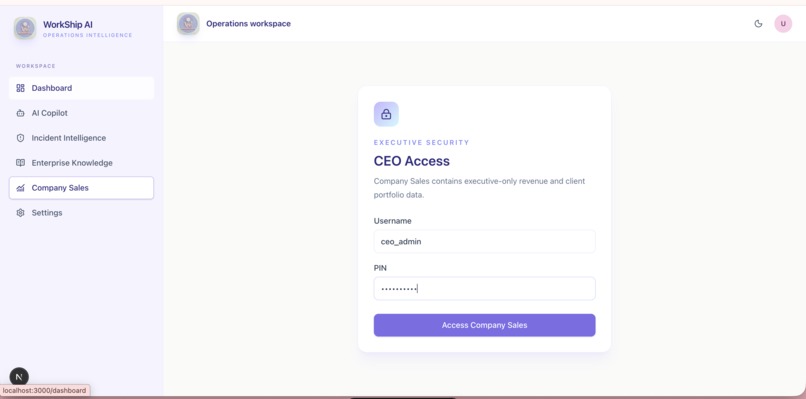
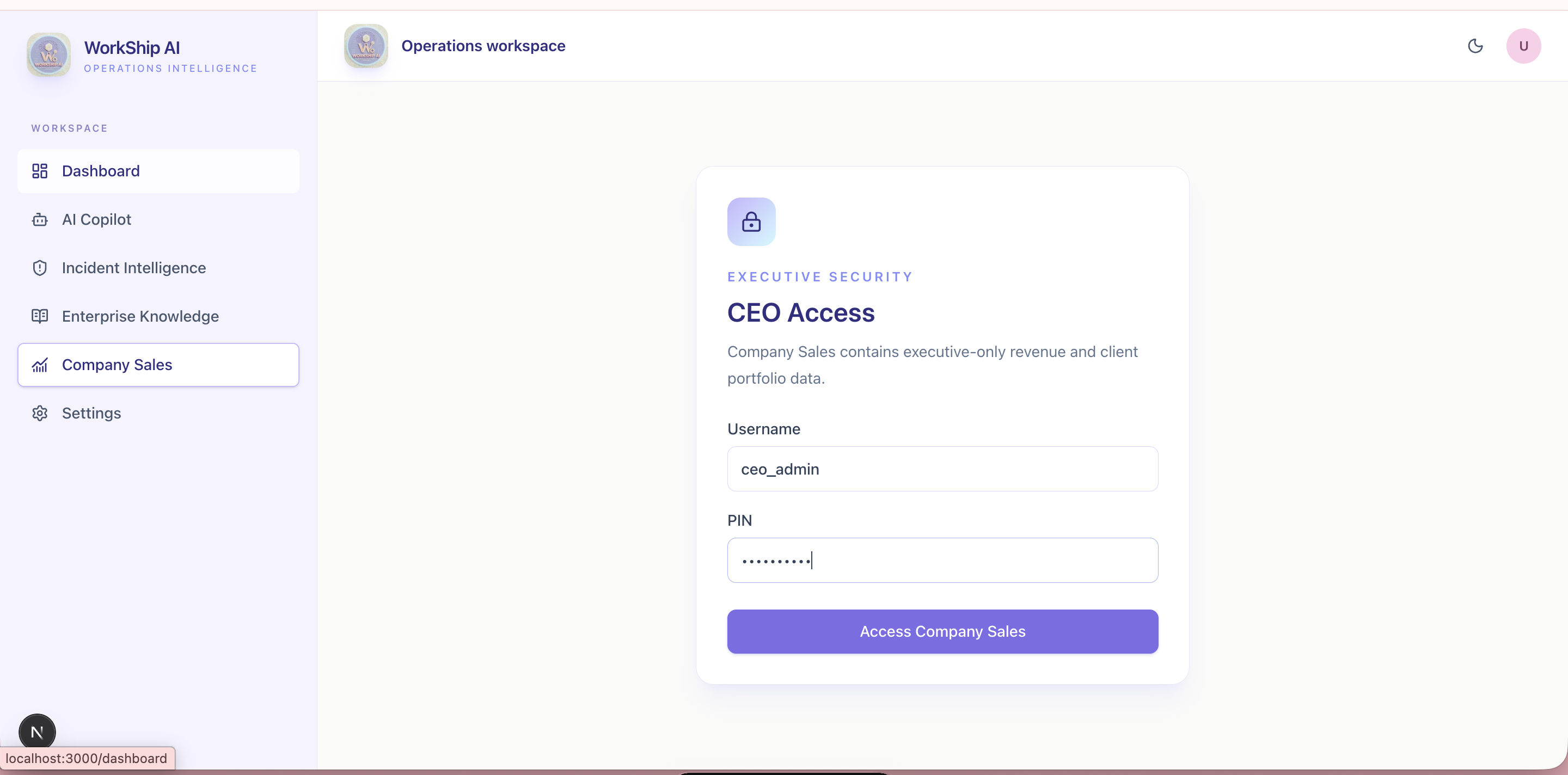
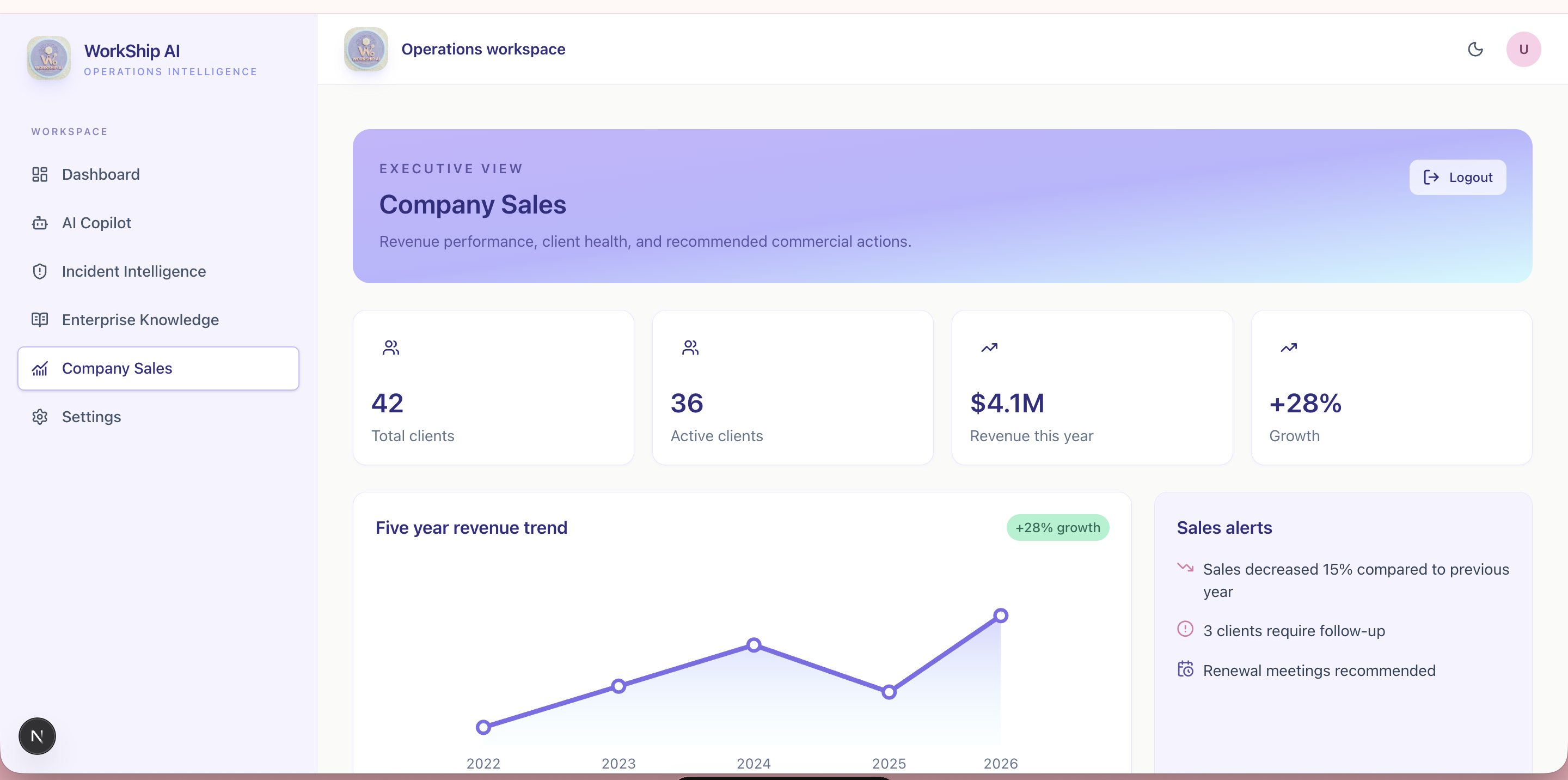
Special login for ceo for viewing company sales
-
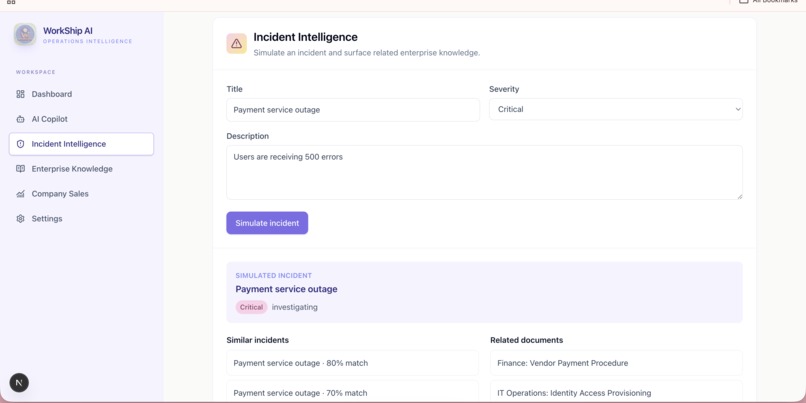
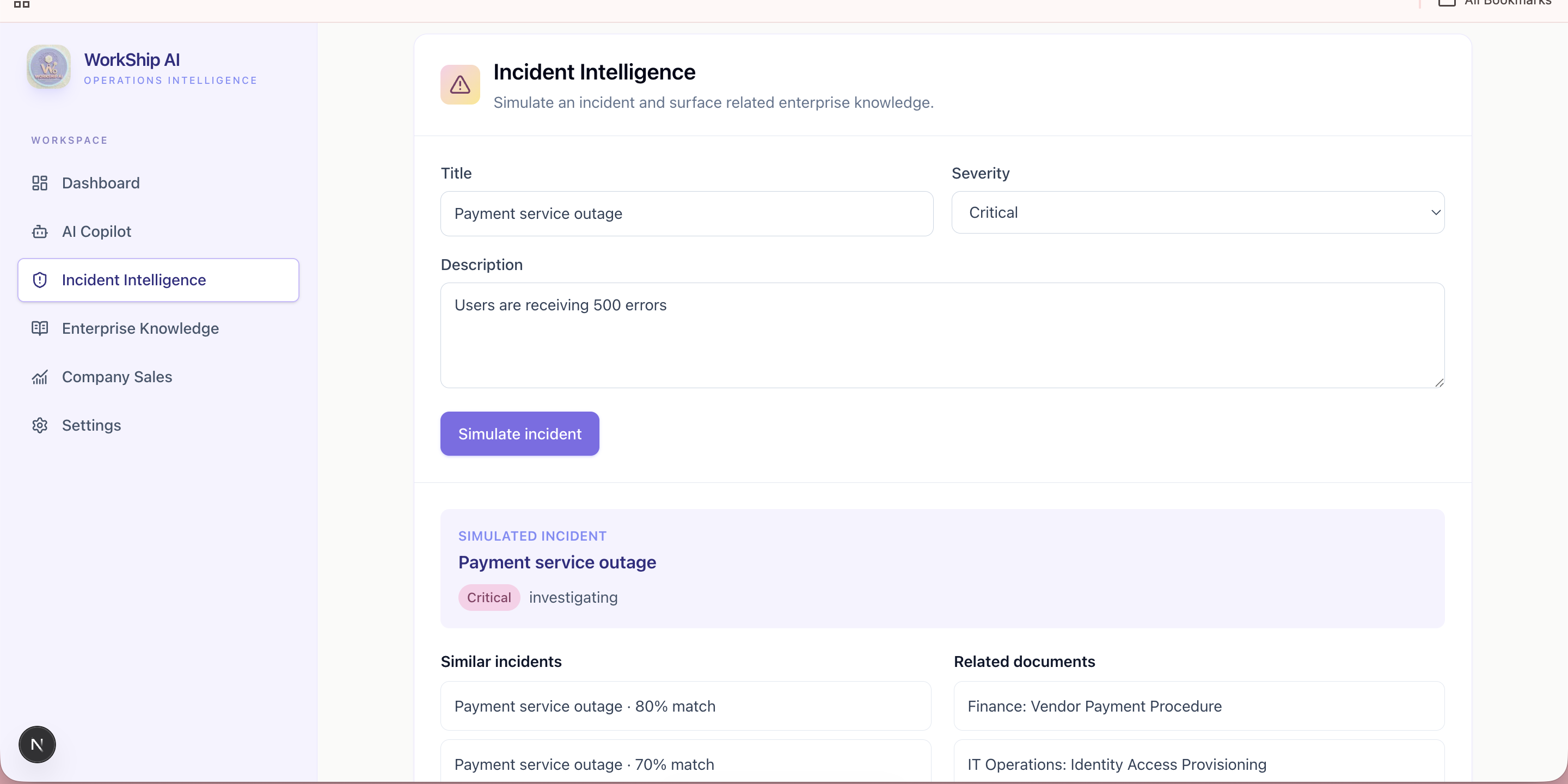
Incident Intelligence
-
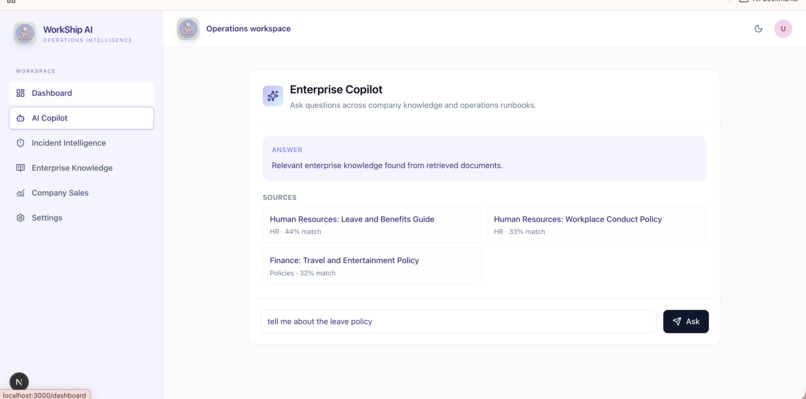
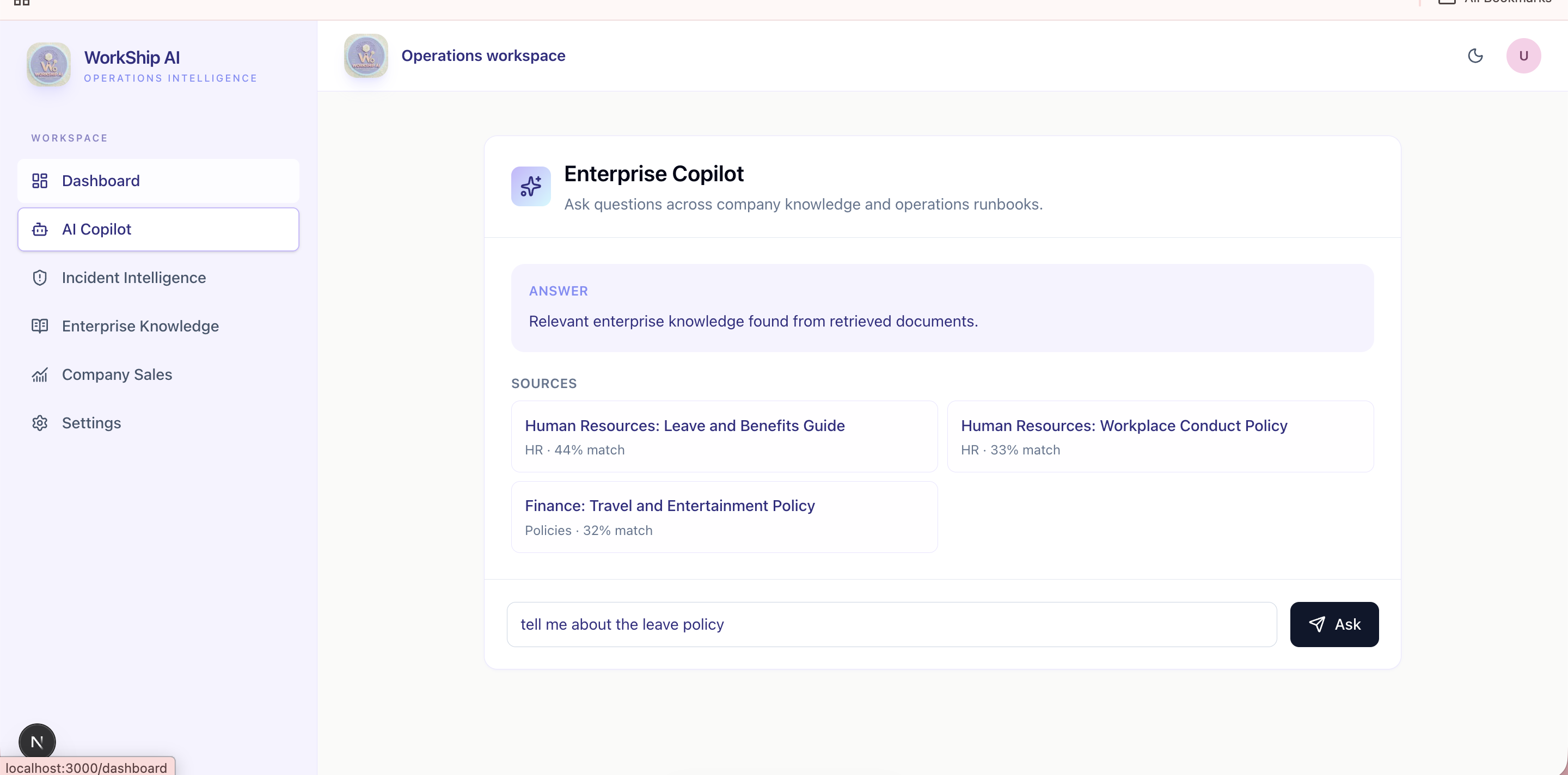
AI copilot
-
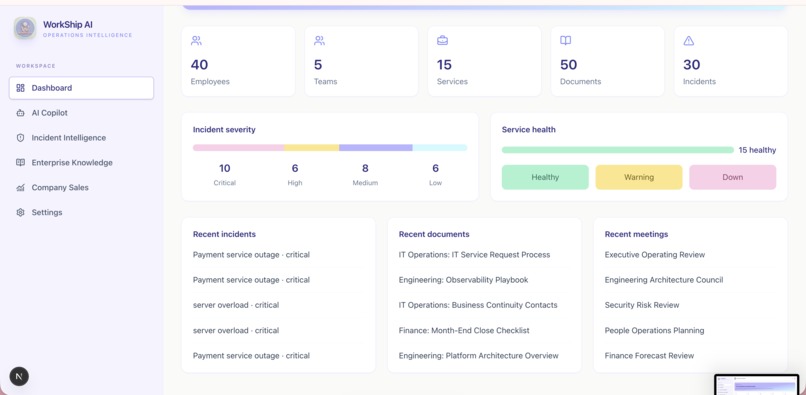
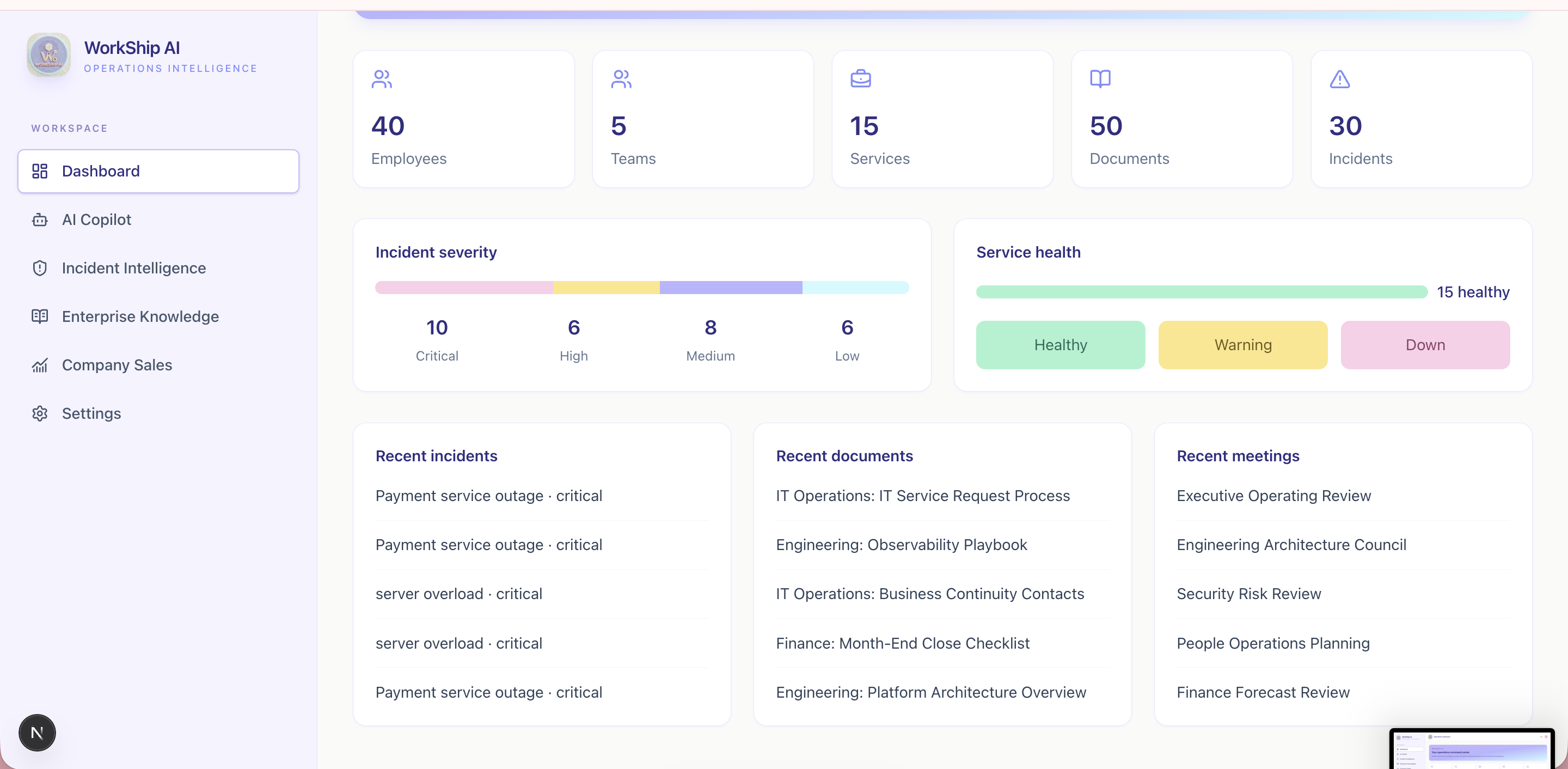
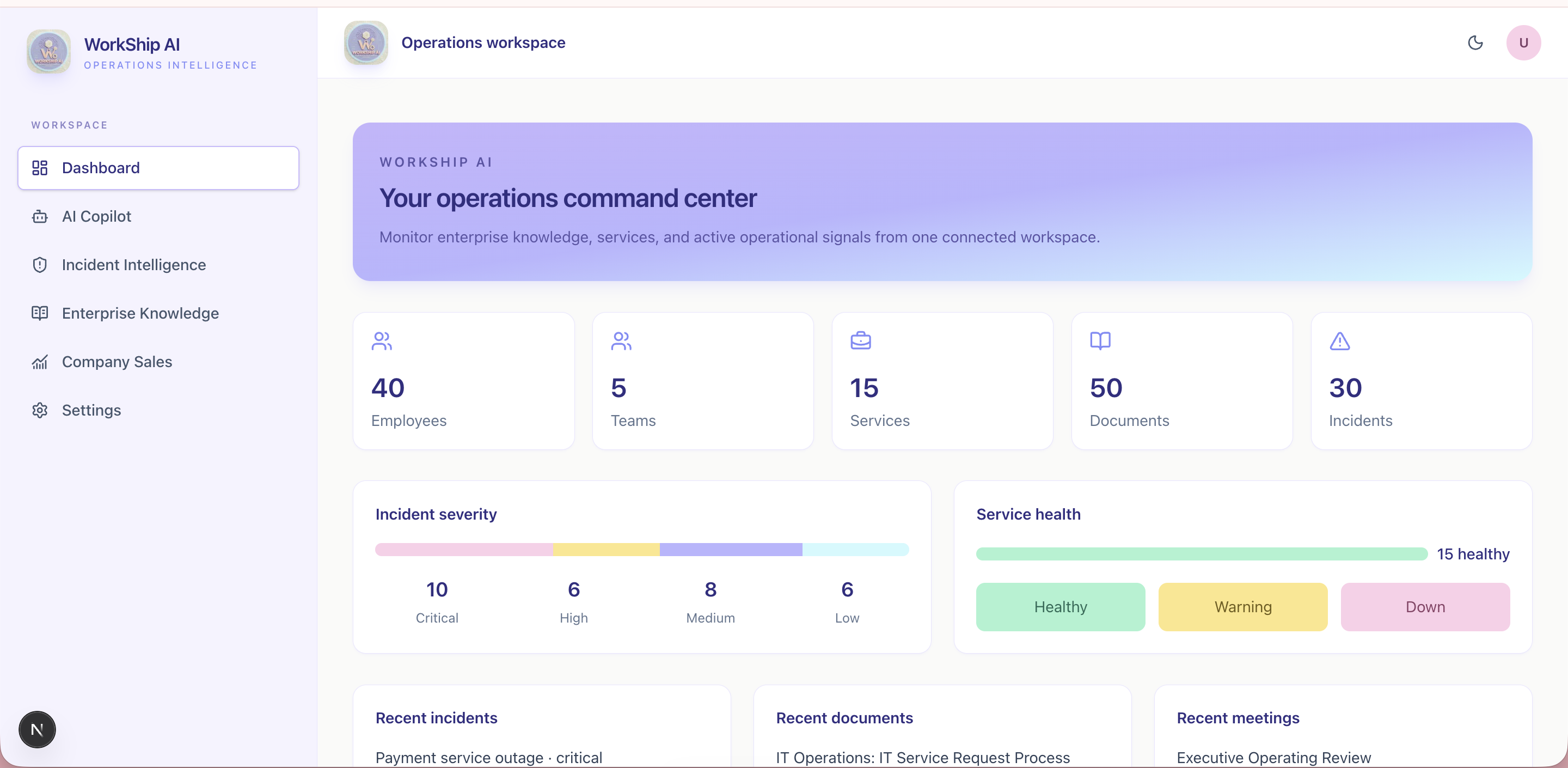
The dashboard
-
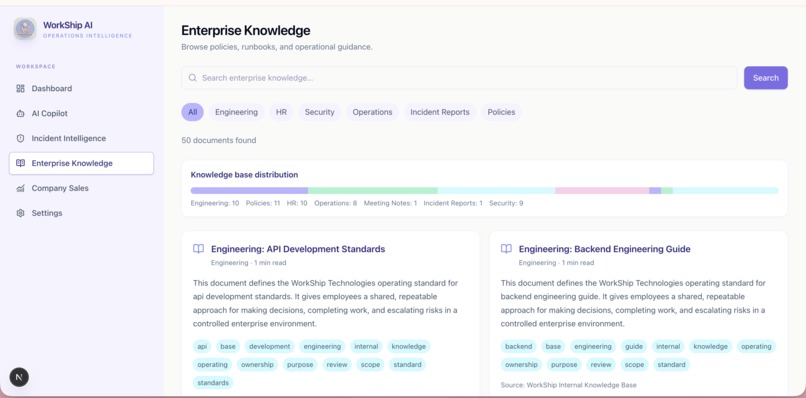
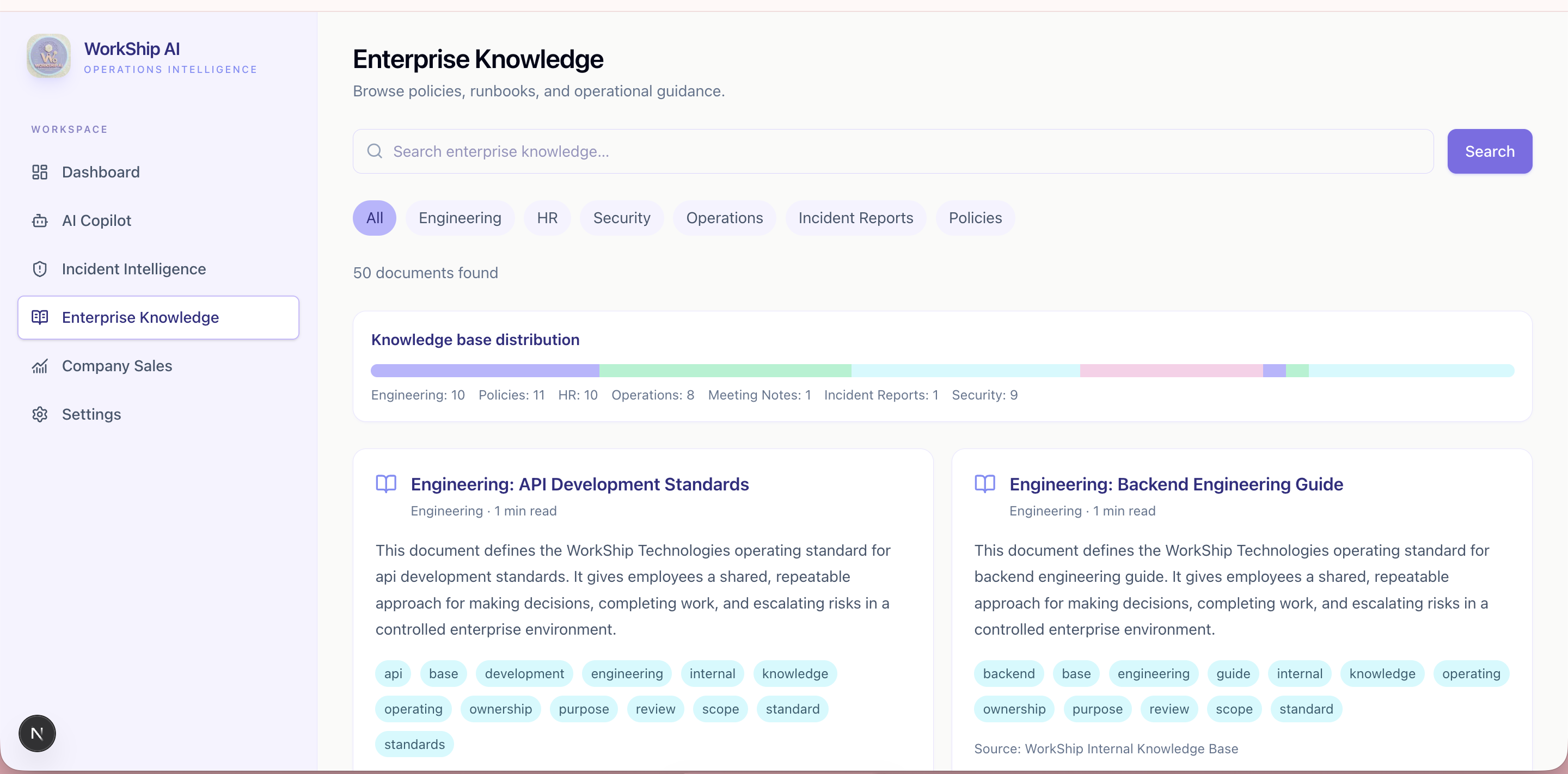
Enterprise Knowledge
-
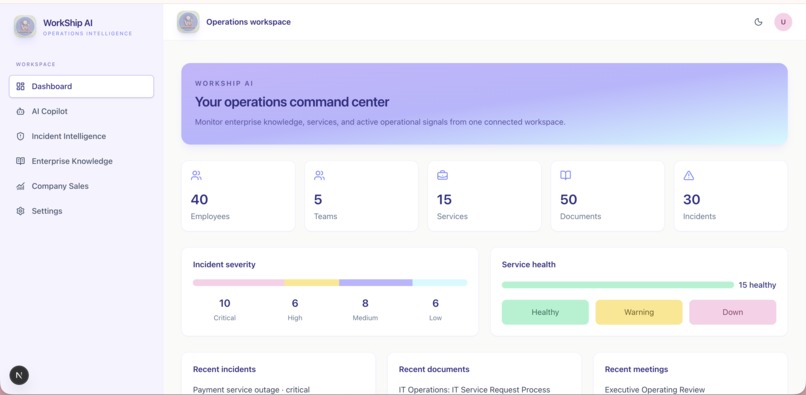
Dashboard continued
-
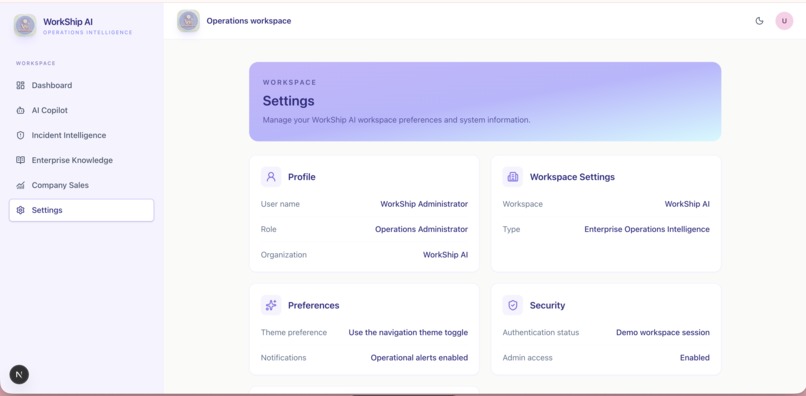
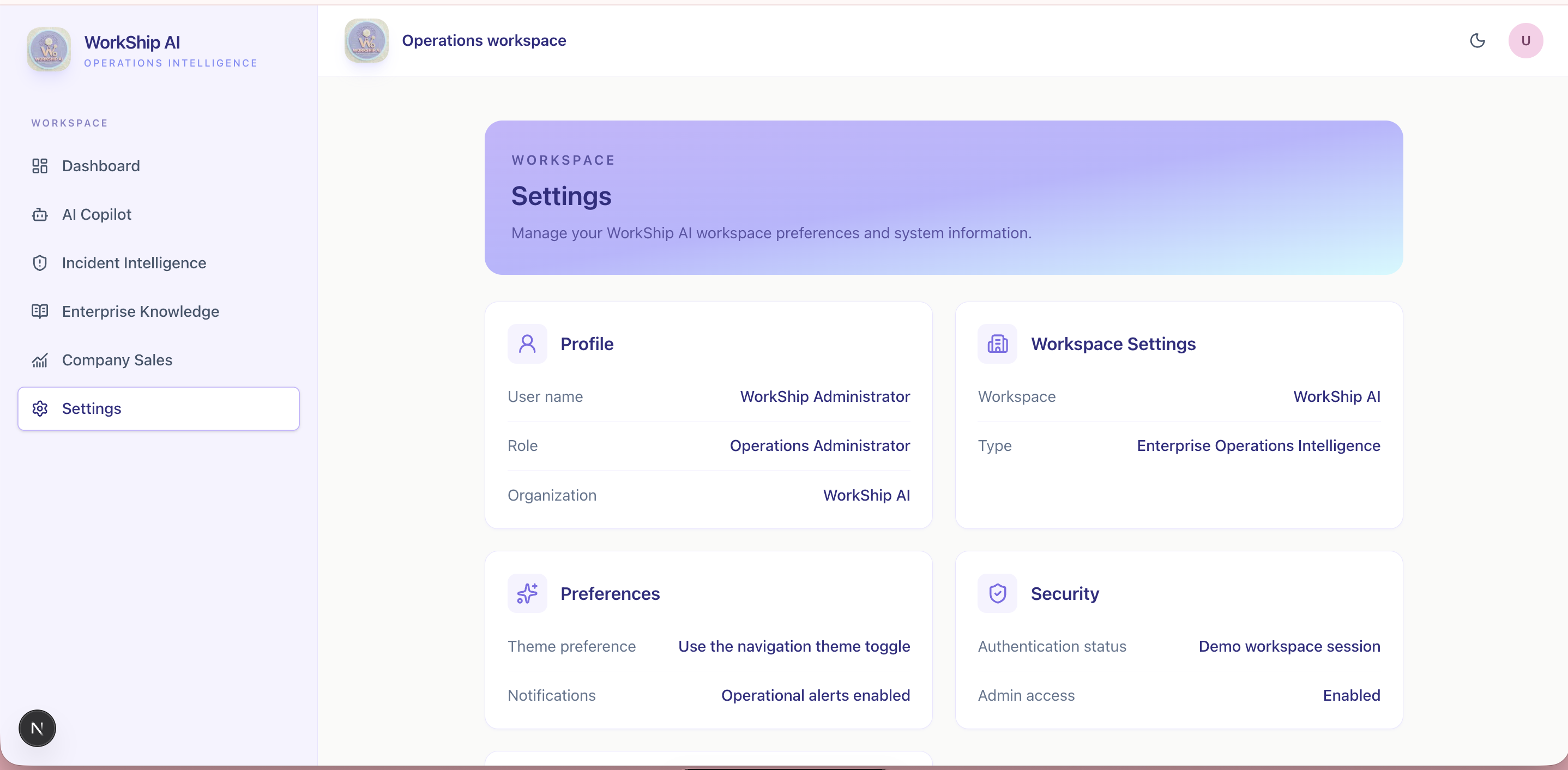
Settings
-
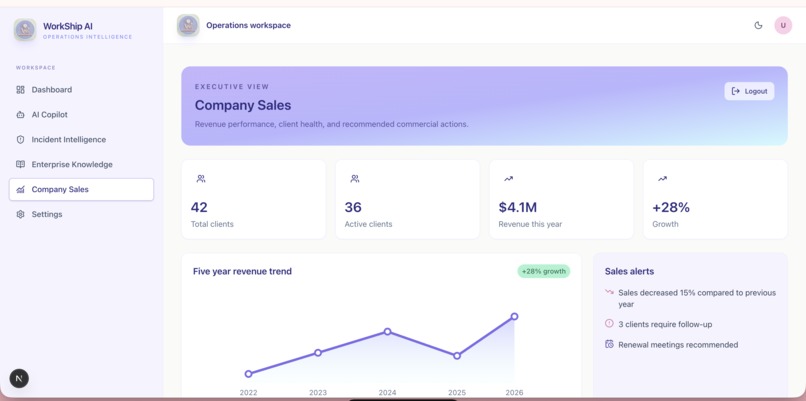
Company Sales Dashboard
-Inspiration
The idea behind WorkShip AI came from noticing how difficult it can be for companies to manage daily operations when information is spread across different platforms. During an incident, teams often spend a lot of time trying to find out what happened, who is responsible, and where the required information is available.
We wanted to create a platform that brings everything together — incidents, employees, documents, meetings, and business insights — so teams can make faster decisions and handle problems more efficiently.
- What it does
WorkShip AI is an AI-powered operations platform that helps companies manage their internal workflows and incidents from a single place.
It allows teams to:
- Track incidents with details like when they occurred, where they happened, possible causes, and current status.
- Understand incident severity and prioritize critical issues.
- Connect incidents with employees and teams responsible for handling them.
- Manage company documents and knowledge resources.
- View company insights such as sales and operational data through dashboards.
- Use AI assistance to quickly find relevant information and improve decision-making.
-How we built it
We built WorkShip AI as a full-stack web application using Next.js for the frontend and FastAPI for the backend.
The frontend focuses on providing a clean dashboard experience with role-based views for different users like employees, managers, and CEOs.
The backend handles APIs, authentication, business logic, and communication between different modules. We used Supabase for authentication and database management to securely store and manage user and company data.
The application was developed in a modular way, with separate services for incidents, documents, employees, meetings, and analytics.
-Challenges we ran into
Building a platform that connects multiple areas of company operations was challenging.
Some of the main challenges we faced were:
- Creating a proper role-based authentication system for different types of users.
- Managing relationships between incidents, employees, teams, and documents.
- Designing APIs that could support different parts of the application.
Making sure the application worked smoothly during deployment and testing.
Accomplishments that we're proud of
We are proud of building a complete working platform that combines operational management, company knowledge, and analytics into one system.
Some things we achieved:
- Built a full-stack application from scratch.
- Created dashboards for different user roles.
- Implemented incident tracking and management.
- Connected operational data with business insights.
- Developed a system that can be extended further for real-world company use.
-What we learned
While building WorkShip AI, we learned a lot about developing real-world applications, especially around backend architecture, frontend development, authentication, database management, and deployment.
We also learned that building a useful product is not only about adding features but also about making sure the user experience is simple and solves an actual problem.
-What's next for WorkShip AI
In the future, we would like to improve WorkShip AI by adding more intelligent automation, such as better incident recommendations, real-time alerts, deeper analytics, and integrations with existing company tools.
Our goal is to continue improving WorkShip AI into a platform that helps teams handle operations faster and make better decisions.
Built With
- css
- fastapi
- github
- html5
- javascript
- next.js
- postgresql
- python
- react
- restapi
- sql
- supabase
- tailwind
- typescript
- uvicorn


Log in or sign up for Devpost to join the conversation.