-
-
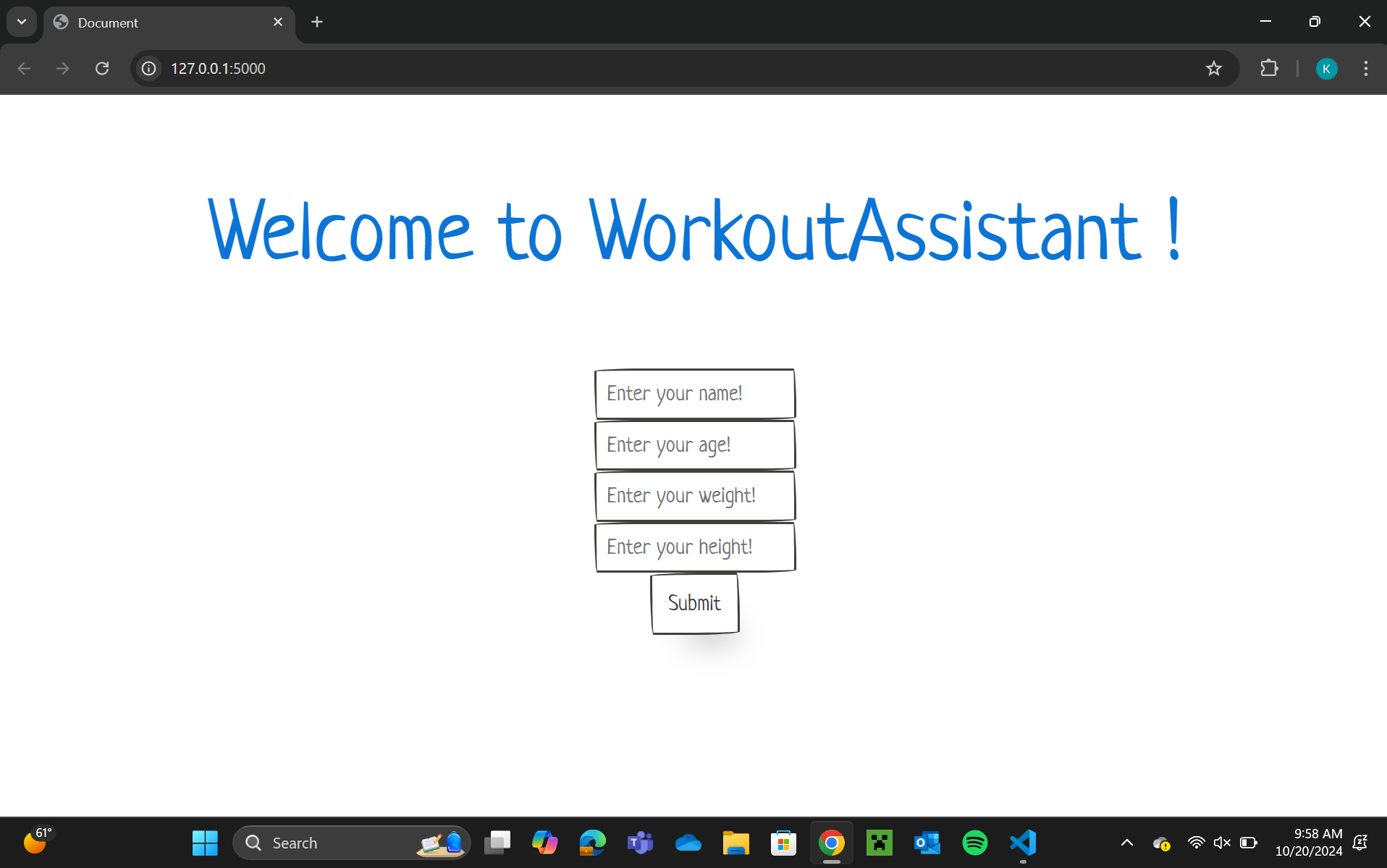
Our Introductory Website to the project
-
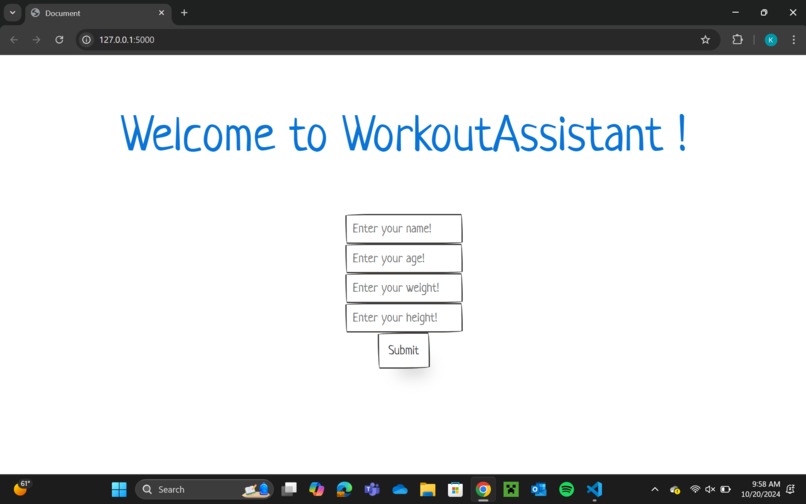
Login page for Workout Assistant
-
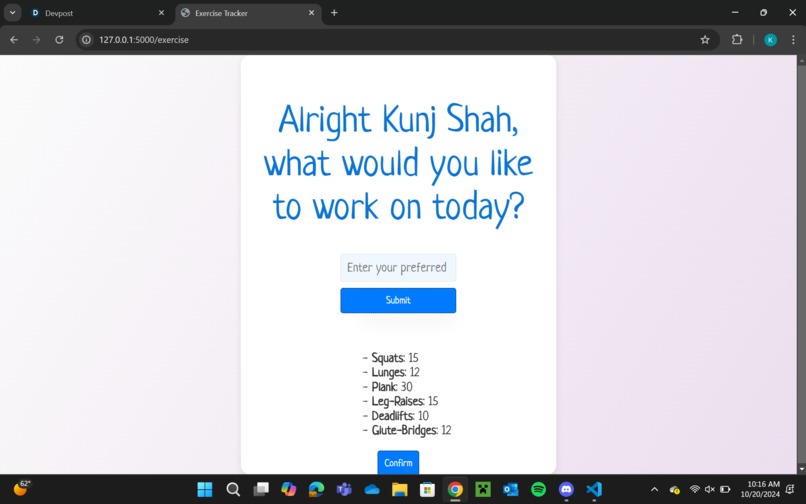
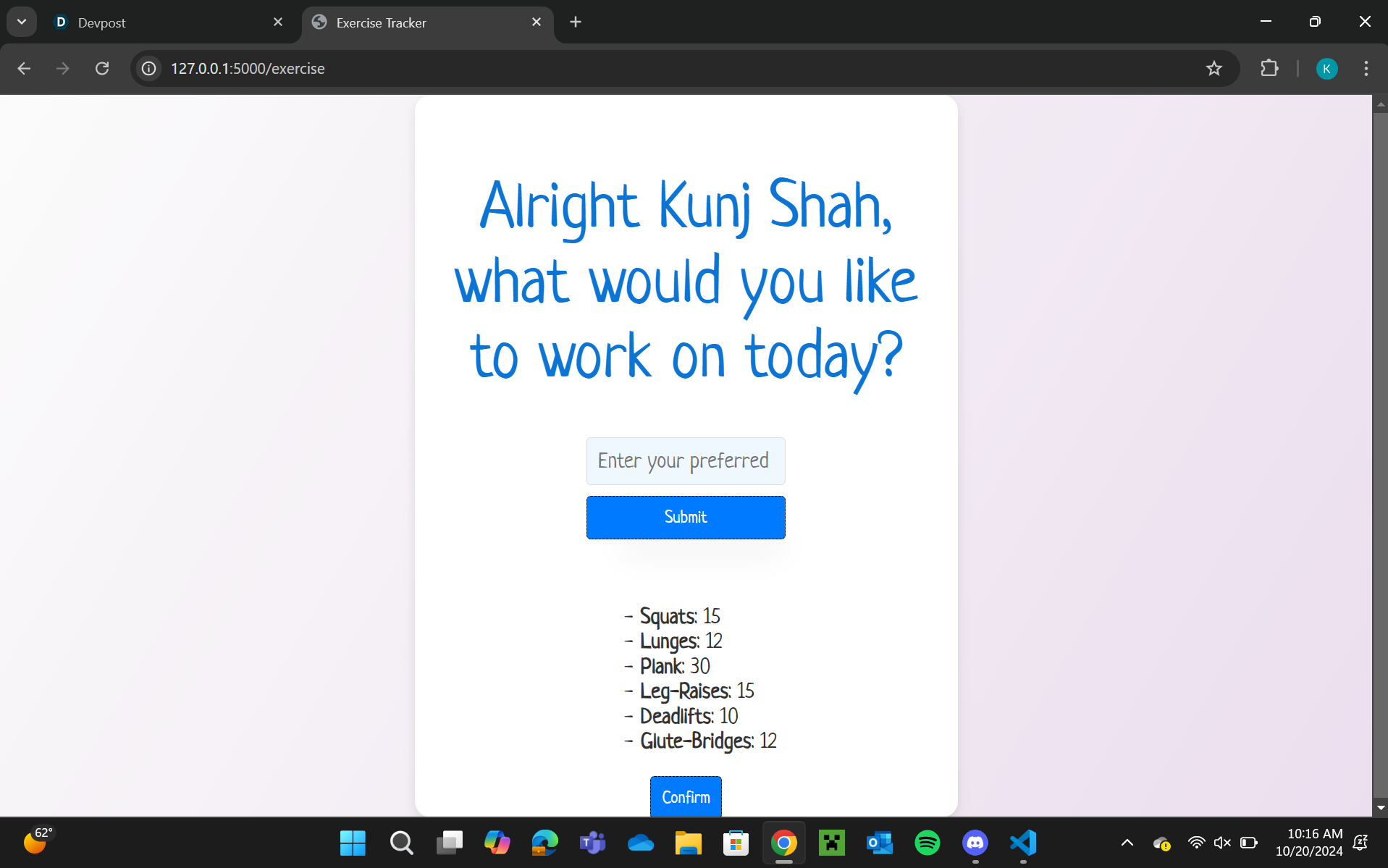
Inquiry page for Workout Assistant
Workout Assistant: Project Story Inspiration: The inspiration behind Workout Assistant stemmed from the desire to make exercise more accessible and engaging for everyone. Many people struggle to maintain proper form during workouts, which can lead to injury or reduce the effectiveness of the exercise. We wanted to create a tool that could help users track their form in real-time, provide feedback, and suggest workout routines tailored to their fitness goals. The idea was to leverage AI and computer vision to bring a personal trainer experience to users in their own homes.
What it does: Workout Assistant is an AI-powered web application that tracks your workout in real-time. Using your webcam, the system detects body landmarks with computer vision to assess the quality of your movements during exercises such as squats, push-ups, and lunges. It provides instant feedback on your form, helping you make adjustments to avoid injuries and get the most out of your workout. Additionally, it offers personalized workout routines based on your preferences and fitness level by integrating OpenAI's API for intelligent suggestions.
How we built it: We built Workout Assistant using a combination of Python, HTML, CSS, and JavaScript. For live video streaming and pose detection, we used OpenCV and the MediaPipe library to track key body landmarks. Flask served as the backend framework to handle requests and integrate different components. The OpenAI API was used to generate personalized workout plans based on user inputs. We designed the frontend using HTML, CSS, and JavaScript, creating an intuitive interface for users to interact with the application.
Challenges: One of the major challenges we faced was accurately detecting and evaluating users’ form in real-time. Ensuring that the computer vision system correctly identified body landmarks under different lighting conditions and camera angles was tricky. We also encountered difficulties when integrating the OpenAI API with the rest of the project, as combining AI-generated text with real-time feedback required careful coordination between the frontend and backend. Additionally, we had to optimize performance to ensure smooth video streaming without lags or delays.
Accomplishments: We're proud of successfully building a fully functioning prototype within the given timeframe. The integration of computer vision for real-time feedback and AI-generated workout plans is a significant accomplishment, as it combines two advanced technologies in one seamless application. We’re also proud of the user-friendly design that makes it easy for people to track their workouts and improve their form from the comfort of their home.
What we learned: This project taught us a lot about working with real-time video processing and combining it with AI-driven solutions. We learned how to better integrate different technologies like OpenCV, MediaPipe, Flask, and OpenAI into a cohesive system. We also gained experience in optimizing applications for performance, especially when working with live video and data streaming.
What's next for Workout Assistant: In the future, we plan to expand Workout Assistant by adding support for more exercises and refining the feedback system to be more comprehensive. We also want to explore the possibility of using machine learning to provide even more personalized recommendations and to detect fatigue or poor posture over time. Integrating wearable devices for more accurate data collection and expanding the platform to mobile would be exciting next steps as well.


Log in or sign up for Devpost to join the conversation.