-
-
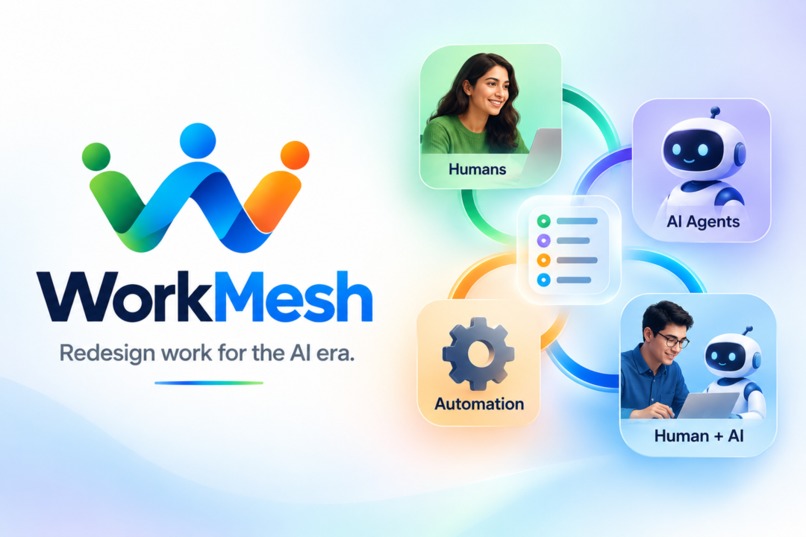
The Vision
-
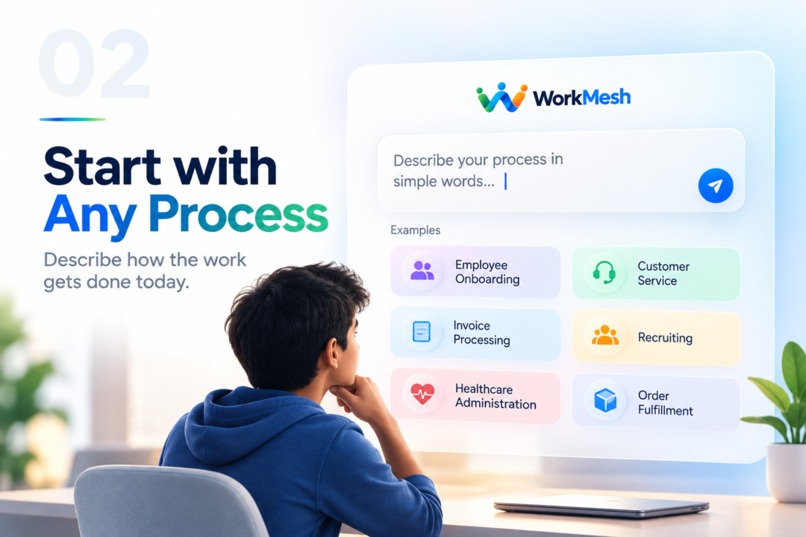
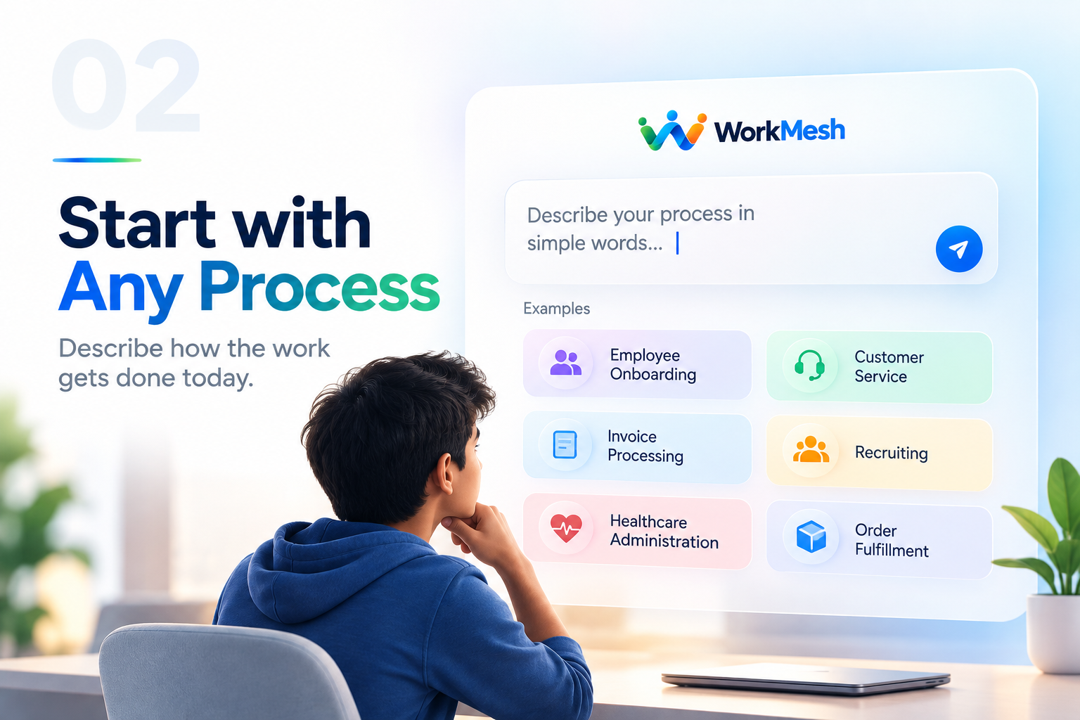
Start with any Process
-
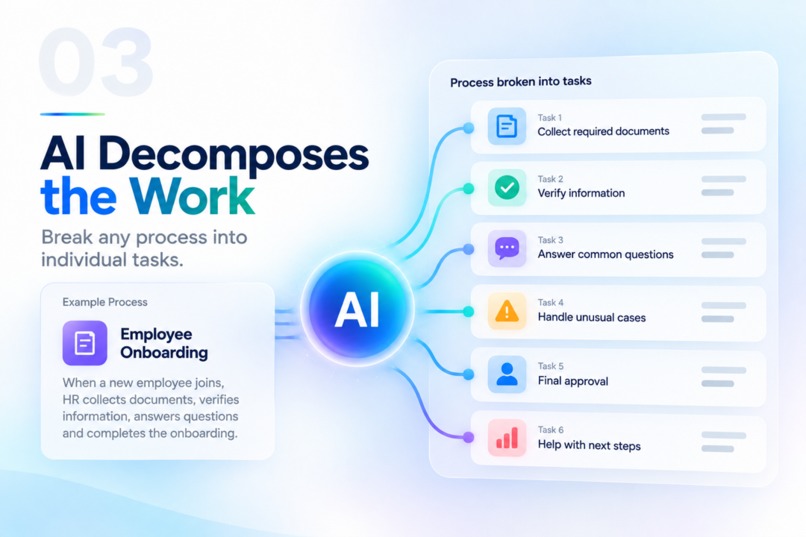
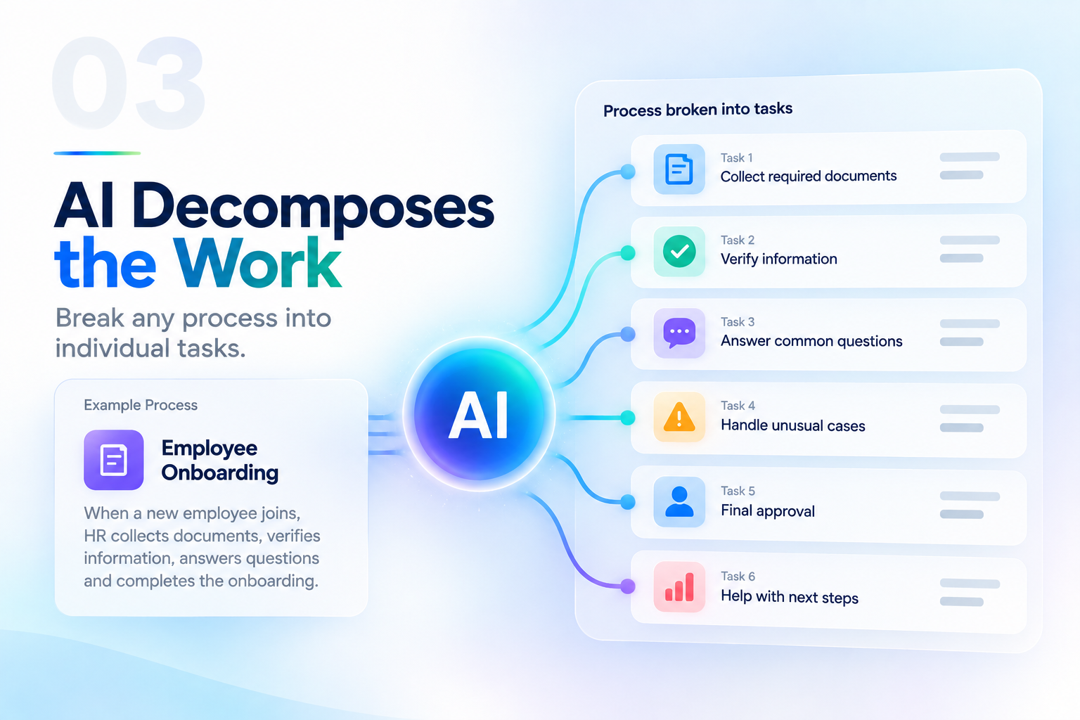
AI Decomposes the Work
-
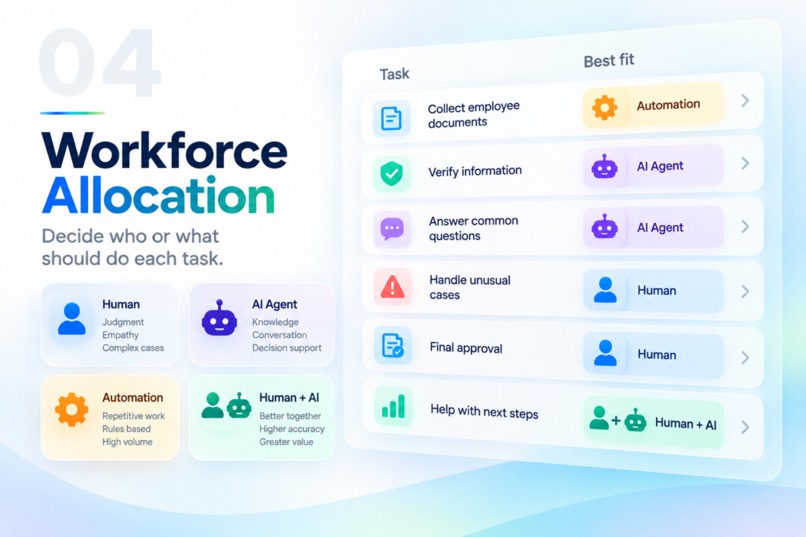
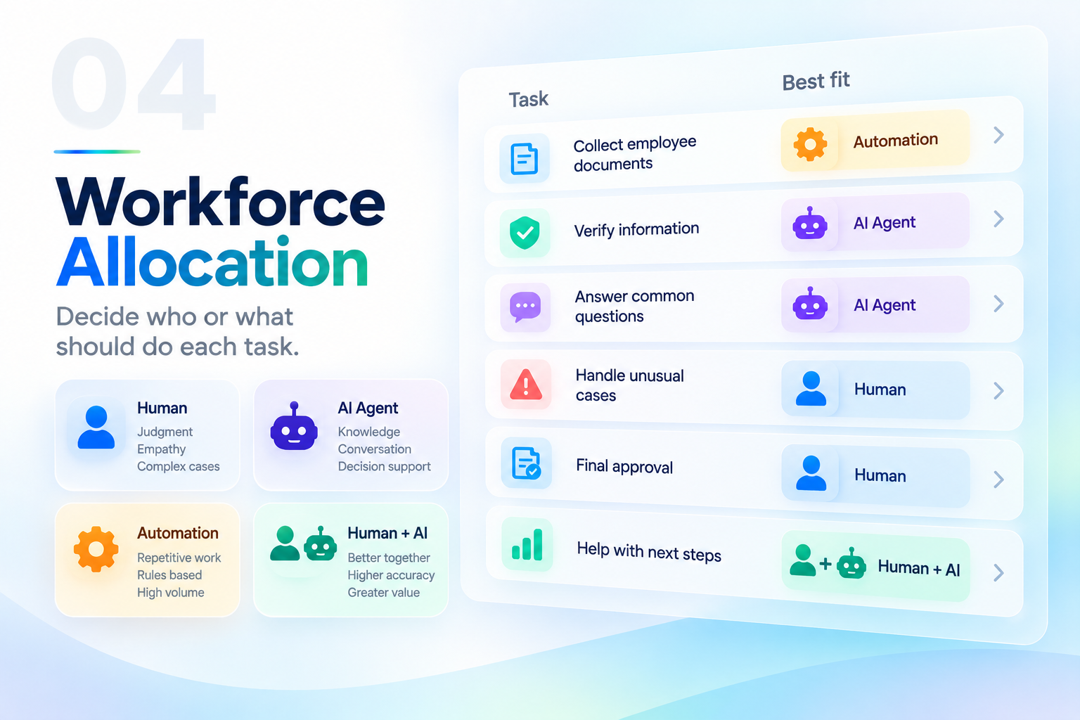
Workforce Allocation
-
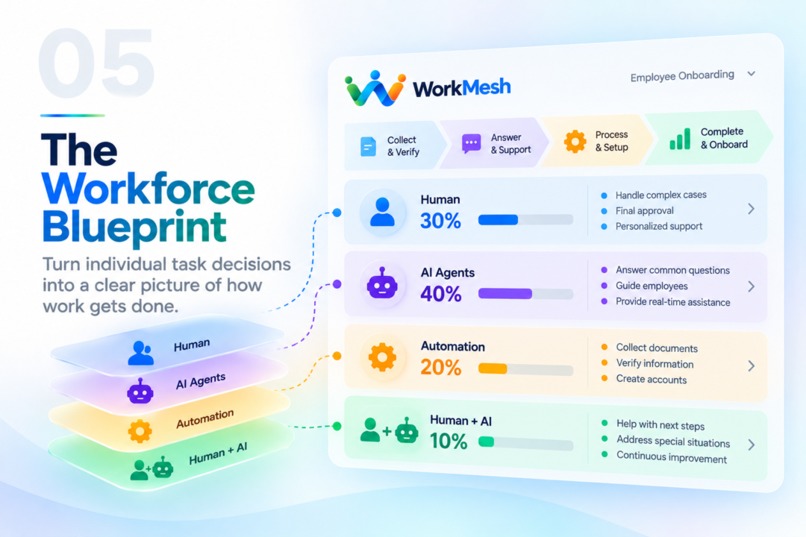
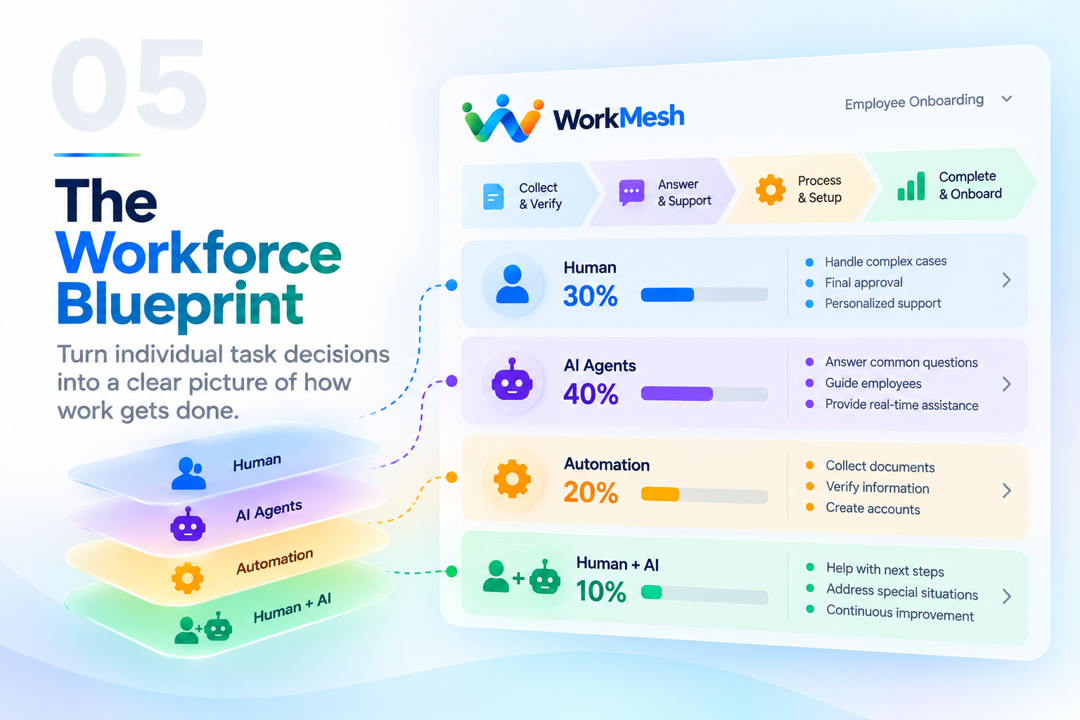
Workforce Blueprint
-
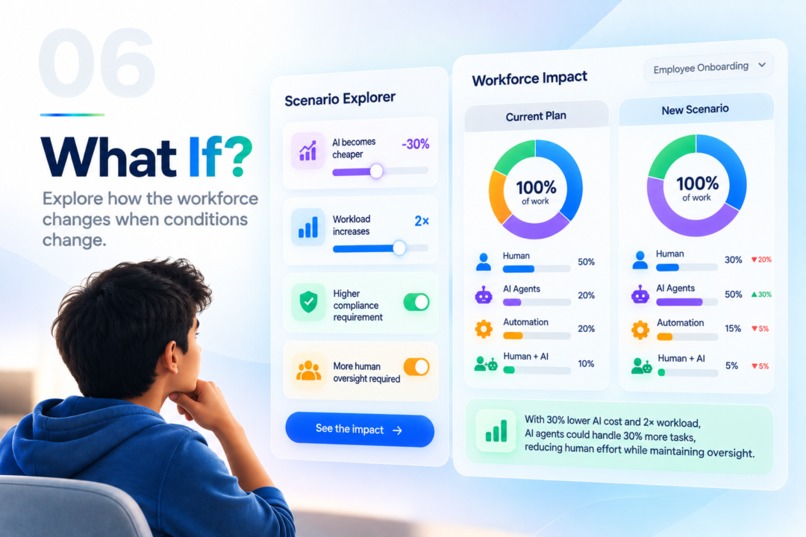
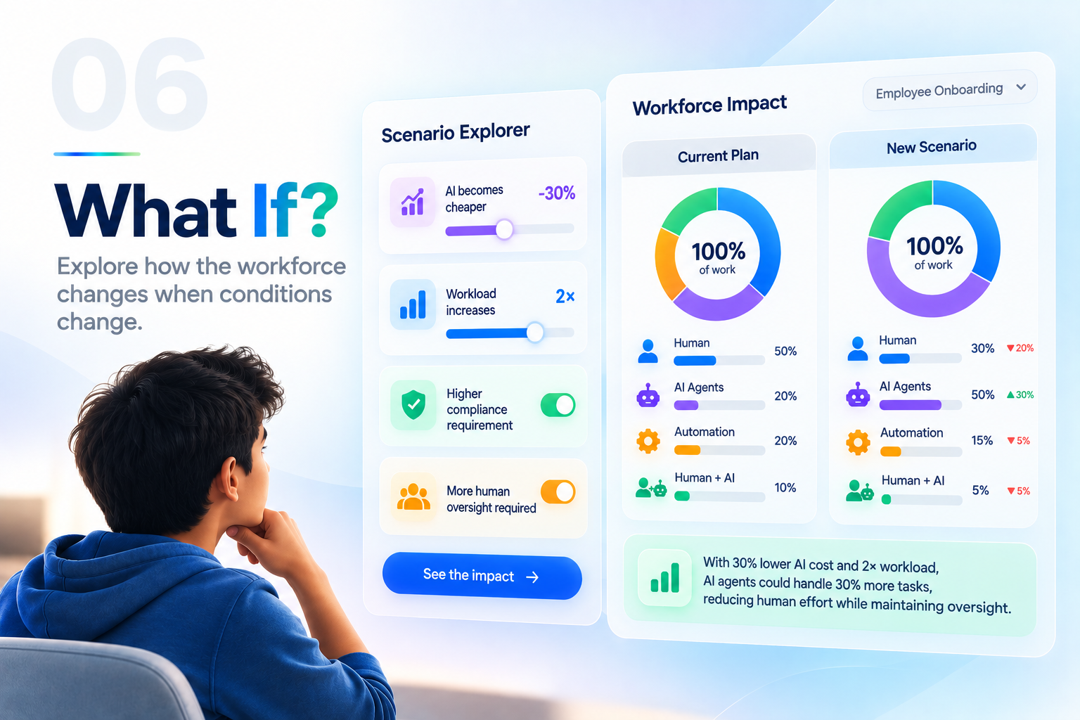
What If
-
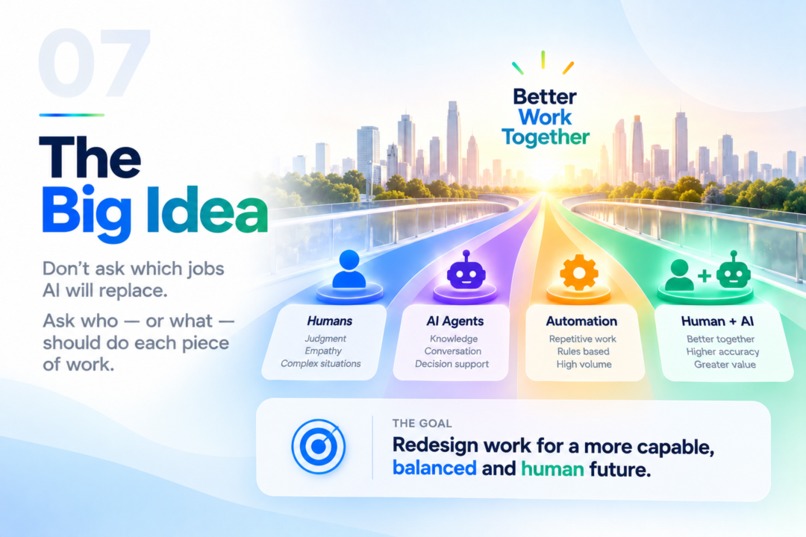
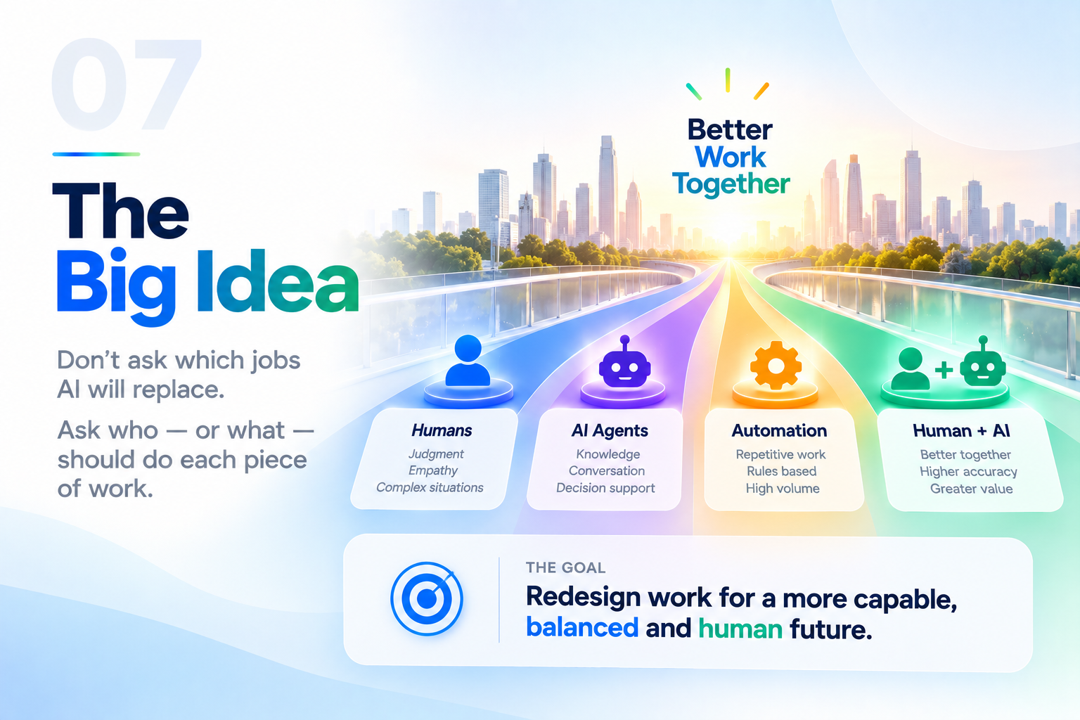
The Big Idea
-
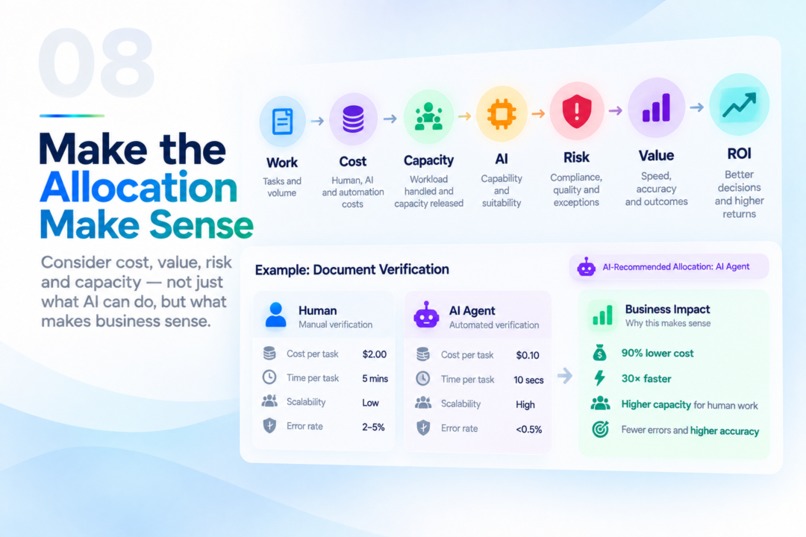
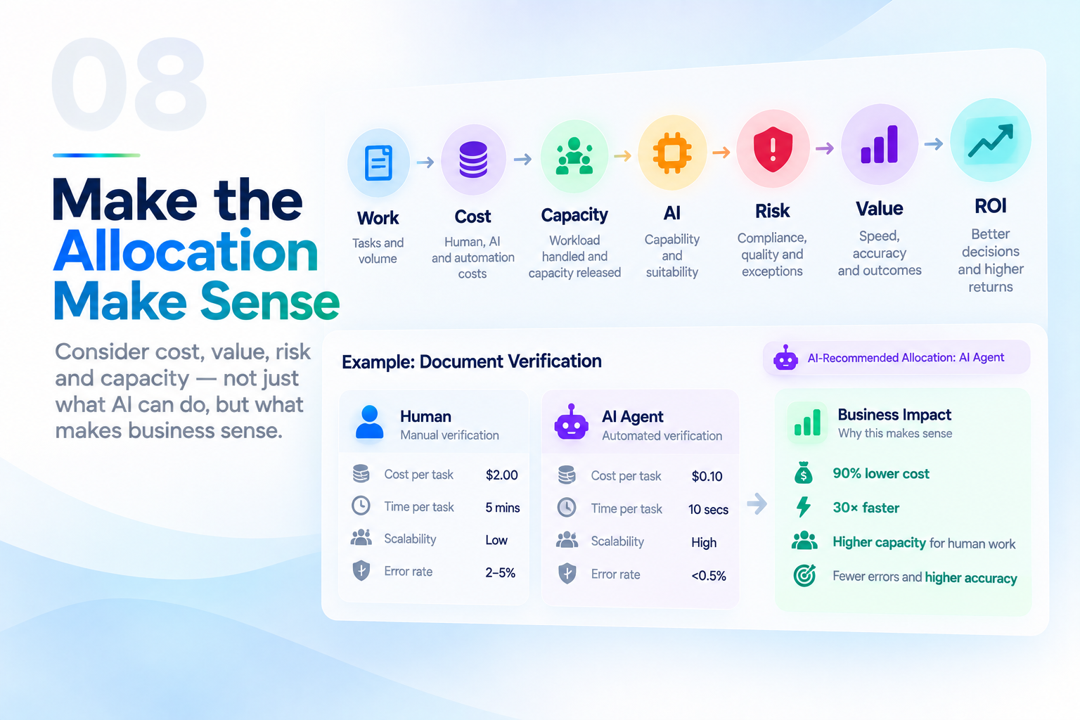
The Economics
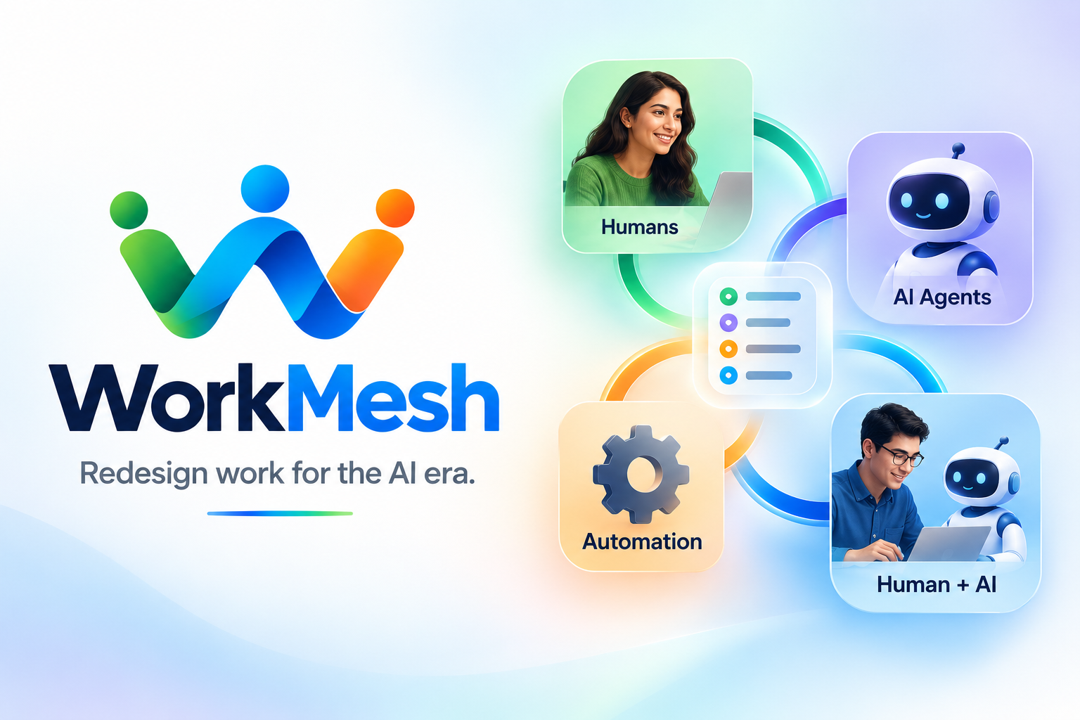
WorkMesh
Redesign work for the AI era.
How the idea started
The idea for WorkMesh started with something pretty simple: conversations with my dad.
My dad works in AI, customer experience, and business transformation, so I hear a lot about how companies are trying to use AI.
One thing I kept hearing was that businesses are not just asking:
"Can AI do this?"
They are also asking:
"Should AI do this?"
That got me curious.
Then I spoke to our neighbor, who runs an AI company. He was dealing with a similar kind of problem. Even when an AI system can perform a task, there are still questions about cost, reliability, human involvement, and whether using AI is actually the best choice.
That made me think about something.
A job is not really one single thing.
A person might have 50 different tasks in their job. Some could be automated. Some could be handled by AI. Some need human judgment. And some might work best when a human and AI work together.
So instead of asking:
"Will AI replace this job?"
I started wondering:
"Who—or what—should do each piece of the work?"
That question became WorkMesh.
The problem I wanted to explore
When people talk about AI and the future of work, the discussion often becomes about humans versus AI.
I don't think it has to be that way.
Businesses now have several different ways to get work done:
- 👤 Humans
- 🤖 AI agents
- ⚙️ Automation
- 👤 + 🤖 Humans working with AI
The difficult part is deciding where each one belongs.
For example, imagine employee onboarding.
There may be tasks such as:
- Collect documents
- Check information
- Answer common questions
- Handle unusual problems
- Approve the onboarding
- Help the employee with more complicated situations
It doesn't make sense to say, "Let's automate onboarding."
Instead, we could ask:
| Task | Possible approach |
|---|---|
| Collect documents | Automation |
| Check information | AI |
| Answer common questions | AI Agent |
| Handle unusual problems | Human |
| Final approval | Human |
| Help with complex situations | Human + AI |
The idea behind WorkMesh is to look at the individual pieces of work, rather than treating the entire job as one unit.
What WorkMesh does
I designed WorkMesh as a decision-support concept.
A business could start with almost any process and describe how it works today.
WorkMesh would then:
1. Understand the process
The business explains the process in normal language.
For example:
"When a new employee joins, HR collects their documents, verifies their information, answers questions, and completes the onboarding."
2. Break the process into tasks
AI would decompose the process into individual tasks.
It could consider things like:
- How repetitive is the task?
- How complicated is it?
- Does it require judgment?
- Is there risk involved?
- Does it require human interaction?
- How much work is involved?
3. Allocate each task
Each task could then be assigned to:
Human | AI Agent | Automation | Human + AI
4. Create a Workforce Blueprint
The individual decisions could then be combined into a future-state picture of how the work gets done.
Instead of simply saying:
"We need 10 employees."
the business could start thinking in terms of:
"Here is the work, here is what technology can handle, and here is where people create the most value."
One important question: economics
While thinking about the idea, I realized that there is another problem.
Just because AI can do something doesn't mean it is worth using AI to do it.
Imagine a company has a task that takes a human two minutes and happens only ten times a month.
Using an expensive AI system to automate it might be impressive—but it might also be a terrible business decision. 😄
Now imagine another task happens 100,000 times every day and is highly repetitive.
That could be a very different story.
So I want WorkMesh to eventually consider things such as:
- Human cost
- Automation cost
- AI/inference cost
- Expected value
- Risk
- Human capacity released
This leads to one of the ideas behind WorkMesh:
Don't automate because you can. Allocate because it makes sense.
In the future, I would like WorkMesh to become an AI Workforce ROI Engine that connects:
$$ Work \rightarrow Cost \rightarrow Capacity \rightarrow AI \rightarrow Risk \rightarrow Value \rightarrow ROI $$
But isn't this already being done?
This was one of the questions I had to ask myself.
There are already workforce-planning tools, automation platforms, AI-agent platforms, and companies working on AI and workforce transformation.
So I don't want to claim that WorkMesh invented the idea of using AI in workforce planning.
Instead, I wanted to explore a different starting point.
A traditional approach might begin with:
Jobs → People → Skills → Capacity
WorkMesh starts with:
Process → Tasks → Requirements → Workforce Allocation
That is the part I find interesting.
Instead of optimizing the workforce first, what if we optimize the work first?
WorkMesh could eventually sit above existing HR, workforce-management and AI systems as a decision layer that helps businesses figure out how work should be performed.
What if the world changes?
There is another reason I don't think workforce planning can be a one-time decision.
AI is changing quickly.
What if an AI agent becomes much better at a task?
What if AI becomes cheaper?
What if the company's workload doubles?
What if a new regulation requires a human to approve something?
The answer could change.
That is why I came up with a "What If?" idea for WorkMesh.
A business could change different assumptions and see how its workforce model might change.
For example:
What if AI becomes 30% cheaper?
What if our workload doubles?
What if every high-risk task requires human approval?
The goal would be


Log in or sign up for Devpost to join the conversation.