Inspiration
Small-business owners often manage customer messages, orders, payment follow-ups, reminders, and daily operations at the same time. Important work can get lost when instructions are scattered across conversations and informal notes. We wanted to explore how AI could help turn that messy information into clear, actionable work.
What it does
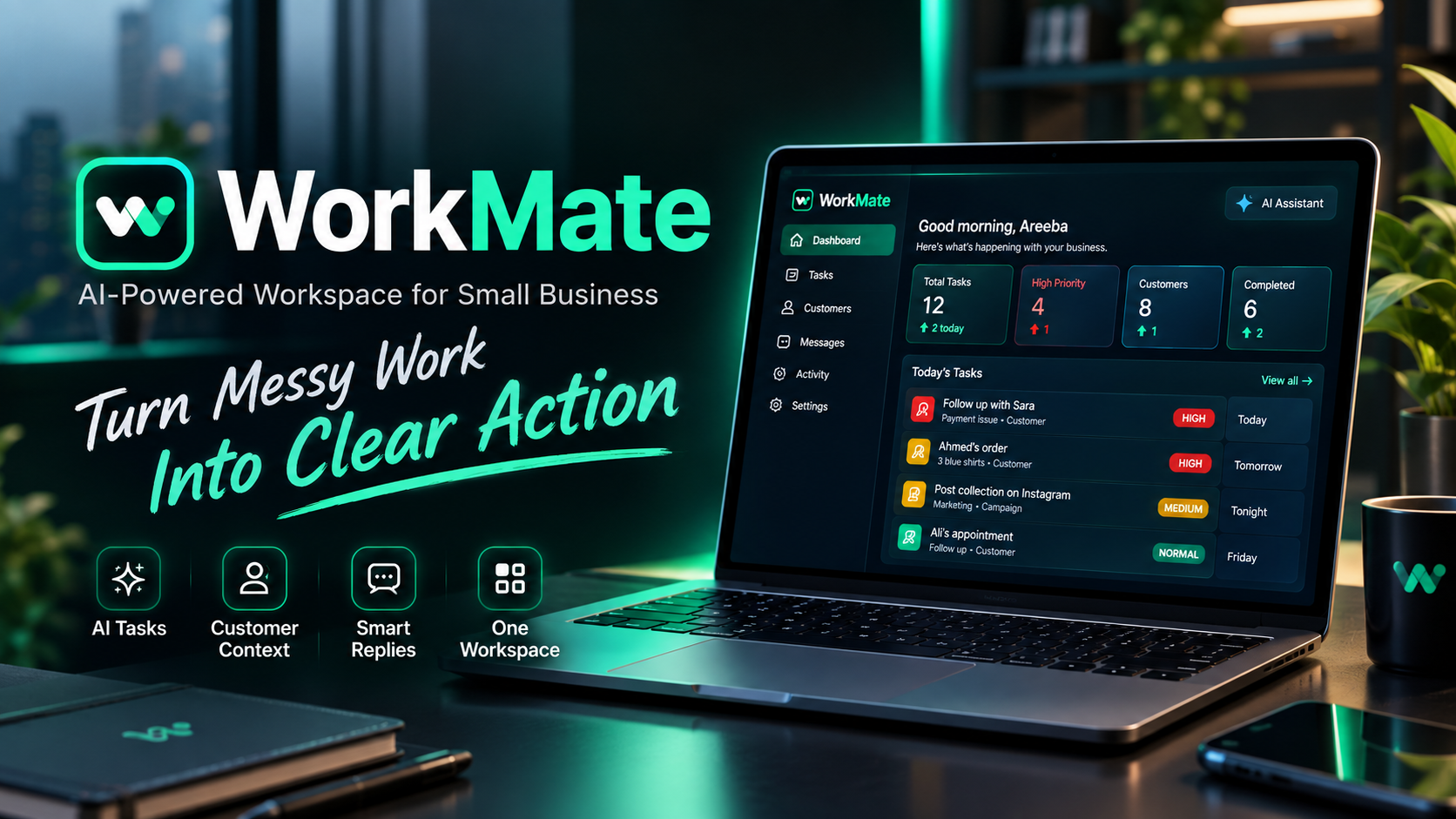
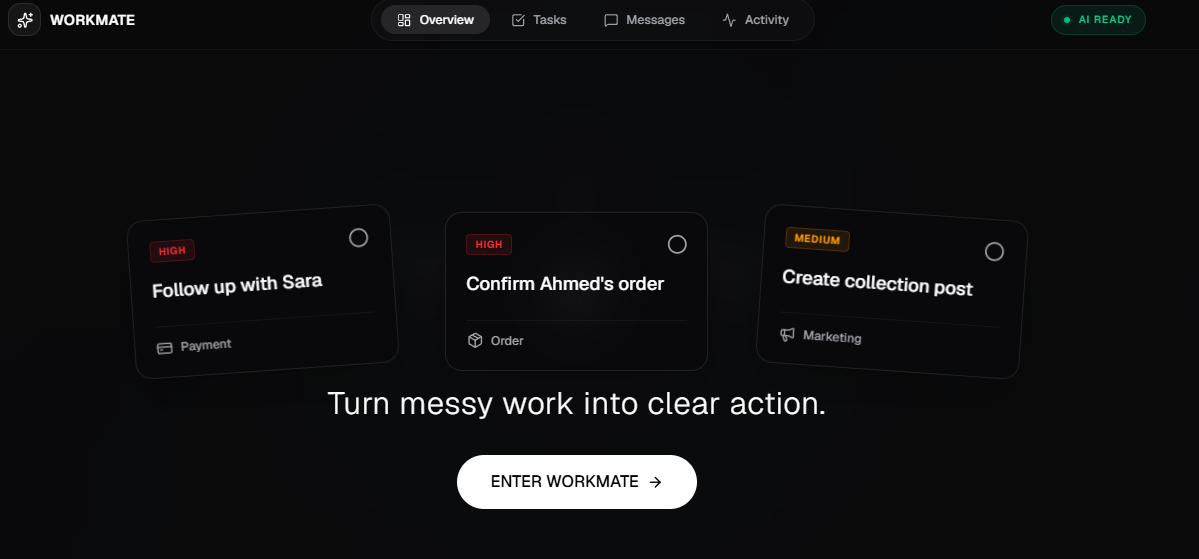
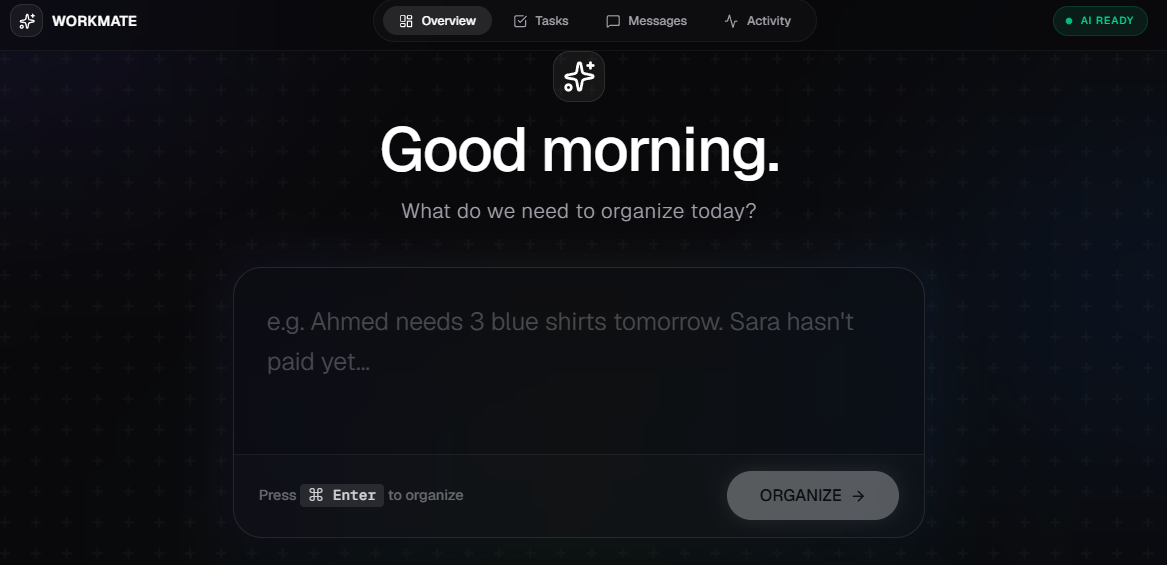
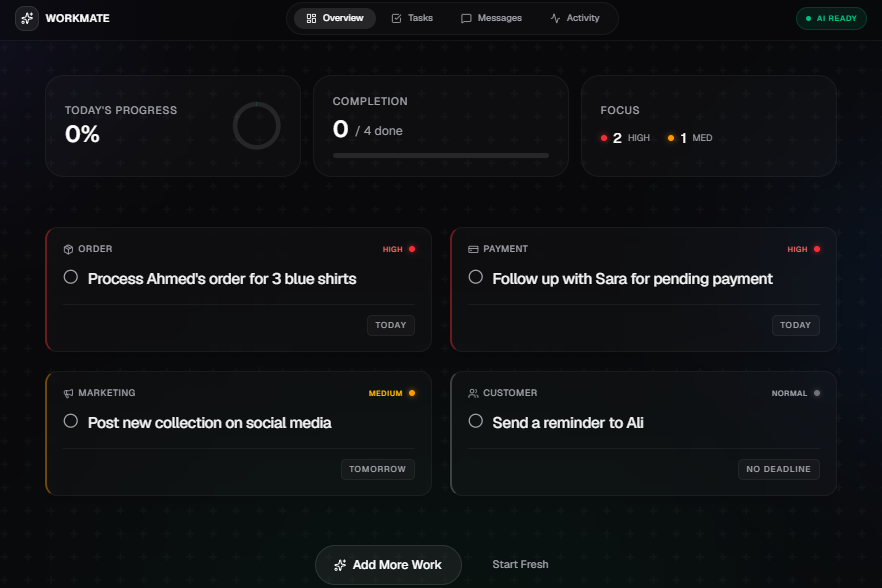
WorkMate is an AI-powered workspace that transforms unstructured business instructions into organized tasks, priorities, deadlines, and customer-ready replies.
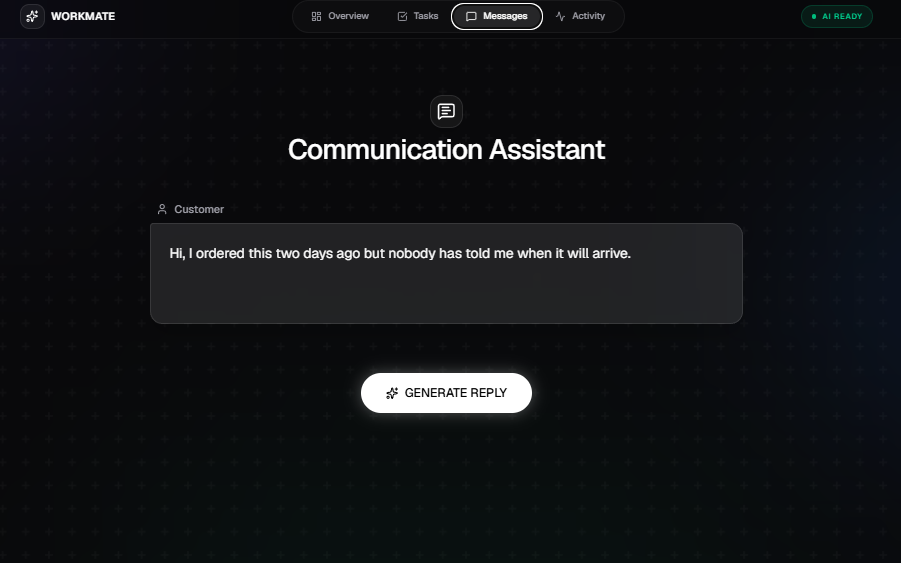
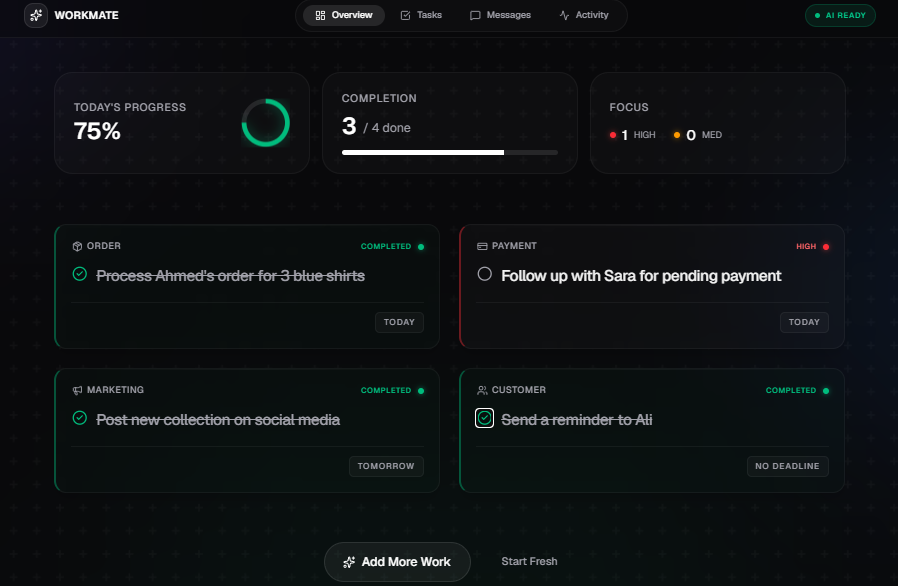
Users can describe their work in natural language, and WorkMate uses AI to extract actionable tasks. Its dashboard helps users review and complete those tasks. The Customer Context feature connects recognizable customers with related tasks and interaction details, while the Communication Assistant generates replies to customer messages in different tones. Tasks are saved locally in the browser so the workspace can persist across refreshes.
How we built it
WorkMate was built as a web application using Next.js, React, TypeScript, and Tailwind CSS. The interface uses Framer Motion for animation, and Lucide React for icons. Server-side API routes connect to the Google Gemini API for task organization and customer-reply generation. Browser localStorage is used to persist tasks, customer context, and activity records.
AI-assisted development tools, including ChatGPT and Antigravity, supported parts of the planning, implementation, debugging, and documentation process. The application logic and integration were tested through development and deployment workflows.
Challenges we faced
One challenge was turning free-form business instructions into structured tasks with useful priorities, categories, and deadlines. Another was connecting customer information, messages, and follow-up tasks without making the application unnecessarily complex. Integrating a hosted generative AI API also introduced dependency on external service availability and usage limits.
What we learned
We learned that an AI product needs more than a prompt and a model. Structured outputs, useful interface design, state persistence, error handling, and a coherent workflow all matter. We also learned to focus on a specific user problem and connect AI-generated results to actions people can take.
What's next
Future improvements could include more reliable handling of temporary AI service failures, stronger task editing and priority management, and integrations with the communication channels small businesses already use. These are future directions, not features currently claimed as implemented.
What it does
Built With
- css
- framer
- gemini
- motion
- next.js
- react
- tailwind
- typescript


Log in or sign up for Devpost to join the conversation.