Inspiration
Shopping online is still built around filters, checkboxes, and scrolling—tools that force people to specify what they want before they actually know it. In real life, people shop by reacting: “I like this,” “not that,” “show me something simpler.” We wanted to build a shopping experience that works the same way—by talking it through.
What it does
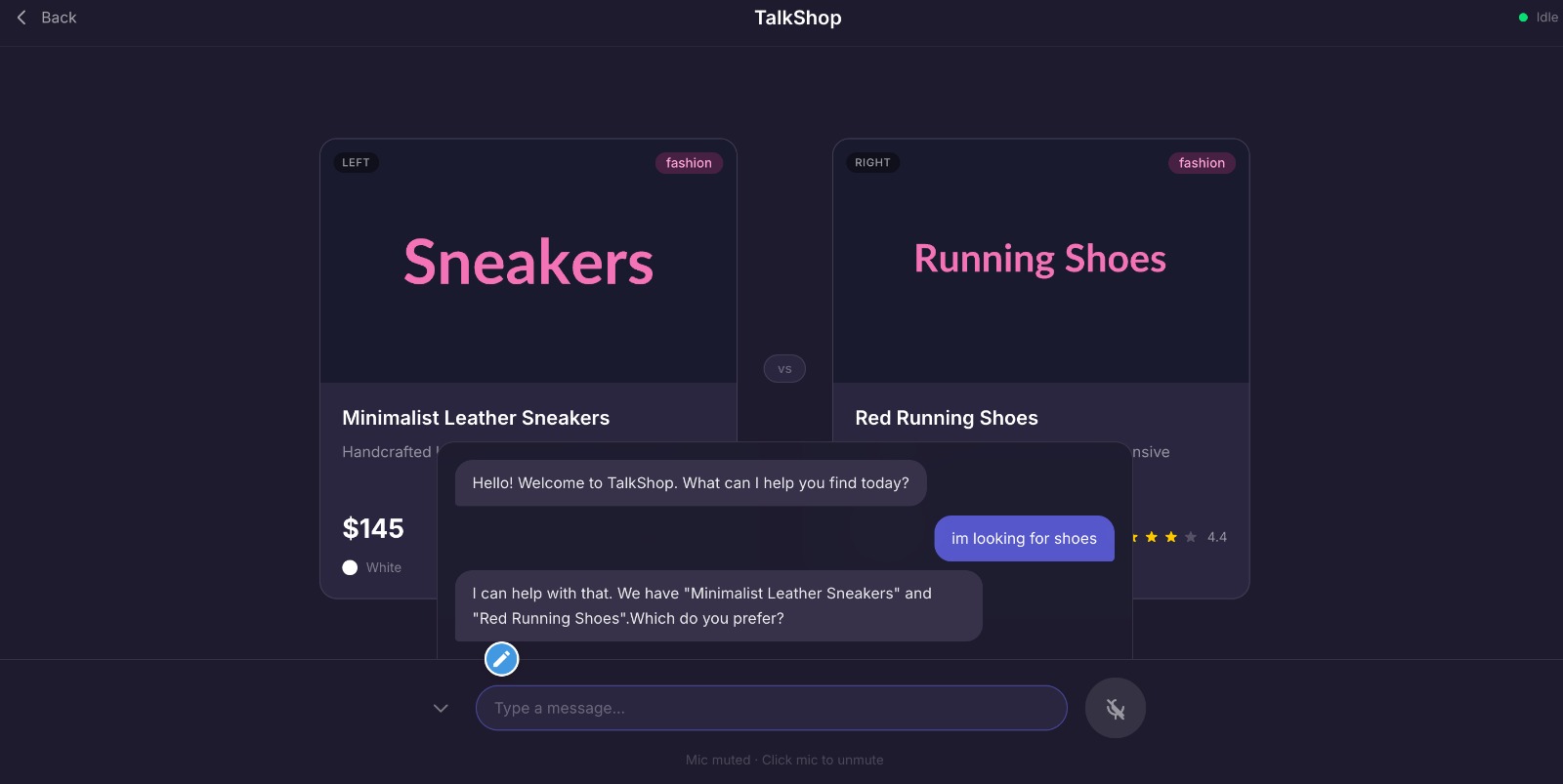
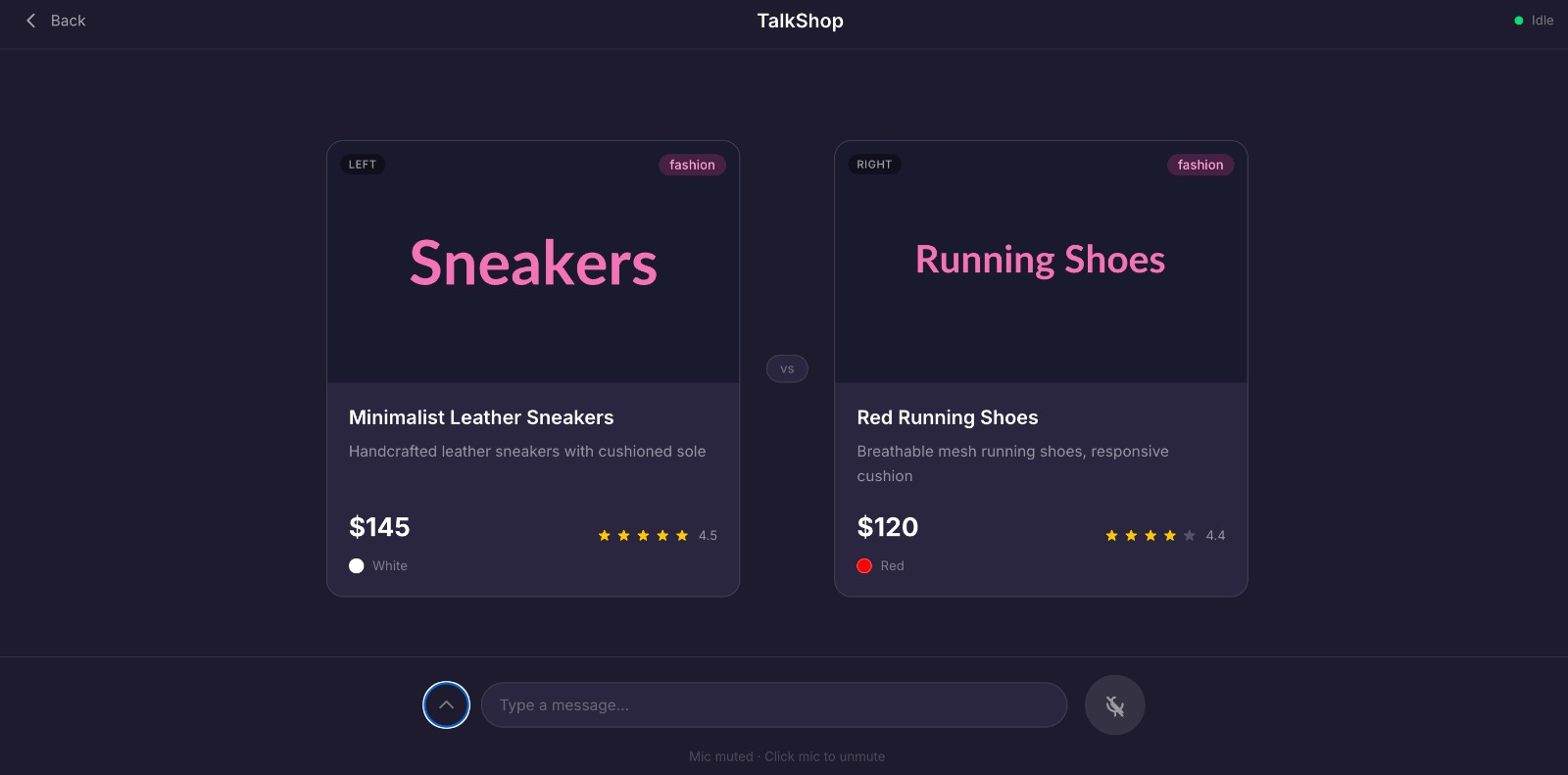
Talk Shop is a voice-first shopping assistant that lets users discover products through natural conversation. Users describe what they’re looking for, react to product images, ask questions, or simply say “next.” The system learns preferences implicitly and improves recommendations across sessions and categories.
⚙️ How We Built It
We designed Talk Shop as a modular system:
- Gemini Live API — serves as the core conversational reasoning engine, interpreting user intent and feedback in real time
- you.com API — provides web search and product discovery
- Web Scraping — extracts product details (price, images, attributes) from search results
- Preference Engine — converts conversational signals into weighted user preferences
- Image-first UI — displays one product at a time with rich visual anchoring
- Supabase — persists user profiles, preferences, and interaction history
Challenges we ran into
One of the main challenges was architectural. Early on, we underestimated the breadth of capabilities provided by you.com and initially designed overlapping logic for product discovery and enrichment. As the project evolved, it became clear that responsibilities needed to be redistributed across services.
We had to pivot mid-build, simplifying our pipeline and clearly separating concerns: letting you.com handle discovery and retrieval, while refocusing the core system on reasoning, preference learning, and UX. This required reworking integrations and assumptions, but ultimately resulted in a cleaner, more maintainable architecture.
Accomplishments that we're proud of
- Built an implicit preference system that feels natural and non-intrusive
- Designed a UX where most learning happens without explicit confirmation
- Enabled cross-category learning without feeling creepy or opaque
- Created a voice interface that encourages casual, conversational use
What we learned
People are far better at reacting than specifying. Clear visual grounding dramatically improves voice interactions, and subtle UI cues build trust more effectively than constant confirmations. Preference learning must be conservative, reversible, and explainable.
What's next for Talk Shop
Next, we want to expand product categories, add visual preference embeddings, and introduce a transparent preference dashboard. Longer term, Talk Shop could become a personalized shopping layer that works across retailers and platforms.


Log in or sign up for Devpost to join the conversation.