-
-

Starting Loading Page
-
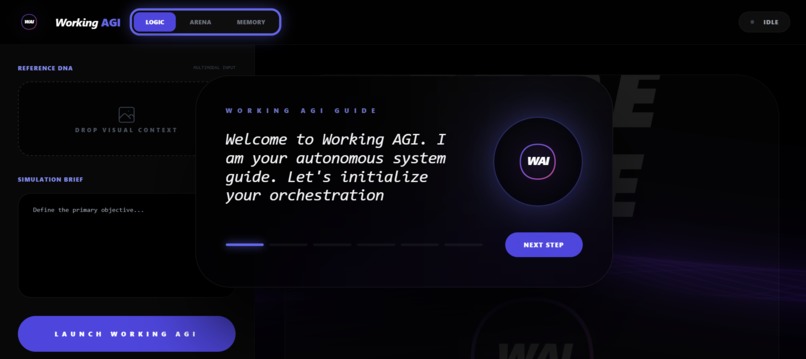
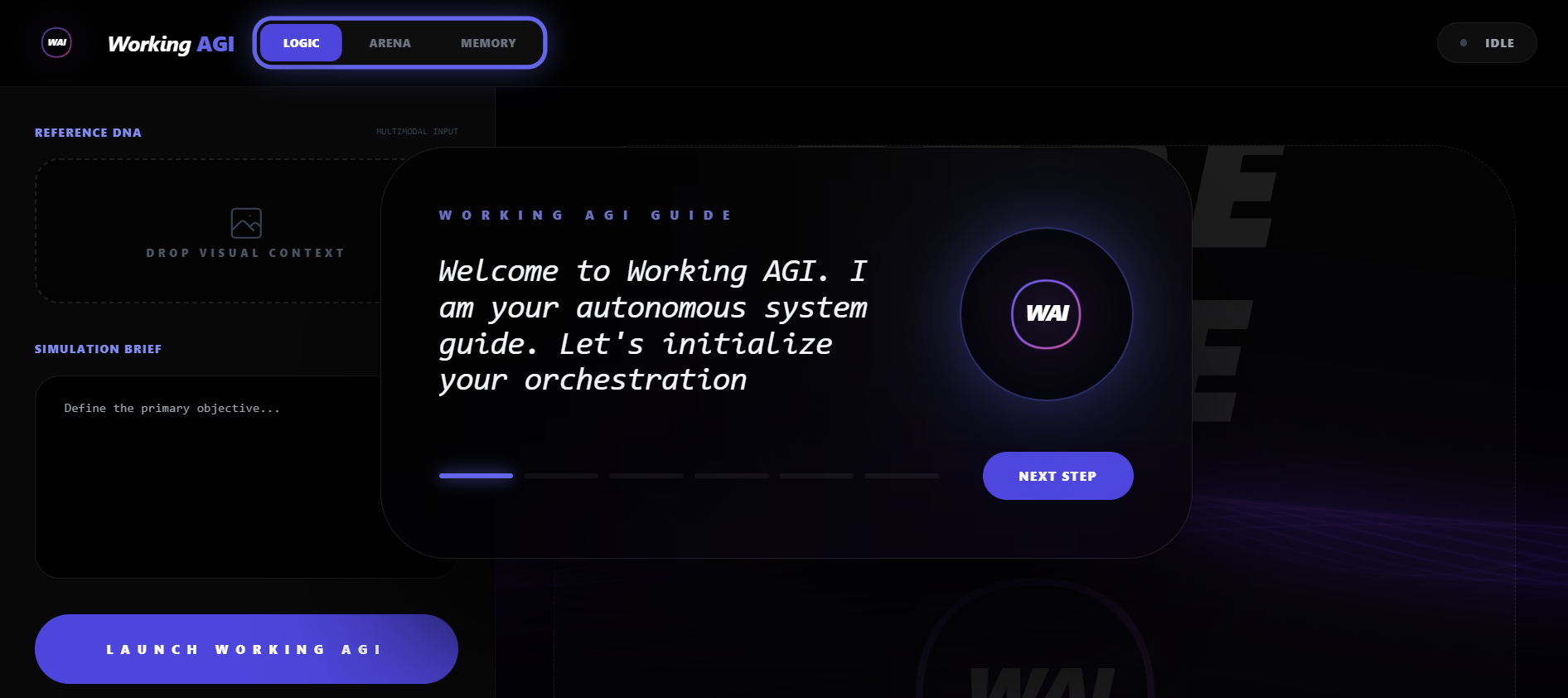
Main Page, appear Working AGI Manual
-
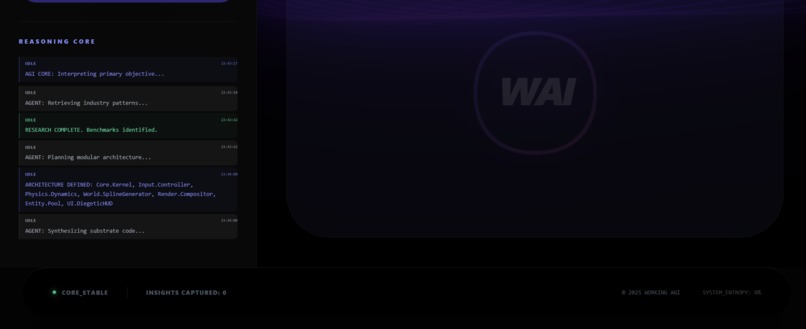
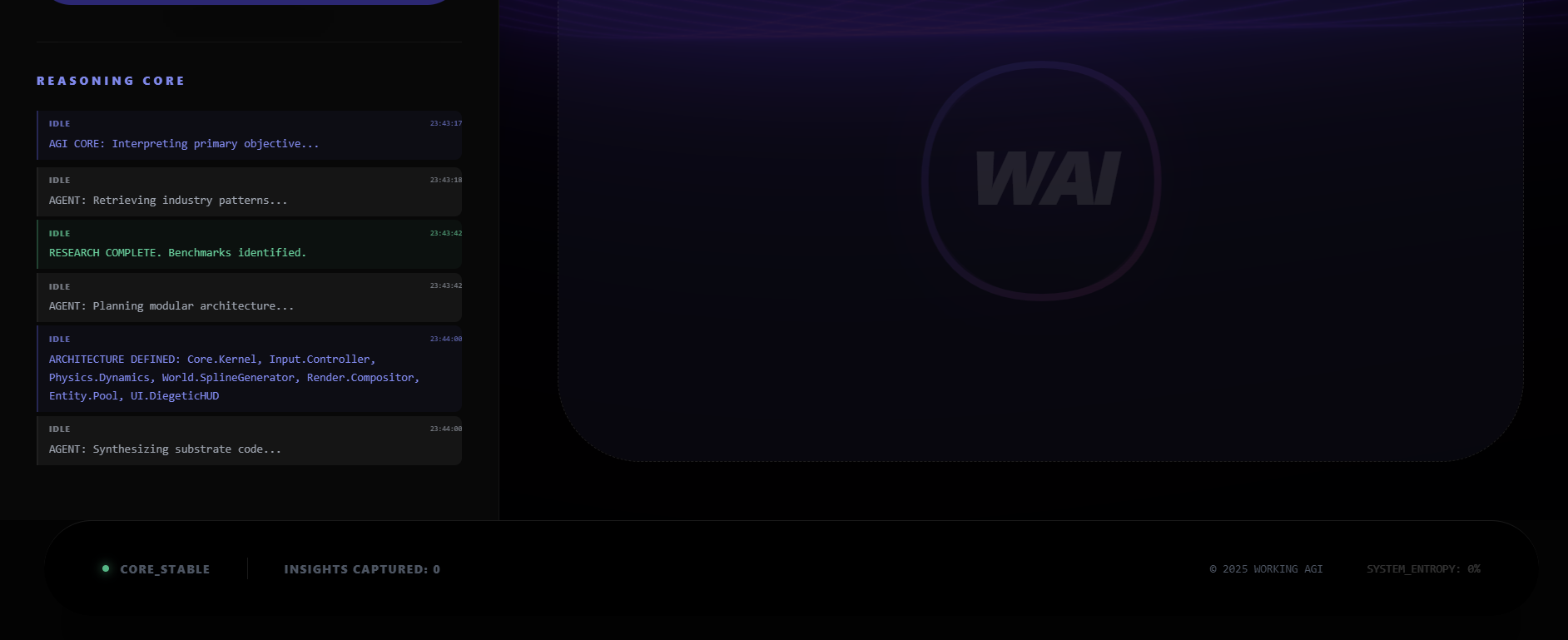
AGI in Process
-
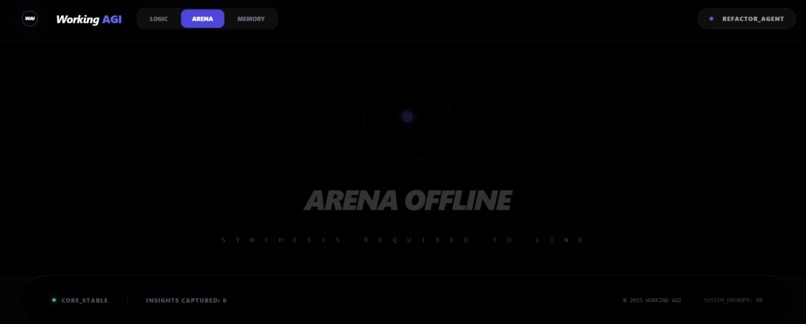
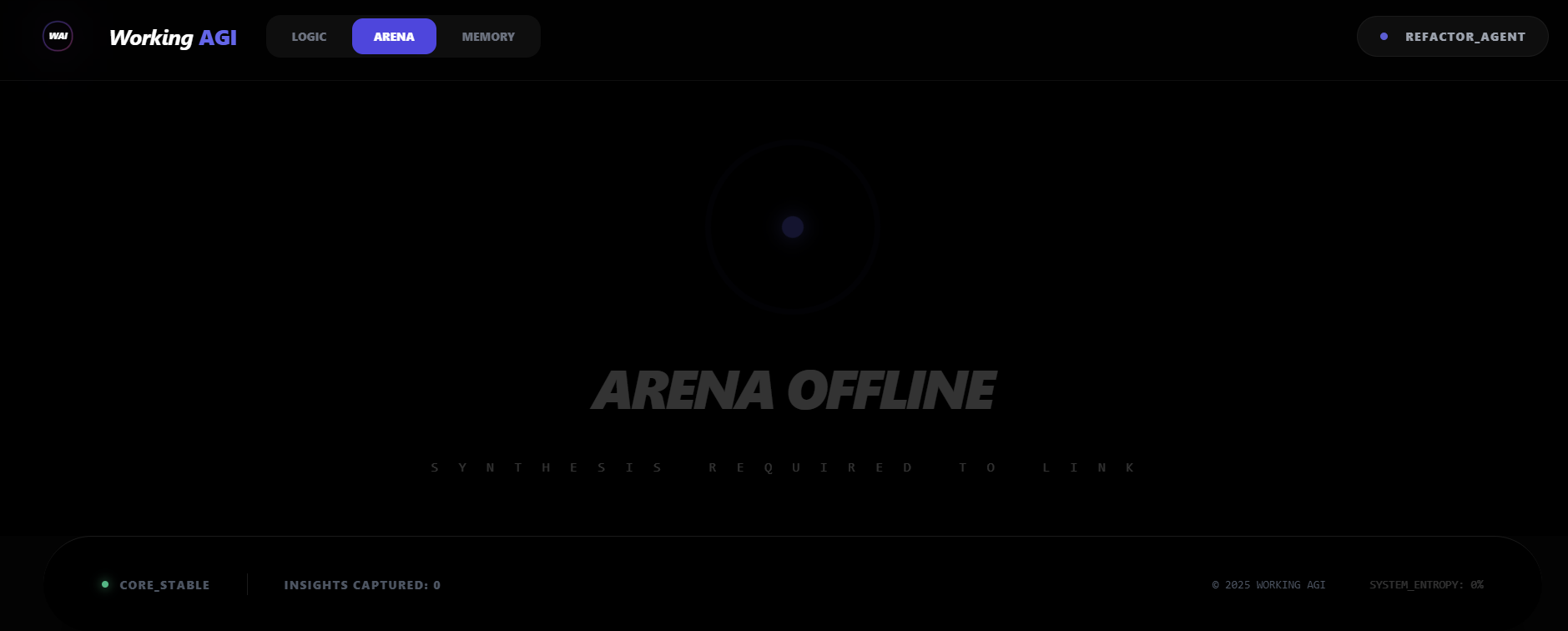
Arena is for viewing model created
-
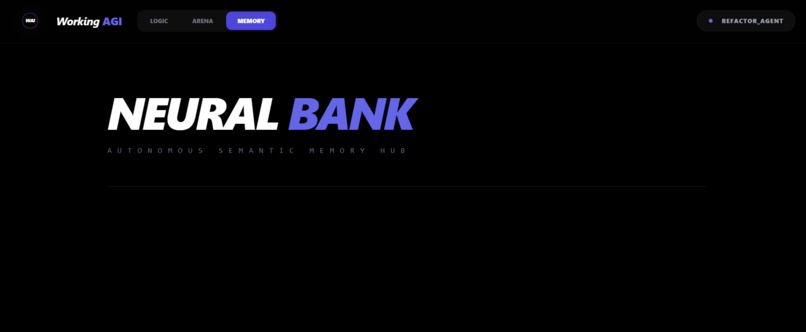
This page is look for status Model
Inspiration
In the current AI landscape, we are moving past simple "chat" interfaces toward Autonomous Orchestration. We noticed that while LLMs can write code, they often struggle with the multi-step reasoning required for production-grade software: architecture, edge-case auditing, documentation, and performance hardening. Working AGI was born from the vision of a "Creative Autopilot"—a system where a human provides a spark of intent (a brief or a visual "DNA" reference), and a swarm of specialized agents handles the heavy lifting of synthesis, critique, and self-correction.
What it does
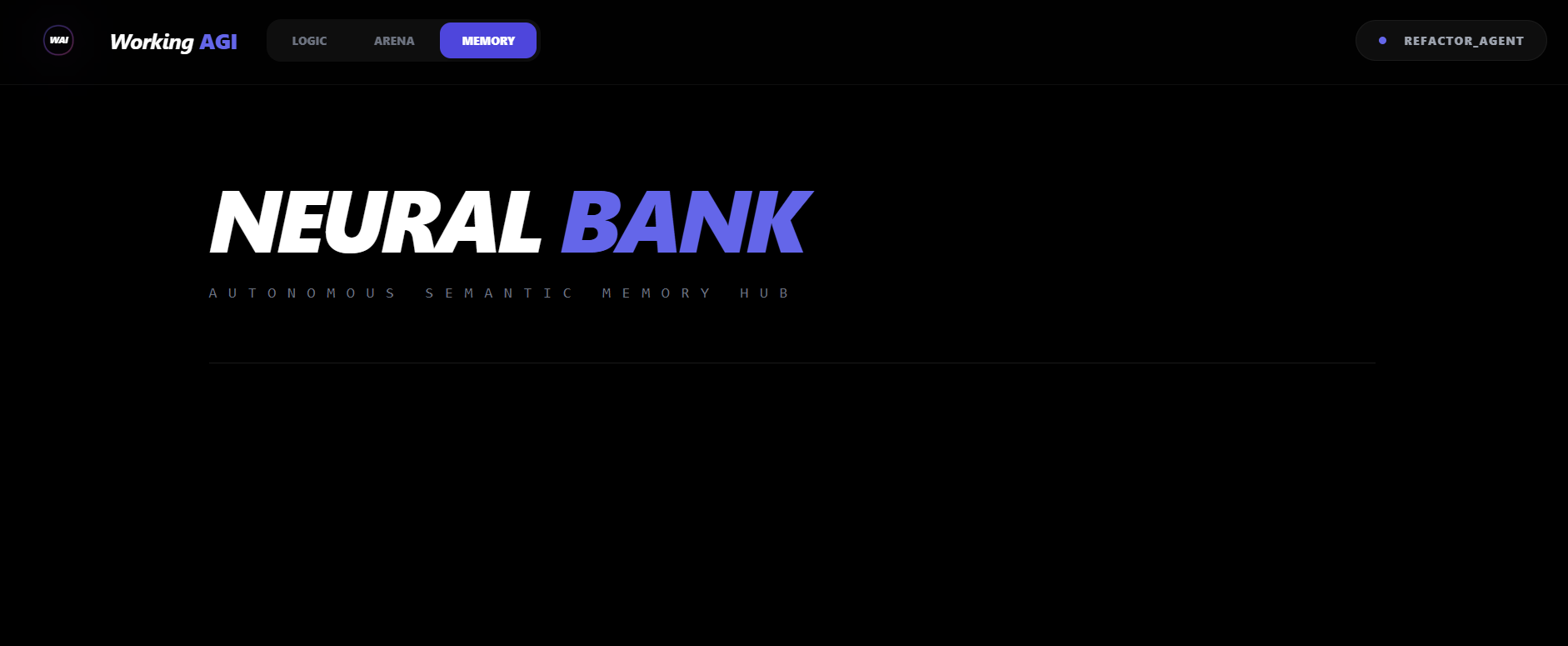
Working AGI is an autonomous research and generation agent designed to create high-fidelity game substrates and interactive simulations from scratch. Visual DNA Extraction: Users can upload images to sync "Visual DNA," which the system analyzes to extract aesthetic patterns and gameplay mechanics. Autonomous Swarm: It triggers a multi-stage workflow: Research Agent: Uses Google Search Grounding to find industry benchmarks. Architect Agent: Uses Gemini 3 Pro with a 32k thinking budget to plan modular ECS structures. Generator Agent: Synthesizes the full HTML5/JS/CSS substrate. Critic & Refactor Agents: A brutal "senior auditor" loop that identifies logic flaws and self-corrects them. Nexus Arena: A real-time testing environment with an integrated Neural Repair Core for on-the-fly bug fixing. Neural Memory Bank: Every critique and score is stored in a semantic memory hub, allowing the AGI to learn from past "mistakes" to improve future generations.
How we built it
The application is a showcase of high-performance frontend engineering and the latest Gemini API capabilities: Core Reasoning: Powered by gemini-3-pro-preview for complex architecture and gemini-3-flash-preview for high-speed research and documentation. Thinking Budget: We utilized the thinkingConfig (up to 32,768 tokens) to allow the Architect and Critic agents to "deliberate" before outputting code. Grounding: Integrated Google Search Grounding to ensure the Research Agent provides data-backed benchmarks. UI/UX: A "Glassmorphism" interface built with React and Tailwind CSS. The background features a custom WebGL shader (FloatingLines) to represent the neural filaments of the AGI. Multimodality: Uses Gemini's vision capabilities to perform multimodal analysis on uploaded reference assets.
Challenges we ran into
State Convergence: Ensuring that the Generator Agent actually followed the Architect Agent’s plan required strict system instructions and iterative prompting. Latency vs. Fidelity: High-fidelity code generation takes time. we solved this by implementing a Reasoning Log, which provides the user with real-time "Monologues" and "Decisions" from the agents, turning wait time into an engaging insight into the AGI’s thought process. The "Shaking" UI: Initially, we had an aggressive "glitch" effect during repairs, but user testing (feedback: "don't shake the whole page!") led us to refactor it into a more sophisticated "Neural Reconstruction" overlay.
Accomplishments that we're proud of
The Self-Correction Loop: Seeing the Critic Agent successfully reject a build for "performance risks" and the Refactor Agent subsequently fixing those issues without human intervention. Neural Memory Integration: Creating a system where "Past Experience" (stored in LocalStorage and semantic logs) is injected back into the Architect Agent’s context, effectively allowing the agent to "evolve" with every run. The Aesthetic: Achieving a "Commercial Production" feel that makes the AGI feel like a high-end creative tool rather than a toy.
What we learned
Thinking is Key: Higher thinking budgets significantly reduce "hallucinations" in complex physics and state-management code. Multimodal Anchoring: Providing an image as a "DNA Reference" results in far more aesthetically aligned outputs than text prompts alone. Agentic Specialized Roles: Breaking down "Write a game" into Research -> Architect -> Generator -> Critic leads to much cleaner, modular, and maintainable code than a single-shot prompt.
What's next for Working AI – Creative Autopilot
Multi-File Orchestration: Moving beyond single-file HTML substrates to full-scale project directories. Human-in-the-Loop Swarm: Allowing users to jump into the reasoning process at specific steps (e.g., approving an architecture before code is written). VEO Video Integration: Using the Veo model to generate promotional trailers for the substrates created in the Arena. Collaborative Memory: A cloud-synced Memory Bank where the AGI can learn from the collective successes and failures of all users.

Log in or sign up for Devpost to join the conversation.