-
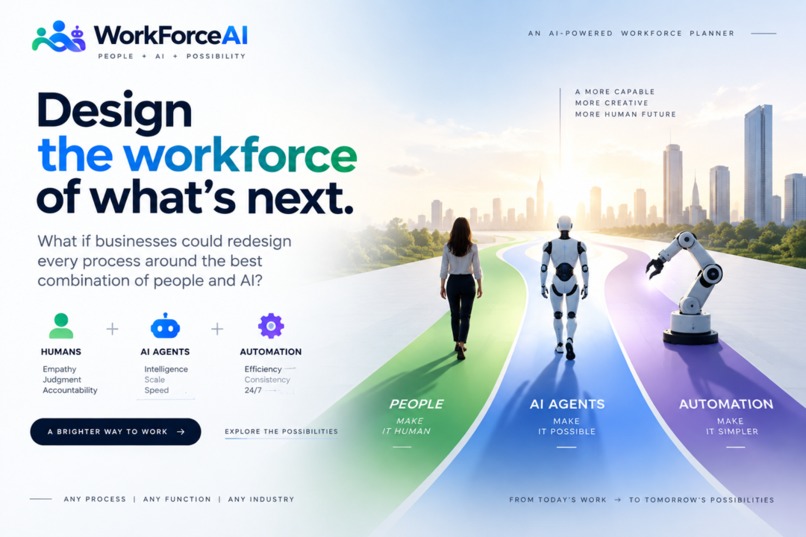
WorkforceAI - Why - The Vision
-
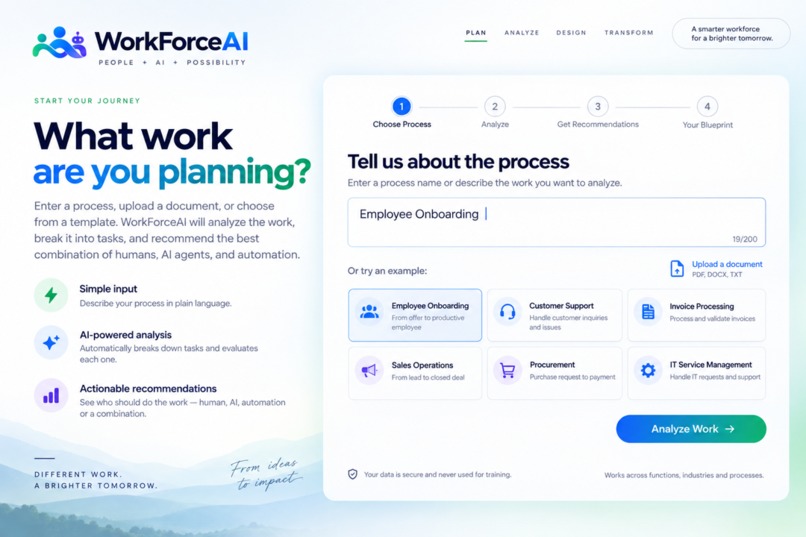
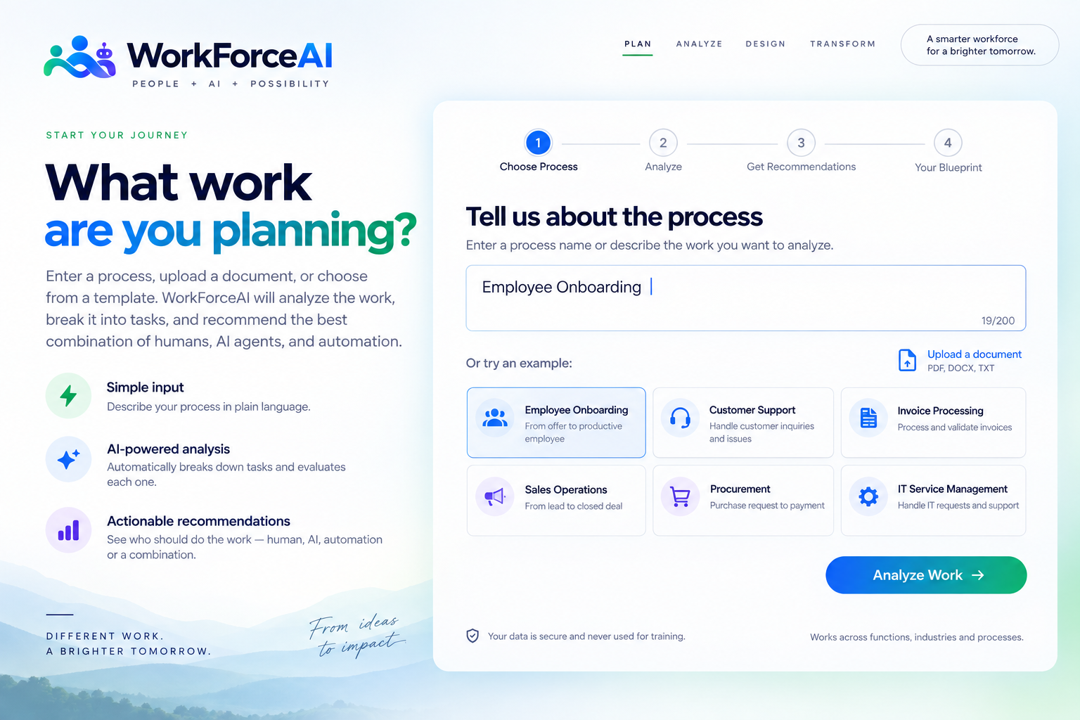
WorkforceAI - What - Start with any Process
-
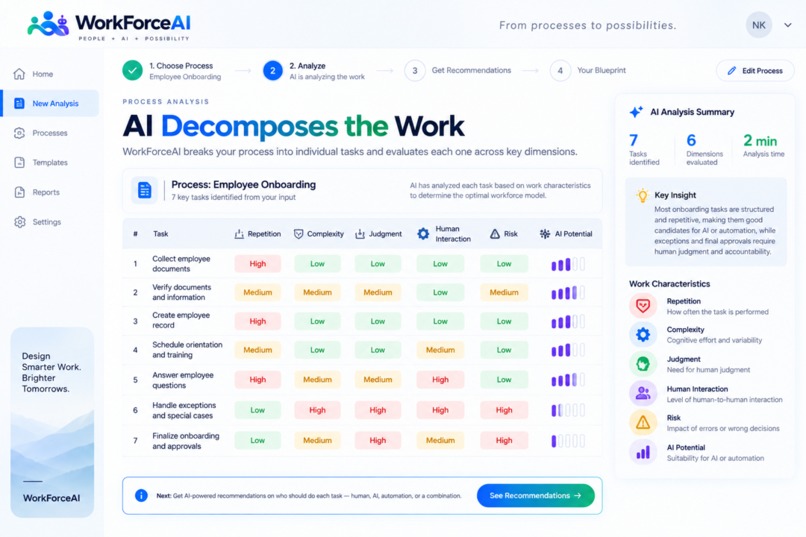
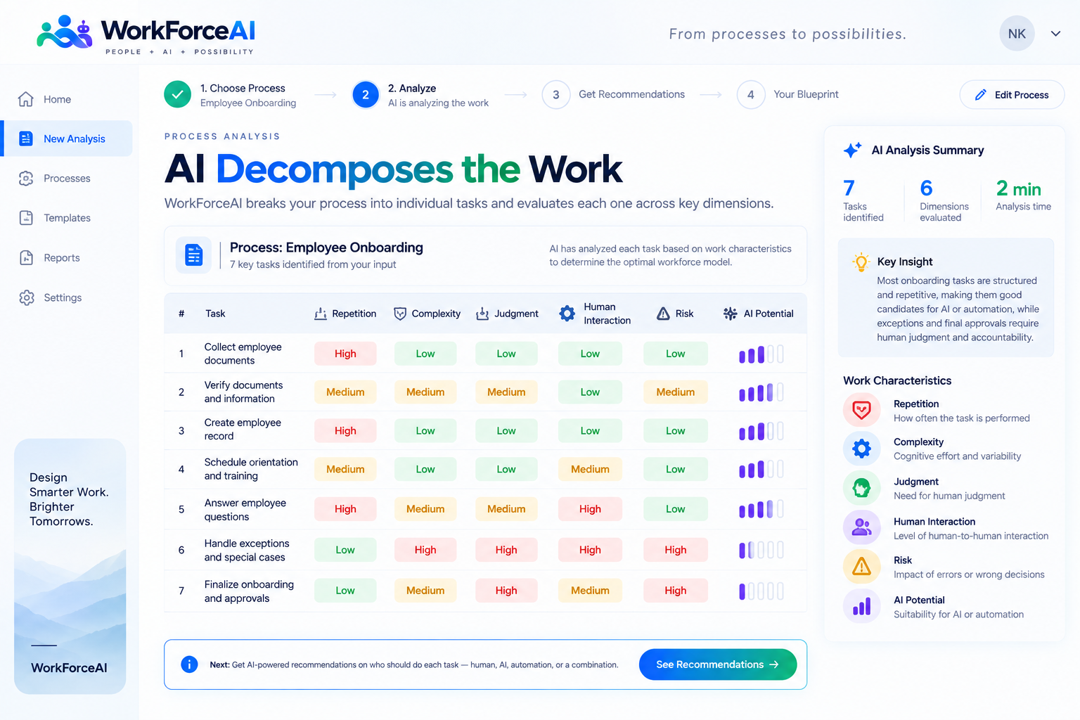
WorkforceAI - How - AI Decomposes the Work
-
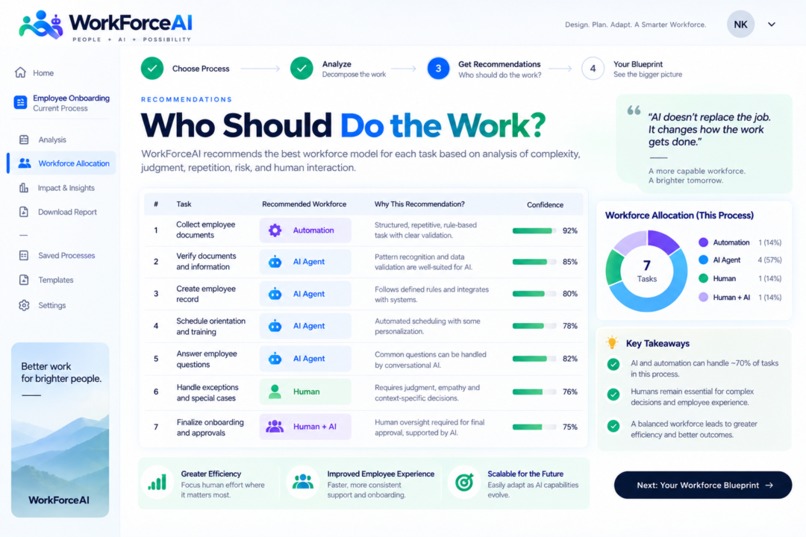
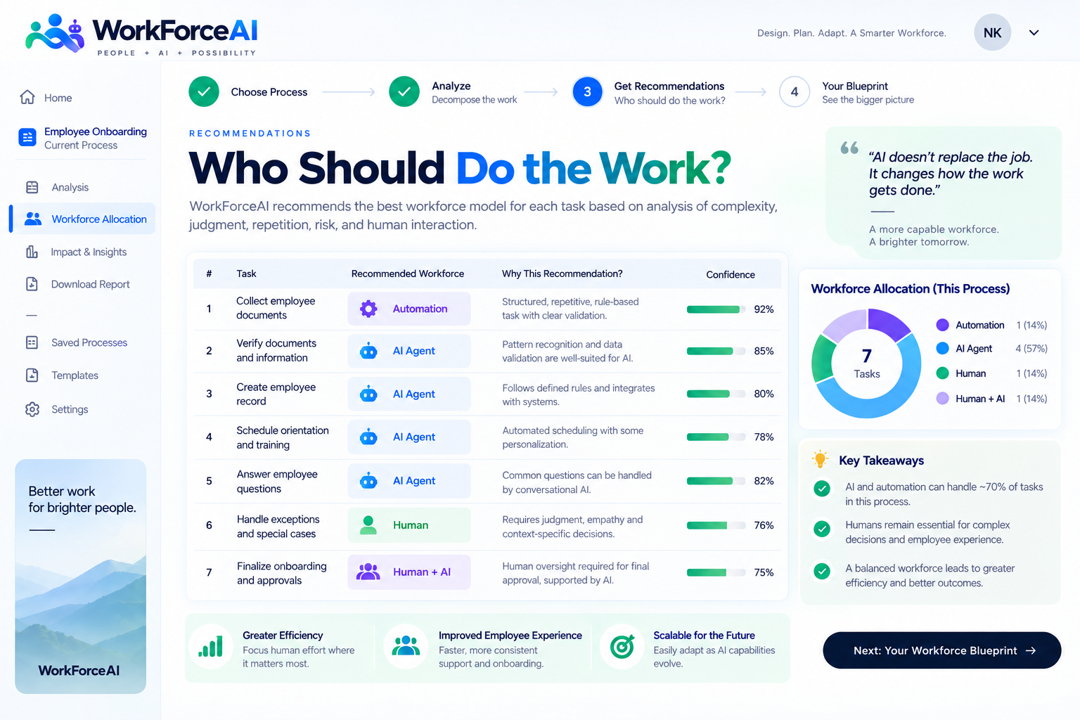
WorkforceAI - Who - Workforce Allocation
-
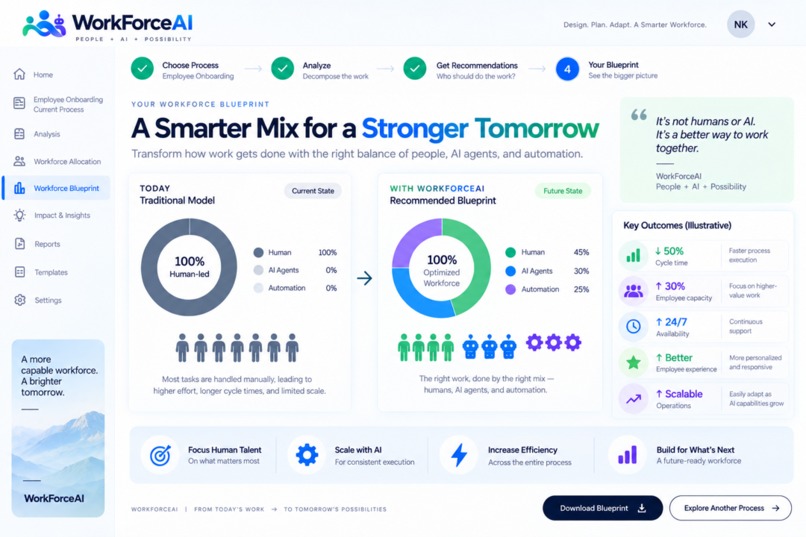
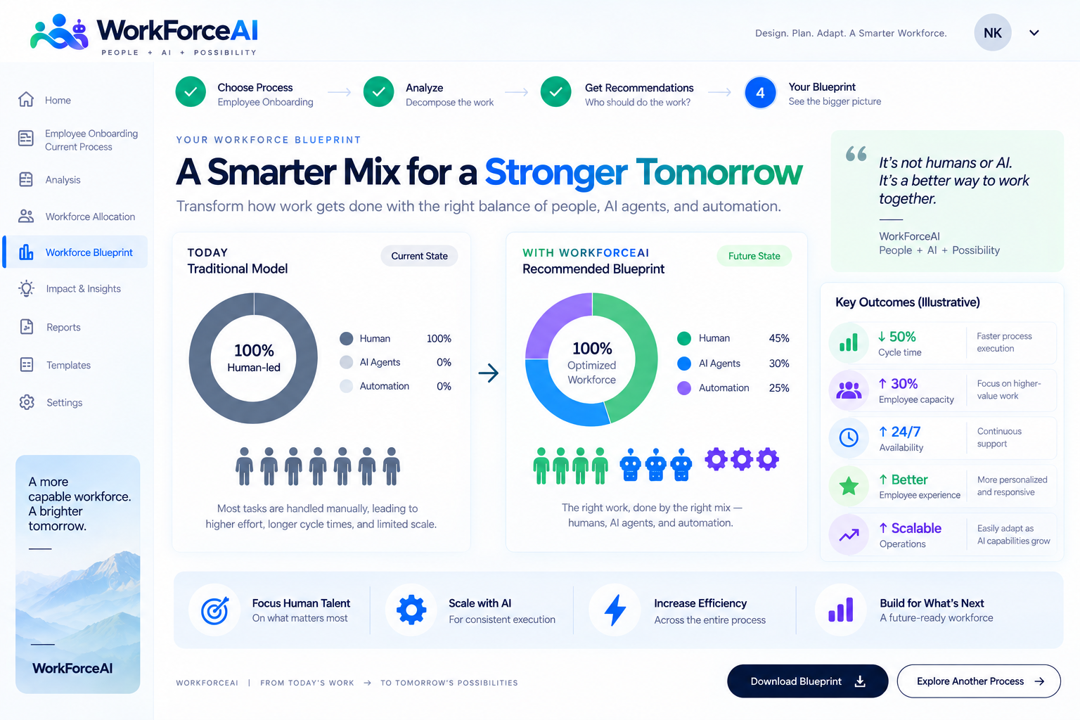
WorkforceAI - What Next - The Workforce Blueprint
-
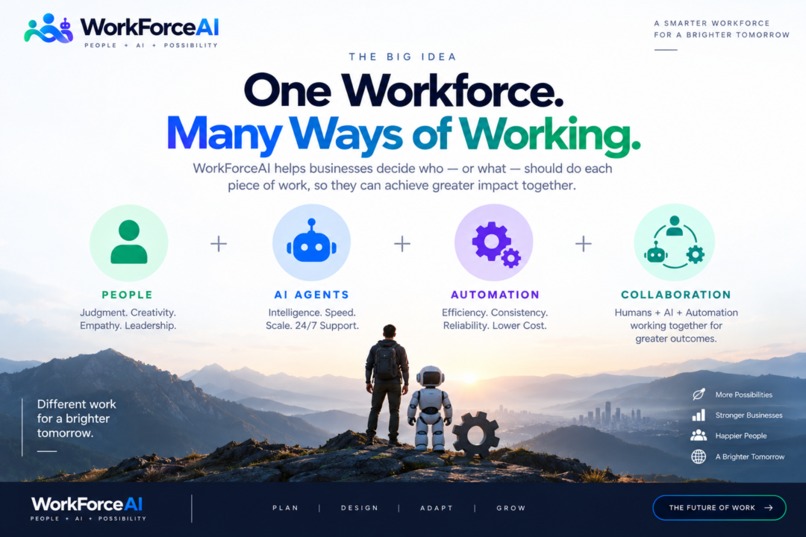
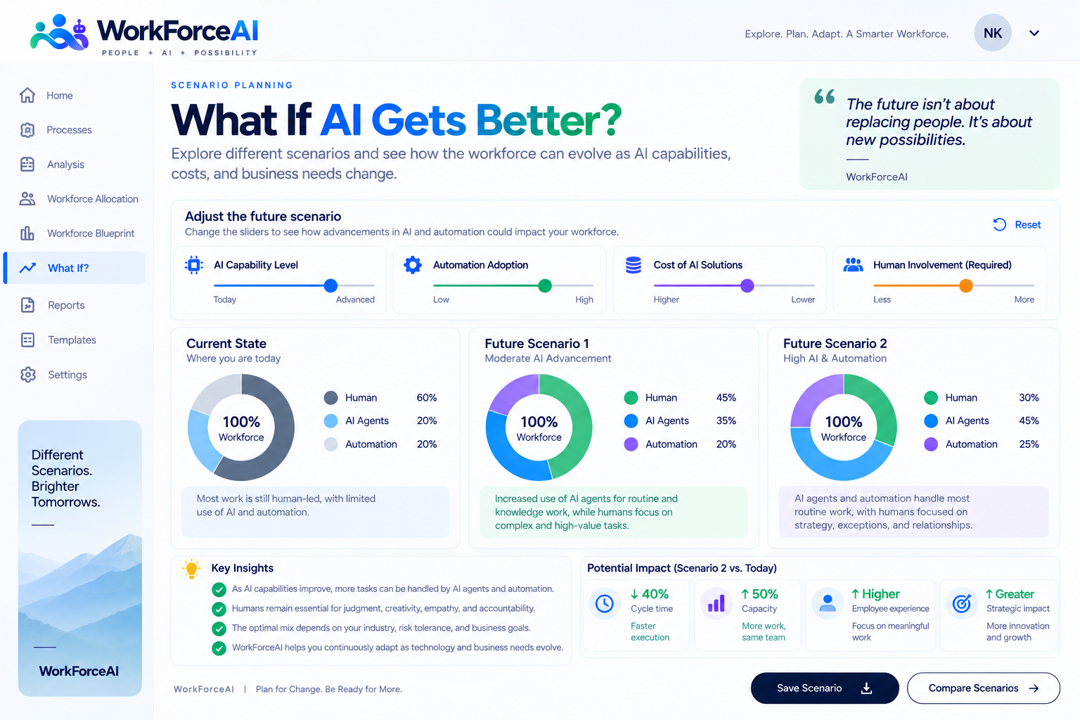
WorkforceAI - When - What If
-
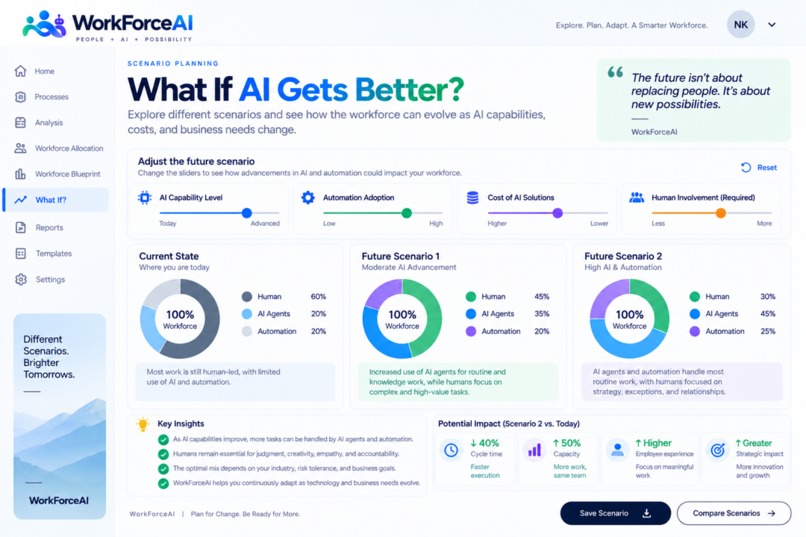
WorkforceAI - Why It Matters - The Big Idea
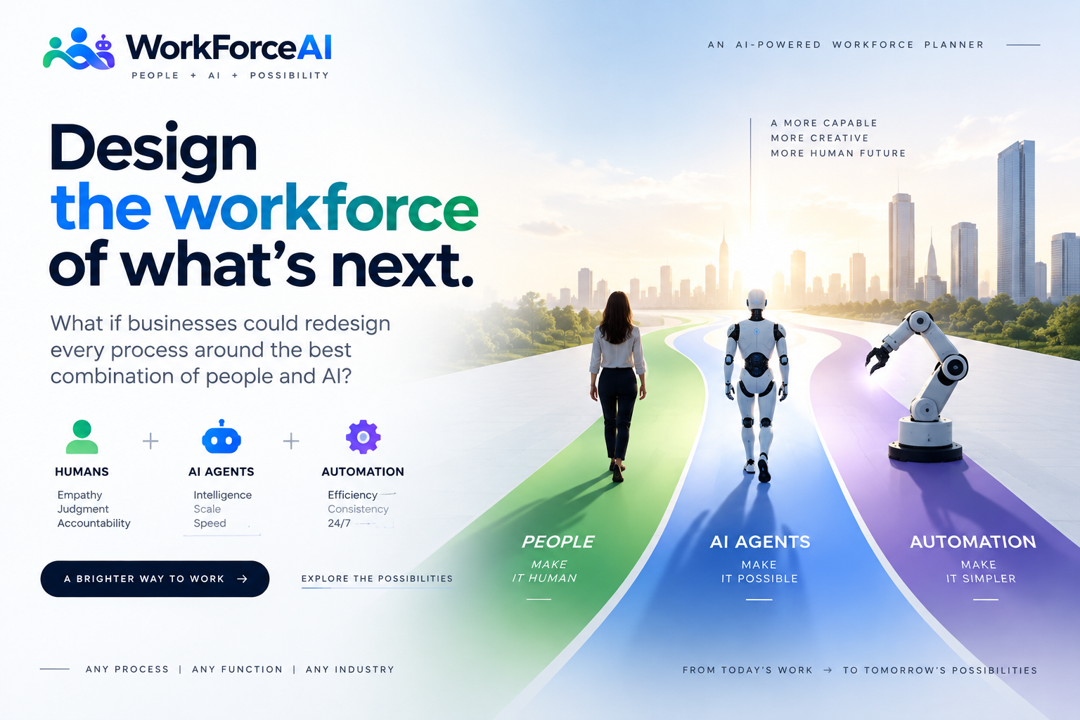
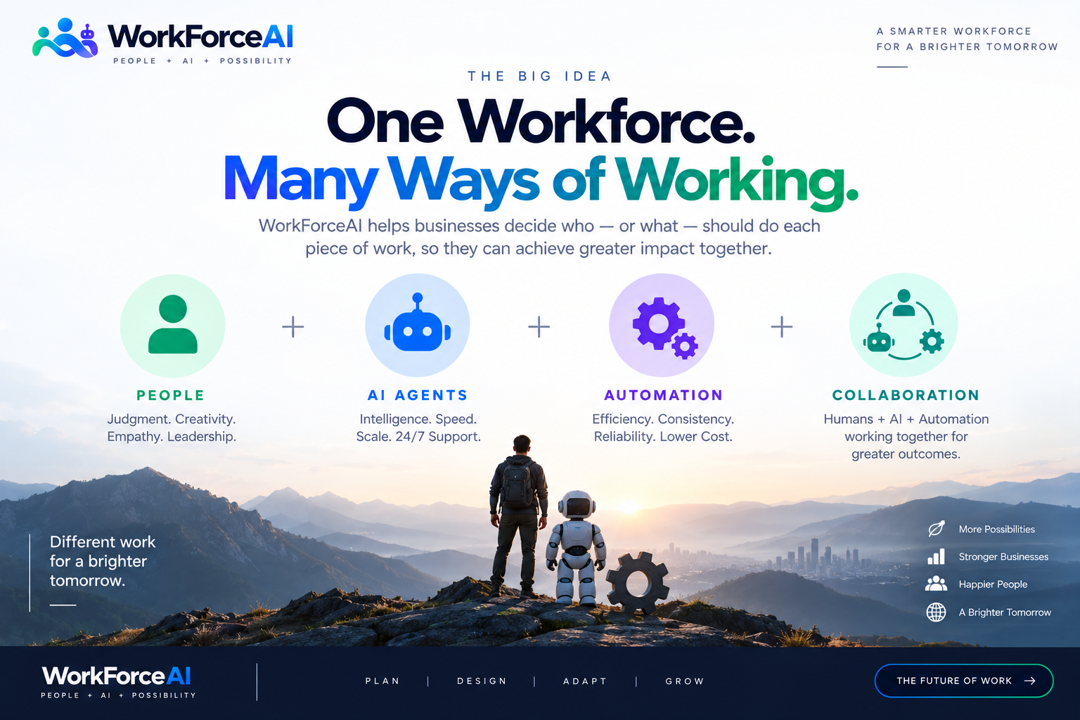
The Problem
For decades, companies have organized work around jobs.
A customer service representative handles customer service. An accountant handles finance. A recruiter handles recruiting.
But AI is changing what a "workforce" means.
Businesses can now use AI agents, automation, software, and humans to perform different parts of the same process. The challenge is no longer simply:
"What jobs can AI replace?"
The more important question is:
"Who—or what—should do each piece of work?"
A task may be best handled by a human, an AI agent, automation, or a combination of humans and AI.
There isn't a simple way for a business to look at an existing process and systematically make that decision.
Our Idea
WorkForceAI is an AI-powered workforce planning tool that helps businesses redesign work for the AI era.
Instead of analyzing jobs as a whole, WorkForceAI breaks a business process into individual tasks and evaluates each one based on factors such as:
- Repetition
- Complexity
- Human judgment
- Need for empathy or interaction
- Risk and accountability
- Data availability
- Potential for automation
It then recommends whether each task should be handled by:
👤 Human
🤖 AI Agent
⚙️ Automation
🤝 Human + AI
The goal isn't to replace people.
The goal is to redesign work intelligently.
How It Works
A user provides a business process, such as employee onboarding, customer support, sales operations, or invoice processing.
WorkForceAI:
- Understands the process
- Breaks it into individual activities
- Analyzes the characteristics of each task
- Recommends the best workforce model
- Explains why that recommendation was made
- Creates a future workforce blueprint
For example, an employee onboarding process might contain tasks such as document collection, document verification, scheduling, answering routine questions, and handling exceptions.
WorkForceAI might recommend:
| Task | Recommended Workforce |
|---|---|
| Collect documents | Automation |
| Verify documents | AI |
| Schedule orientation | AI |
| Answer routine questions | AI |
| Handle exceptions | Human |
| Approve sensitive decisions | Human |
This creates a much more useful picture than simply saying "automate onboarding."
Why We Built It
The inspiration came from a simple observation:
AI is not just changing the tools people use. It is changing who—or what—can perform work.
As AI agents become more capable, businesses will increasingly have a workforce made up of humans, AI agents, and automation.
We wanted to explore what happens when workforce planning is designed for that future.
What Makes WorkForceAI Different
Most conversations about AI and employment focus on job replacement.
WorkForceAI focuses on work redesign.
A single job does not have to be entirely human or entirely AI.
Instead, the work can be decomposed:
AI handles what AI is good at. Automation handles what machines are good at. Humans handle what requires judgment, accountability, empathy, and uniquely human capabilities.
The result is a workforce designed around the work itself, rather than around traditional job descriptions.
What We Learned
One of the biggest lessons from this project is that AI adoption is not simply a technology problem.
It is a work design problem.
We also learned that recommending AI for a task is only one part of the decision. A useful workforce planner also needs to consider risk, human accountability, exceptions, and the consequences of getting a decision wrong.
That led us to an important principle:
The best AI workforce is not necessarily the one with the most AI. It is the one with the right division of work.
Challenges
One of our biggest challenges was keeping the idea broad enough to work across industries while making the recommendations specific enough to be useful.
A customer support process, an HR process, and a finance process look very different on the surface. We therefore focused on the underlying characteristics of work such as repetition, judgment, complexity, interaction, and risk rather than building a separate solution for every industry.
Another challenge was avoiding the temptation to treat automation as the answer to everything.
Some tasks may technically be automatable but still require human oversight or accountability. WorkForceAI is designed to surface those trade-offs rather than hide them.
What's Next
We see WorkForceAI evolving from a planning tool into a continuous workforce intelligence platform.
In the future, a business could connect real operational data and continuously ask:
- What work is changing?
- Which tasks can now be performed by AI?
- Where should humans remain involved?
- Where is human-AI collaboration most valuable?
- What capabilities will the workforce need next?
The long-term vision is simple:
Don't plan the workforce of yesterday. Design the workforce of what's next.
Built With
- automation
- generative-ai
- llm
- natural-language-processing
- python
- python-package-index
- streamlit
- vscode
- workforce

Log in or sign up for Devpost to join the conversation.