-
-
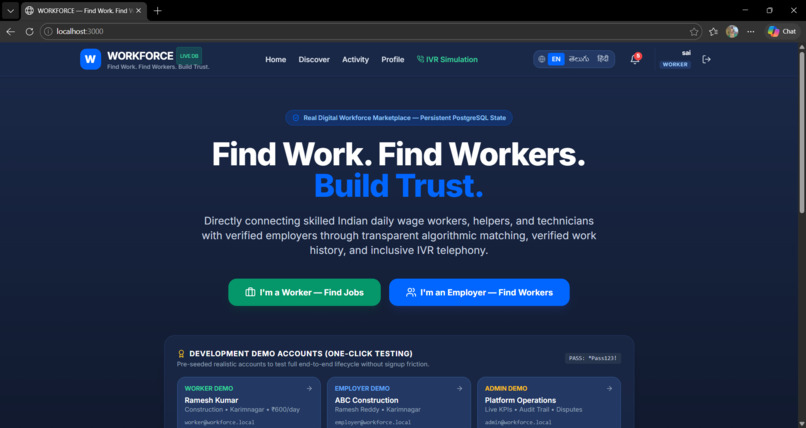
WORKFORCE — Find Work. Find Workers. Build Trust. An AI-assisted digital labour marketplace connecting workers with employers.
-
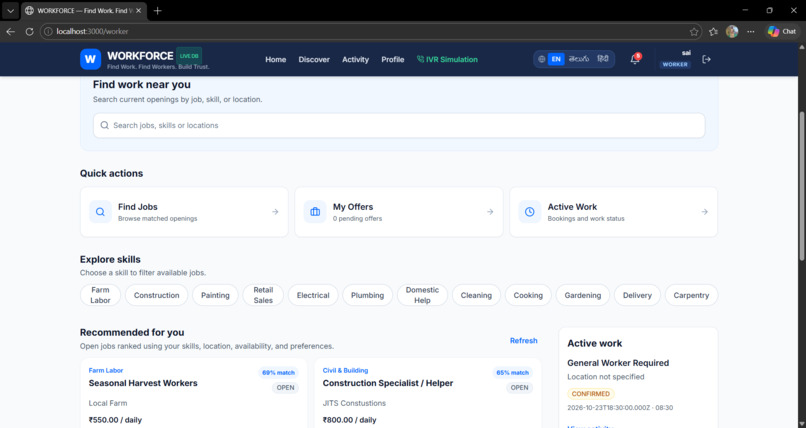
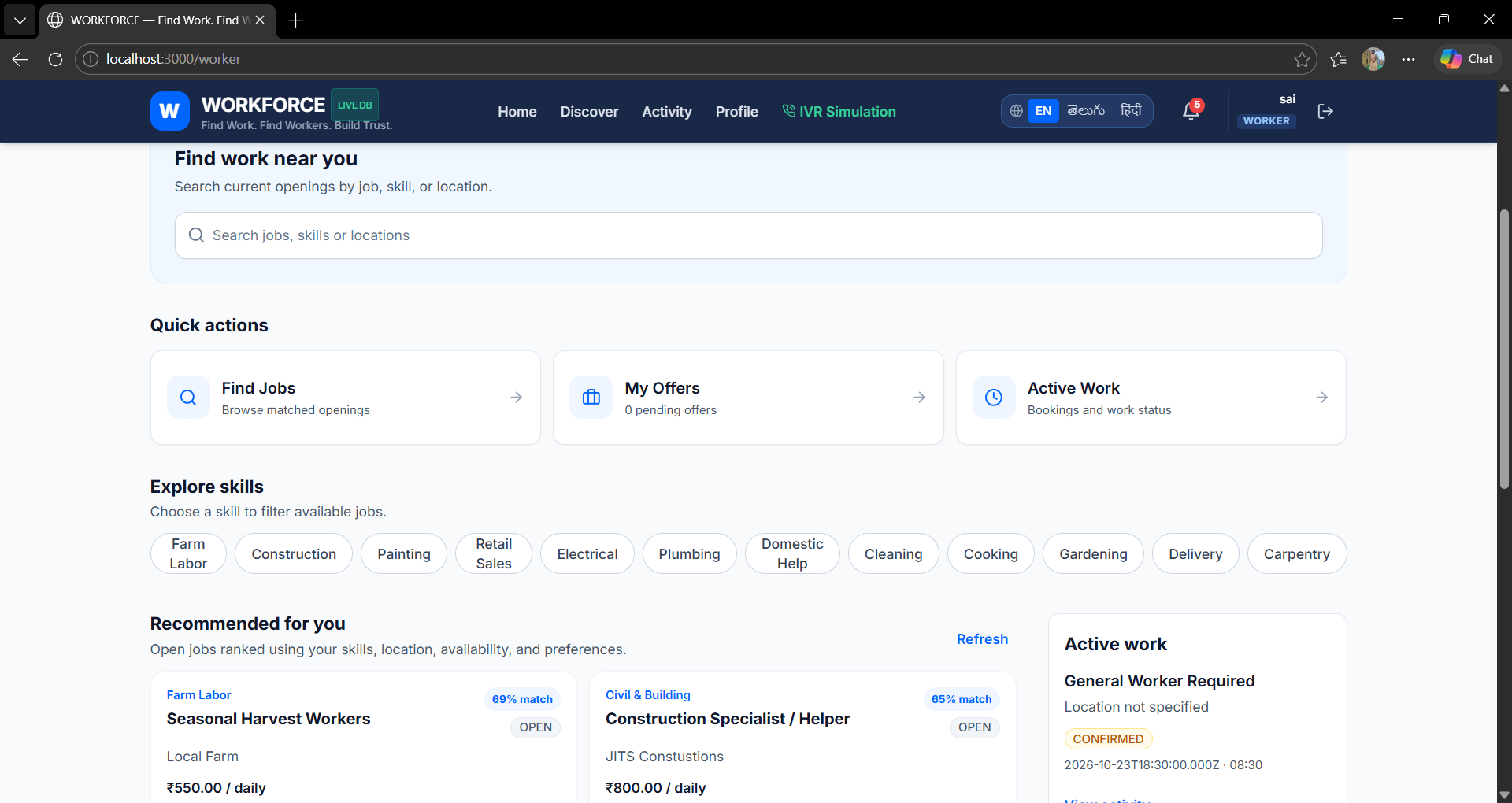
Job Discovery — Helping workers find relevant employment opportunities based on their skills and location.
-
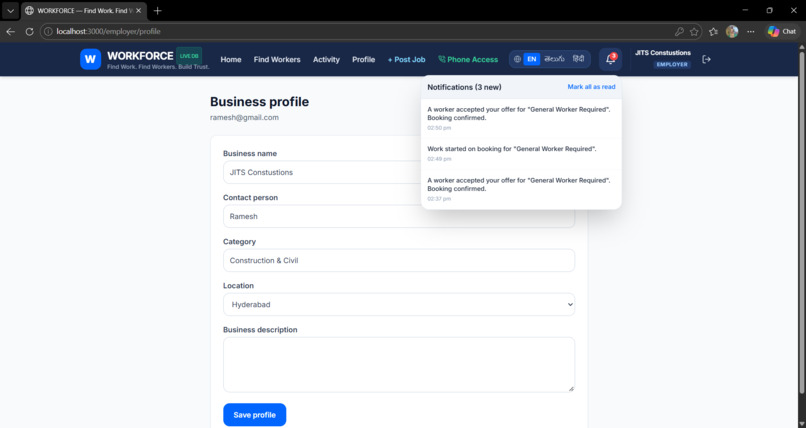
WORKFORCE Dashboard — A centralized interface designed to simplify access to employment and worker-management features.
-
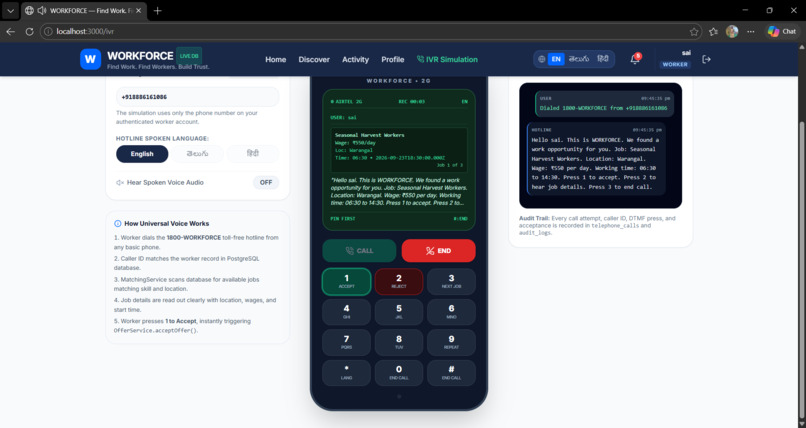
Universal Work Access — Our vision for helping workers access employment opportunities through telephone-based services.
-
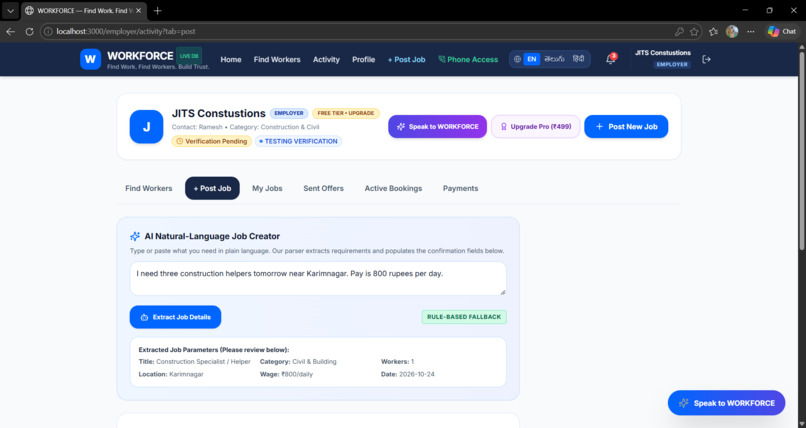
Digital Labour Marketplace — Connecting workers and employers through an accessible, technology-enabled platform.
-
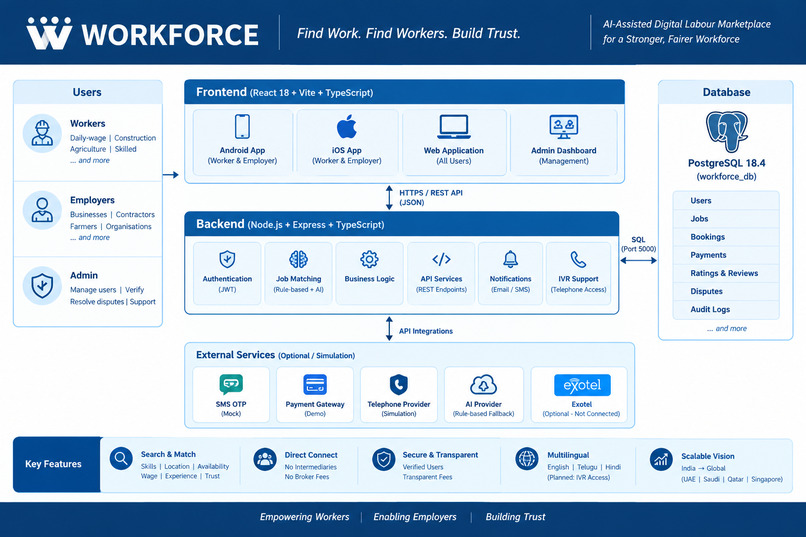
WORKFORCE Features — Designed to improve job discovery, worker-employer connections, and access to employment opportunities.
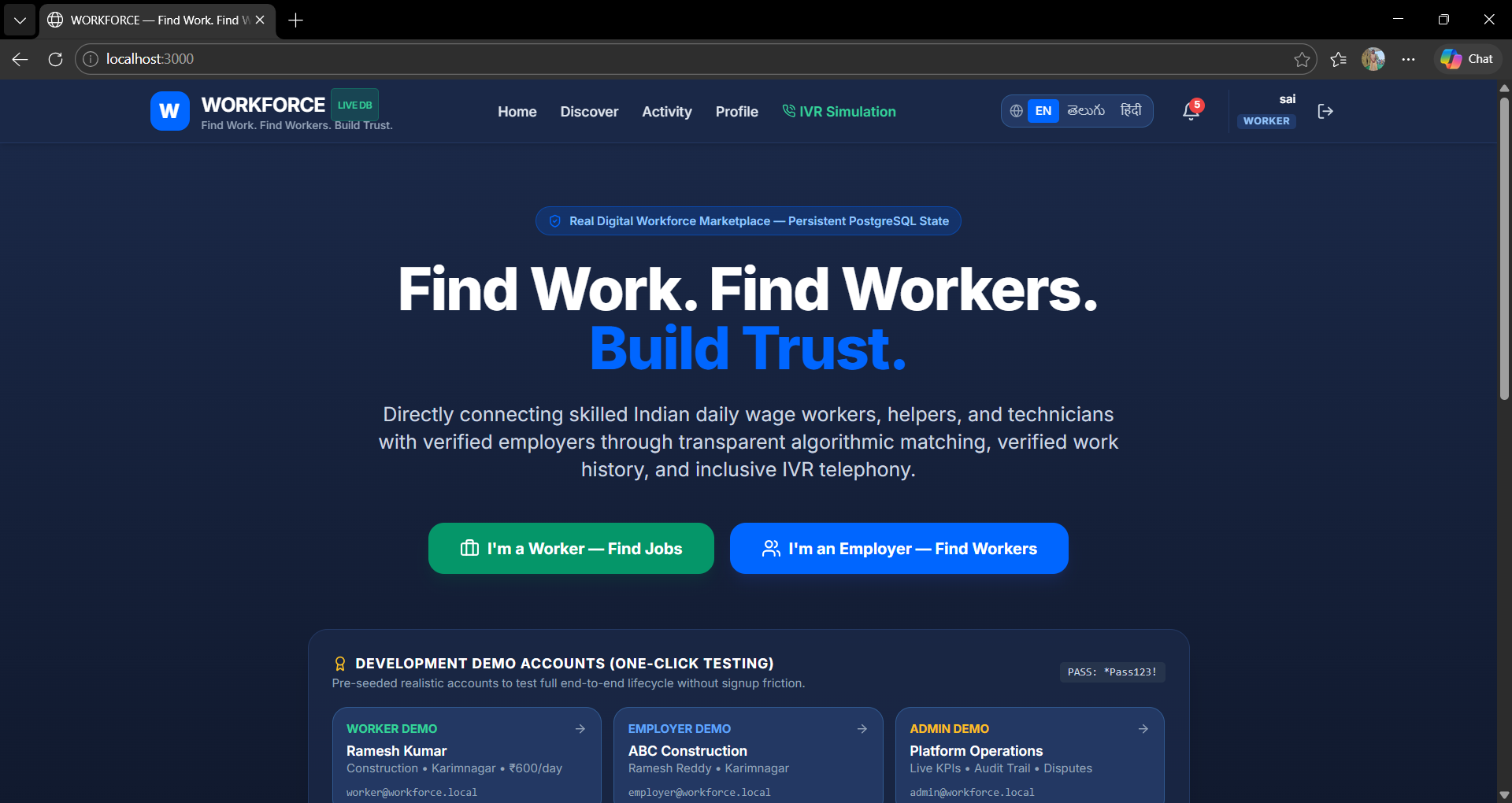
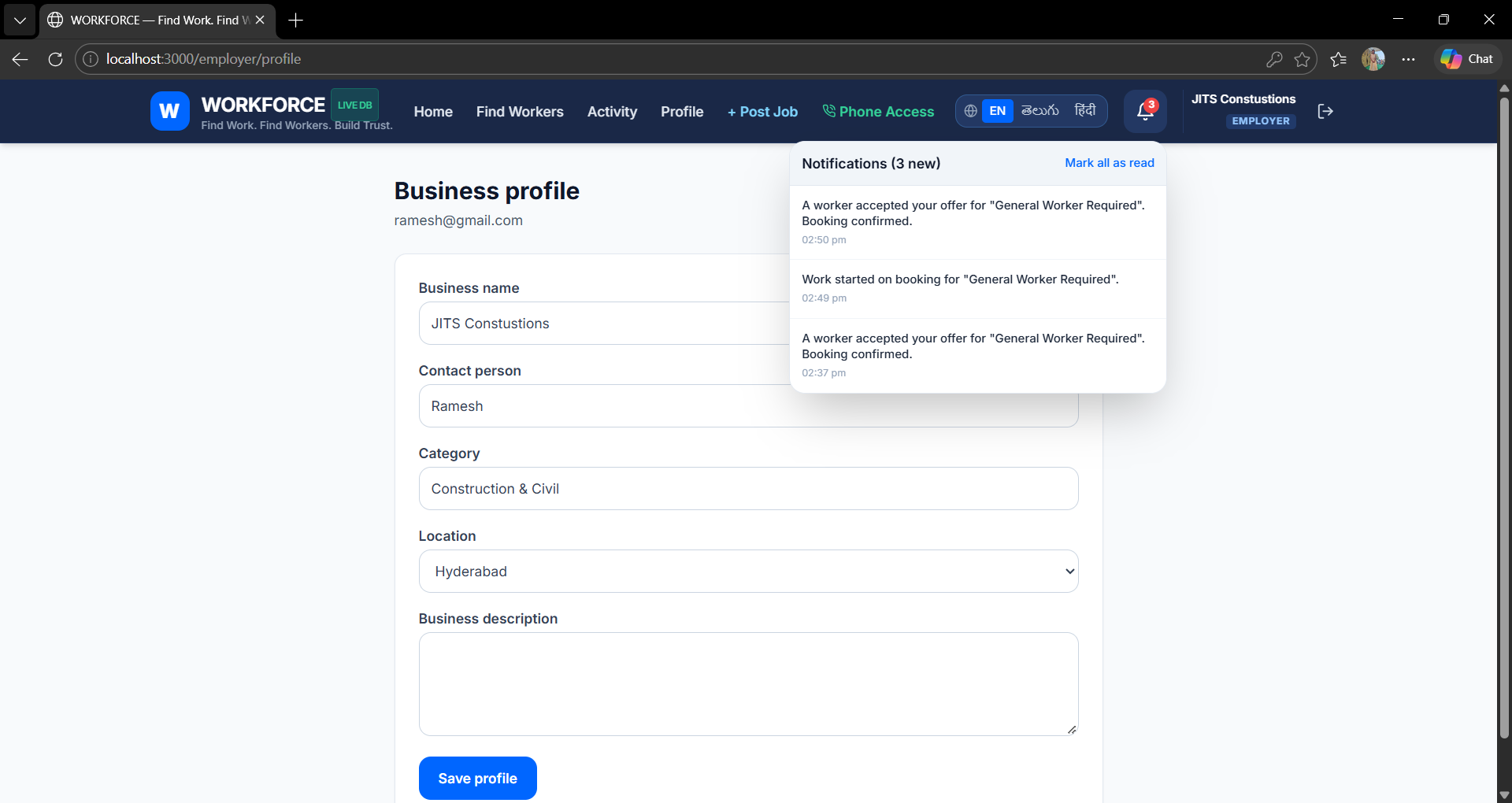
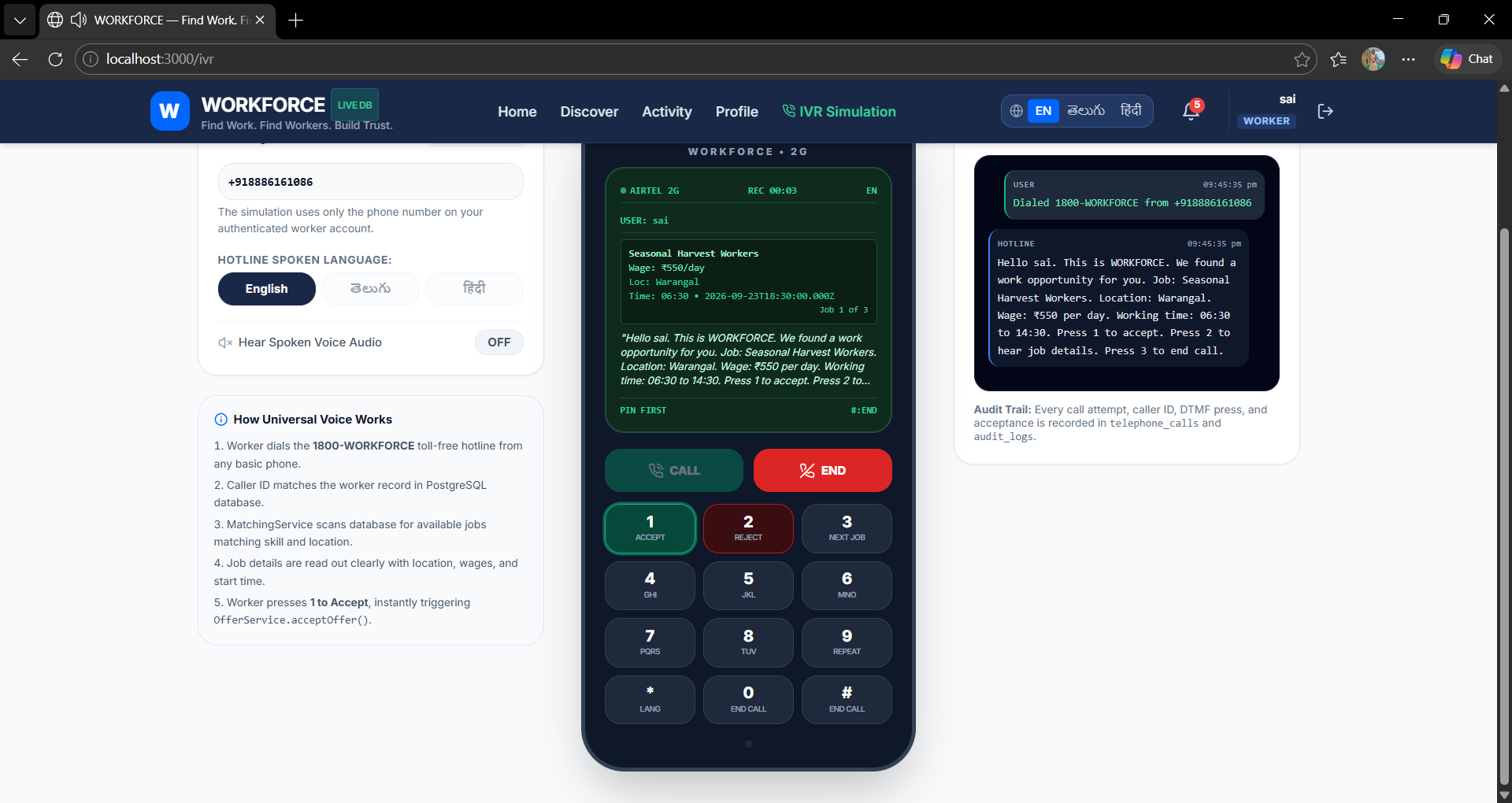
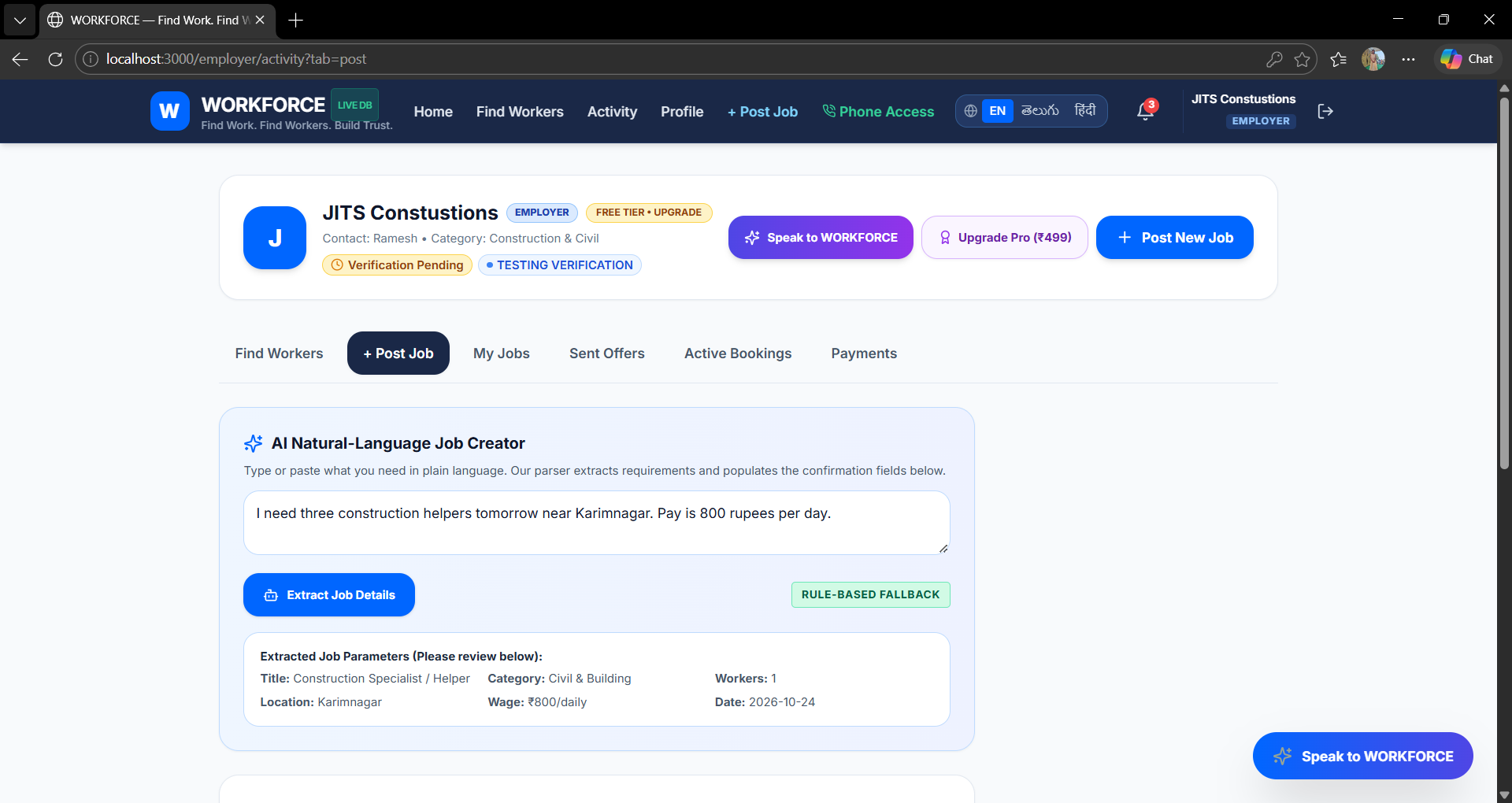
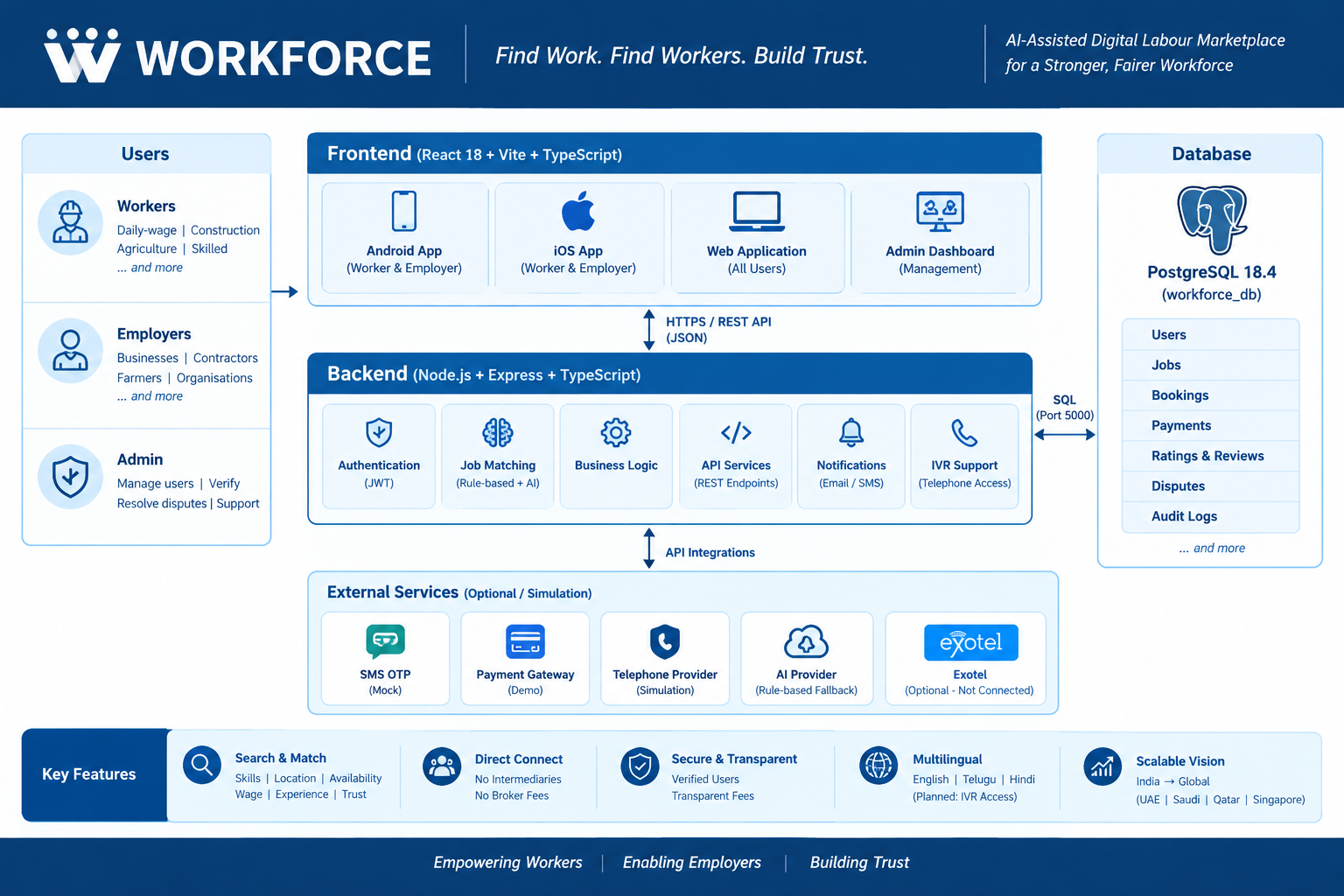
WORKFORCE — Find Work. Find Workers. Build Trust.
Inspiration
Across India, many daily-wage labourers, construction workers, agricultural workers, and skilled workers depend on labour addas, contractors, brokers, WhatsApp groups, and word of mouth to find work. Finding reliable opportunities with clear wages and convenient locations can be difficult. At the same time, employers, farmers, contractors, and businesses often struggle to find suitable workers quickly.
We created WORKFORCE to address this gap by building a digital labour marketplace that helps workers and employers connect more directly, transparently, and efficiently.
Our vision is simple: access to work should be easier, regardless of a person's occupation, location, or digital experience.
What It Does
WORKFORCE is an AI-assisted digital labour marketplace designed to connect people looking for work with people who need workers.
The platform is designed around three roles:
- Workers: Discover relevant job opportunities and explore work based on skills, location, availability, and wages.
- Employers: Find suitable workers and manage labour requirements more efficiently.
- Administrators: Support platform management, user oversight, and trust-related processes.
The project focuses on job discovery, worker-employer connections, and more transparent employment opportunities. Our longer-term vision includes multilingual access in English, Telugu, and Hindi, along with telephone-based access for people who may not have smartphones or strong digital skills.
How We Built It
WORKFORCE is being developed as a full-stack web application with a modular architecture.
Our technology stack includes:
- Frontend: React, Vite, and TypeScript.
- Backend: Node.js, Express, and TypeScript.
- Database: PostgreSQL.
- Matching approach: Rule-based matching with an AI-assisted direction for future improvements.
- Authentication: JWT-based authentication.
- Integrations: Development-stage SMS OTP, payment, and telephone-provider simulations.
The frontend communicates with backend REST APIs, while PostgreSQL stores application data. The architecture is intended to support future expansion as the platform grows.
Challenges We Faced
One of our main challenges was designing a platform for two different groups: workers seeking opportunities and employers seeking reliable labour. Both groups need a simple experience, but their needs are different.
We also had to consider location-based job discovery, wage transparency, user trust, database integration, authentication, and the difficulties faced by people with limited digital access.
Another challenge was balancing ambitious features with practical implementation. We are distinguishing between features implemented in the current prototype, simulated integrations, and capabilities planned for future development.
What We Learned
Building WORKFORCE helped us understand how frontend interfaces, backend APIs, databases, authentication, and matching logic work together in a full-stack application.
We also learned that solving a real-world problem requires more than building software. Accessibility, trust, transparency, usability, and feedback from the intended users are equally important.
What's Next
Our next goals include improving job matching, strengthening verification and trust mechanisms, testing the platform with real workers and employers, expanding multilingual support, and exploring telephone-based access.
We aim to begin with Karimnagar, expand across Telangana and India, and eventually explore international labour markets where appropriate legal and operational requirements can be met.
WORKFORCE is our effort to make finding work and finding workers simpler, more accessible, and more transparent.
Find Work. Find Workers. Build Trust.
Built With
- express.js
- node.js
- postgresql
- react
- rest-api
- typescript
- vite

Log in or sign up for Devpost to join the conversation.