WorkflowWizard: Your AI Automation Architect
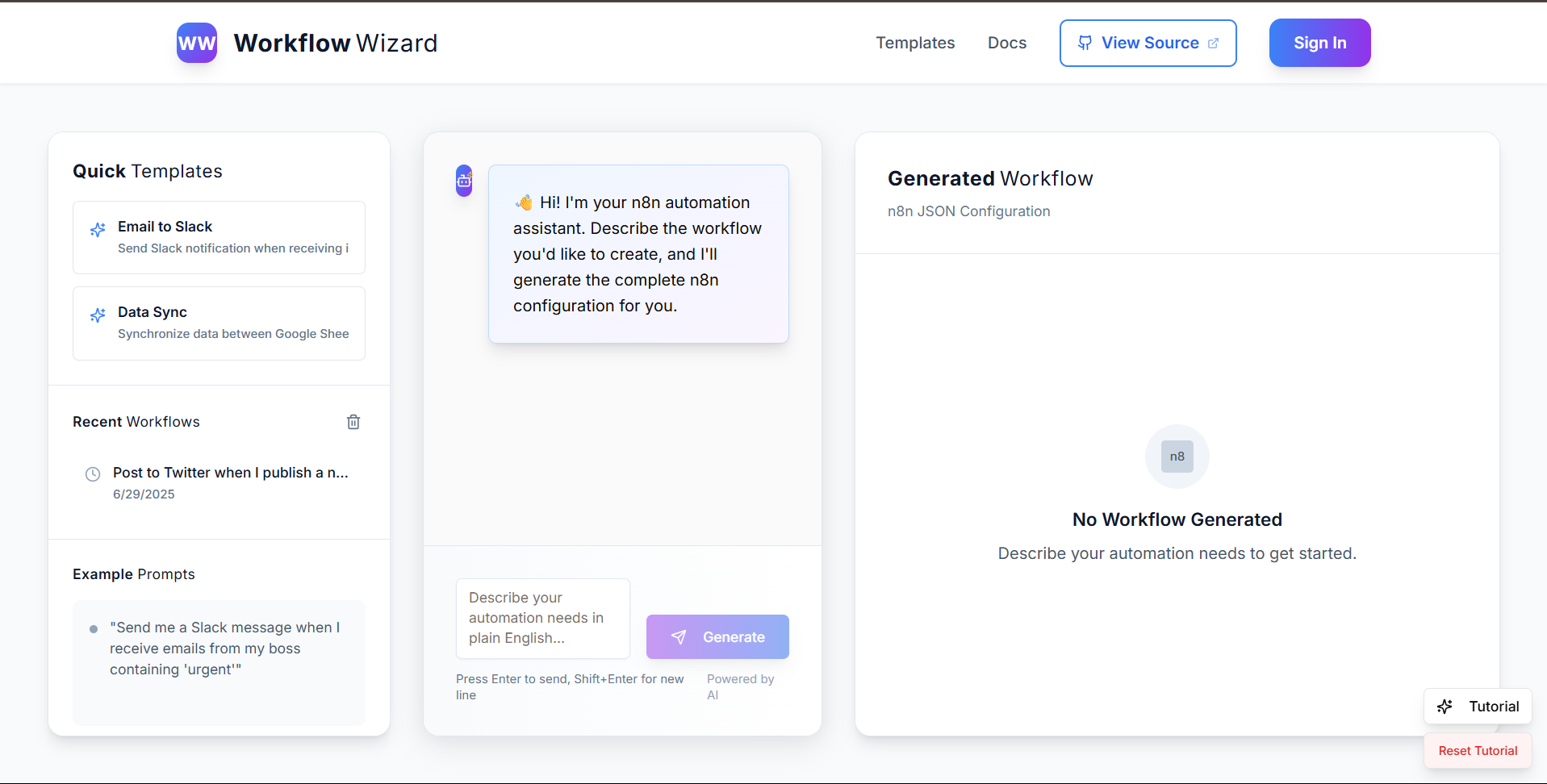
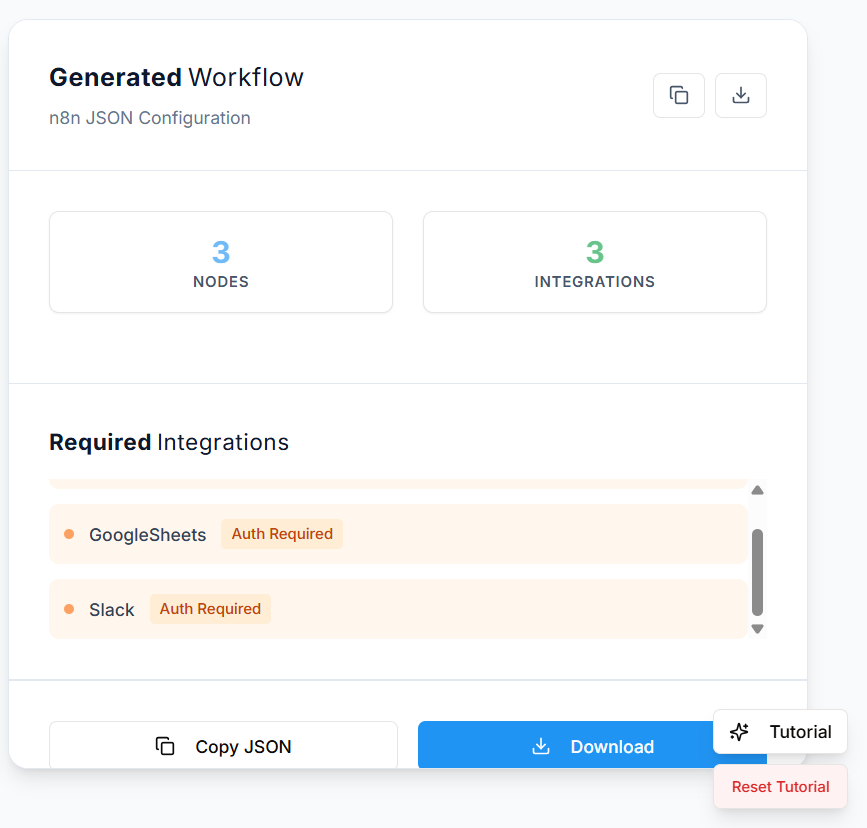
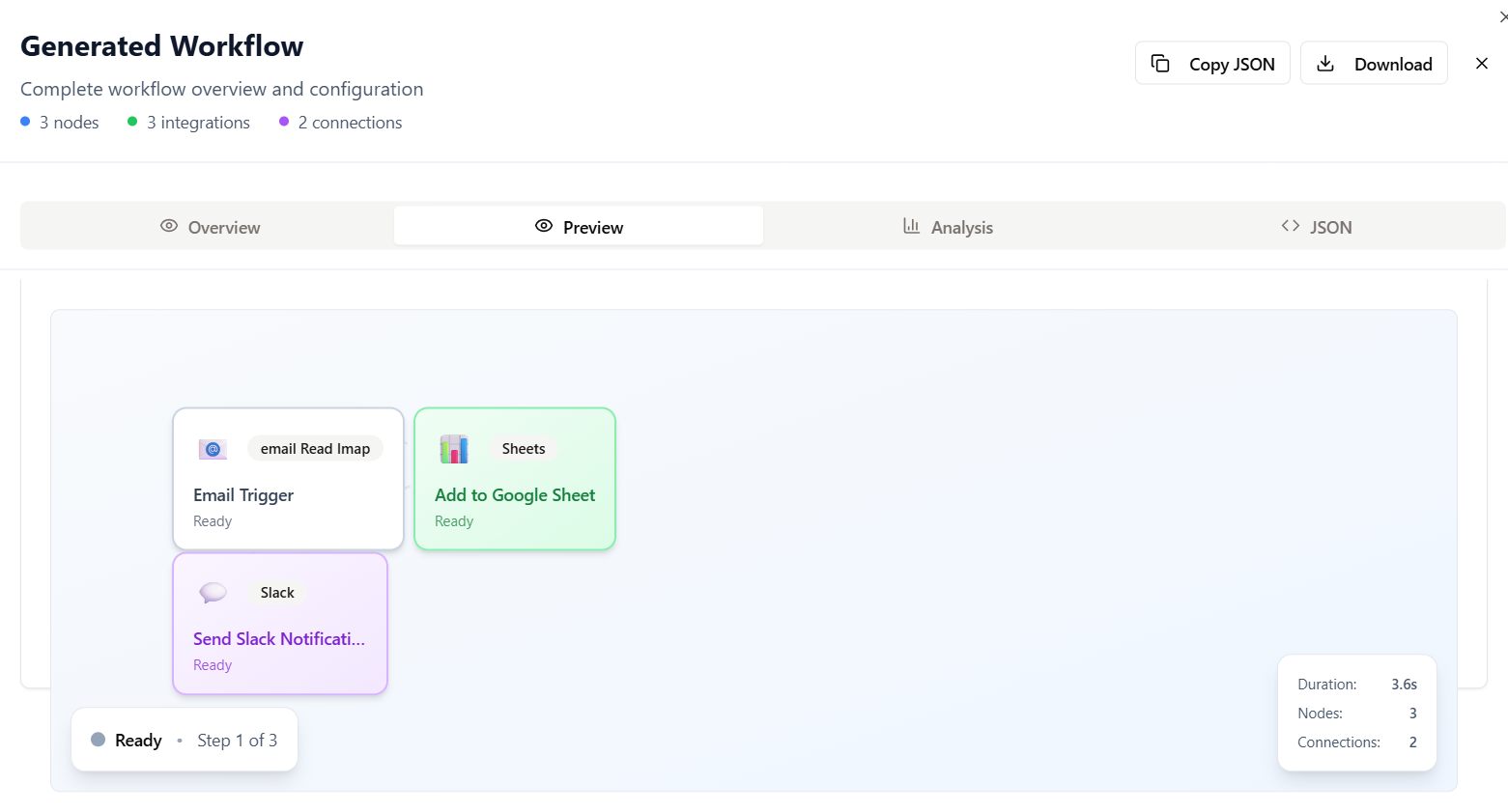
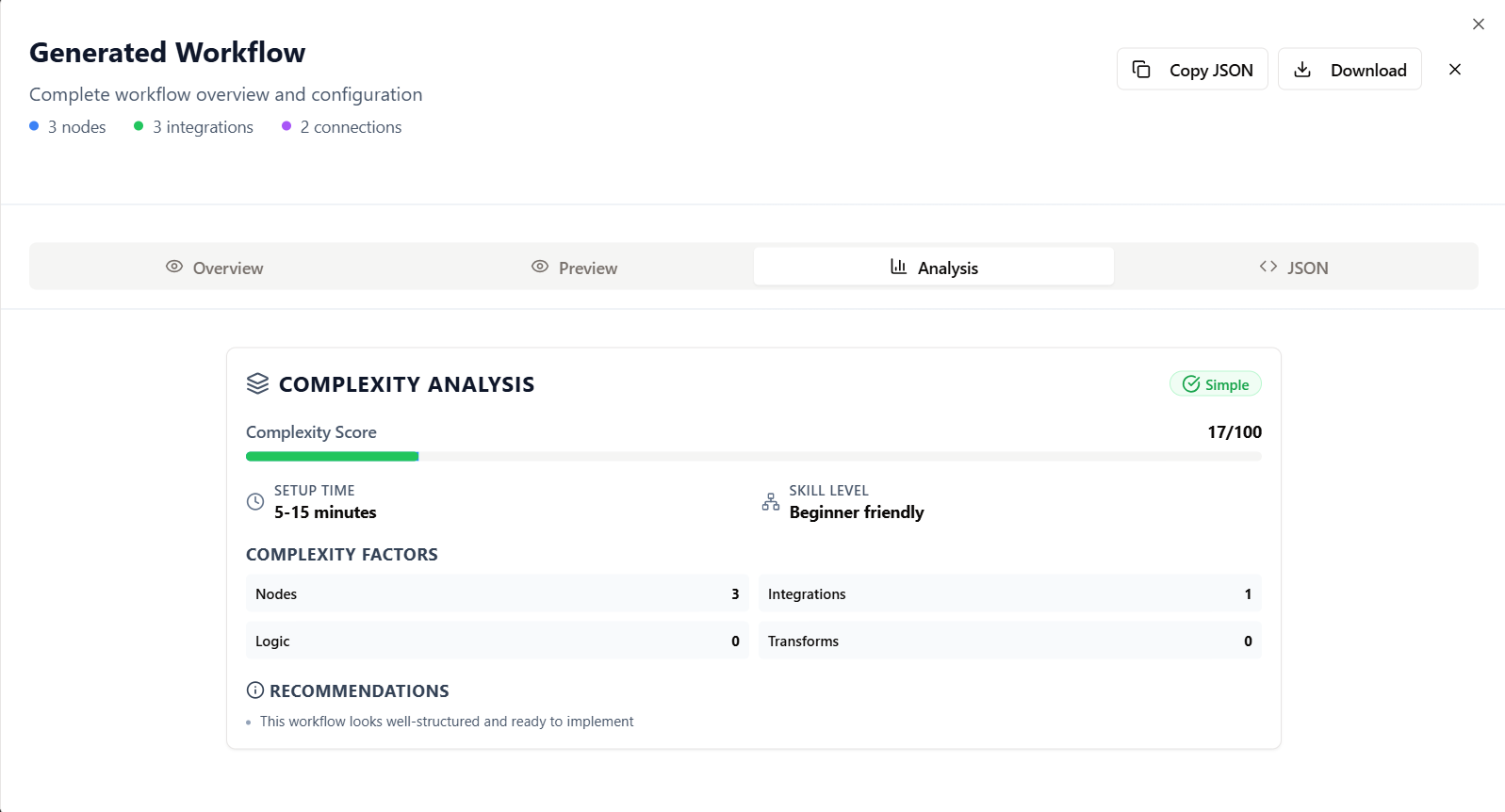
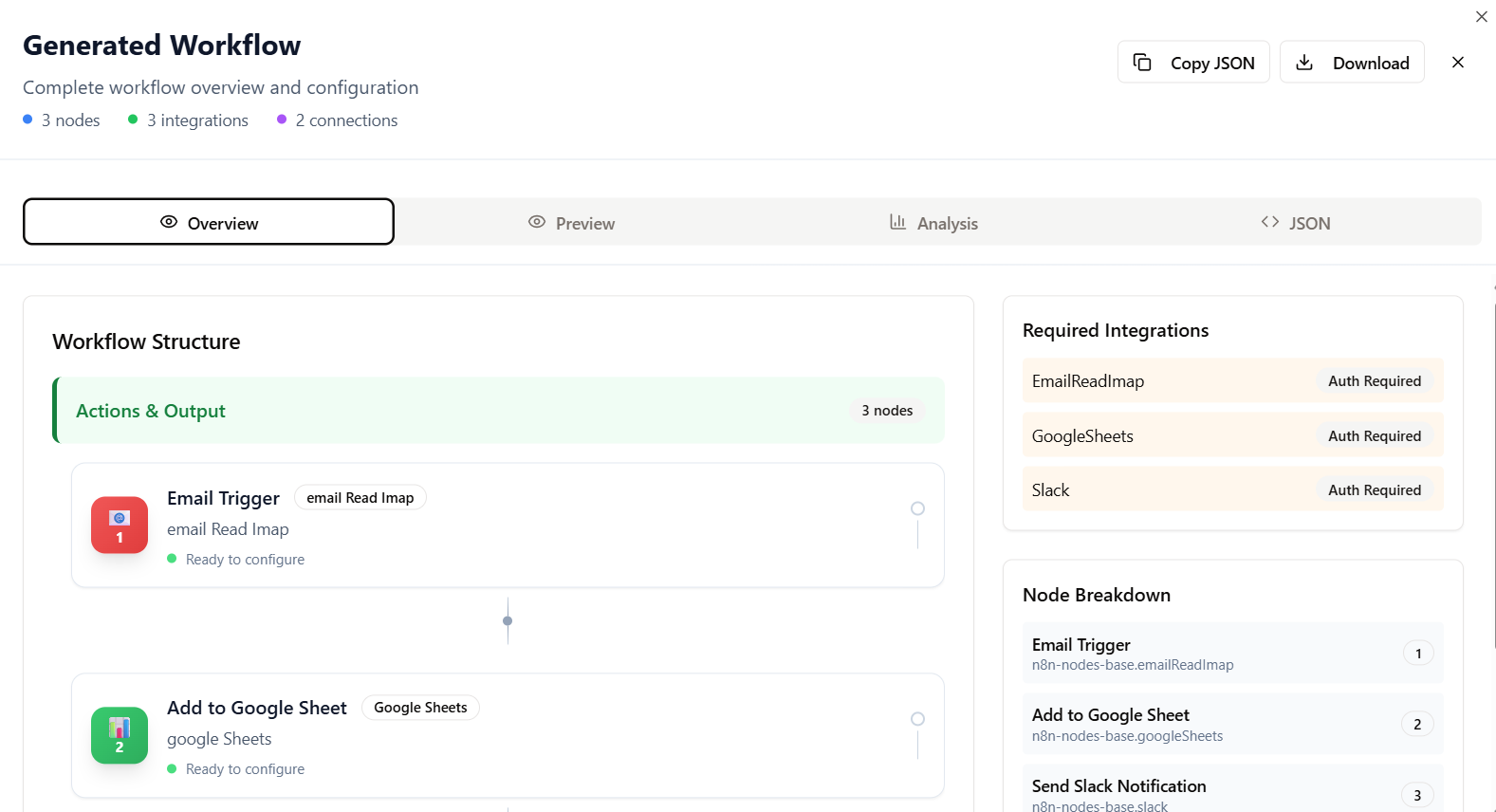
WorkflowWizard is a smart application designed to bridge the gap between human language and complex automation workflows. By simply describing a process, users can generate fully-functional n8n workflow JSON, ready to be imported and run.
Inspiration
The inspiration for WorkflowWizard came from a simple observation: while automation platforms like n8n are incredibly powerful, there's often a steep learning curve. Designing workflows, finding the correct nodes, and configuring them perfectly can be a tedious and time-consuming process, even for experienced developers.
I imagined a tool that could act as an expert automation consultant. A tool that could understand your goals in plain English and translate them into a robust, ready-to-use workflow. The goal was to democratize automation, making it more accessible to everyone, from marketers to developers, by replacing manual configuration with the power of Artificial Intelligence.
How It Was Built
WorkflowWizard is a full-stack application built with a modern, type-safe technology stack.
Frontend: The user interface is built with React and Vite, providing a fast and responsive user experience. Styling is handled efficiently with Tailwind CSS and the excellent pre-built components from shadcn/ui. This allows users to easily input their automation ideas and see the results.
Backend: The server is powered by Node.js and Express, providing a robust API to connect the frontend to the core logic. The entire backend is written in TypeScript and uses
tsxfor a seamless development experience.The AI Core: The magic happens in the
workflow-generatorservice. When a user submits a prompt, the backend sends a carefully crafted request to the OpenAI API (using thegpt-4omodel). The key to the project's success is a highly detailed system prompt that instructs the AI to act as an "elite n8n Workflow Architect," ensuring it returns a valid, logical, and well-structuredn8nJSON object.Database & ORM: The application uses PostgreSQL as its database and Drizzle ORM for type-safe database queries. This is set up to potentially store generated workflows, user accounts, or workflow templates in the future.
Challenges Faced
Building WorkflowWizard was a rewarding journey, but it came with its share of challenges:
Consistent & Valid AI Output: The biggest hurdle was ensuring the LLM consistently produced valid JSON that strictly adhered to the complex
n8nworkflow schema. This required extensive prompt engineering. I had to iteratively refine the system prompt, adding specific rules about node types, placeholder values, and even the visual layout of the nodes on the canvas. I also implemented avalidateWorkflowfunction as a second layer of defense against invalid outputs.Cross-Platform Compatibility: Early in development, I hit a snag where the application would run on my machine but not on others. The
NODE_ENVenvironment variable was being set in a way that only worked on Linux/macOS. This taught me the importance of cross-platform development tools, leading me to integratecross-envto make the scripts universally compatible.Handling Ambiguity: Users don't always provide every detail. A prompt might say "send a Slack message" without specifying the channel or message content. I had to program the AI to make reasonable, best-practice assumptions and, crucially, to list those assumptions in its response for transparency.
What I Learned
This project was a fantastic learning experience. I significantly deepened my skills in:
- Practical AI Application: I moved beyond theory and learned how to apply a large language model to a real-world problem. Mastering prompt engineering to control the structure and quality of the AI's output was the most valuable takeaway.
- Full-Stack TypeScript: Building the entire application, from the database schema to the UI components, in a single, type-safe language was incredibly efficient and helped prevent countless bugs.
- Modern Web Tooling: I gained hands-on experience with the latest and greatest tools in the web development ecosystem, including Vite, Drizzle ORM, and Tailwind CSS.
- The Inner Workings of n8n: To make the AI generate correct workflows, I had to dive deep into the
n8nJSON structure, learning how nodes, connections, and credentials all fit together.
Built With
- css
- drizzelorm
- express.js
- framermotion
- javascript
- node.js
- openaiapi
- postgresql
- react
- shadcn/ui
- tanstackquery
- typescript
- vite


Log in or sign up for Devpost to join the conversation.