-
-
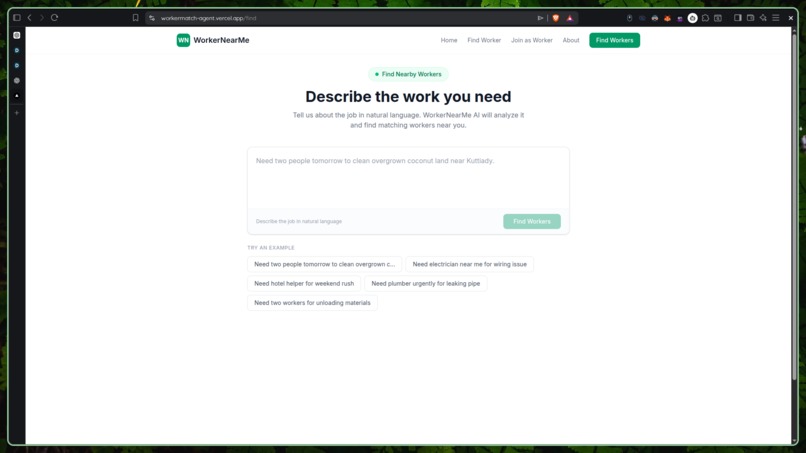
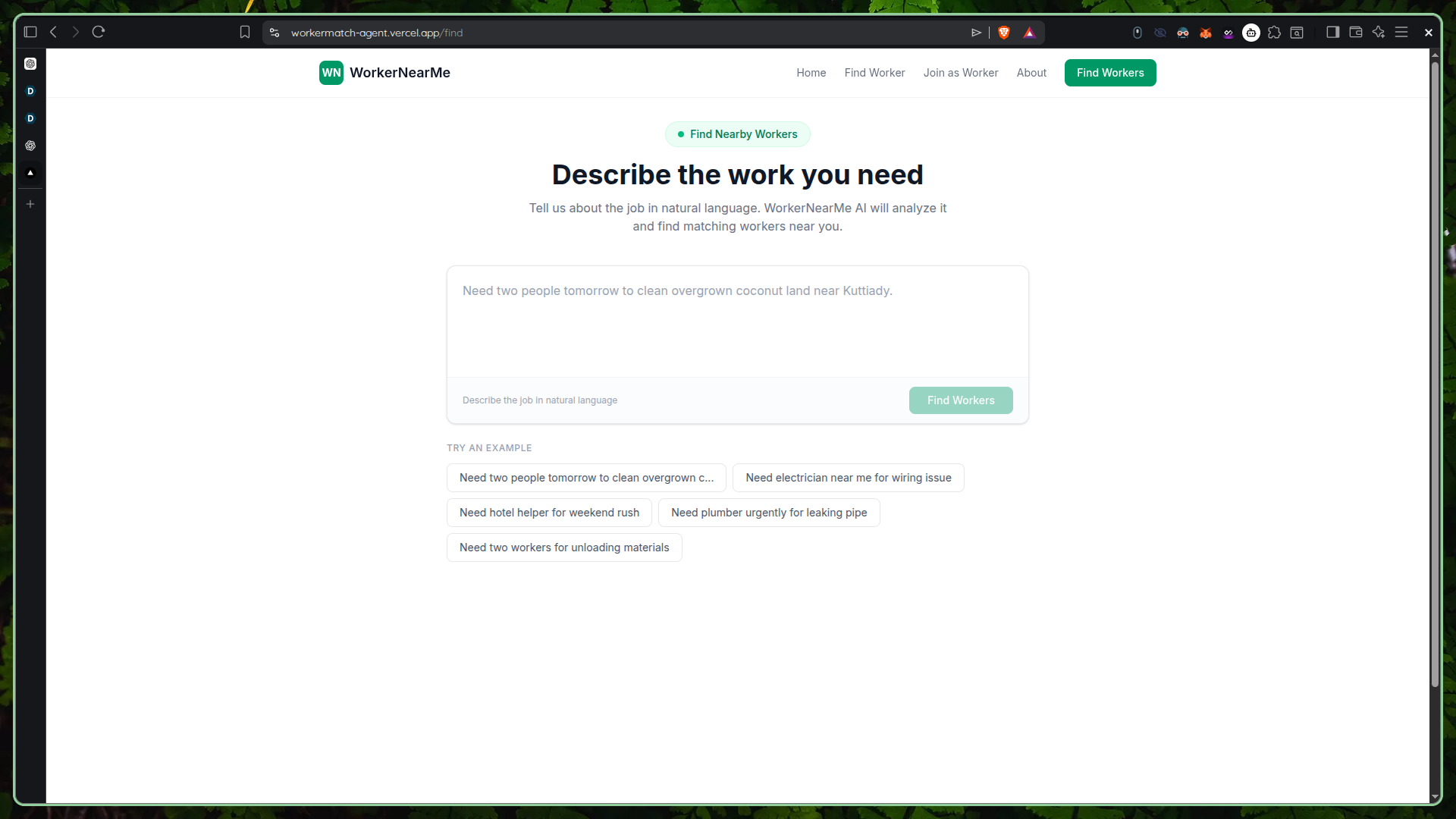
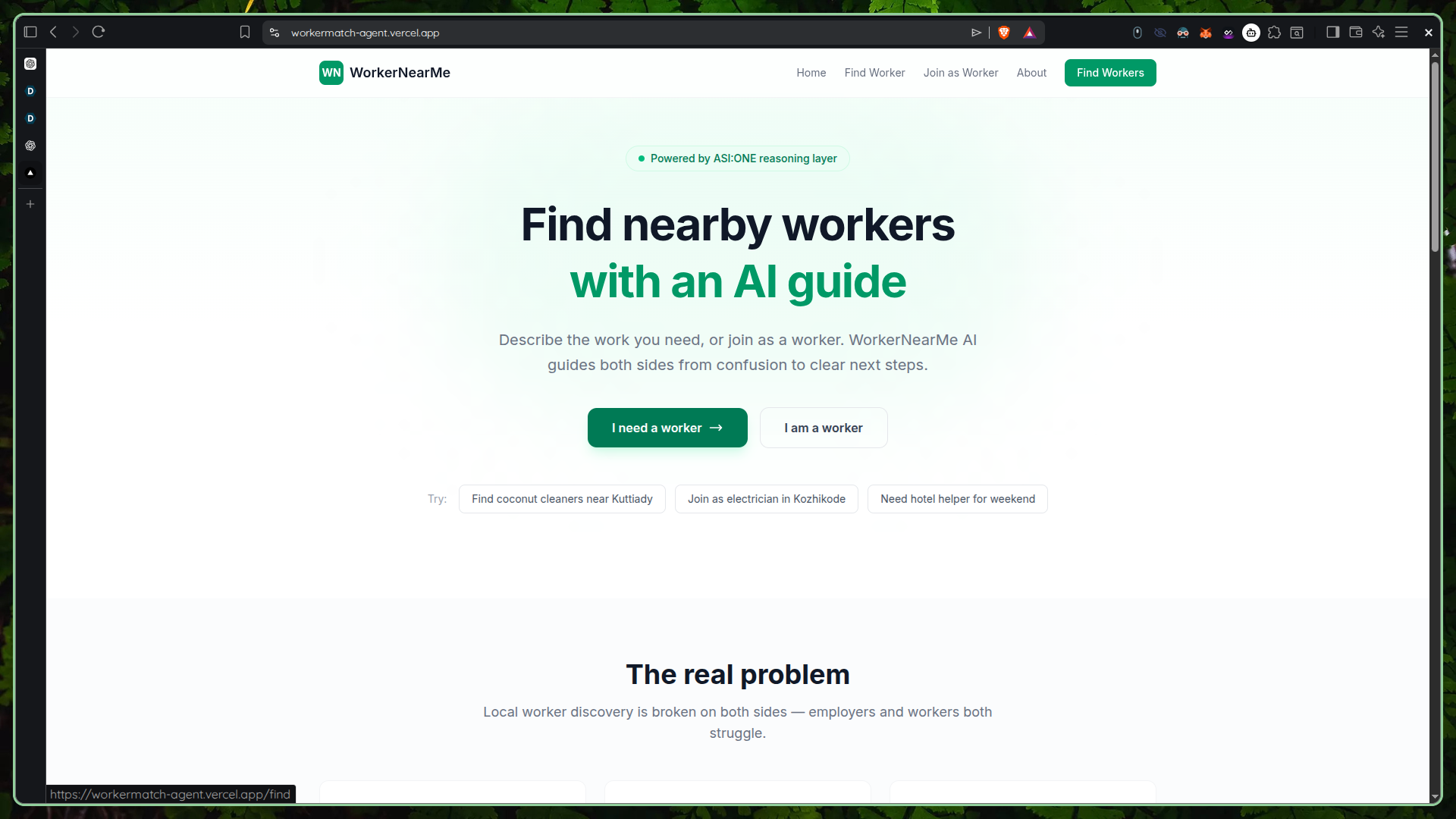
Find workers UI
-
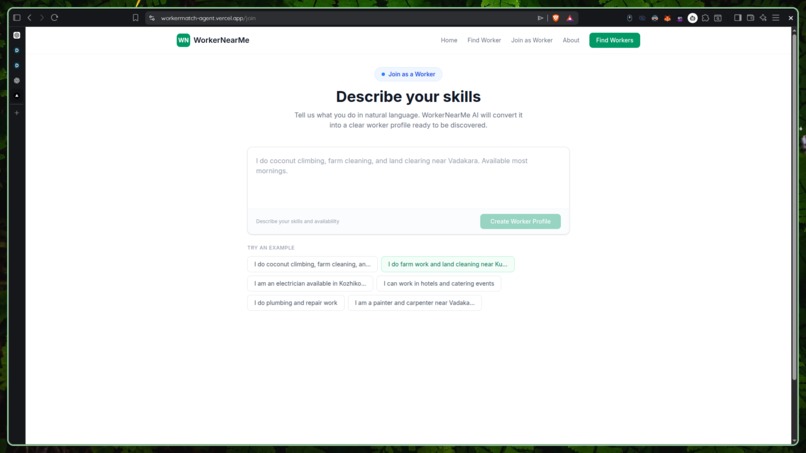
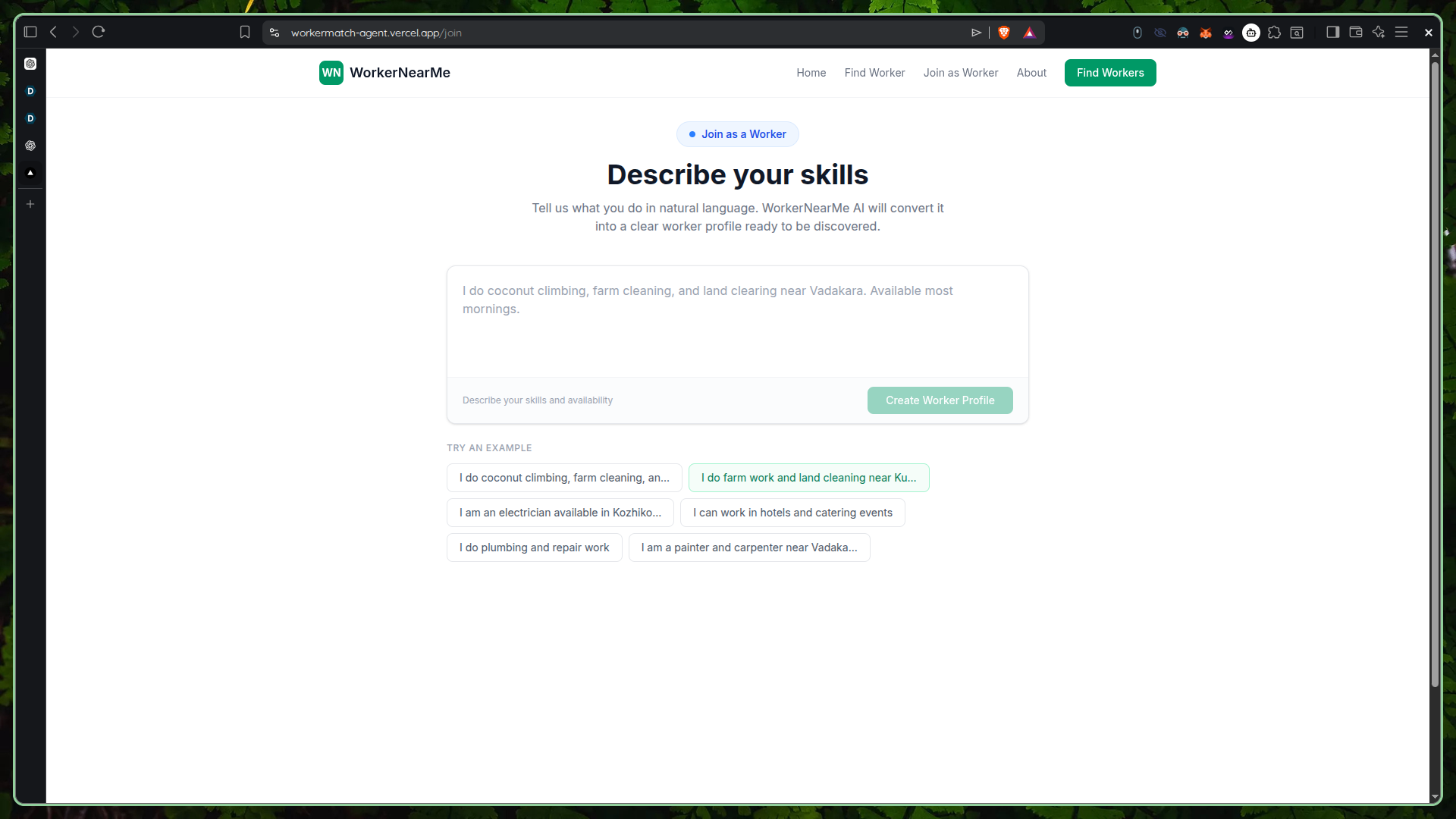
Join as a Worker UI
-
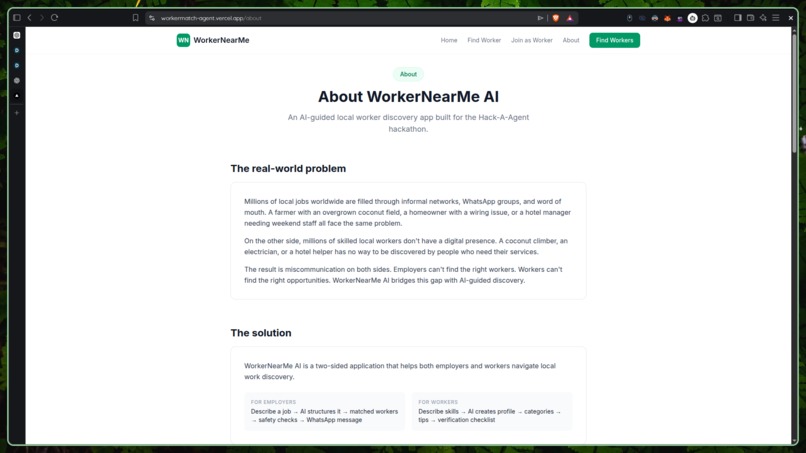
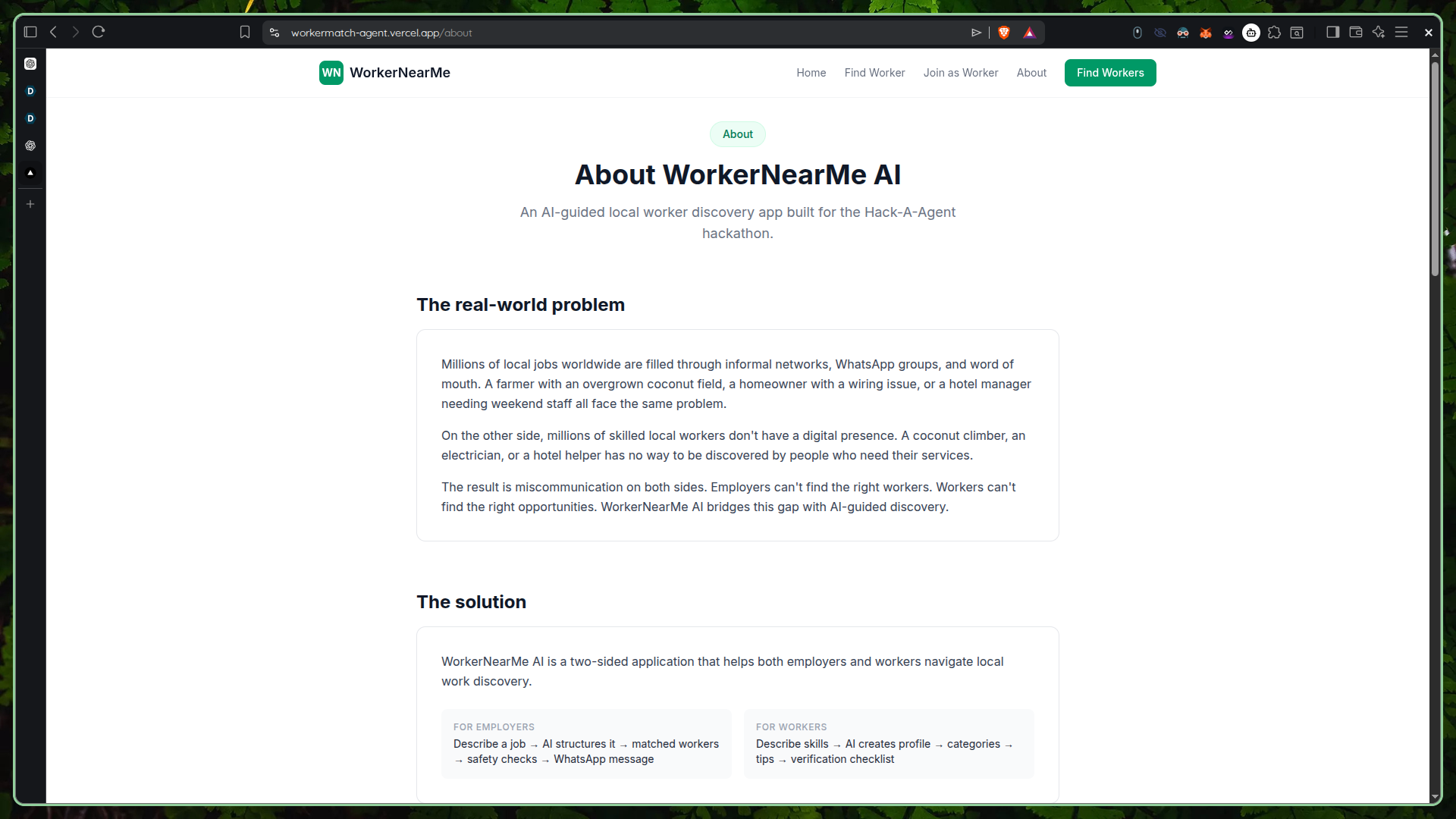
About UI
-
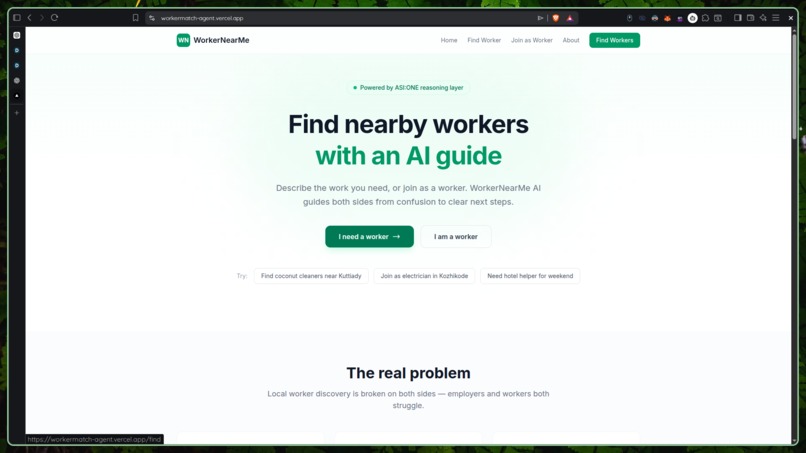
Home page UI
-
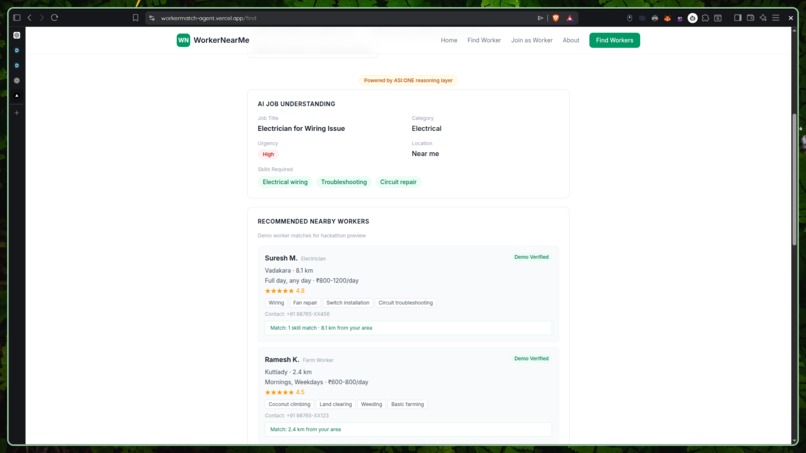
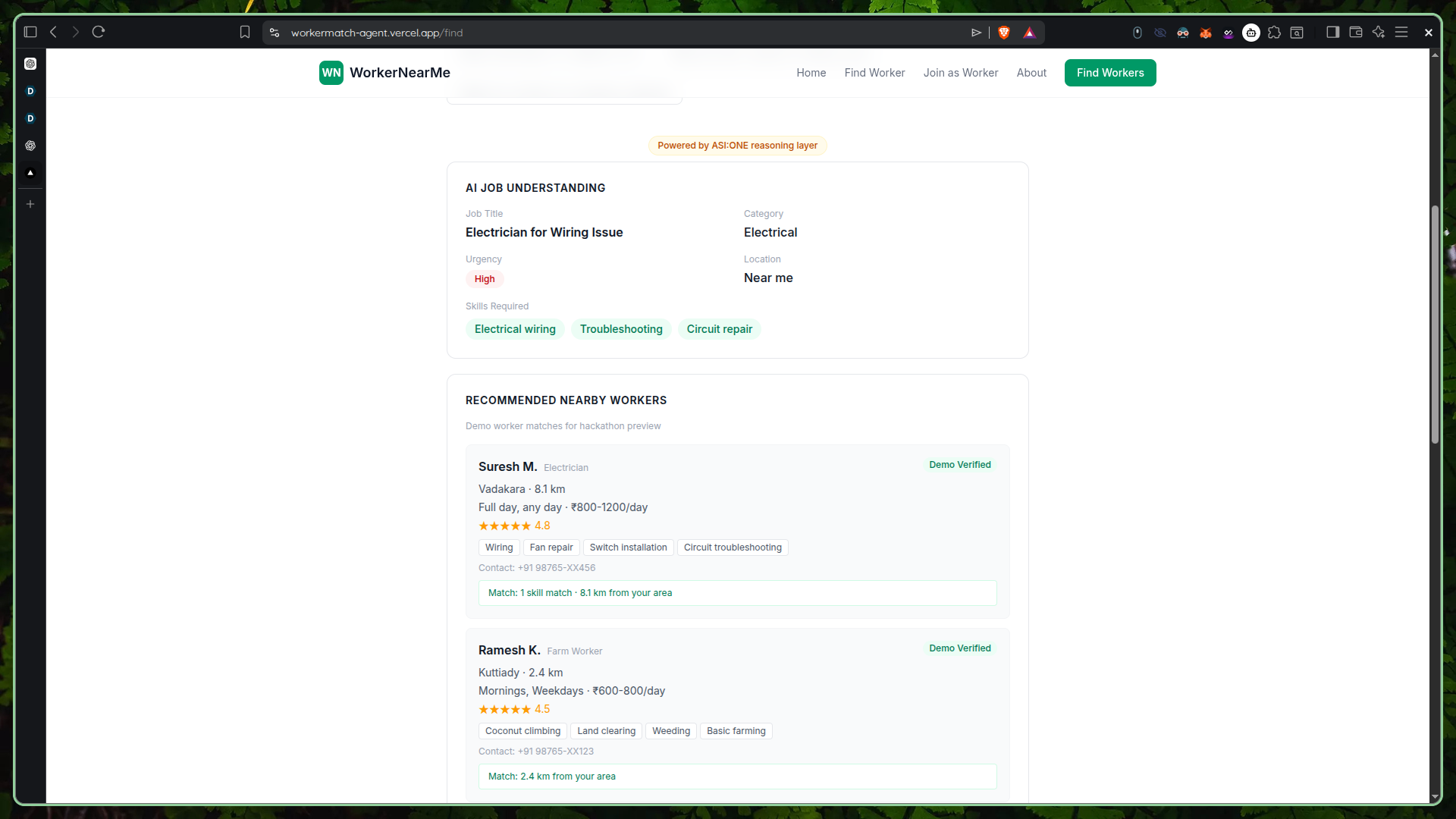
Found Workers UI
Inspiration
Finding reliable nearby workers for small jobs is still an informal and confusing process in many local communities. If someone needs an electrician, farm worker, plumber, hotel helper, painter, or land-cleaning worker, they often depend on random contacts, WhatsApp forwards, or word of mouth.
At the same time, many skilled local workers do not have a clean digital profile that helps people discover them. WorkerNearMe AI was inspired by this gap: people need workers, workers need work, but the discovery process is messy.
What it does
WorkerNearMe AI is a NearMe-style local worker discovery app powered by an ASI:ONE reasoning agent.
It has two main flows:
Find a Worker A customer describes the work they need in natural language. The AI analyzes the request, identifies the job category, urgency, location, required skills, worker count, follow-up questions, and safety/payment checklist. The app then shows demo nearby worker matches and generates a ready-to-send WhatsApp contact message.
Join as Worker A worker describes their skills, location, and availability in plain language. The AI converts that description into a clean worker profile with categories, skills, service area, availability, profile tips, and a verification checklist.
The goal is to turn local worker discovery from a vague informal process into a guided, structured, AI-assisted flow.
How we built it
We built WorkerNearMe AI using:
- Next.js App Router
- TypeScript
- Tailwind CSS
- Server-side API routes
- ASI:ONE chat completions API
- Mock Kerala-area worker dataset
- Server-side fallback logic for demo reliability
ASI:ONE is used as the reasoning layer behind both flows. For employers, it converts messy job requests into structured worker requirements and contact messages. For workers, it turns plain self-descriptions into useful service profiles.
The app calls ASI:ONE only from the server, keeping the API key safe. If the API key is missing or the API response fails, the app falls back to strong mock responses so the demo remains reliable.
Challenges we ran into
The biggest challenge was keeping the project focused. A real worker marketplace could include GPS, maps, authentication, payments, verification, reviews, WhatsApp integration, and admin dashboards. Since the hackathon timeline was short, we intentionally avoided overbuilding and focused on the core agent experience.
Another challenge was making AI output reliable. To solve this, we designed structured JSON responses, added safe parsing, validation, and fallback behavior.
Accomplishments that we're proud of
We are proud that WorkerNearMe AI is not just a generic chatbot. It demonstrates a practical two-sided agent flow:
- Customers can find the right type of nearby worker.
- Workers can join by creating a clear profile.
- ASI:ONE guides both sides through the process.
- The app stays simple, fast, and demo-ready.
We also built the app with a clean UI, server-side API safety, mock worker matching, and submission-ready documentation.
What we learned
We learned that AI agents are most useful when they reduce confusion and help users move through a real process. In this case, the agent does not just answer questions. It structures job needs, guides decision-making, prepares communication, and helps workers present themselves better.
We also learned the importance of keeping hackathon scope realistic. A focused working demo is better than an unfinished full marketplace.
What's next for WorkerNearMe AI
Next, WorkerNearMe AI can grow into a real local work network with: *Convert to Native App for better user experience
- Verified worker onboarding
- WhatsApp integration
- Malayalam and Manglish support
- Real location-based matching
- Worker availability tracking
- Trust and safety scoring
- Admin verification dashboard
- Worker reviews
- Emergency job alerts
The long-term vision is to make finding trusted nearby workers as simple as describing the work you need.
Built With
- agents
- ai
- asi
- css
- next.js
- node.js
- react
- tailwind
- typescript

Log in or sign up for Devpost to join the conversation.