-
-
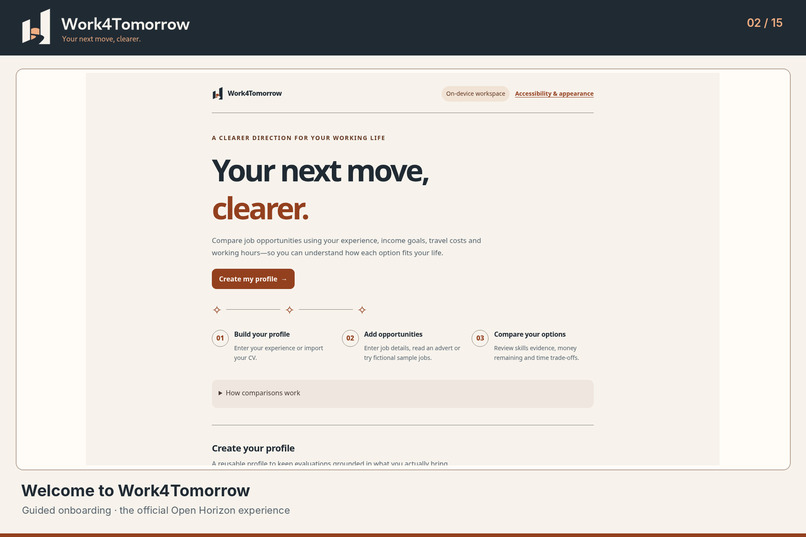
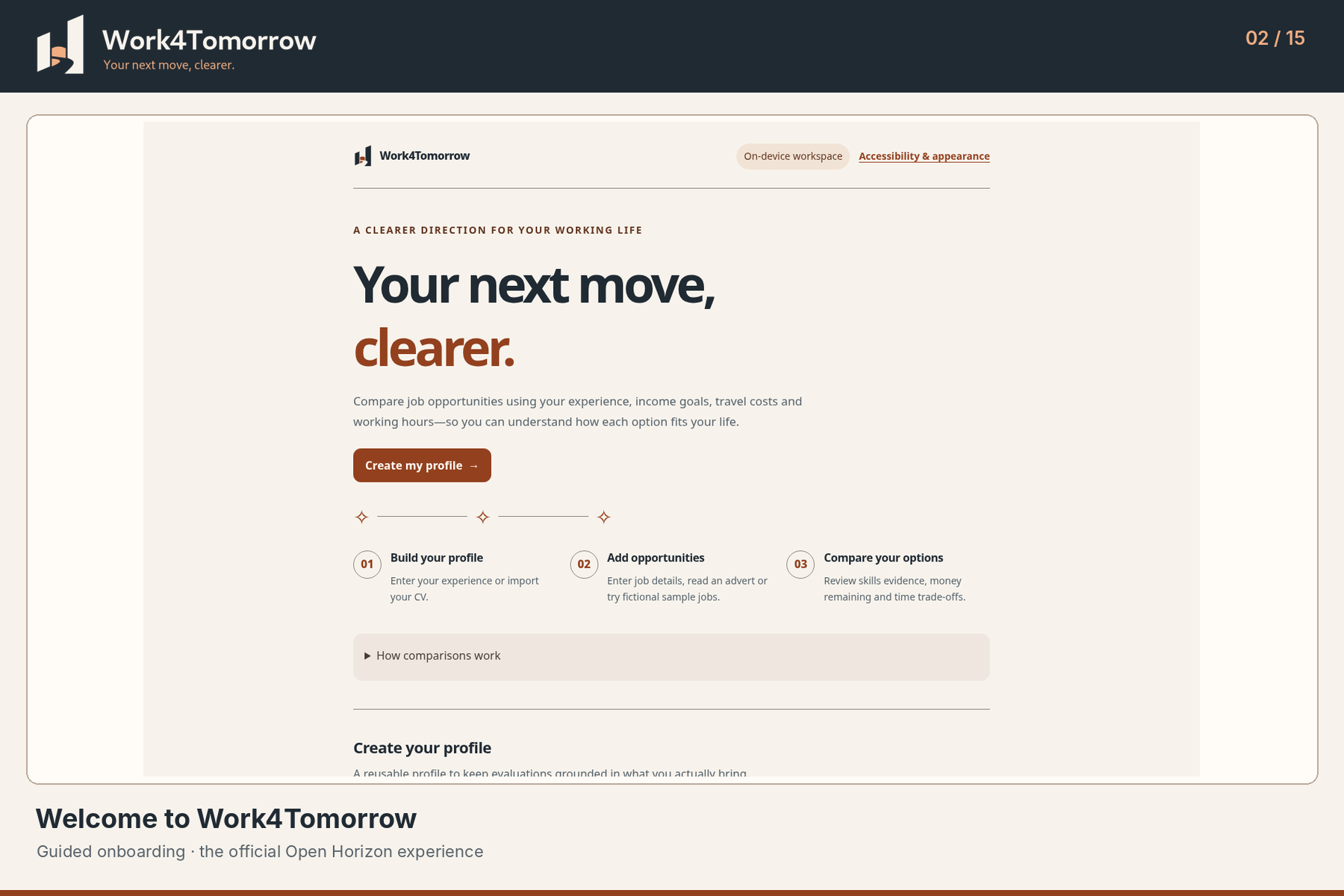
Welcome
-
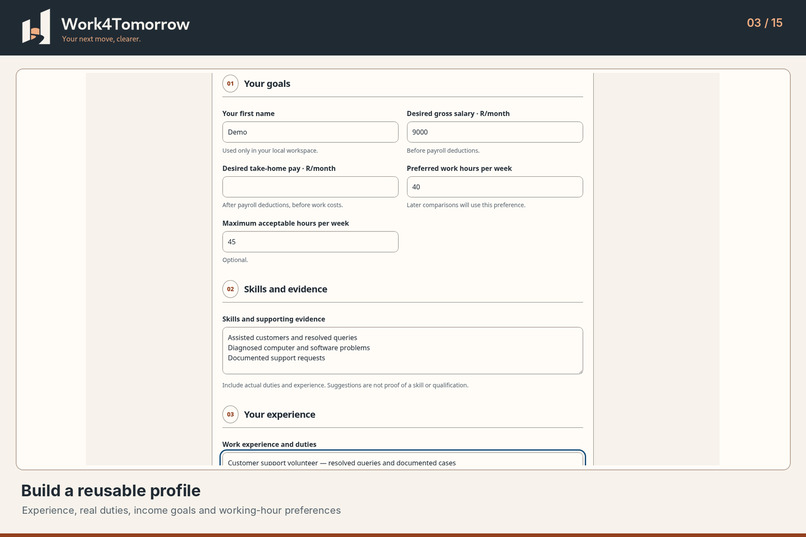
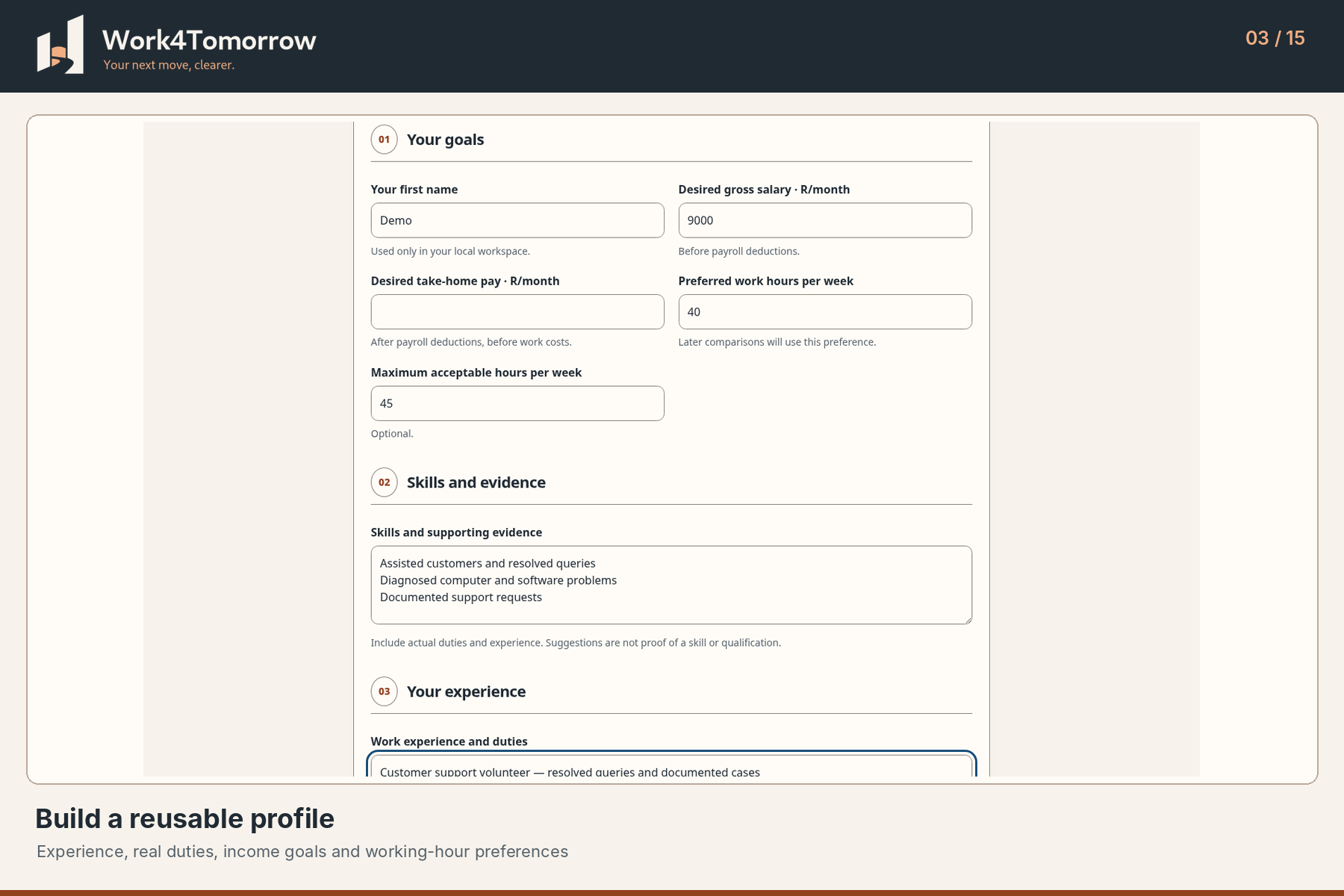
Profile
-
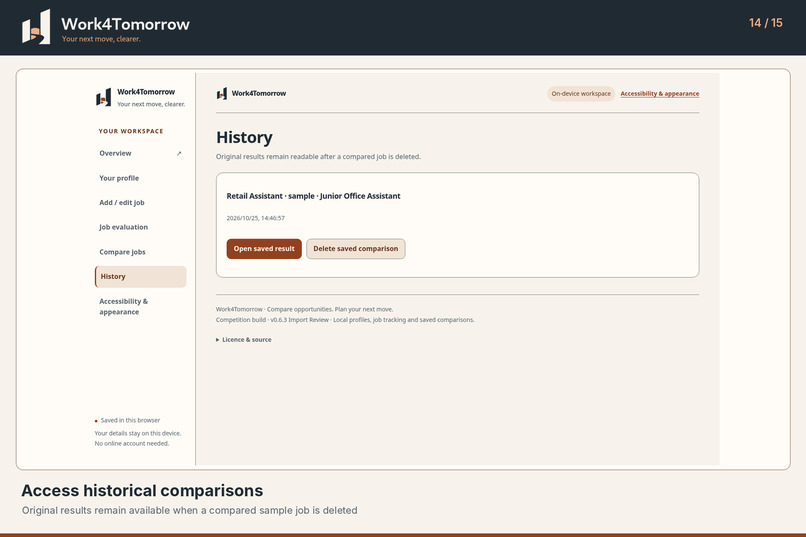
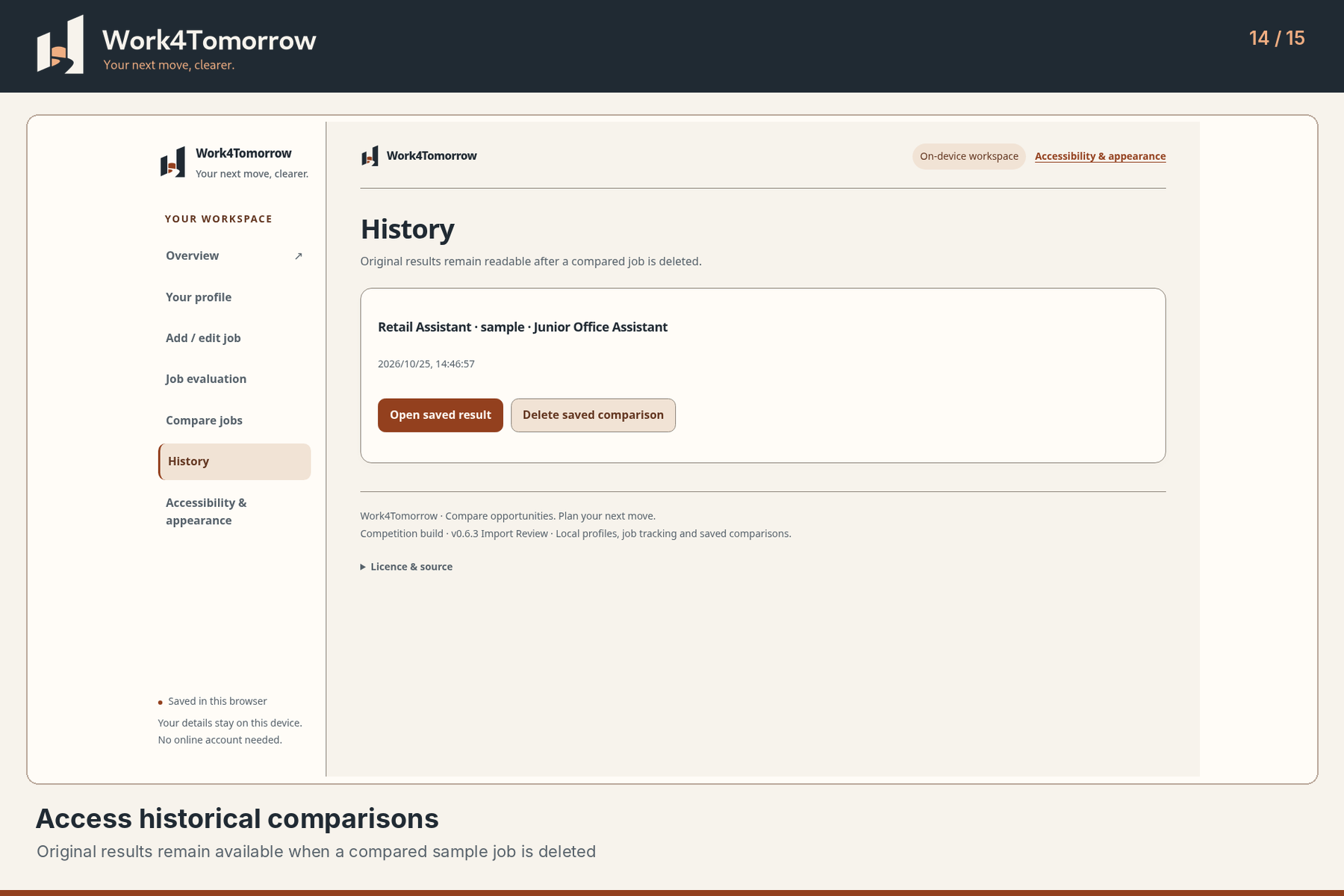
History
-
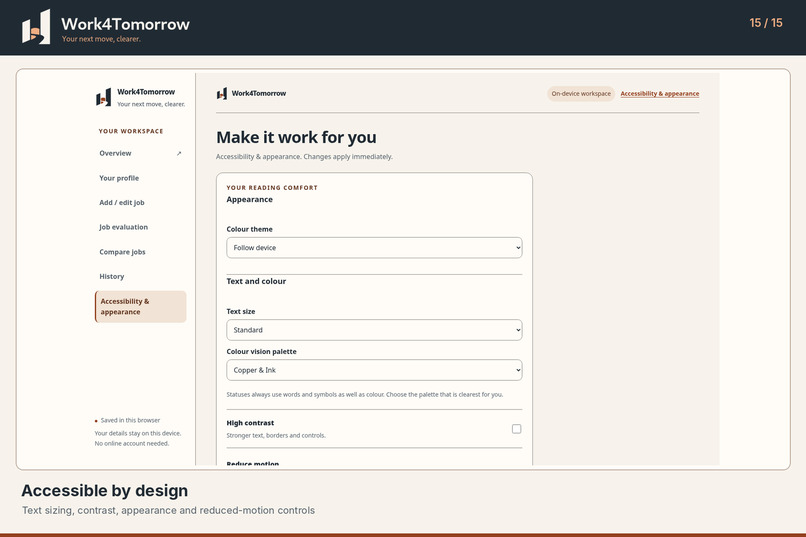
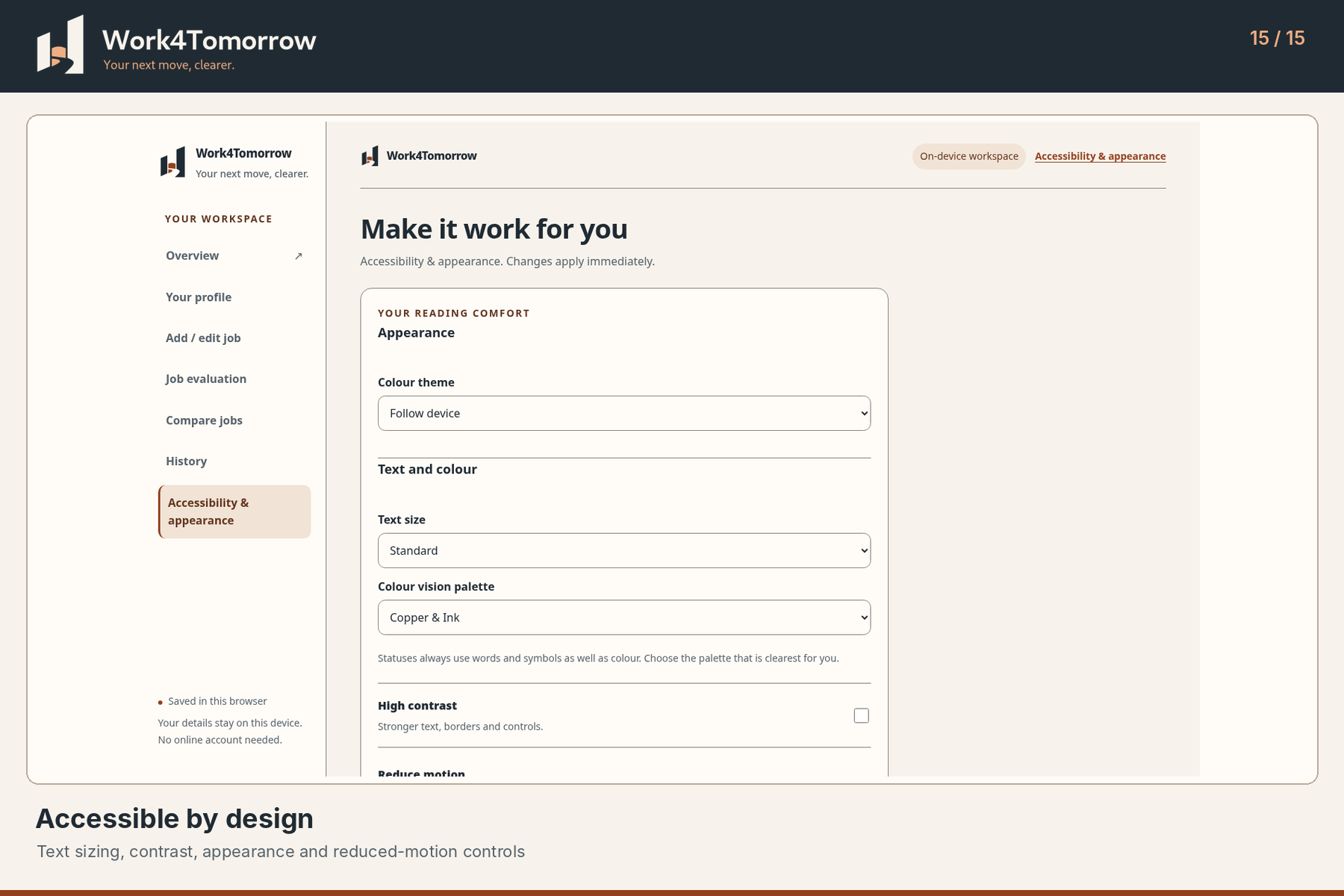
Accessibility
-
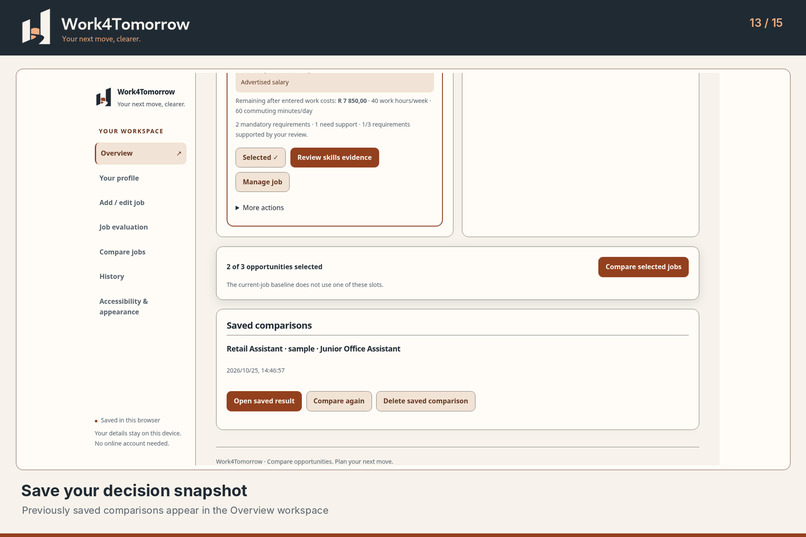
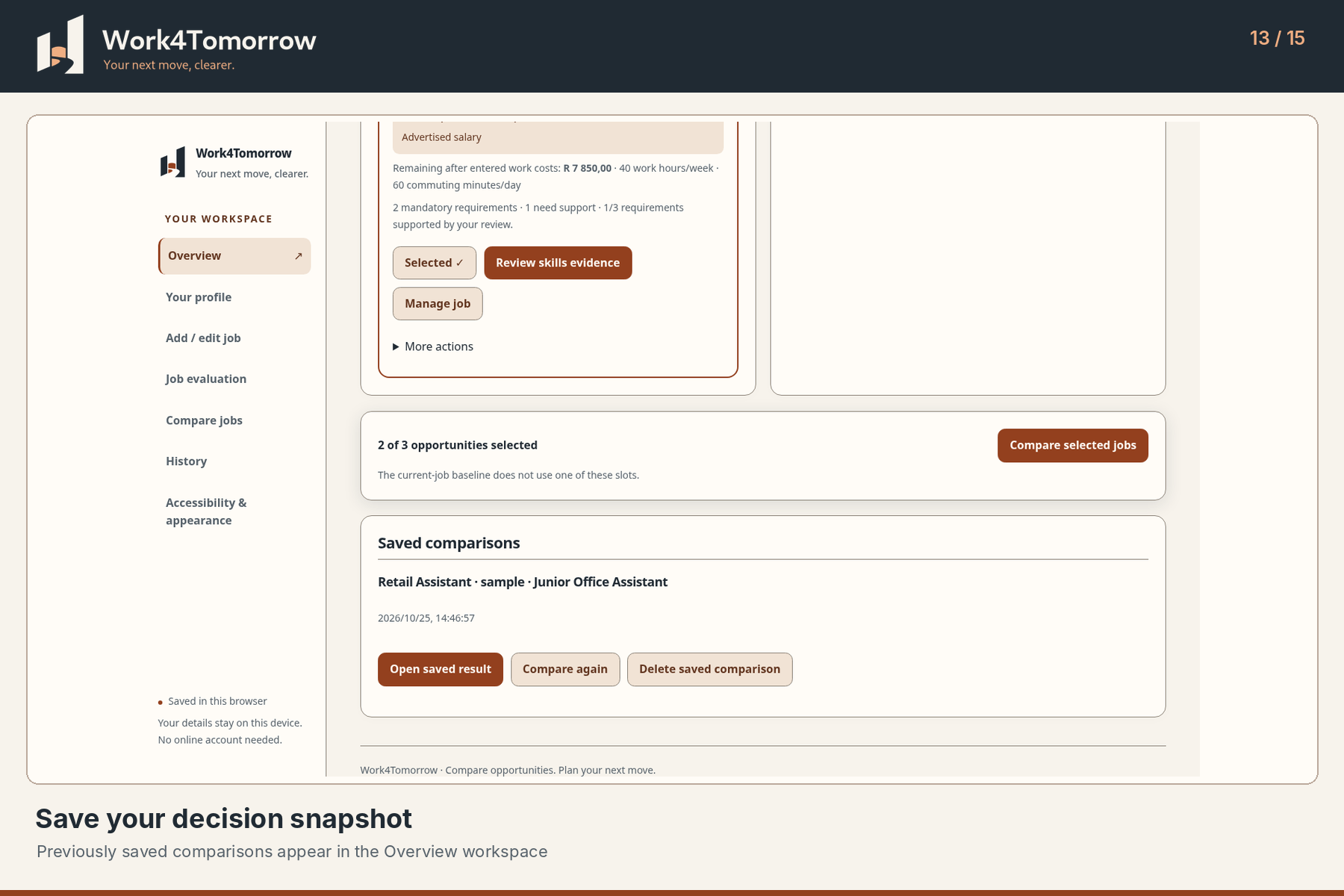
Saved Comparison
-
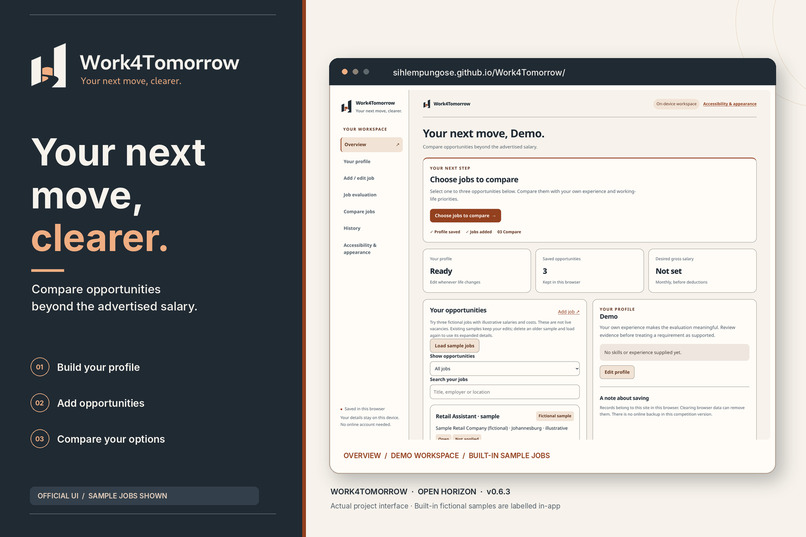
Cover
-
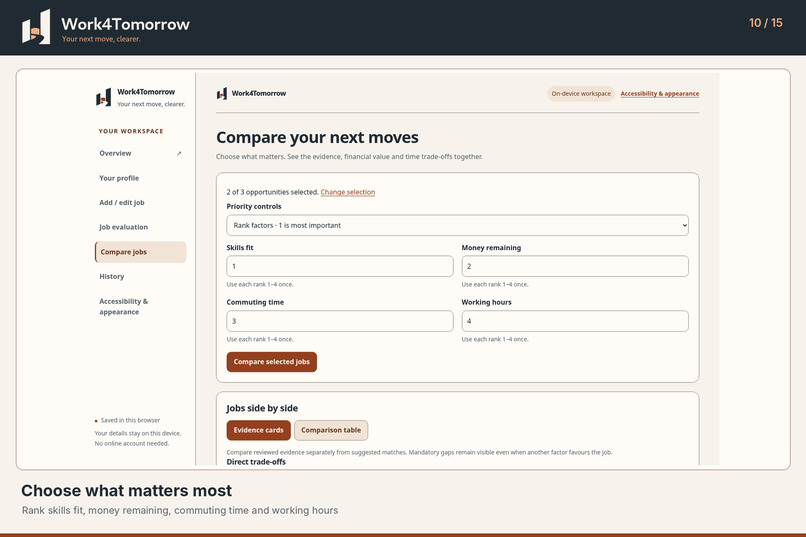
Comparison Priorities
-
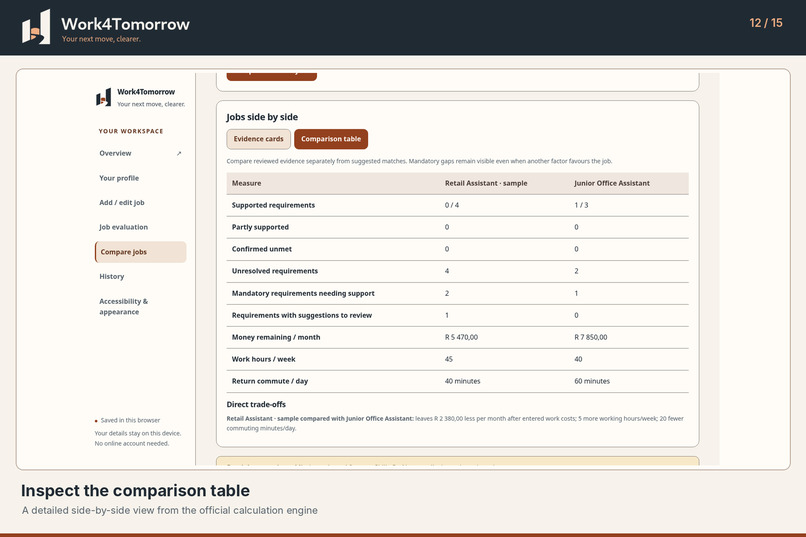
Comparison Table
-
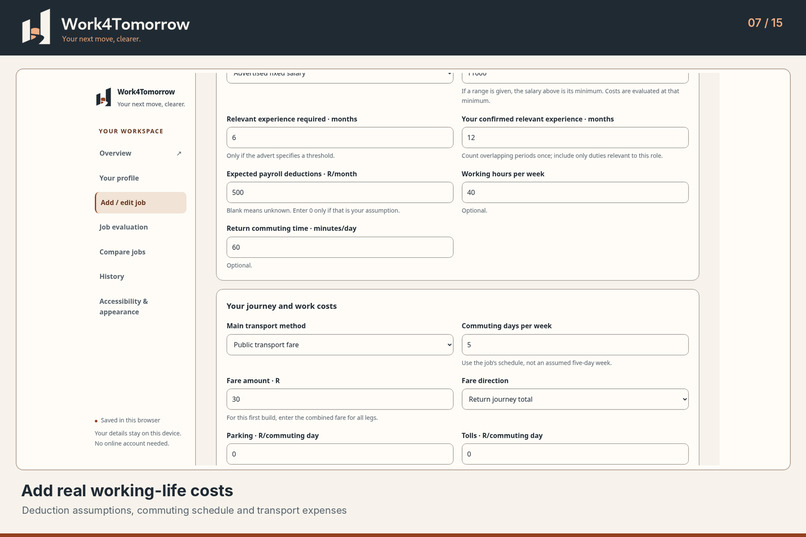
Work Costs
-
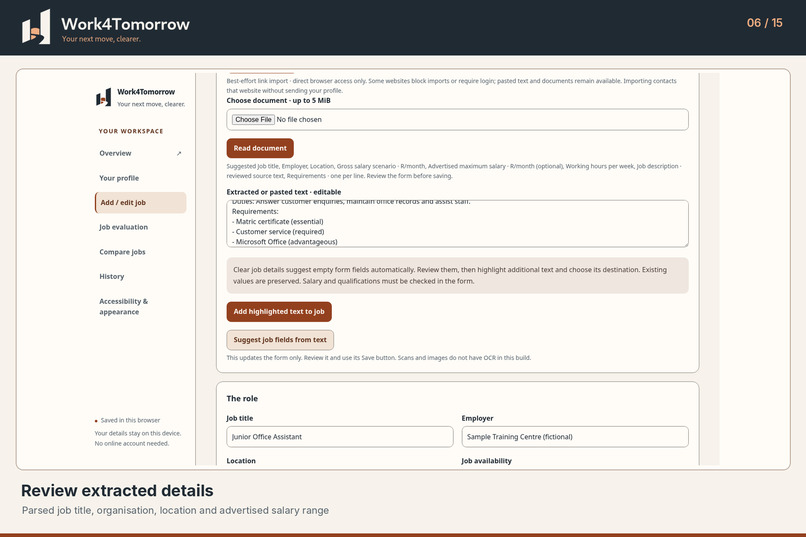
Review Extraction
-
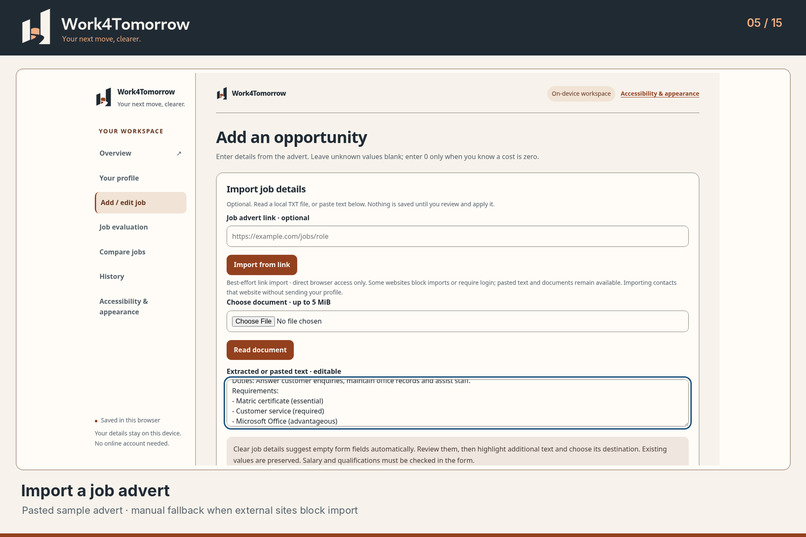
Paste Advert
-
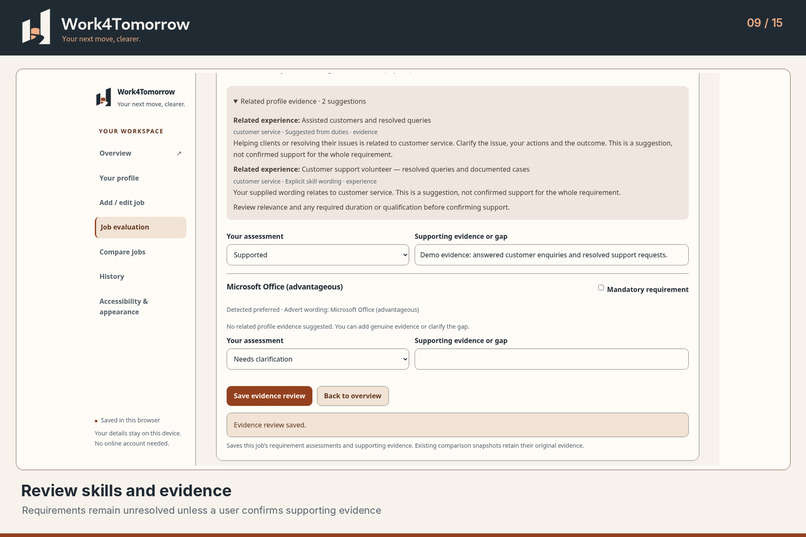
Review Requirements
-
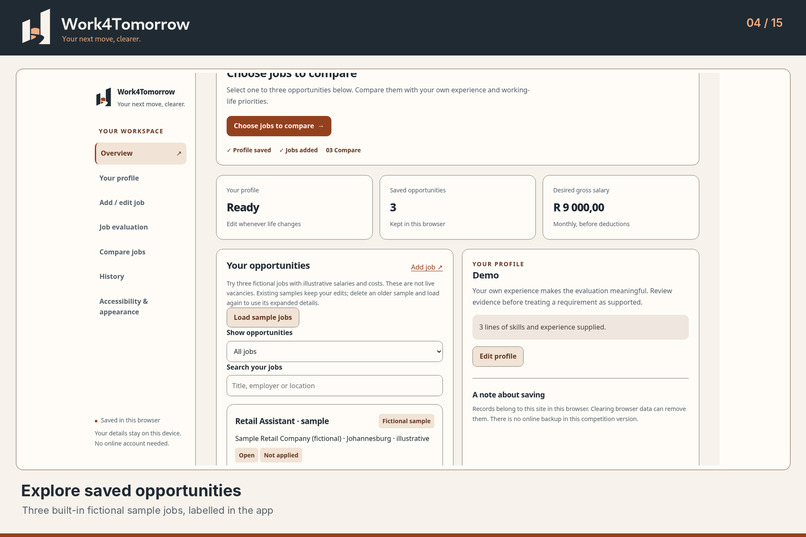
Sample opportunities
-
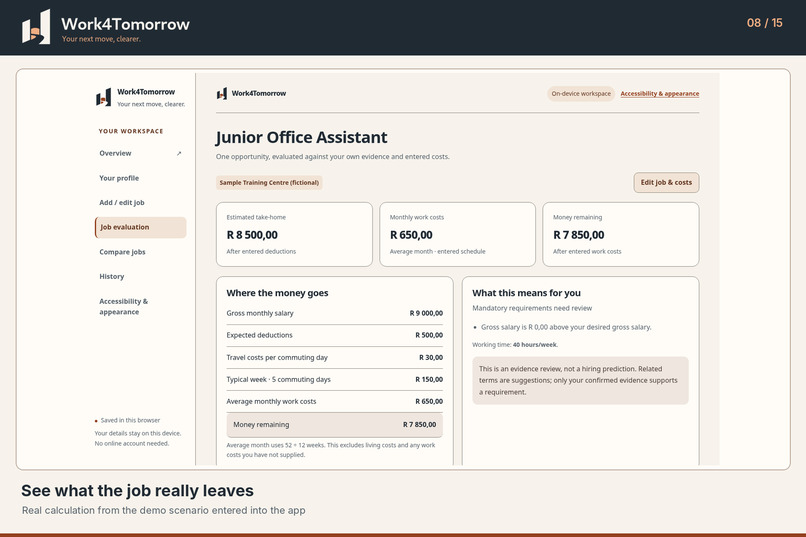
Money Remaining
-
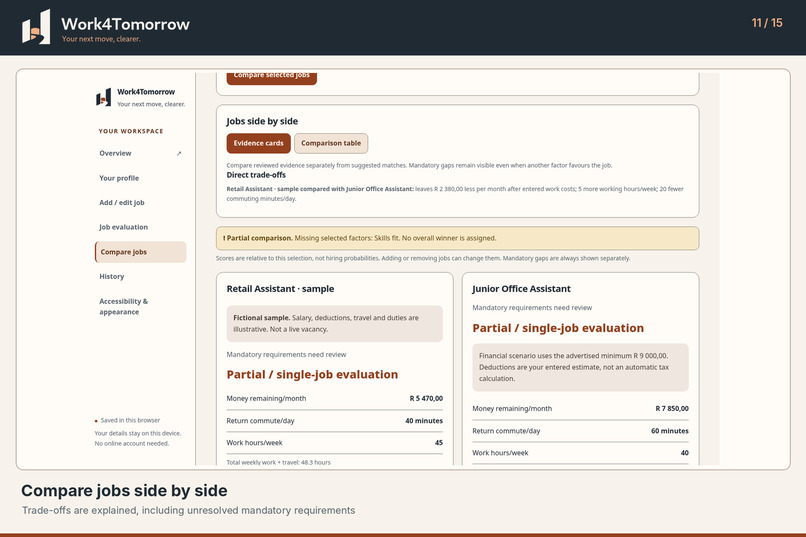
Comparison Results
Inspiration
As an IT graduate in South Africa, I know how challenging the transition from education to employment can be. During my own job search, I realized that I was evaluating job opportunities without calculating all the factors that could affect my decision. An advertised salary might look attractive, but after accounting for commuting costs, taxes and other expenses, the opportunity might not be as beneficial as it first appeared.
I also realized that finding a job is not just about qualifications. It is about understanding whether your skills match an employer's requirements, identifying gaps, and deciding whether an opportunity fits your circumstances and career goals.
I believe many graduates face the same problem. We work hard to earn our qualifications, yet we often lack accessible tools to help us compare opportunities beyond the job title and advertised salary.
That inspired me to create Work4Tomorrow, a project designed to help South African job seekers make more informed decisions by comparing the financial, professional and practical aspects of different job opportunities.
What it does
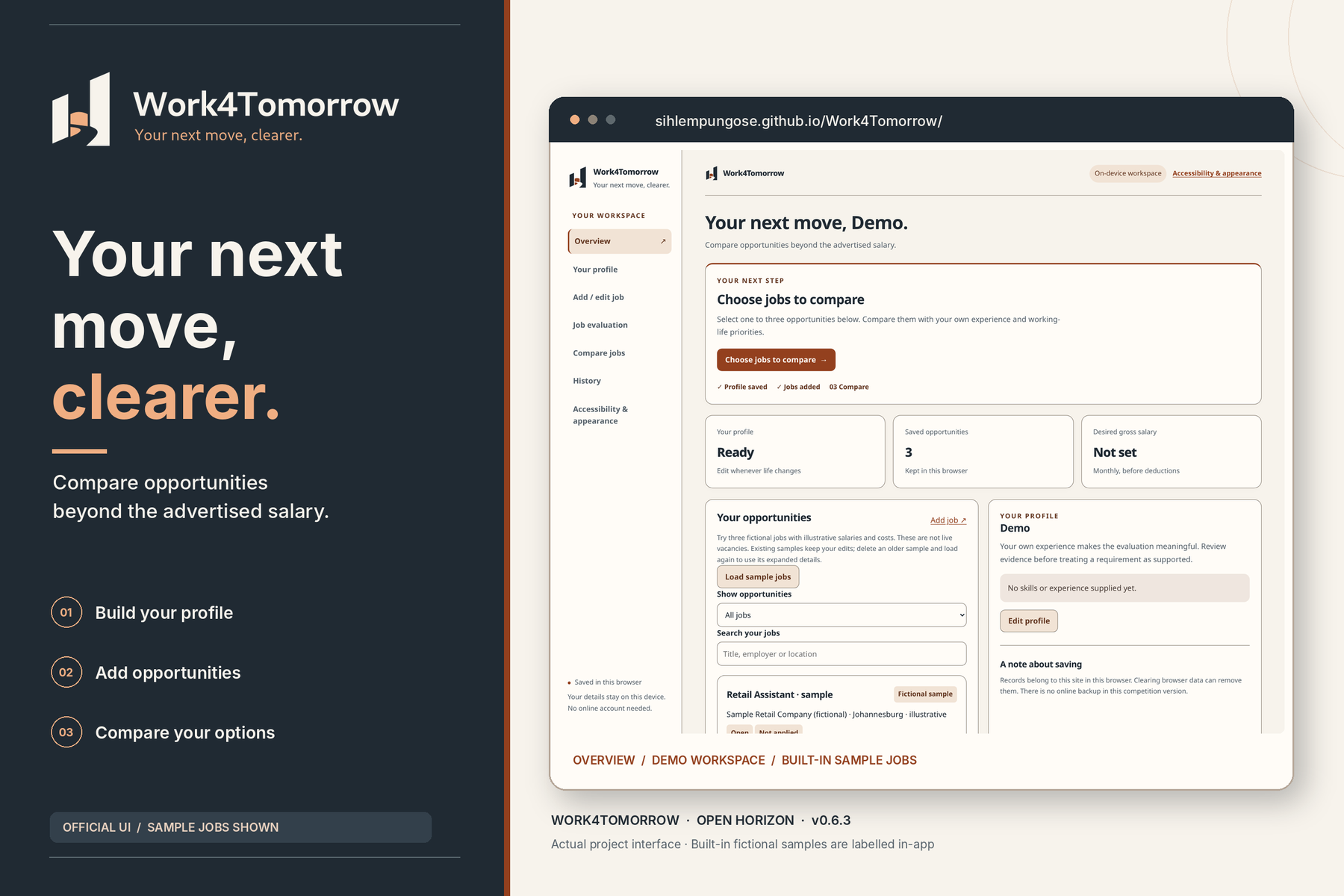
Work4Tomorrow is a job opportunity comparison tool designed to help South African graduates and other job seekers understand the bigger picture before pursuing or accepting a job.
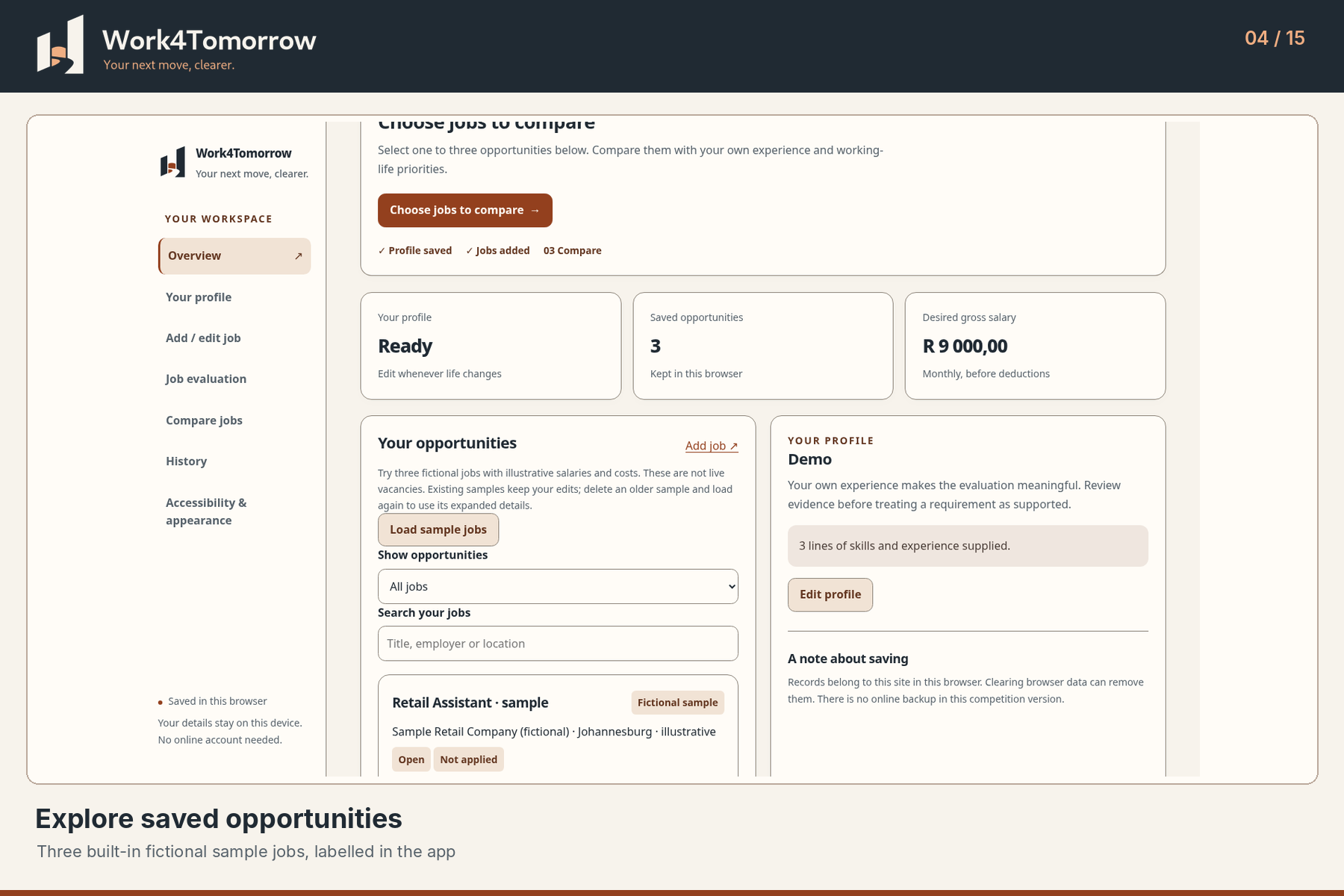
The application allows users to create a profile containing their skills, qualifications, certifications and experience. They can then add job opportunities and compare them against their profiles and personal priorities.
Key features include:
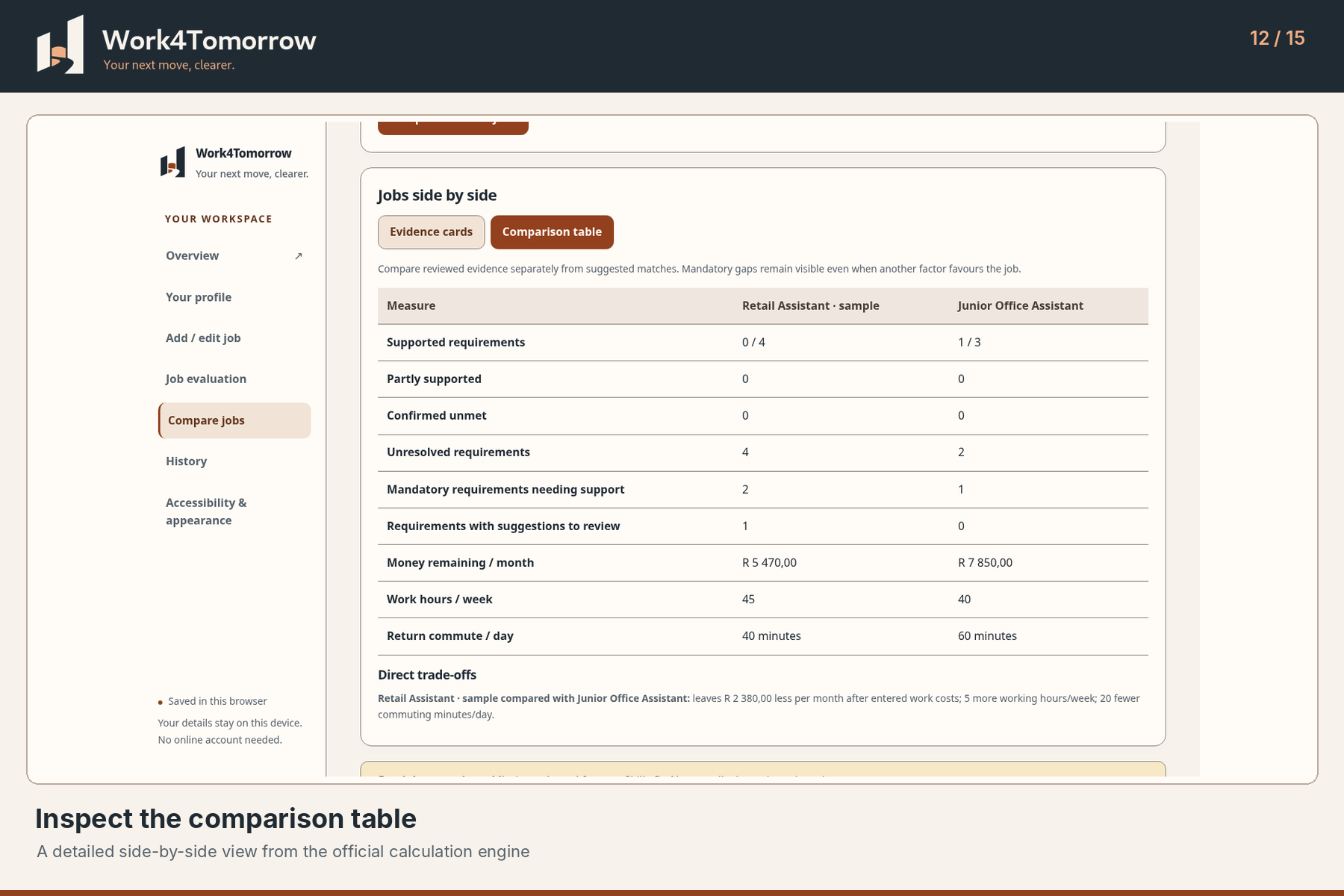
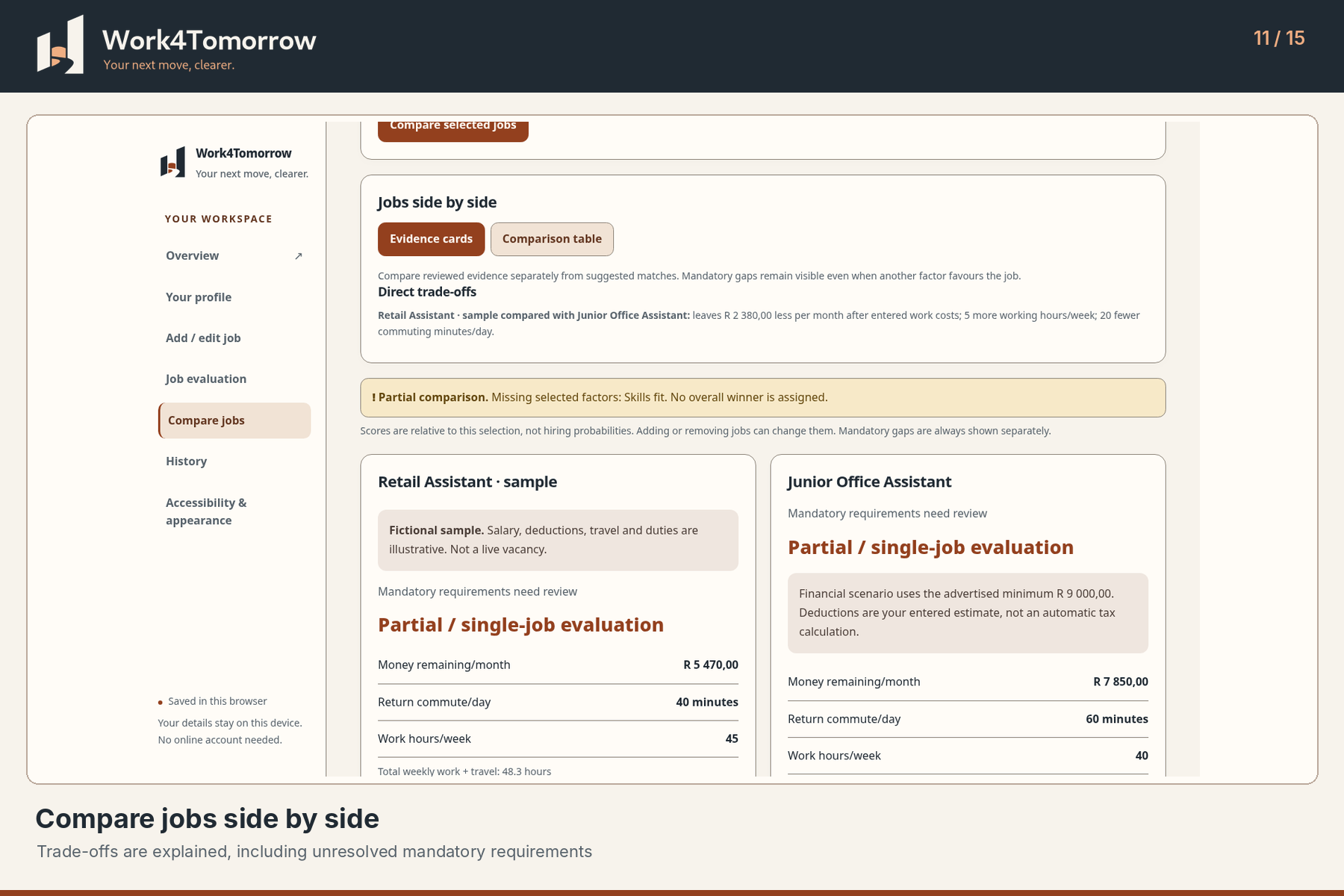
Job comparison: Compare multiple opportunities side by side instead of evaluating each one in isolation.
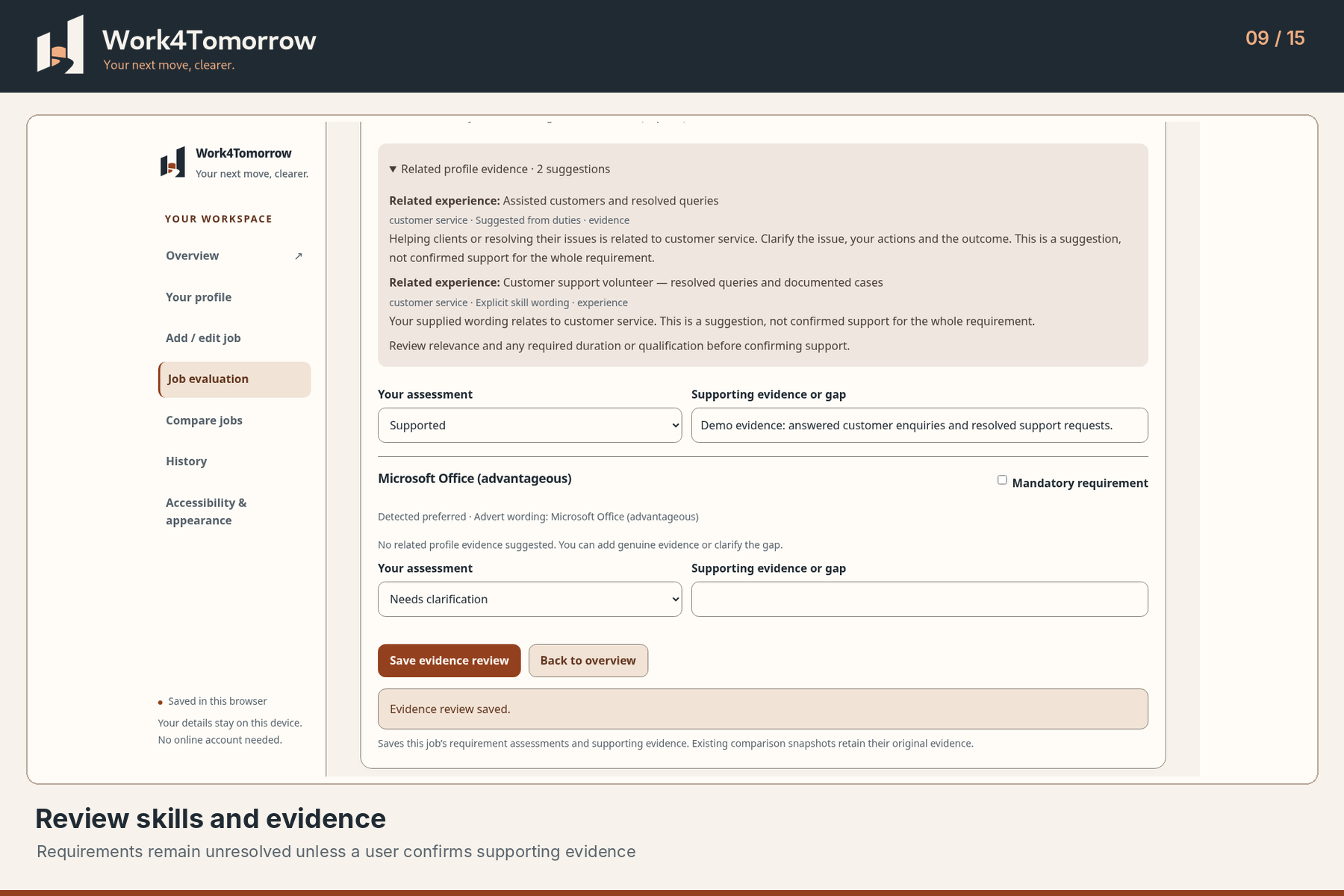
Skills matching: Compare a user's skills and qualifications with job requirements to identify strengths and potential skill gaps.
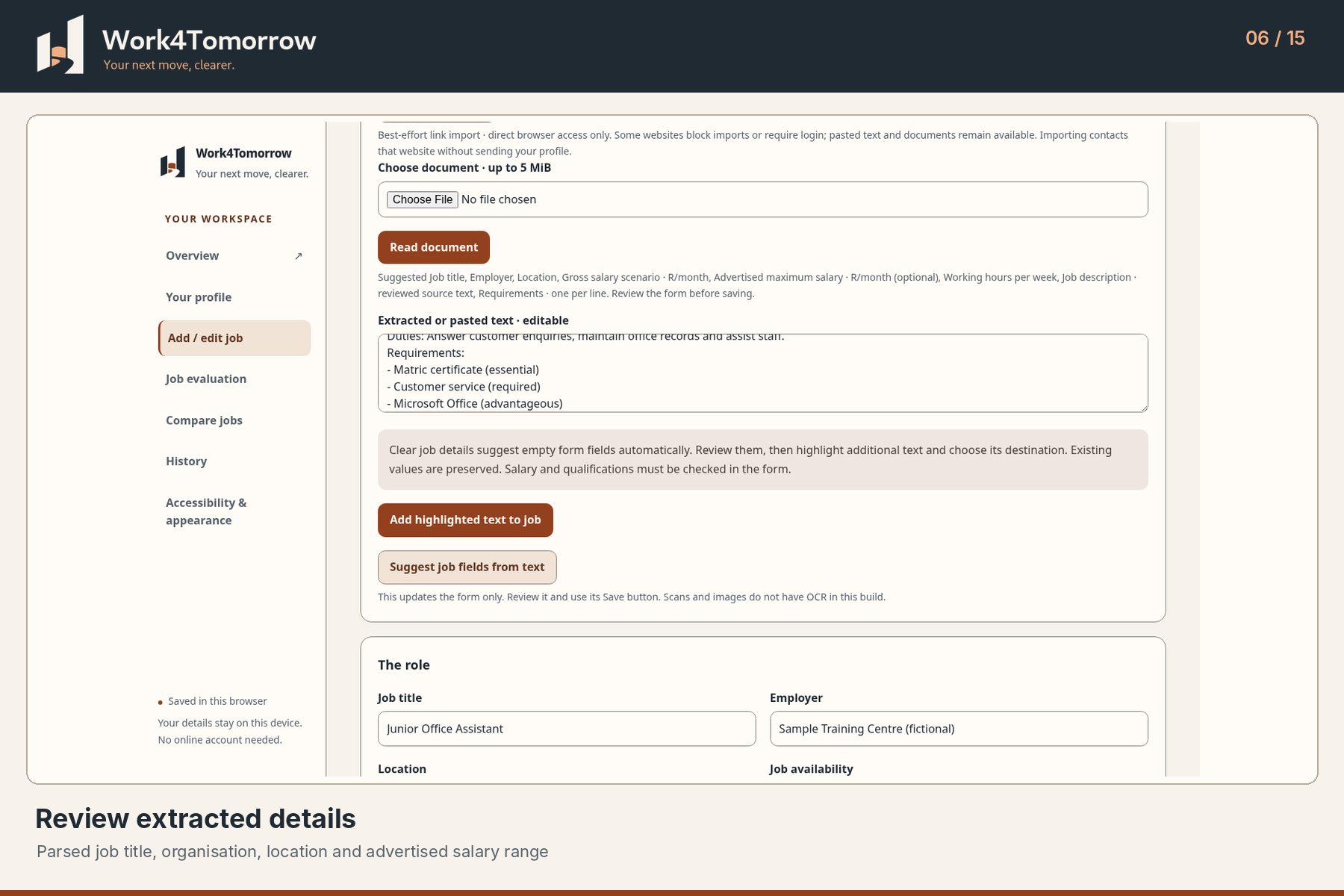
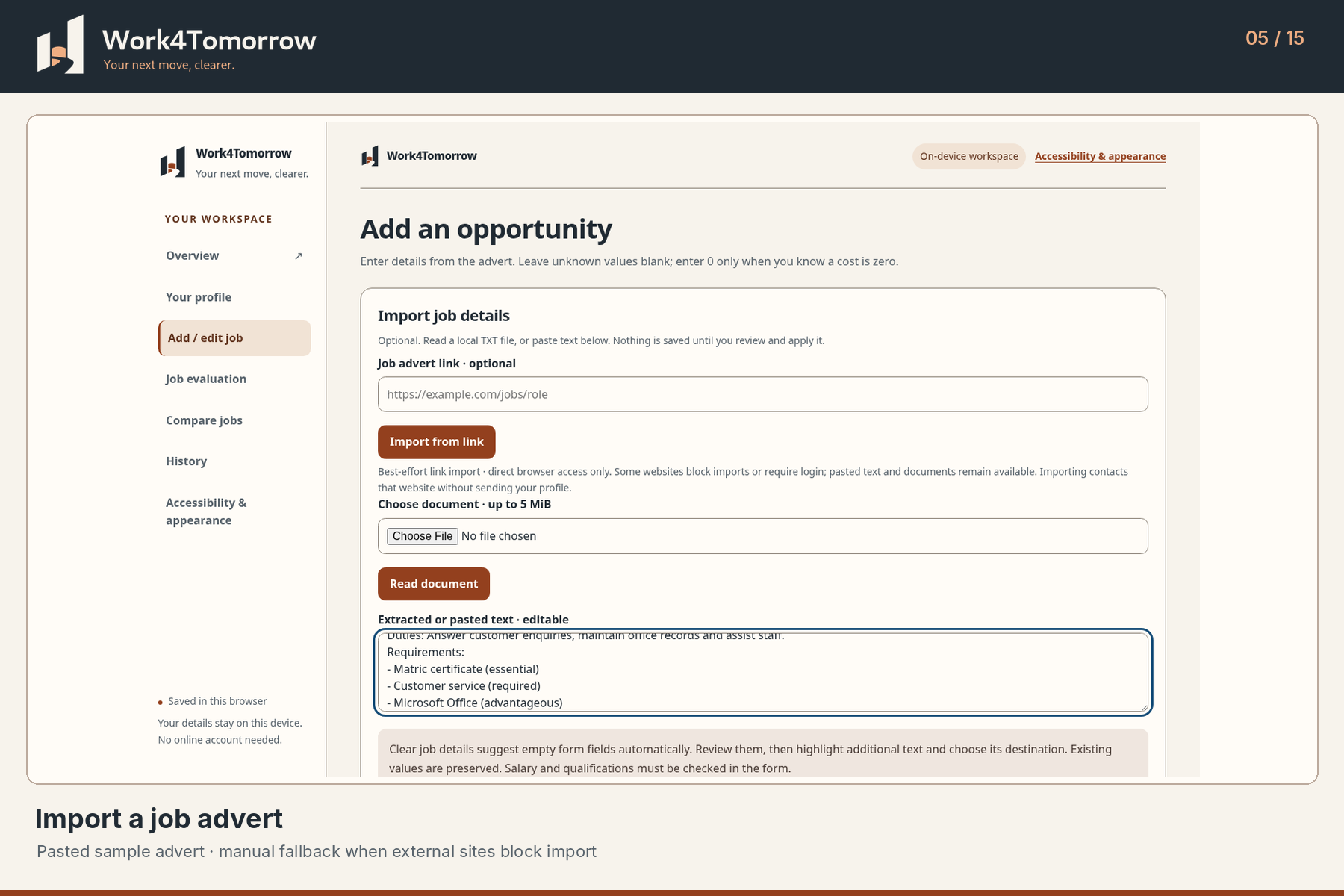
Job requirement analysis: Extract and organzise relevant information from supported job links, documents, screenshots or pasted text, helping users assess opportunities more easily.
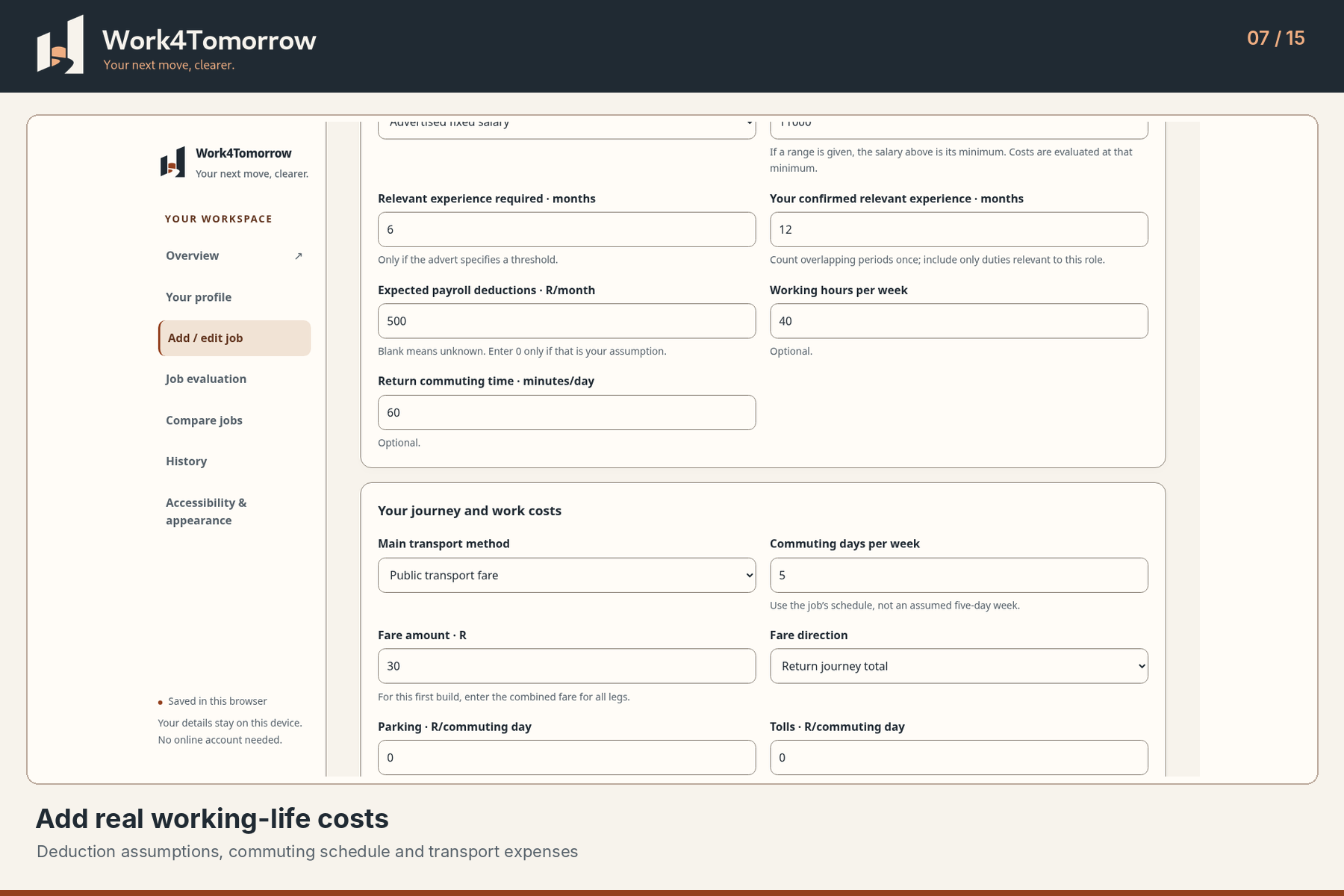
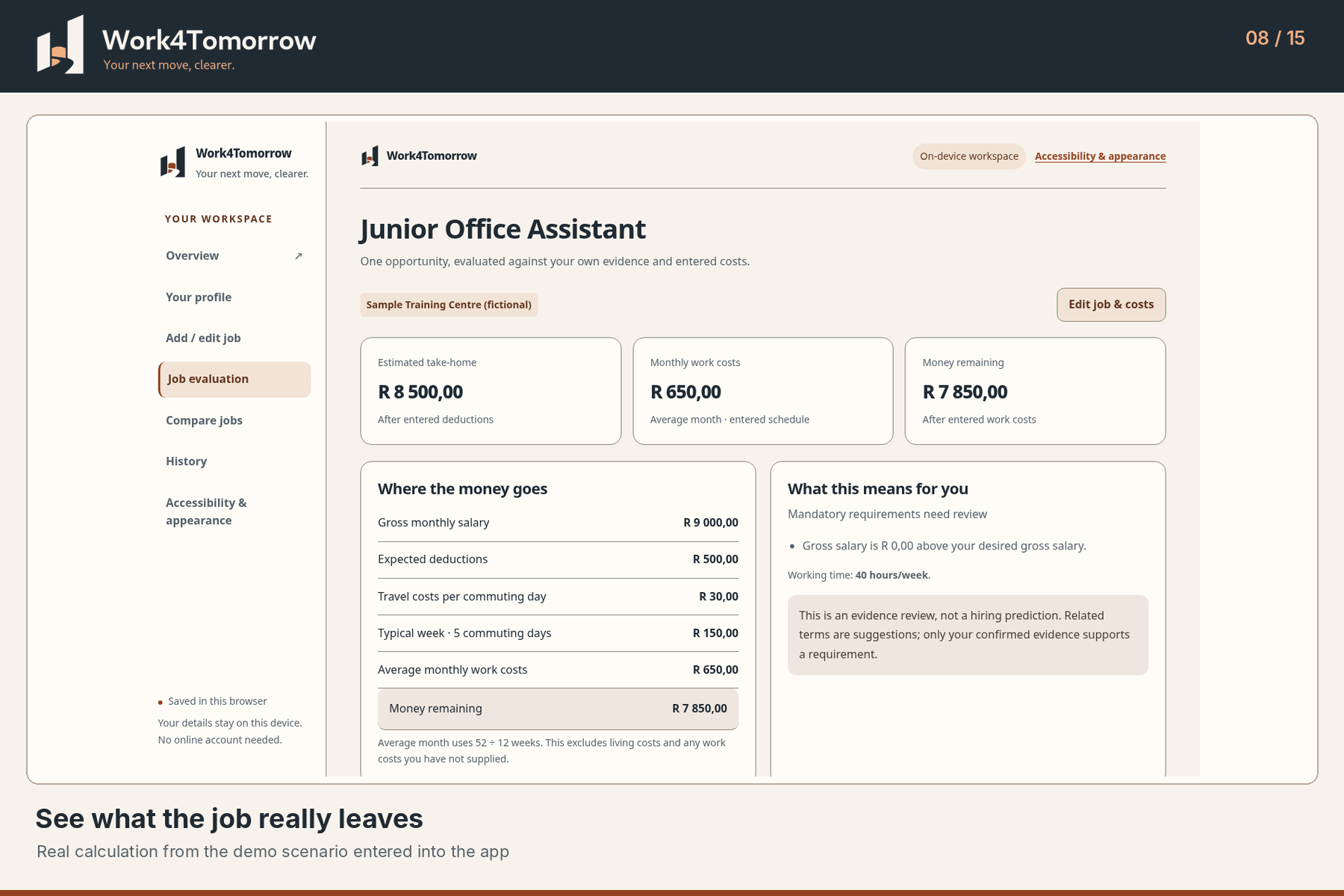
Financial comparison: Consider advertised salaries alongside estimated commuting expenses, including taxi fares and petrol costs where applicable.
Take-home pay awareness: Help users understand potential earnings after relevant expenses, with estimated deductions where supported.
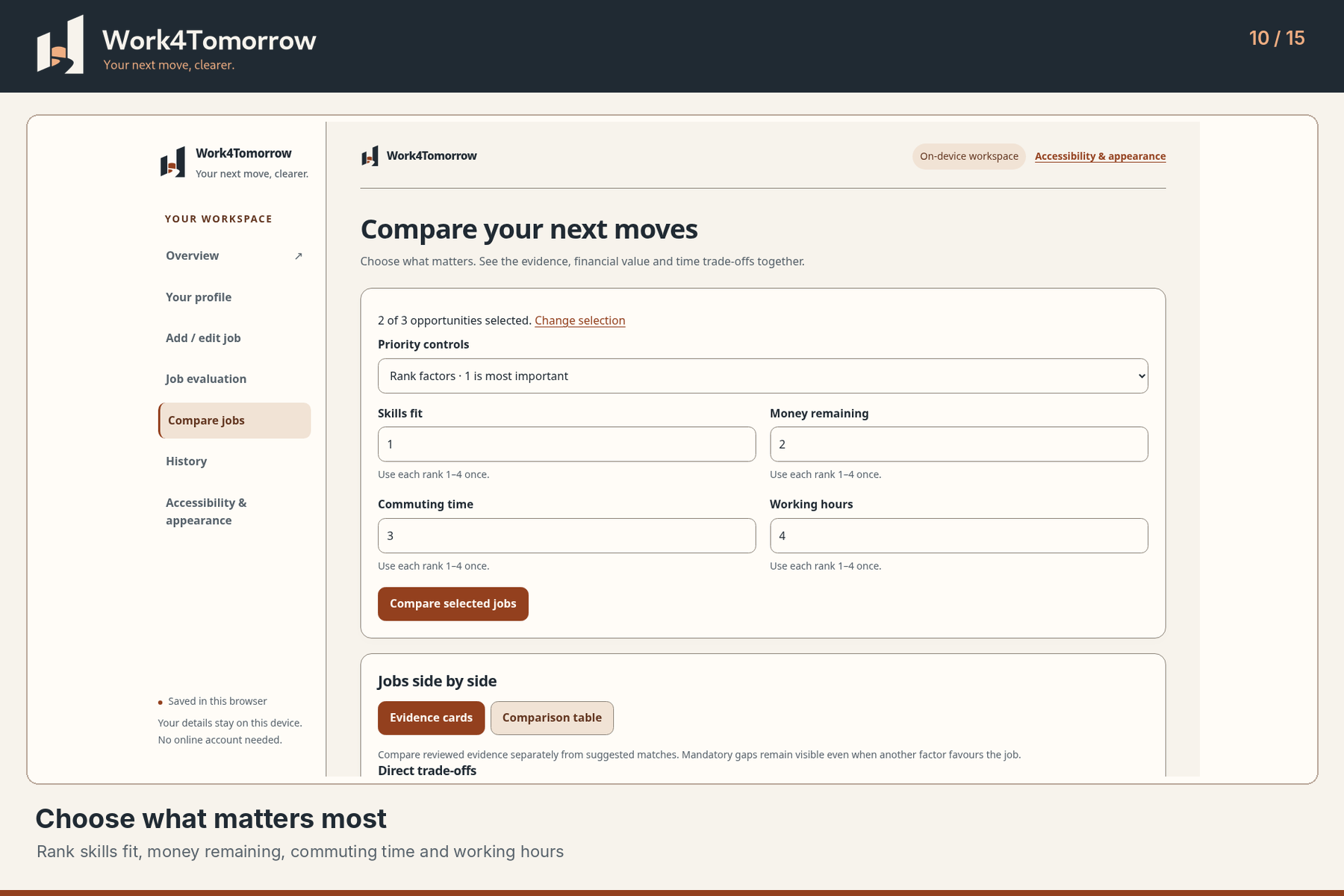
Personalized evaluation: Consider individual preferences and priorities rather than assuming that the highest advertised salary is always the best option.
Work4Tomorrow is not intended to make career decisions for users. It aims to provide clearer information and a more structured way to evaluate opportunities so users can make their own informed choices.
How we built it
I started by identifying a problem I had experienced personally and breaking it down into the information a job seeker needs to evaluate an opportunity meaningfully.
I then developed the application's requirements and user workflows, focusing on profile creation, job information collection, skills matching, financial considerations and side-by-side comparisons.
As an individual developer, I used AI-assisted development tools to help implement features, refine the interface, troubleshoot issues and improve the application iteratively. I approached the project by translating requirements into manageable tasks and working through the challenges as they arose.
I also focused on making the application practical for the South African context. For example, commuting expenses can significantly affect the value of an opportunity, so the comparison process considers transport costs rather than treating the advertised salary as the only financial factor.
The interface is designed to present information clearly, helping users understand not only how opportunities compare but also the reasons behind those comparisons.
Challenges we ran into
One of the biggest challenges was turning job searching, which involves many different variables, into a comparison process that is useful and easy to understand.
Salary alone does not tell the whole story. Skills requirements, qualifications, experience, commuting expenses and individual priorities can all change how suitable a job is for a particular person.
Another challenge was skills matching. Employers may describe the same underlying skill in different ways. For example, one advertisement might request customer service skills, while another describes resolving client problems. A useful comparison tool needs to consider the meaning of these requirements, not just whether the same words appear in a user's profile.
Collecting information from different job sources also presented challenges because job advertisements do not always follow the same structure. The application needs to distinguish relevant job details from unrelated content and organize those details into information that users can compare.
As someone developing the project while continuing to grow my technical skills, debugging, refining requirements and balancing ambitious ideas with practical implementation were also important challenges. I approached these obstacles as opportunities to improve both the application and my development process.
Accomplishments that we're proud of
I am proud to have turned a personal frustration into a practical technology project with the potential to help other South African job seekers.
Instead of creating another platform focused solely on displaying vacancies, Work4Tomorrow focuses on what happens after a person finds an opportunity: understanding whether it is suitable, financially practical and aligned with their skills and goals.
I am particularly proud of the project's focus on combining different considerations into one decision-making experience. Bringing together profile information, job requirements, salary and commuting expenses creates a more complete picture than evaluating these factors separately.
I am also proud of the learning process behind the project. As an IT graduate, I have taken on the challenge of moving from identifying a problem to designing and developing a software-based solution, using AI-assisted tools while actively working through technical and product decisions.
Most importantly, Work4Tomorrow is built around a problem I understand personally, and I hope its approach can benefit graduates who are navigating the same difficult transition into employment.
What we learned
Building Work4Tomorrow has reinforced that developing a useful application starts with understanding a real problem, not simply choosing a technology or designing an interface.
I learned that job opportunities need to be evaluated in context. An opportunity that looks attractive to one person may not be suitable for another because of differences in skills, location, commuting costs, financial needs and career priorities.
I also learned that data extraction and skills matching require careful thought. Information needs to be organized meaningfully, and comparisons should be understandable rather than presenting users with unexplained scores or conclusions.
On the technical side, I strengthened my understanding of requirements planning, user experience design, iterative development, debugging and AI-assisted software development. The process has also taught me the importance of testing assumptions and improving features based on the actual problem they are intended to solve.
Above all, I learned that technology can help people make better decisions when it turns scattered information into something clear, relevant and actionable.
What's next for Work4Tomorrow
The next step for Work4Tomorrow is to continue improving its accuracy, usability and usefulness for South African job seekers.
Planned improvements include:
Smarter skills matching: Improve semantic matching so the application can recognize related skills even when users and employers use different wording.
Better job information extraction: Improve how relevant details and mandatory requirements are identified from supported links, documents, screenshots and pasted text.
More accurate financial estimates: Refine commuting cost calculations and take-home pay estimates, clearly communicating assumptions and limitations.
More personalized comparisons: Allow users to prioritize the factors that matter most to them and understand why an opportunity may be a stronger match.
Improved testing and reliability: Continue testing the main workflows, fixing issues and refining the experience across devices.
A broader range of opportunities: Explore ways to make it easier to collect and compare relevant job opportunities from more sources.
My longer-term vision is for Work4Tomorrow to become a useful decision-support tool not only for South African graduates and job seekers but for the entire world's job seeking population, helping them understand their options, recognize their strengths, identify areas for improvement and make career decisions with greater confidence.
The goal is simple: help people look beyond the vacancy and see the opportunity — including what it could cost, what it could offer and how it fits their future.

Log in or sign up for Devpost to join the conversation.