-
-
banner
-
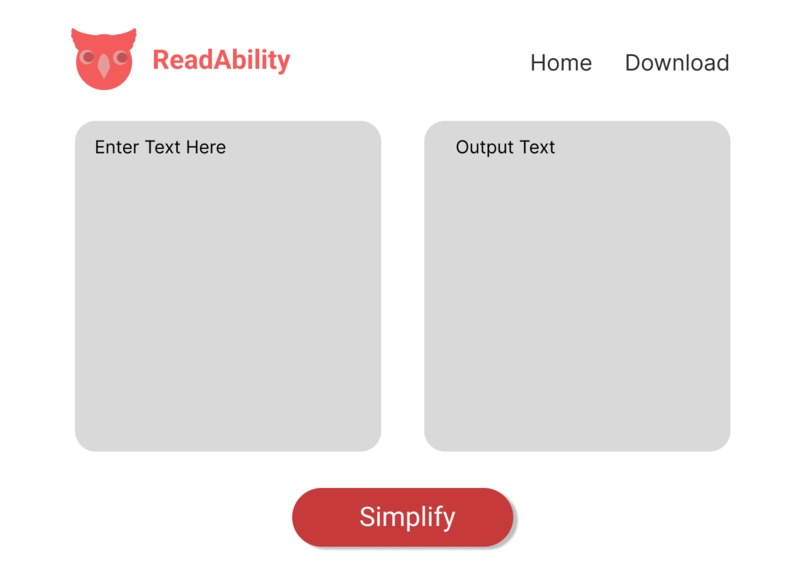
try me page mock up
-
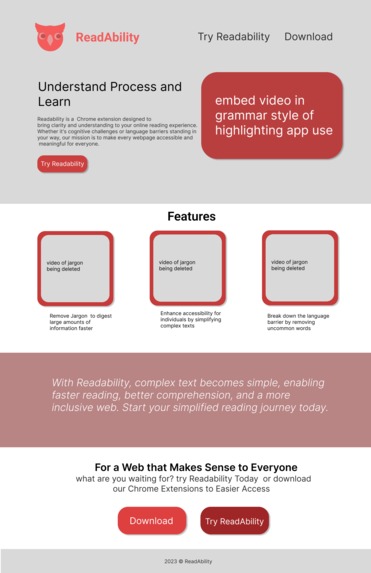
Landing page mockup
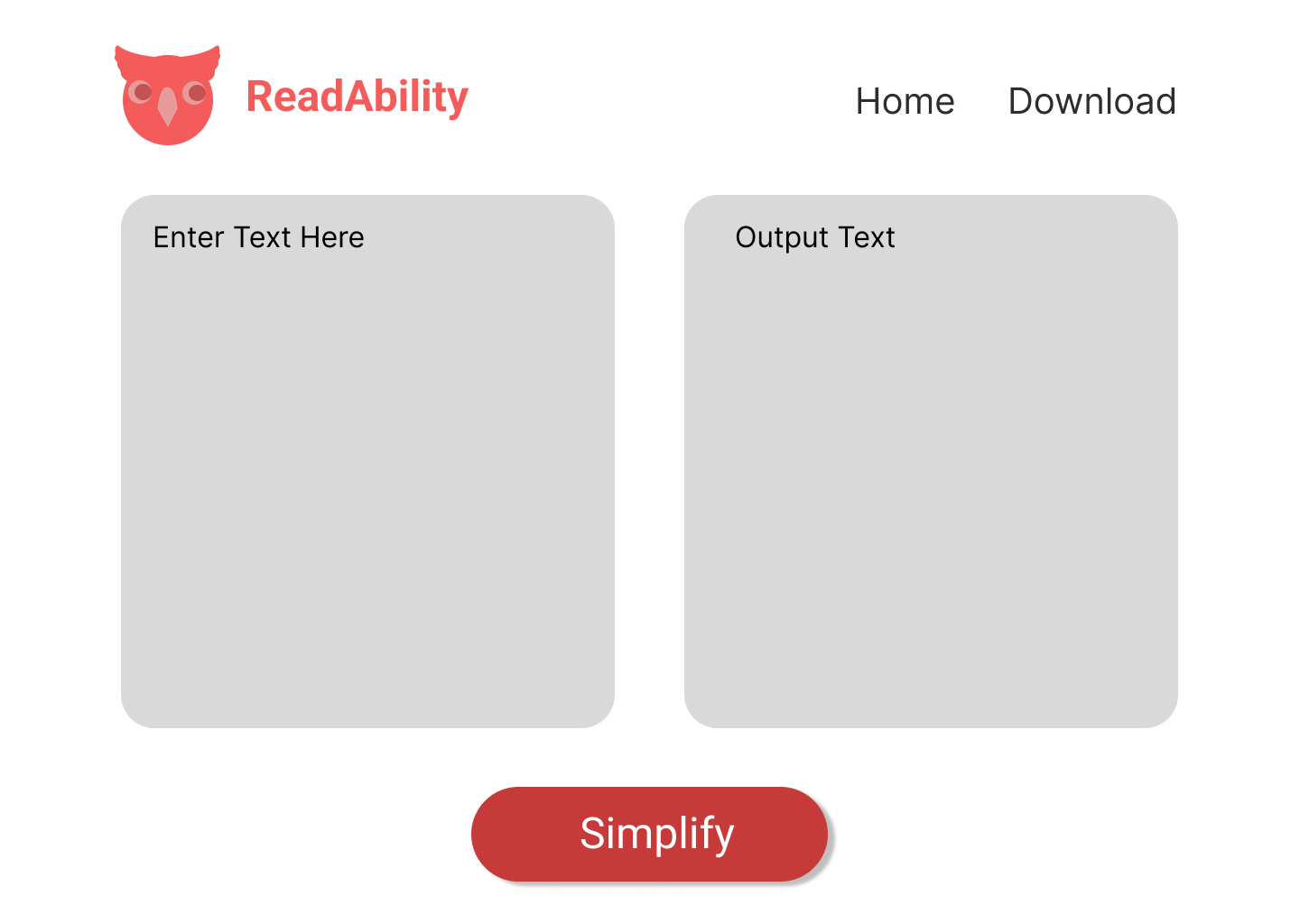
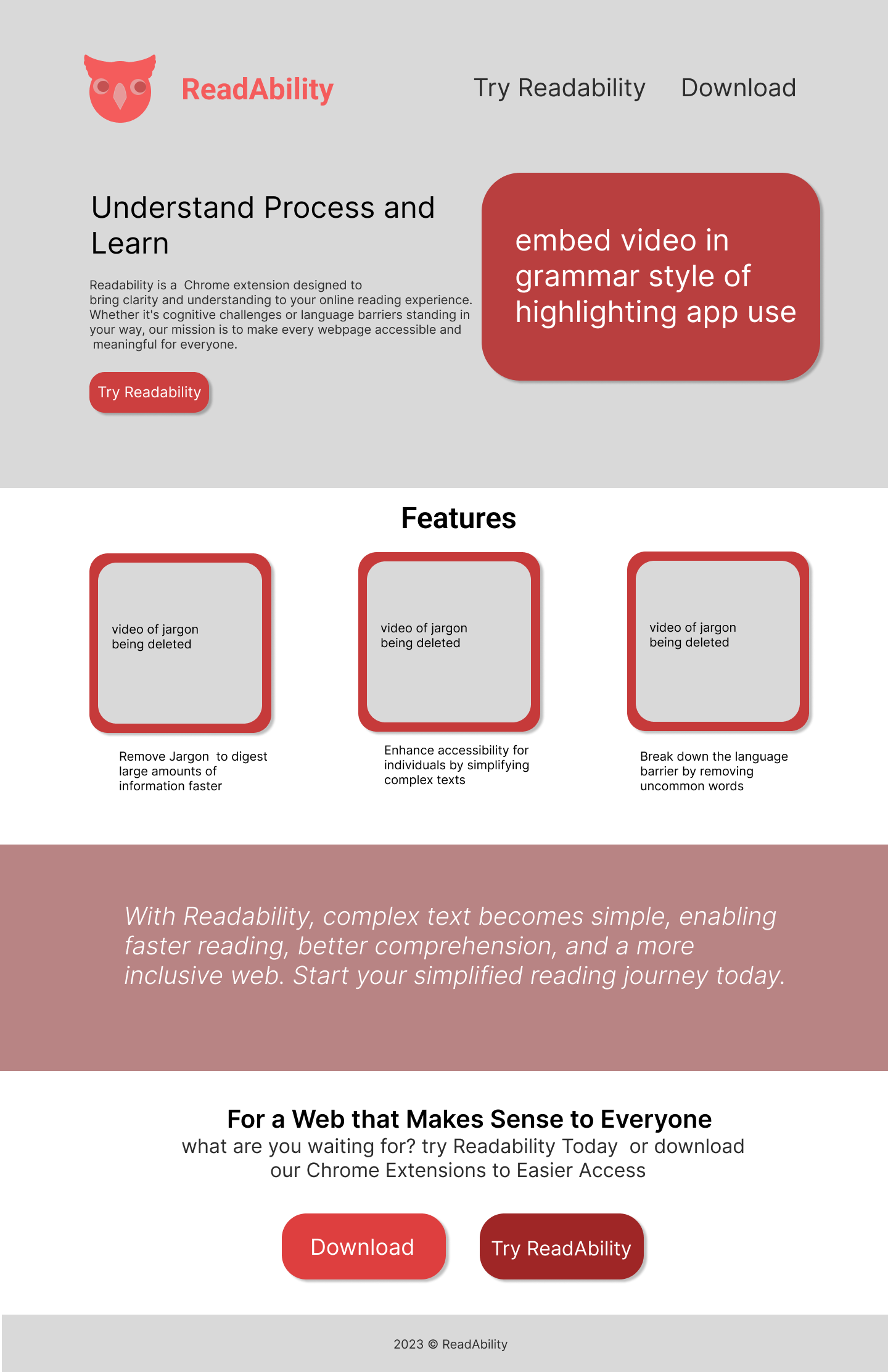
video link [https://youtu.be/f67FYdJ2rRw]
Inspiration
Our inspiration for creating ReadAbility came from observing the difficulties faced by individuals with cognitive disabilities in understanding complex text. We recognized a gap in available tools for language simplification. This drove us to develop Readability, an app designed to simplify highlighted text. We aim to make digital content more accessible, inclusive, and understandable for everyone, regardless of cognitive ability or language proficiency.
What it does
ReadAbility takes complex topics and makes them easier to understand. When activated, ReadAbility takes the text that the user has highlighted, and uses AI to simplify the language used and explain the concepts in question.
How we built it
Once we knew what we were going to build, each of us focused on specific pieces of the project. Parm worked on the front end of the website for the app. Ryan mostly focused on the Chrome Extension and Matt worked on integrating and manipulating the OpenAi Gpt model with our Try Me page and the Chrome extension.
Challenges we ran into
Creating Readability posed several challenges. We initially struggled with using environmental variables, resulting in our API keys being mistakenly pushed to Git. This necessitated frequent key regeneration and emphasized the need for better data security practices.
This was our first time developing a browser extension, and our first time using Parcel, so it took some time to read through the documentation, and figure out how to make everything work.
Additionally, we faced time constraints that prevented us from converting our Figma prototype into a functional website within our schedule. This underscored the importance of realistic time management in software development Lastly, the unexpected absence of a team member disrupted our workflow and put us behind schedule, highlighting the need for effective contingency planning in team projects. Despite these obstacles, we learned valuable lessons and remained committed to our goal of improving linguistic accessibility.
Accomplishments that we're proud of
Throughout the development of Readability, our team achieved notable accomplishments. Ryan successfully navigated the complexities of creating Chrome extensions and learned to use the Parcel bundler. Parm designed his first webpage prototype using Figma, enhancing his skills in user interface design. Matt gained in-depth understanding of API keys' implementation in software development and learned how to use Flexbox for responsive layout design. These individual successes contributed significantly to our collective achievement: the creation of an accessible digital tool.
What we learned
During the creation of Readability, each team member acquired new skills. Parm navigated Figma and media queries for the first time, while Ryan built his first Chrome extension, mastering script injection for webpage DOM manipulation and using Parcel as a build tool. As for Matt, he got valuable experience learning to handle API calls, particularly the openai API, more experience using flexbox and CSS and how to write prompts for LLM integration into applications.
What's next for ReadAbility
ReadAbility was made with simplicity in mind, but we all think it would be better if it were able to process more difficult text and provide detailed explanations of hard concepts. Often, using very simple language abstracts out important details, but if a certain level of complexity can be retained in the output, then more complicated concepts can be handled by the application, with a more sophisticated user in mind.
Ideally we would like the application to explain a concept, and then work in a tree format, explaining difficult concepts that are generated as a part of the output, perhaps up to some limit. This would generate much more output and probably require multiple api calls, but the application would be able to explain more difficult concepts in greater detail and while covering other ideas.
Built With
- express.js
- figma
- html/css
- javascript
- large-language-models
- openai
- parcel
- vercel
- vite


Log in or sign up for Devpost to join the conversation.