-
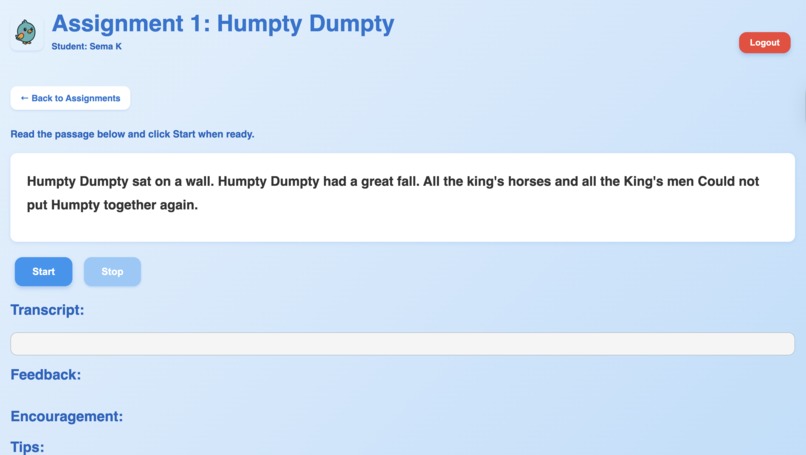
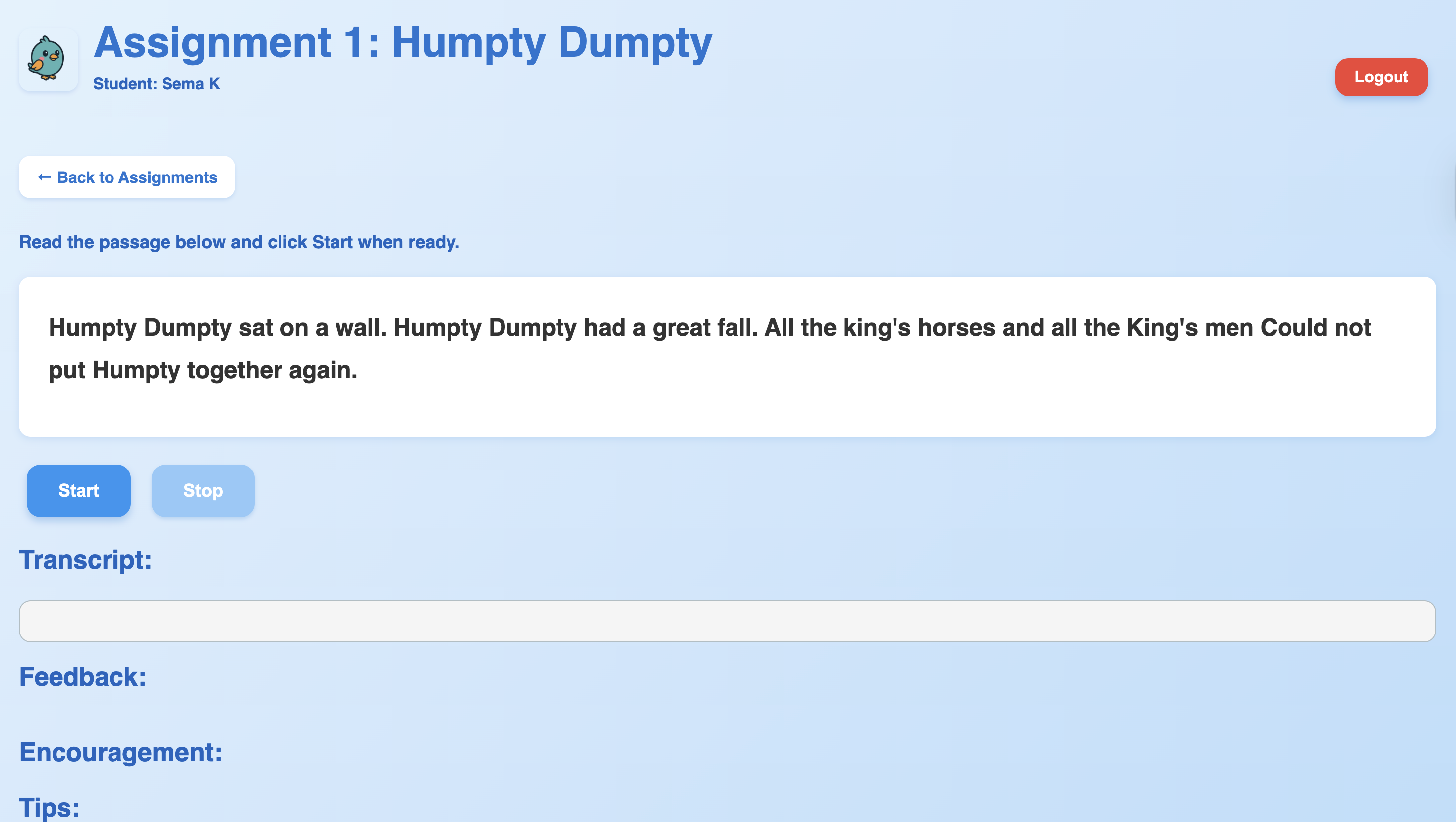
Assignment veiw
-
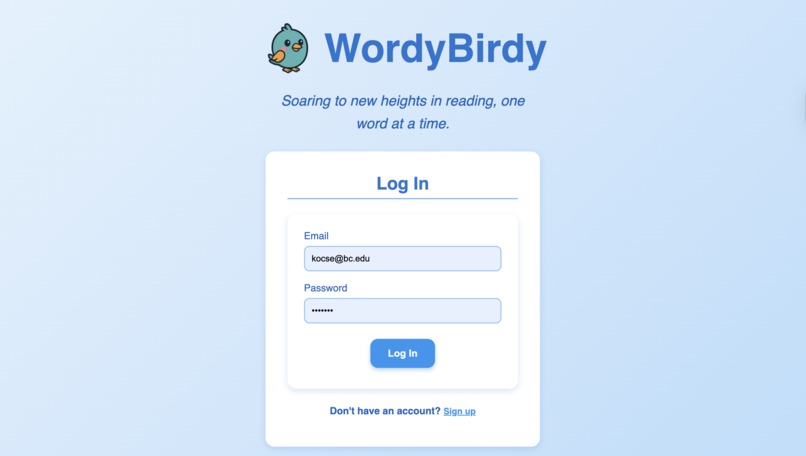
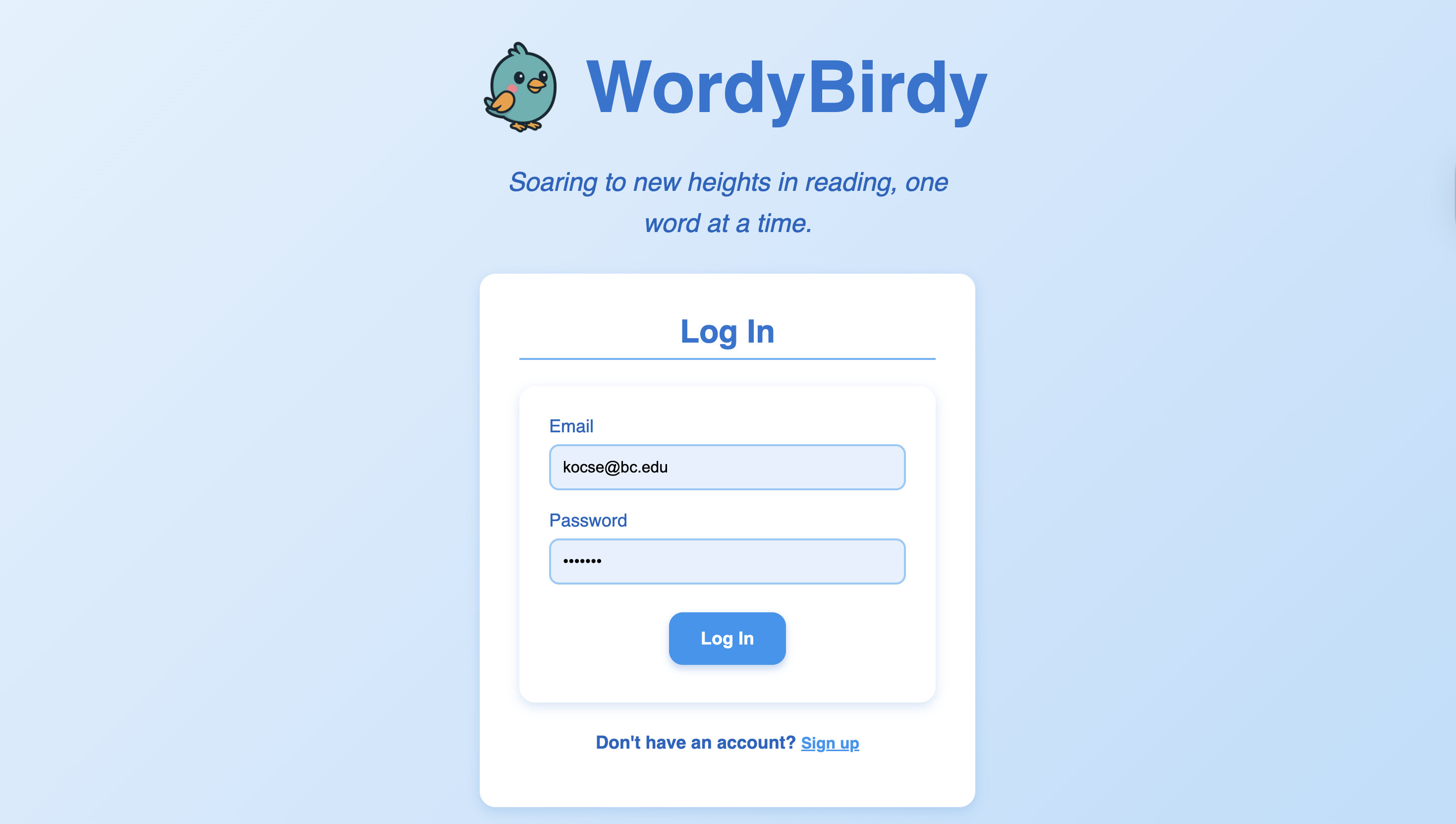
Log in page
Wordy Birdy
Inspiration
During the pandemic, reading achievement across U.S. schools dropped by 17%, and the impact was even worse for students in low-income communities.
We saw firsthand, working in classrooms, how many bright, curious kids struggled simply because one-on-one support wasn’t possible.
Wordy Birdy was born from that experience, the belief that every student, no matter their background or learning difference, deserves a patient reading companion that listens, supports, and encourages.
What it does
Wordy Birdy is an AI-powered reading coach that helps students build reading fluency and confidence while giving teachers tools to track progress.
- Teachers can upload PDF reading assignments and monitor student performance through accuracy scores and reading analytics.
- Students can read aloud, receive instant feedback on pronunciation and fluency, and listen to the correct pronunciation using text-to-speech.
- The app tracks misread words, calculates reading accuracy, and offers personalized encouragement and comprehension questions through GPT.
How we built it
- Backend: Flask (Python) for the API and routing logic.
- Database: Supabase (PostgreSQL) to store assignments and reading submissions.
- AI Models:
- Whisper for speech-to-text transcription.
- GPT-4o-mini for personalized feedback and comprehension.
- OpenAI TTS for voice playback and pronunciation.
- Whisper for speech-to-text transcription.
- Frontend: HTML, CSS, and JavaScript for a lightweight, accessible design suitable for classrooms with limited technology.
- Libraries: PyPDF2 for text extraction, difflib for accuracy comparison, httpx for API requests, and dotenv for environment management.
Challenges we ran into
- Audio processing latency: Whisper transcription initially caused delays; we optimized it by splitting audio files into smaller chunks.
- PDF extraction: Non-standard formatting caused text recognition issues, requiring normalization and error handling.
- Tone tuning: Ensuring GPT feedback was age-appropriate and encouraging, not robotic or critical.
Accomplishments that we're proud of
- Built a fully functional prototype in under 24 hours that integrates speech, text, and AI feedback seamlessly.
- Created a clean, accessible design that can be used by both teachers and students.
- Seeing the demo in action and hearing the AI coach give warm, personalized feedback made the project come alive.
- Stayed true to our mission of accessibility through empathy, which is deeply personal to our team.
What we learned
- How to combine multiple AI models (Whisper, GPT, and TTS) into a single coherent user experience.
- The importance of designing for inclusion first; when you build for accessibility, you end up helping everyone.
- Empathy and technology can coexist; the best educational tools feel human, not mechanical.
- We learned how to deploy a Flask app with Supabase and handle live audio data streams efficiently.
What's next for Wordy Birdy
- Gamification: Add badges, reading streaks, and progress rewards to motivate students.
- Multilingual support: Expand to ESL learners and language acquisition classrooms.
- Teacher analytics: Long-term data visualization to show reading growth over time.
- Mobile app version: To make it accessible beyond the classroom and usable offline.
- Integration with special education tools: Partner with accessibility programs to bring reading confidence to more students.
Our Mission
To make reading support as accessible as Wi-Fi, helping every learner, everywhere, find their voice one word at a time.
Built With
- css
- flask
- html
- javascript
- openai
- pypdf
- python
- railway
- supabase


Log in or sign up for Devpost to join the conversation.