-
-
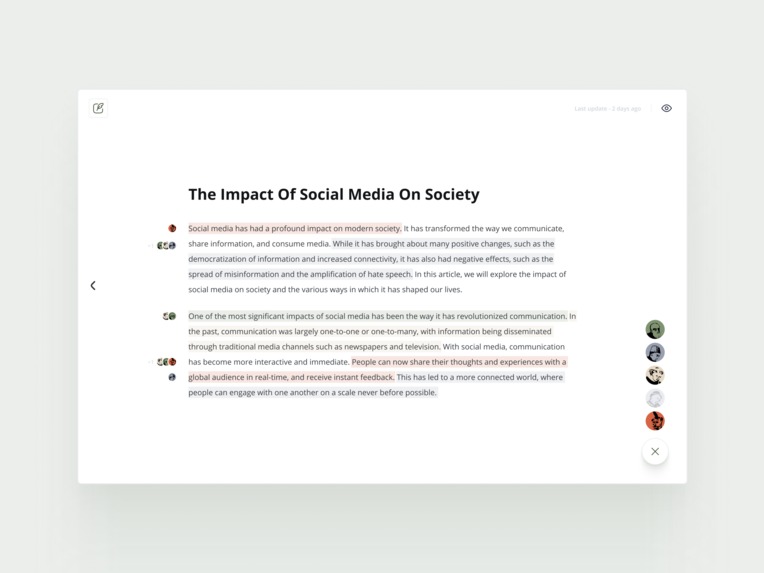
Image 01 Wordwarden
-
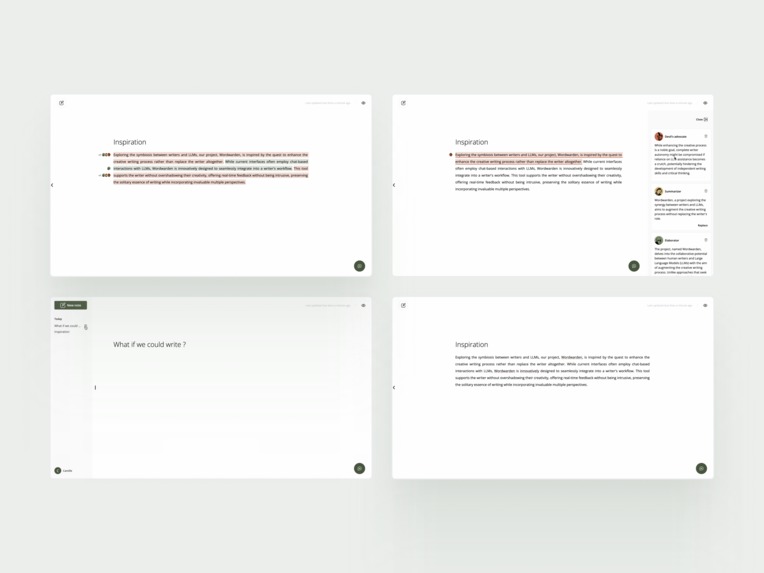
Image 02 Wordwarden
-
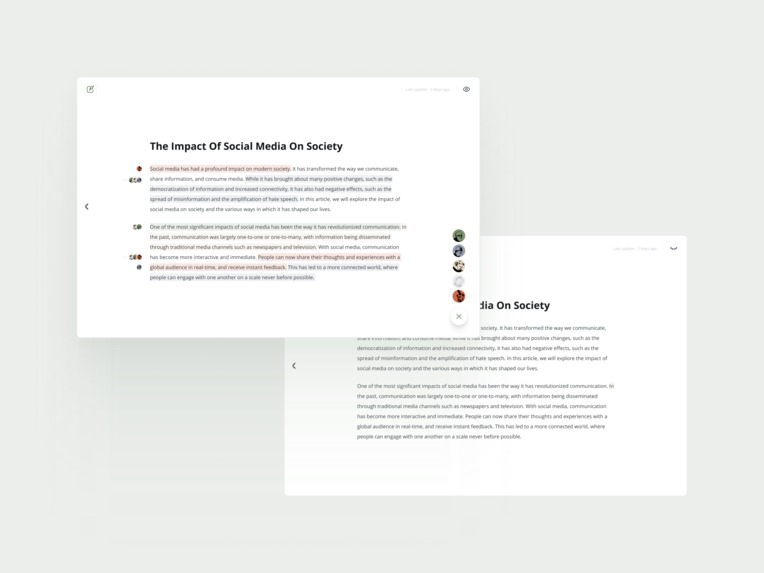
Image 03 Wordwarden
-
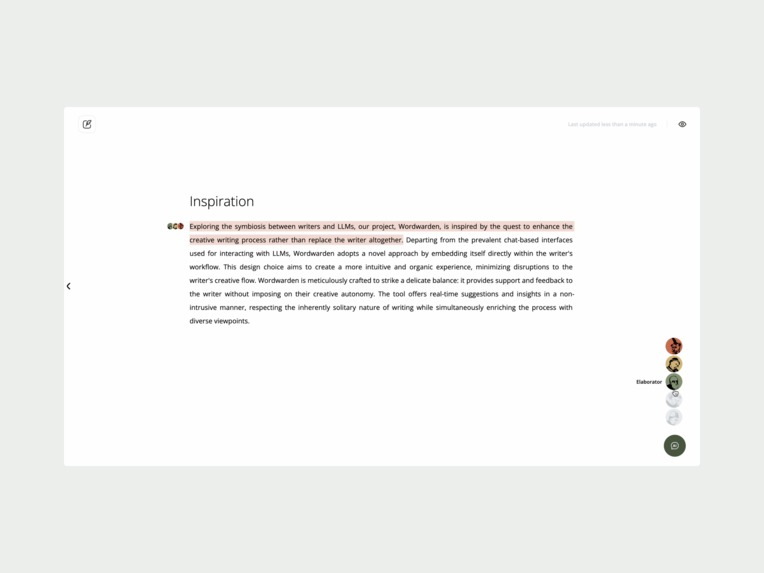
Image 04 Wordwarden
-
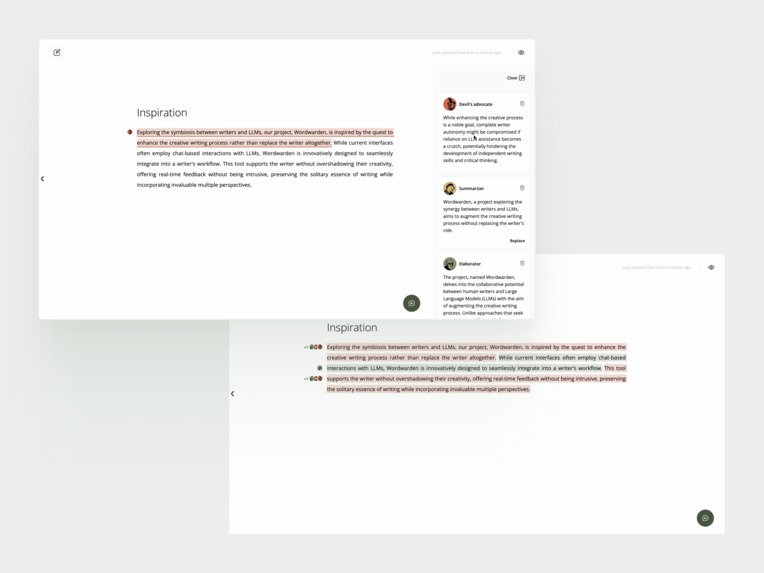
Image 05 Wordwarden
Inspiration
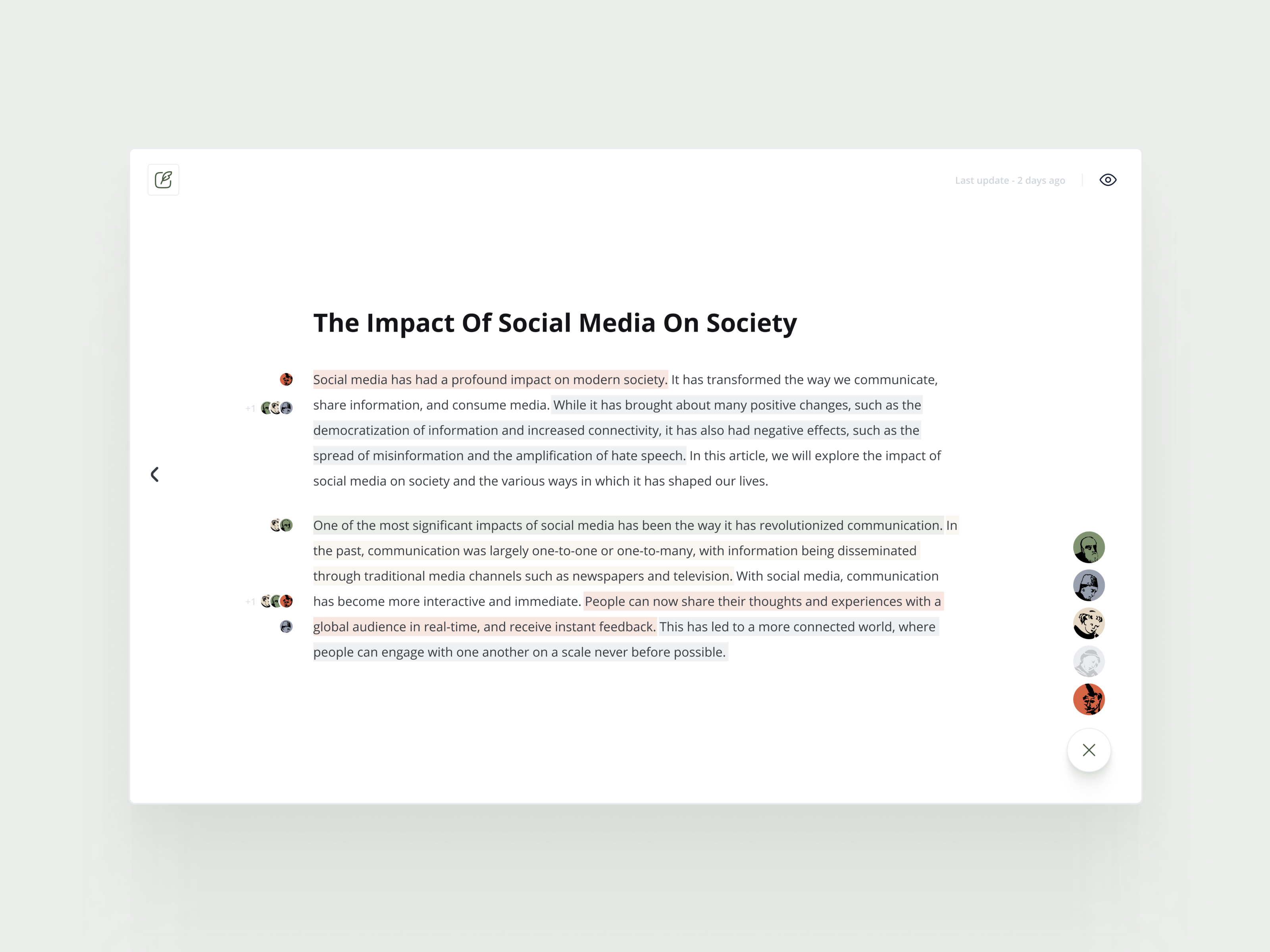
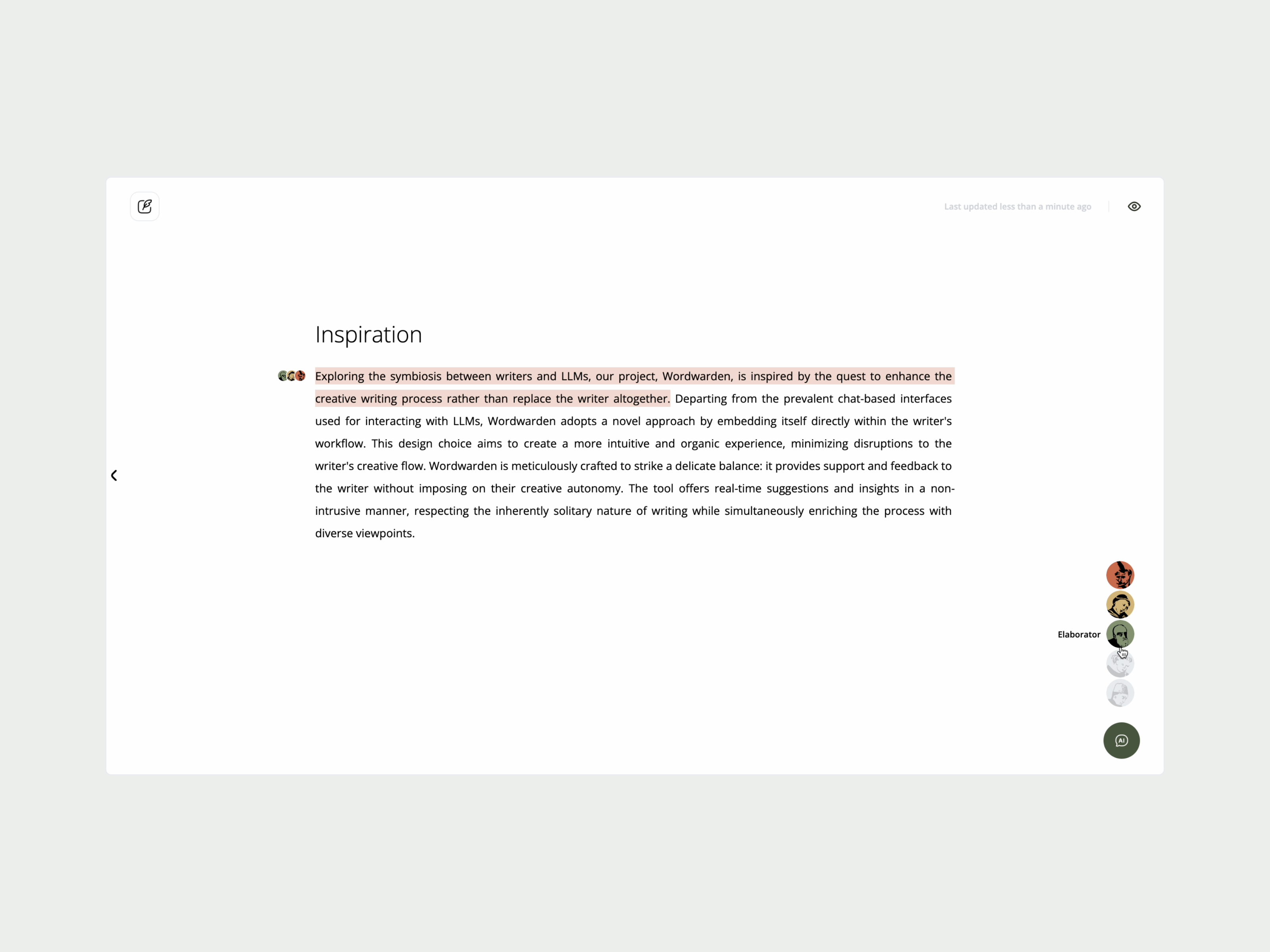
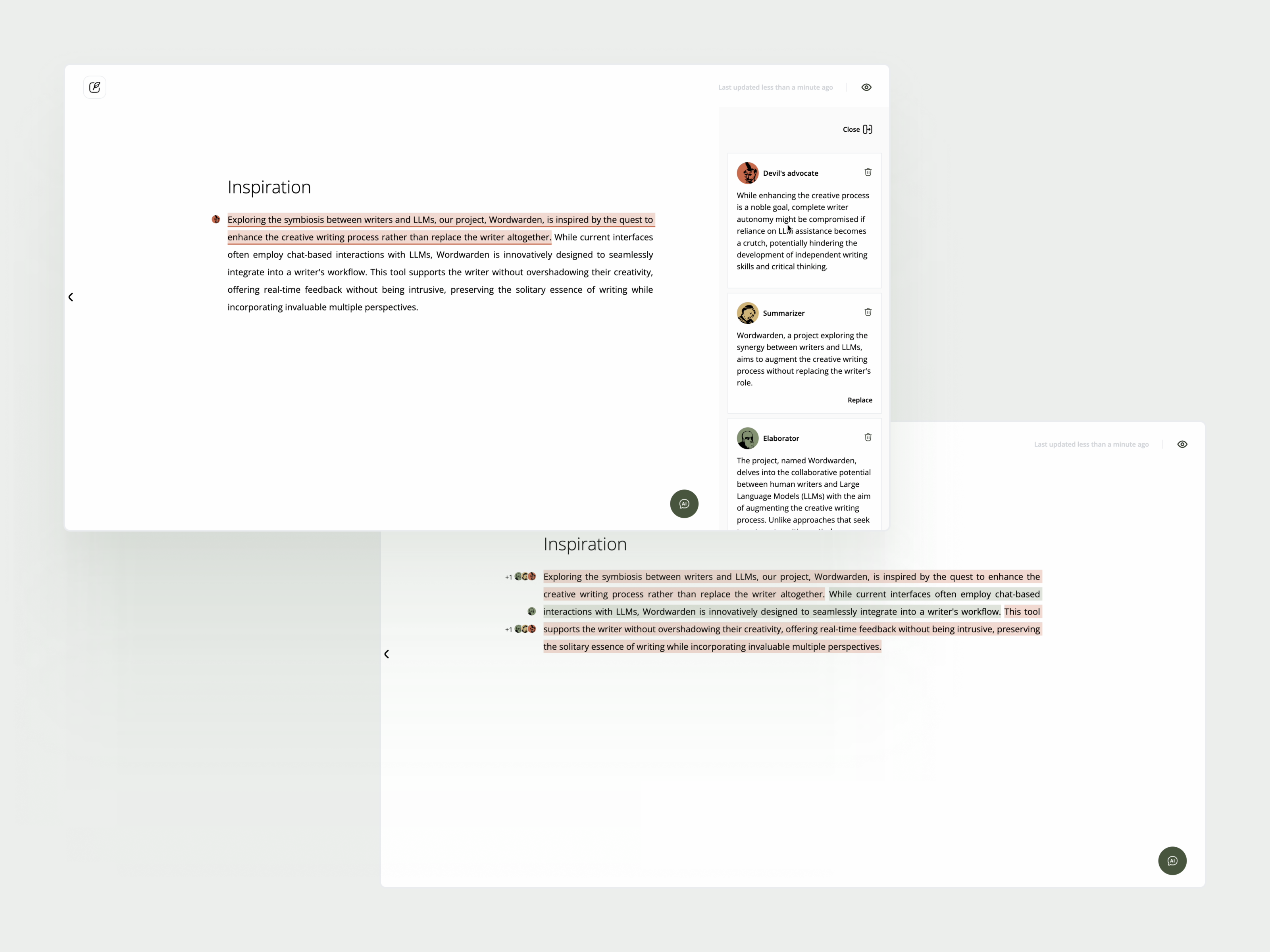
Exploring the symbiosis between writers and Large Language Models (LLMs), our project, WordWarden, is inspired by the quest to enhance the creative writing process rather than replace the writer altogether. While current interfaces often employ chat-based interactions with LLMs, WordWarden is innovatively designed to seamlessly integrate into a writer's workflow. This tool supports the writer without overshadowing their creativity, offering real-time feedback without being intrusive, preserving the solitary essence of writing while incorporating invaluable multiple perspectives.
What It Does
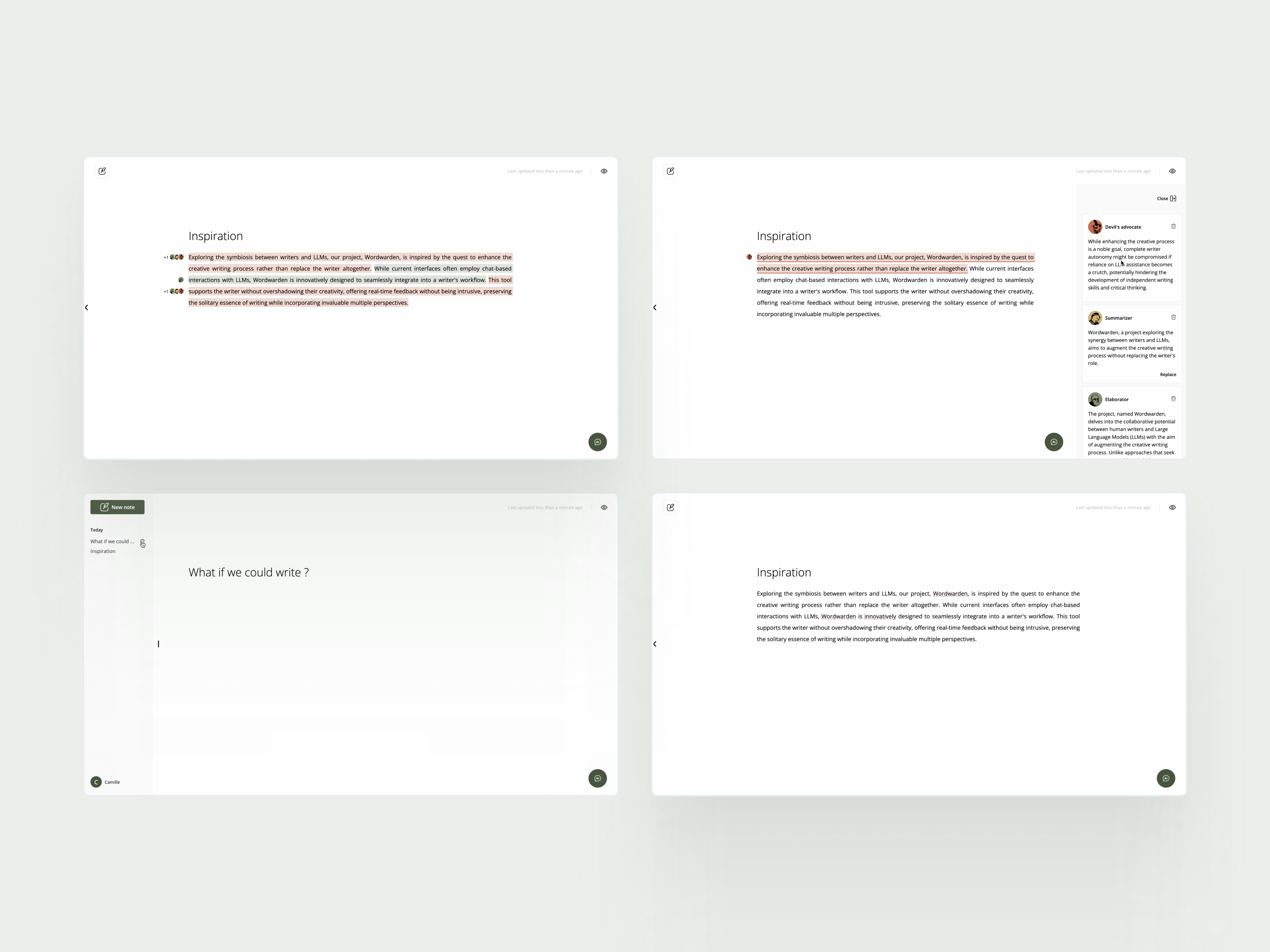
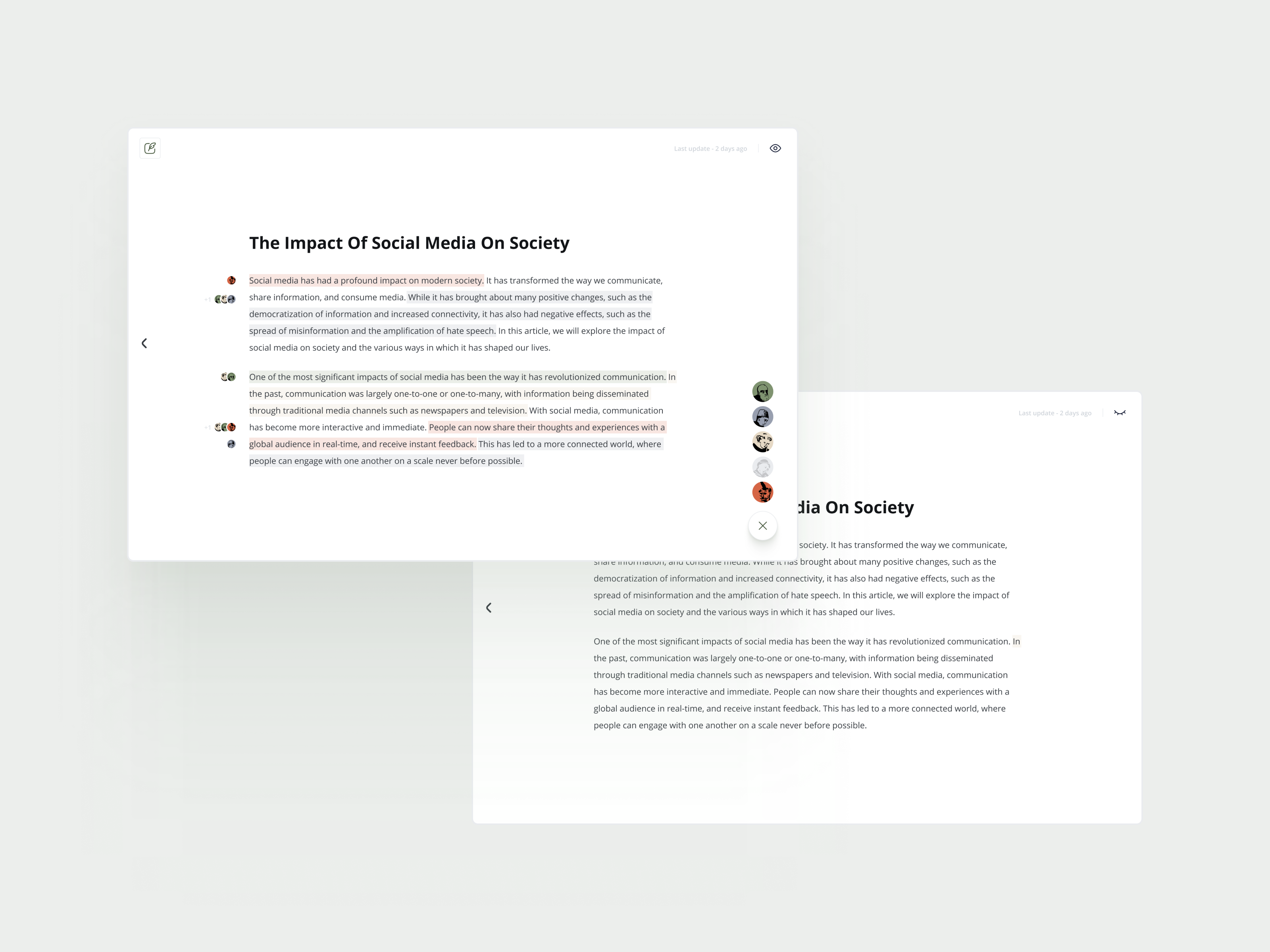
Imagine a blank canvas where your thoughts come to life, and as you write, a team of virtual assistants—each with a distinct personality and viewpoint—analyzes your text in real time. These assistants highlight sentences to offer feedback, which you can review and use to refine your drafts. This process simulates a collaborative environment, enabling you to engage in solo writing yet benefit from the value of a whole team of experts always at your disposal.
How We Built It
WordWarden is built using NEXT.js with an Express backend, leveraging open-source technologies like Tiptap. The platform securely stores notes in a Firestore database and allows seamless user authentication via Google accounts. This architecture ensures a fluid and responsive user experience, essential for maintaining creative flow. The app leverages the Vertex AI api, using the Gemini 1.5 Pro preview to analyze the text. The user needs to do as little as possible. The team is made up of two junior devs and an UX designer.
Challenges We Ran Into
One of our key challenges was designing human-machine interactions that feel natural and enriching. The goal was to create an interface where feedback feels like part of an organic writing process, making the platform a comfortable and inviting space for writers of all walks of life.
Accomplishments We're Proud Of
We are particularly proud of WordWarden's intuitive design, which connects modern AI capabilities to the tradition of writing, reminiscent of a medieval scriptorium. This design not only enhances usability but also provides a peaceful, inspiring environment for writers to thrive creatively.
What We Learned
The development journey taught us about the flexibility of LLMs and the potential to craft user-centric designs that resonate with the traditional act of writing. The whole UX was thought around code, and not the other way around. Through iterative design and testing, we refined our approach to interactive highlights and other features that enrich the user experience without overwhelming the writer.
What's Next for WordWarden
Looking forward, we are excited to expand WordWarden's capabilities through extensive user research and real-world testing. We plan to explore more writing solutions - such as search through embedding, automatic classification, smart exports -, develop new assistant profiles for thematic alignment, and introduce a local-first version. Additionally, a production version with an emphasis on encrypted, security-first storage is also in development, ensuring that creativity remains the writer’s primary focus.
Built With
- express.js
- firebase
- firestore
- gemini
- javascript
- next.js
- node.js
- react
- tiptap
- vertex


Log in or sign up for Devpost to join the conversation.