-
-
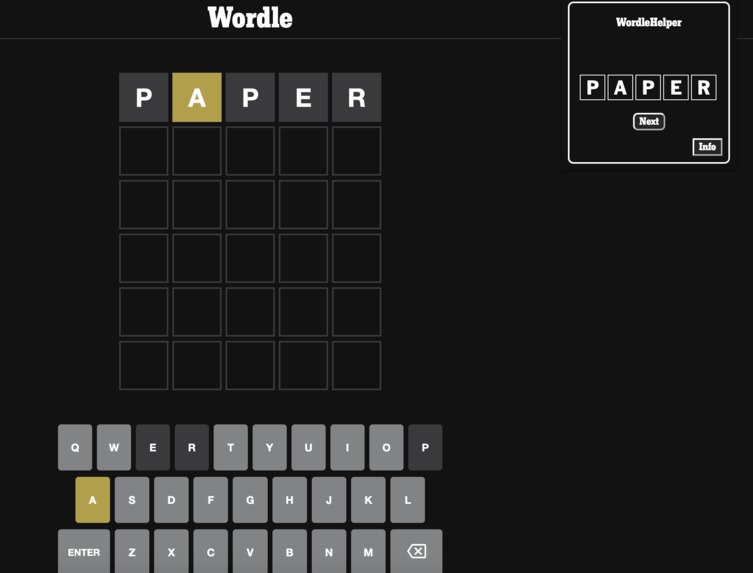
Just a little tech demo.
Inspiration
When thinking of projects to work on, we looked for small everyday problems that could be tackled using code due to our relative inexperience. Making a chrome extension seemed like the perfect fit for this hackathon and with all of the hype around the New York Time's Wordle, we knew there was a place for our app as a fun little word finder. The brain's behind our algorithm is heavily influenced by the popular Youtuber 3Blue1Brown's optimal word finder that he presented on his channel recently.
What it does
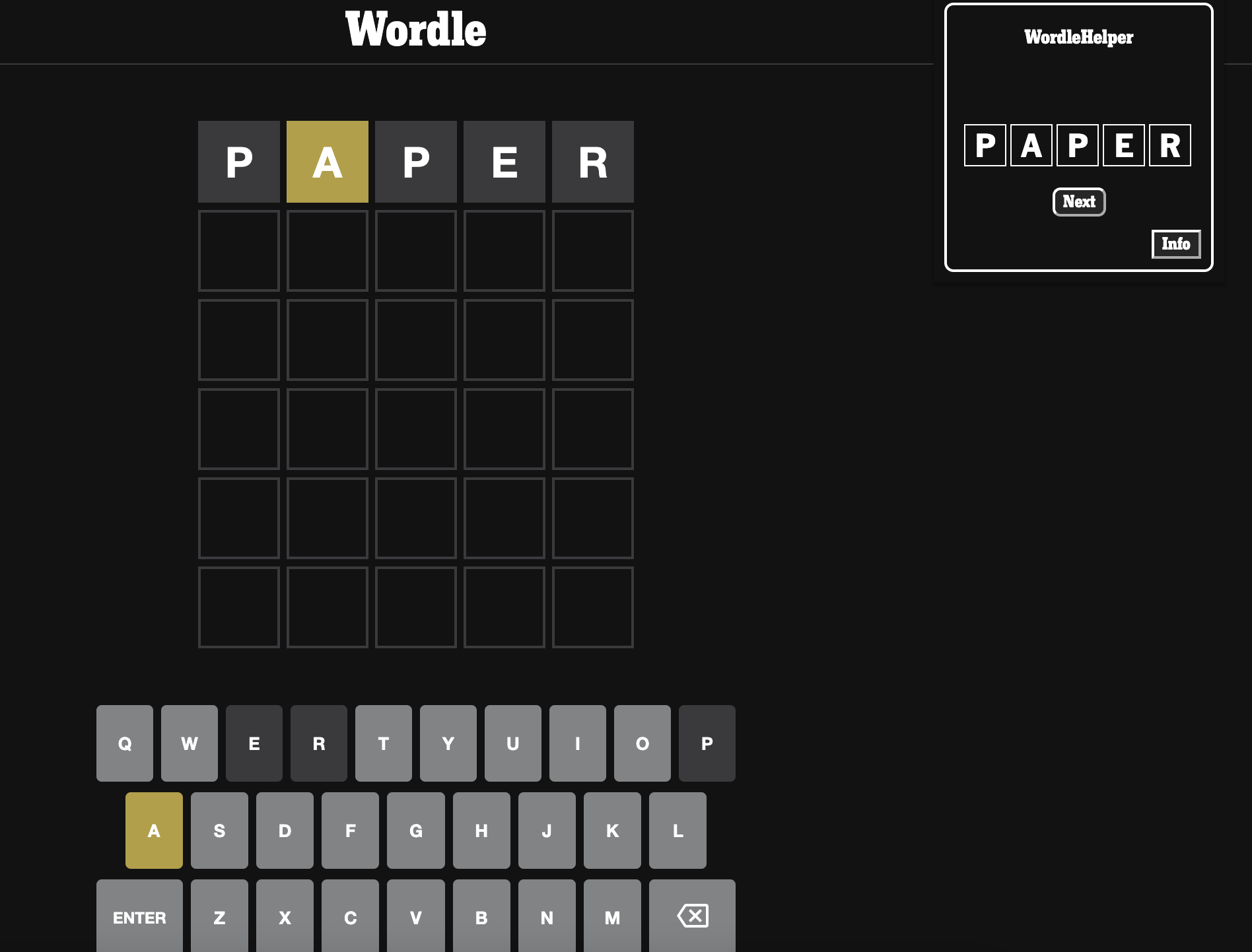
WordleFinder is a simple extension that suggests optimal words to use based on the current letter hints available. Of course, if no guess has been made, the algorithm will suggest the optimal overall word and suggest that instead.
How we built it
Chrome extensions are built like mini websites, so we used a simple blend of HTML, CSS, and Javascript to achieve the frontend, which is was all built by Owen Boseley. The algorithm itself was built by Antoine using Python. The reason Python was chosen originally was because 3Blue1Brown's code was written in Python, which is how we got the source code to start reverse engineering it.
Challenges we ran into
A couple challenges I, Owen, ran into on the frontend were scraping letter data from the wordle website and dealing with Chrome's CSP policies to access data in a safe manner. On the backend, Antoine discovered the difficulties with engineering the algorithm, mostly due to some technical issues with even running the animations seen in the videos. We also realized towards the end that Python would be too hard for us to implement and we had to port our code over to javascript.
Disclaimer: Do to chrome's long approval times for chrome extensions / time constraints, our extension is currently only available as source code that can be uploaded to your chrome browser individually to test it. Sorry for the inconvenience!
Accomplishments that we're proud of
We are proud of accomplishing this despite the fact that the languages we used are not familiar to us. Additionally, the algorithm itself and the design of the extension were pretty cool feats.
What we learned
I, Owen, learned a lot more about web development, mostly about asynchronocrity of javascript and proper handling of data transfer. Of course, Antoine was working from no previous background in Python, so learning his way around that was lots of learning.
What's next for Wordle Helper
We have a lot more features in mind to bring this extension to life, including autofill for the letters, dictionary/definition capabilities, a smarter algorithm for word suggestion, and possibly different modes for how good the suggestions are.


Log in or sign up for Devpost to join the conversation.