-
-
-
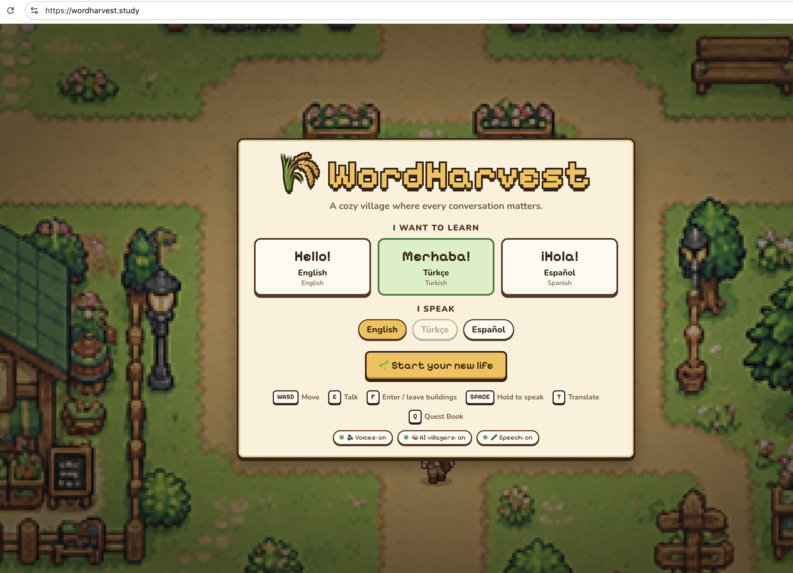
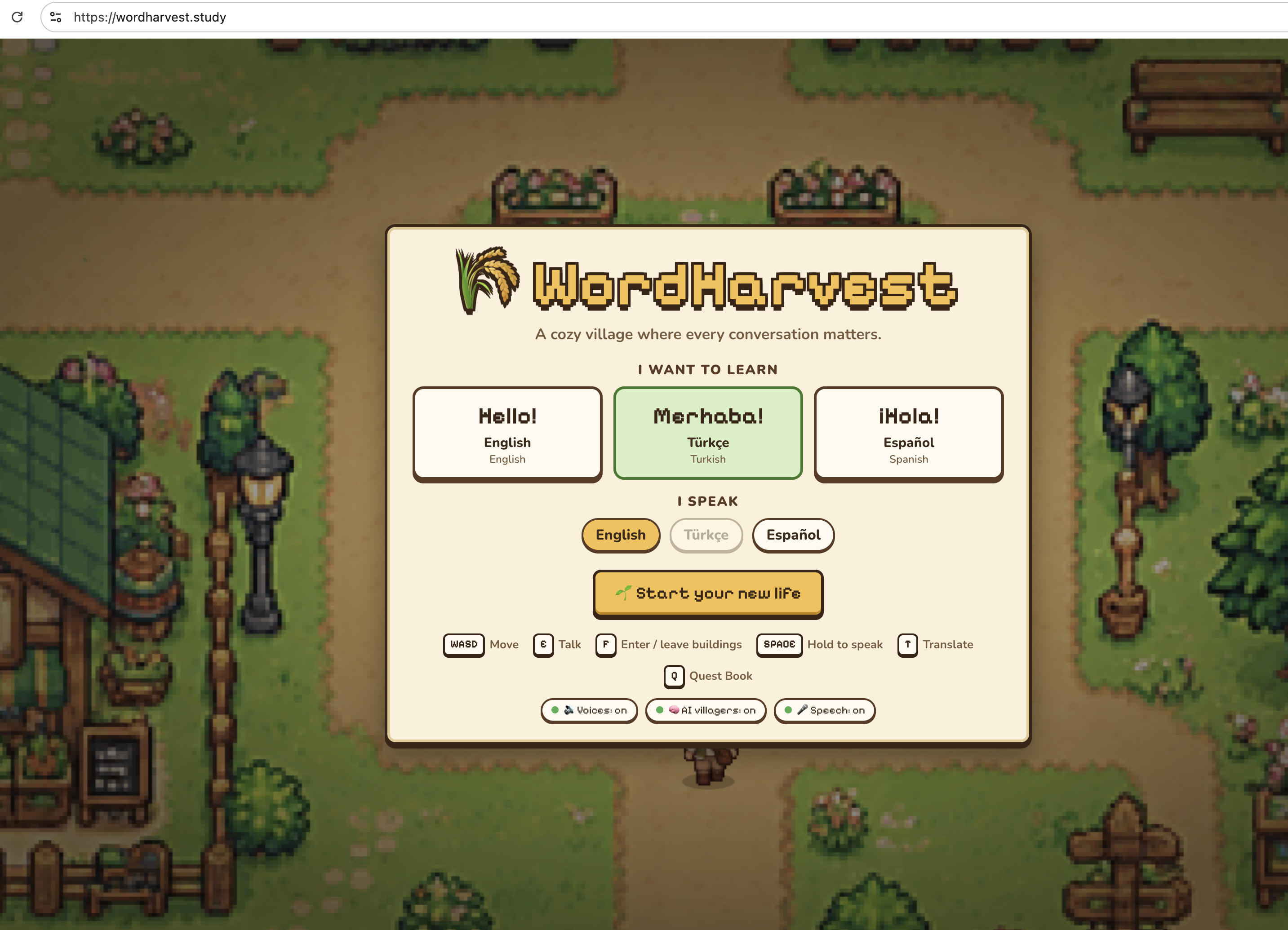
Word Harvest Title Screen: Pick Your language
-
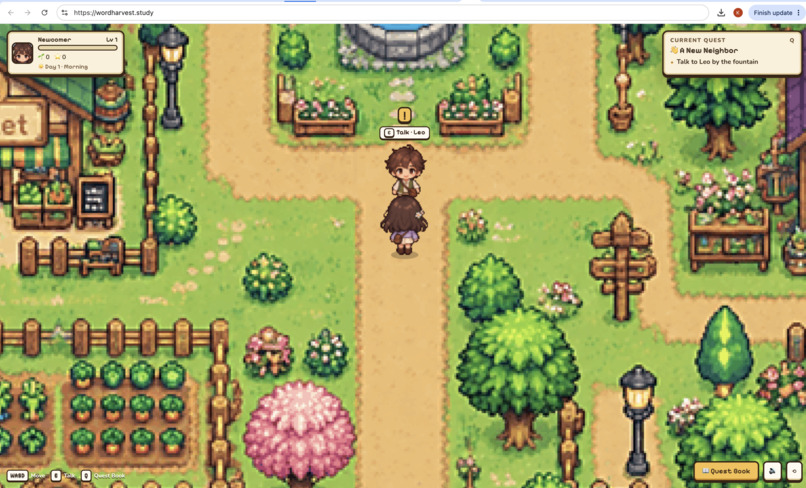
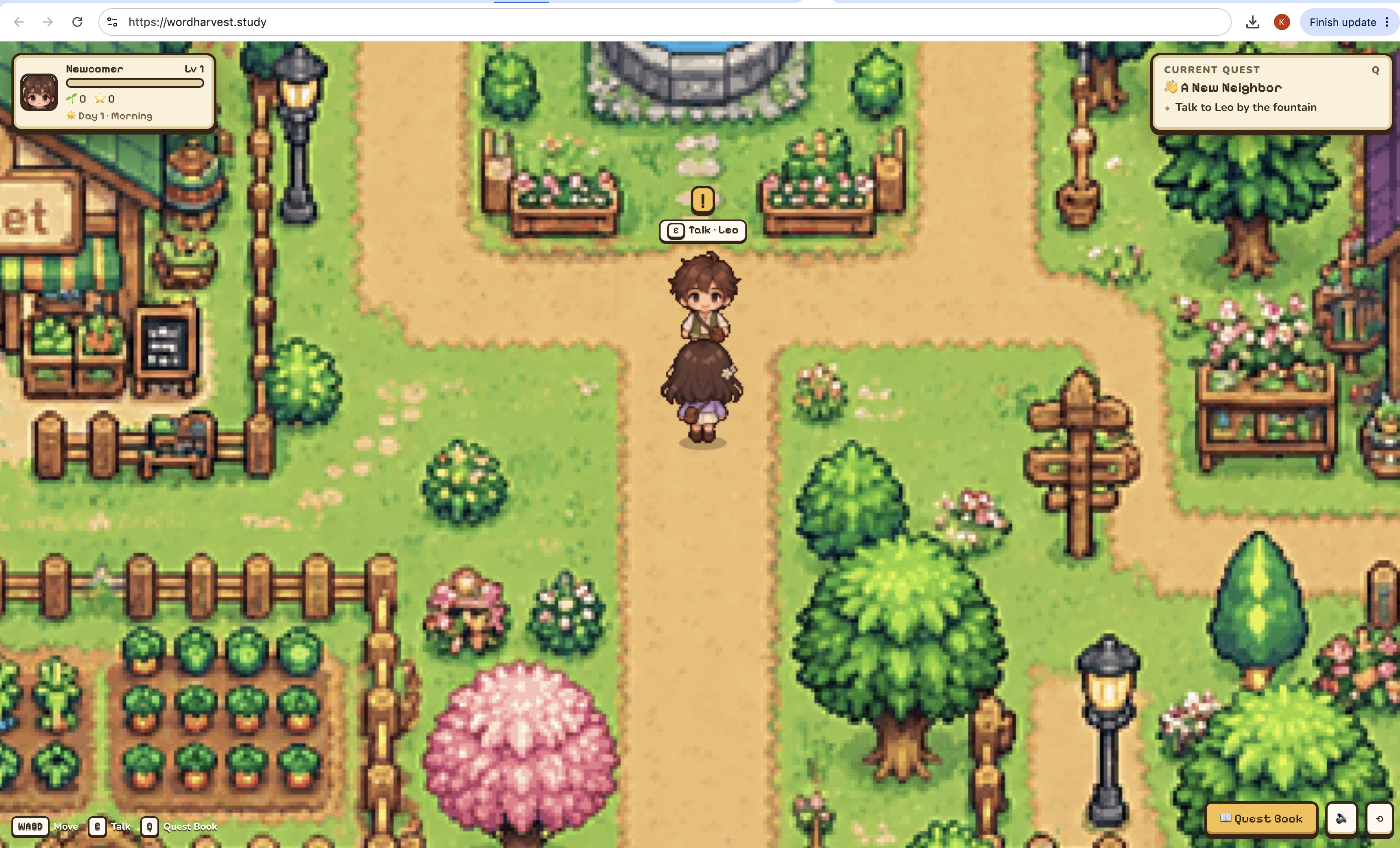
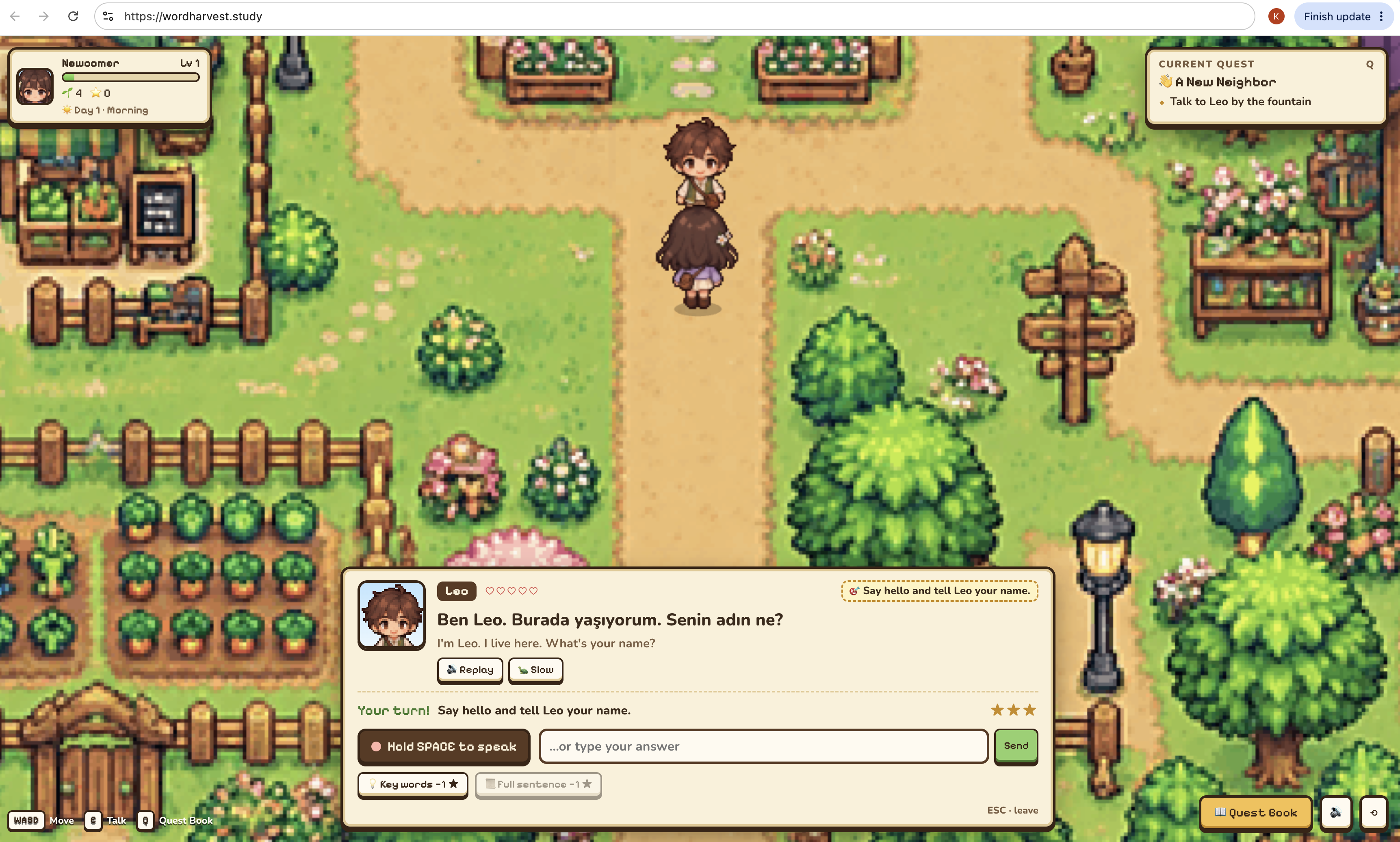
First Villager: Meet Leo!
-
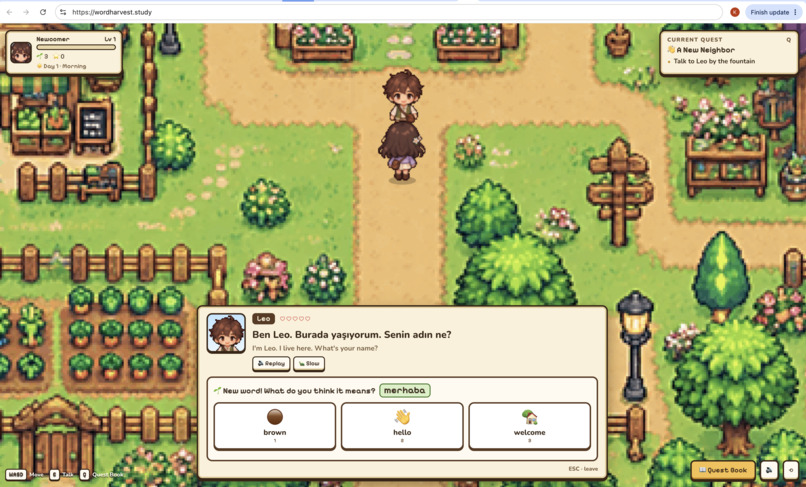
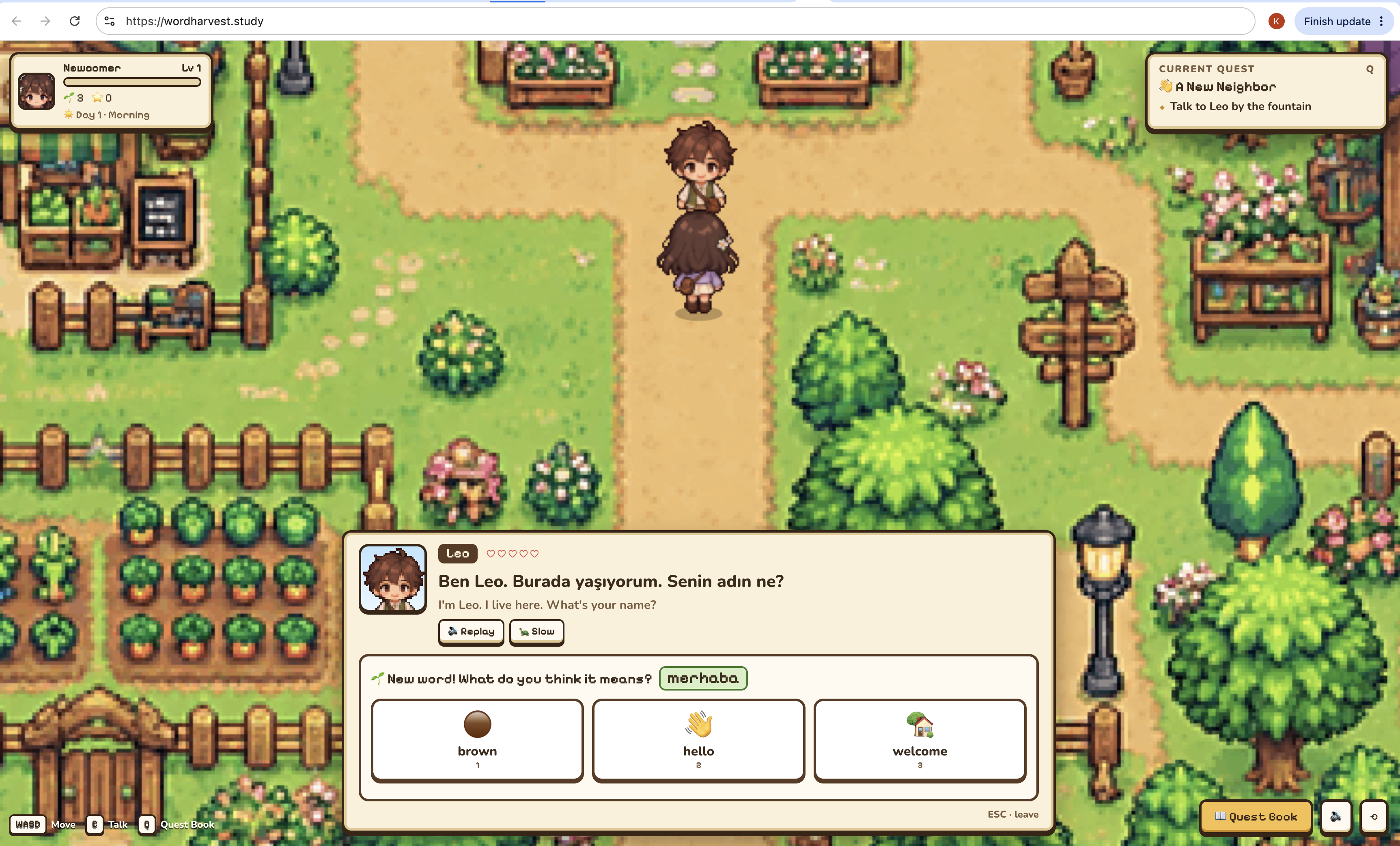
Press on E to interact: Leo asks you a starting question
-
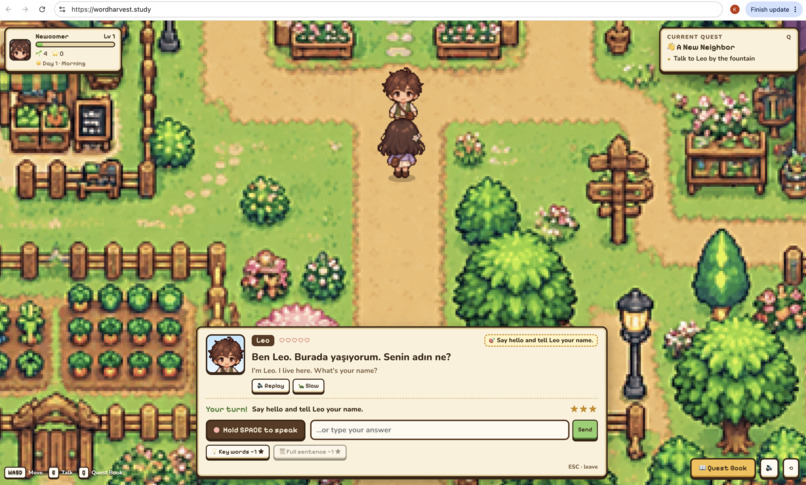
Speak and practice your chosen language! Hold the space bar and try your best!
-
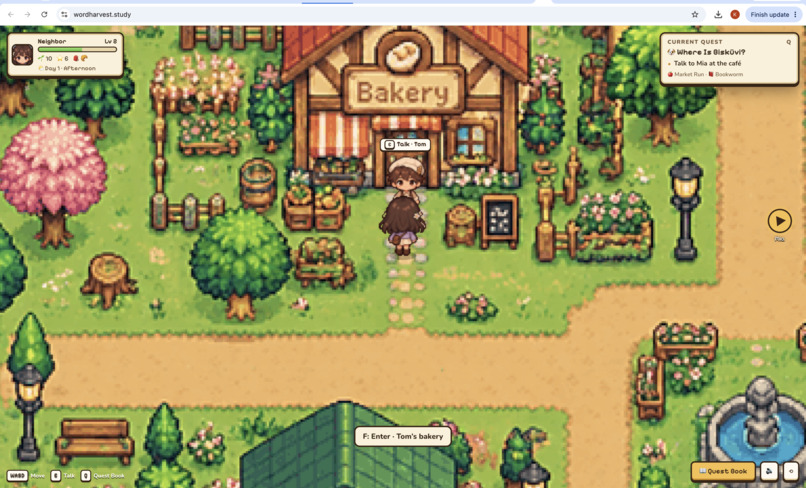
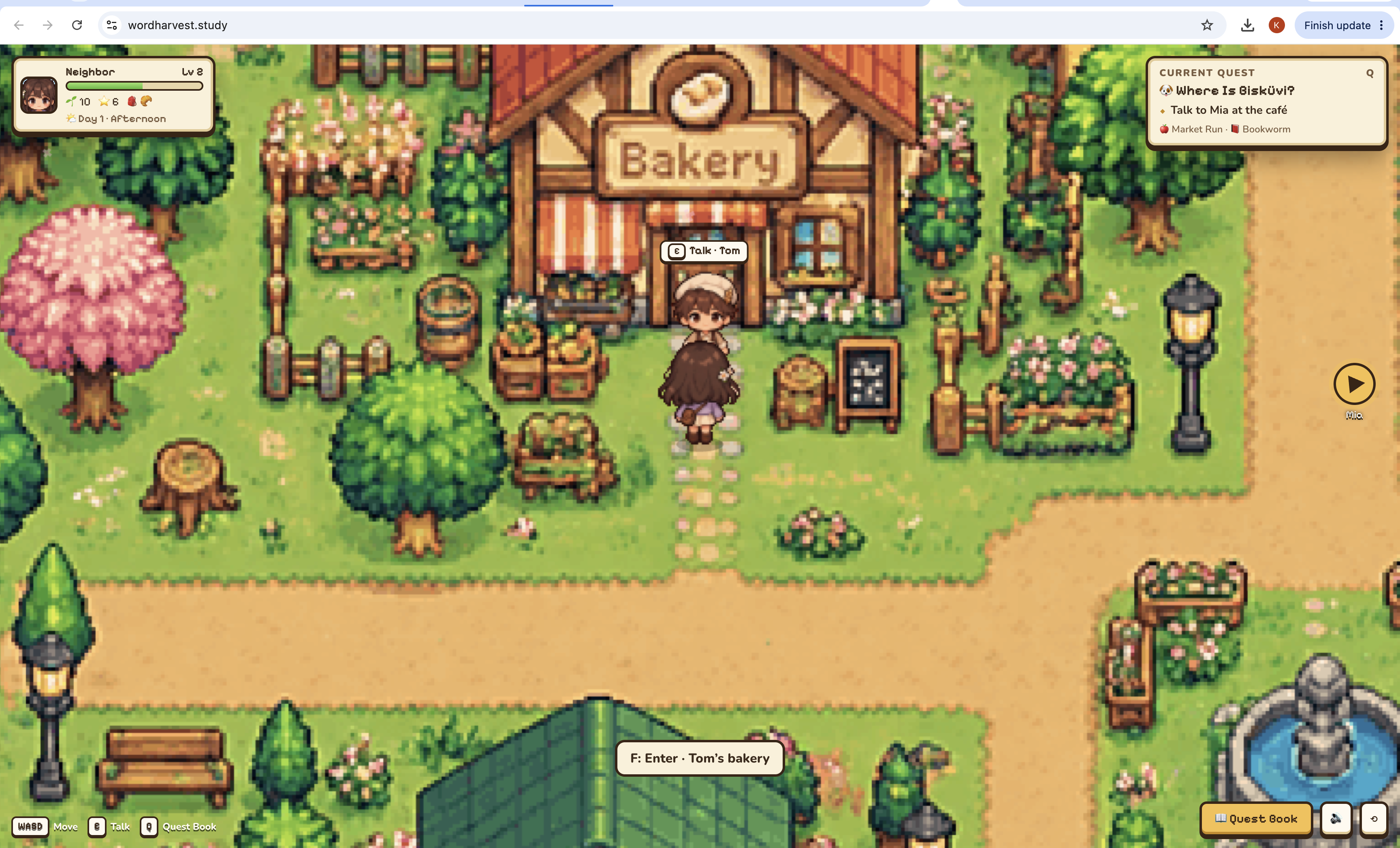
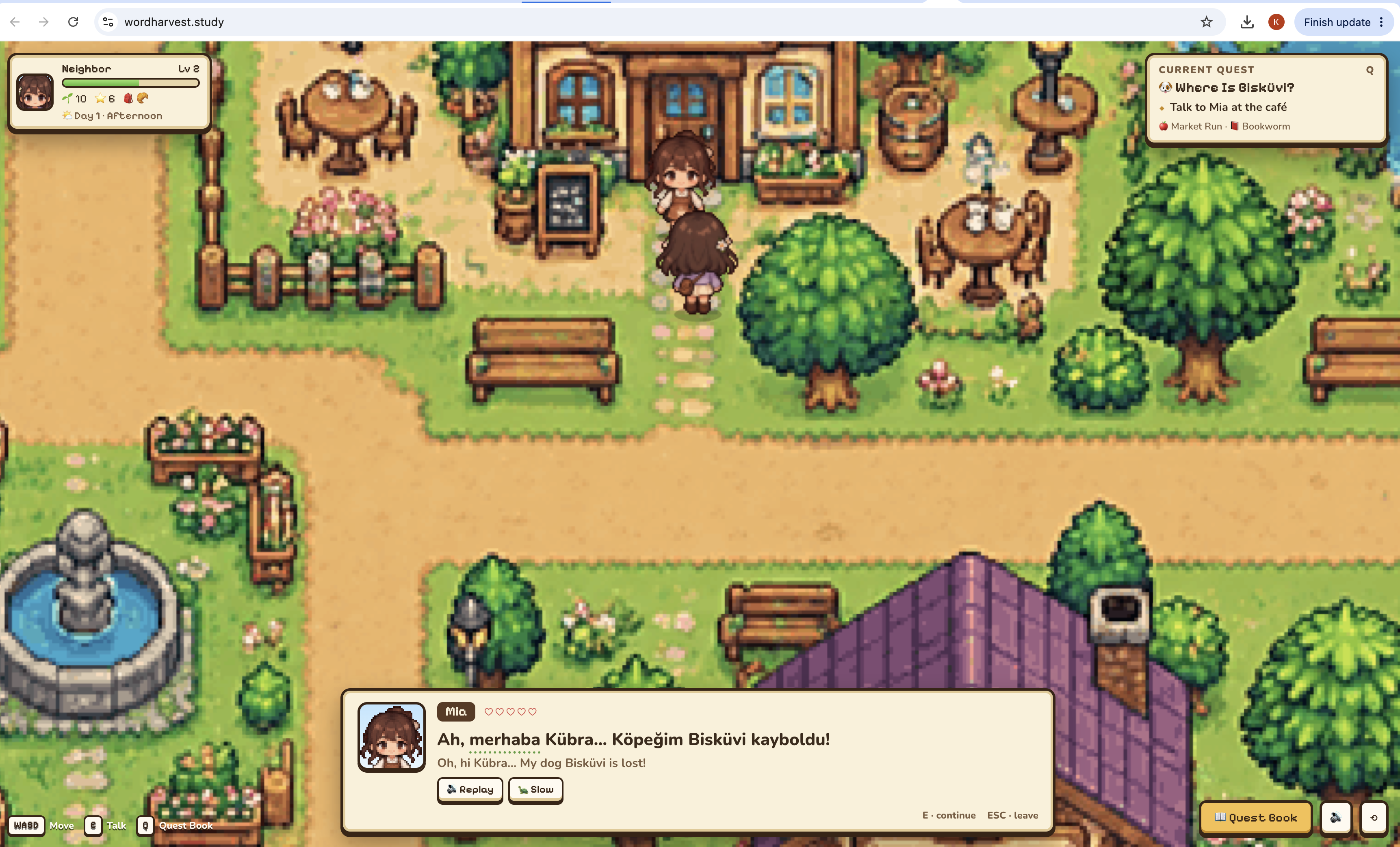
Interact And Conversate With The Villagers: Meet Mia at the bakery!
-
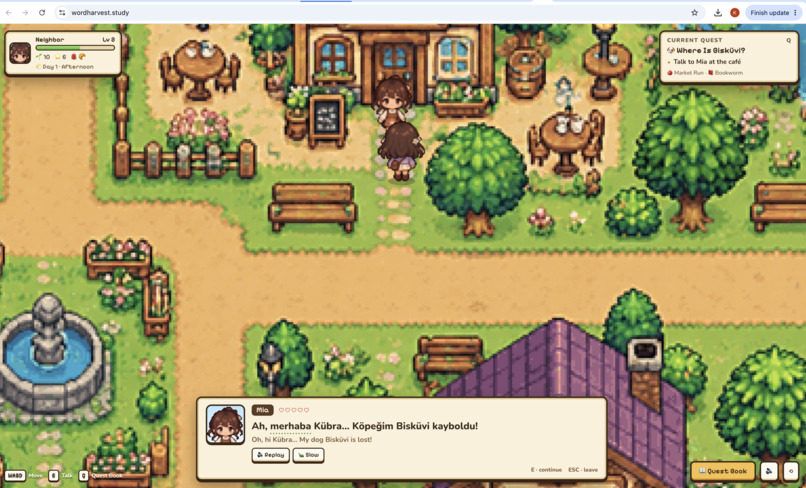
Meet Mia!: You can select the right choice and use the space bar to reply to her to practice your new language!
-
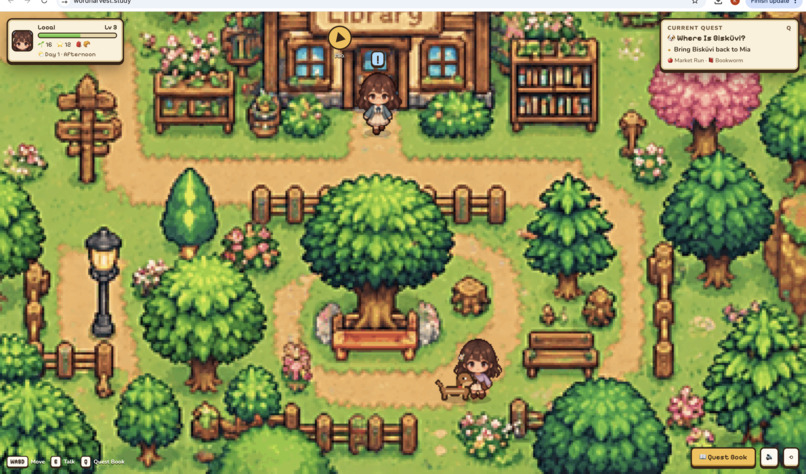
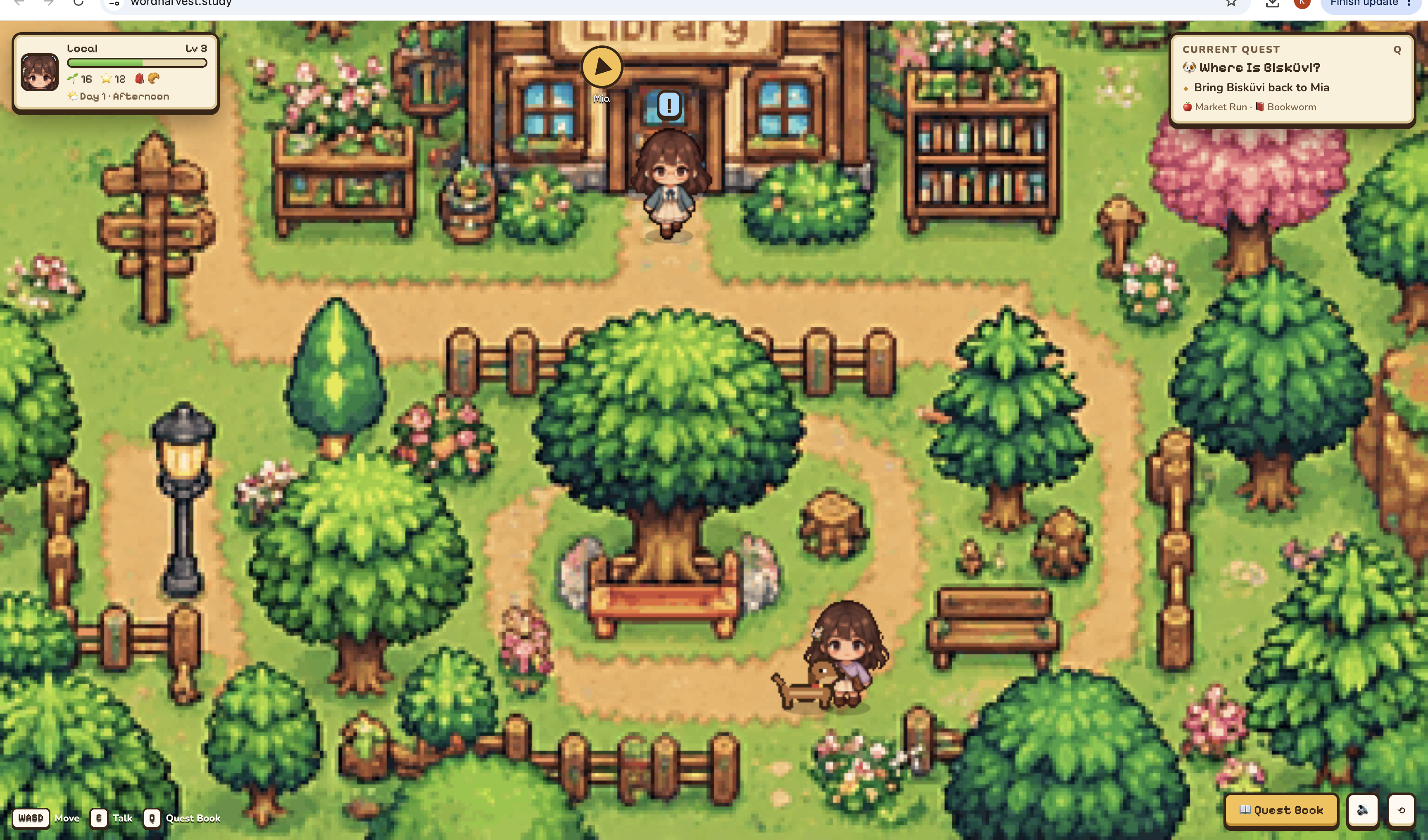
Walking the dog at the park! Your new friend follows you!
-
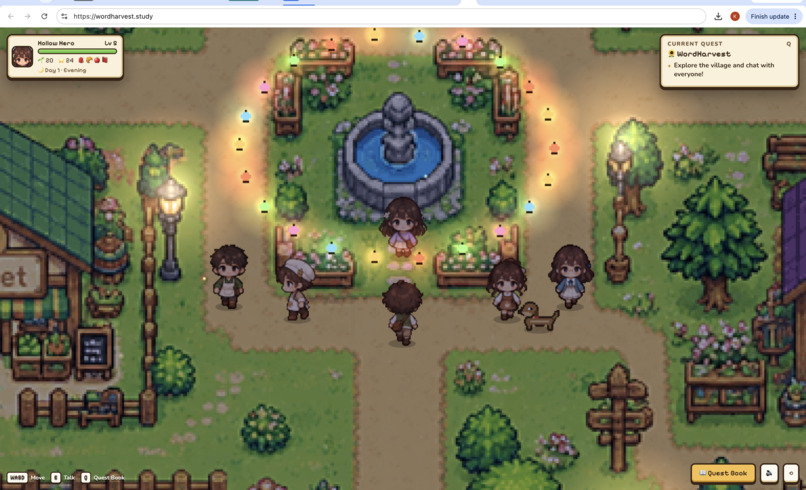
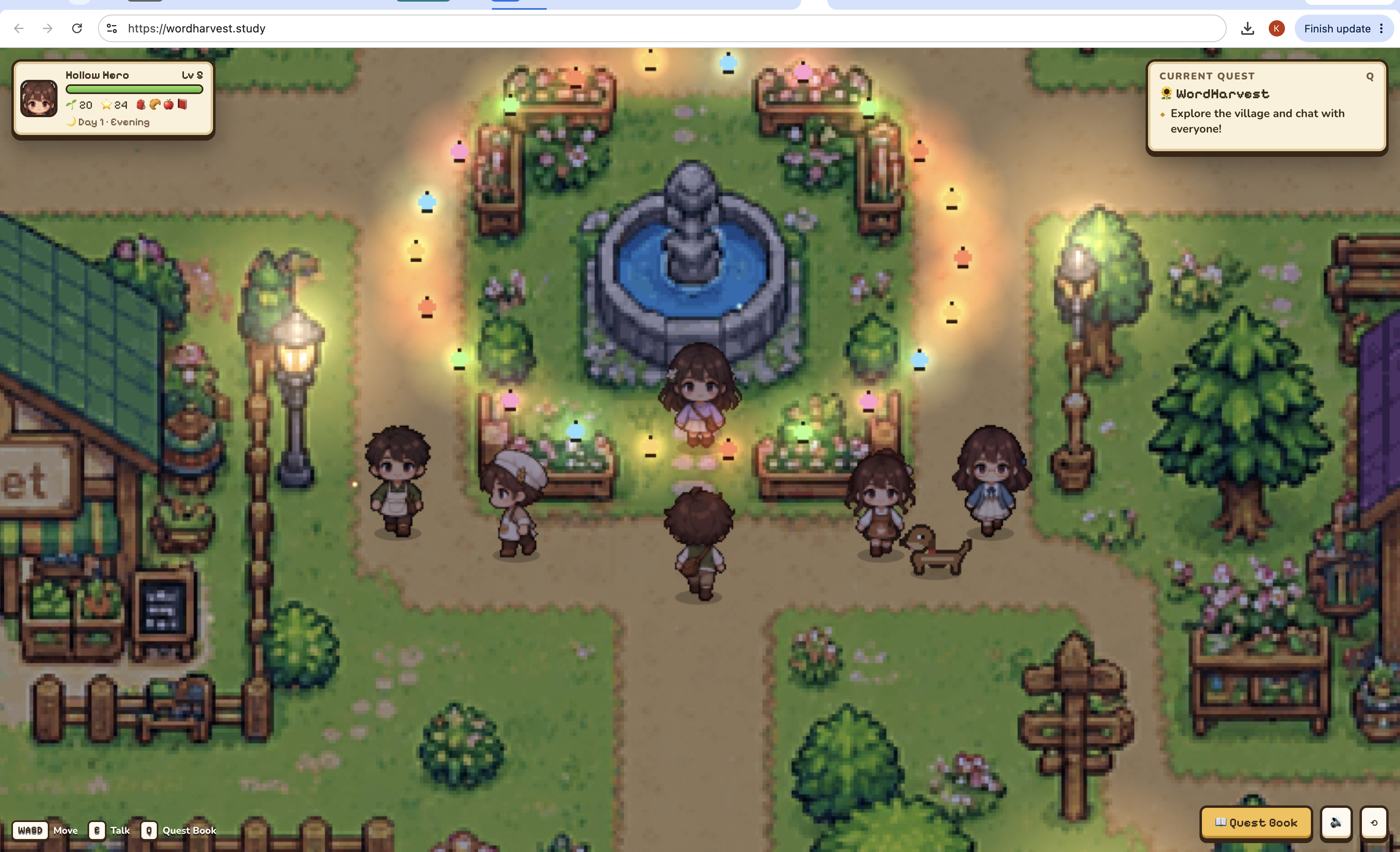
Lantern Festival
-
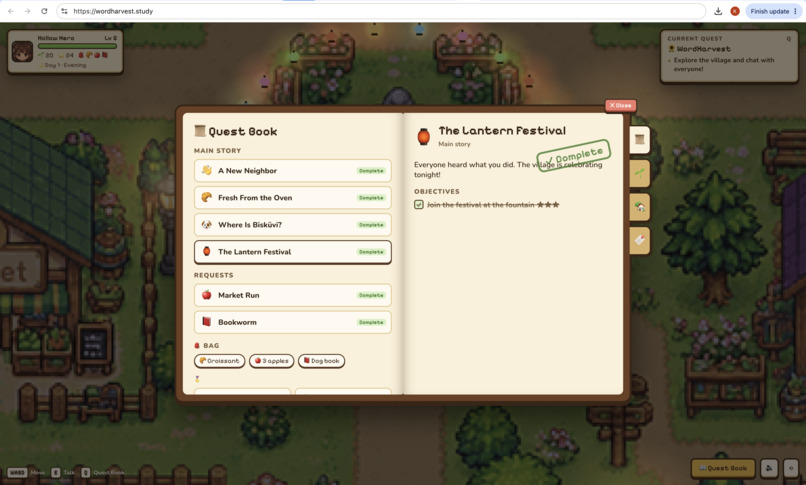
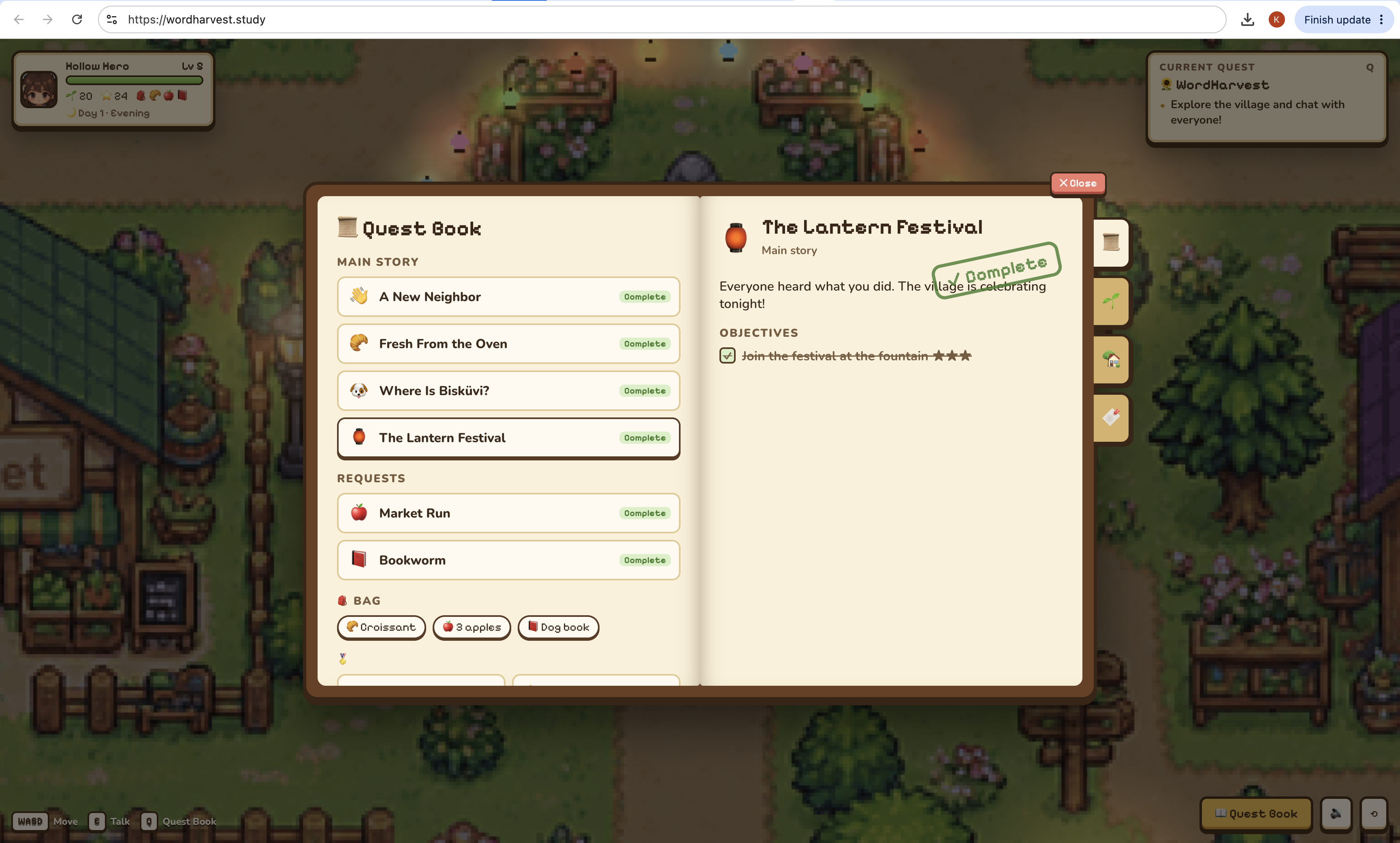
Lets open the Quest Book: Keep updated on game achievements and requests!
-
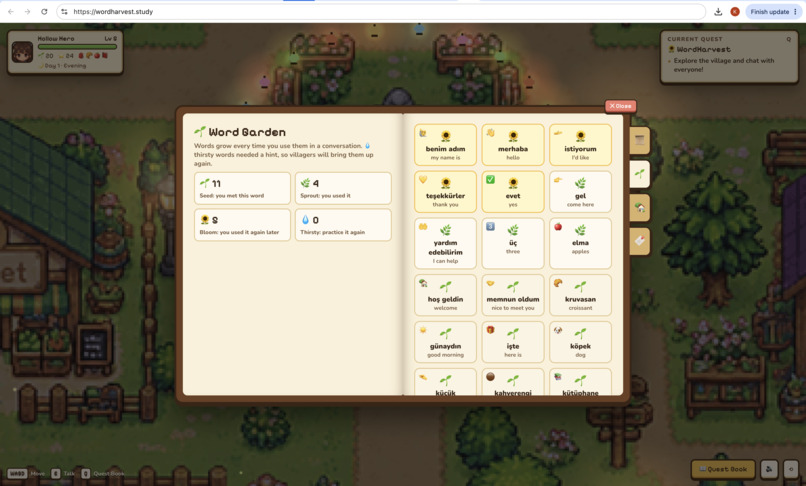
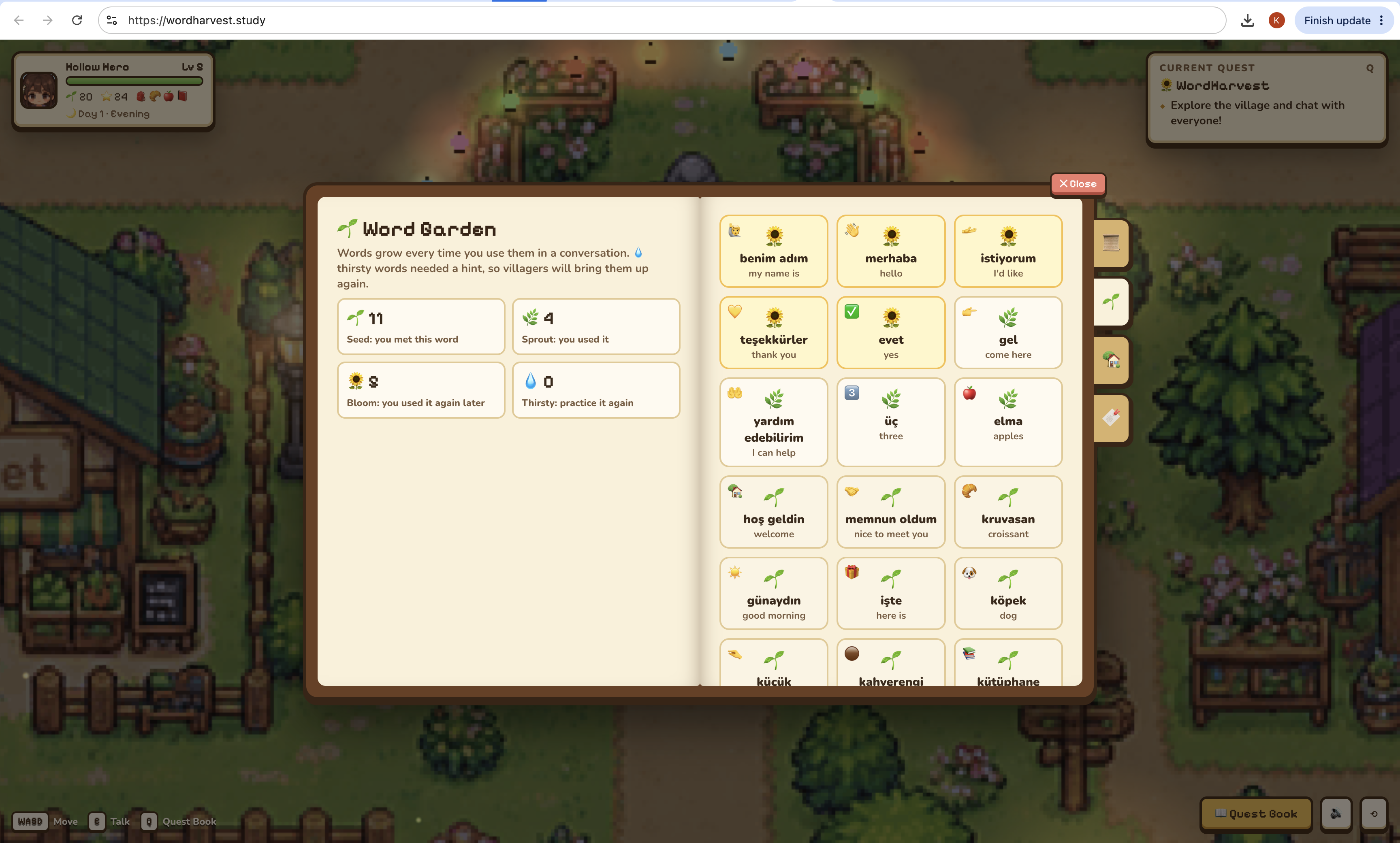
The Word Garden: The garden grows when you learn a new word
-
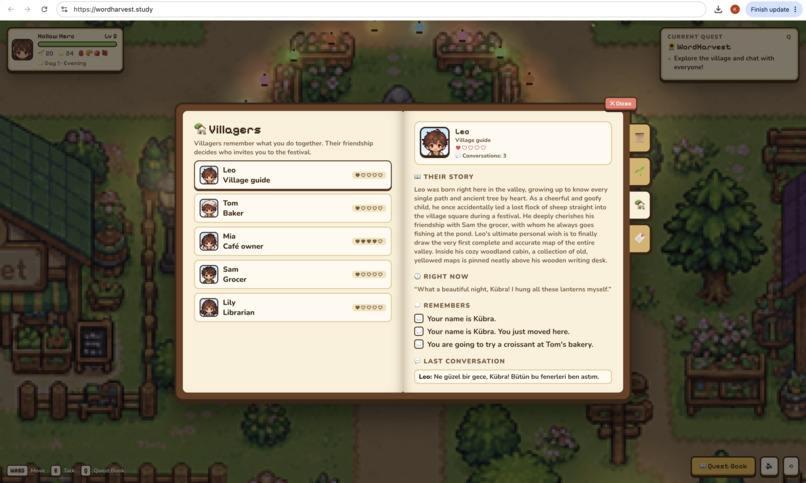
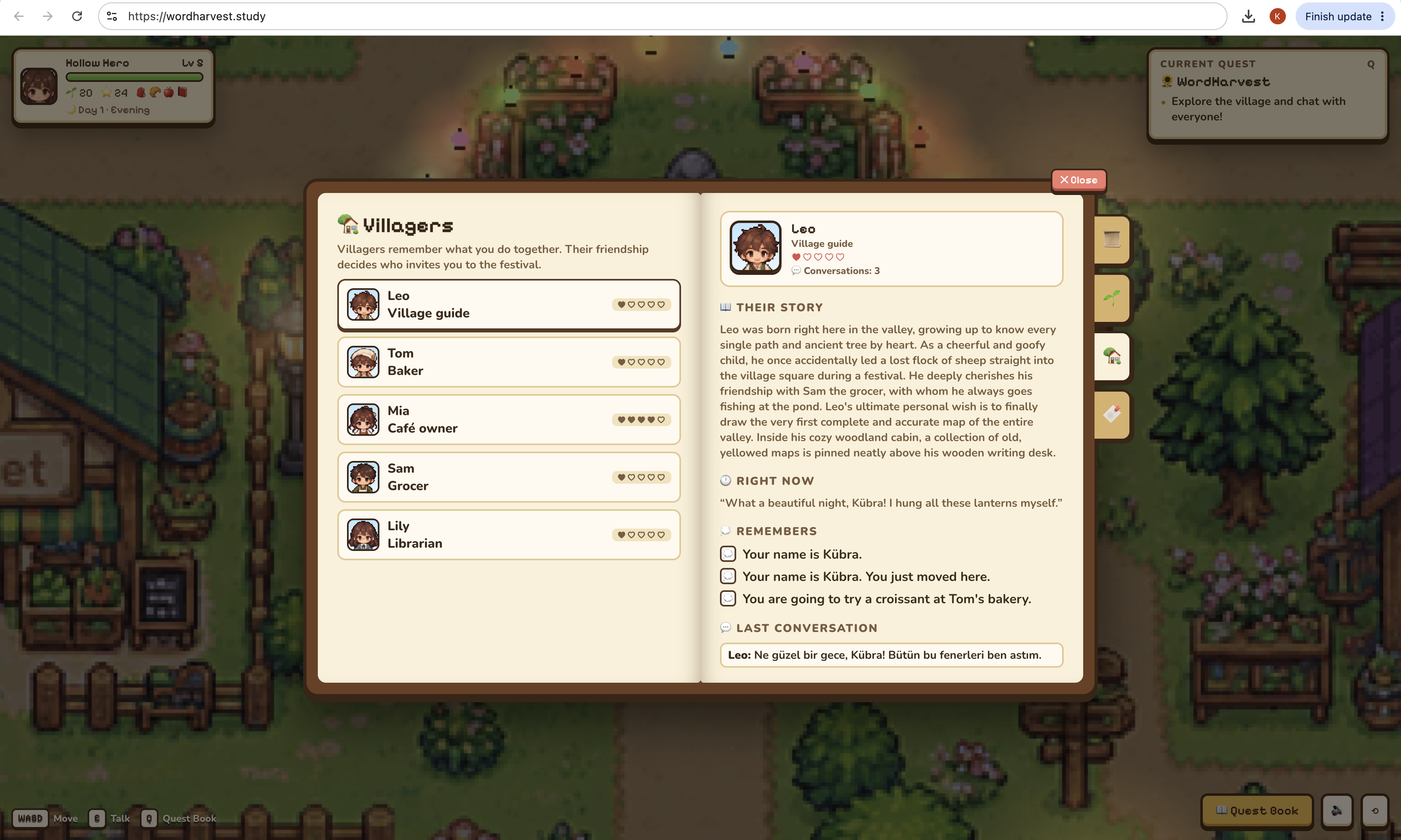
The Villagers: Keep track of their memories and conversation history
Inspiration
Many kids between 7 and 14 learn a new language at school, but they rarely get to speak it. Apps give them flashcards and multiple choice, and real conversations feel scary. While I was mentoring students, many of them asked me the same question. "I understand the language, so why can't I speak it?"
Research shows that speaking anxiety strongly holds learners back (Teimouri, Goetze & Plonsky, 2019), and that digital games have a clear positive effect on second language learning (Dixon, Dixon & Jordan, 2022).
So we wondered. What if speaking a new language felt like playing a cozy village game? Kids already love games like Stardew Valley. So we built a village where the only way to make friends is to talk to people, out loud.
What it does
WordHarvest is a pixel village where kids learn English, Turkish or Spanish by talking to villagers.
A story guides you, but you are free to talk. You just moved to the village and nobody knows you yet. Leo, the village guide, welcomes you and sends you to Tom's bakery for breakfast. There you hear that Mia's little dog Biscuit ran away, so you help her search the village. Along the way, Sam needs a customer at the market and Lily has a book for you at the library.
The quests only show you the way and give you a reason to speak. You can also walk up to any villager and just chat about anything, like their day, their hobbies or the village. They answer in character, remember what you told them and react to what is happening in the story. The goal of the day is to make friends and get invited to the Lantern Festival 🏮 in the evening. The villager who likes you most invites you, so every conversation counts.
- Every villager speaks the target language with their own real voice.
- Each quest is part of the story and has a real-life speaking goal, like ordering a croissant, offering to help find a lost dog or accepting the festival invitation.
- Free chat is always open. Kids can talk to any villager about anything, not only about quests.
- Kids hold SPACE and answer out loud, or type if they feel shy.
- Villagers understand the meaning of what kids say, not just exact words.
- If a kid asks for something off-script, villagers do not say "I don't understand". They offer what they have and keep the talk going.
- Instead of saying "wrong", villagers give gentle hints and show a more natural way to say it.
- New words are planted in a Word Garden 🌱 → 🌿 → 🌻 and grow when kids use them again later.
- Villagers remember the player's name and choices, and news spreads around the village.
How it teaches
Every feature comes from language-learning research.
| In the game | Technique |
|---|---|
| A real goal in every conversation | Task-based learning |
| Guess a new word before seeing its meaning | Pretesting |
| Pictures on every word | Dual coding |
| Hints before answers | Self-correction |
| "A natural way to say it" | Recasts instead of "wrong" |
| Word Garden and thirsty words | Spaced retrieval |
| Patient villagers, typing always allowed | Low-anxiety practice |
How we built it
- Phaser + Vite for the game, with depth sorting, walk areas and lighting.
- Gemini plays each villager in character. It decides if the player reached the goal, suggests a more natural sentence and saves facts to remember.
- ElevenLabs gives every villager a unique voice, with a slow mode for learners, and listens to the player with Speech to Text.
- Node.js server keeps the API keys secret and proxies all AI calls.
- Vultr cloud server runs the game and the AI proxy, with automatic HTTPS so the microphone works in the browser.
- wordharvest.study is our custom domain.
- Python art tools turn our source art and map annotations into game assets.
- The game still works without API keys. It falls back to browser voices and simple word matching.
Zero Data
WordHarvest has no accounts, no logins, no profiles and no tracking. A kid opens the page and starts playing. We never ask for an email, an age or a real name.
- Progress stays on the device. The player's name, words and villager memories are saved only in the browser on that device. One click on the reset button deletes everything.
- Our server stores nothing. It only passes requests to the AI services and keeps the API keys secret. It does not save conversations, voices or names, and it has no database.
- No trackers. There is no analytics, no cookies and no third-party scripts in the game.
- Safe by design for kids. Villagers are told never to ask for personal details like age, school or address, and never to remember them if a kid shares them.
- Honest about AI. To understand speech and reply, the kid's voice and text are sent to ElevenLabs and Gemini for that one request. The game also works with no AI at all, using browser voices and simple word matching, so nothing leaves the device.
We believe a learning game for kids should work without knowing who they are.
Challenges we ran into
- Speed. A villager has to answer within a few seconds, or a child loses interest. We chose fast Gemini models and added backup models.
- Judging meaning, not spelling. Kids make many small mistakes. We had to make the AI accept answers that are correct in meaning while still teaching the better phrase.
- Keeping the talk alive. At first villagers said "I don't understand" when a kid asked for something off-script. Now they offer what they have ("No simit today, but would you like a croissant?") and the talk ends only when the player says goodbye.
- Free API limits. We hit Gemini and ElevenLabs quotas while testing. We added backup models and fallbacks, so the game never stops.
- Three languages at once. Every story line, menu and translation exists in English, Turkish and Spanish.
What we learned
We learned how to keep AI replies short, friendly and in character, so a villager feels like a real neighbor and not a chatbot. We also learned that good feedback for kids is about encouragement. A gentle hint teaches more than a red "wrong" message.
What's next
- More interior spaces, so kids can walk into more homes and shops and talk to villagers inside
- Deeper stories with longer quest lines, more days and stronger friendships
- More villages, languages and seasonal festivals
- A parent and teacher view to track progress
- Testing with real kids in classrooms
References
- Teimouri, Goetze & Plonsky (2019). Second language anxiety and achievement. A meta-analysis. Studies in Second Language Acquisition.
- Dixon, Dixon & Jordan (2022). Second language gains through digital game-based language learning. A meta-analysis. Language Learning & Technology.
- Ellis (2003). Task-based language learning and teaching. Oxford University Press.


Log in or sign up for Devpost to join the conversation.