Inspiration
Every word game has a solver. You type your letters in, it hands you the answers, and the puzzle is over. I know because I built one — Wordator has been on Google Play since December 2023, a two-tab app I wrote to learn Flutter and Dart. Its main button literally said GENERATE. Two green tiles in, and it would dump BORON, BOSON, CAJON, CANON at you until the puzzle was dead.
That always bothered me. When you're stuck on a puzzle you don't want the answer — you want to stay stuck a little longer, with a nudge. During OpenAI Build Week I rebuilt Wordator around that one rule: give the next nudge, never the answer.
What it does
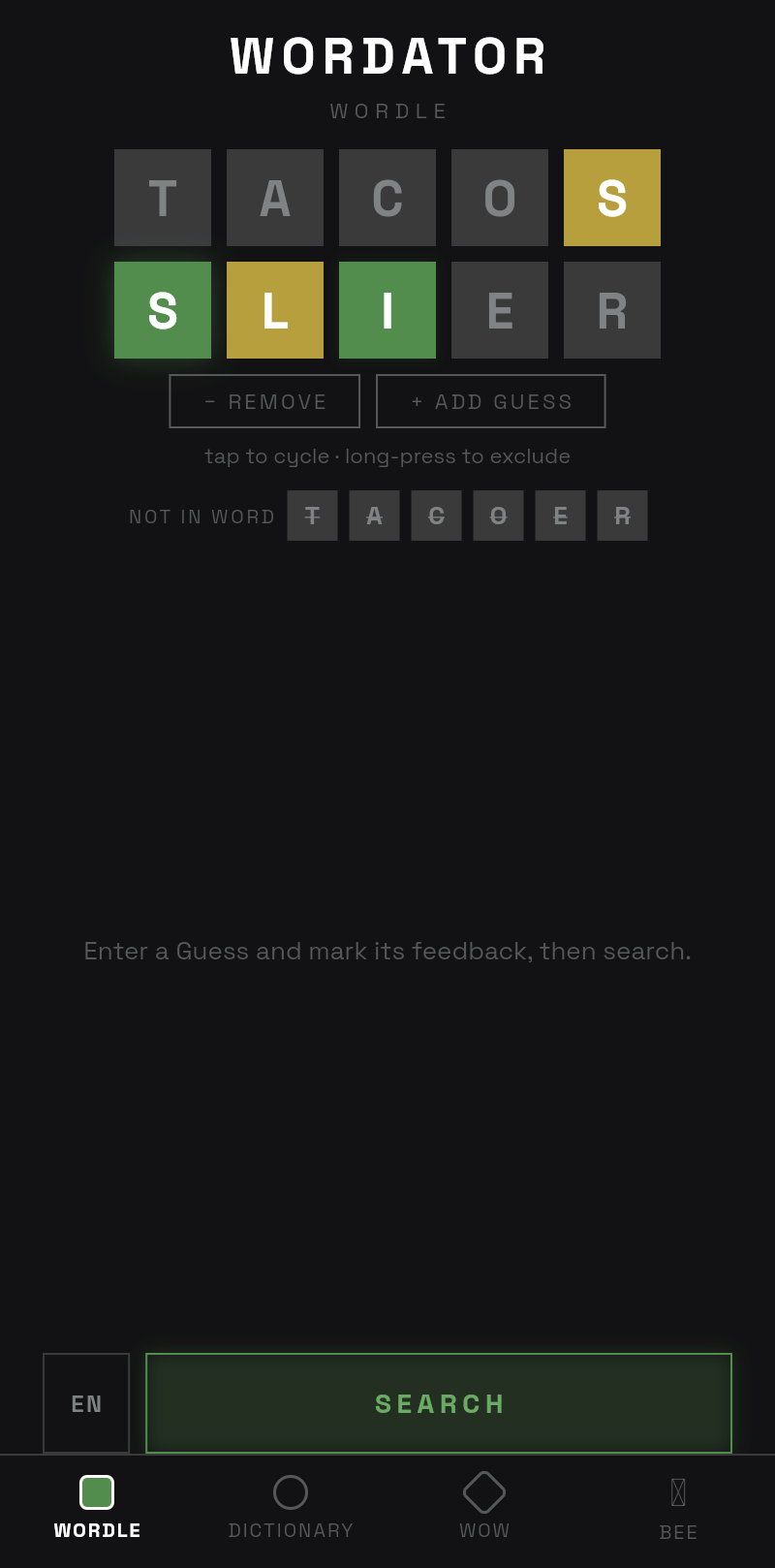
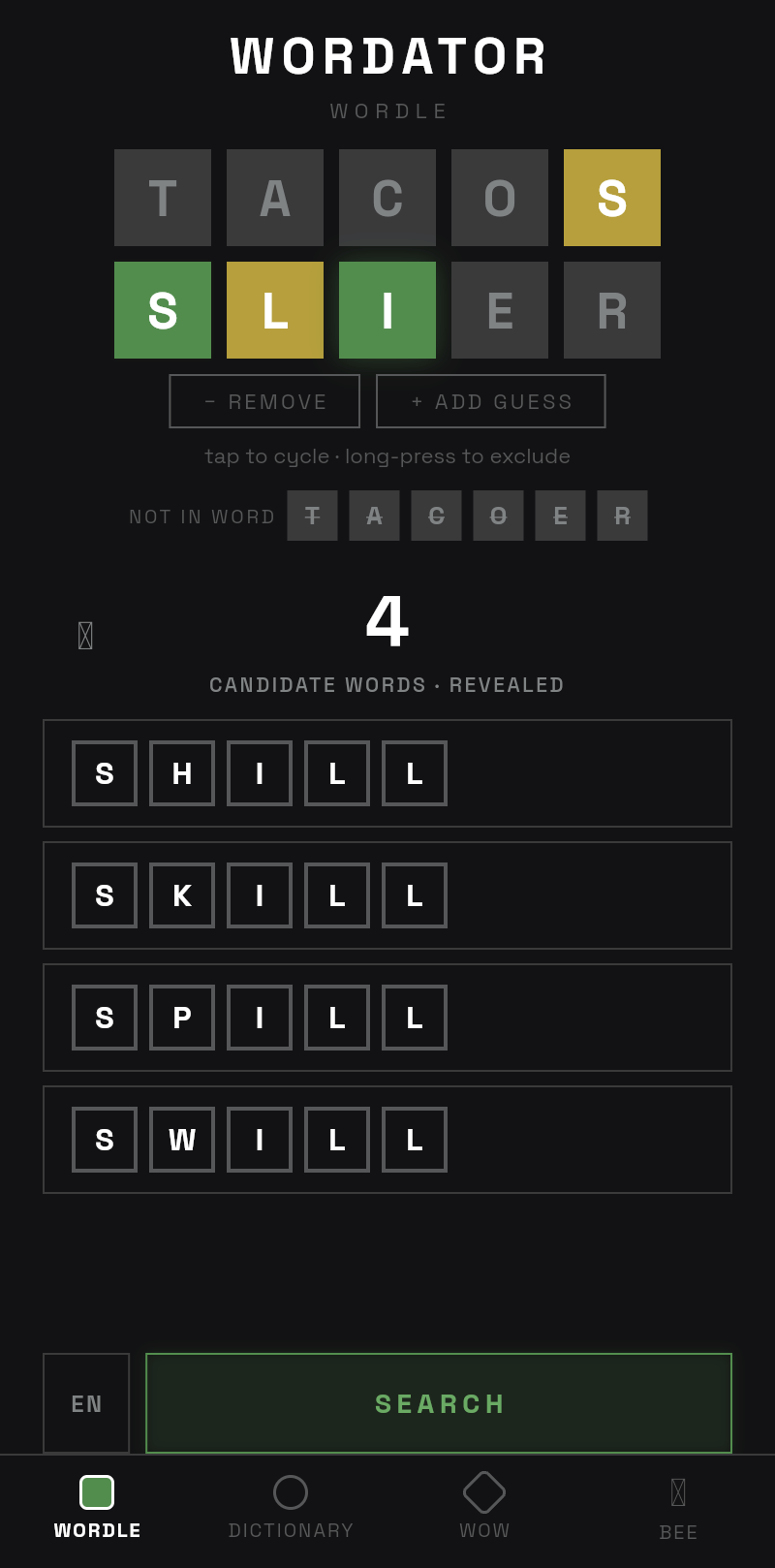
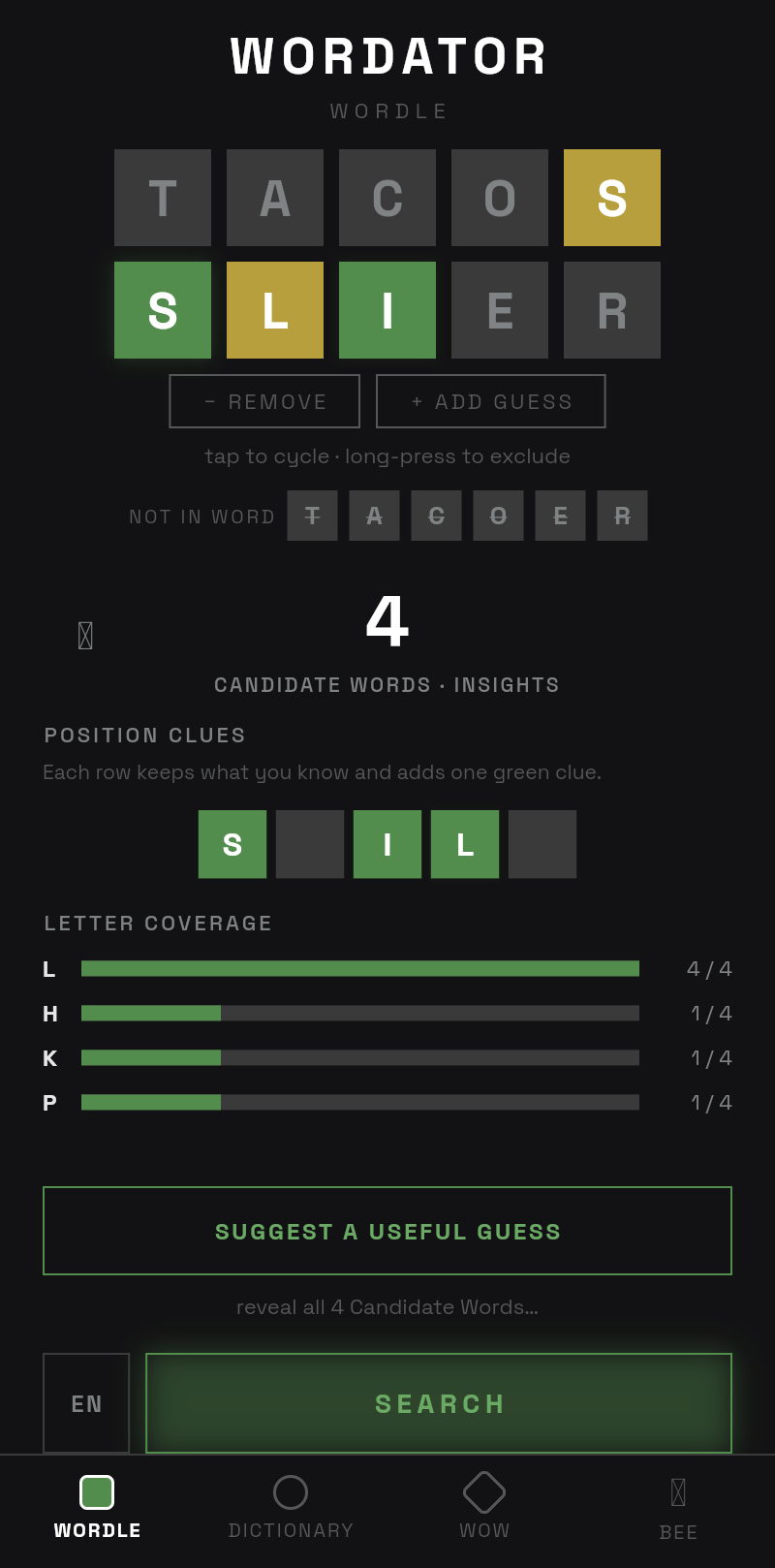
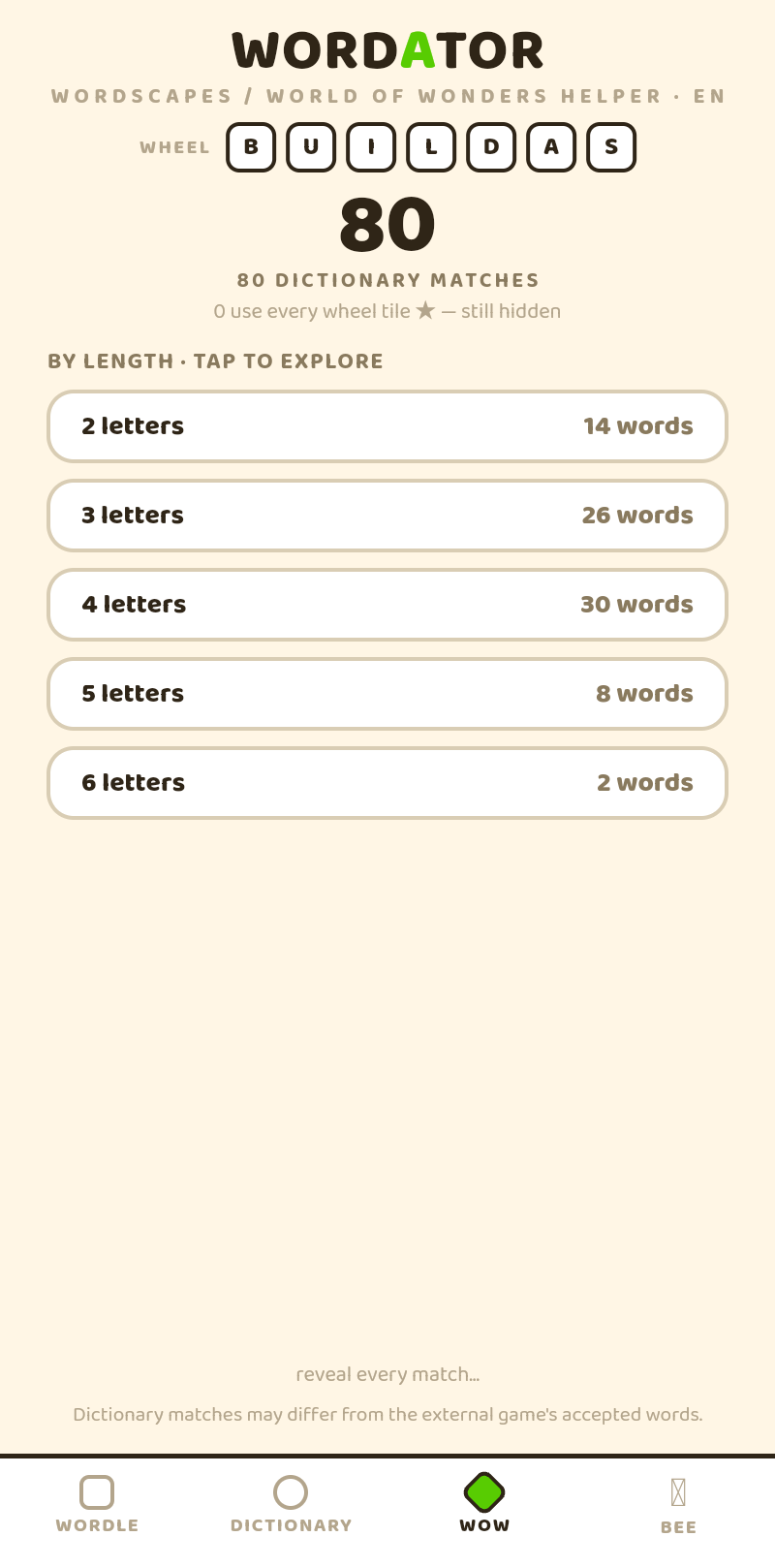
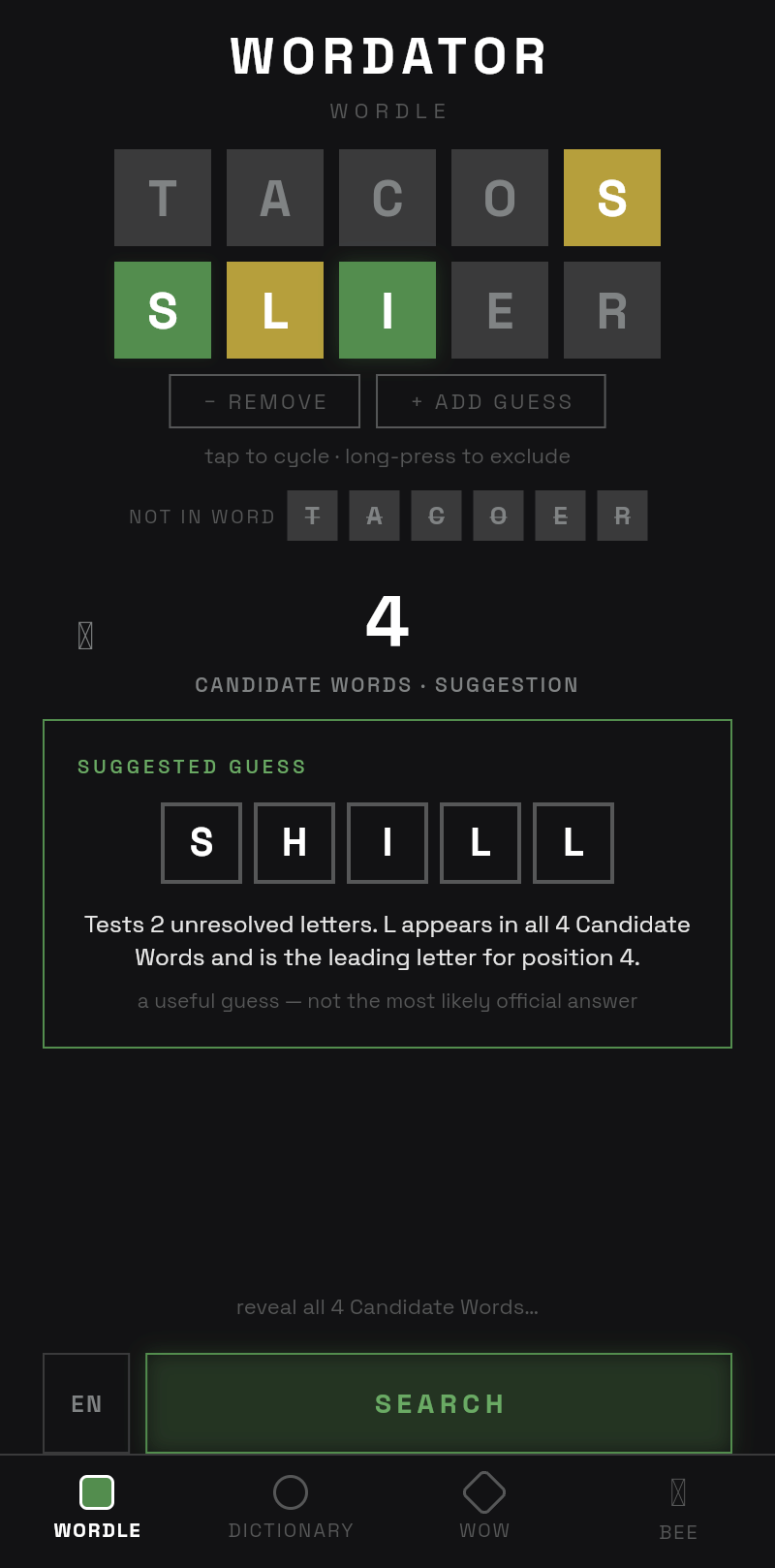
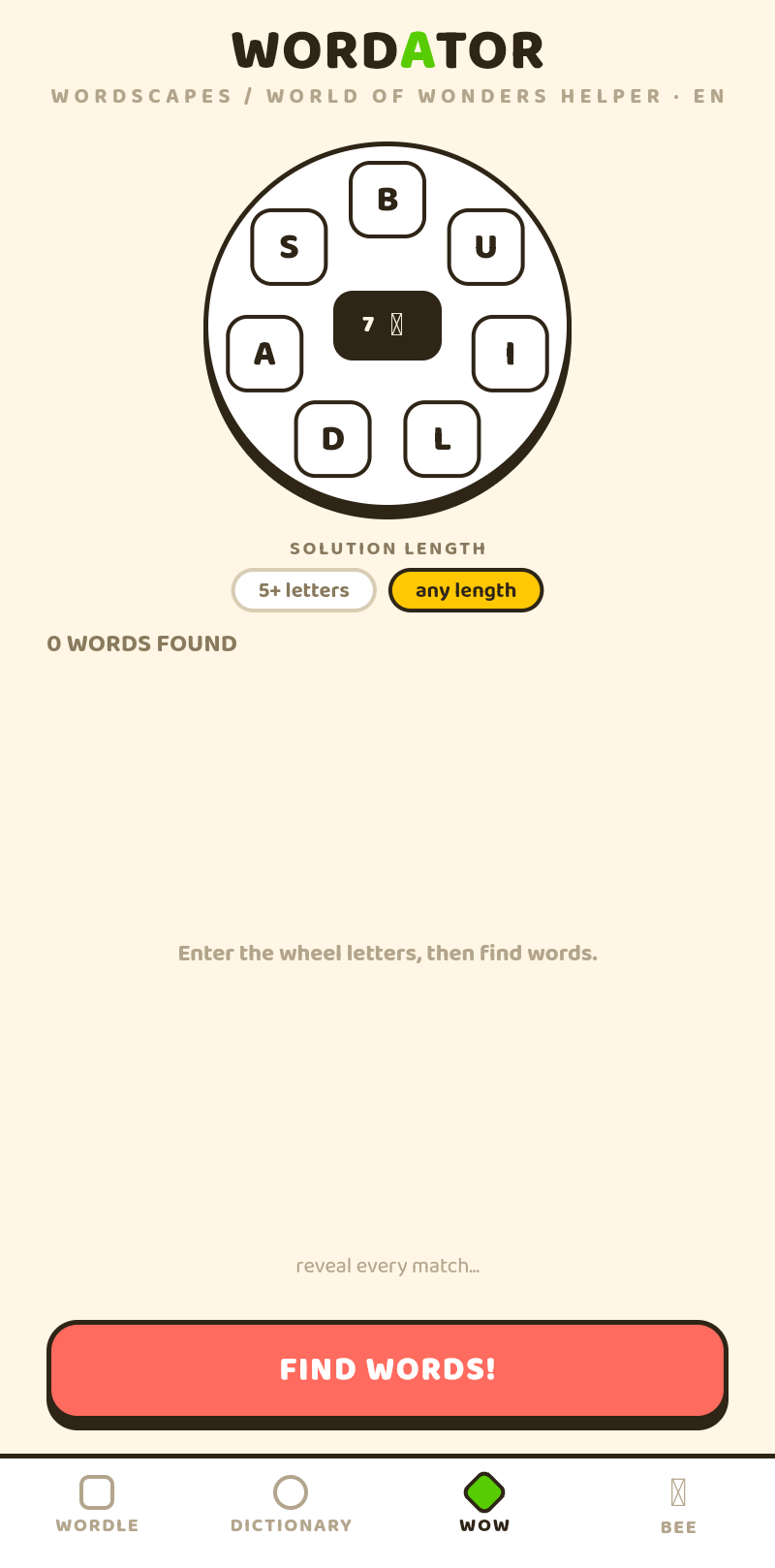
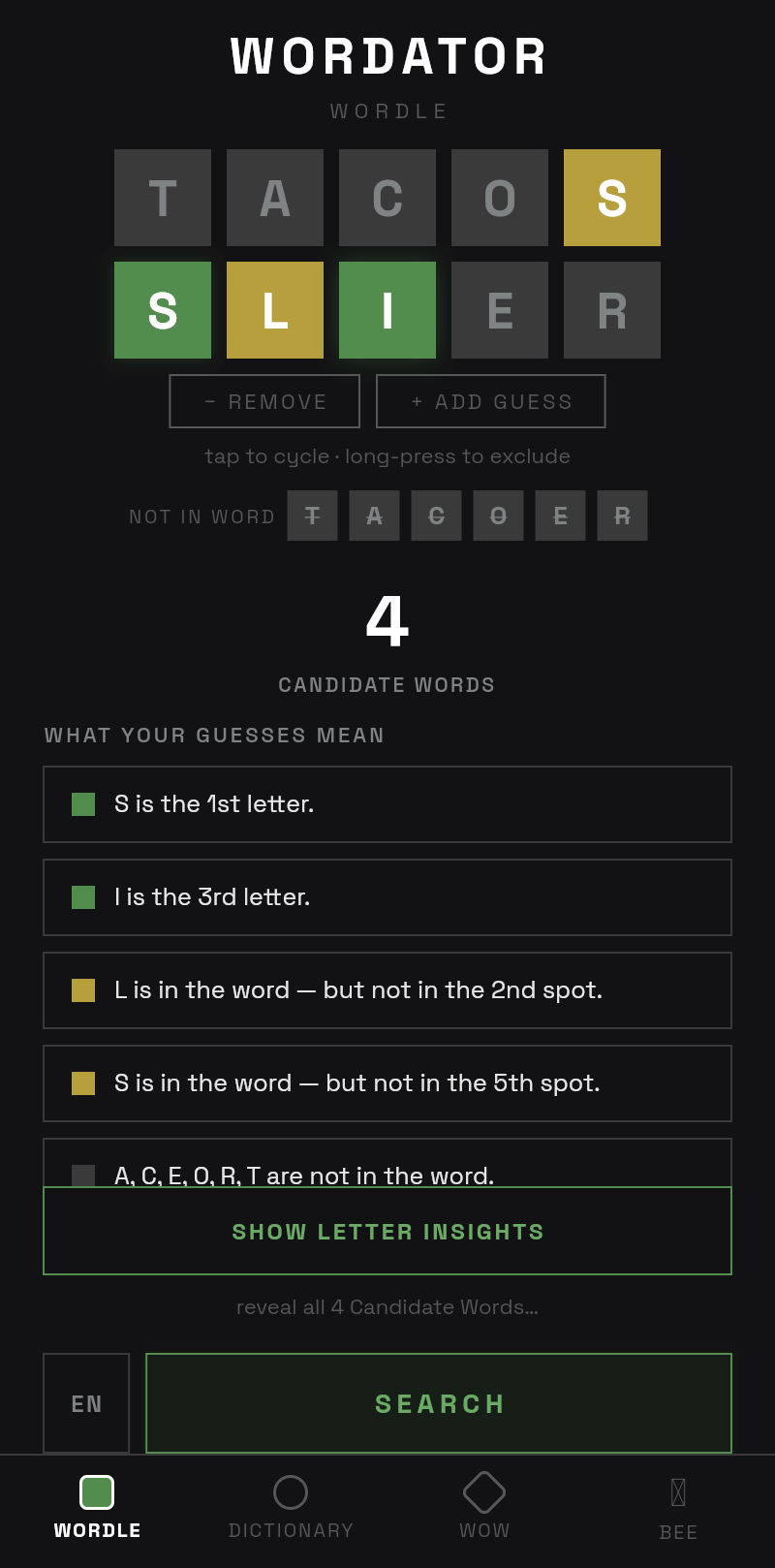
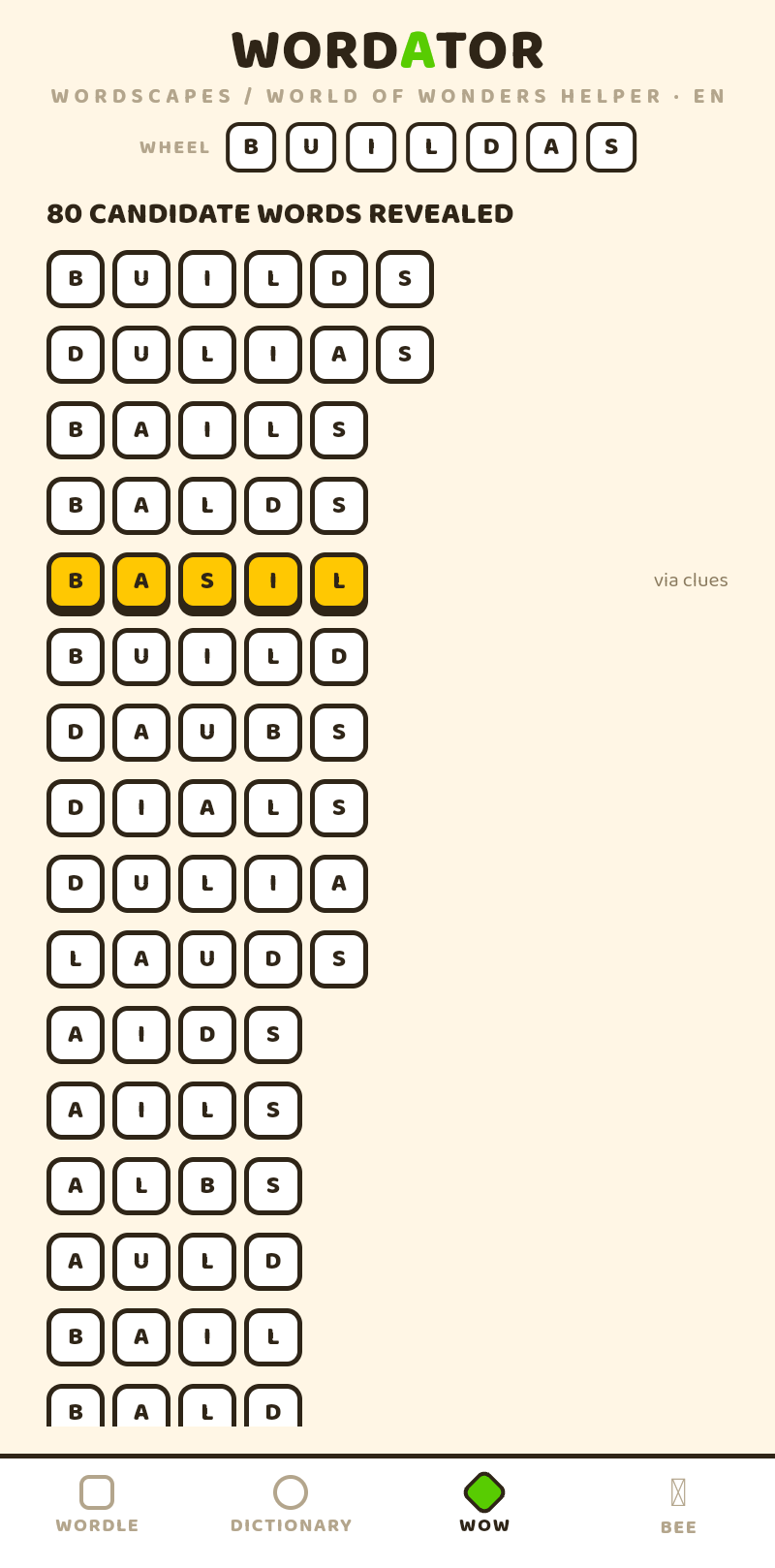
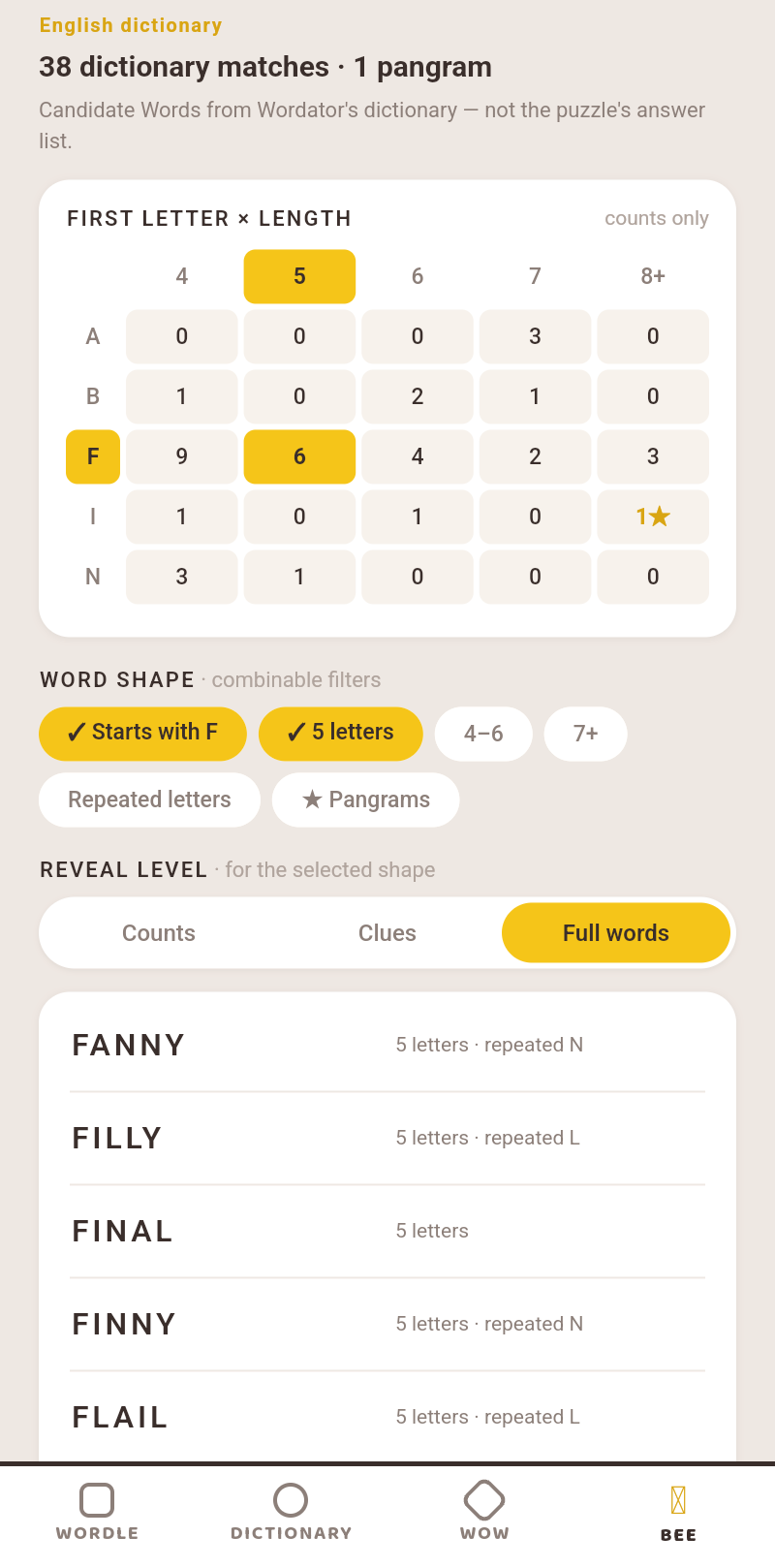
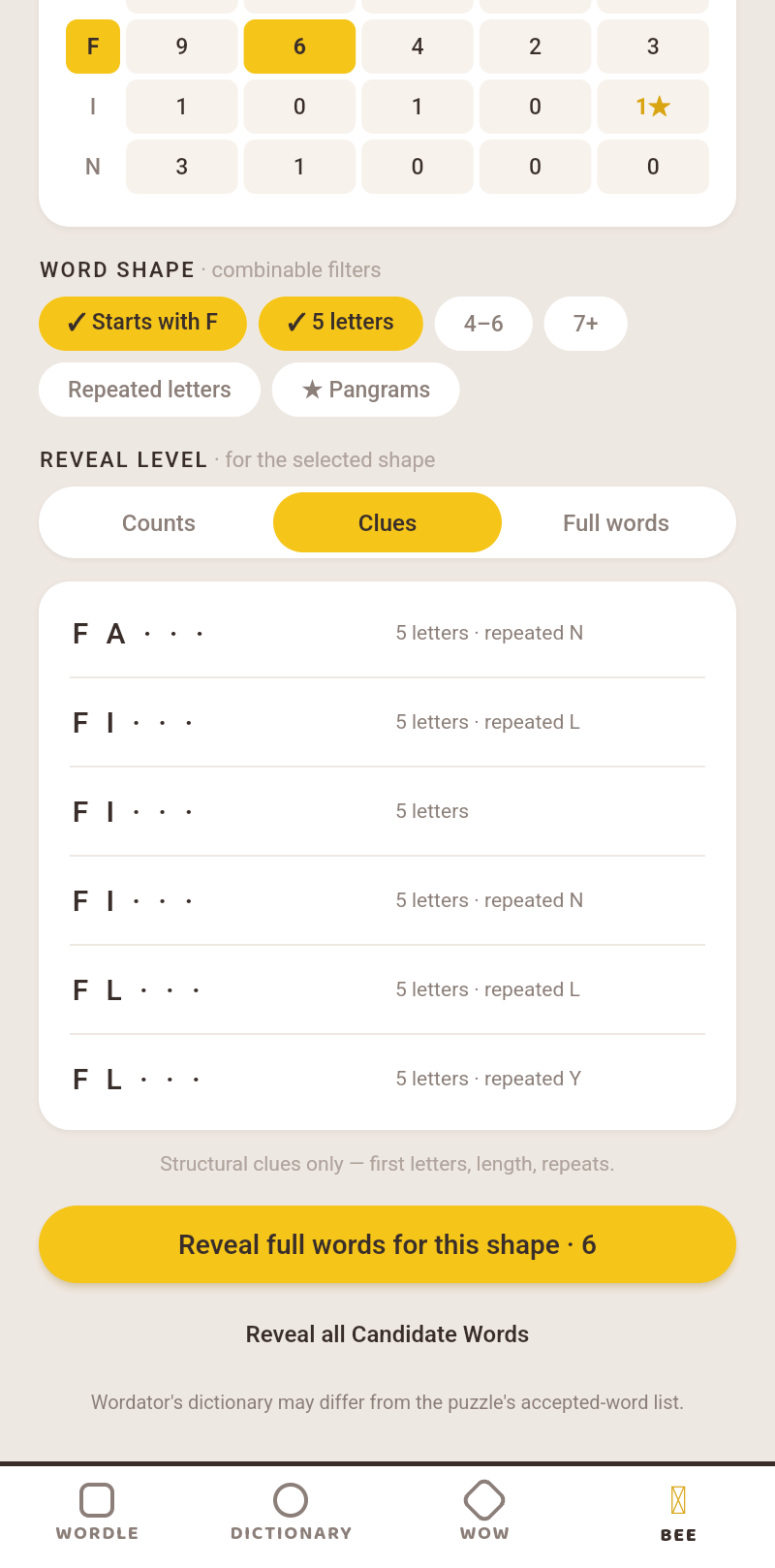
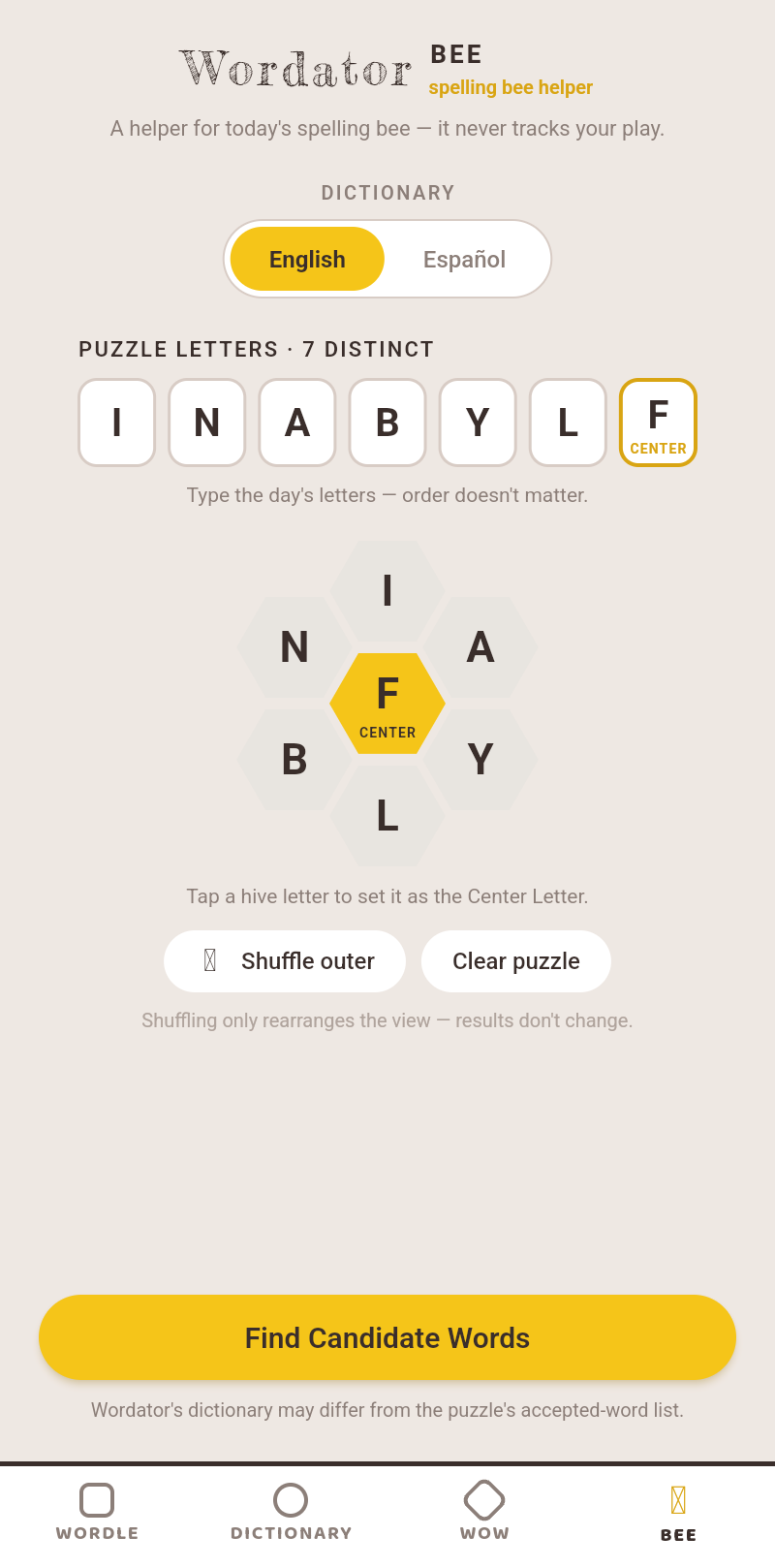
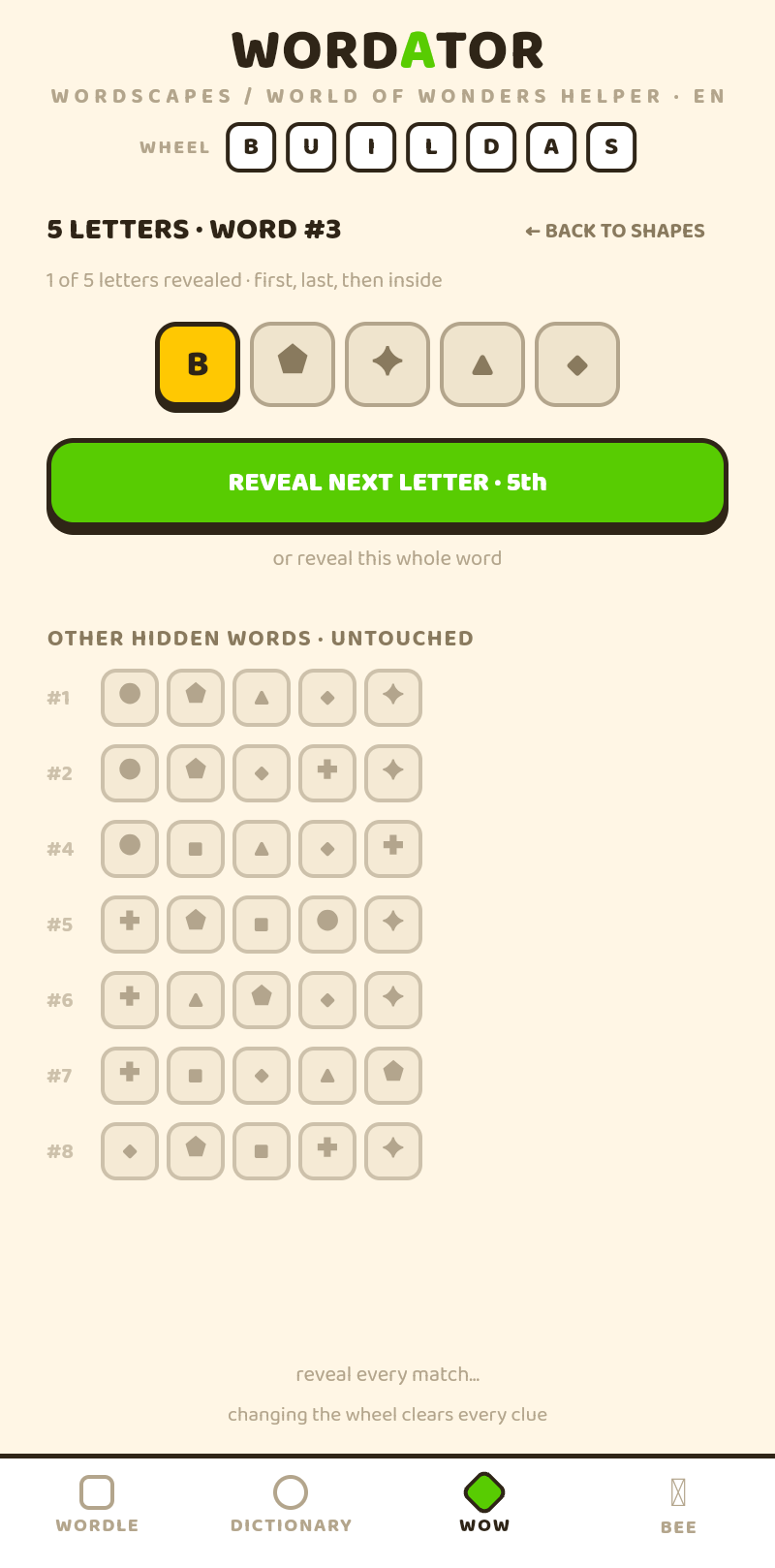
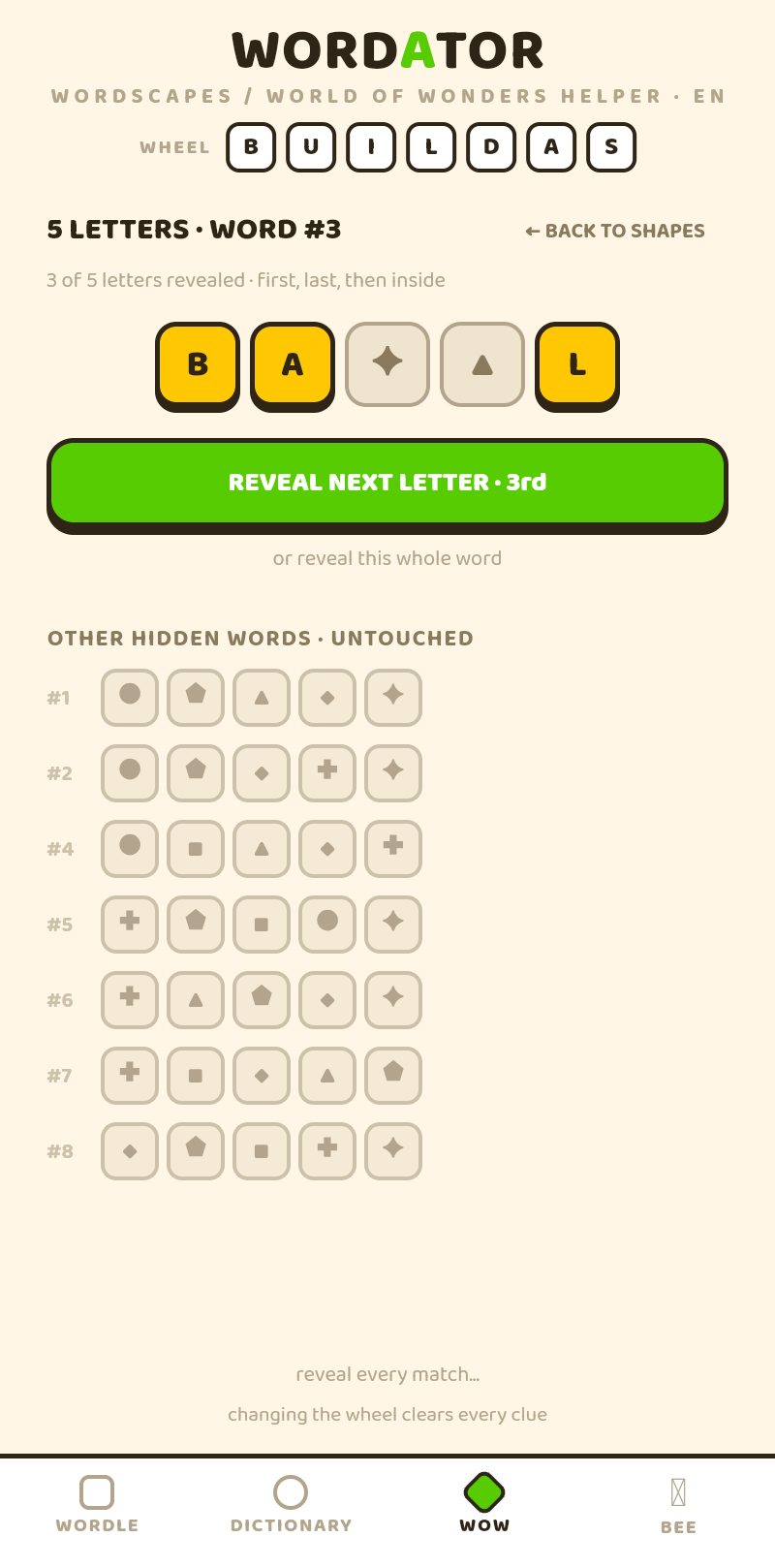
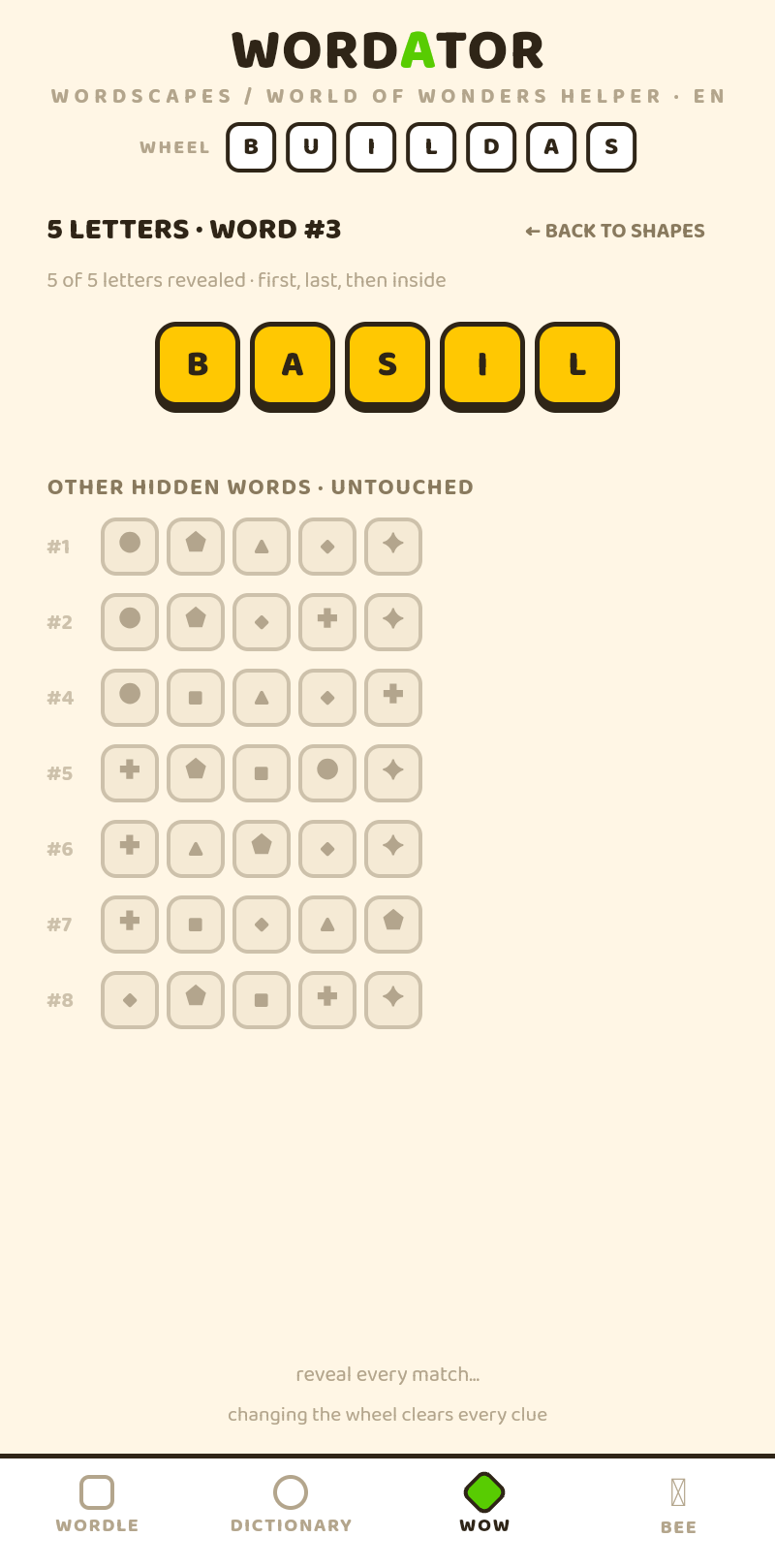
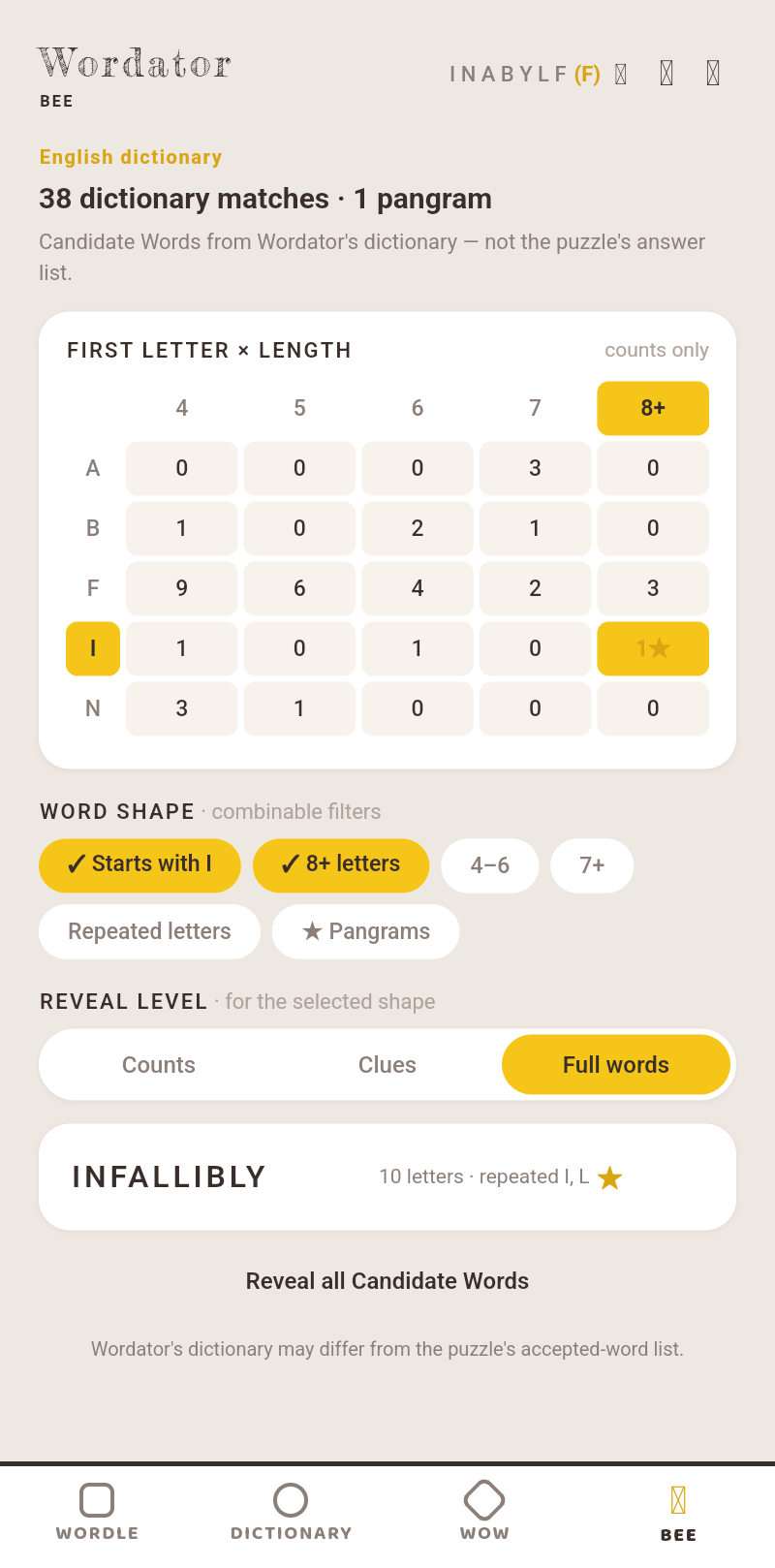
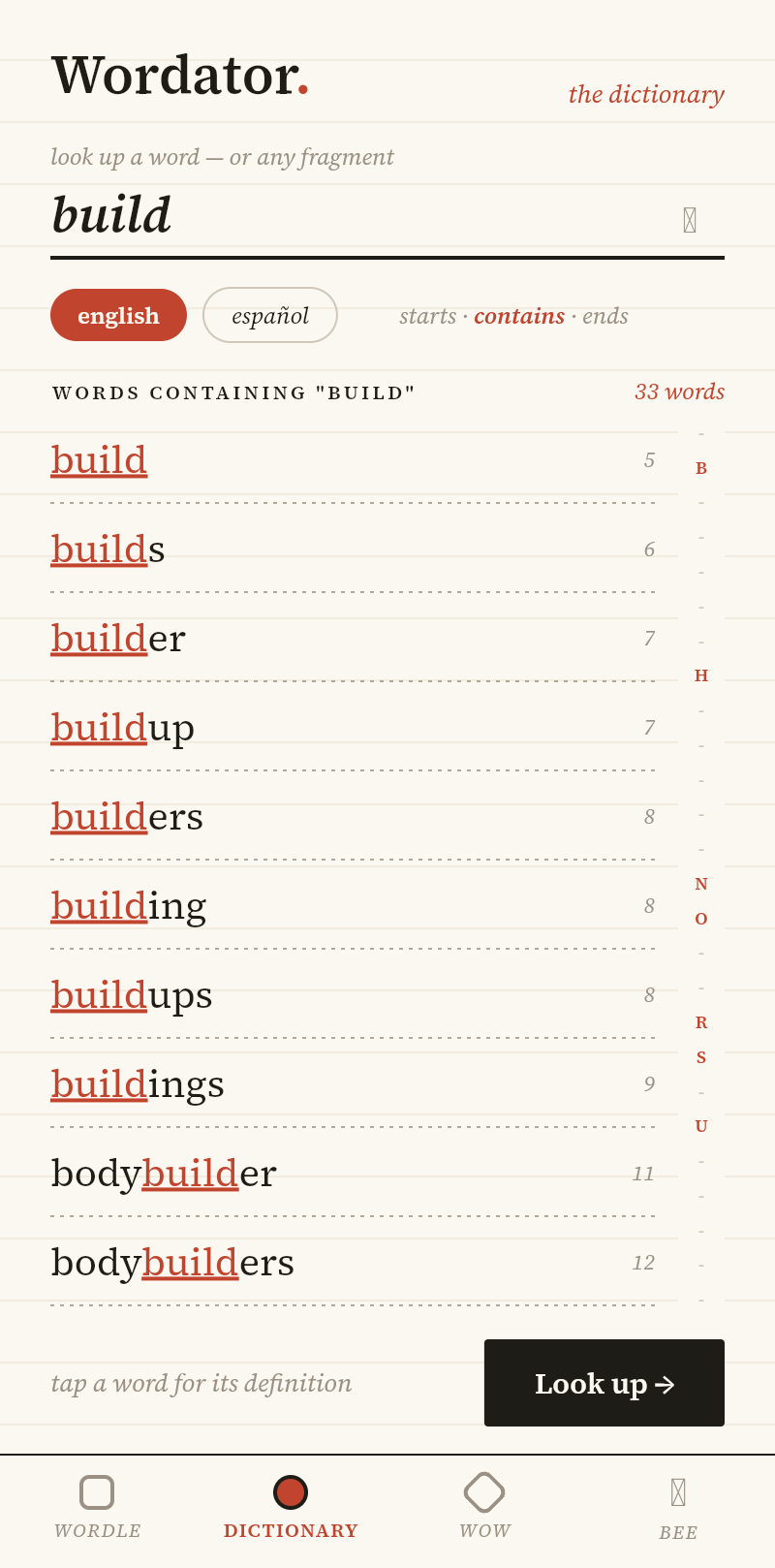
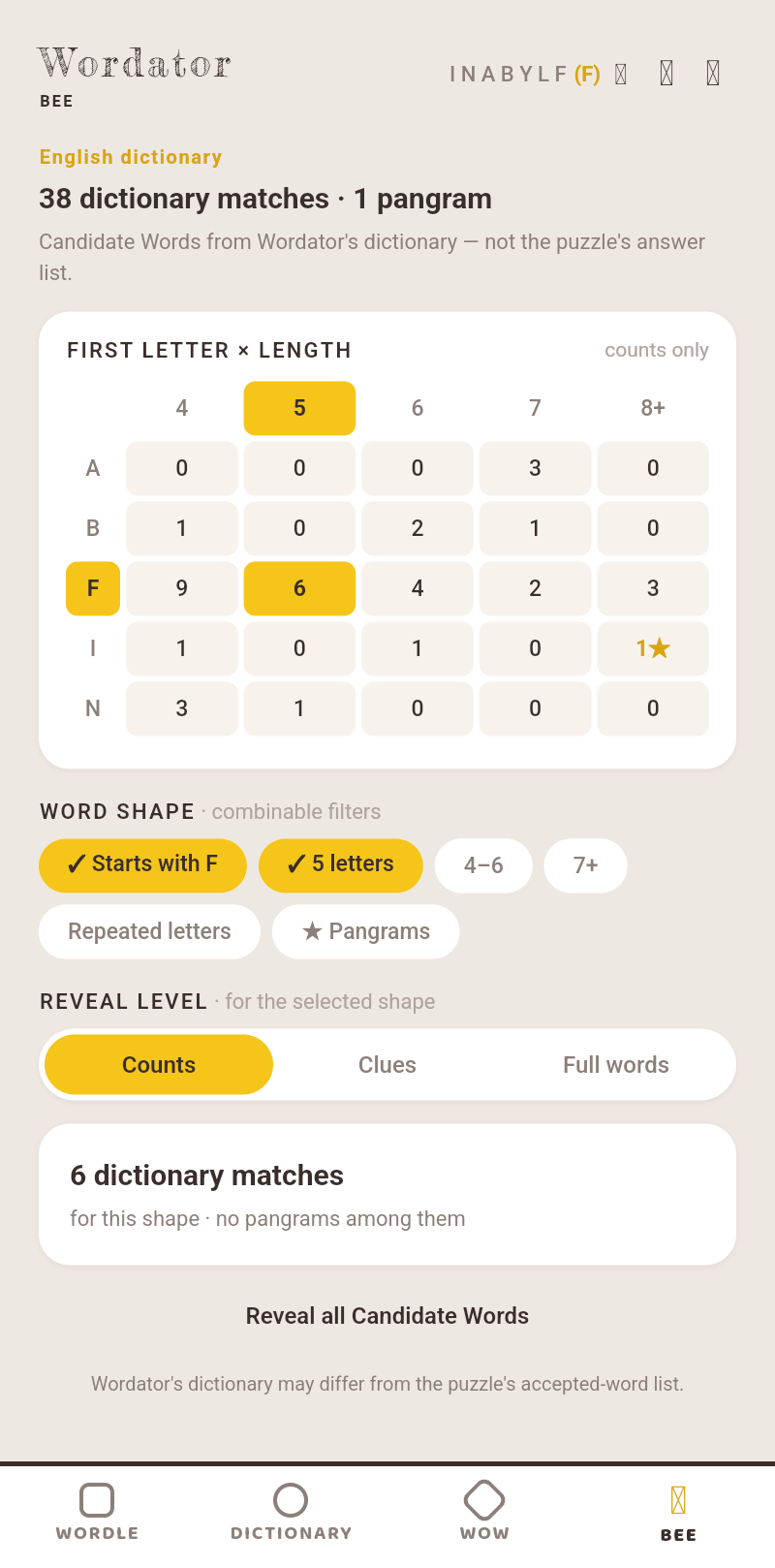
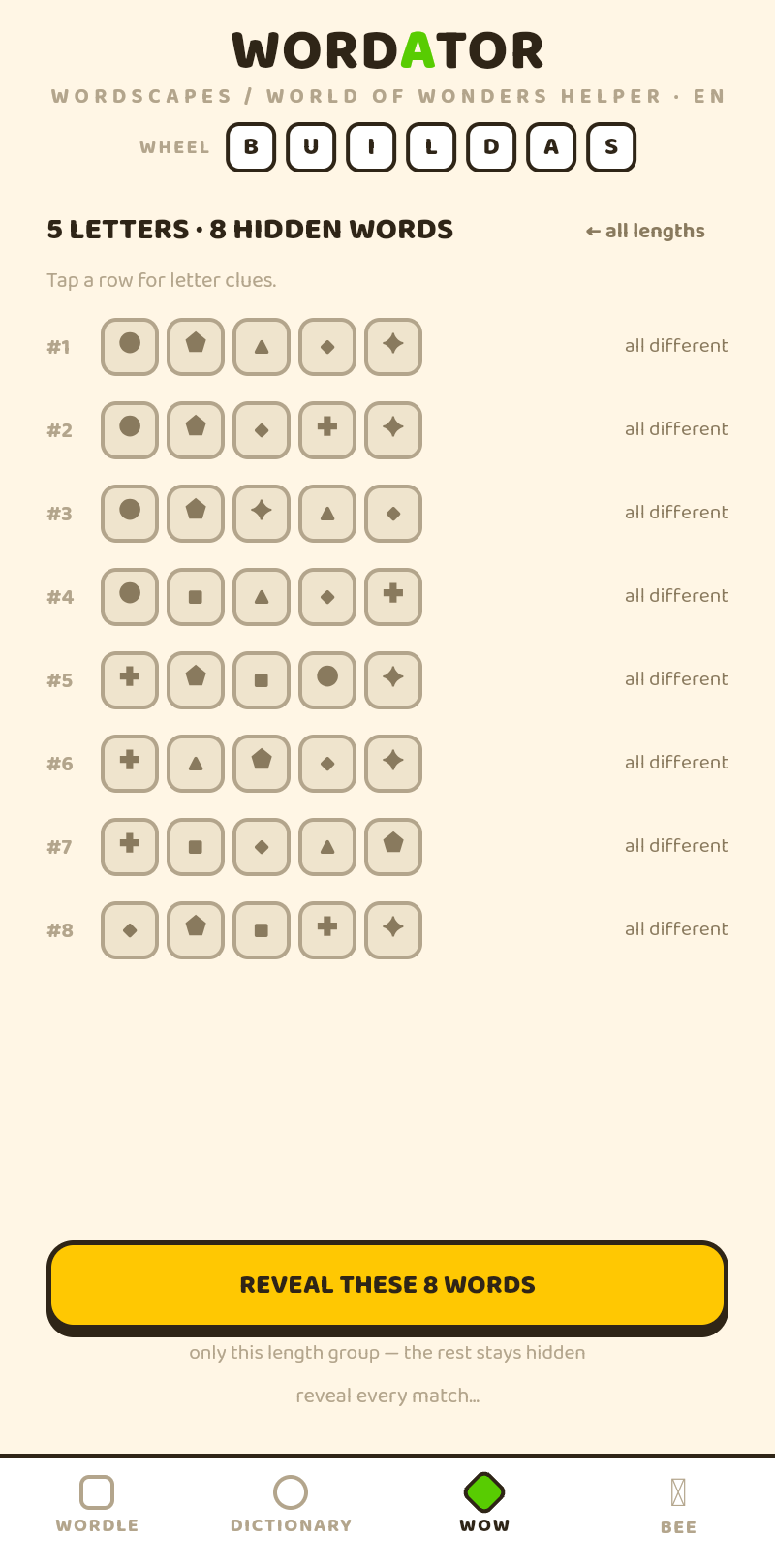
Four tools — Spelling Bee, Wordle, WOW, and a dictionary search — sharing one rule: when there's a puzzle to protect, Wordator withholds. Results open as a count, then narrow through filters and hints, and only become full words when you explicitly ask. Wordle coaches you on which letter to test next without naming a word; Spelling Bee gives you the first-letter × length grid players already use, made interactive. Dictionary is the exception — it's a lookup, not a puzzle, so it just answers.
It works like a good trainer: it nudges and guides you through the game instead of playing it for you — which also makes it a quiet vocabulary coach for English and Spanish learners. Everything runs against bundled English and Spanish dictionaries — fully offline, no word server.
How we built it
The legacy app is committed at legacy_app/ — 16 Dart files, 3 test files, two
screens. The rebuild in app/ was done with Codex and GPT-5.6 — and Codex ran
the whole campaign, not just the code:
- It analyzed the Build Week rules and helped scope what could ship in a week.
- It researched the most-played word games in English and Spanish, filed as GitHub research issues that became the project roadmap — every feature started as one of those issues.
- Spec-first, not prompt-and-pray: Codex read the legacy code and wrote
LEGACY_BEHAVIOR.md— a behavior spec of what the old app actually did, including a duplicate-letter Wordle rule I'd gotten wrong — before touching the new code. - I wrote a domain glossary (
CONTEXT.md) that fixes the product language. It explicitly bans the word solver. That one line is why this is a hint generator and not another answer dump. - Codex rebuilt against the spec: modular architecture (domain / providers / repositories / ui per module), Riverpod state, 32 test files / 137 tests.
- Two tools that never existed — Dictionary and Spelling Bee — were designed and built entirely inside the submission week.
- It even wired up the deployment: Cloudflare Pages behind wordator.io.
Challenges
The interesting failures were about taste, not code. Codex is excellent at finding shortcuts in UI workflows — and a shortcut is not always the intuitive way to use an app. More than once I rejected a working implementation and had it redone the way a person would actually want to touch it (the commit history keeps the receipts). AI ships something workable; human taste is the difference between working and five stars.
Accomplishments
- The philosophy isn't just written in this description — it's a control on screen. Every puzzle mode has a reveal switch (Counts | Clues | Full words): you don't have to take our word for "hints, not answers", you can tap it.
- 16 files → 248. 3 test files → 32 (15 tests → 137, all passing). Two game modes → four; Dictionary and Spelling Bee are new.
What we learned
A rebuild with AI works when the human writes the spec and the glossary first. The glossary turned out to be the highest-leverage file in the repo — it made every generated screen speak the same language and enforce the same philosophy.
What's next
Ship the rebuild to the existing Play Store listing, and grow the progressive-hint model to more games and more languages.

Log in or sign up for Devpost to join the conversation.