-
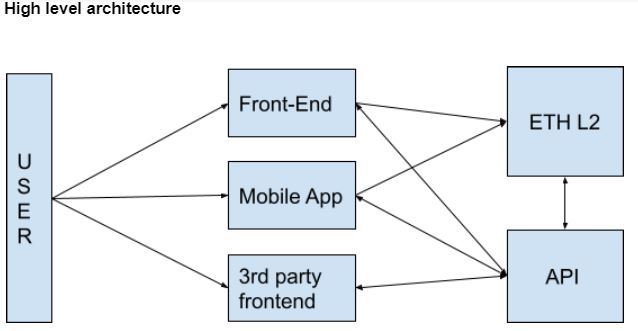
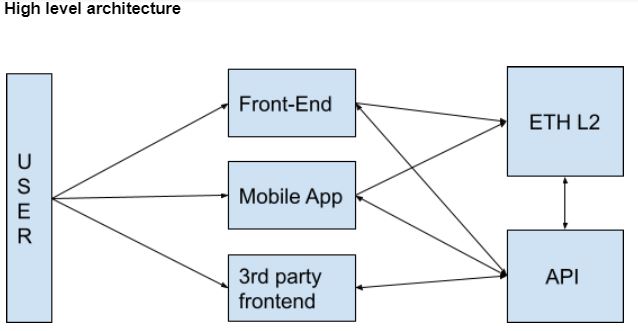
High end architecture
-
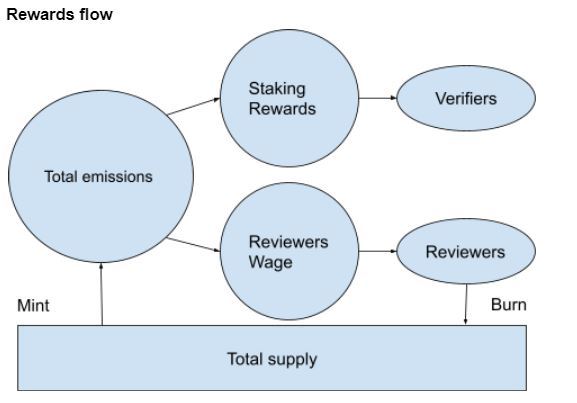
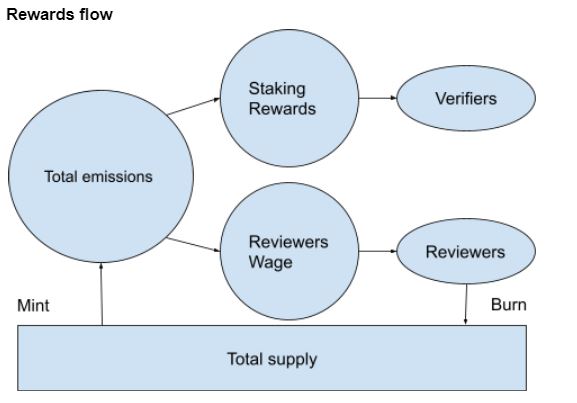
Reward flow
-
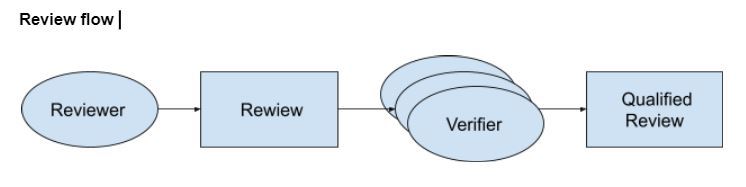
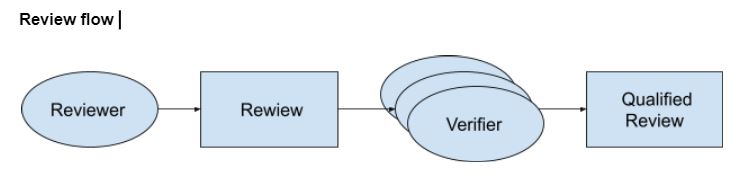
Review flow
A decentralized rating platform, which rewards users to provide reviews on product & services, through a verification method that provides higher returns to the more consistent ones.
Inspiration
The most famous rating systems that we use everyday to choose a restaurant or a particular product are centralized, not open source and not fully data transparent. In addition the quality of the reviews is not standardized and often poor, and at worst some are even manipulated for marketing, competition or rivalry purposes. We thought of creating a system to make all the data fully available and free, incentivizing the users to actively work to produce good quality reviews of services, and in the future eventually also of products.
What it does
FreeOP is in the designing phase, but we have already sketched and simulated part of the architecture. The platform provides incentives for both reviewers and reviews quality verifiers through a token, in different forms. In addition, it offers the possibility for service providers to boost incentives on their products, in a decentralized and transparent way. The goal of the protocol is to provide high quality data freely available, to create value and to make easily visible market manipulation attempts..
How we built
Actors:
In the platform we defined four actors:
User: It can be a normal user who accesses the reviews data through a frontend that interfaces with the protocol. At the beginning we’ll start with our own frontend but the idea is to develop a free accessible API in order to incentivize other people to retrieve and process our data using it or querying directly the smart contract. Another possible User could be a private company, that is interested in comparing our data with theirs, or just show a different visualization or processment.
Reviewers: they are the actors who input the data in the platform, and have to go through a verification process (not properly a KYC) in order to demonstrate their unicity (ex, BrightId). They are rewarded for their work according to a model based on how many reviews they have done, their quality, and the amount of token burnt.
Verifiers: they are a pool of people who are entitled to rate the reviews in terms of legitimacy and quality. They also have to go through the same verification process of the reviewers and stake a determined value of the token. For each review a set of verifiers will be randomly selected for the verification, and their staking return will be affected by the number of reviews qualified.
Service providers/ product owners: Once the application will be properly working, service providers might be interested in advertising their products receiving more reviews. The system will natively offer the possibility to boost the rewards on particular products for a determined period of time. The SP will buy the preferred token amount, decide the boost percentage and deposit it in the smart contract.
Tokenomics:
Emissions: the emissions of tokens are directed either to reviewers or to verifiers. The total amount of emissions is decided on a weekly basis according to several parameters: the number of total reviews in the platform, the new approved reviews of the week, the total number or active contributors and of course the current supply. Then the emissions are divided into two pools: the staking reward pool and the reviewers wage pool.. There is no way to have additional returns without participating actively in the platform.
Stake (only for verifiers): the staking rewards are dynamically assigned according to the work contribution to the platform, if the verifiers will process all the review tasks they will be assigned to, they’ll receive 100% of the staking reward allocation, otherwise less and the rest will be burnt. The staking is locked for a minimum period of time, and cannot be claimed before the end of the period. The quantity and the time span of the lock gives to the verifier the possibility to be assigned with more reviews.
Review placing (Burn) & reviewers return: Doing a review is not free. The minimum cost of a review will be decided weekly according to the token emissions parameters, and the amount paid will be burnt immediately. The reviewers will get a return for the total amount of token burnt, considering the value in dollar of the token at the time of the payment. The time window considered for the returns is a parameter still to be determined. However, the actual return is computed differently for each contributor and it represents a percentage of the reviewers wage pool. This percentage is determined by a score that is derived by the number and the quality of the reviews done so far by the reviewer computed according to the rates given by the verifiers and the fitness rate given by the fitness model (more details later)
The Fitness model
Another important component of our system is the fitness model, which has the aim of evaluating the distance between the estimated “truth” and the reviews. The idea is to compute a fitness score of each single review given the distribution of a subset of the reviews for each product and then compute the difference with the max score. The max score is the maximum fitness, while the subset of reviews to take in consideration should be the last N approved review. We decided to take just the last reviews to limit the risk of the convergence of all the ratings to the most common one, having multiple duplicates just to obtain the reward without providing real information.
The architecture
The chain where the contracts will be deployed is Ethereum or one of its layer 2. A mechanism to compensate the fees will be implemented in order to compensate with extra token emissions if the user (reviewer or verifier) will decide to use the amount of gwei suggested by the platform in particular network conditions. In both cases will be done increasing the percentage of returns within the relative pool. A user who already gets the maximum return would not benefit from this mechanism.
High level architecture (in the attached file) Review flow (in the attached file) Rewards flow (in the attached file)
Challenges we ran into
Unicity of the users Risk of duplicated reviews Complex model dynamics and reward system
Accomplishments that we're proud of
Completion of the conceptual design in less than 3 days Consolidation of the team
What we learned
Technical aspects about crypto-economics and game theory Difficulties and challenges of fully decentralized platforms Smart-contract development requirements
What's next for freeOp
Simulation of all the possible scenarios and implementation. The simulation of the tokenomics will be done modeling the environment with open-ai gym and training reinforcement learning agents to find the equilibria in the different economic scenarios.
Built With
- apis
- eth
- frontend
- mobileapp

Log in or sign up for Devpost to join the conversation.