Inspiration
Word Cardzy is my first project whose code was implemented entirely with AI agents.
The idea came from my own experience learning a new language. Most vocabulary apps rely on complicated, opaque review algorithms. They ask users to rate how familiar a word feels, but rarely explain how that choice affects when the word will appear again. When I want to review a specific chapter, I also cannot easily locate and organize the exact words I need.
This led me to three questions:
Can vocabulary learning be controlled by the learner instead of an algorithm?
Can the software remain genuinely simple?
Can anyone understand how it works within three minutes?
Word Cardzy was created around this minimalist philosophy.
What it does
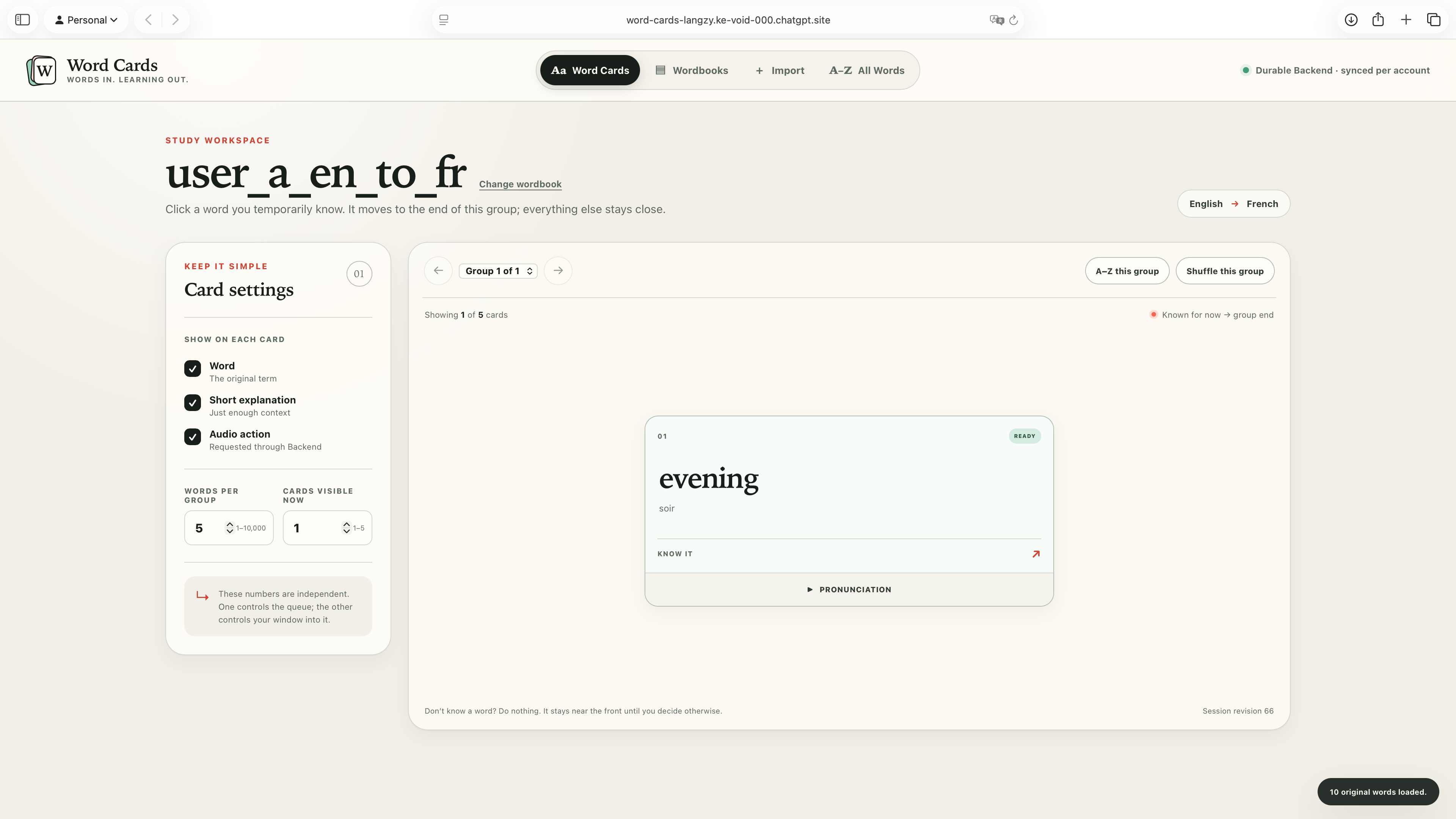
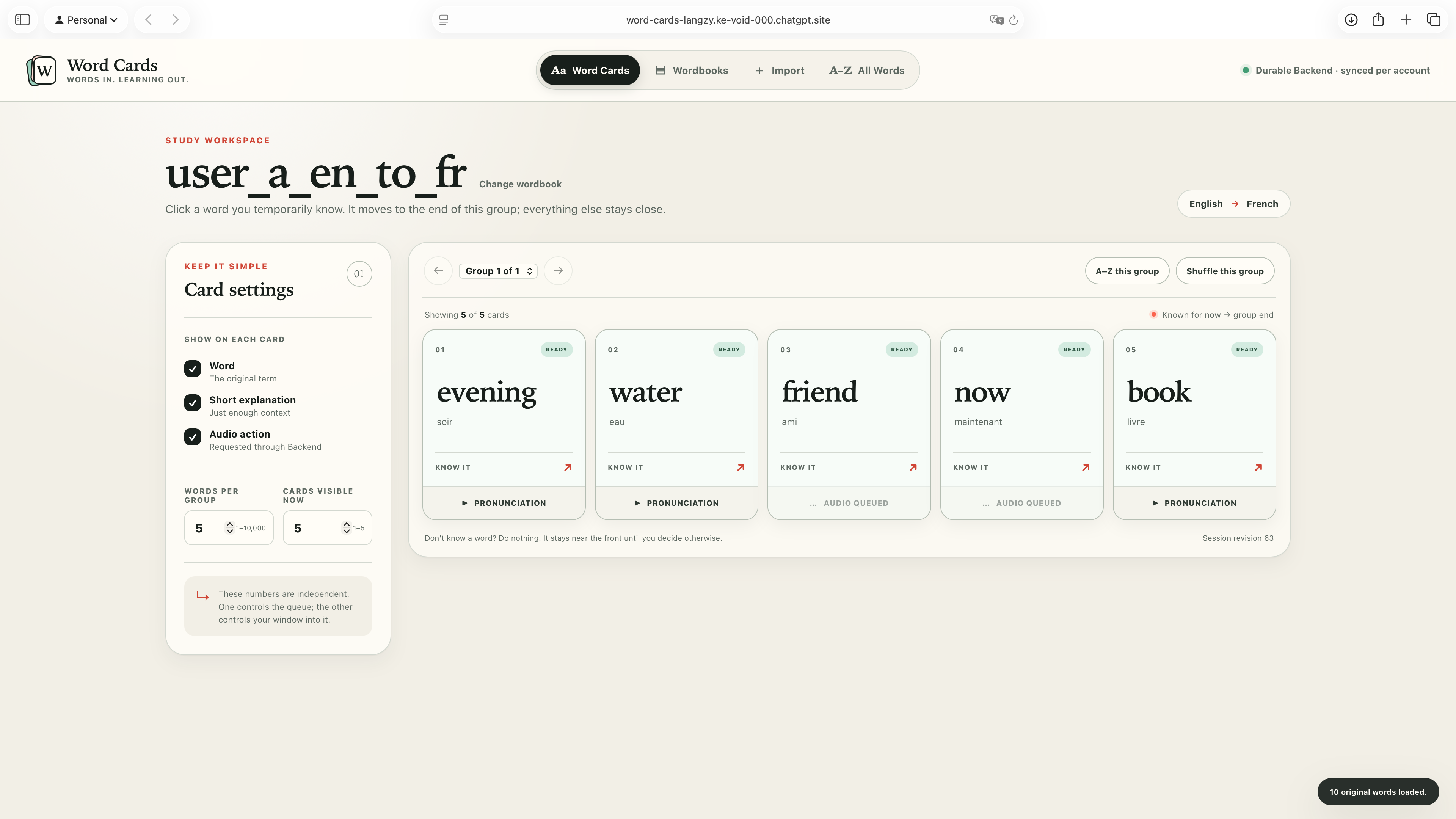
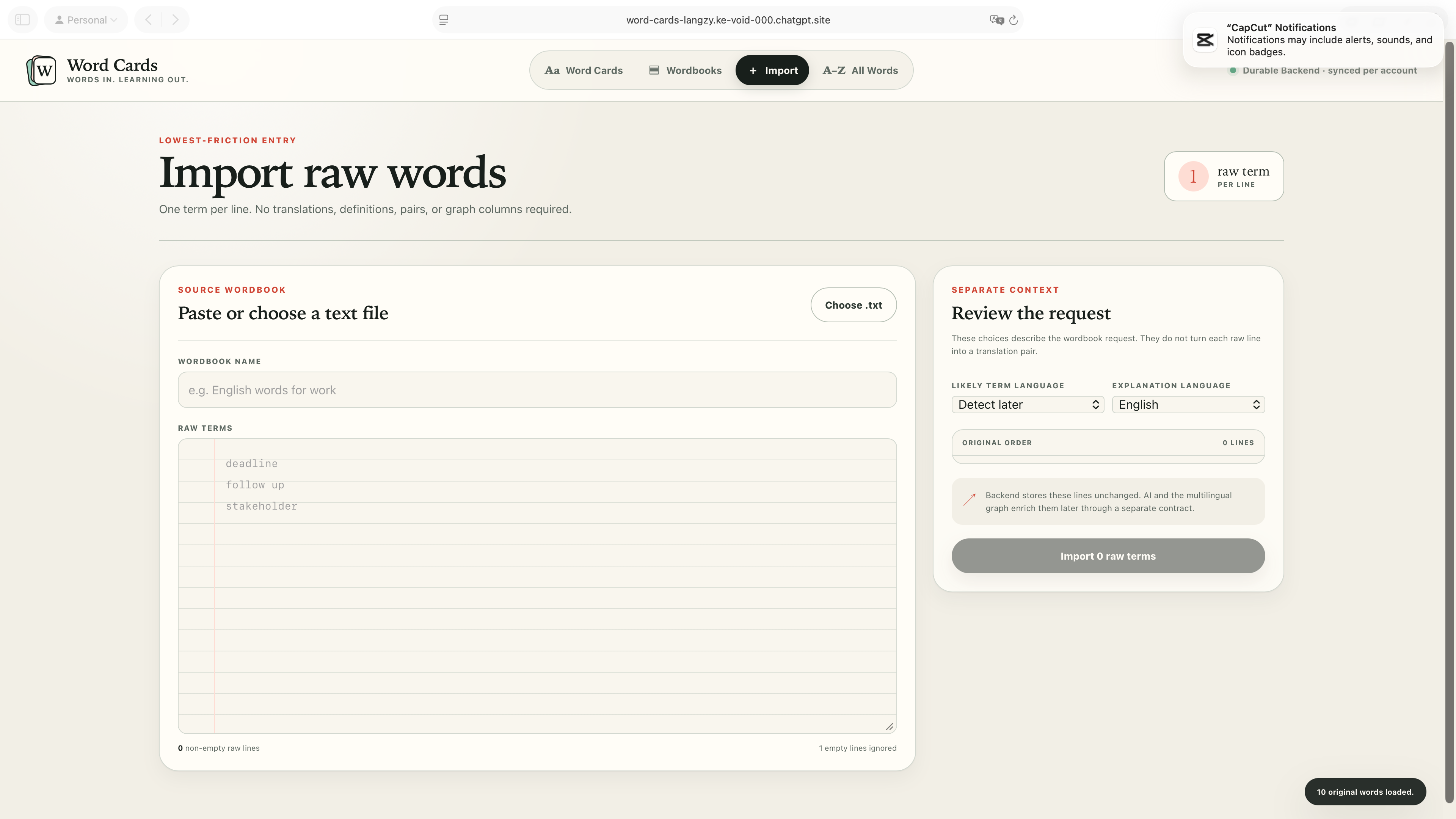
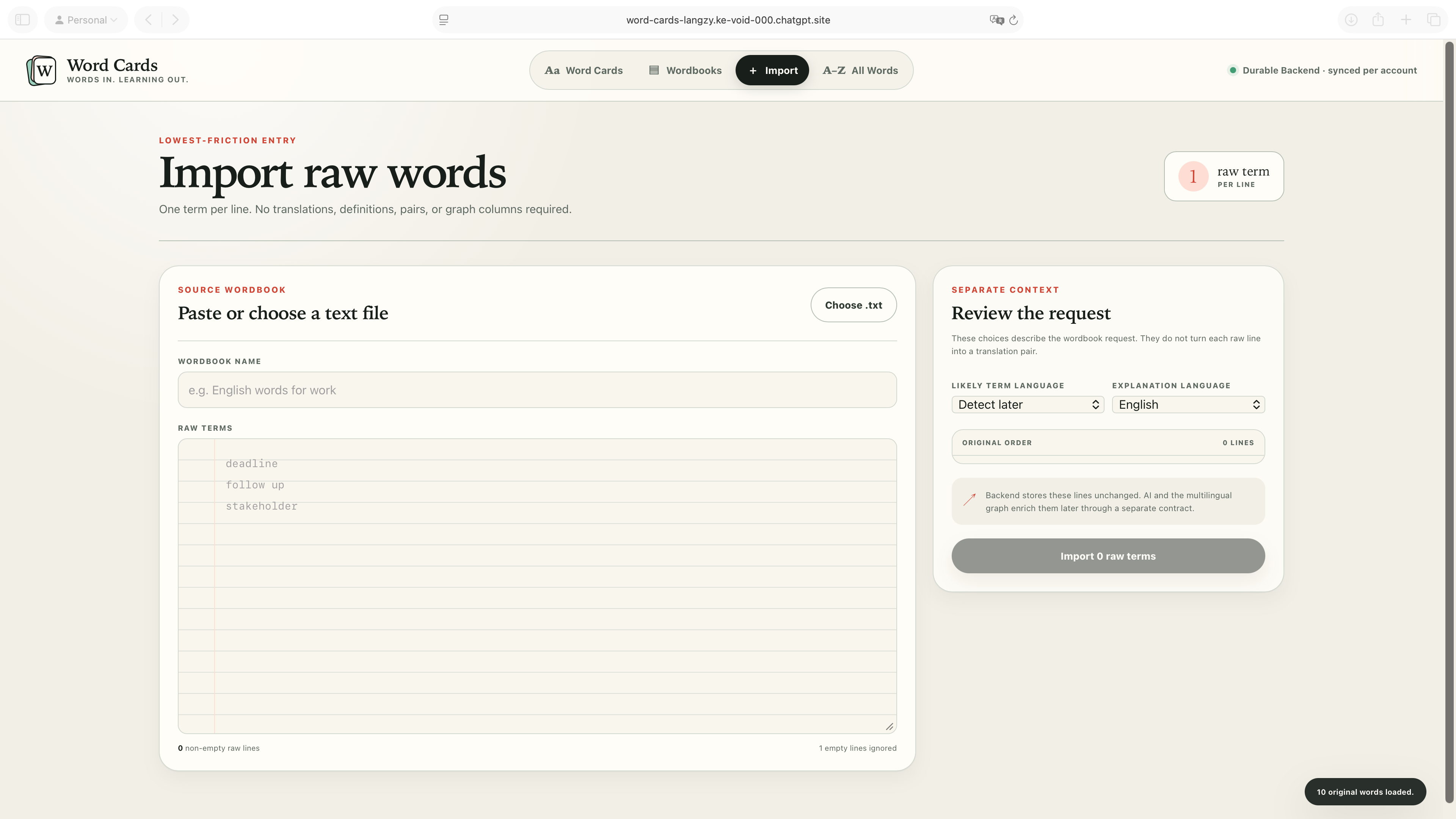
Users can import a plain list of words and choose a target language and an explanation language. Word Cards preserves the original list and lets users control their own study flow, including how words are grouped and which parts of each card are visible.
The intended experience combines three simple layers:
- AI-generated translations and explanations
- TTS-generated pronunciation audio
- User-controlled cards displaying any combination of the word, explanation, and audio
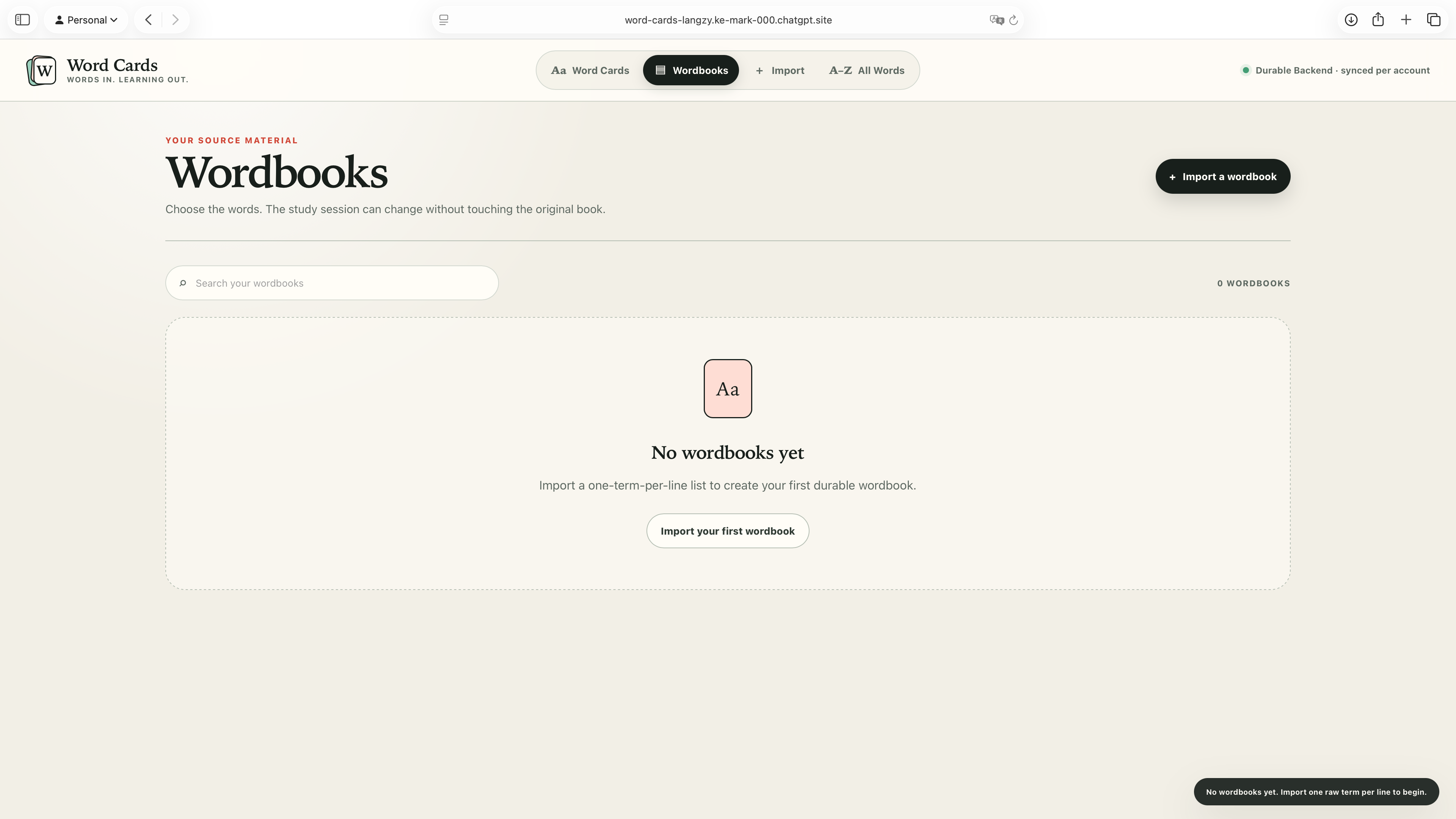
The current MVP focuses on importing wordbooks, browsing all imported words or a specific wordbook, and studying cards without a hidden scheduling algorithm. AI translation and production TTS are designed as replaceable future services behind the existing interfaces.
How I built it
I was primarily responsible for product requirements, system architecture, and workflow design. I divided the project into three development lines:
- Frontend: user interaction, wordbooks, cards, imports, and the All Words interface
- Backend: authentication, user-private data, shared reusable records, processing jobs, and APIs
- Algorithms: future AI processing, multilingual mapping, knowledge-graph maintenance, and speech generation
Because these components depend on one another, I also designed a development-log system. Each AI agent records its starting point, decisions, verification results, unresolved dependencies, and next steps. This allows later agents to continue from verified evidence instead of reconstructing the project from conversation history.
Challenges and lessons
The greatest challenge was maintaining clear boundaries across multiple AI-generated components. An AI agent can produce code quickly, but without strict interfaces and persistent records, different parts of the system can easily make incompatible assumptions.
I learned that AI-assisted development still requires careful human ownership of product intent, data boundaries, test design, and architectural decisions. The most important work was not asking AI to “build an app,” but defining what the app should—and should not—do.
I also learned to preserve user input separately from AI-derived results. Original wordbook rows remain user-private and unchanged, while translations, canonical forms, audio, and future graph relationships are treated as replaceable derived data.
What comes next
I plan to connect production AI translation and TTS services. I am also exploring a personalized multilingual knowledge graph built from each user’s own wordbooks. A future version may visualize that graph from the current All Words page, helping learners explore relationships across languages without taking control of the learning process away from them.
Built With
- cloudflare
- codex
- d1
- next.js
- node.js
- openai
- react
- sqlite
- typescript
- vite
- workers

Log in or sign up for Devpost to join the conversation.