-
-
Woody, The Experiment Brain
-
Inspiration
-
Problem it solves: it is messy to track experiments
-
Agents: One Memory, Five Roles
-
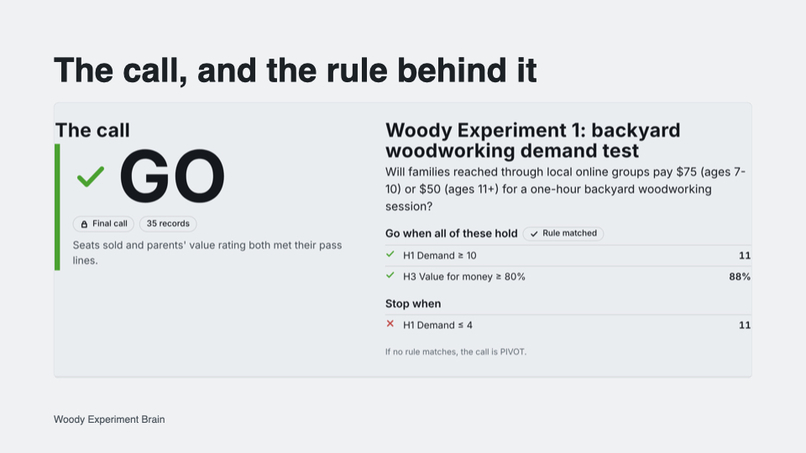
Demo: Rules
-
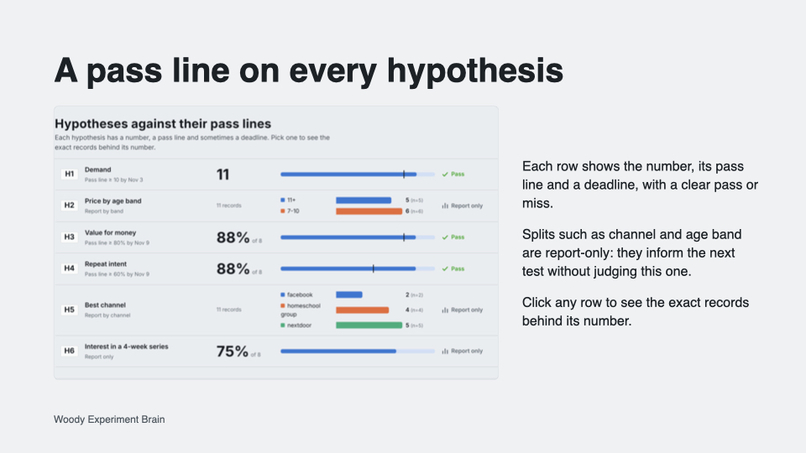
Demo: Pass Line
-
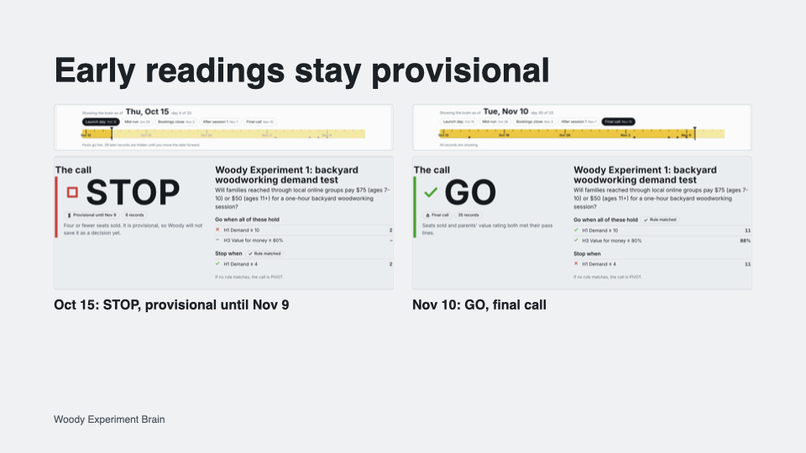
Demo: Early readings
-
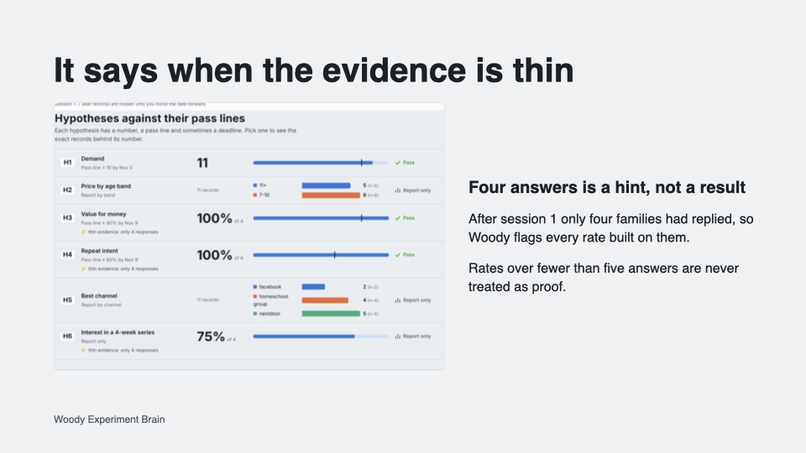
Demo: Evidence building
-
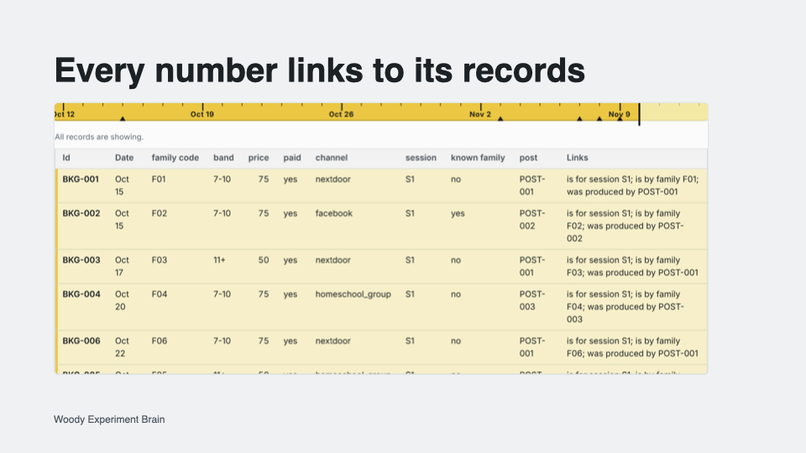
Demo: Timeline
-
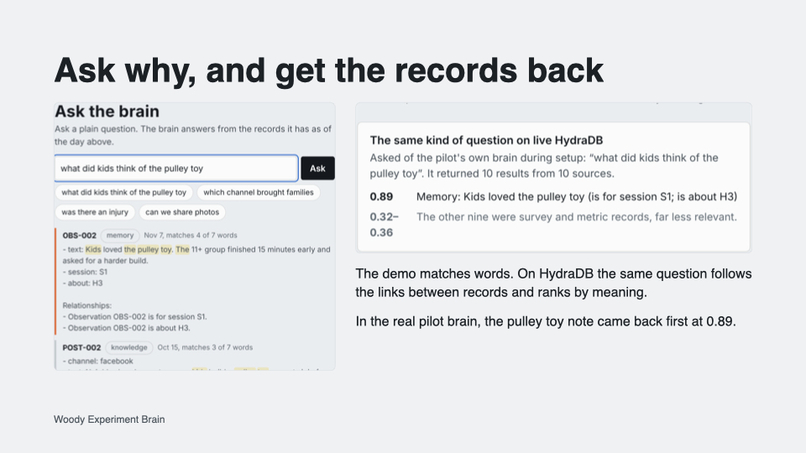
Demo: Ask why
-
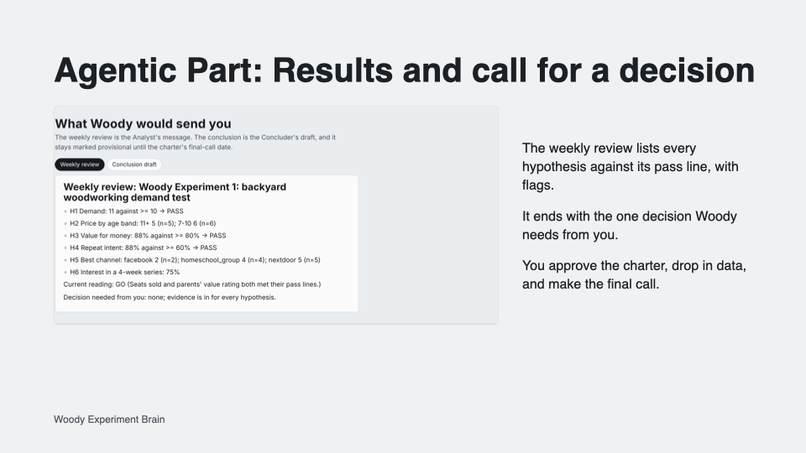
Demo: Agentic part
-
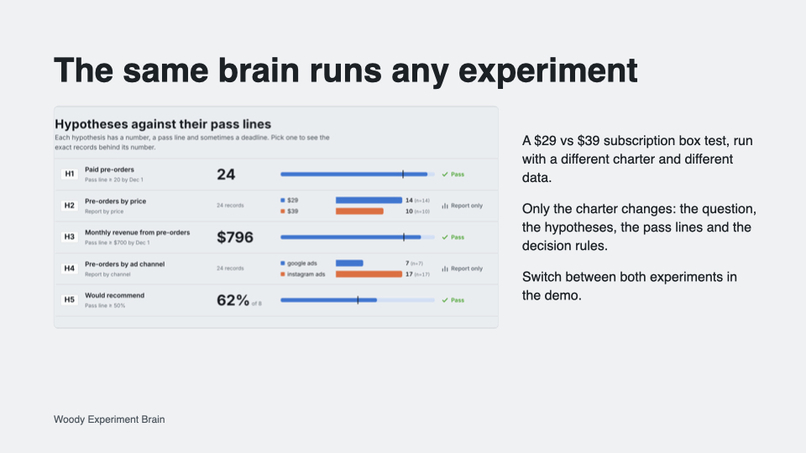
Demo: Run any experiment
-
Benefits
-
What's next
Inspiration
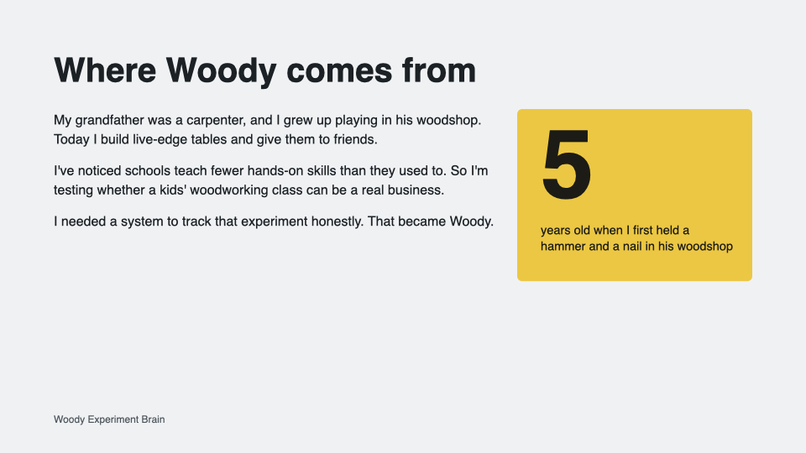
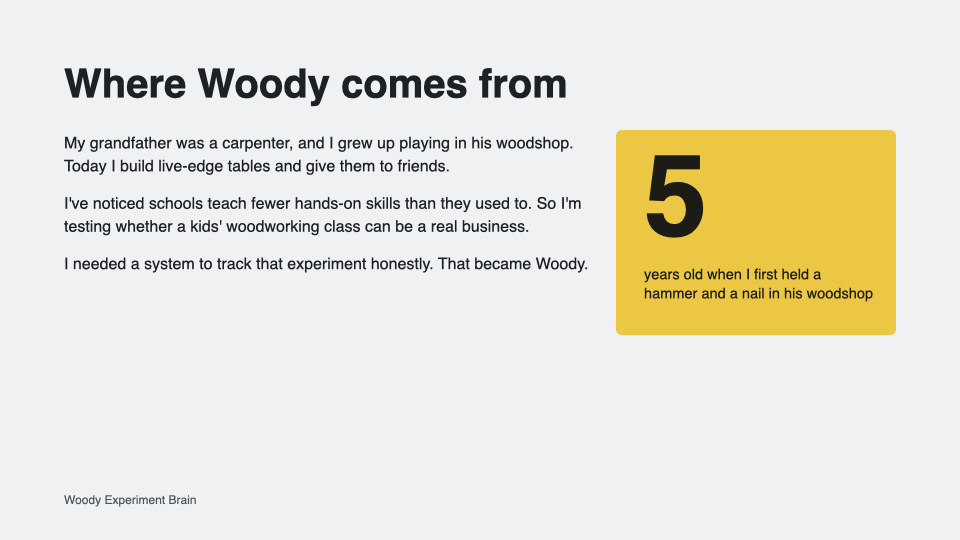
My grandfather was a carpenter, and I grew up playing in his woodshop. I remember holding my first hammer and nail at five years old.
Today I build live-edge tables and give them to friends. It brings me more joy than almost anything else I do. But I’ve noticed that schools teach fewer hands-on skills than they used to, and I think kids lose something when they never get to build anything real.
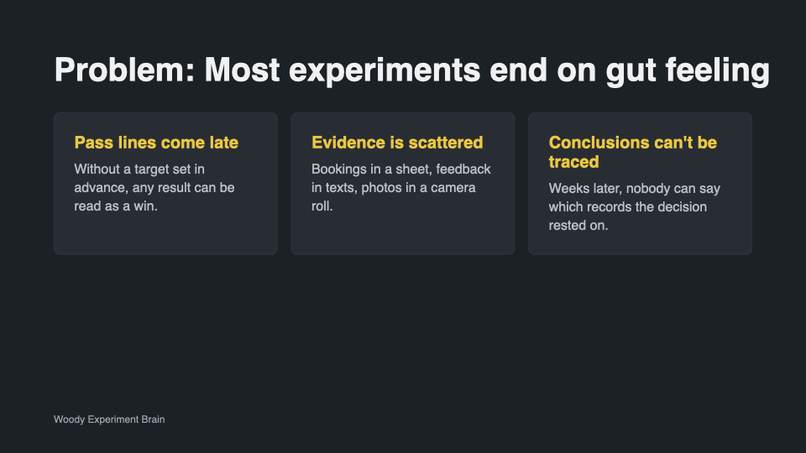
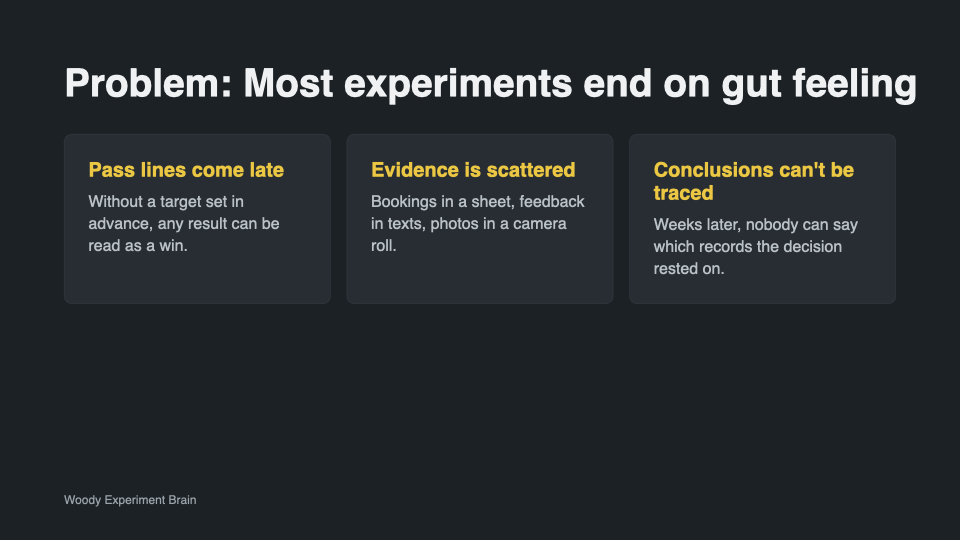
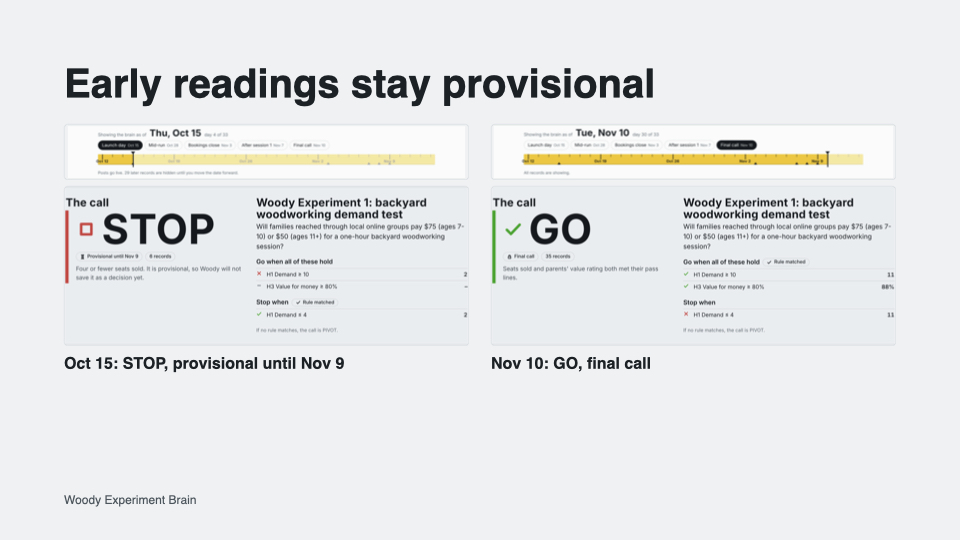
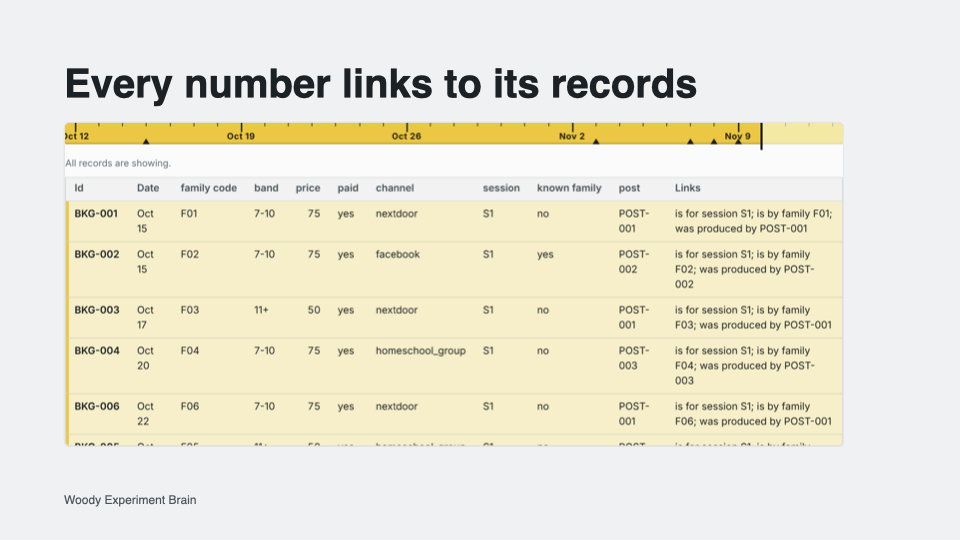
So I’m testing a simple question: will local families pay for a backyard woodworking class for their kids? I didn’t want to run that test on gut feeling and scattered notes. I wanted a system that would track every booking, survey and observation, hold me to the pass lines I set in advance, and tell me honestly whether to go, pivot or stop.
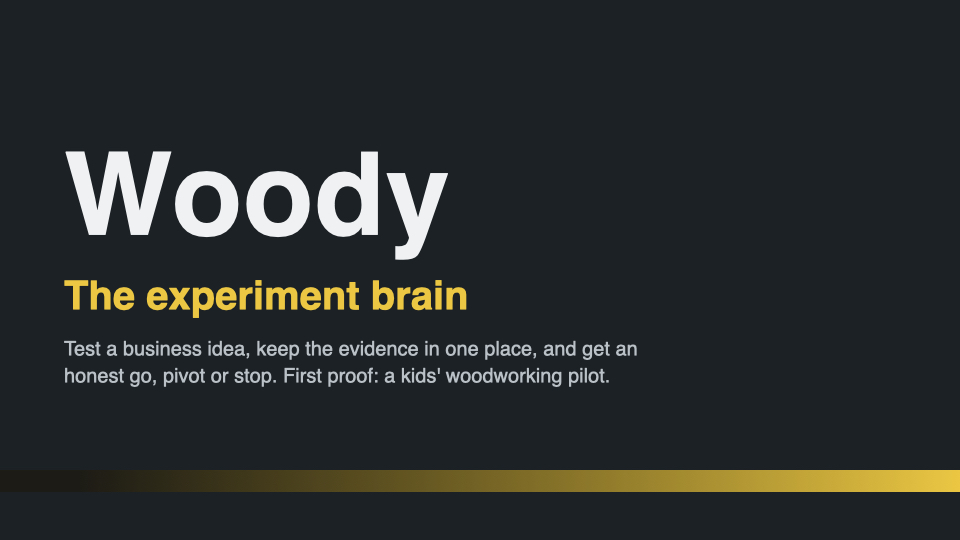
That became Woody, the experiment brain. I needed a system to track the experiments overtime. It began with one kids’ woodworking pilot, and it works for any business idea worth testing before you commit to it.
What it does
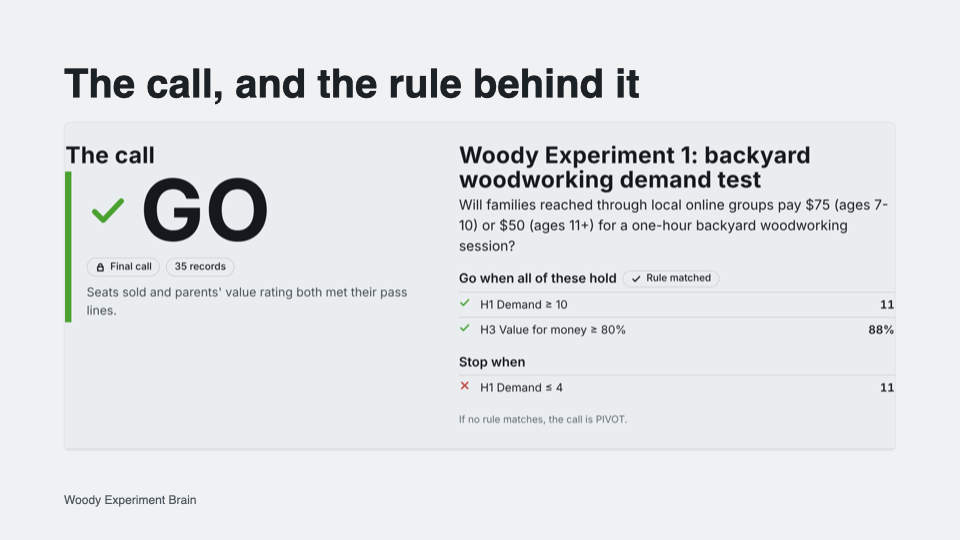
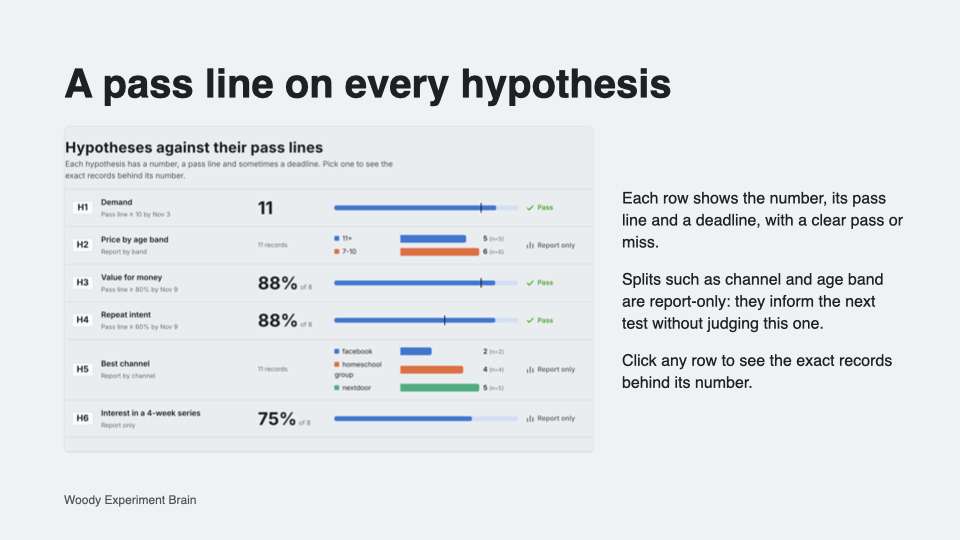
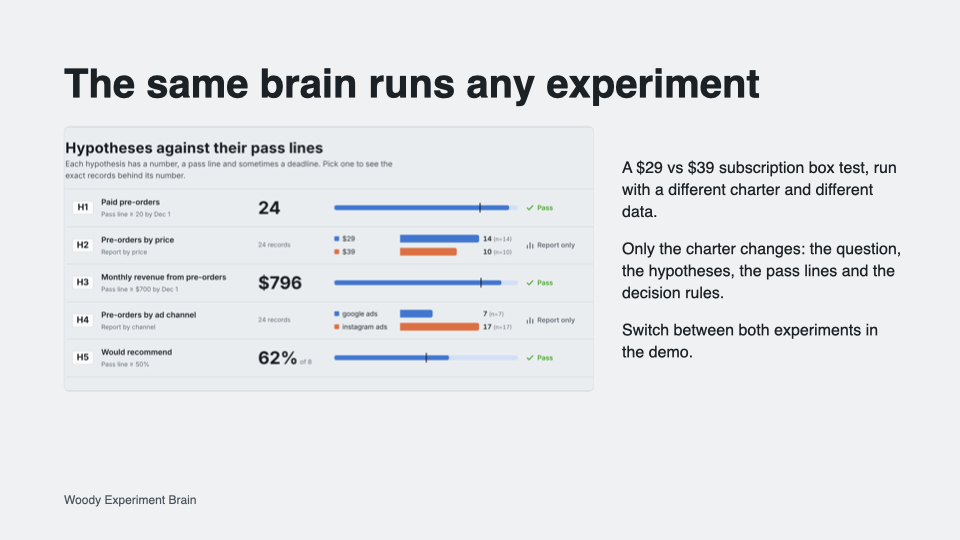
You describe a business idea. Woody’s agents turn it into a testable experiment with hypotheses, pass lines and a measurement plan, collect bookings, surveys, notes and photos into a HydraDB graph, analyze weekly, and write a go, pivot or stop conclusion linked to its evidence. In my case, I am running physical woodworking shops with kids and families on the weekends to test my business idea, as Woody as my sidekick, guiding me through these experiments, keeping track of results and helping to decide what to test next.
How we built it
Claude was used to plan and design experiment steps for kids woodworking class idea. Then the memory and agentic parts were designed on HydraDB.
Challenges we ran into
Because the physical execution of experimentation will take time to collect real results from the market, I won't be able to complete real life testing of Woody until each episode is complete in real life.
Accomplishments that we're proud of
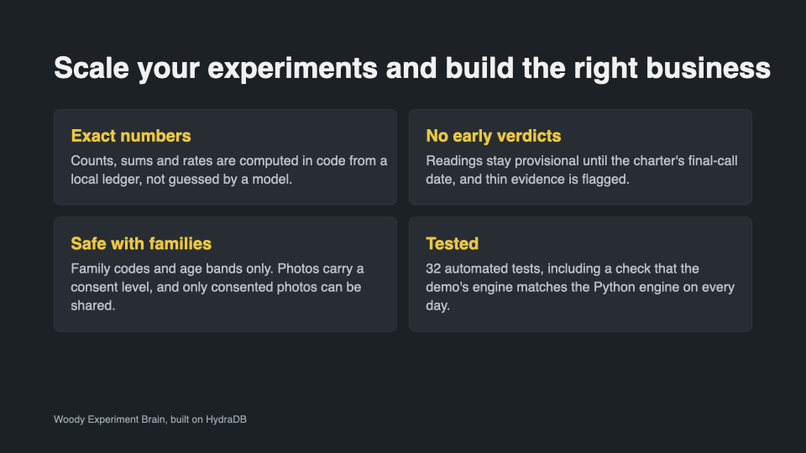
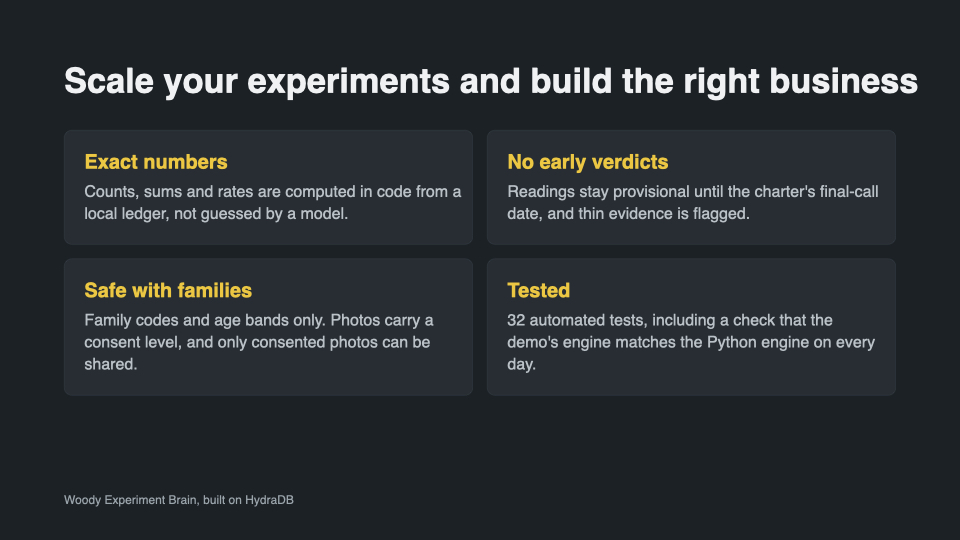
Woody Experiment Brain is a decision engine and place for all my business experimentation.
What we learned
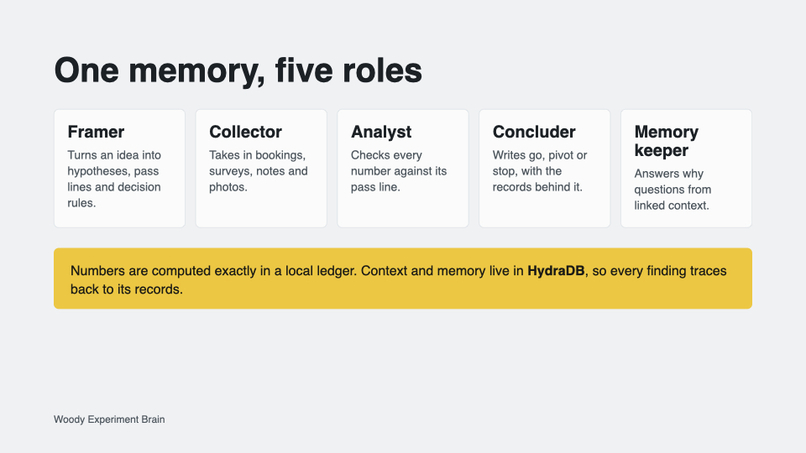
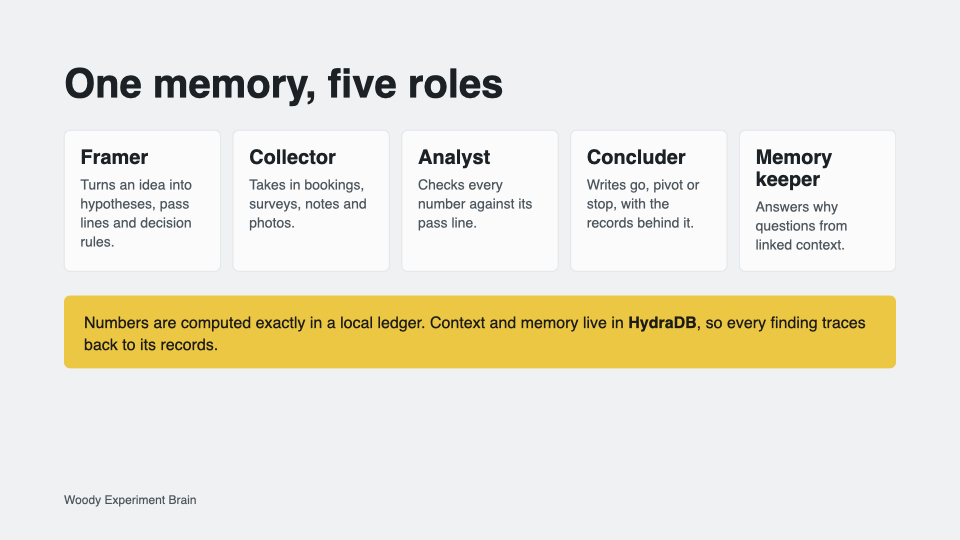
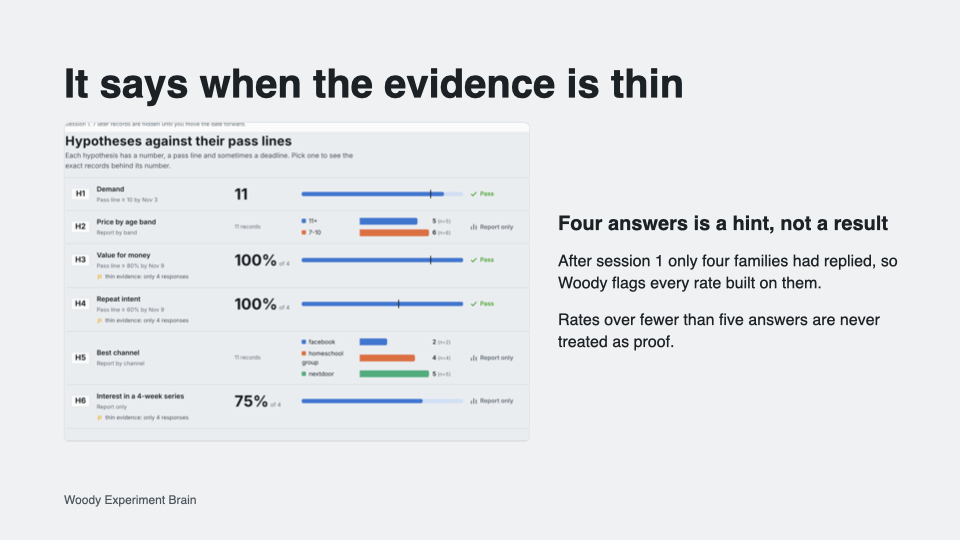
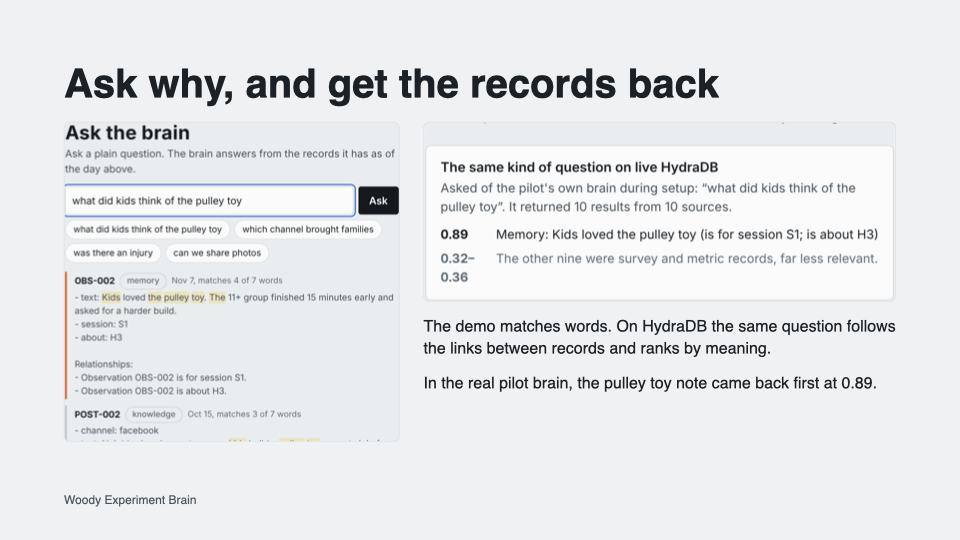
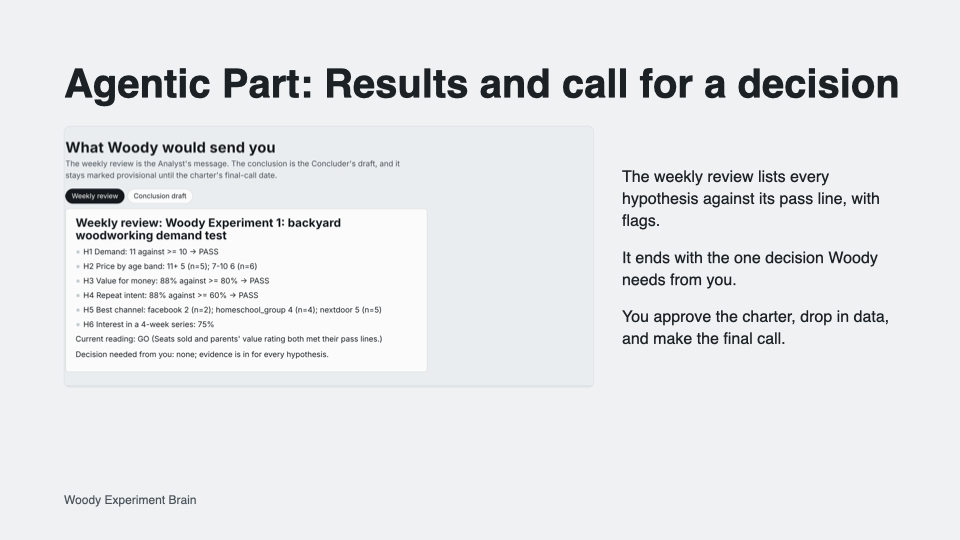
We created 5 agents, but memory layer sits above them; Key functions: 1) Framer: turns your idea into a testable question, hypotheses, success and kill criteria, and the minimum sample you need. 2) Collector: gets data in with minimal effort: post-session QR surveys for parents, quick voice or text notes from staff, sign-up and sales numbers, photos of finished projects, and incident logs. 3) Analyst: runs the numbers, compares variants, flags weak evidence, and says plainly what the data can’t tell you. 4) Concluder: writes the findings, a go / pivot / stop recommendation, and logs the decision with its evidence - Agentic part. 5) Memory keeper: stores everything in HydraDB so every answer traces back to its source - Memory part.
What's next for Woody, Experiment Brain
Live against HydraDB Cloud: database setup, ingest of knowledge and memory records, and ask. Not yet verified live: status and sync, and the MCP server inside a live Claude client. The tool also keeps records locally if HydraDB is down and catches up afterward.
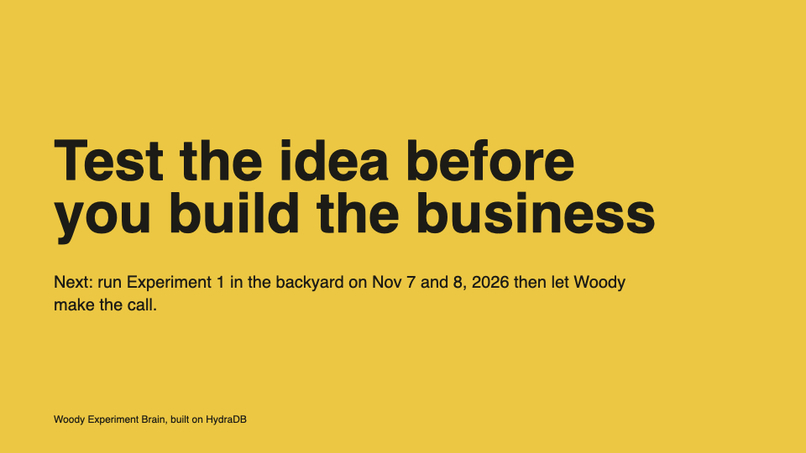
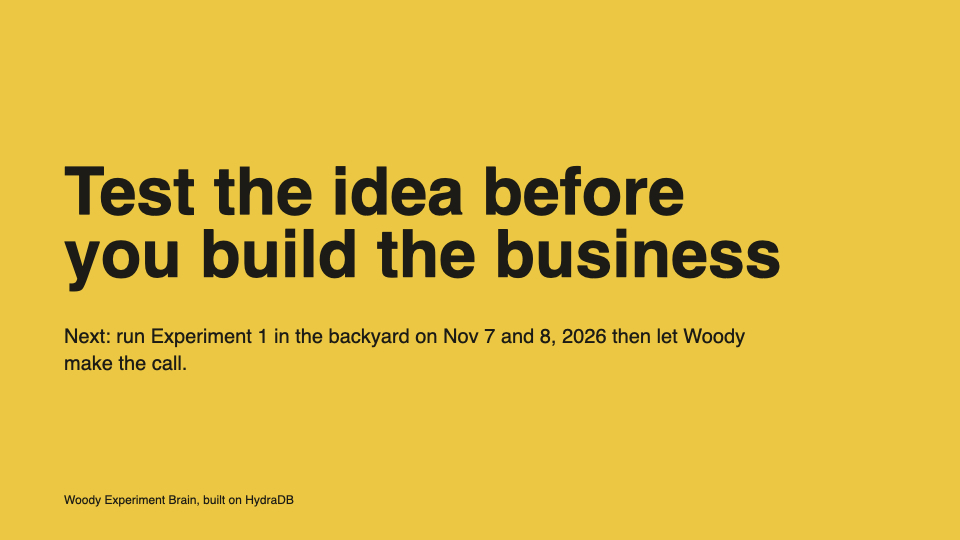
The next step is to run two backyard sessions, scheduled on Saturday Nov 7 and Sunday Nov 8, with six kids each. After that Woody reads the evidence against the pass lines set in advance and says go, pivot or stop.
Built With
- claude
- hydradb

Log in or sign up for Devpost to join the conversation.