Inspiration
WonderWords began with two different perspectives that led to the same question.
One of us is a mother who watched her young son learn English vocabulary. Most learning activities relied on repeating flashcards and memorizing word lists. Although he could remember words for a test, it was difficult to keep him excited about learning.
The other is a university student who has experienced how vocabulary shapes confidence, communication, and future opportunities. Learning English requires time and persistence, but the process often feels repetitive and disconnected from real curiosity.
Together, we asked ourselves a simple question.
What if learning vocabulary felt like exploring a game instead of studying for a test?
With today's AI capabilities, we saw an opportunity to rethink how children experience language learning. That idea became WonderWords.
What it does
WonderWords is an interactive web application that transforms English vocabulary into immersive learning adventures.
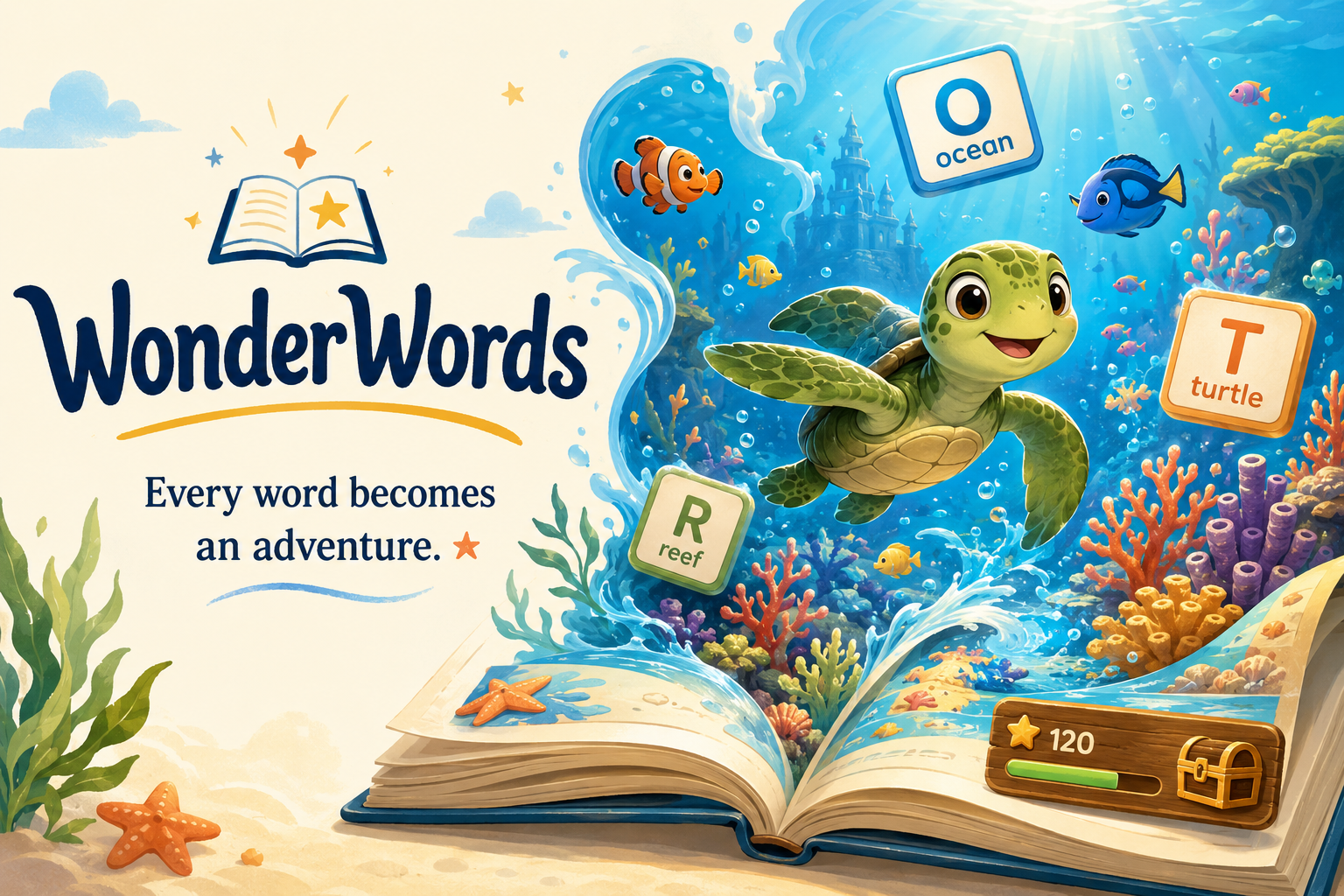
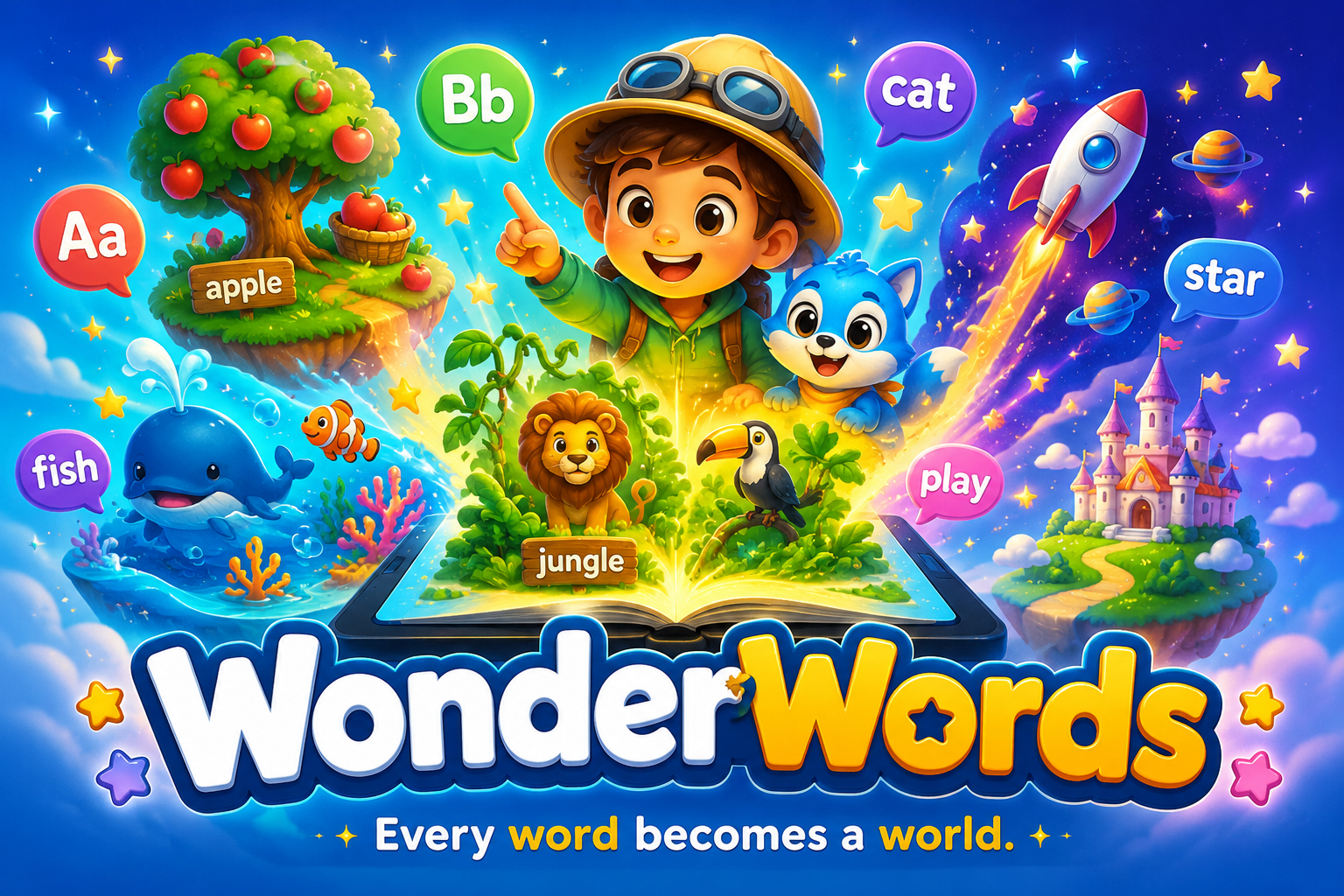
Instead of showing children a word and asking them to memorize it, every vocabulary word opens an interactive world filled with animations, visual storytelling, playful challenges, and meaningful interactions.
The experience supports Beginner, Intermediate, and Advanced learning levels, allowing children to build vocabulary naturally while exploring instead of memorizing.
Our vision is simple.
Every word becomes a world.
How we built it
We built WonderWords as a browser based web application that works across desktop and tablet devices.
OpenAI Codex played an important role throughout the development process. It helped us prototype ideas quickly, generate and improve front end components, refine interactions, debug issues, and iterate on the user experience much faster than traditional development.
We focused on creating an interface that children can understand intuitively with large interactive elements, clear visual feedback, and simple navigation.
Challenges we ran into
The biggest challenge was finding the right balance between education and entertainment.
If the experience feels too much like a lesson, children lose interest. If it feels only like a game, the educational value becomes weaker.
Another challenge was designing interactions that work across different vocabulary levels while keeping the interface simple and enjoyable for young learners.
We also wanted every word to feel unique instead of becoming another picture with a translation.
Accomplishments that we're proud of
We are proud that WonderWords introduces a different way of learning vocabulary.
Instead of treating words as information to memorize, we transform them into experiences that children can explore, interact with, and enjoy.
We are also proud that our concept can grow beyond English vocabulary and eventually support reading, science, geography, and many other learning subjects.
What we learned
This project taught us that memorable learning happens when curiosity comes before memorization.
We also learned how AI assisted development can dramatically shorten the journey from an idea to a working product. Using Codex allowed us to spend more time improving the learning experience and less time on repetitive development work.
What's next for WonderWords
Our next goal is to make WonderWords even more personalized.
Future versions will include AI generated interactive worlds, adaptive learning paths based on each child's progress, pronunciation feedback, parent dashboards, and support for additional subjects beyond English.
We hope WonderWords can inspire children to see every new word not as something to memorize, but as the beginning of a new adventure.
Built With
- codex
- css
- css3
- framer
- html5
- javascript
- motion
- next.js
- openai
- react
- tailwind
- typescript
- vercel


Log in or sign up for Devpost to join the conversation.