About Wonderland
Inspiration
The idea for Wonderland was inspired by the desire to create a platform that allows users to easily design, build, and interact with 3D worlds. We noticed that many people are interested in creating their own games or AR experiences but lack the technical skills to develop them from scratch. Wonderland bridges that gap by offering an intuitive interface for users to craft their own scenes and bring them to life with visual programming.
What We Learned
Throughout the development of Wonderland, we learned a lot about the challenges of combining 3D scene creation, visual scripting, and AR technologies. We also gained insights into user experience design, especially making complex tools like a Node Editor accessible to users of all skill levels. Additionally, we deepened our understanding of physics engines and how they can be integrated smoothly into interactive scenes.
How We Built It
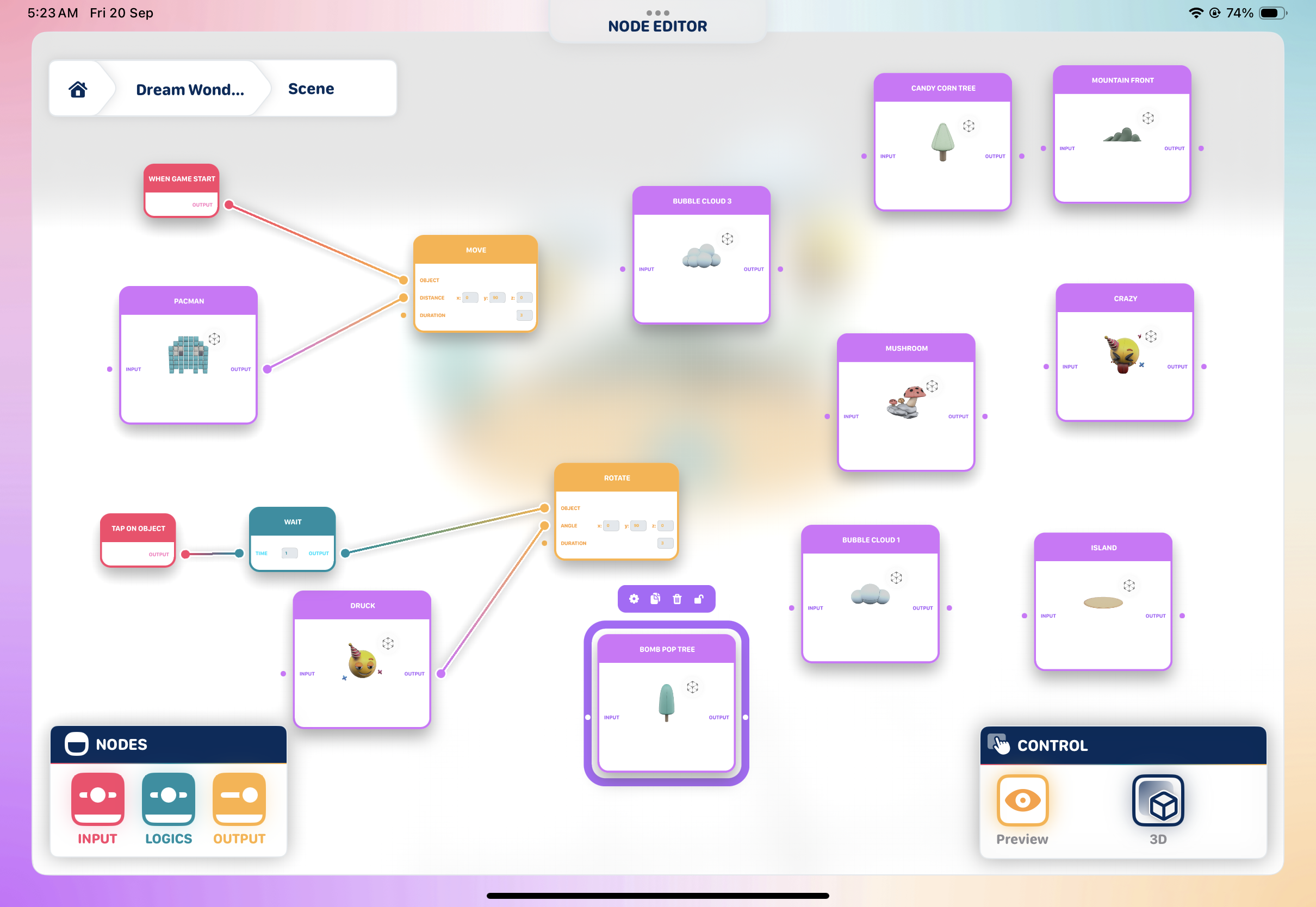
We started by building a robust 3D engine to support the creation of complex scenes. Next, we integrated a visual scripting system, the Node Editor, which allows users to add interactive elements to their scenes without needing to write code. Finally, we incorporated AR technology, enabling users to bring their 3D worlds into the real world.
Challenges We Faced
One of the key challenges we faced was optimizing the performance of 3D scenes in real-time, especially when rendered in AR. Balancing ease of use with the power of customization was another challenge, as we wanted to make sure Wonderland remained accessible while still offering advanced features for more experienced users.
We also make Wonderland compatible with both iPad and Vision Pro, offering the latest in spatial computing experiences, allowing users to seamlessly interact with 3D and AR worlds across different devices.


Log in or sign up for Devpost to join the conversation.