-
-
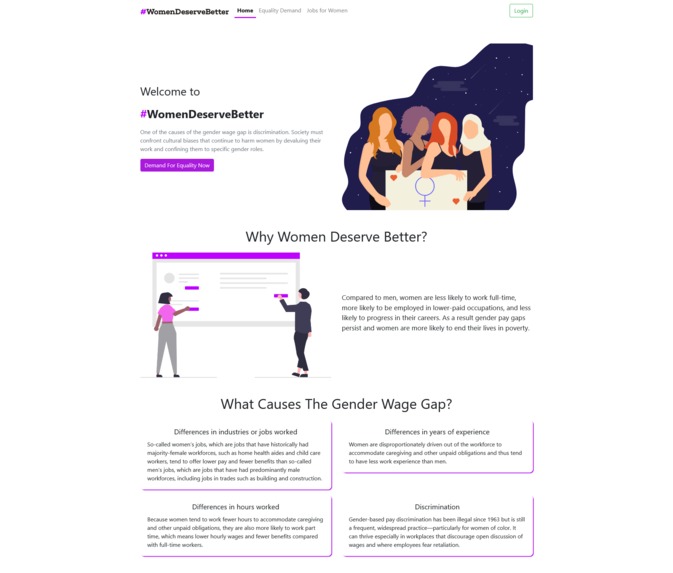
Homepage
-
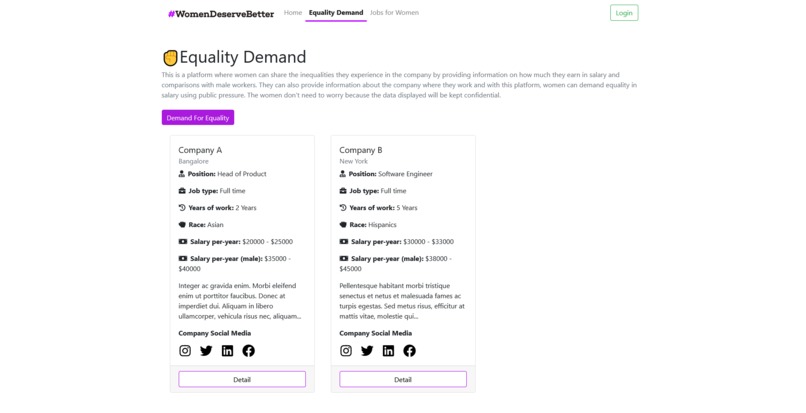
Share the inequalities women experience in the company
-
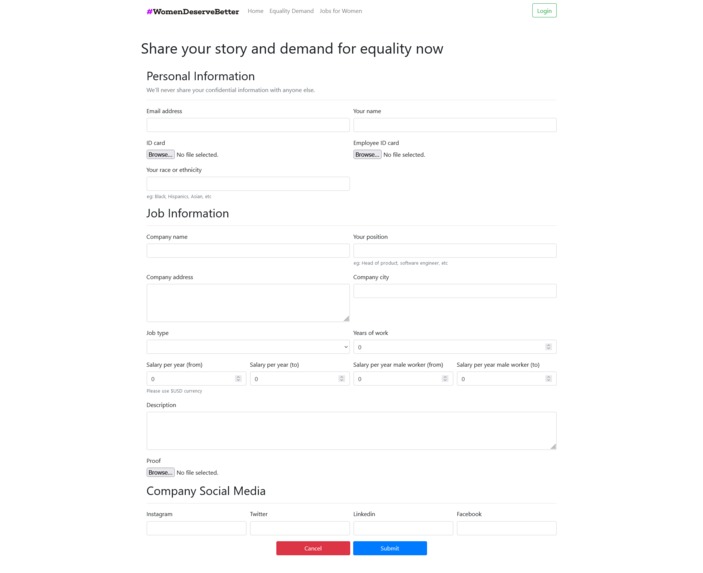
Women can create new story about the inequalities that they experience in the company
-
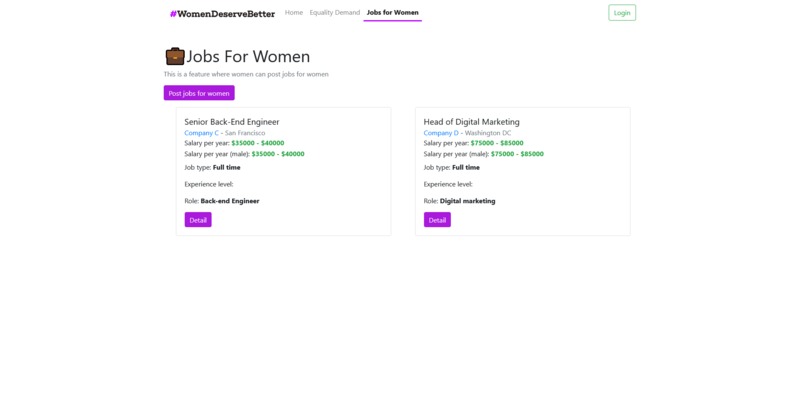
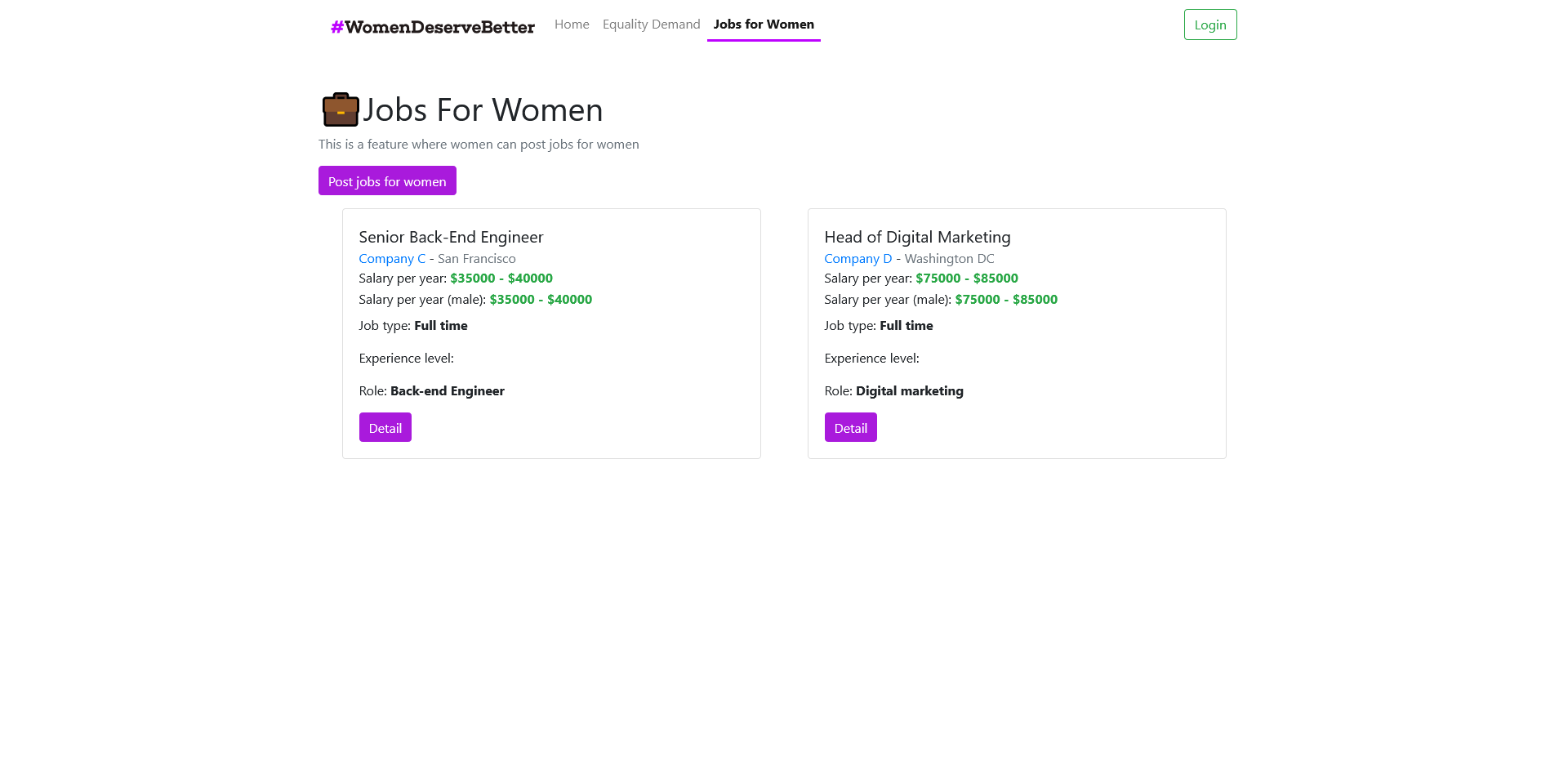
See jobs posted for women only
-
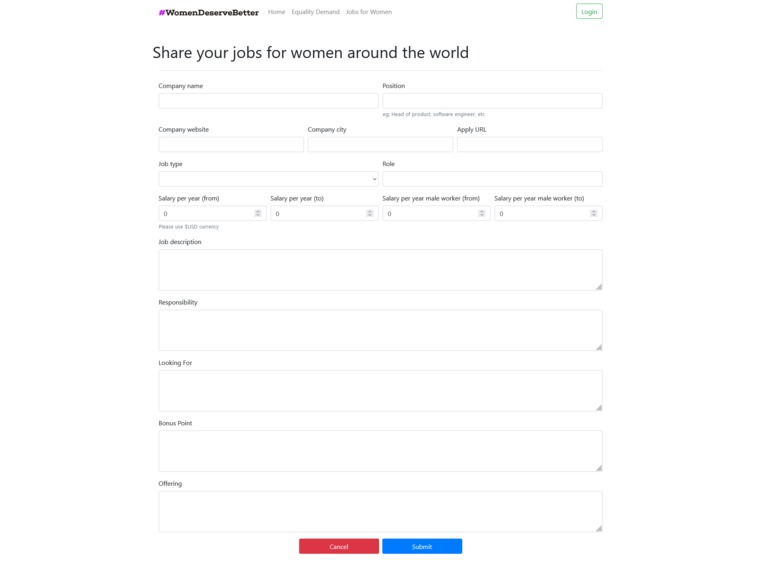
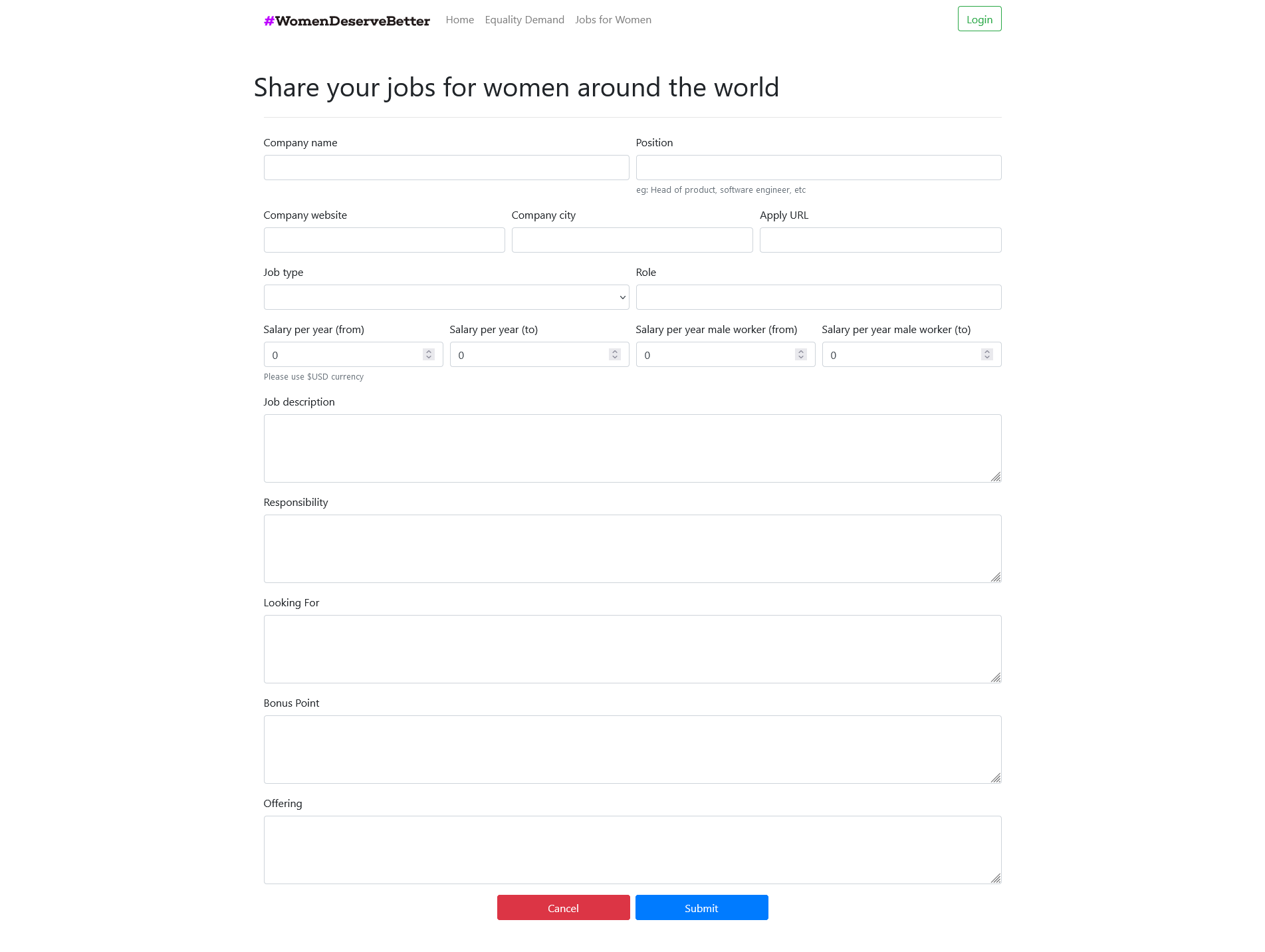
Post jobs for women only
Inspiration
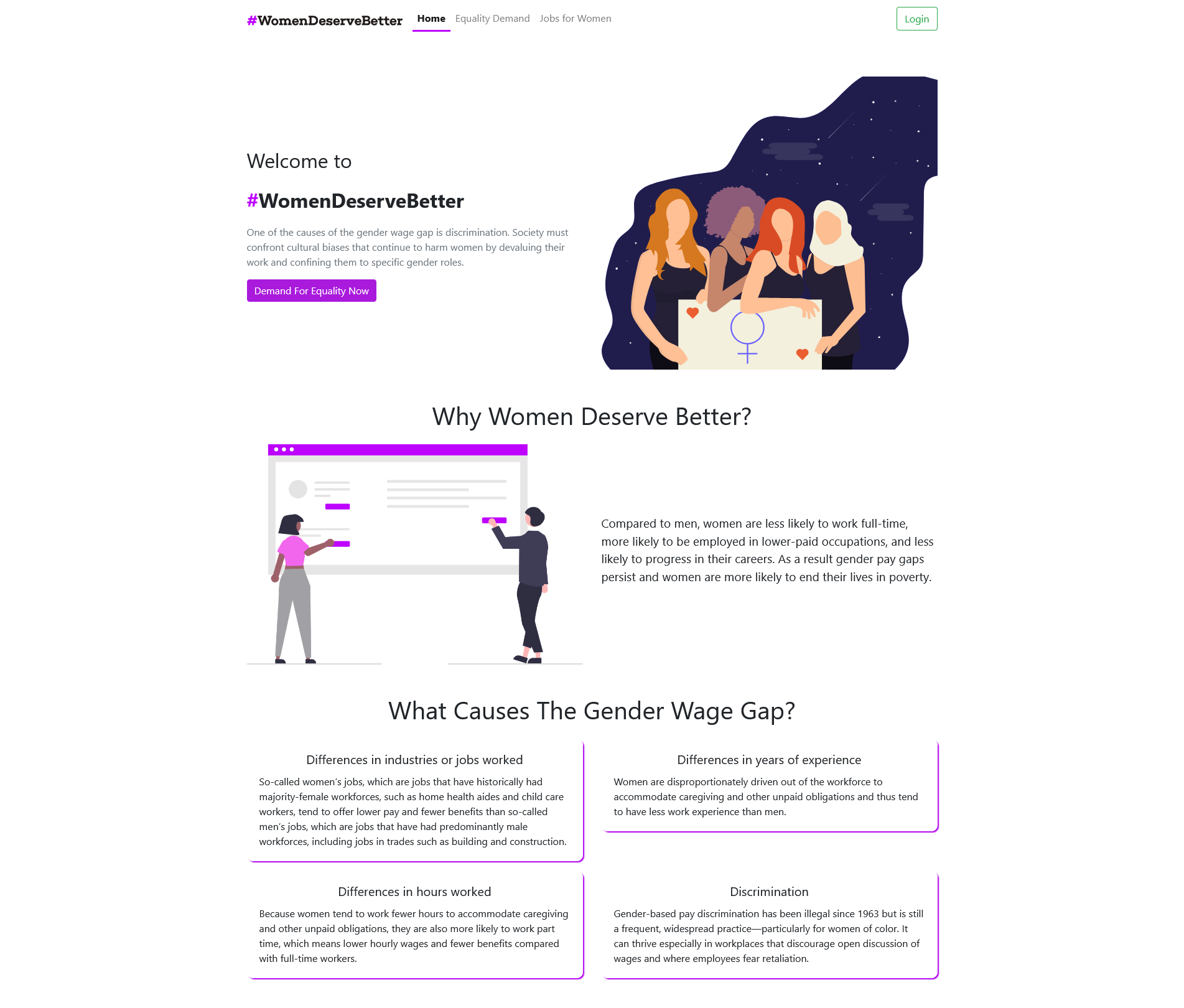
My inspiration is that in today's technological advancements there are still inequalities, especially the gender wage gap. Nowadays everyone has the opportunity to get a fair entitlement such as a salary. But there are still companies that have not met equality in salary, especially for women. Compared to men, women are less likely to work full-time, more likely to be employed in lower-paid occupations, and less likely to progress in their careers. As a result gender pay gaps persist and women are more likely to end their lives in poverty. What causes the gender wage gap?
- Differences in industries or jobs worked: By calculating a wholistic wage gap, researchers can see effects of occupational segregation, or the funneling of women and men into different types of industries and jobs based on gender norms and expectations. So-called women’s jobs, which are jobs that have historically had majority-female workforces, such as home health aides and child care workers, tend to offer lower pay and fewer benefits than so-called men’s jobs, which are jobs that have had predominantly male workforces, including jobs in trades such as building and construction. These gendered differences are true across all industries and the vast majority of occupations, at all levels, from frontline workers to mid-level managers to senior leaders.
- Differences in years of experience: Women are disproportionately driven out of the workforce to accommodate caregiving and other unpaid obligations and thus tend to have less work experience than men. Access to paid family and medical leave makes women more likely to return to work—and more likely to return sooner. However, as of March 2019, only 19 percent of civilian workers had access to paid family leave through their employers and only 40 percent had access to short-term disability insurance benefits to deal with their own medical needs.
- Differences in hours worked: Because women tend to work fewer hours to accommodate caregiving and other unpaid obligations, they are also more likely to work part-time, which means lower hourly wages and fewer benefits compared with full-time workers.
- Discrimination: Gender-based pay discrimination has been illegal since 1963 but is still a frequent, widespread practice—particularly for women of color. It can thrive especially in workplaces that discourage open discussion of wages and where employees fear retaliation. Beyond explicit decisions to pay women less than men, employers may discriminate in pay when they rely on prior salary history in hiring and compensation decisions; this can enable pay decisions that could have been influenced by discrimination to follow women from job to job.
 The gender wage gap is more than just a few cents
The most frequent way of discussing the wage gap, in terms of dollars and cents, may unintentionally obscure the real impact on working women and their families. For context, a woman working full-time, year-round earned $10,194 less than her male counterpart, on average, in 2018. If this wage gap were to remain unchanged, she would earn about $407,760 less than a man over the course of a 40-year career. Again, these earnings gaps are larger for most women of color.
The gender wage gap is more than just a few cents
The most frequent way of discussing the wage gap, in terms of dollars and cents, may unintentionally obscure the real impact on working women and their families. For context, a woman working full-time, year-round earned $10,194 less than her male counterpart, on average, in 2018. If this wage gap were to remain unchanged, she would earn about $407,760 less than a man over the course of a 40-year career. Again, these earnings gaps are larger for most women of color.

Solution The gender wage gap is not only complex and nuanced, but it is also stubborn. Without updated and comprehensive equal pay reform, the gender wage gap has only closed by 4 cents in more than a decade. At the current pace, women are not estimated to reach pay parity with men until 2059.
To begin to close the gender wage gap, women need updated comprehensive equal pay legislation, such as the Paycheck Fairness Act, that will strengthen existing protections and further combat discriminatory practices. Other robust work-family policies are also essential to truly combating the multifaceted gender wage gap so that women—who disproportionately assume much of the caregiving responsibilities in their families—are not unfairly disadvantaged by taking time to address care needs. For example, access to paid sick days and a comprehensive paid family and medical leave program are just two of the essential policies that would help minimize job loss and ensure better economic security for all workers. Beyond public policy, society must confront cultural biases that continue to harm women—particularly women of color—by devaluing their work and confining them to specific gender roles. Only by enacting essential policies and shifting cultural attitudes can the United States begin to dismantle the patriarchal structures that systematically disadvantage and shortchange women and their families.
other solution is we can use External Social Pressure to Influence Business Ethics of a company.
- Ethical transformation: In the early 21st century, business ethics has broadened to include more proactive efforts toward good citizenship and honest business practices. This is based largely on societal expectations that companies meet demands for honest treatment of customers, community involvement and charitable giving, fair working conditions for employees and environmentally friendly business activities.
- Going Beyond the Law: In the latter half of the 20th century, some companies included social responsibility in their missions as a way to distinguish themselves from the competition. Ben & Jerry's Ice Cream and furniture retailer IKEA are two examples. Now, companies have to be socially responsible to avoid public pressure.
- The Internet Revolution: In the early 21st century, your business can simply not afford to ignore external social pressure. If you say or do things that go against socially accepted norms, the Internet and other means of rapid communication allow the community to rise against you
- Boycotts: One of the ways communities can use social pressure to influence company ethics is by hitting them where it hurts -- the bottom line. Leveraging the ability to mobilize quickly, communities have been able to organize boycotts in certain circumstances to force businesses to reconsider social or environmental decisions. Some companies, for example, have changed certain processes to better preserve the environment based on pressure from environmental watch groups and the public in general
What it does
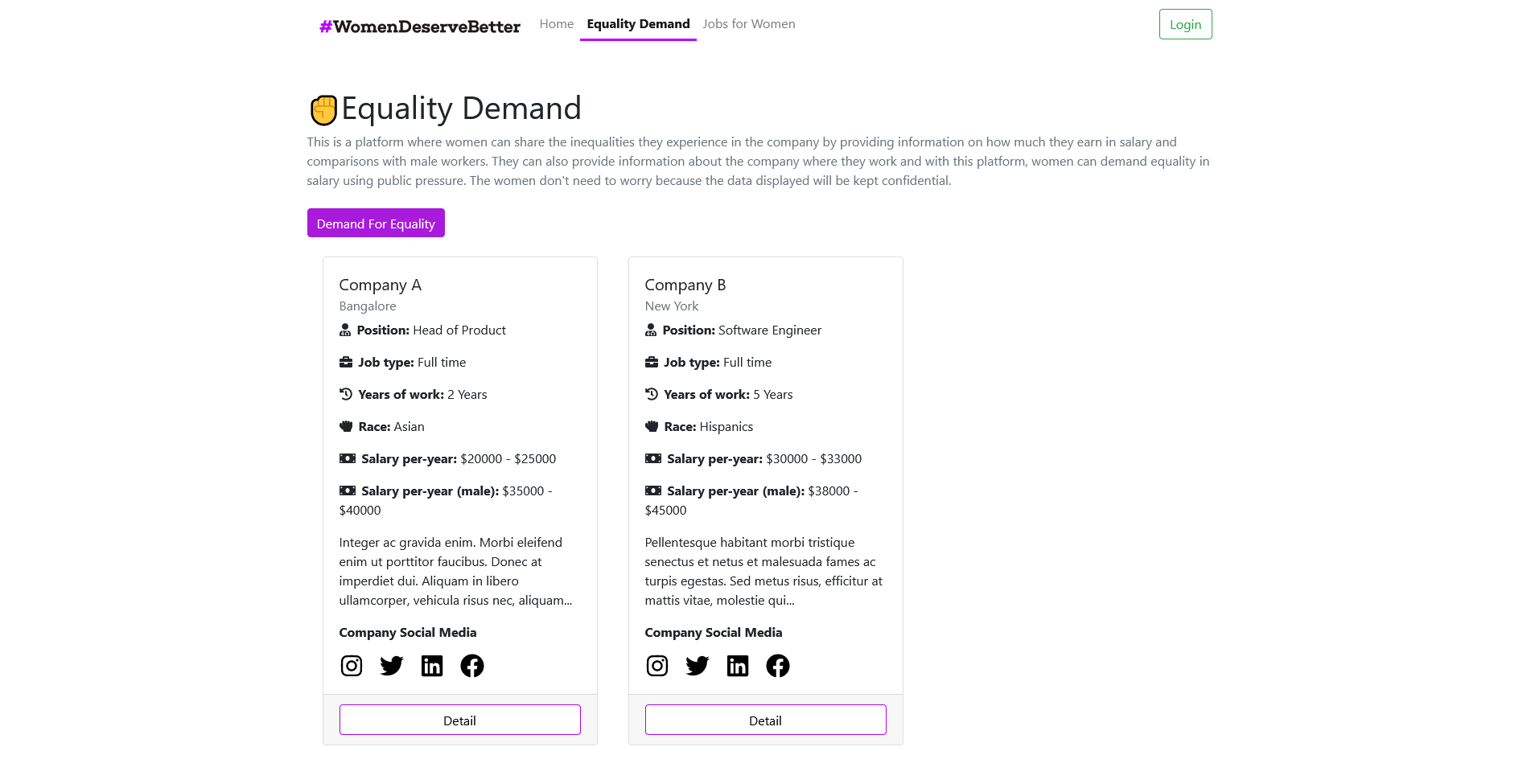
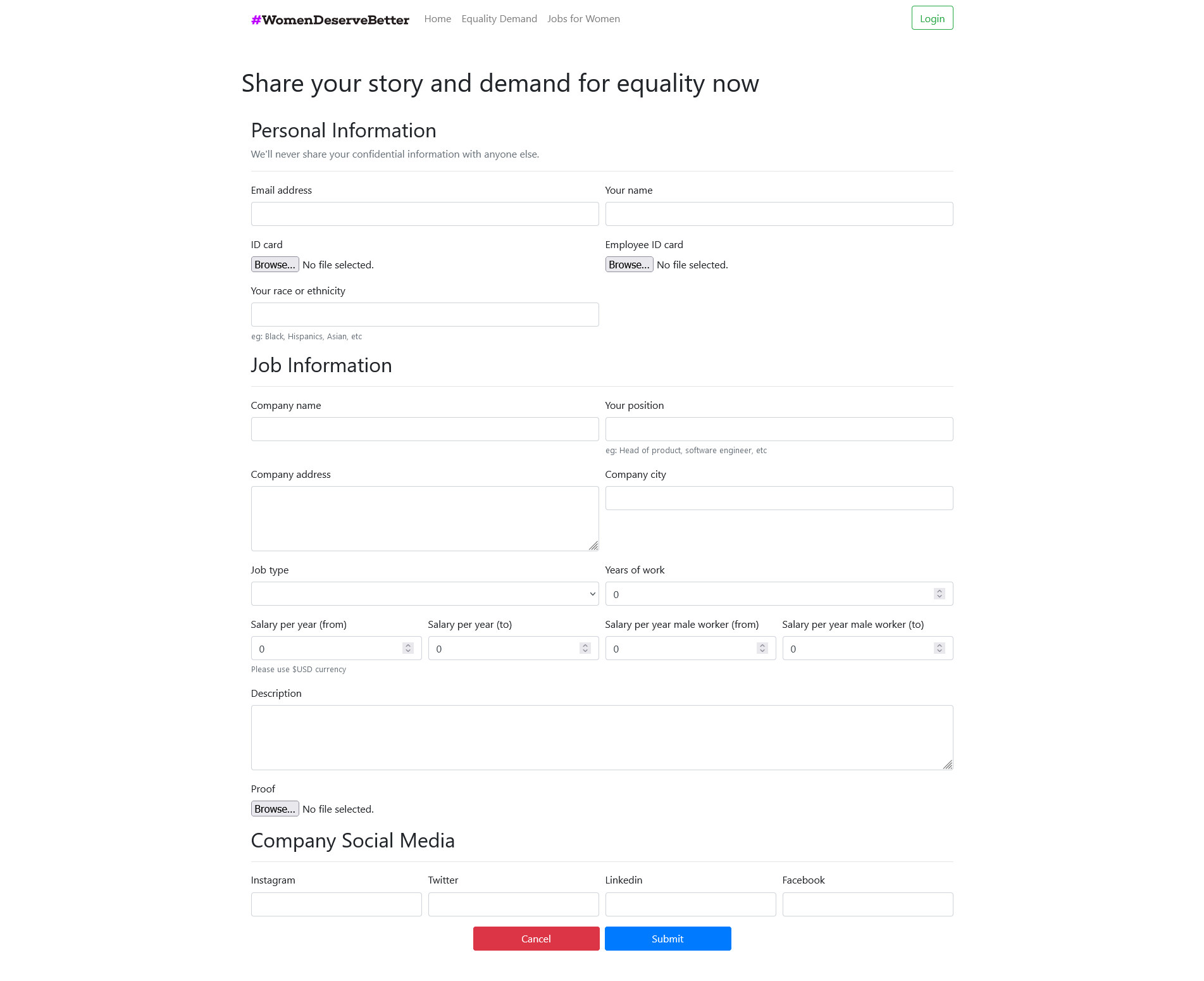
With this solution, I create a platform where women can share the inequalities they experience in the company by providing information on how much they earn in salary and comparisons with male workers. They can also provide information about the company where they work and with this platform, women can demand equality in salary using public pressure. The women don't need to worry because the data displayed will be kept confidential. there will also be a feature where women can post jobs for women. only women can register on this platform. With this platform, we hope that companies can realize the importance of equality in work and can improve the welfare of women. Women support women because women deserve better
How I built it
First I look for data to strengthen the problem that I raise. After that, I determine what data to display on the web. Then I decide what technology that I will be using, in this case, I use Vue.js and Firebase for the database. Then I develop the website. To simplify the website development I use Bootstrap for the UI Frameworks.
Challenges I ran into
Since I am a beginner in Vue.js, I ran into some problems like API management, state management, and so on. But I don't give up and keep learning from documentations, StackOverflow, and youtube.
Accomplishments that I am proud of
I am proud that I am able to do this by myself, as I said before I am still a beginner in Vue.js and with this hackathon, I am able to push myself to keep learning and enhance my skill in programming. Also, I have joined the discord server so I can meet new friends to get more knowledge from different perspectives
What I learned
I learned that coding is not easy as it looks. I ran into a lot of problems and I realized that coding is not the only skill that you need to master, other skills like searching on the web, read the documentation, and understand the concept quickly is no less important
What's next for WomenDeserveBetter
Next thing I want to implement AI/Machine Learning to verify the data that has been submitted by the user. Because this is important so that this platform is not misused to bring down a company in the future. Other than that, I want a lot of people to use this as a platform used for movements that demand equality for women.

Log in or sign up for Devpost to join the conversation.