-
System architecture
Inspiration
This project was inspired by my personal experiences of fear and anxiety while walking alone on the streets. Even in normal situations, the constant feeling of being followed or getting startled made me realize how vulnerable women often feel. This fear became more serious after observing the increasing number of minor assault and rape cases reported in India. I felt that relying only on smartphones is not enough, especially during panic situations where hands tremble and simple actions become difficult. This motivated me to build a simple, discreet, and always-accessible safety system that any woman, regardless of age or technical knowledge, can use.
What it does
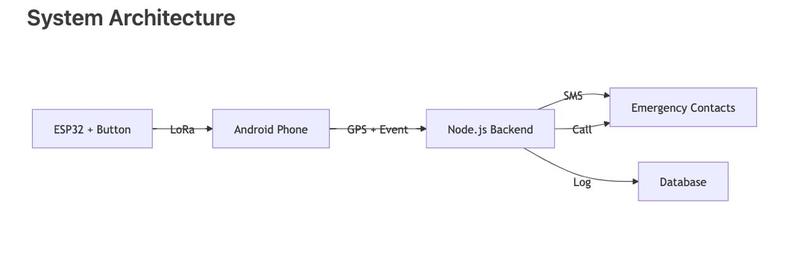
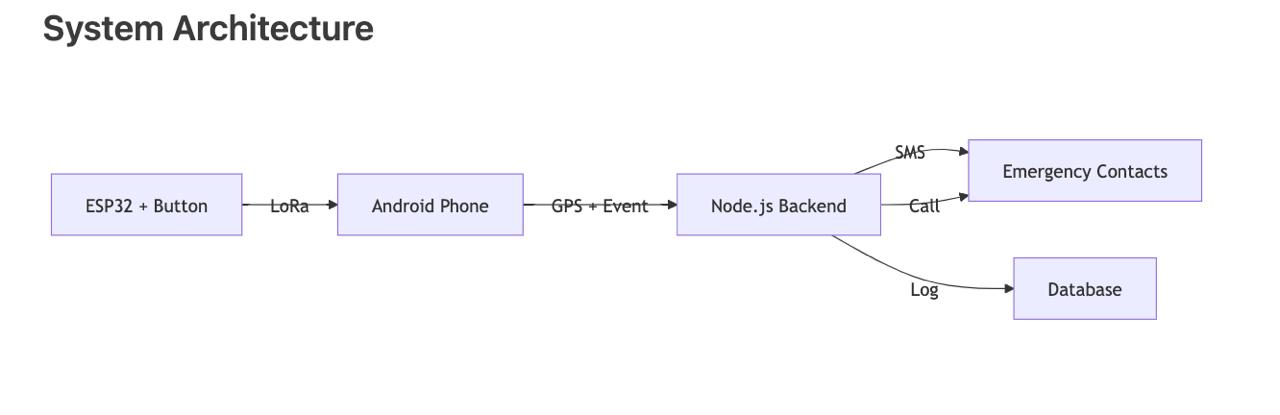
The women’s safety system is an AI-assisted hardware–software solution designed for emergency situations. It uses a strap-based necklace with a hidden camera at the back and a physical emergency button in the front. When the button is pressed, the system:
- Sends the user’s live GPS location to emergency contacts and authorities
- Initiates emergency calls automatically
- Starts live video streaming to capture evidence
- Works even if the phone is unavailable or snatched
- Supports multiple devices like phones and smartwatches
- Includes a 3-second delay to cancel accidental button presses
The system is designed to be ultra-simple, making it usable even for uneducated women or those using older button-based phones.
How we built it
The project was designed using a minimalistic and cost-optimized approach:
- Hardware: A low-power microcontroller, a tiny camera module, and a physical emergency button integrated into a strap-style necklace
- Communication: LoRa (Long Range) technology for reliable, low-power communication, especially in rural or low-connectivity areas
- Software: A lightweight mobile application to handle alerts, GPS sharing, and live streaming
- AI Logic: Focused on automation—confirming emergencies, preventing false alarms, and triggering actions instantly without user complexity
The system prioritizes reliability, simplicity, and accessibility over advanced but impractical features.
Challenges we ran into
- Designing a system that is powerful yet extremely simple to use
- Avoiding false alerts while still ensuring fast emergency response
- Ensuring the system works even when phones are inaccessible
- Balancing privacy concerns with evidence collection
- Choosing communication technologies suitable for rural India
These challenges required careful system-level thinking rather than just adding more features.
Accomplishments that we're proud of
- Designing a device-first safety solution instead of relying only on mobile apps
- Creating a multi-device safety ecosystem (necklace, phone, smartwatch)
- Introducing a 3-second cancel mechanism to reduce false alarms
- Making the system accessible for women with minimal technical literacy
- Proposing a scalable and realistic architecture suitable for real-world deployment
What we learned
This project taught us that good engineering is about understanding human behavior, not just technology. We learned:
- The importance of system design and architectural trade-offs
- How simplicity directly impacts adoption and trust
- Basics of hardware–software integration
- The role of communication technologies like LoRa
- How real-world constraints shape better solutions
Most importantly, we learned that technology should reduce fear, not add complexity.
What's next for Women safety system
- Building a functional prototype of the necklace hardware
- Testing LoRa-based communication in real environments
- Improving live streaming reliability and evidence storage
- Adding basic analytics for emergency response optimization
- Collaborating with authorities and NGOs for real-world validation
The long-term goal is to turn this idea into a practical, scalable product that genuinely improves women’s safety.

Log in or sign up for Devpost to join the conversation.