Inspiration
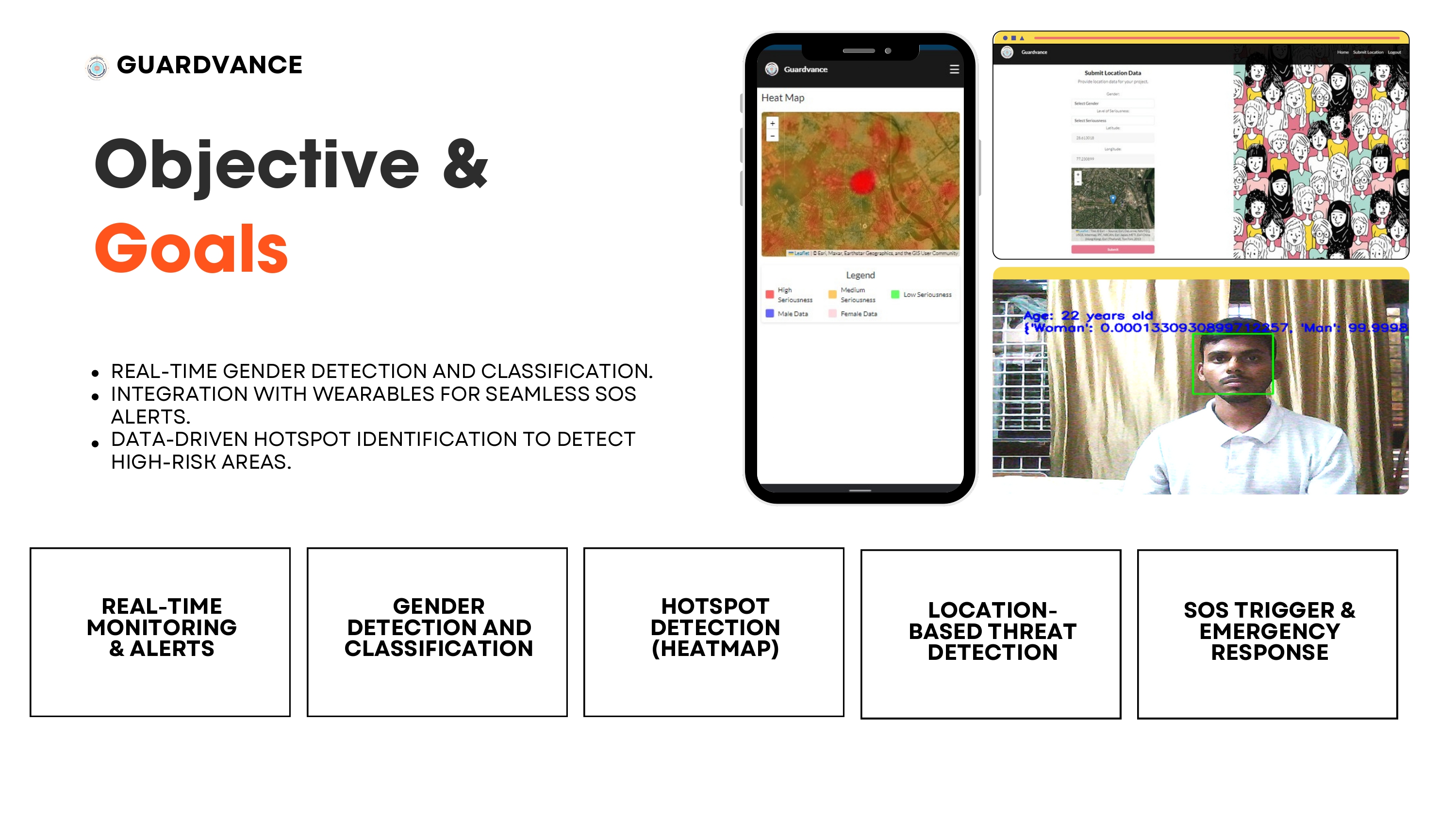
Details Women Safety Analytics – Protecting Women from Safety Threats THDC Institute of Hydropower Engineering and Technology Growing concern for women's safety due to increasing crimes. Need for advanced surveillance and analytics. Real-time threat detection software to enhance public safety and assist law enforcement. Analyzes gender distribution, identifies unusual patterns, and generates alerts. Real-time monitoring and alerts- Early intervention by law enforcement- Valuable data for identifying hotspots and trends
- Person detection with gender classification
- Gender distribution counting
- Identifying lone women at night
- Detection of women surrounded by men
- SOS recognition through gesture analytics
- Hotspot identification based on past alerts
Bharat Electronics Limited (BEL)
Software
What it does
How we built it
OpenCV (cv2): For image and video processing, detecting motion and faces. NumPy: For handling large datasets and numerical operations. DeepFace: For facial recognition and emotion analysis. Geocoder: For fetching real-time location data. Datetime: For timestamp management in alerts. Threading: To handle multiple processes and tasks simultaneously. Winsound: To generate alert sounds in case of emergencies (Windows-specific).
Challenges we ran into
Challenges and Solutions
- OpenCV (cv2) Challenges: Difficulty in tuning motion and face detection parameters to minimize false positives/negatives. Real-time processing may lag due to computational overhead. Environmental factors (e.g., poor lighting, occlusions) affecting detection accuracy. Solutions: Use optimized pre-trained models for face detection like Haar cascades or DNN modules. Implement background subtraction techniques for better motion detection. Reduce frame resolution or utilize GPU acceleration (e.g., CUDA) to enhance performance.
- NumPy Challenges: Memory consumption when handling large datasets or matrices. Inefficient operations leading to slower processing for real-time tasks. Solutions: Use slicing and vectorized operations instead of loops. Consider distributed computing tools (e.g., Dask) for handling very large datasets.
- DeepFace Challenges: Slow processing times due to the heavy computational nature of facial recognition models. Limited dataset adaptability; may struggle with edge cases or diverse facial features. Integration with other tools for real-time emotion analysis. Solutions: Optimize model usage by reducing image dimensions or using hardware accelerators. Preload models to save loading time during processing. Augment datasets to improve model performance for diverse inputs.
- Geocoder Challenges: Latency in fetching real-time location data, especially in low-connectivity areas. API rate limits leading to interrupted functionality in large-scale systems. Solutions: Cache frequent API responses to reduce redundant calls. Use multi-threading or asynchronous requests to improve responsiveness.
- Datetime Challenges: Incorrect timezone handling, leading to misaligned timestamps. Managing frequent datetime conversions (e.g., UTC to local time). Solutions: Use libraries like pytz or dateutil for accurate timezone conversions. Ensure timestamps are consistently stored in UTC and converted as needed.
- Threading Challenges: Race conditions and deadlocks when threads access shared resources. Managing thread lifecycle efficiently for resource-intensive tasks. Solutions: Use thread-safe structures or locks (threading.Lock) to avoid race conditions. For simpler concurrency, consider concurrent.futures or multiprocessing.
- Winsound Challenges: Windows-specific dependency limits cross-platform compatibility. Limited sound customization options for alerts. Solutions: Use platform-agnostic libraries like playsound or pydub for better flexibility. Store custom audio files for alerts instead of relying on system sounds.
Accomplishments that we're proud of
Accomplishments in Project Development
- Mastery of Multiple Technologies Successfully integrated a diverse set of tools and libraries (e.g., OpenCV, DeepFace, Geocoder) into a cohesive system. Demonstrated the ability to handle complex frameworks and combine them for real-world applications.
- Advanced Image and Video Processing Implemented motion detection and face recognition using OpenCV, showcasing skills in real-time image processing. Built a system capable of analyzing emotions with DeepFace, a task requiring advanced understanding of machine learning and AI.
- Real-Time Capabilities Achieved real-time location fetching and timestamp management using Geocoder and Datetime. Developed multi-threaded solutions to handle simultaneous tasks efficiently, ensuring the system's responsiveness.
- Emergency Alert System Integrated Winsound to provide immediate audio alerts during emergencies, enhancing the system's usability and practicality. Delivered a functional prototype that can notify users of critical events in real-time, demonstrating a focus on user safety.
- Efficient Data Handling Utilized NumPy to process large datasets with high efficiency, optimizing operations and minimizing memory consumption.
- Resilience to Challenges Overcame challenges like performance optimization, API limitations, and environmental constraints to deliver a robust solution. Impactful Outcomes Enhanced Skill Set: Gained hands-on experience with cutting-edge technologies in computer vision, AI, and software development. Collaboration Success: Worked collaboratively to address real-world challenges, demonstrating strong teamwork and problem-solving abilities. Practical Application: Created a system that combines theory and practice, ready to address critical problems like safety alerts and real-time monitoring.
What we learned
Reflecting on your project, here's a summary of the key lessons learned across technical, collaborative, and problem-solving dimensions:
Technical Insights Versatility of Tools and Libraries:
Learned how to effectively integrate multiple libraries like OpenCV, NumPy, and DeepFace to build robust solutions. Gained deeper knowledge of real-time processing with OpenCV and emotion analysis using DeepFace. Optimizing Performance:
Understood the importance of balancing computational efficiency with accuracy, especially in resource-intensive tasks like motion detection and facial recognition. Improved skills in using multi-threading and asynchronous processing for handling concurrent tasks. Real-Time System Design:
Developed expertise in building real-time alert systems, incorporating tools like Geocoder for live location data and Winsound for immediate notifications. Error Handling and Debugging:
Learned to tackle challenges such as API rate limits, lighting conditions in image processing, and thread synchronization issues in multi-threaded environments. Problem-Solving Skills Handling Data Complexities:
Mastered managing large datasets with NumPy, optimizing operations, and avoiding memory bottlenecks. Adapted algorithms to work with incomplete or noisy data, ensuring robustness in motion and face detection. Platform-Specific Development:
Navigated platform-specific challenges like using Winsound for Windows, while considering cross-platform alternatives. Iterative Improvement:
Recognized the value of iterative testing and fine-tuning to achieve reliable results in both detection and response modules. Collaboration and Teamwork Efficient Division of Labor:
Learned to assign tasks based on individual strengths, improving efficiency and reducing project delays. Communication and Feedback:
Strengthened skills in team communication, ensuring smooth integration of components developed by different team members. Cross-Disciplinary Integration:
Collaborated across domains to merge AI, software development, and cybersecurity knowledge into a cohesive project. Soft Skills and Mindset Adaptability:
Learned to quickly adapt to unexpected challenges, such as performance issues or environmental factors affecting detection accuracy. Resilience:
Overcame technical and logistical hurdles, building confidence in tackling complex problems in future projects. Continuous Learning:
Gained an appreciation for staying updated with emerging tools and techniques to improve future implementations.
What's next for WOMEN SAFETY ANALYTICS PROTECTING WOMEN FROM SAFETY THREATS
For the next steps in developing "Women Safety Analytics: Protecting Women from Safety Threats", focusing on building an app, here’s a roadmap you can consider:
- Define Core Features for the App Safety Analytics:
Real-time Location Tracking: Use GPS to track the user's location in real time, sending alerts if the user feels unsafe or if they enter dangerous areas. Emergency SOS Button: Allow users to send an immediate alert to contacts or authorities in case of emergency, including location and a pre-recorded message. Incident Reporting and Analytics: Collect data on unsafe areas or incidents, and analyze patterns to provide insights and preventive measures. Face Detection and Emotion Recognition: Integrate DeepFace for identifying facial expressions that could indicate distress, sending alerts if necessary. Geofencing: Create safe zones and receive alerts if the user moves out of these predefined areas. User Empowerment: Self-defense Tips and Resources: Provide information on how to respond to different threats, including videos, articles, and interactive lessons. Safety Network: Connect users with trusted friends, family members, or community groups for mutual support. Voice and Gesture Recognition: Incorporate voice commands and gesture controls for discreet emergency signaling.
Technological Stack for the App Backend: Use cloud-based services (e.g., Firebase, AWS) for real-time data synchronization, user authentication, and database management. Frontend: Build a cross-platform app using frameworks like Flutter or React Native for scalability and efficiency. APIs: Geolocation APIs (Google Maps or Mapbox) for real-time location tracking. AI-powered Facial Recognition using DeepFace. SMS/Email Integration for sending alerts (Twilio, SendGrid). Notifications: Implement push notifications to alert the user or emergency contacts in case of incidents. Security: Ensure end-to-end encryption to protect user data, including location and personal details.
Key Features to Focus on for Safety and Protection Real-time Monitoring: Monitor user movements in unsafe areas and send alerts with location data. Data Analytics: Collect incident data and use AI to identify patterns that could help improve safety measures and predict potential threats. Community Engagement: Allow users to report incidents, creating a community-driven database of "unsafe zones" that other users can avoid. Integration with Law Enforcement: Develop features that allow users to instantly connect with local authorities, sharing their exact location and incident details.
User Experience and Design Easy and Quick Access: Ensure the interface is simple, with a prominent, easy-to-reach SOS button and a clear, minimalistic design. Accessibility: Consider accessibility features for all users, including those with disabilities. Privacy and Security: Prioritize user privacy, with features like data encryption and the option to share location only with trusted contacts.
Future Roadmap Phase 1 - Research and Planning:
Conduct surveys and focus groups to understand the needs and pain points of the target audience. Research and integrate best practices from existing women safety apps and technologies. Phase 2 - Prototype Development:
Create wireframes and mockups for the app, focusing on UI/UX design. Develop a basic prototype with key features (SOS button, real-time location tracking). Phase 3 - Testing and Feedback:
Pilot the app with a small group of users to gather feedback on usability, performance, and features. Test different emergency scenarios to ensure reliability. Phase 4 - Full Development and Launch:
Refine the app based on feedback, and develop additional features such as analytics and face recognition. Release the app on platforms like Google Play and the App Store.
Phase 5 - Continuous Improvement and Updates: Regularly update the app to add new features and improve security. Introduce community engagement features, such as incident reports and safety zone maps.
Potential Challenges Privacy Concerns: Handling sensitive data like location tracking and facial recognition responsibly. Battery Usage: Real-time tracking and facial recognition can drain battery life, so optimizations will be crucial. User Adoption: Ensuring that users trust the app enough to use it regularly and in emergency situations.
Collaboration and Funding Partnerships: Work with NGOs, women’s safety organizations, and local law enforcement agencies to ensure the app meets real-world needs. Funding: Explore funding options through grants, investors, or crowdfunding campaigns to support development and marketing.
Enhanced Detection Algorithms: Further research into machine learning models and sensor technologies could improve the accuracy of gender classification and threat detection. User Feedback: Incorporating user feedback mechanisms can help refine the system’s functionality and address any emerging concerns. Extended Integration: Exploring additional integrations with emergency services and public safety networks can broaden the system’s impact and effectiveness.


Log in or sign up for Devpost to join the conversation.