Inspiration
Women's Rights are constantly oppressed. We wanted to make sure that what we chose was a good representation of how we can begin to fix the problem.
What it does
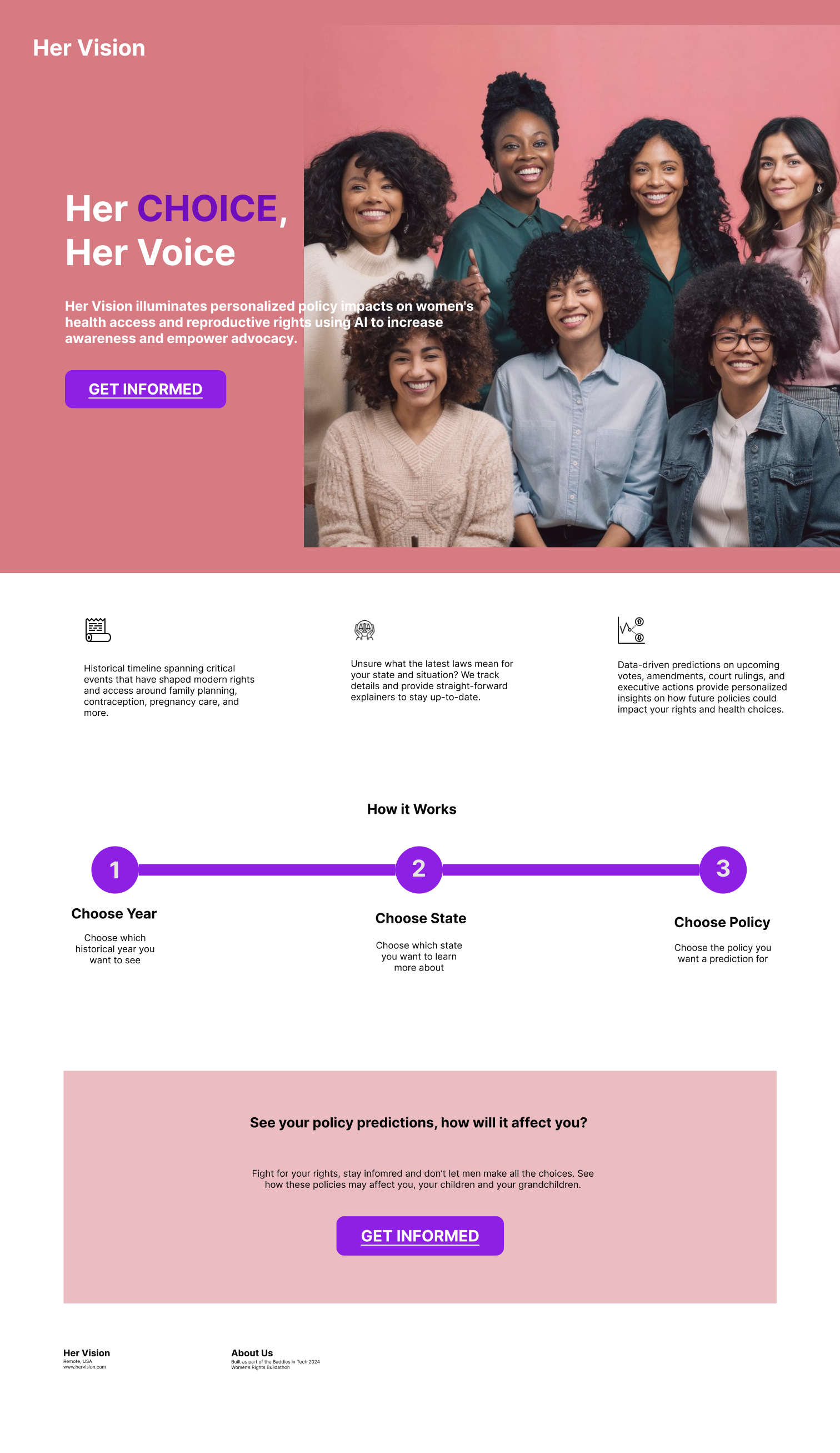
Our app aims to empower women and all individuals to understand the landscape of reproductive rights legislation better. By providing easy-to-understand information on current laws and policies and impartial analysis of potential legislative changes, we hope to support informed decision-making and civic engagement around this critical issue.
Our app illuminates how past and current policy decisions shape the ever-evolving legal framework surrounding reproductive rights. Leveraging data and policy analysis, we deliver digestible insights on legislation to increase awareness of the laws that impact women and families. We aim to make this complex information more transparent and accessible so individuals can better advocate for themselves and their communities.
How we built it
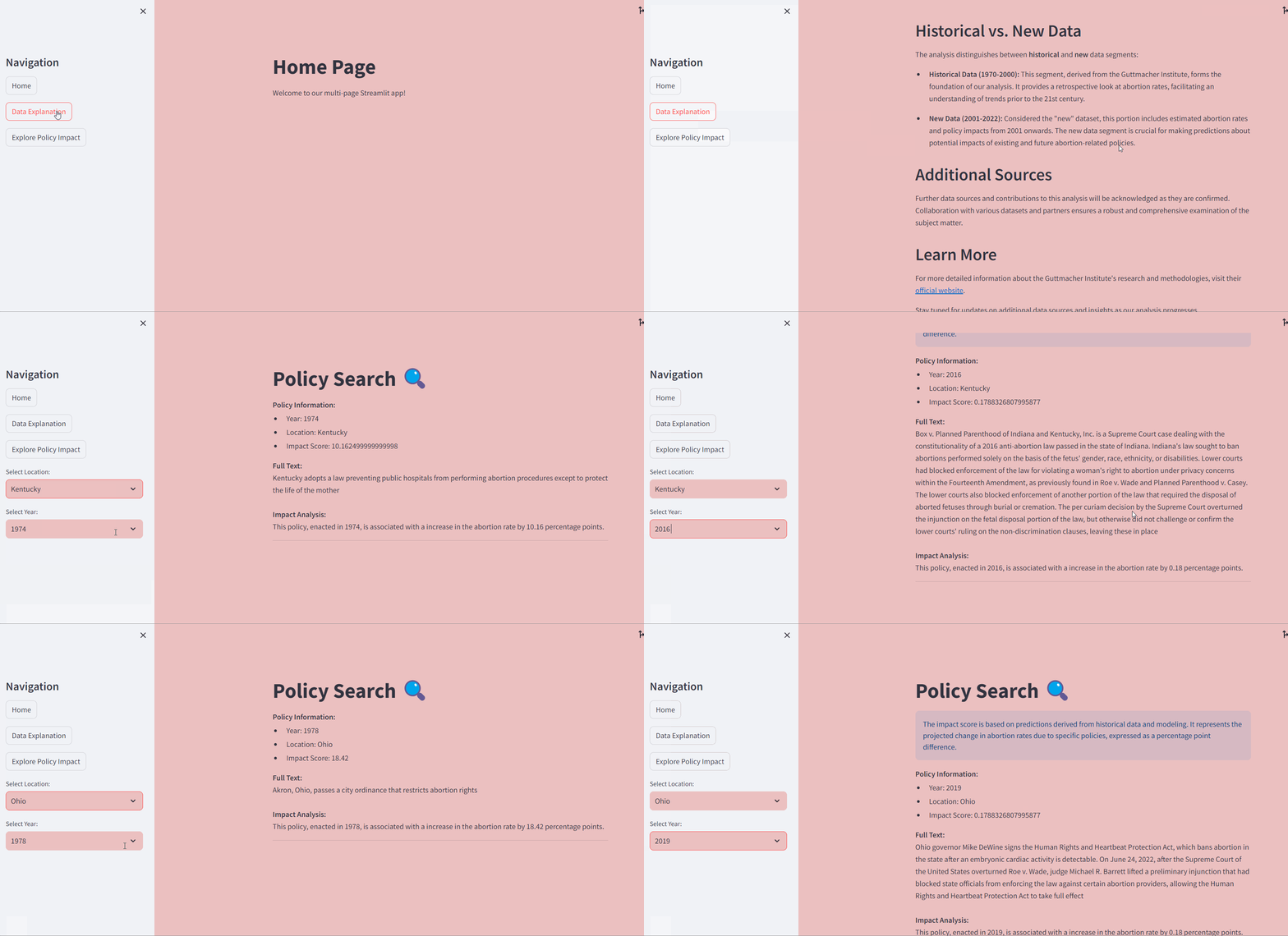
We first sourced policy information and key metrics regarding women's reproductive rights (abortion rate and number of providers). The policy information was used to predict changes in women's reproductive rights. The model was trained on policy data and changes abortion rate and number of providers from 1970-2000. Then, we made predictions for changes to abortion rate and number of providers for policies enacted since 2001. The information from this model was built into a Streamlit app.
Challenges we ran into
Challenge 1: Finding the Right Policy Information
- The Problem: Government policy details aren't kept in one easy-to-find place. We weren't sure if it was better to find the information ourselves or get it from a trusted source.
- The Solution: We chose to get the data from a reliable source to ensure accuracy.
Challenge 2: Dealing with Text-Based Data
- The Problem: Policies are written in complex language, not numbers that computers easily understand.
- The Solution: We focused on key policy verbs (like "legalize" or "ban") and turned them into numerical codes. These codes showed whether a law added restrictions or freedoms.
Challenge 3: Picking Meaningful Measurements
- The Problem: Policies, especially around reproductive rights, can impact many areas of life, making it hard to know what to measure.
- The Solution: We had to balance what data was available with what would directly show the effects of changes in reproductive rights laws. We chose abortion rates and number of abortion providers, but it's important to remember that limiting access to abortions doesn't stop abortions, it makes them less safe.
** Challenge 4:** Technical Difficulties with Development
- The Problem: The recommended setup for the app (using GitHub Codespaces and Streamlit) didn't work smoothly.
- The Solution: Switching to a familiar tool (VS Code) solved the problem.
Challenge 5: Data Formatting Issues
- The Problem: The prediction results saved in CSV files were hard to search due to inconsistent spacing.
- The Solution: Using the .strip function to remove extra spaces made the CSV files easier to work with.
Accomplishments that we're proud of
In two weeks, we 1) narrowed down the scope of the project, 2) were able to get data processed and analyzed, 3) created a working AI algorithm that 4) was able to give useful predictions on abortion rate changes and number of abortion providers.
What we learned
- Communication is so important; tap into your teams strengths and build up.
- Planning is key to minimize inefficiencies, redundancies, and confusion
What's next for Women’s Rights Policy Tracker
We would love to revise the app and make it more intuitive and include not just one topic of women's rights issues. Potentially expand to other healthcare, education, wage gap, discrimination, etc.


Log in or sign up for Devpost to join the conversation.