
Inspiration
Over the past decade, the quantified self movement has changed how we understand our bodies. Wearables track steps, sleep cycles, and heart rhythms, turning invisible physiological signals into actionable insights.
But despite these advances, one of the most profound human experiences remains largely invisible.
Pregnancy.
Inside the body, two developing nervous systems are interacting constantly. A mother’s emotions, movement, and physiological rhythms influence the developing baby. At the same time, the baby responds through movement, heartbeat changes, and sensory development.
These signals form a continuous sensory dialogue between mother and child, yet most of this dialogue remains difficult to perceive or interpret.
We asked a simple question:
What if pregnancy could become a new frontier of human sensory awareness?
What if technology could help mothers perceive the hidden signals exchanged between their body and the life developing inside it?
What it does
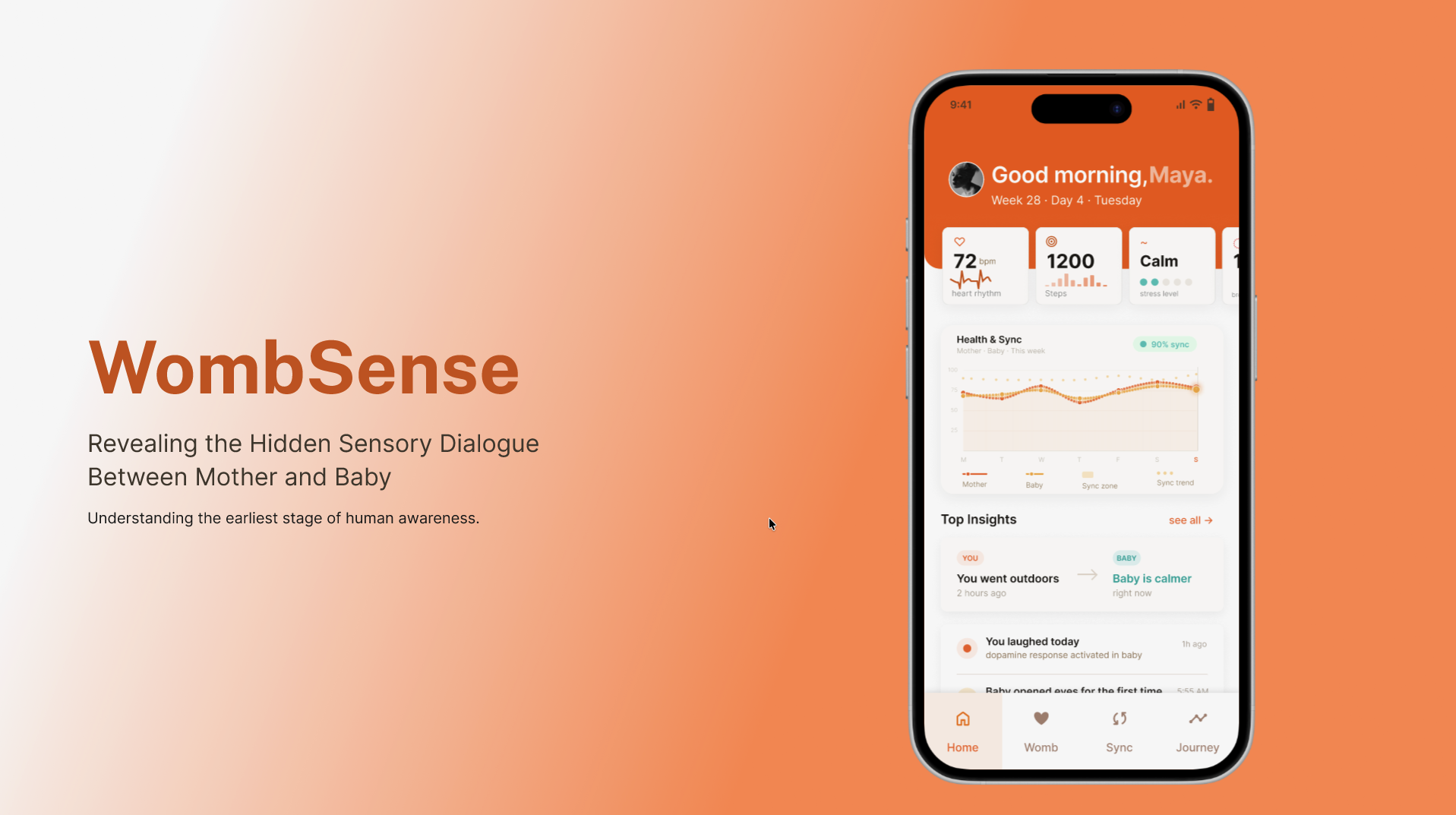
WombSense is a speculative sensory platform designed to reveal and interpret the invisible dialogue between a pregnant mother and her unborn baby.
The system introduces a new form of sensory awareness by translating internal biological signals into meaningful perception.
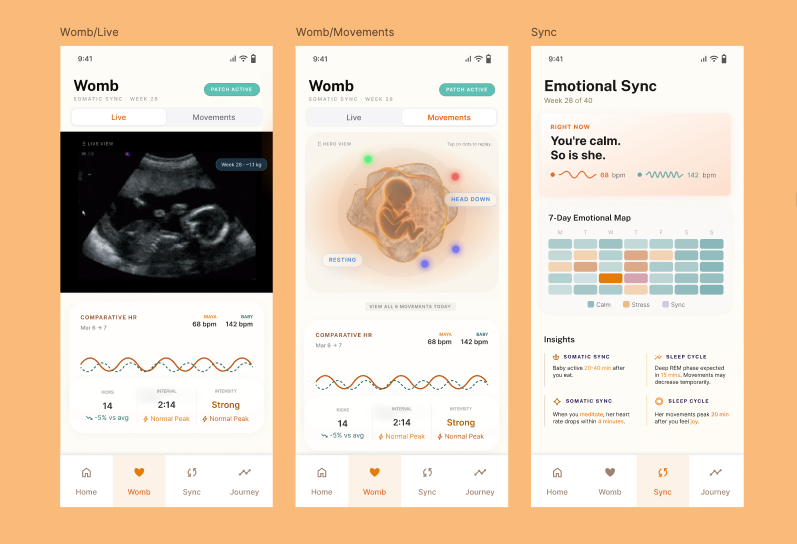
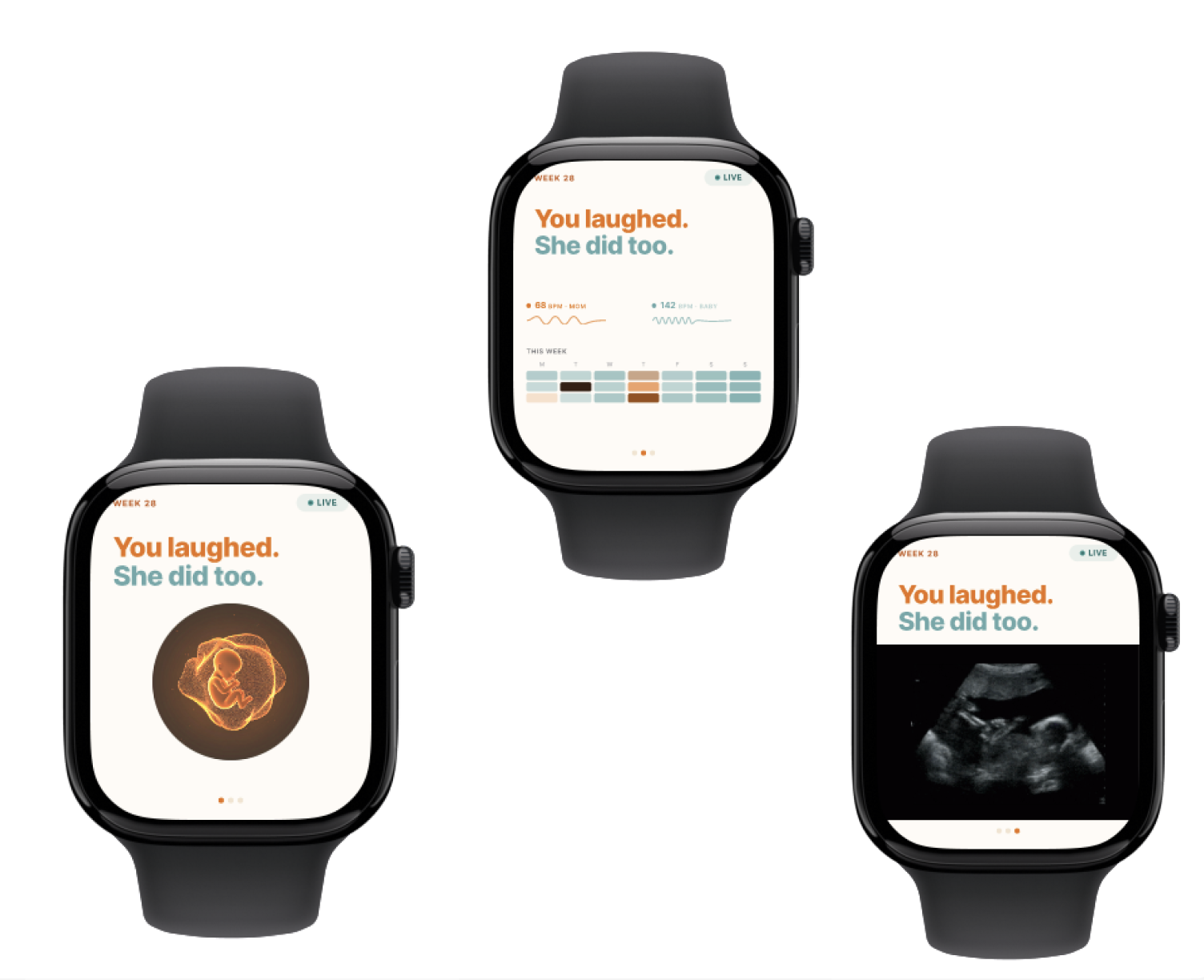
A wearable sensing patch detects subtle physiological signals including fetal movement patterns, maternal heart rhythm, stress indicators, and environmental stimuli. These signals are analyzed and translated into a visual and tactile interface that helps mothers understand how their body and environment influence their baby.
Rather than acting as a medical diagnostic tool, WombSense functions as a sensory awareness interface.
It allows mothers to:
• detect internal physiological signals that were previously invisible
• visualize patterns between their body and their baby’s responses
• enhance perception of fetal movement through tactile feedback
• influence the sensory environment through calming rhythmic signals
In essence, the system transforms pregnancy from a process observed through occasional medical scans into a continuous experience of sensory awareness.
How we built it
We approached WombSense as a speculative design exploration combining research, product thinking, and interface prototyping.
We started by studying human sensory systems beyond the traditional five senses, particularly interoception, the body’s ability to perceive internal physiological signals. Pregnancy represents one of the most complex interoceptive experiences because two biological systems interact within a single body.
From this research we designed a future-facing sensing platform composed of three layers:
A wearable sensing surface A conceptual bio-sensing patch placed on the abdomen that detects subtle physiological signals such as fetal movement patterns, maternal heart rhythm, stress indicators, and body motion.
An interpretation layer A speculative AI layer that analyzes correlations between maternal physiology and fetal responses to identify meaningful sensory patterns.
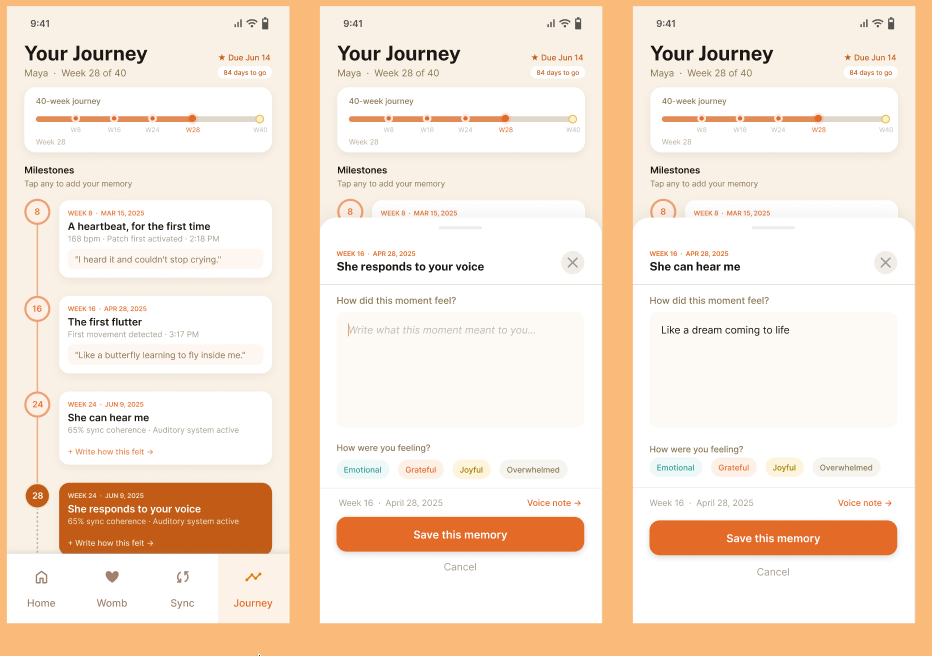
A perception interface A visual and tactile interface designed in Figma that translates these internal signals into understandable insights. This includes a sensory dialogue dashboard, fetal movement visualization, and emotional synchronization mapping.
We focused on designing an experience that detects, visualizes, enhances, and influences sensory signals, rather than simply presenting raw data. The goal was to transform pregnancy into a journey of awareness and discovery rather than clinical monitoring.
Challenges we ran into
One of the biggest challenges was ensuring the concept did not become just another pregnancy tracker. The goal of the challenge was to design a tool that reveals a new human sensory experience, so we had to carefully frame the system around interoception and sensory dialogue, rather than medical metrics.
Another challenge was designing how complex biological information should be presented. Too much data could create anxiety, while too little would reduce the sense of discovery. We therefore focused on patterns and insights instead of raw numbers, allowing the interface to communicate meaningful relationships between maternal behavior and fetal responses.
We also had to consider ethical implications such as privacy, emotional safety, and avoiding the perception that the system provides medical diagnosis. Designing safeguards around these concerns was an important part of the process.
Accomplishments that we're proud of
We are proud that WombSense reframes pregnancy not as a medical condition to monitor, but as a sensory relationship between two developing nervous systems.
The project introduces the concept of interoceptive dialogue, a new way to understand how the mother’s body and the baby’s developing sensory system interact throughout pregnancy.
We are also proud of the interface design, which focuses on calm, human-centered insights rather than overwhelming users with technical metrics. The system emphasizes connection, awareness, and discovery.
Most importantly, we created a concept that aligns with the idea of expanding human self-awareness through technology, imagining how future sensing systems could reveal aspects of human experience that were previously invisible.
What we learned
This project taught us that some of the most meaningful design opportunities exist in areas where human experiences are currently difficult to perceive or interpret.
We learned that technology does not always need to measure more things. Instead, its role can be to translate existing signals into meaningful perception.
We also gained a deeper understanding of the ethical responsibilities involved in designing technologies that interact with human bodies, emotions, and deeply personal experiences such as pregnancy.
Finally, the project reinforced how powerful speculative design can be as a tool for exploring future possibilities and challenging how we think about technology and human awareness.
What's next for WombSense
WombSense represents an early exploration of how sensing technologies might expand human awareness of internal bodily signals.
Future iterations could explore more advanced sensing systems capable of detecting richer biological signals, improved visualization of fetal sensory development, and new ways for parents to interact with and understand the earliest stages of human life.
Beyond pregnancy, this concept opens the door to a broader category of technologies designed to reveal hidden sensory experiences within the body, helping people better understand emotional states, physiological rhythms, and cognitive responses.
Ultimately, our vision is a future where technology helps people listen to their bodies in ways that were never possible before, expanding the boundaries of human self-awareness.
Built With
- ai
- analysis
- biosensor
- built
- concept
- data
- editing
- figma
- figmaai
- figmamake
- generation
- signal
- slides
- tools
- video
- visualization
- voice
- wearable
- with


Log in or sign up for Devpost to join the conversation.