-
-

App icon
-
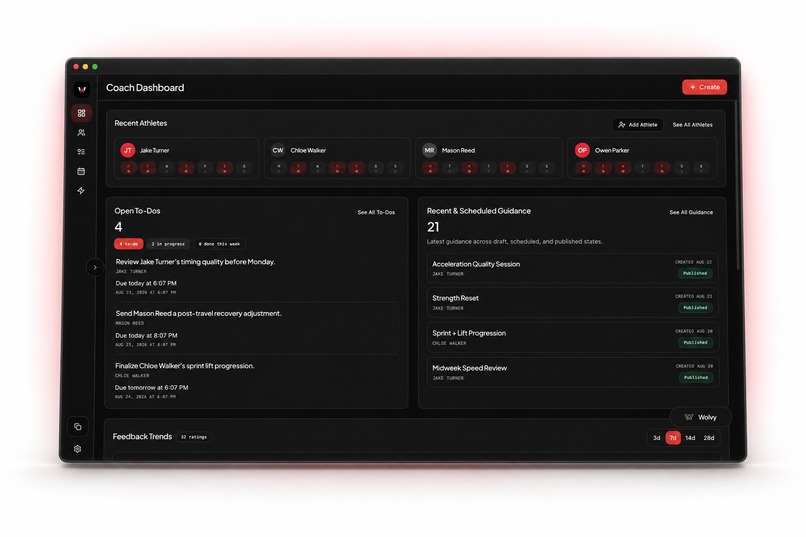
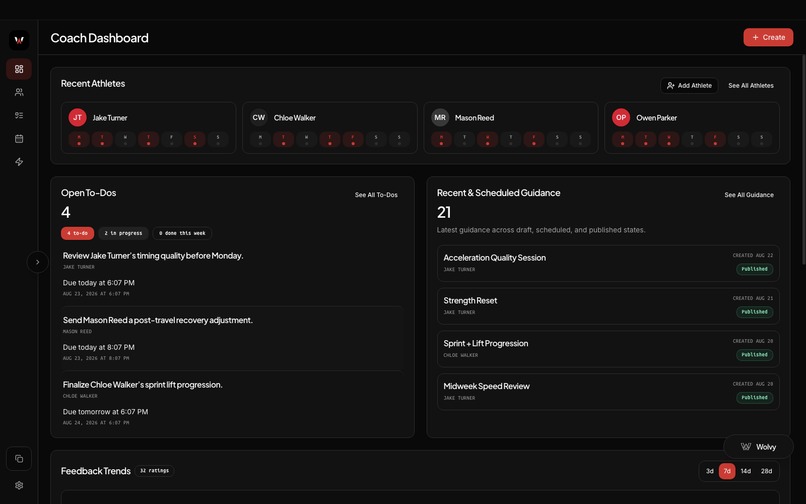
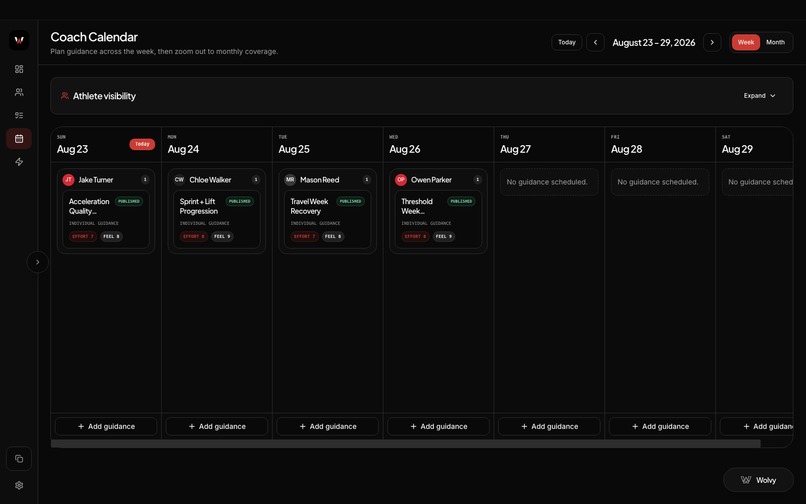
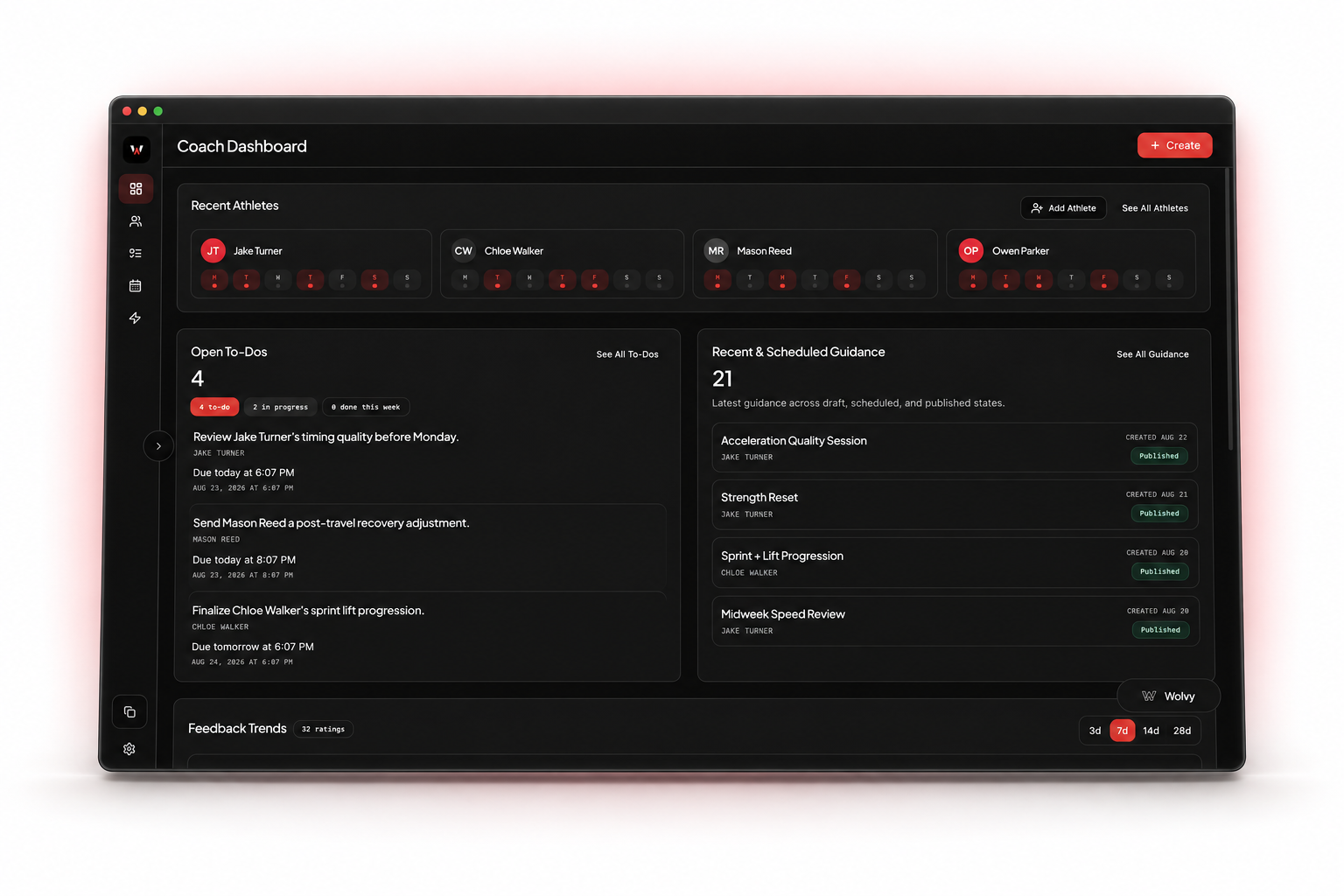
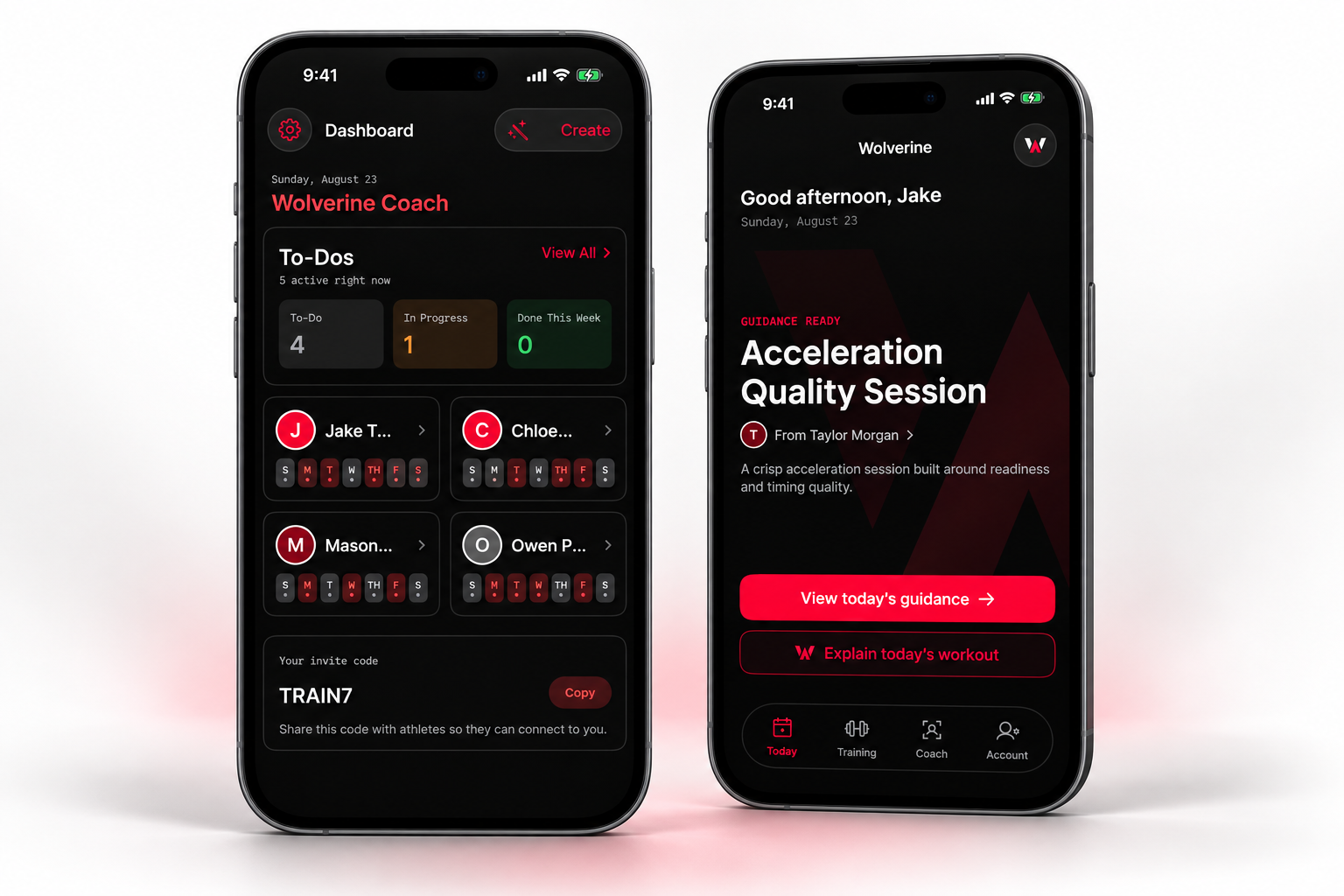
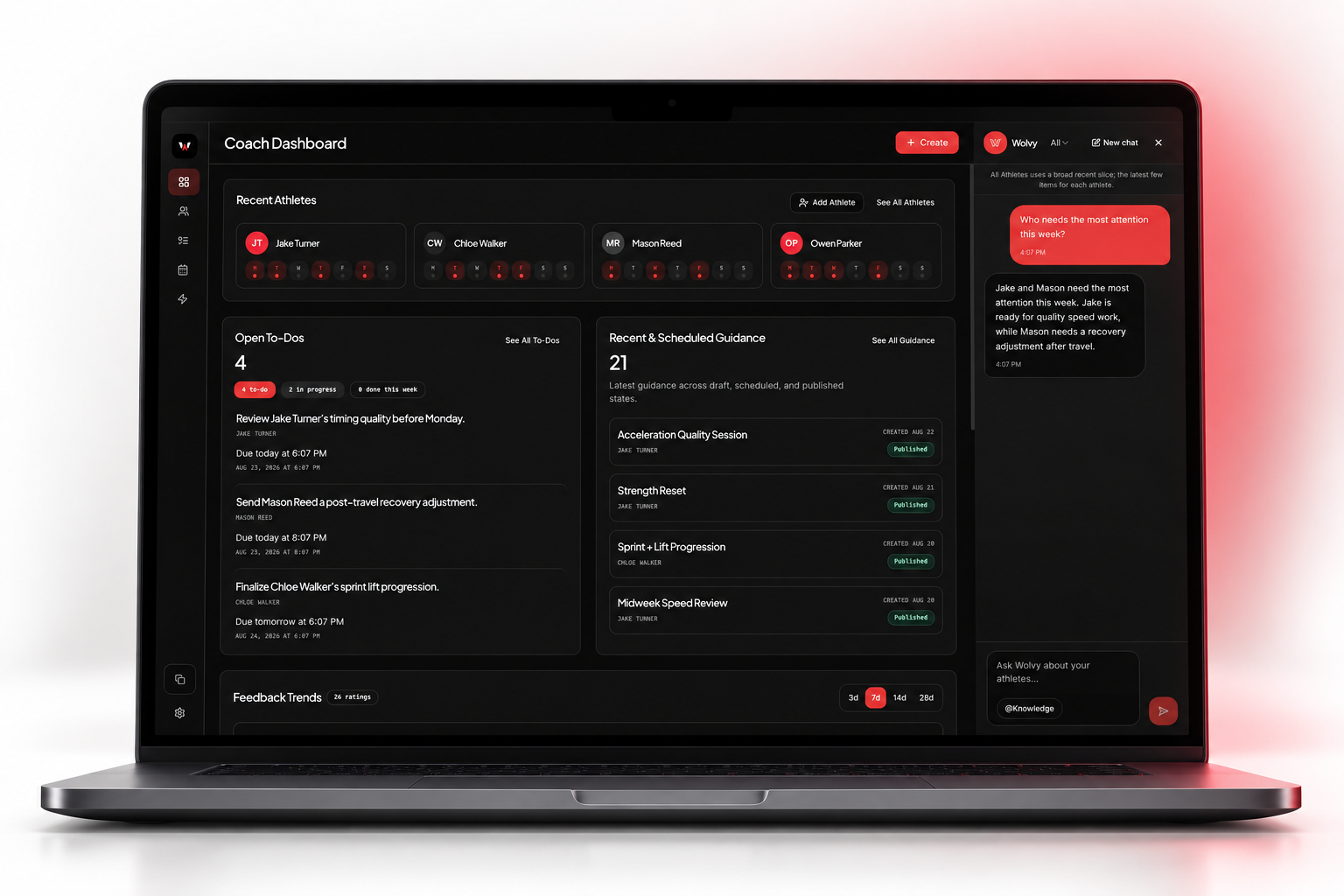
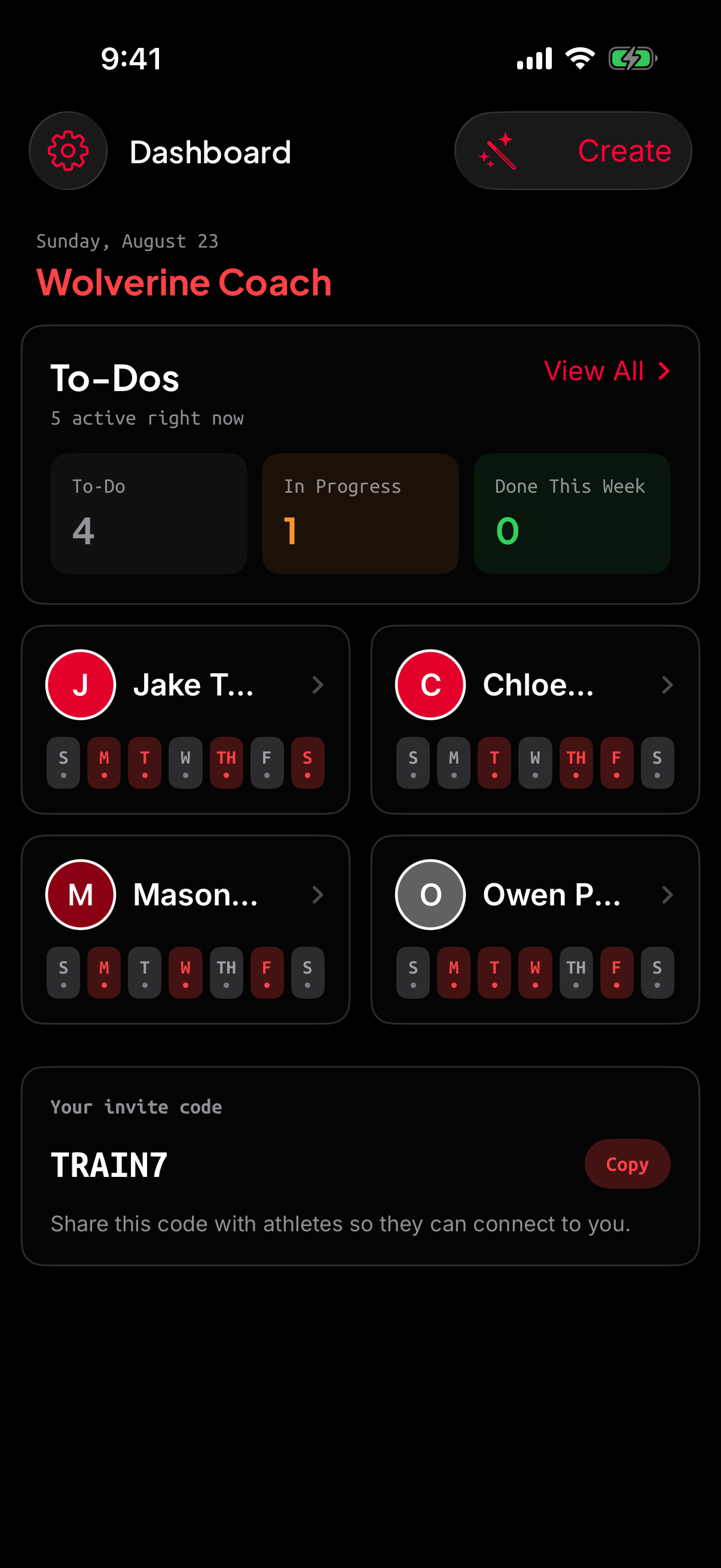
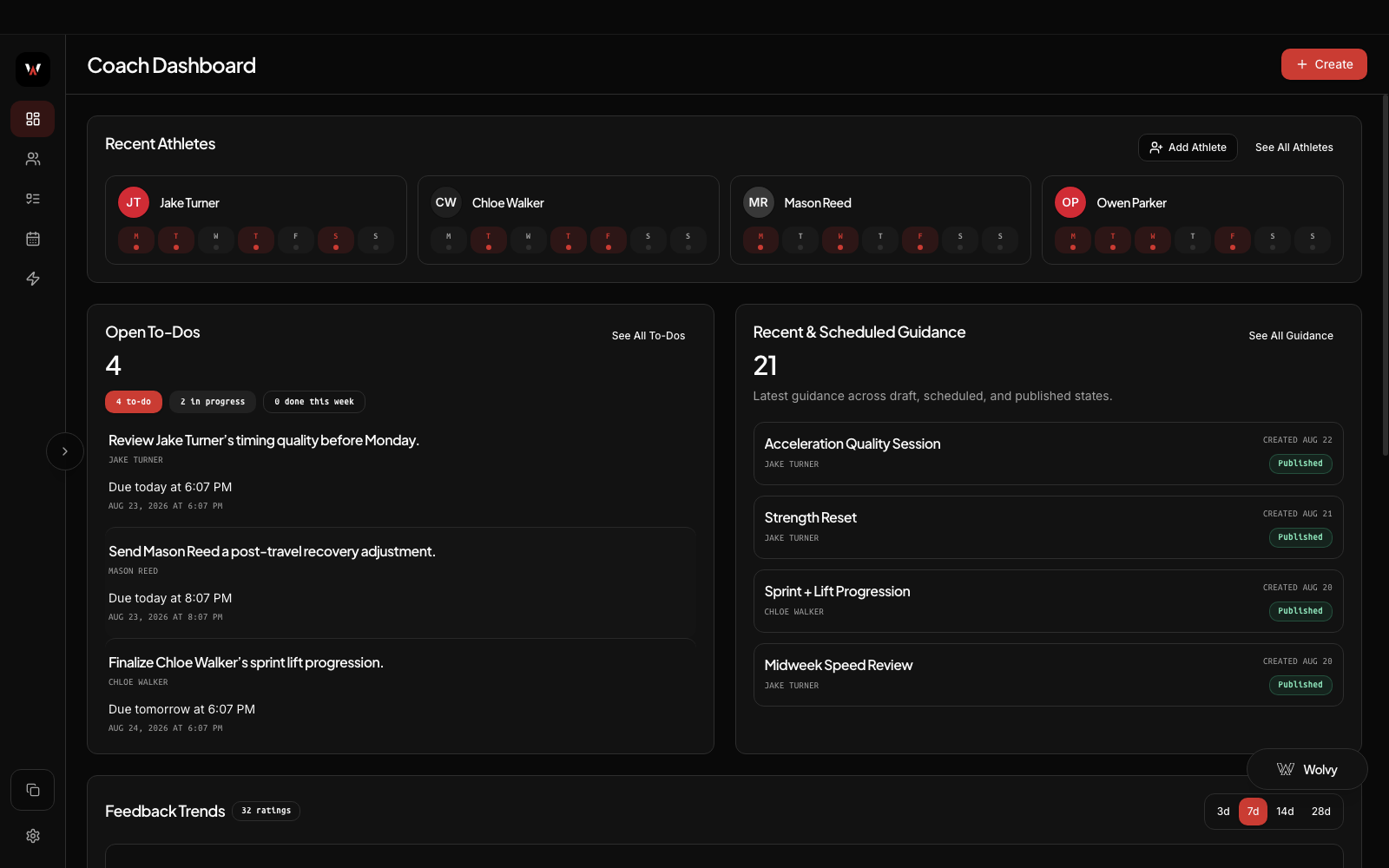
01: See every athlete, priority, and next step in one focused coaching workspace.
-
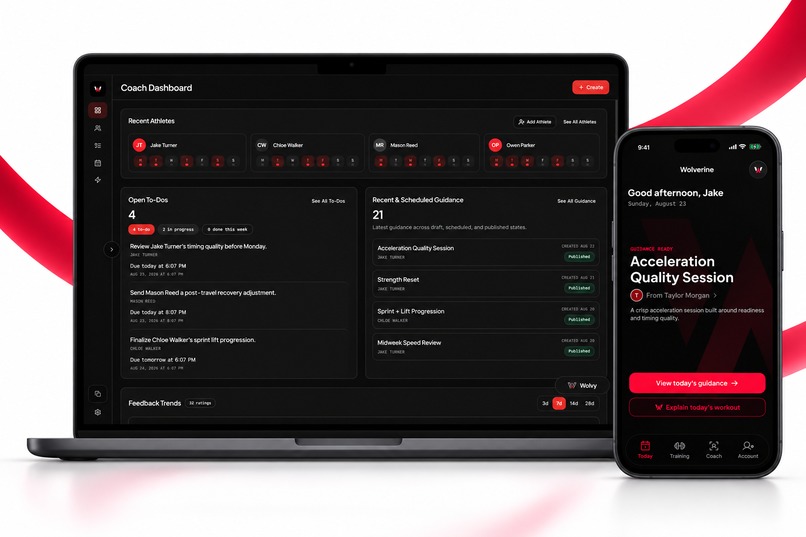
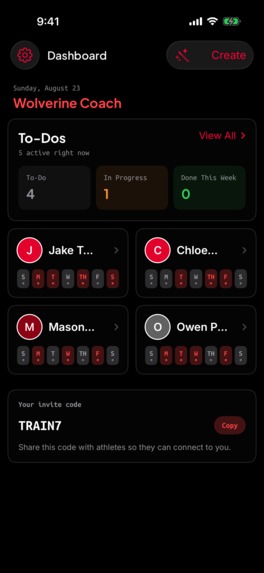
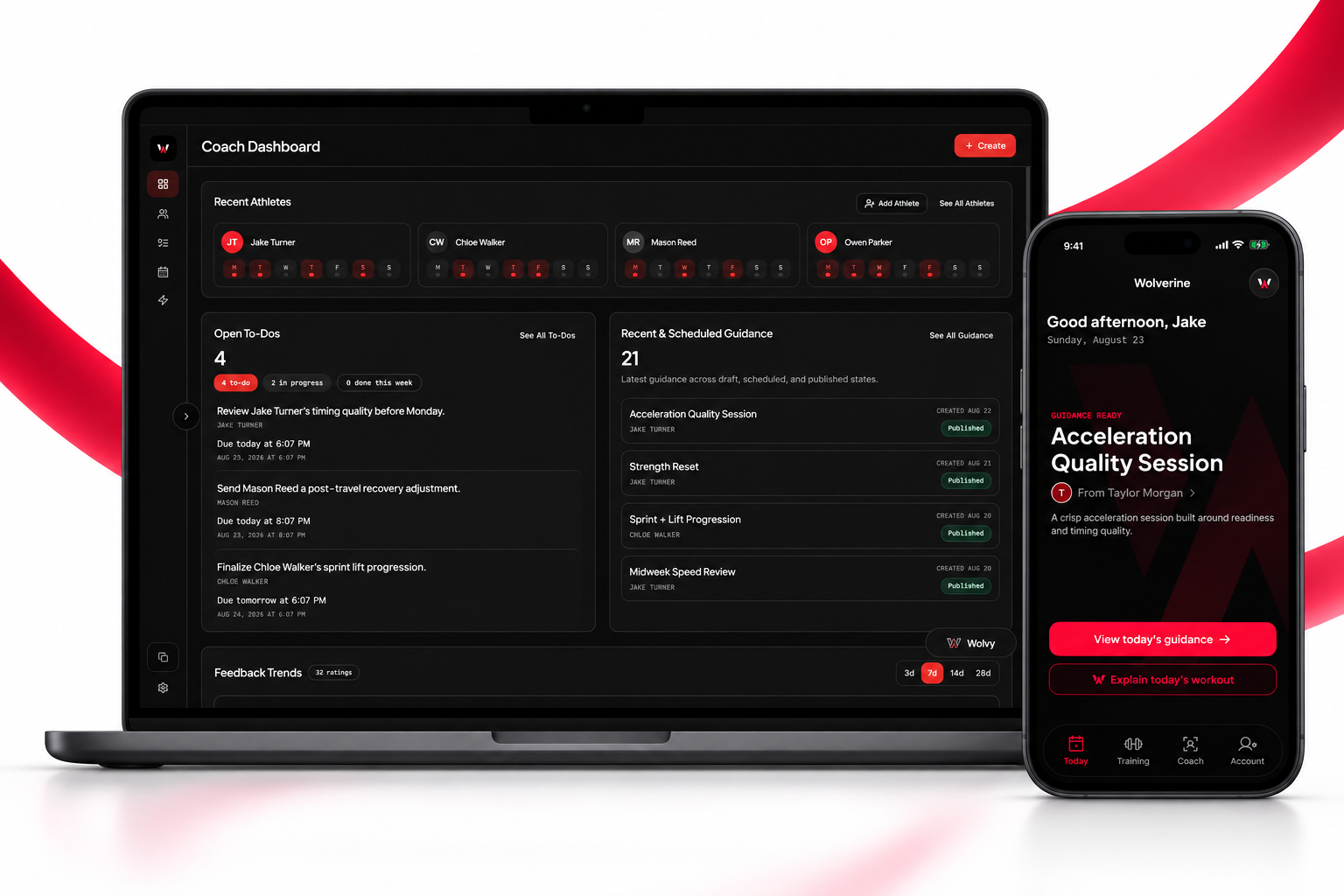
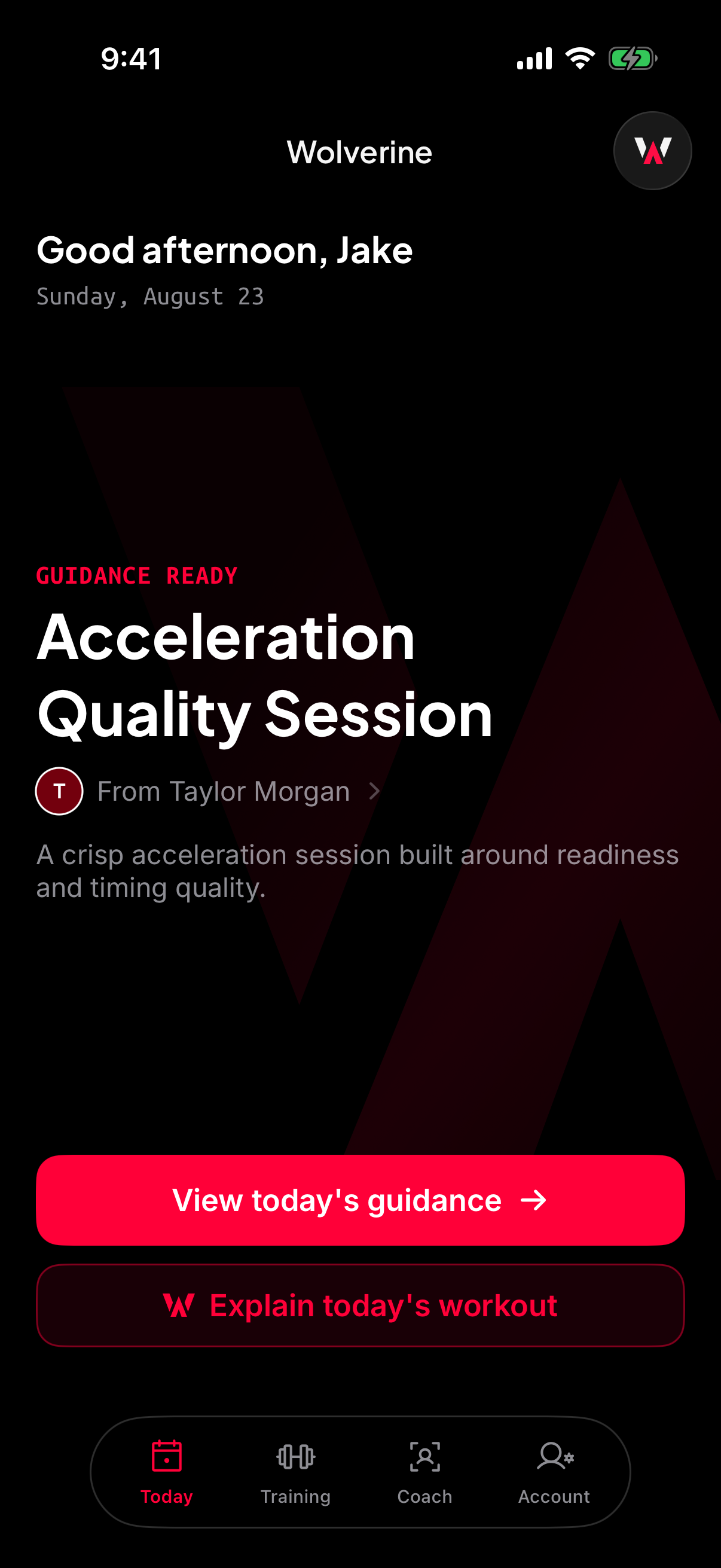
03: One continuous coaching experience across desktop and mobile.
-
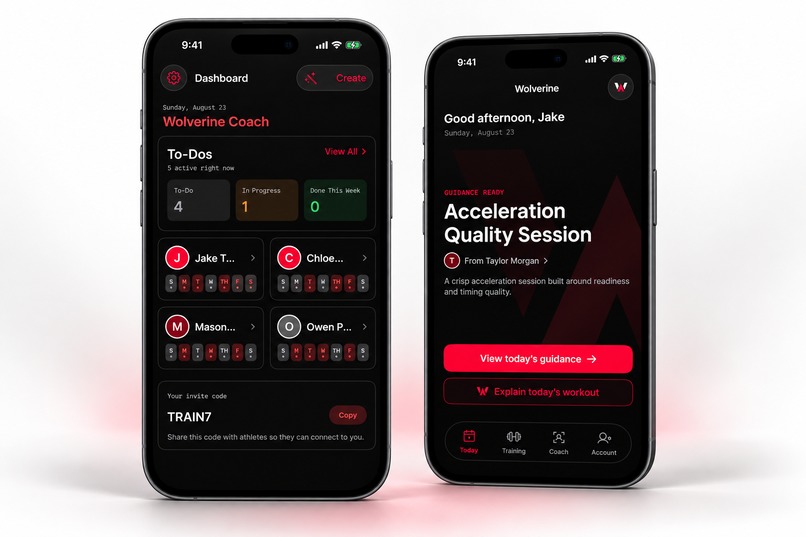
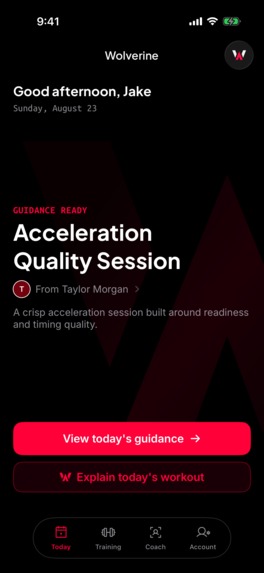
02: Keep coaches and athletes connected wherever training happens.
-
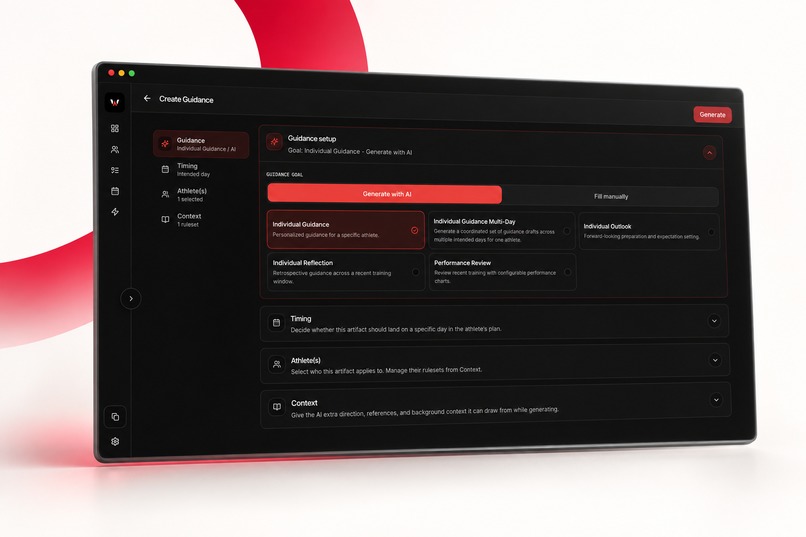
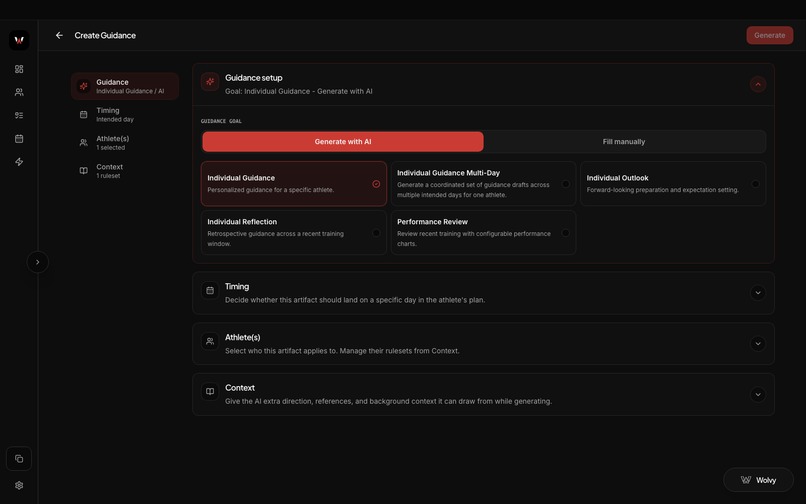
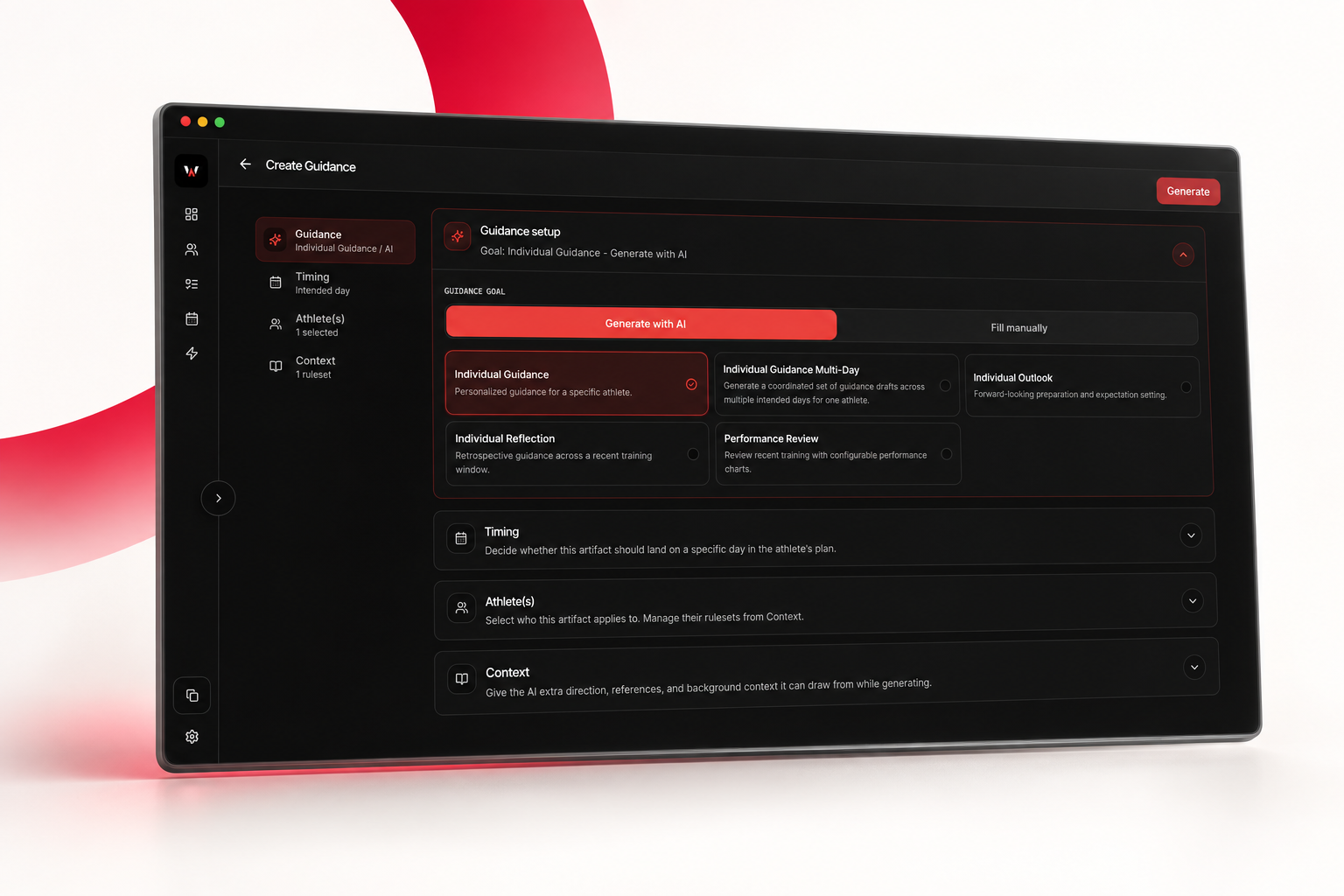
05: Turn athlete context into personalized guidance faster.
-
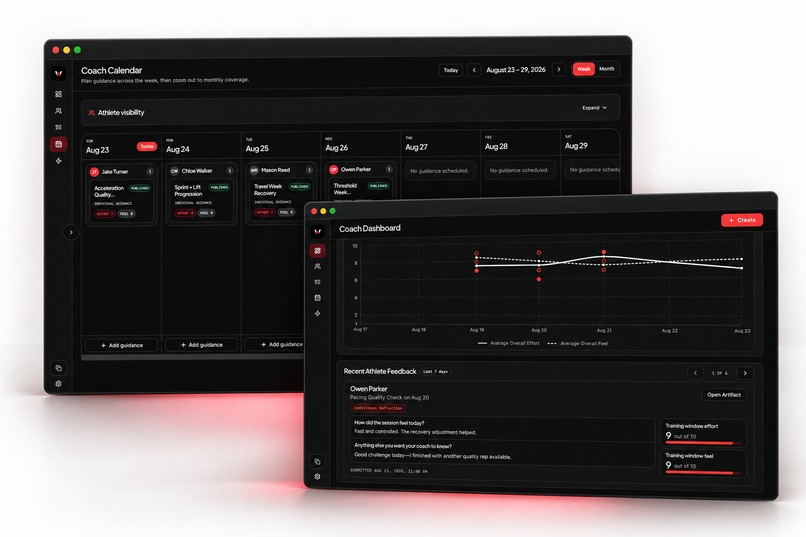
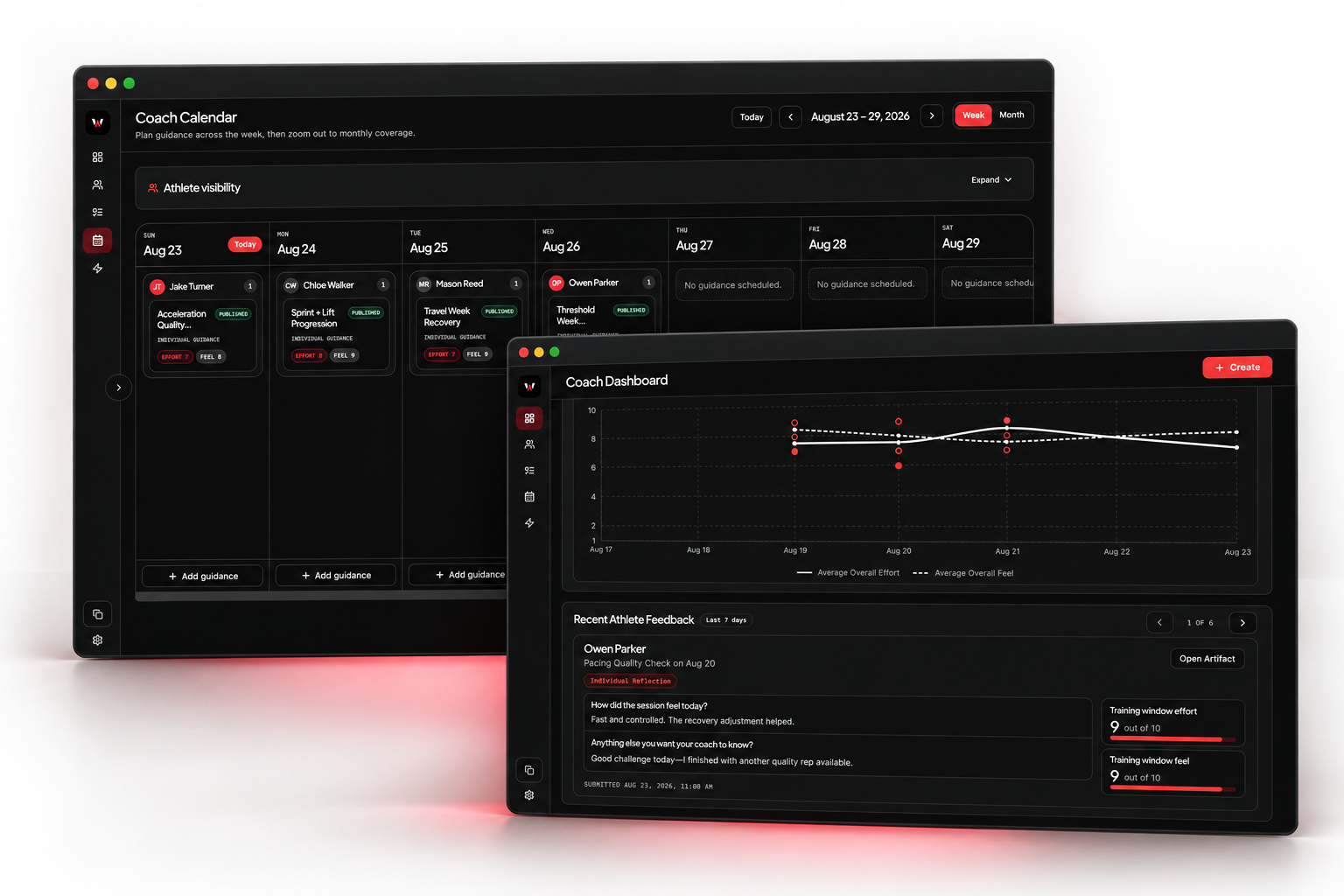
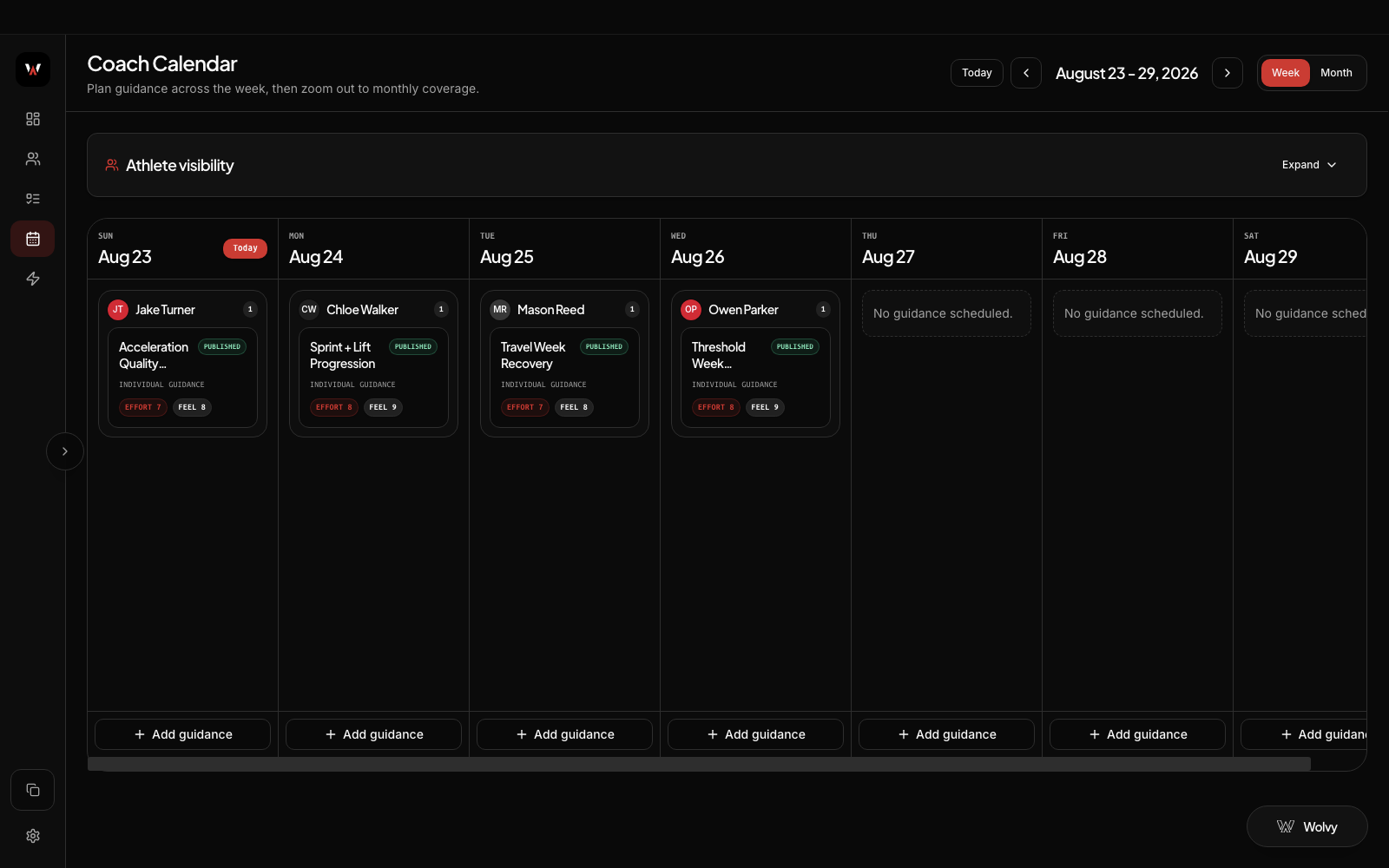
06: Plan the week, capture feedback, and keep progress moving.
-
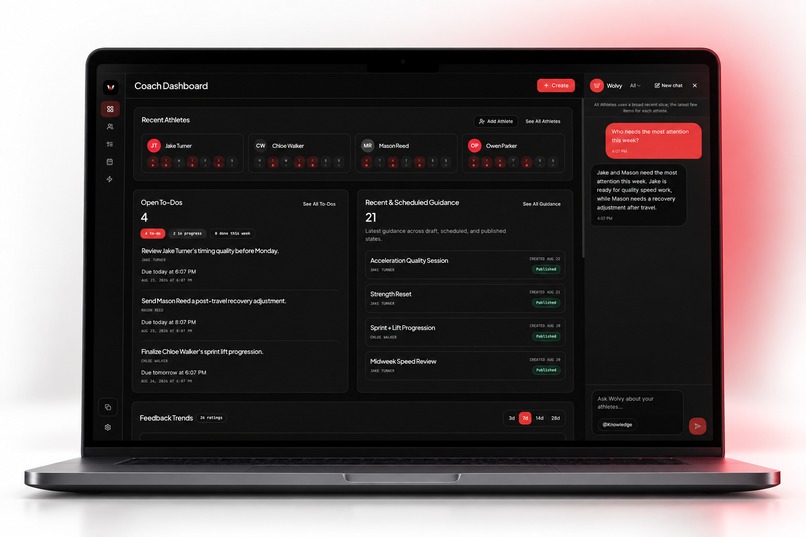
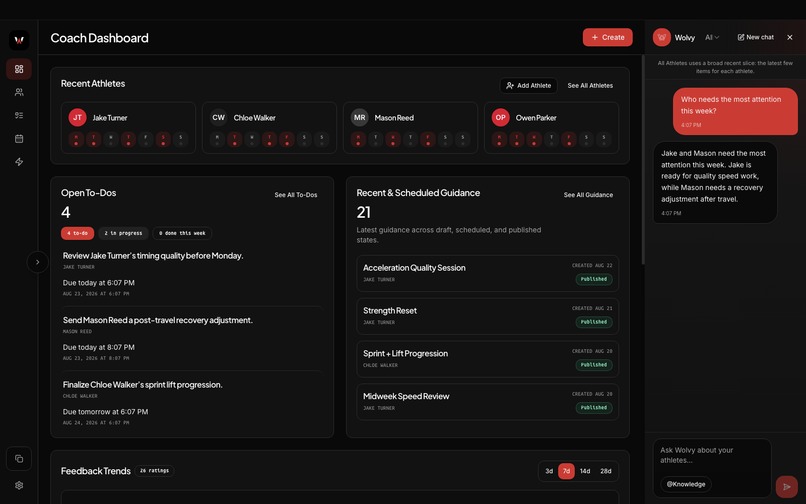
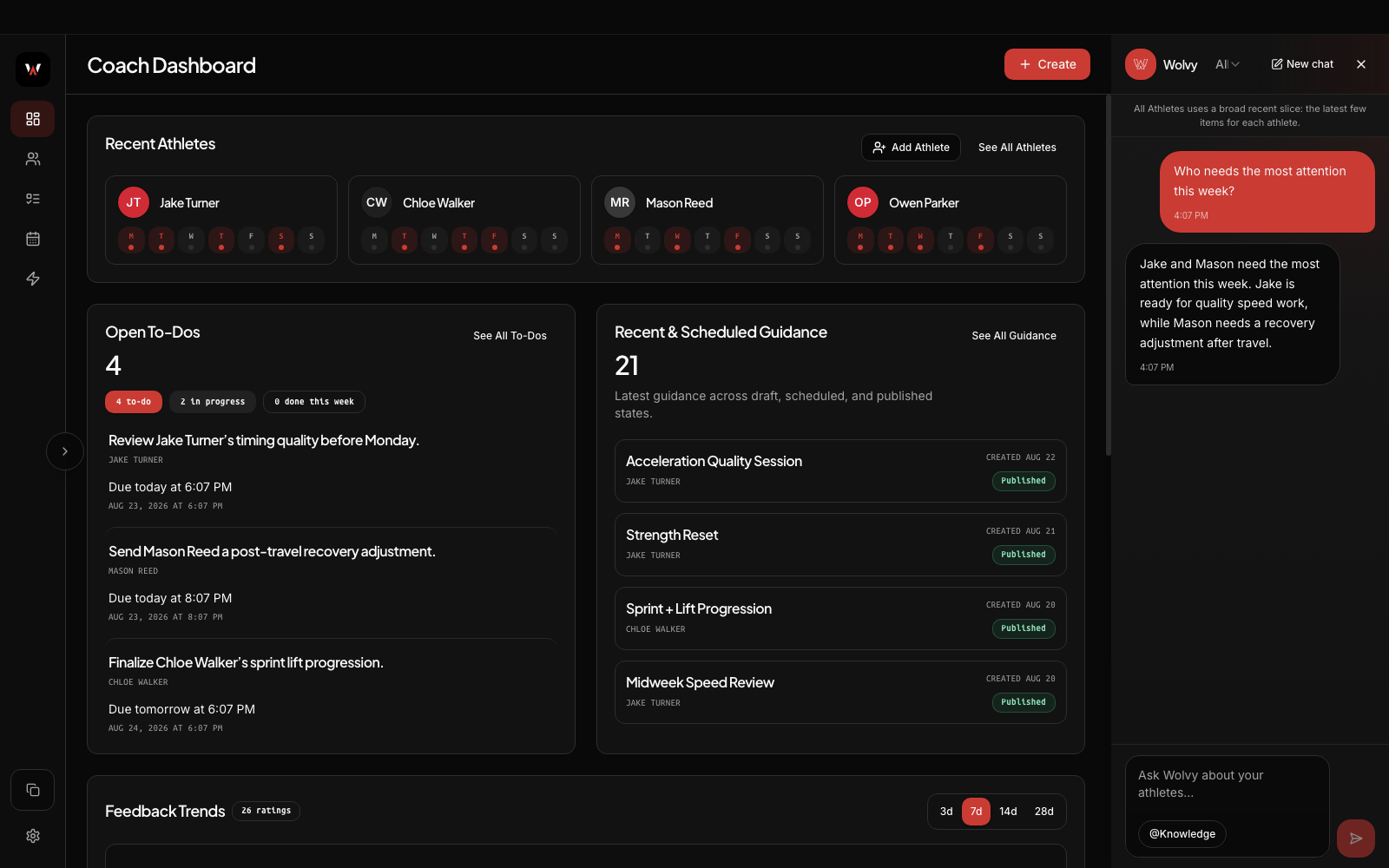
04: Ask Wolvy what changed, who needs attention, and what to do next.
-
-
-
-
-
-
-
Inspiration
Wolverine began at the intersection of coaching experience and technology. One of us builds software and AI systems; the other is a head trainer for a globally recognized fitness studio.
We kept seeing the same problem: great coaching is deeply personal, but the context required to deliver it is scattered across messages, workout results, readiness notes, schedules, and documents. As an athlete roster grows, coaches are forced to spend more time assembling information and less time actually coaching.
We asked a simple question: Can AI give coaches more leverage without taking the coach out of coaching?
What Wolverine does
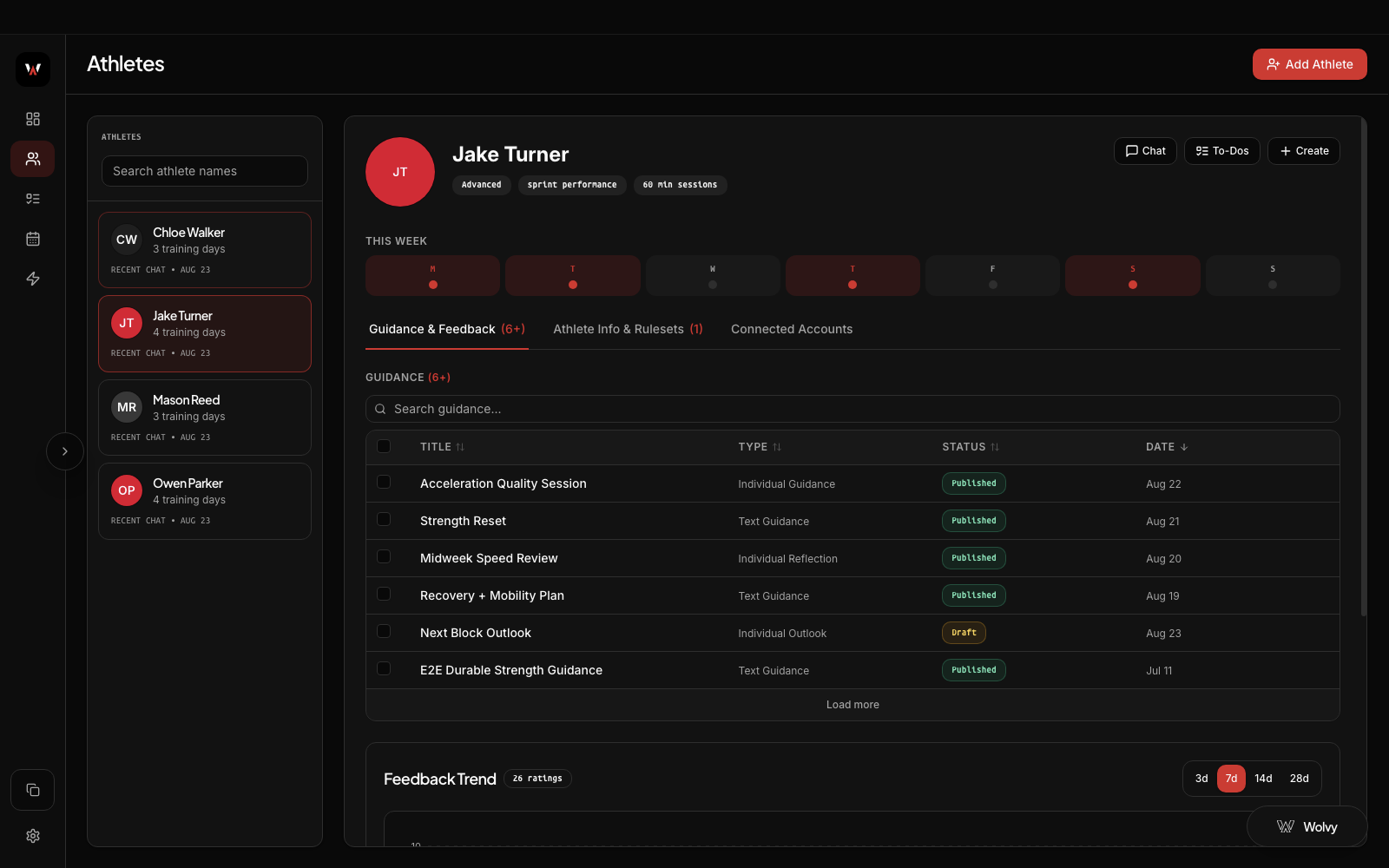
Wolverine is a shared coaching platform that helps coaches provide personalized, consistent support to every athlete.
Coaches can:
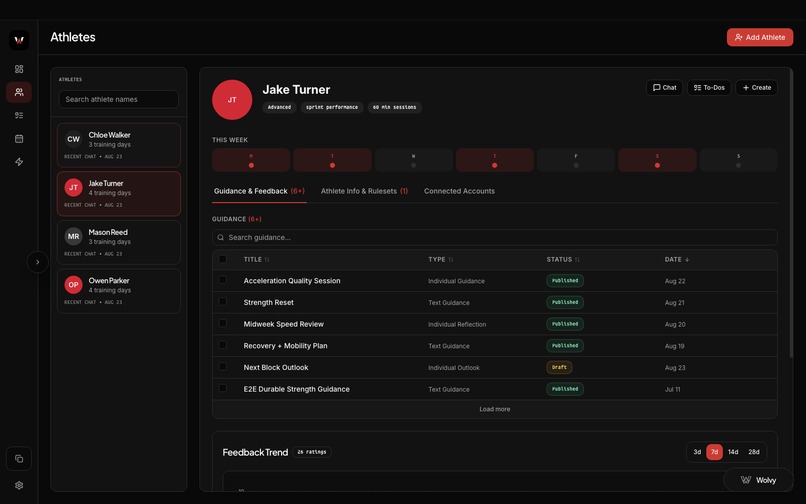
- Manage athletes, goals, baselines, training history, and conversations in one place
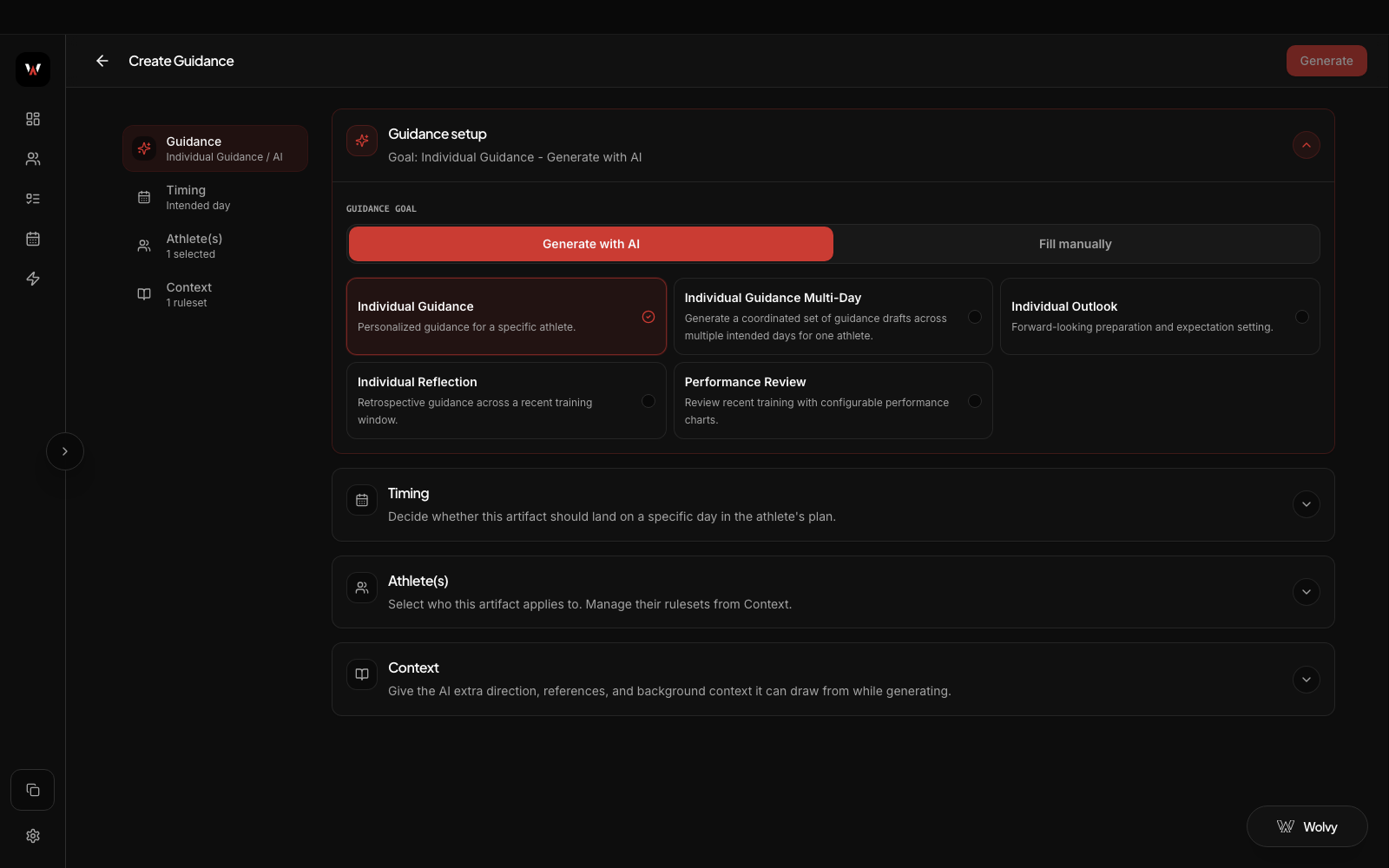
- Create personalized guidance using athlete data, coaching rules, and uploaded reference material
- Review, edit, schedule, and publish AI-assisted guidance
- Ask Wolvy, the built-in coaching copilot, questions about individual athletes or patterns across an entire roster
- Track feedback, readiness, follow-ups, performance trends, and personal records
Athletes receive guidance and check-ins, communicate with their coach, report how training went, and keep important recommendations close at hand across mobile and wearable devices.
The feedback loop is central to the product. Each athlete response becomes context for the next coaching decision, helping Wolverine become more useful without replacing the coach's judgment.
How we built it
Wolverine is a cross-platform system designed around two connected experiences: one for coaches and one for athletes.
The product includes:
- SwiftUI applications for iOS and watchOS
- Kotlin and Jetpack Compose applications for Android and Wear OS
- A React and Electron desktop application
- Firebase Authentication, Firestore, Storage, Cloud Functions, Cloud Messaging, Analytics, and Crashlytics
- Google Cloud Run services for external fitness-data integrations
- Gemini and Vertex AI for context-aware generation and analysis
- LangChain and LangGraph for Wolvy's agentic workflows
Our AI pipeline combines structured athlete information, recent training, previous guidance, coach-authored rules, and uploaded knowledge. Coaches always retain control through a review-before-publish workflow.
RevenueCat and the Shipathon
Wolverine already spans Apple, Google, and desktop platforms, which makes subscription management a meaningful engineering and product challenge.
For the Shipathon, we are consolidating monetization around RevenueCat. Apple, Google, and web products will map to shared entitlements so a coach or athlete receives the correct access regardless of where they subscribe. RevenueCat offerings and paywalls will let us evolve packaging without shipping a new application release, while webhook-driven synchronization will keep subscription state and AI usage allowances aligned with our Firebase backend.
Our goal is to make subscribing feel like one Wolverine membership—not three unrelated platform purchases.
Challenges we faced
Keeping AI grounded
Generic AI-generated fitness advice is not good enough. The difficult part was assembling the right context for each request while preventing stale, irrelevant, or unrelated athlete information from influencing the result.
Designing for two roles
Coaches and athletes share information, but they do not have identical permissions or workflows. We had to build strict boundaries around private data while still making collaboration feel immediate.
Maintaining cross-platform consistency
Wolverine spans desktop, mobile, and wearable devices. Features, navigation, notifications, billing state, and data contracts must remain consistent even though every client uses a different native technology stack.
Connecting subscriptions to metered AI
Access is not simply “paid” or “free.” Different plans include different AI allowances, and usage can come from foreground requests, automations, reports, or background analysis. Keeping purchases, entitlements, and usage synchronized requires a dependable source of truth.
What we learned
We learned that the best coaching AI is not the loudest voice in the product. It works quietly behind the coach: organizing context, identifying patterns, preparing a useful first draft, and making follow-through easier.
We also learned that the feedback loop matters more than any single prompt. Guidance improves when athletes can quickly explain what happened and coaches can use that response in the next decision.
Finally, cross-platform monetization is fundamentally an identity and entitlement problem—not just a checkout problem. RevenueCat gives us a path to treat access as one coherent product across every platform.
What's next
Next, we are completing the RevenueCat implementation, testing offerings and paywalls with early users, and expanding Wolverine's rollout to coaching teams and performance studios. We will be releasing this app in September.
The long-term vision is to give every coach the infrastructure of a high-performance organization while preserving the human relationship that makes coaching work.
Built With
- ai
- android
- cloud
- compose
- electron
- firebase
- firestore
- functions
- gemini
- javascript
- jetpack
- kotlin
- langchain
- langgraph
- messaging
- os
- react
- revenuecat
- swift
- swiftui
- typescript
- vertex
- watchos
- wear

Log in or sign up for Devpost to join the conversation.