The Inspiration
We noticed that it was quite difficult for several of our classmates to adequately visualize 3D models in classes such as calculus, physics, and chemistry. We wanted to tackle this solution by making something that anyone could use to better see how 3D functions looked in space.
What it does
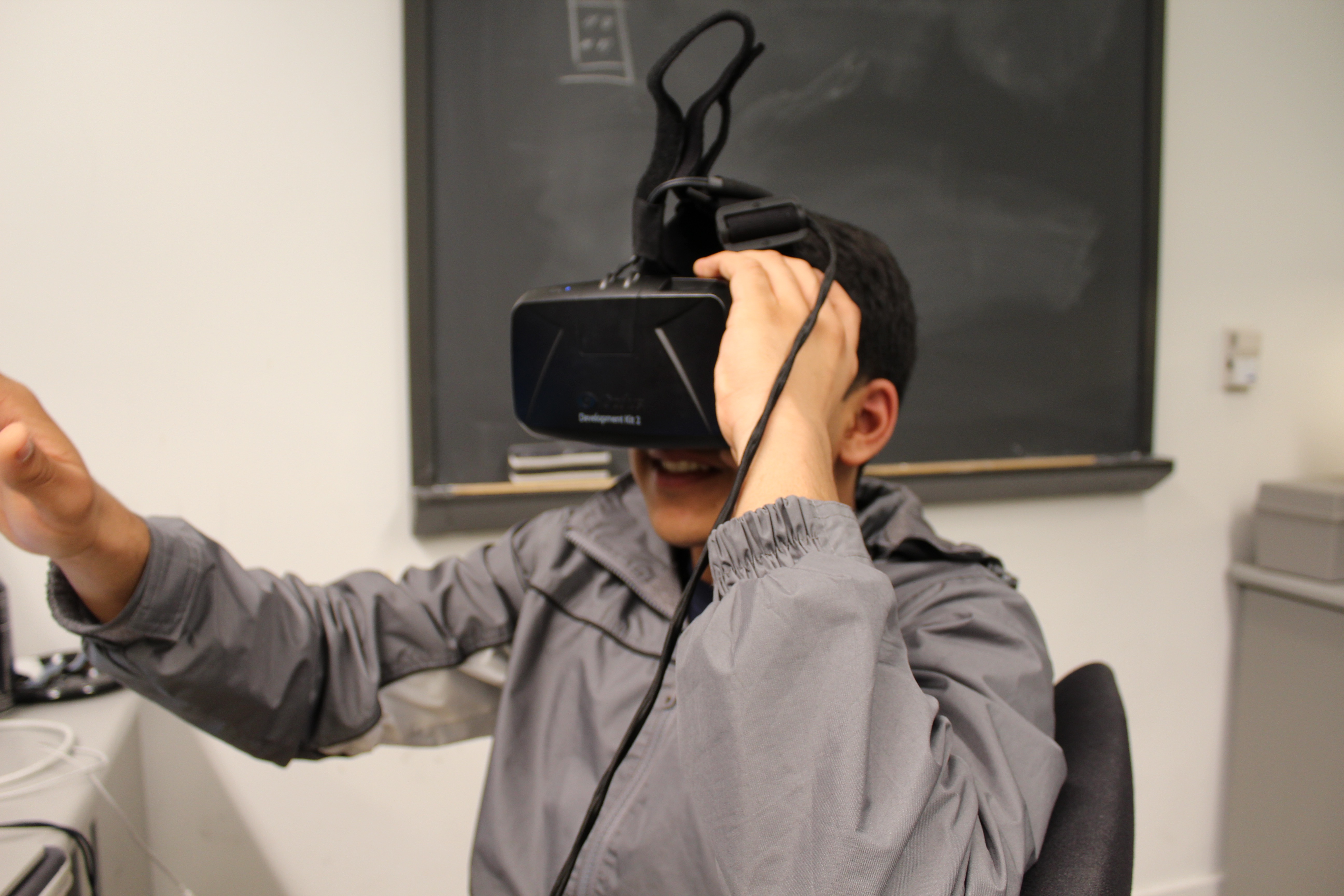
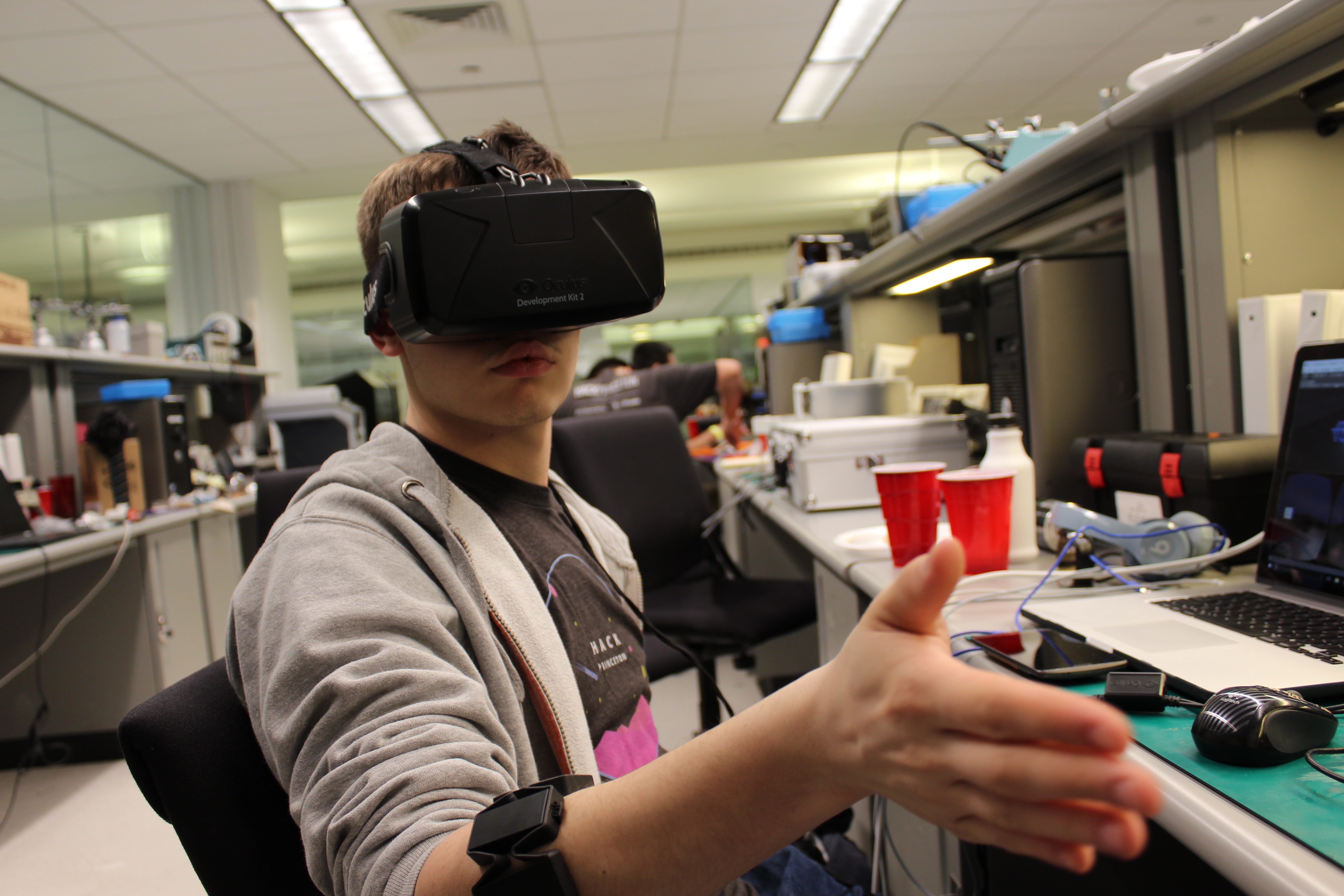
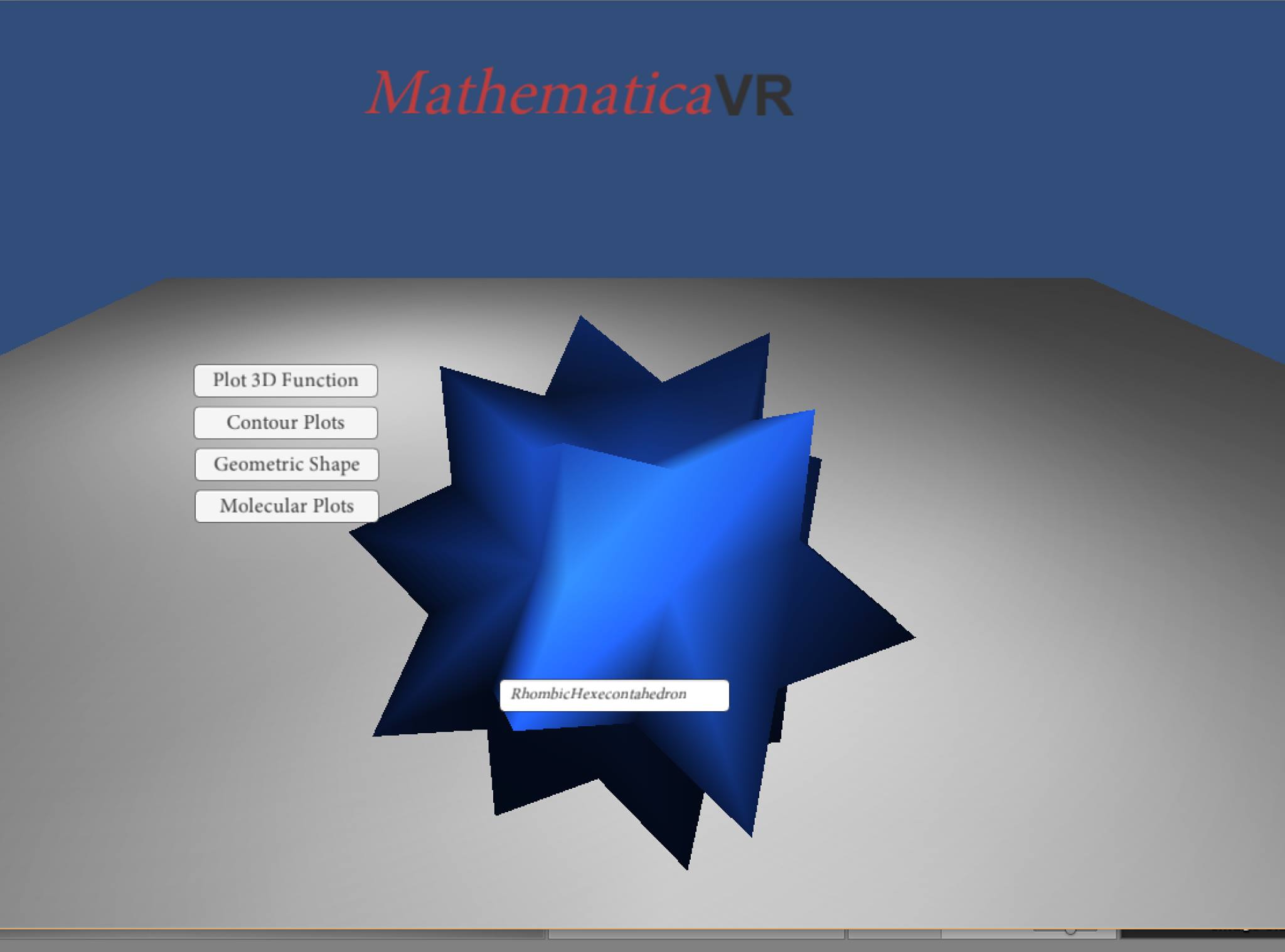
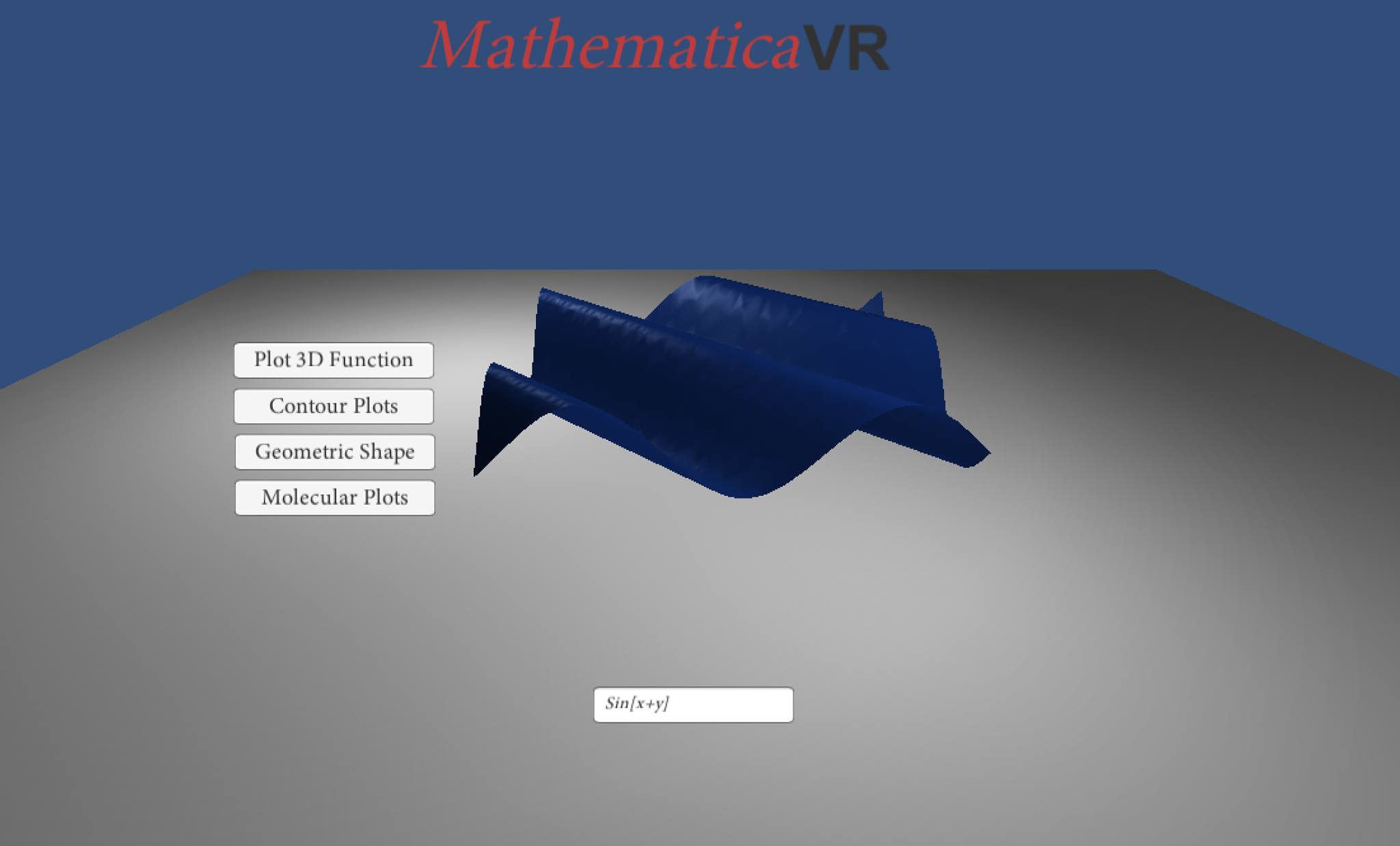
Our product can input a query in Mathematica and output a 3D model of the representation requested into a Unity environment that can be displayed on the Oculus Rift, and navigated through using the Myo Armband.
How we built it
We built our product by linking the Mathematica kernel with Unity's C# codebase through Wolfram's Native .NETLink. This allowed us to submit queries to the Mathematica kernel and act upon the result in Unity. For example, loading most 3D models requires us to
- Fetch the user's desired query
- Format it for Mathematica queries and export format
- Save the file to disk (.OBJ and .MLT).
- Pass saved file location to Unity]
- Load the saved file utilizing a self-modified .OBJ and .MTL file importer for the 3D data
Challenges we ran into
We ran into several bumps along the way mainly due to system requirements. For starters, the Oculus Rift DK2 was not compatible with the current version of the Mac Oculus Runtime. In fact, we had to install a version of the runtime that was over a year out of date in order for the Rift interface with the mac. Also, since the Mathematica kernel was only made to link with the .NET framework, we realized that we had to run a partition of Windows 10 on one of our macs to run our program. After we got the dual boot to work, there were even further system issues. At first the, Rift was not connecting with the latest Windows Runtime for Rift DK2. It would always turn off within 10 seconds of being plugged in. We realized that we had to downgrade the runtime to 0.5.0.1 in order for our project set up to work. After that happened, we had to then re-install the appropriate and corresponding Myo and Unity packages, and graphics driver for the Rift.
Accomplishments that we're proud of
We're really proud of being able to interface Mathematica with the Rift. There were several complexions that made this a difficult project to implement, but this was definitely a great learning experience. This was our first time working with VR in any capacity, and it is definitely something that has caught our interest and challenged us greatly.
What we learned
We learned a lot about the Mathematica language, complexions with creating VR applications, and how we can interface the Myo armband with various applications.
What's next for WolframVR
Going forward, we hope to make WolframVR something with as many features as possible. There are endless possibilities with Mathematica, and we believe that WolframVR could be a powerful tool for teaching mathematics, physics, and several other subjects more effectively to students. We hope to expand the capabilities of our application and try to directly help students that can benefit from our product.


Log in or sign up for Devpost to join the conversation.