-
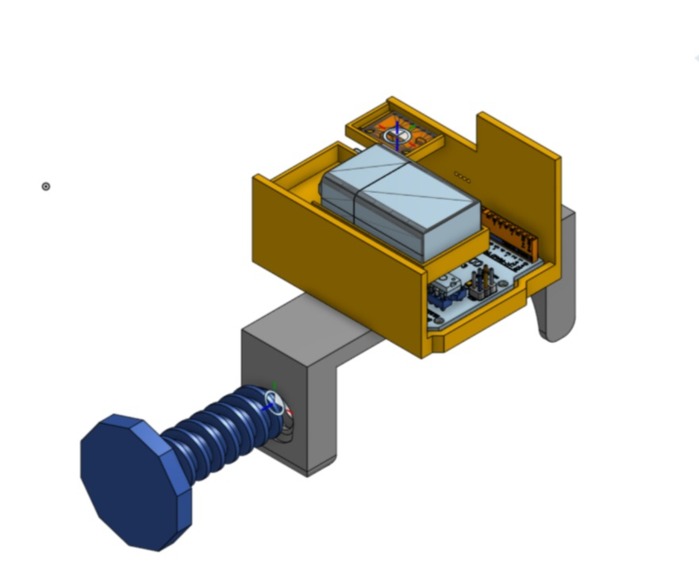
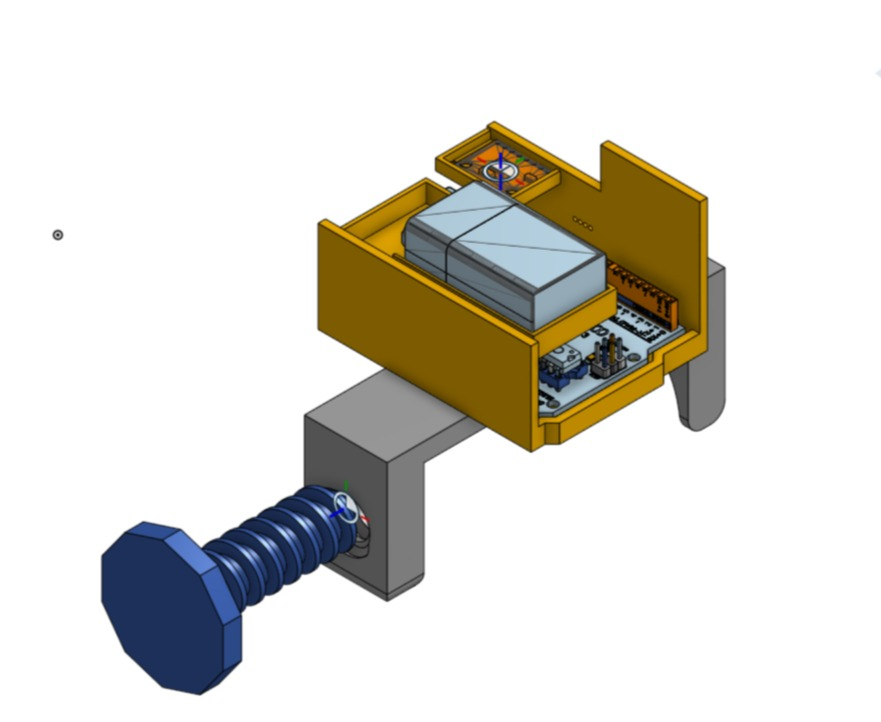
WobbleGuard CAD
-
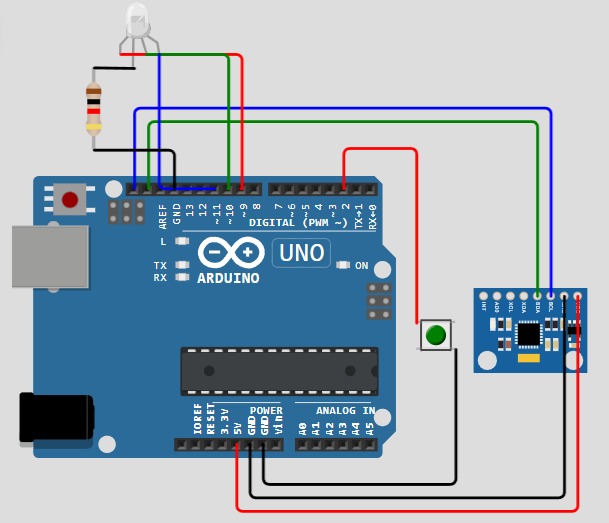
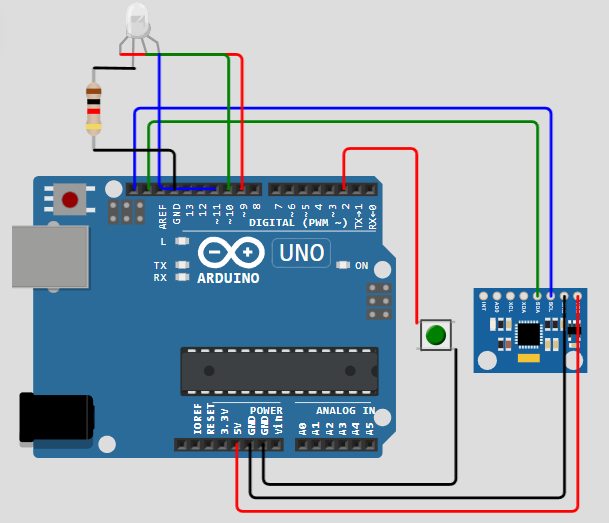
WobbleGuard Circuitry
-
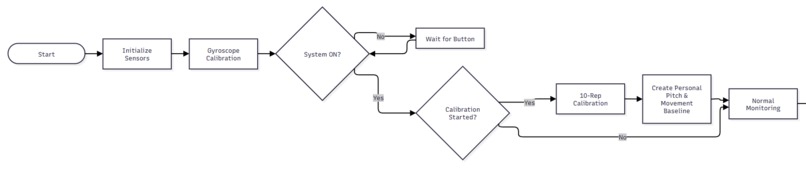
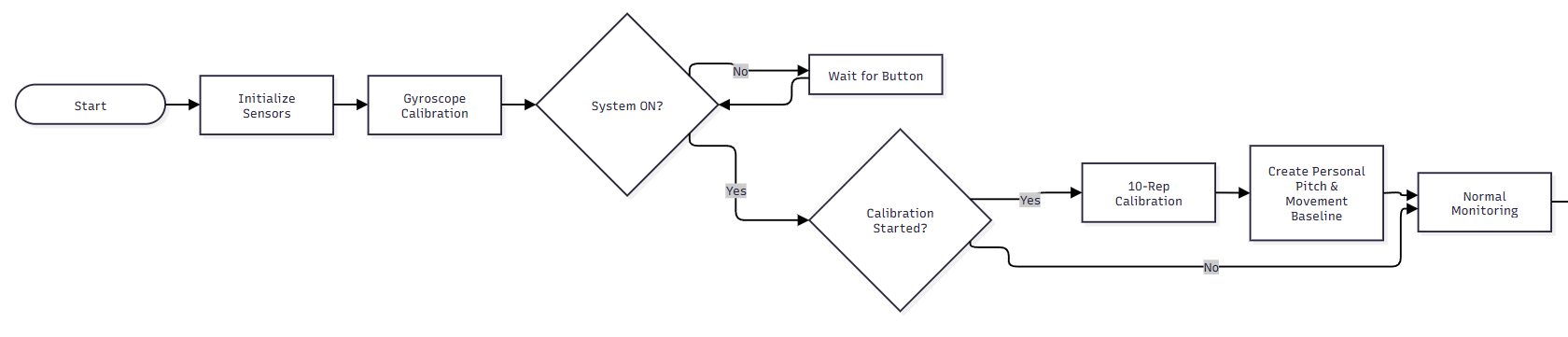
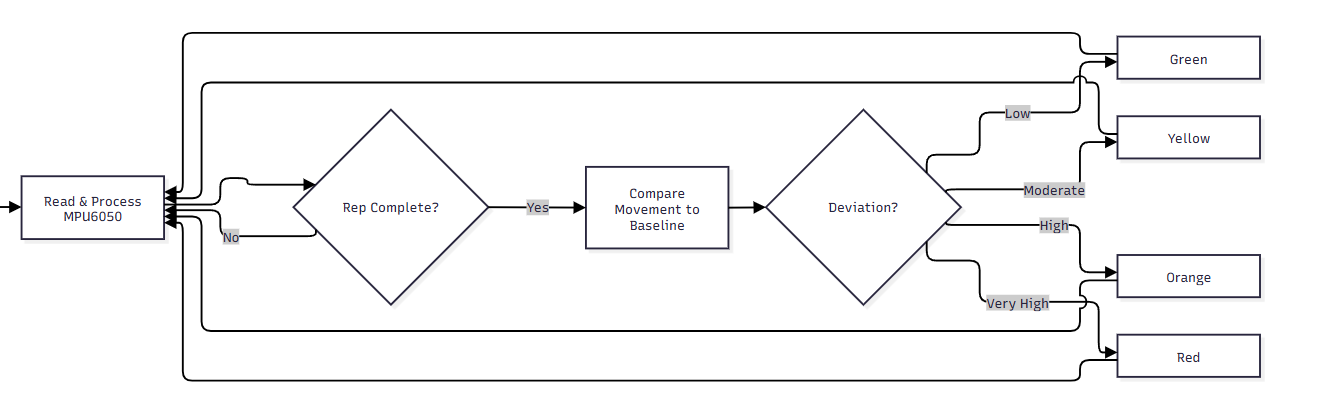
WobbleGuard Flowchart (1)
-
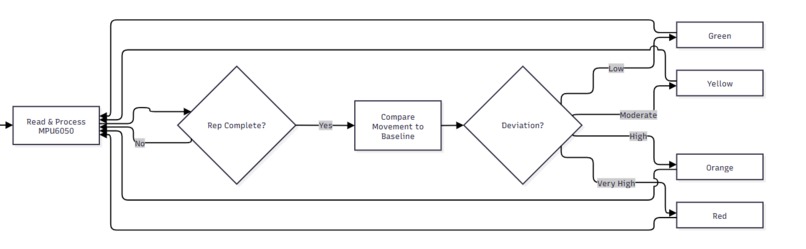
WobbleGuardFlowchart (2)
-
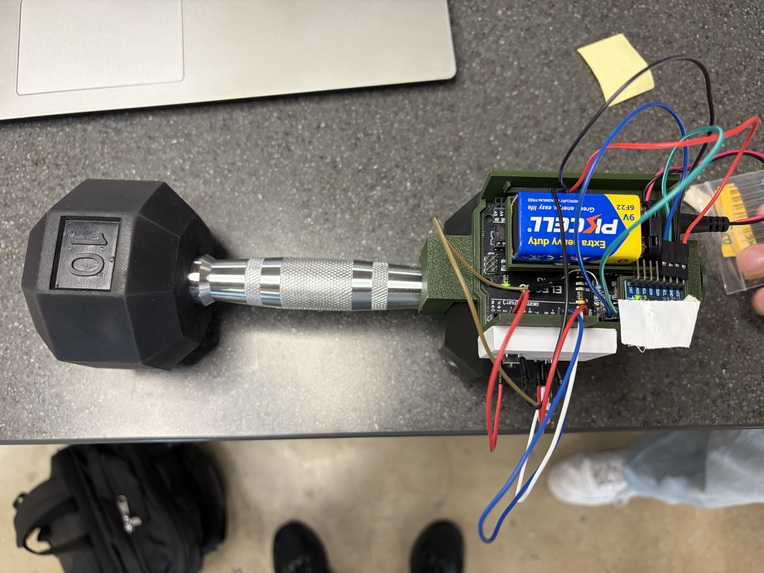
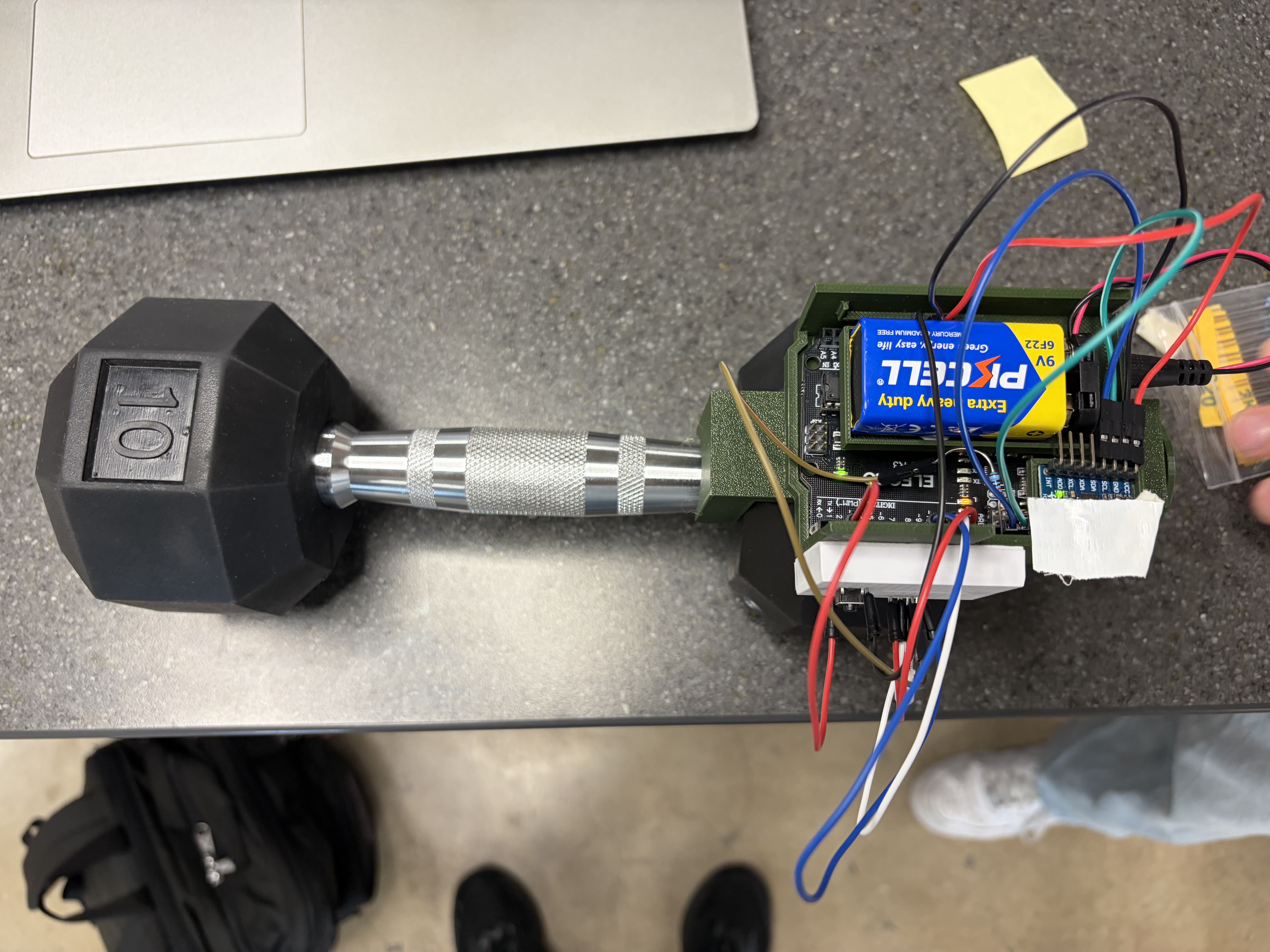
WobbleGuard Prototype
Inspiration
Repetitive exercise can often lead to changes in movement consistency, which has been proved to increase injury risk potential. We wanted to create an affordable device that could help users recognize their movement instability without requiring excessive cameras or a personal trainer. WobbleGuard does just that: an attachable form-monitoring system with real-time feedback to the user.
What it does
WobbleGuard uses an inertial measurement unit (IMU) to track movement during resistance exercises. During calibration, the user performs a designated number of repetitions, allowing the system to establish a baseline. During normal use, WobbleGuard actively compares each repetition to the baseline and uses and RGB LED to provide real-time feedback. Green indicates movement similar to the baseline, while yellow, orange, and red indicate progressively larger deviations.
How we built it
We built WobbleGuard using an Arduino Uno and MPU6050 IMU. A button controls the device and initiates calibration, while an RGB LED provides the user feedback. Computer-aided design was used for the housing and attachment system, while a Bambu Lab X1C 3D Printer was used to print the designs.
Challenges we ran into
One of the largest challenges we ran into was determining how to differentiate between intentional movement and unwanted instabilities. Since an accelerometer can solely measure changes in velocity, not position, we decided to combine accelerometer and gyroscope metrics to estimate orientation and used a calibration process to establish personalized baselines rather than universal ones.
Accomplishments that we're proud of
We are proud of creating a system that can adapt to the individual user and exercise rather than a universal one with no personalization. We also developed a comprehensive workflow in addition to utilizing a wide variety of techniques, including CAD, 3D Printing, circuitry, coding, and more.
What we learned
We learned that working with real-world sensor data is significantly more complicated and intricate than at first glance. Measurements may not be very precise, and excess noise is common. We also learned the importance of and methods to design around constraints: limited resources, various exercise movements, size/weight concerns, etc.
What's next for WobbleGuard
Our next-steps is to both improve the motion-sensing algorithm and possibly create calibration settings that can be pre-selected based on a specific exercise/movement. To reduce size/weight, we could also explore the option of utilizing a printed circuit board and wireless connectivity in addition to developing a smaller housing system.

Log in or sign up for Devpost to join the conversation.