Inspiration
Reddit is built on communities deciding what is good. A typical daily puzzle works the other way: one author sets it and everyone else just plays. I wanted a daily game where the people who solve the puzzle also write the next one.
What it does
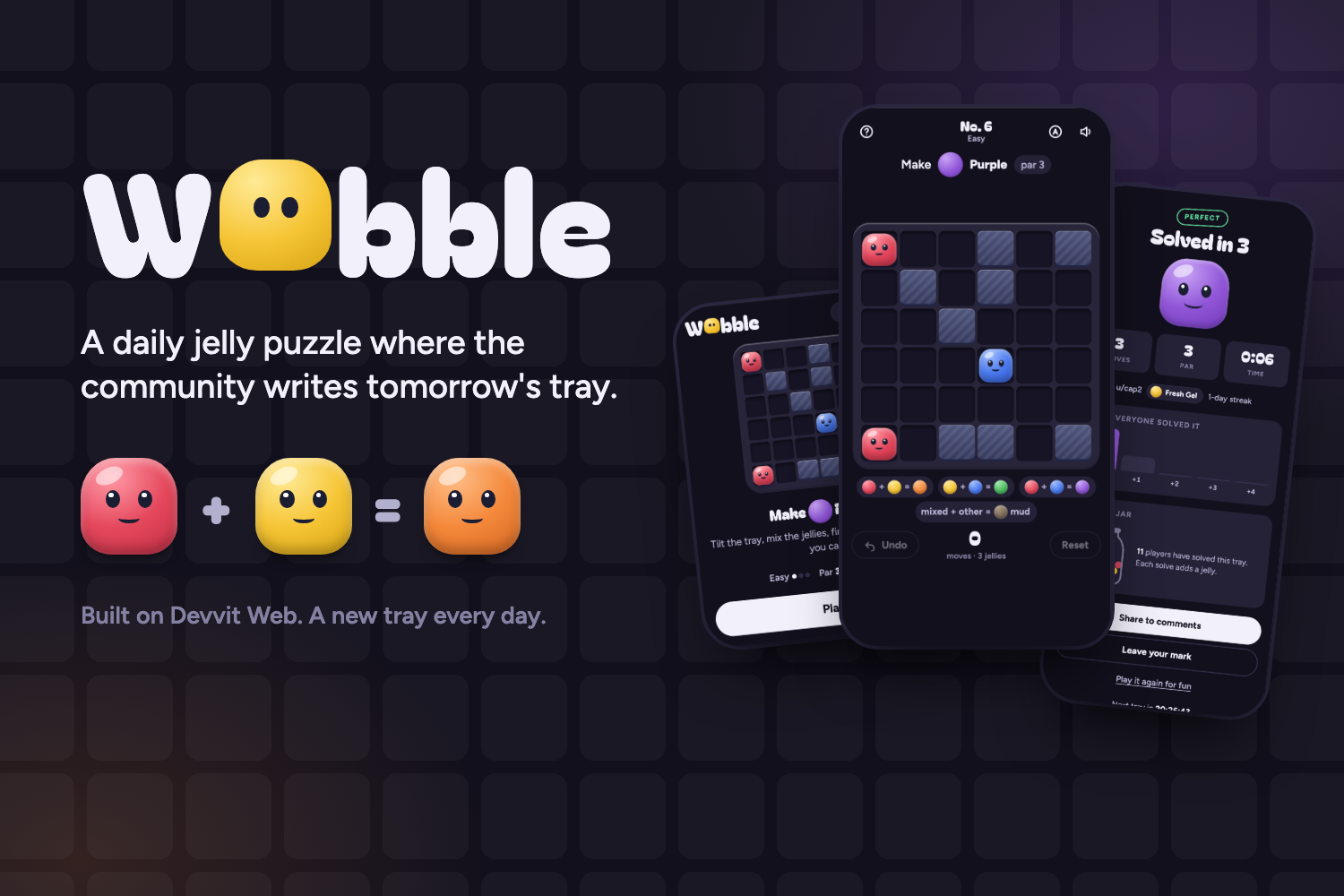
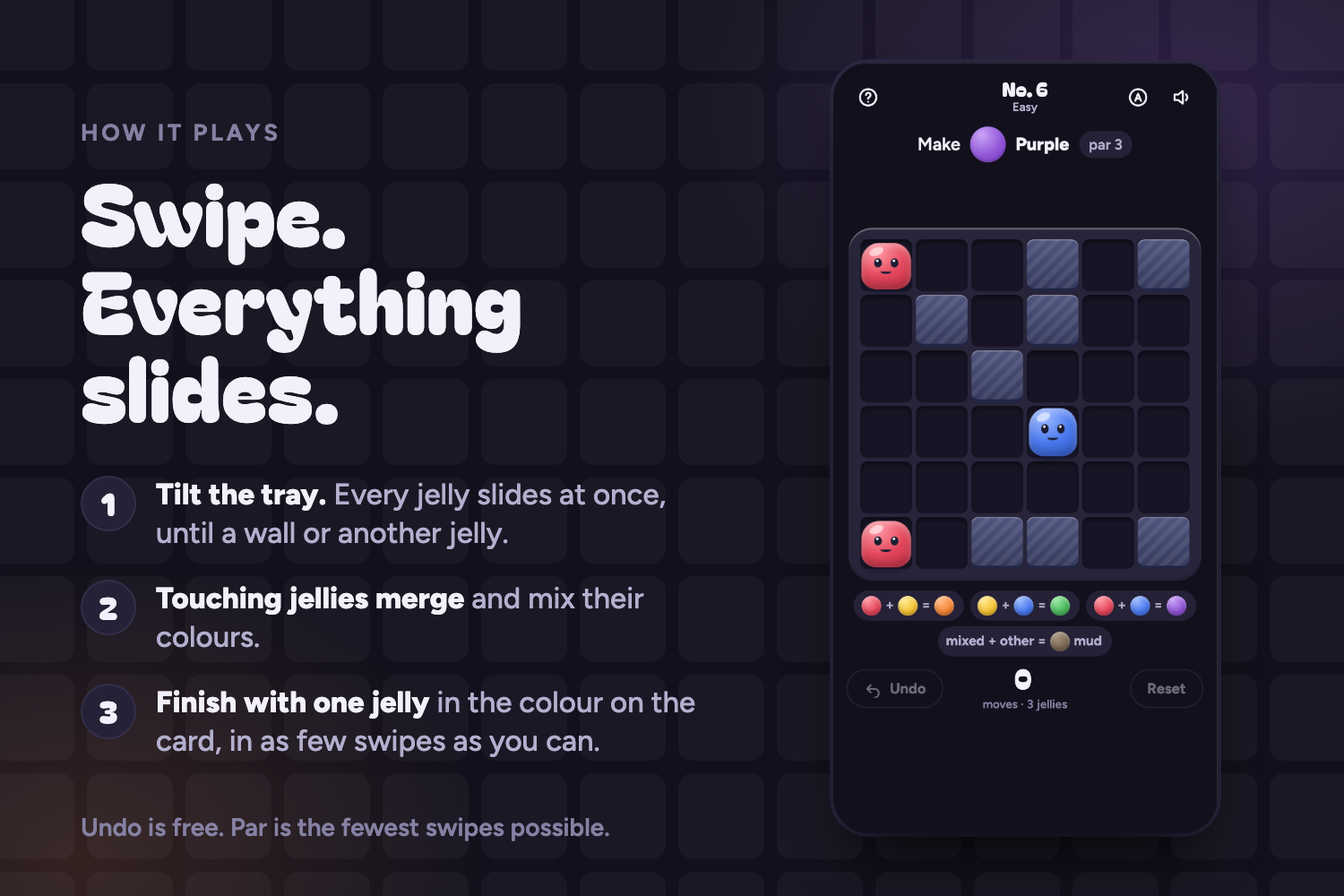
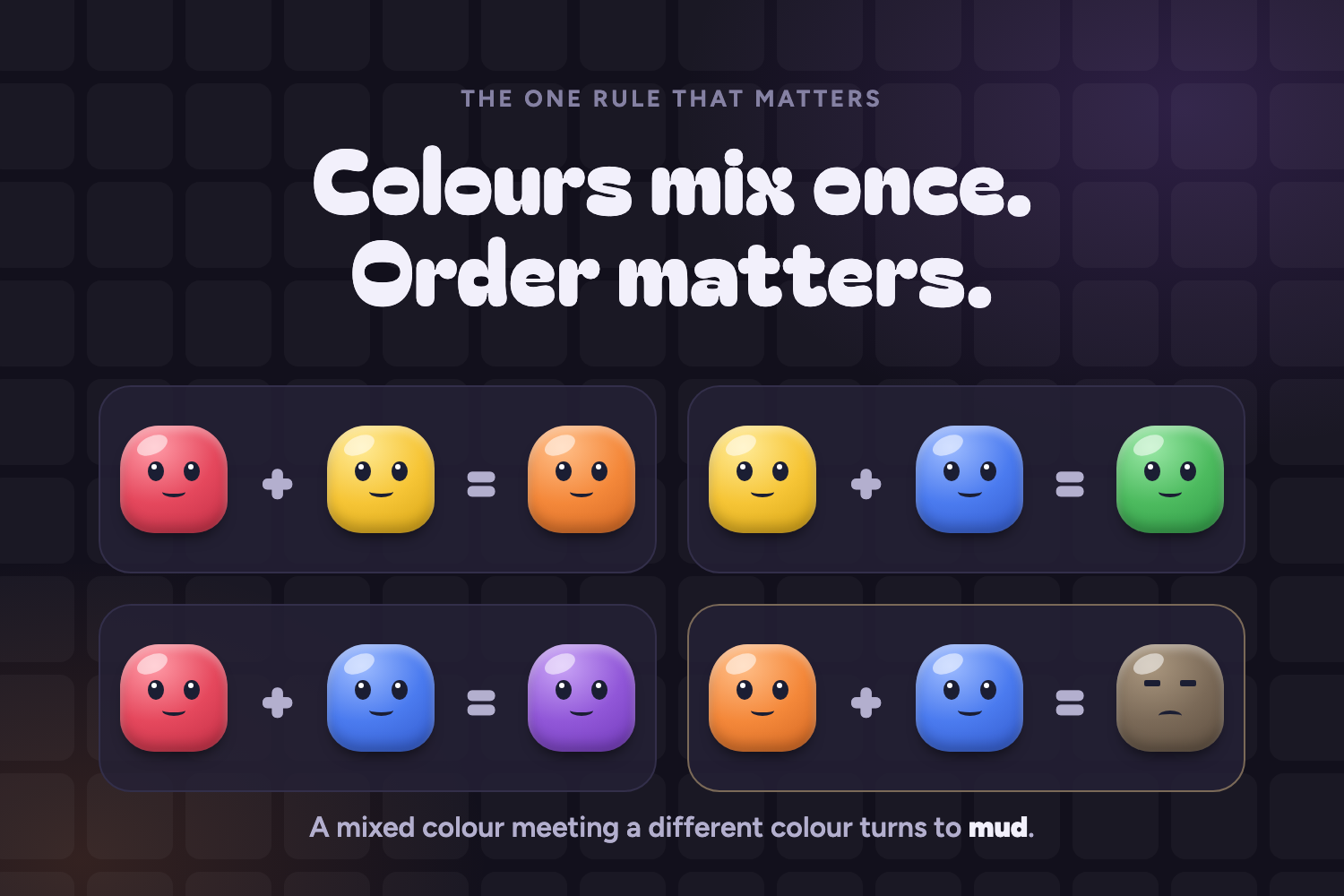
Wobble is a daily jelly puzzle that lives inside a Reddit post. Swipe to tilt the tray, and every jelly slides at once. Touching jellies merge, and colours mix: red and yellow make orange, yellow and blue make green, red and blue make purple. A mixed colour that meets a different colour turns to mud, so the order of your swipes matters. Make the colour on the card with one jelly left, in as few swipes as you can.
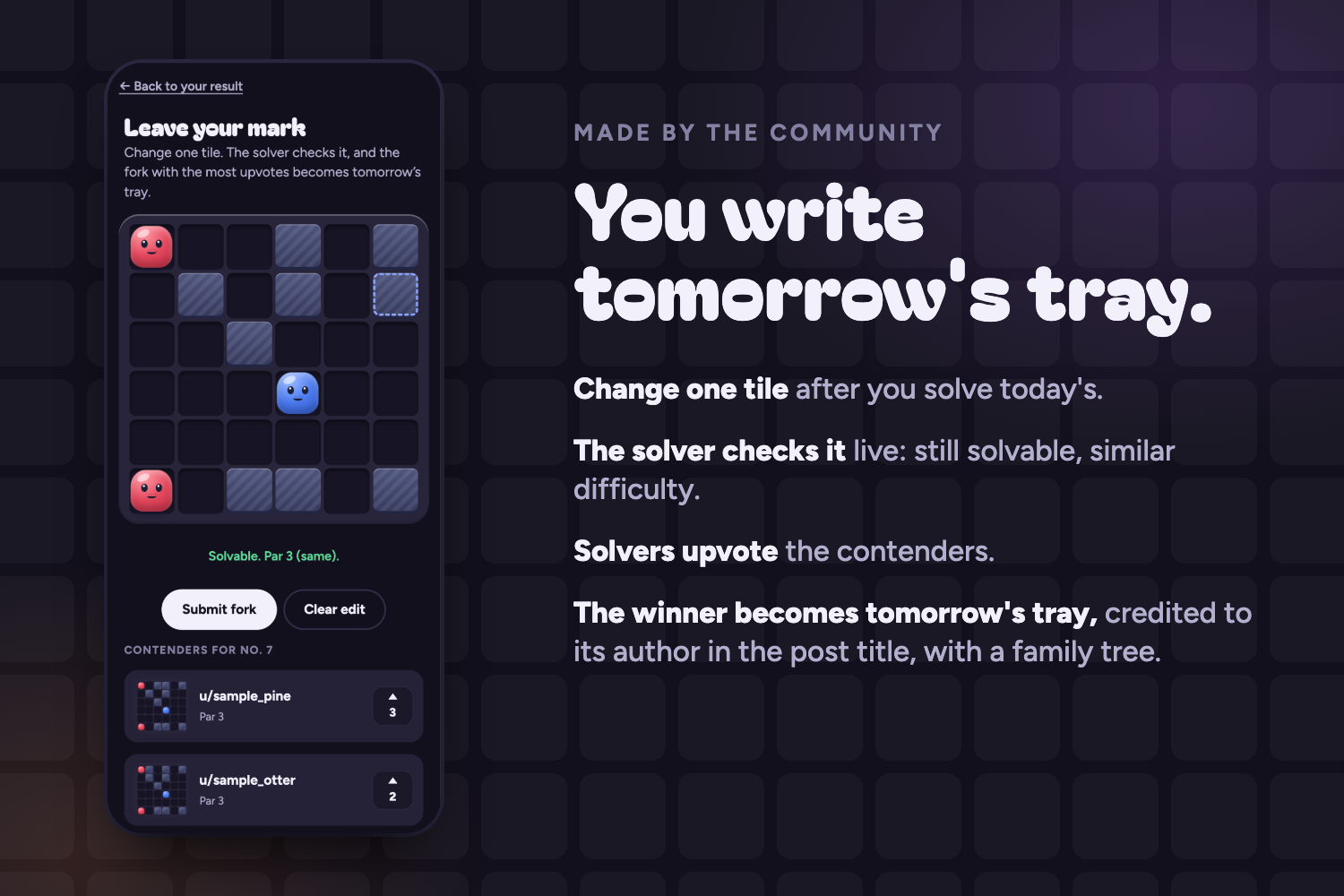
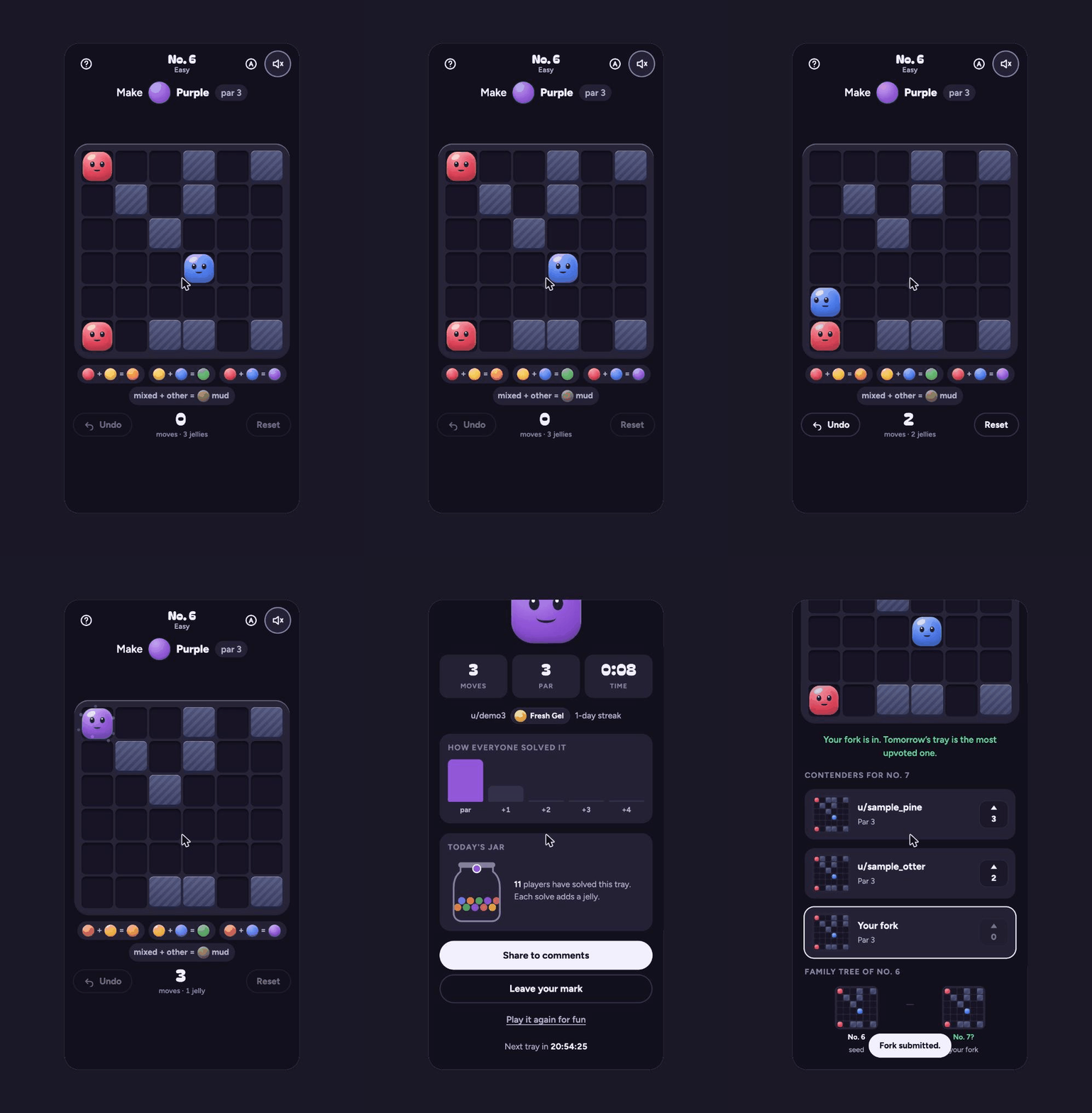
Solving the tray unlocks the part that makes it Reddit's own. You can fork tomorrow's tray by changing one tile. The solver checks your edit instantly, solvers upvote the forks, and at UTC midnight the top fork becomes tomorrow's tray. Its author is credited in the post title, and a family tree shows how the tray evolved.
Around that loop:
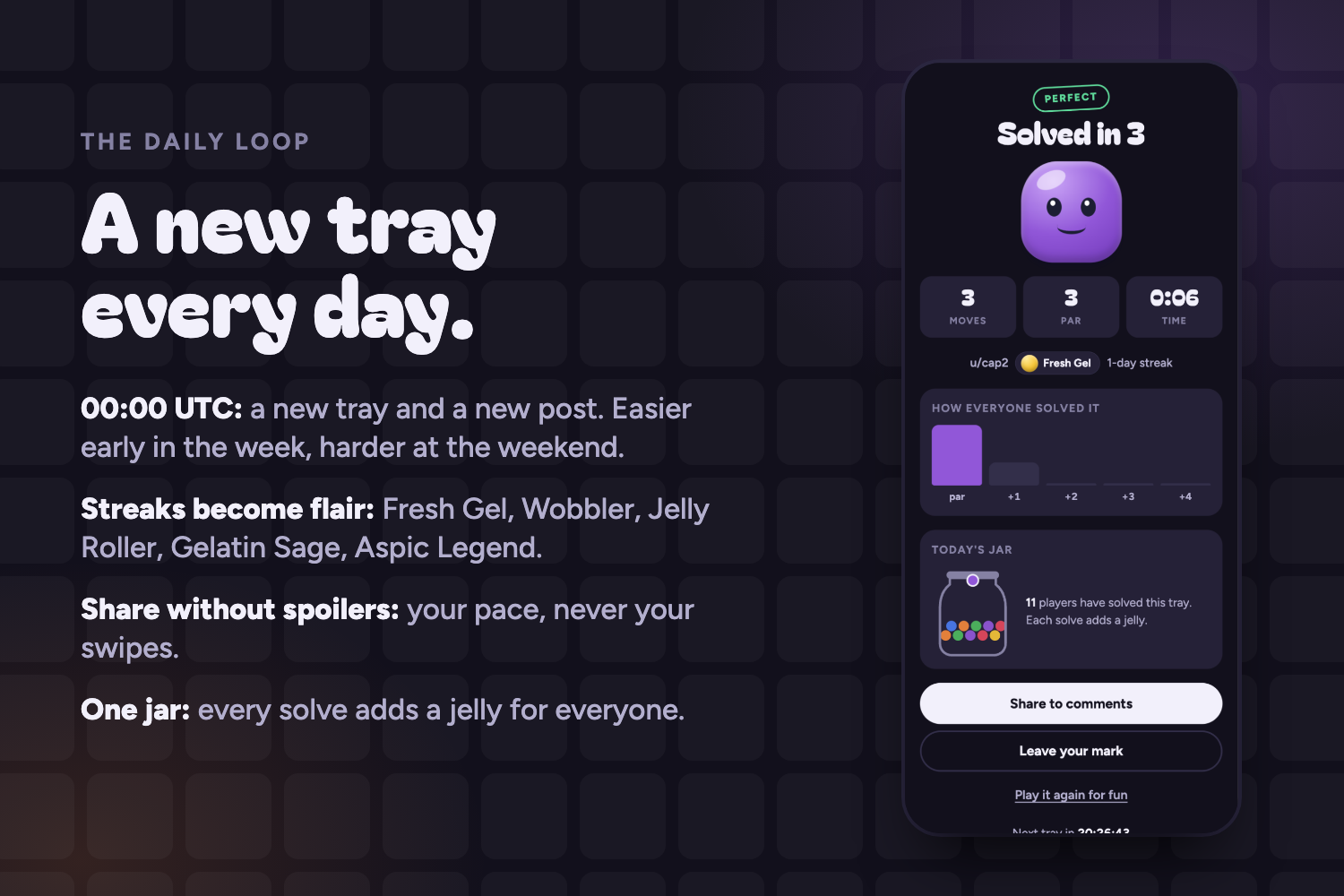
- Your streak becomes your user flair.
- Results can be shared to the comments without spoiling the swipes.
- Every solve adds a jelly to a shared jar, and a histogram shows how everyone else did.
- Every subreddit that installs Wobble gets its own jar, histogram and forks.
Try it: open the latest post in r/wobble_daily_dev and tap Play. A two-swipe warm-up teaches the rules.
How I built it
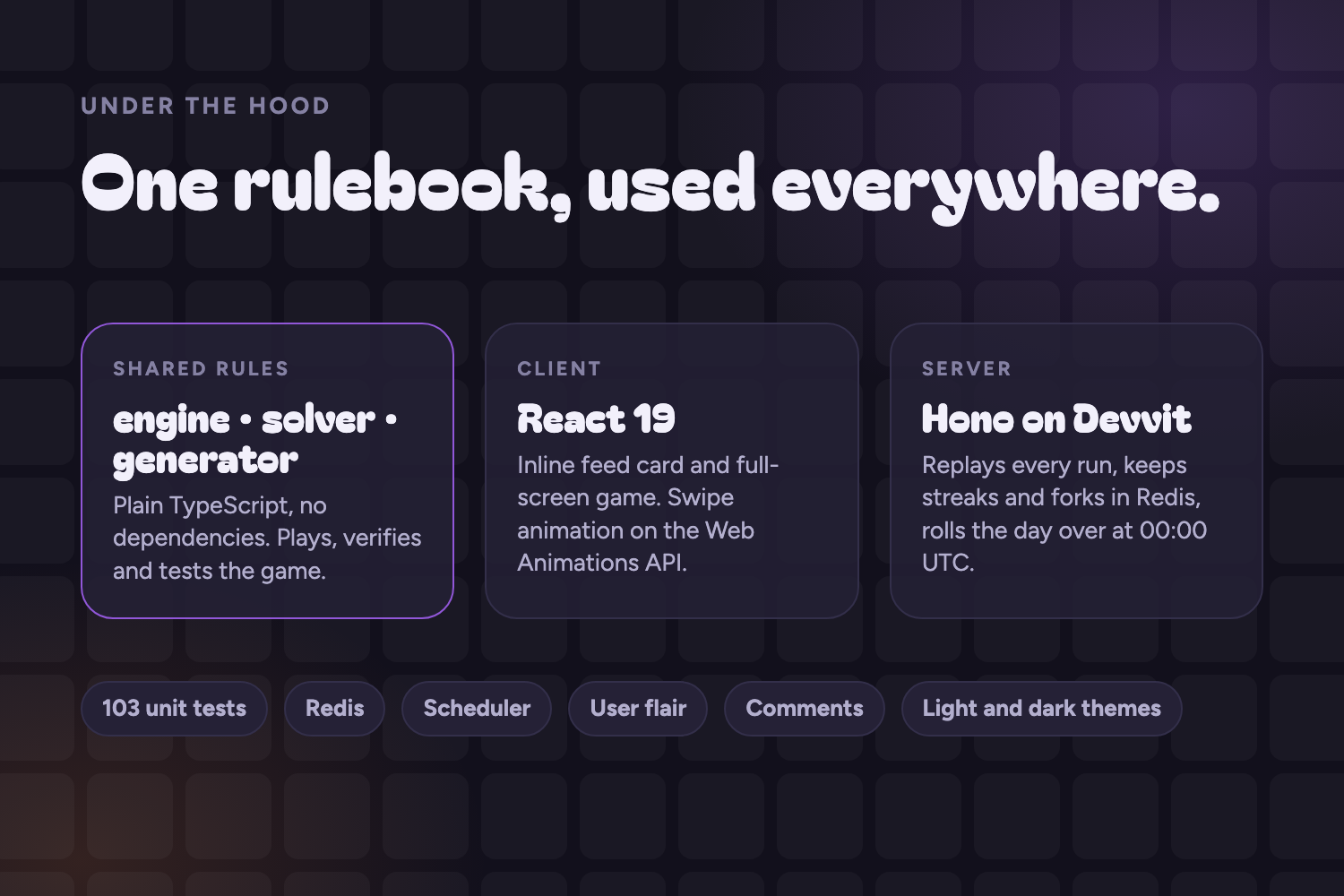
Wobble is a Devvit Web app: a React 19 client, a Hono server, Redis for storage and the Devvit scheduler for the daily post.
- One rulebook. The game rules are a dependency-free TypeScript module used by both the client and the server.
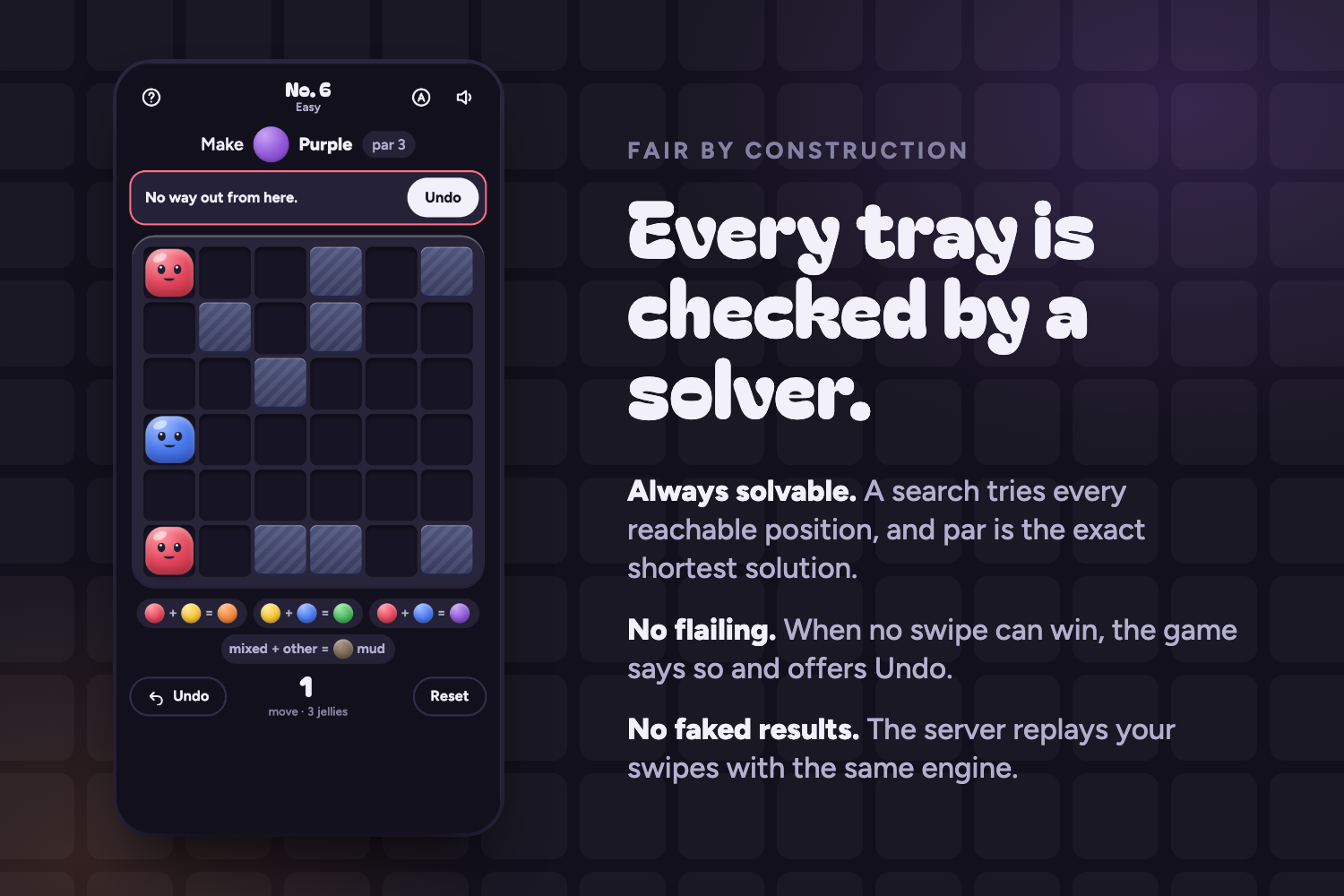
- A solver behind every tray. A breadth-first search proves each daily tray can be solved and sets the exact par. When a position has no way out, the game says so and offers a free Undo.
- No faked results. The client sends its swipes and the server replays them with the same engine. The solution never leaves the server.
- Testable server. The server logic sits behind two small ports, one for Redis and one for Reddit, so 104 unit tests run against fakes without deploying.
- A smooth board. The tray is an imperative DOM layer driven by the Web Animations API (slide, squash, merge, burst), while React owns the game state.
Challenges
- Making a swipe feel good without fighting React's render cycle.
- Keeping a daily game fair: free Undo, dead trays detected, and a par that is provably the shortest line.
- A community loop that works on day one. If nobody forks, a seeded generator still produces a verified tray.
- A bug my tests could not see. While recording the demo I found that the jelly layer swallowed real taps, so fork tiles could not be picked on a phone. My tests clicked the tiles directly and never noticed. It is fixed, with a regression test.
What I learned
Put the rules in one place and every other part gets simpler: the client, the server and the tests all trust the same engine. And test with real input, because a synthetic click can hide a bug a thumb finds in seconds.
What's next
Devvit Journeys events, streak freezes and a moderator control to feature or retire a fork.
