-
-
-
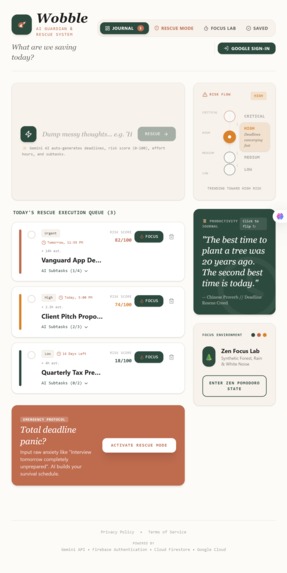
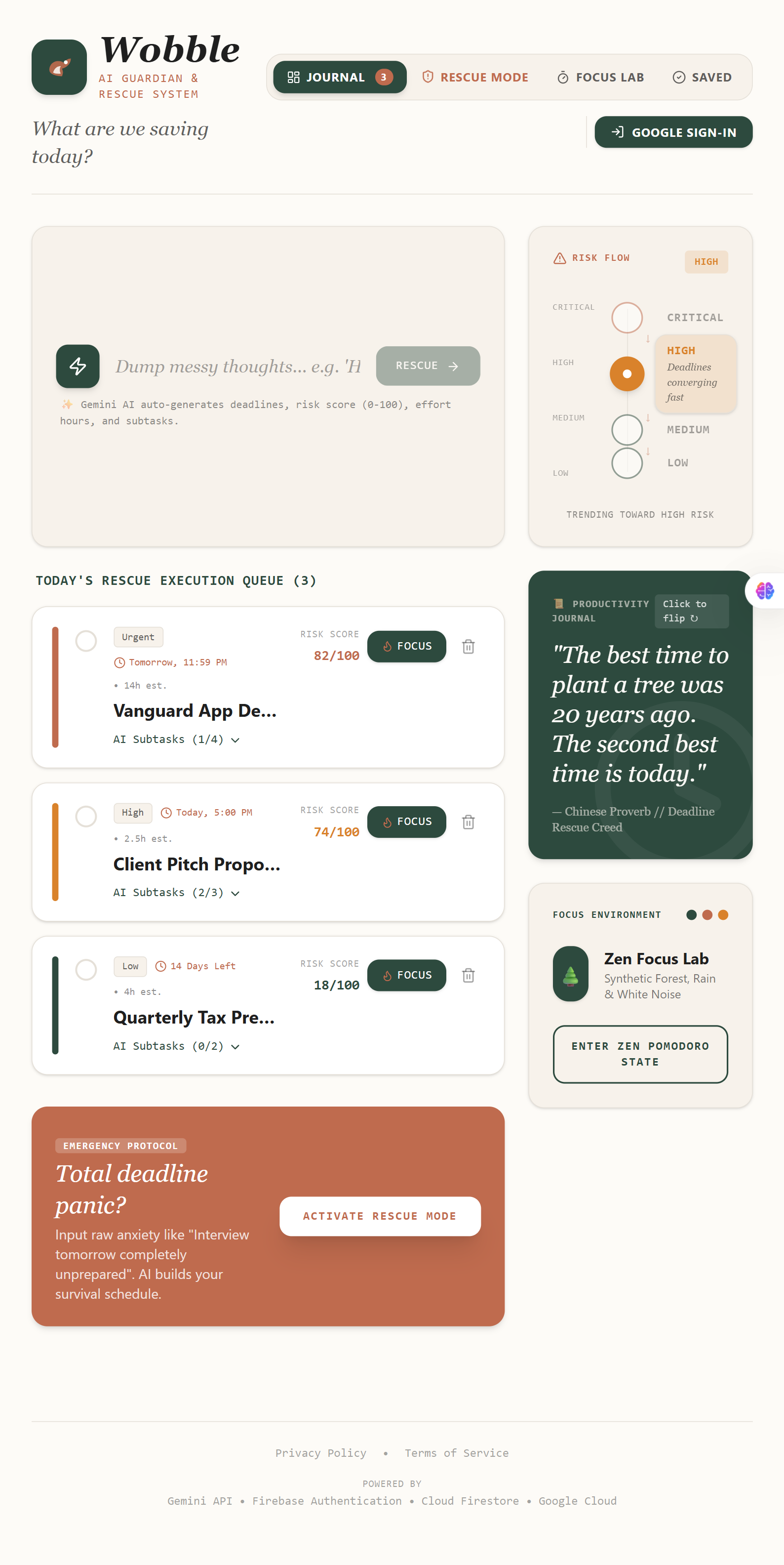
The Journal
-
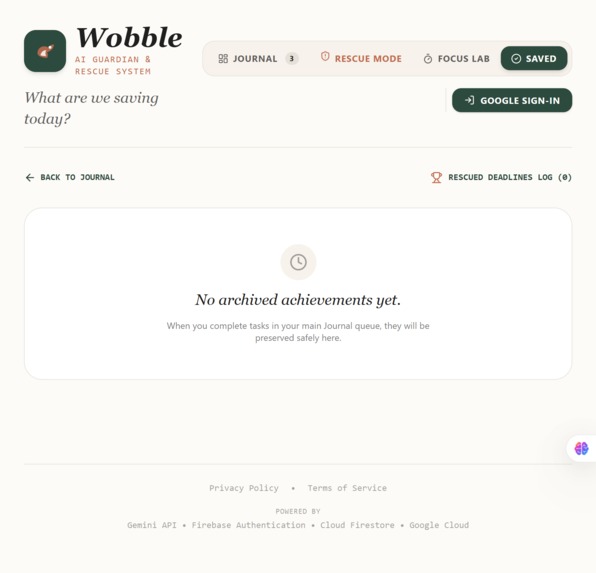
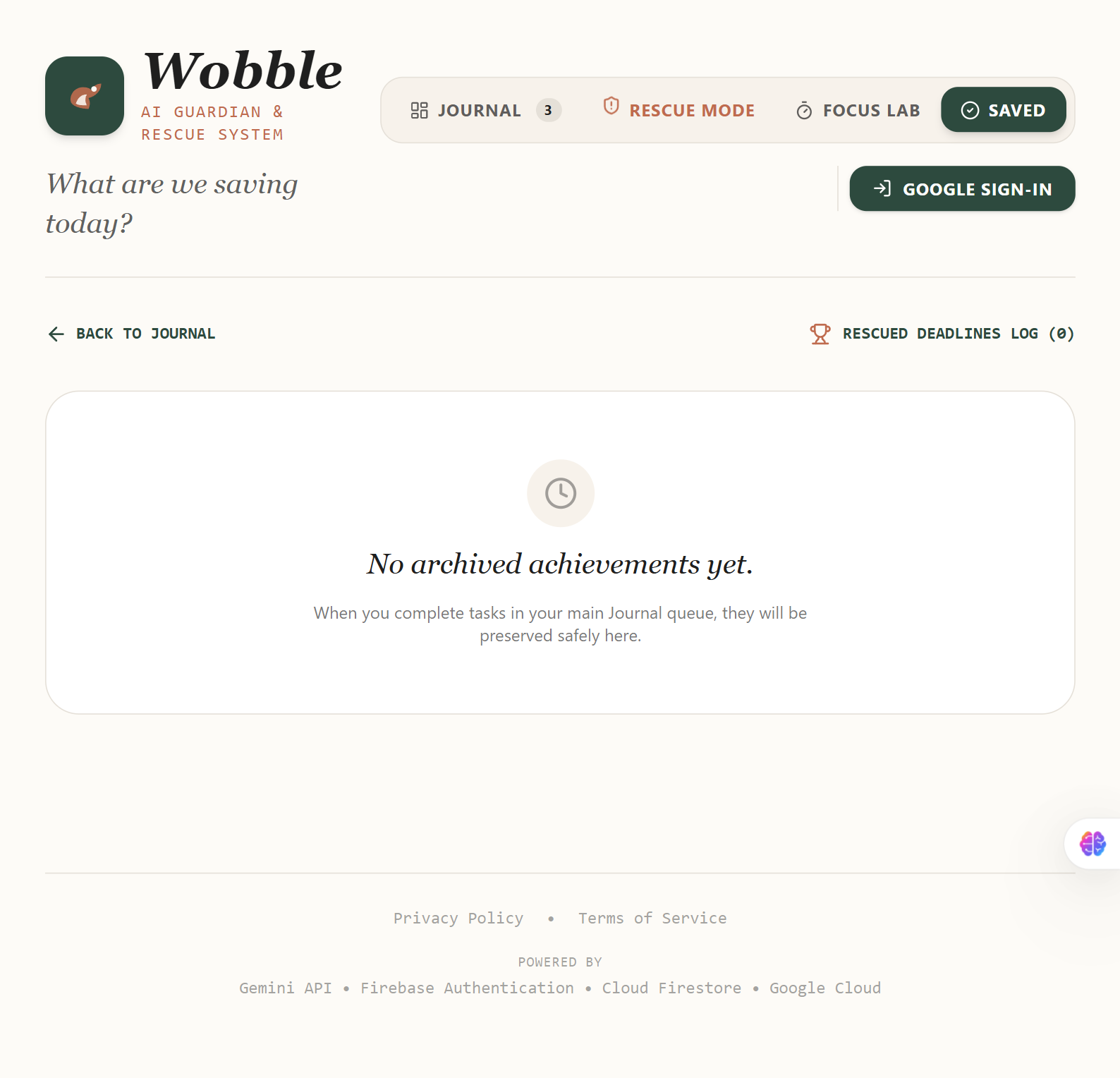
The hall of achievement
-
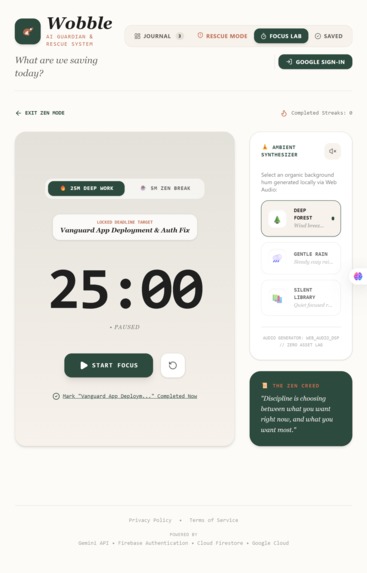
Focus Mode
-
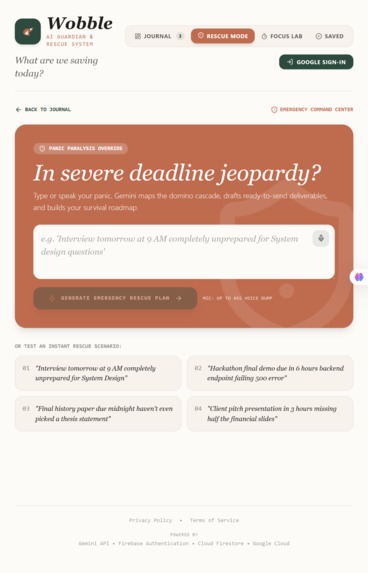
Rescue Mode
-
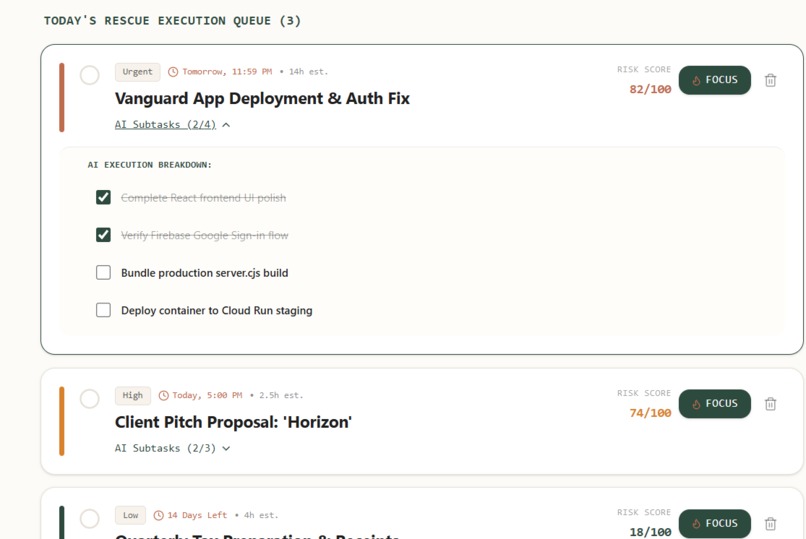
Rescue Queue
-
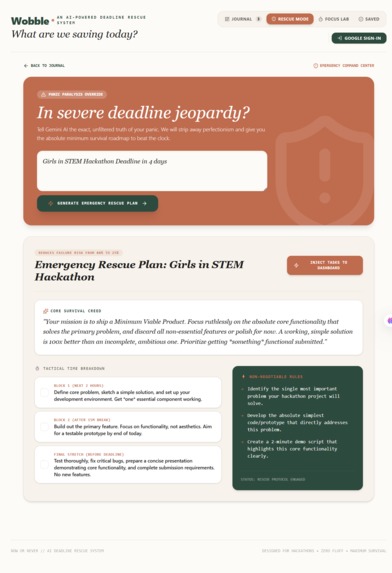
Planning
-
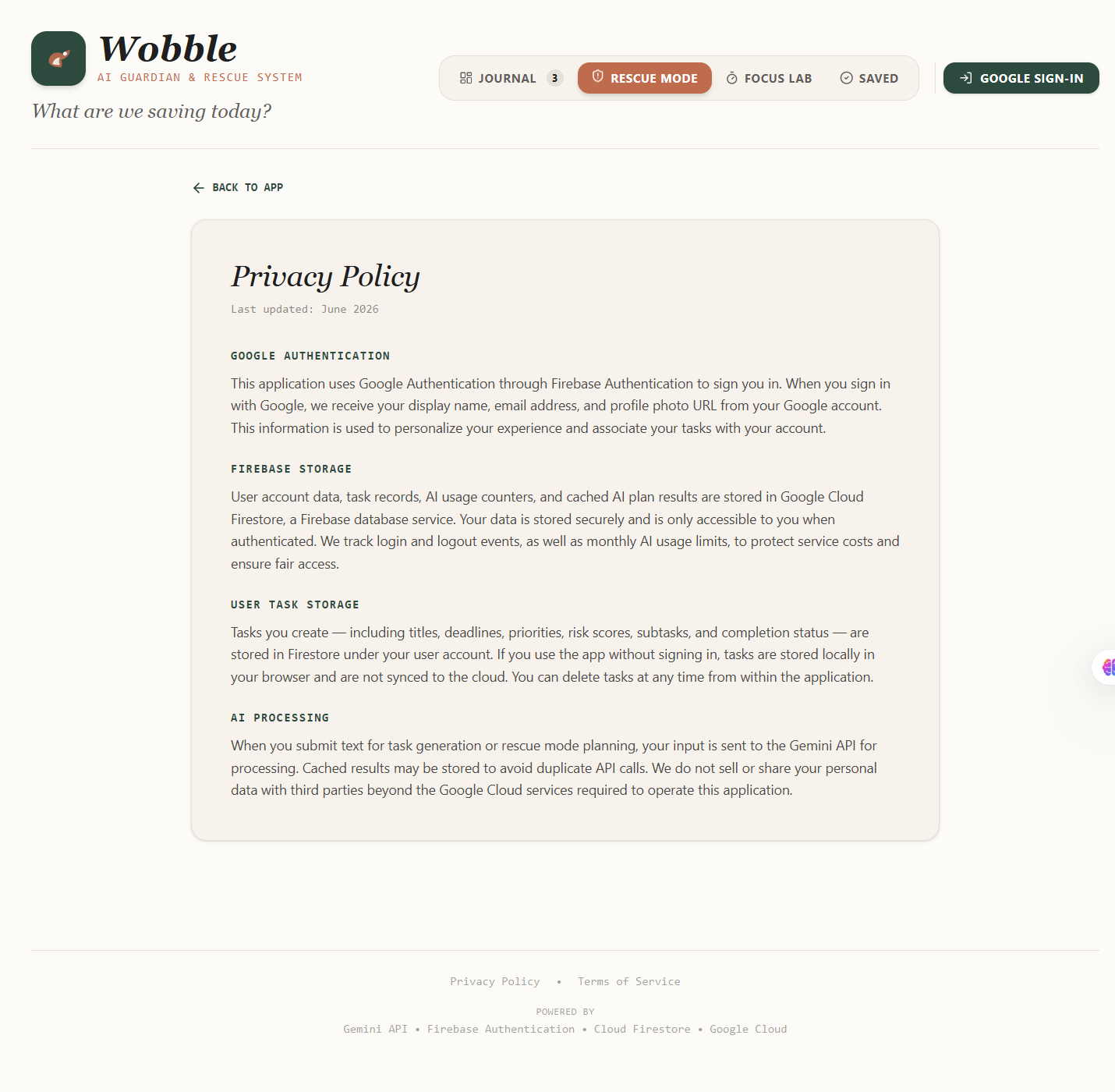
privacy policy
-
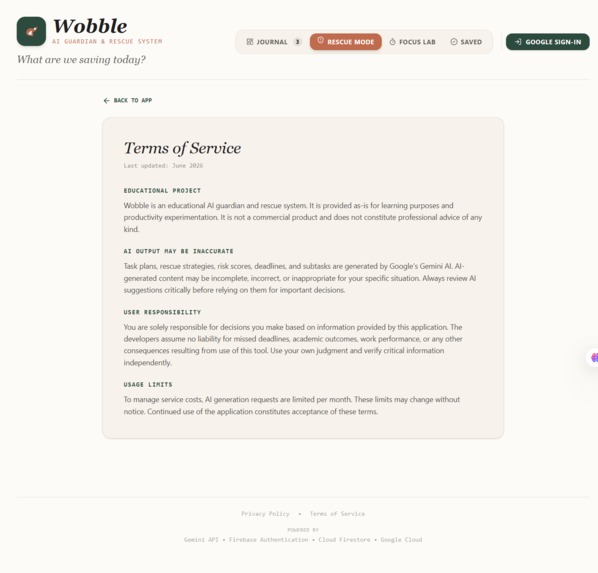
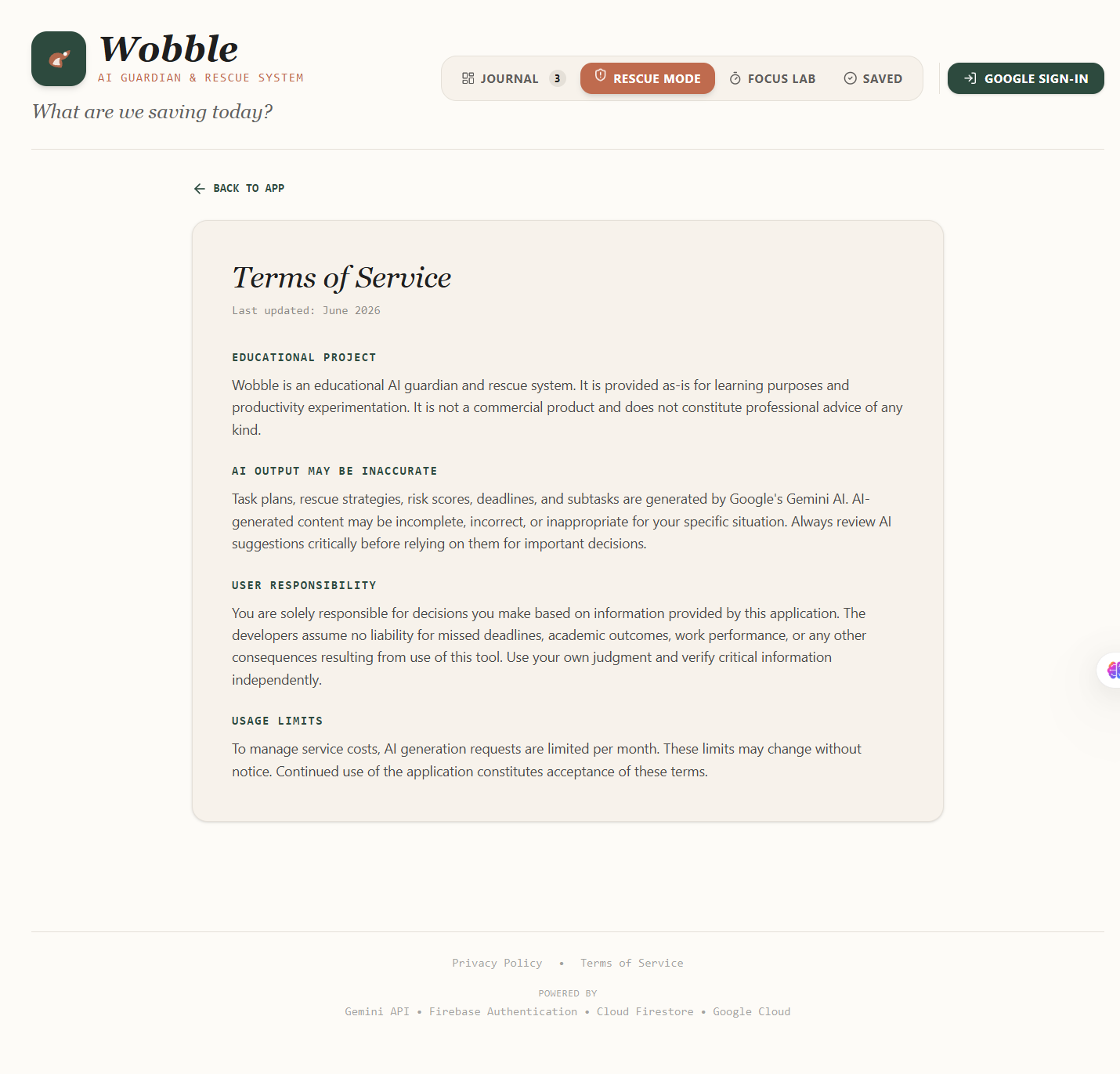
Terms of service
Inspiration
My wall used to be have more sticky notes pasted everywhere. Every task got its own scrap of paper a deadline scribbled in one corner, a subtask in another and every morning I'd shuffle through them, doing the math in my head on what was due when and what I could still save.
At some point I stopped and asked: why am I the one calculating this? Why isn't something doing this for me?
That question is where Wobble started. Not another to-do list, but something that notices a project going unstable before I do the way a person who knows me well would nudge me before a deadline turned into a crisis. Projects rarely fail without warning. They wobble first. I just wanted an app smart enough to see it happening and hand me a way out, instead of a wallet full of paper doing it badly.
What it does
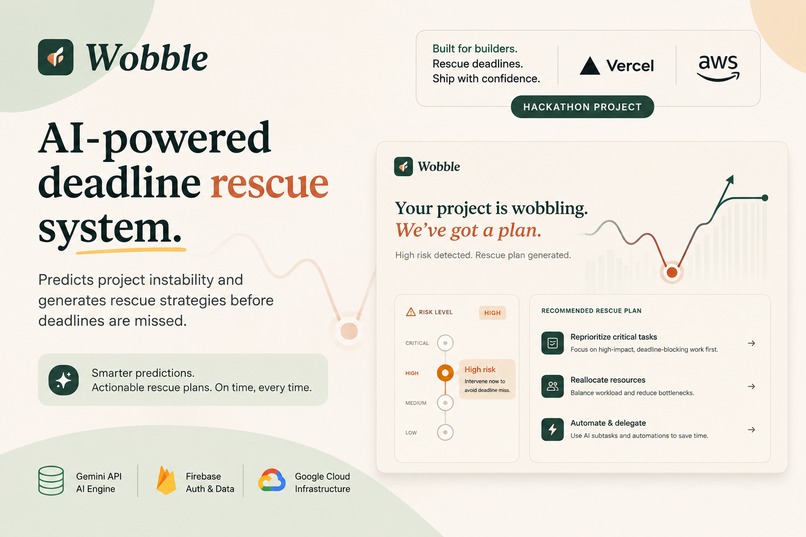
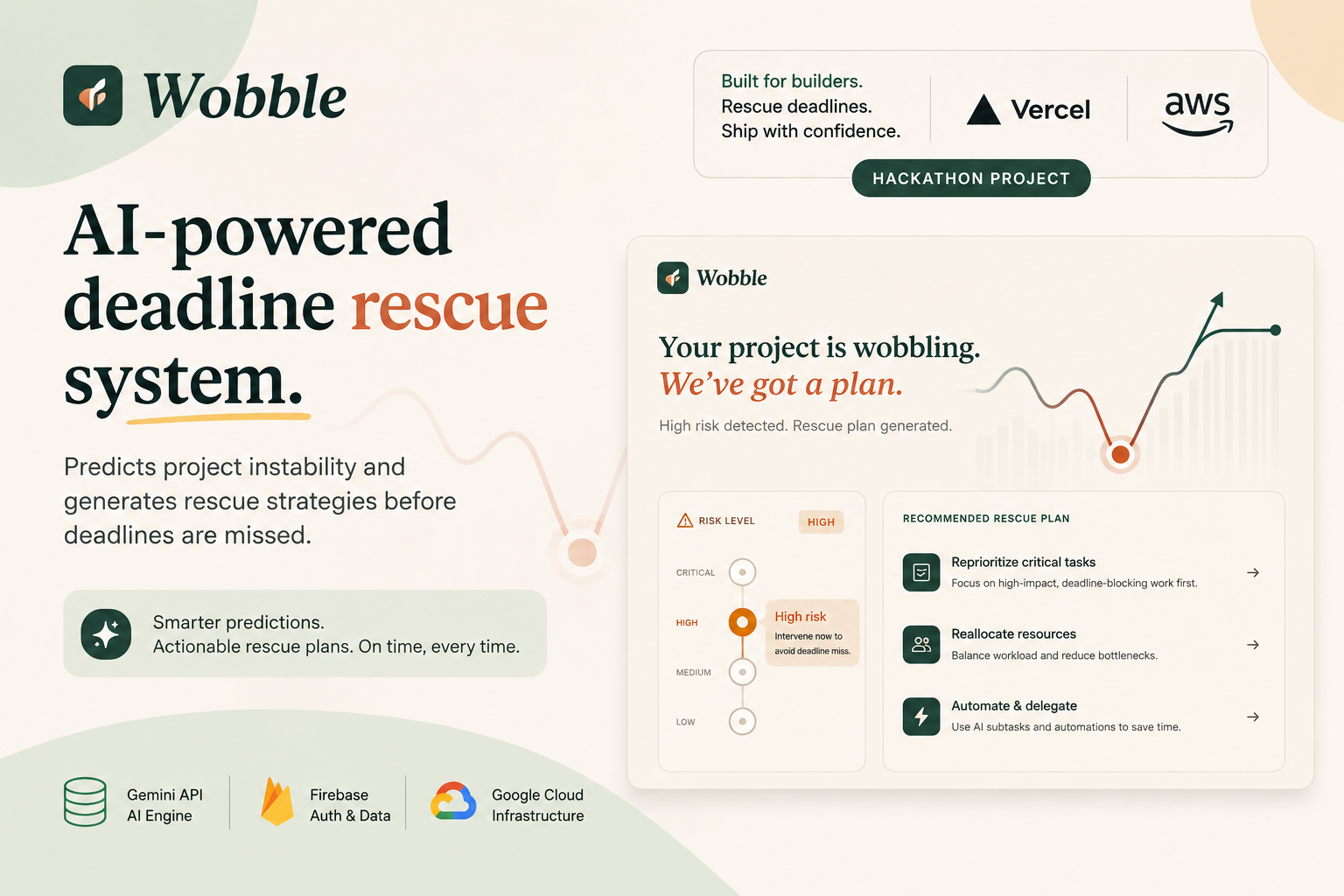
Wobble is an AI-powered deadline rescue system that predicts project instability, detects cascading risks, and generates rescue strategies before deadlines are missed.
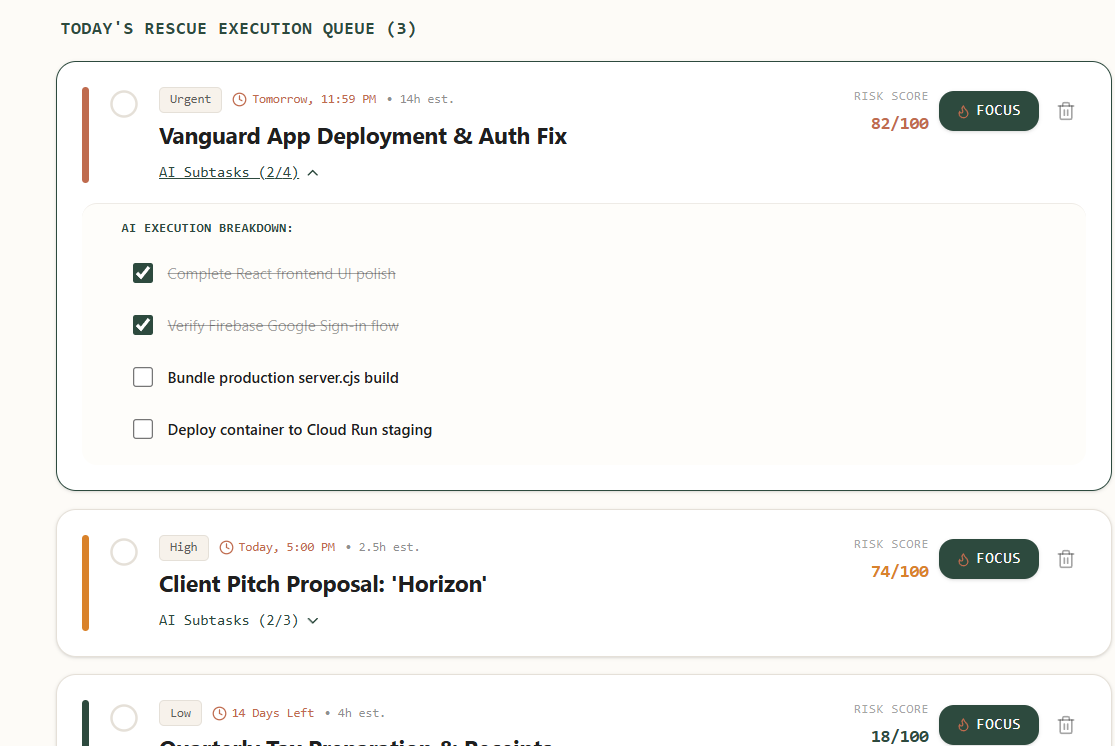
- AI Planning — turns natural-language descriptions of your work into structured, actionable plans
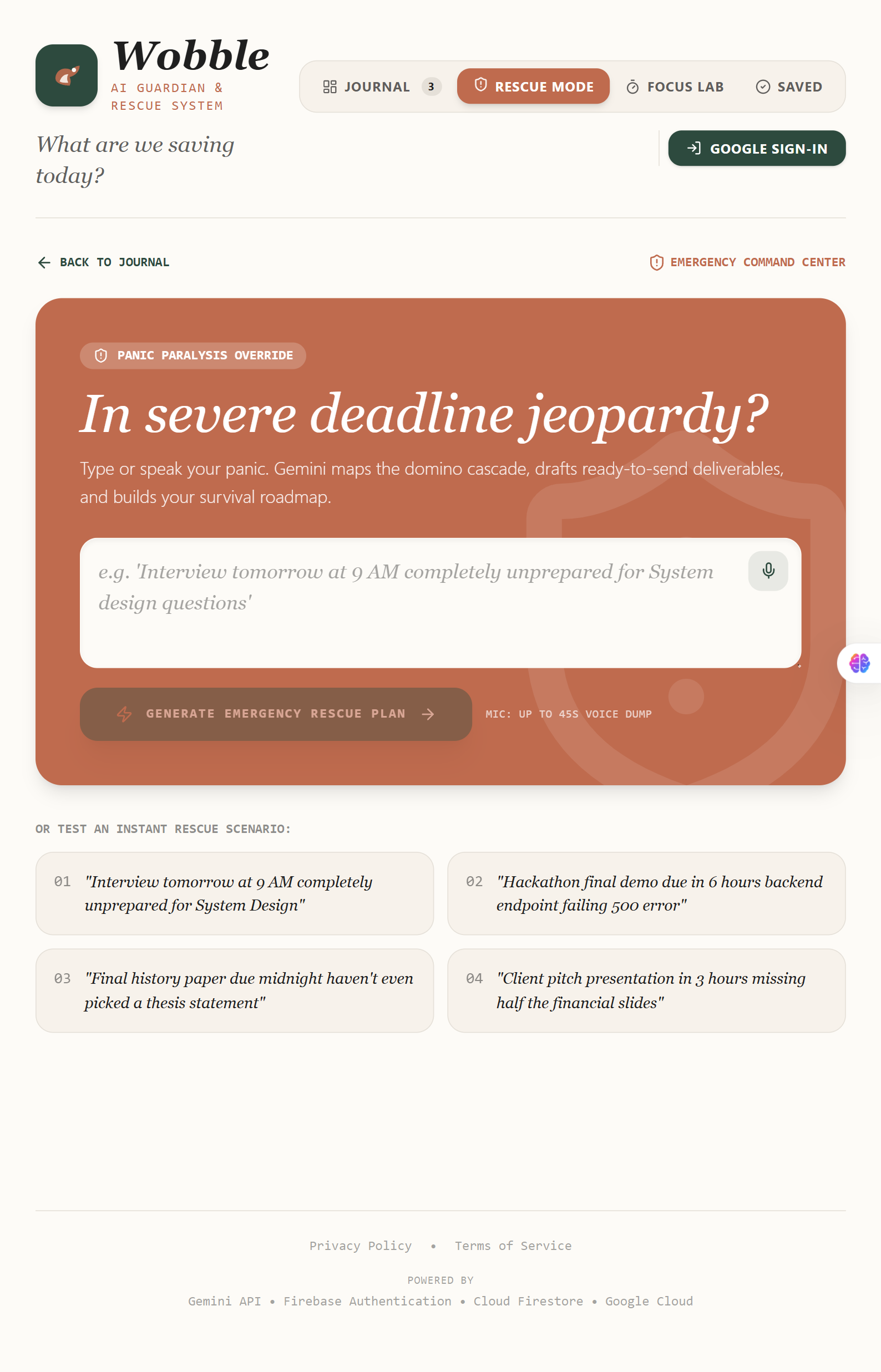
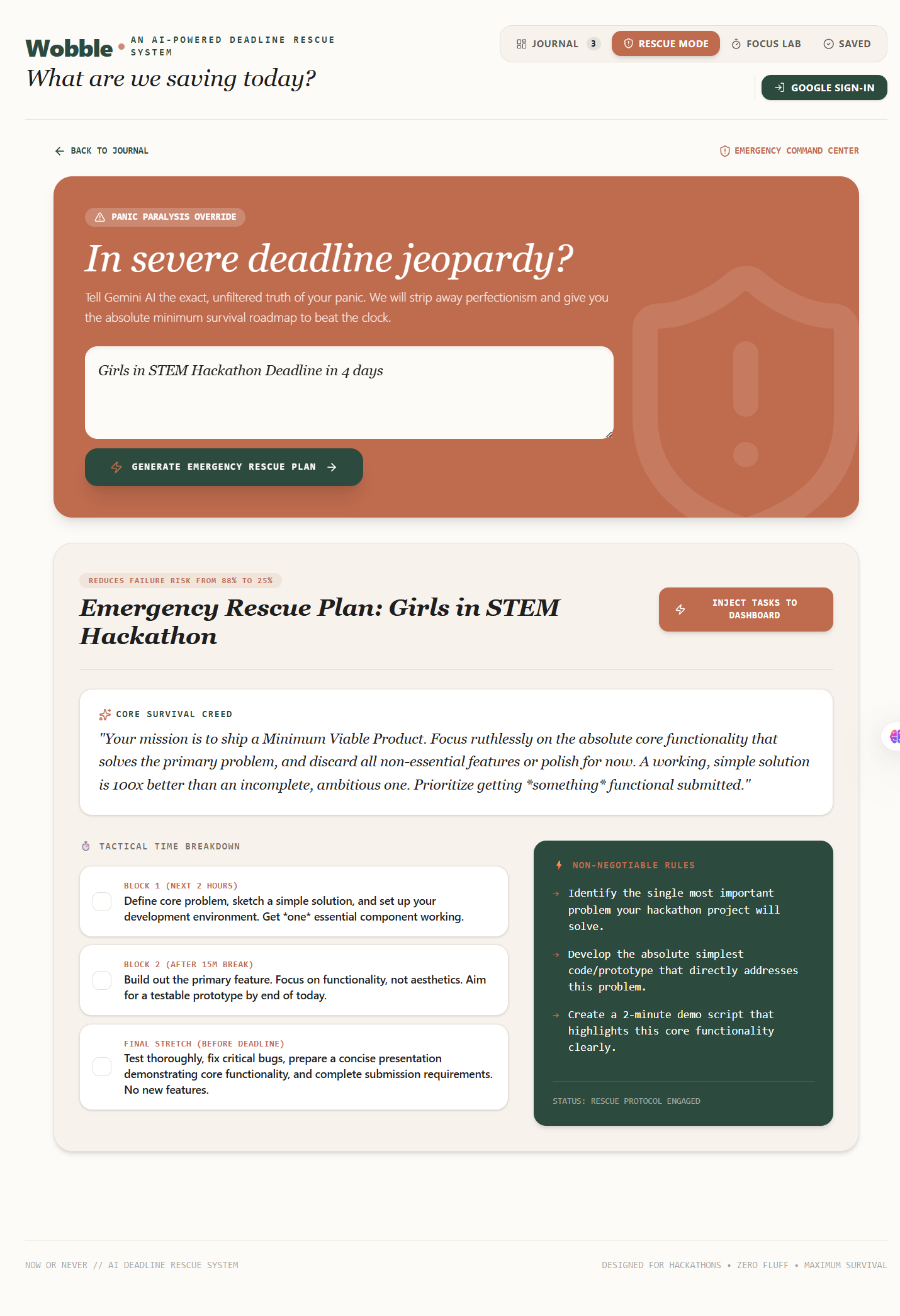
- Rescue Mode — when things are already slipping, Wobble generates an emergency recovery strategy tailored to what's left and how much time remains
- Risk Detection — continuously analyzes deadlines, workload, and complexity to catch instability early, before it becomes a crisis
- Calendar — a timeline view of upcoming work so risk is visible at a glance
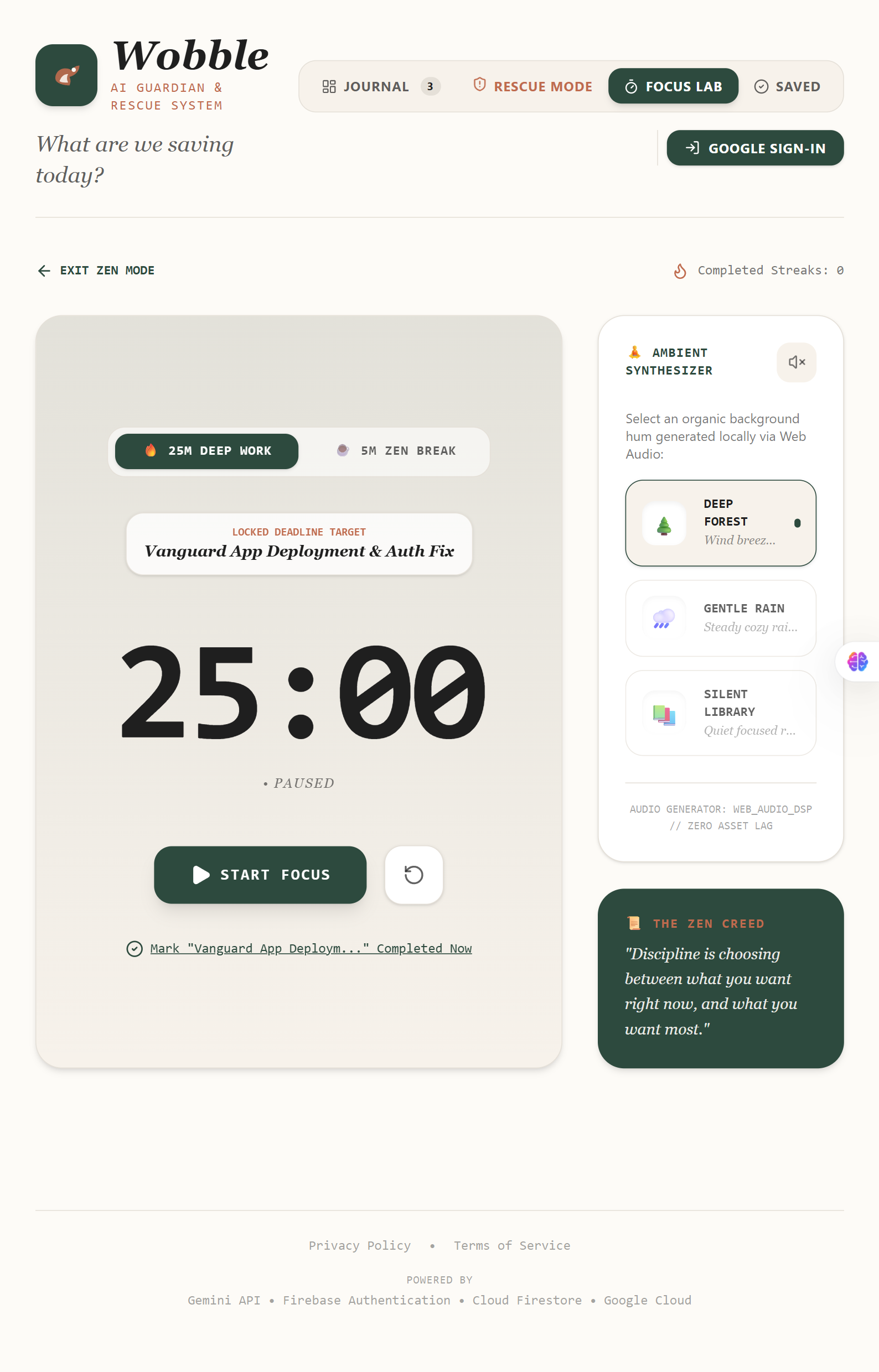
- Focus Lab — distraction-free Pomodoro sessions with ambient environments, for when the plan is right and you just need to execute
- Secure Google Sign-In and cloud sync, so your plans and progress follow you across devices
How we built it
Wobble is a React + TypeScript frontend built with Vite, styled with plain CSS for full control over the light and dark themes. On the backend, we leaned entirely on Google's ecosystem: Firebase Authentication for secure sign-in, Cloud Firestore for real-time data sync, and the Gemini API as the reasoning engine behind both the planning and rescue features.
The core AI workflow takes structured project data deadlines, task complexity, current progress and feeds it to Gemini with carefully designed prompts that ask it to reason about risk, not just organize tasks. That output is what powers Rescue Mode's recovery strategies and the dashboard's early-warning signals. The whole thing is designed to deploy on Google Cloud, keeping the stack consistent end to end.
Challenges we ran into
- Designing for proactivity, not reactivity it's much easier to build a tool that reminds you of what's late than one that predicts what's about to be late. Getting the risk-detection logic to feel genuinely useful, and not just noisy, took real iteration.
- Balancing AI assistance with user control we wanted Gemini's suggestions to feel like a second brain, not an autopilot. Tuning prompts so recommendations felt trustworthy and editable, rather than prescriptive, was harder than expected.
- Staying within free-tier Gemini limits optimizing request frequency and payload size so the AI features stayed responsive without burning through quota.
- Shipping a polished MVP on a hackathon clock prioritizing ruthlessly to get authentication, AI planning, Rescue Mode, and Focus Lab all working together in a cohesive product, not just a pile of disconnected features.
What we learned
Building Wobble pushed us deeper into AI-first UX desig figuring out how to surface AI reasoning in a way that feels helpful rather than opaque. We got hands-on experience integrating Gemini into a real production-style workflow, wiring up Firebase Authentication and Firestore for a resilient cloud application, and rapid-prototyping with Google AI Studio under real time pressure. Beyond the tech, we learned a lot about designing proactive software tools that surface a problem while there's still time to fix it, instead of just logging that it happened.
What's next for Wobble
Our roadmap includes calendar sync with external tools, a lightweight browser widget for at-a-glance risk status, team collaboration so Wobble can watch over shared projects rather than just individual ones, and offline support so recovery planning doesn't stop when connectivity does.
Built With
- css
- firebase
- firebase-authentication
- firestore
- gemini-api
- google-cloud
- react
- typescript
- vite


Log in or sign up for Devpost to join the conversation.