-
-
Wizegen - Train for skill, hire for attitude
-
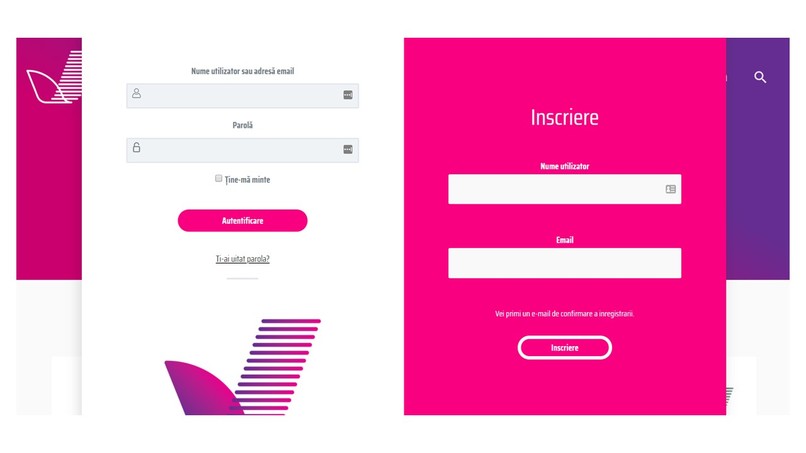
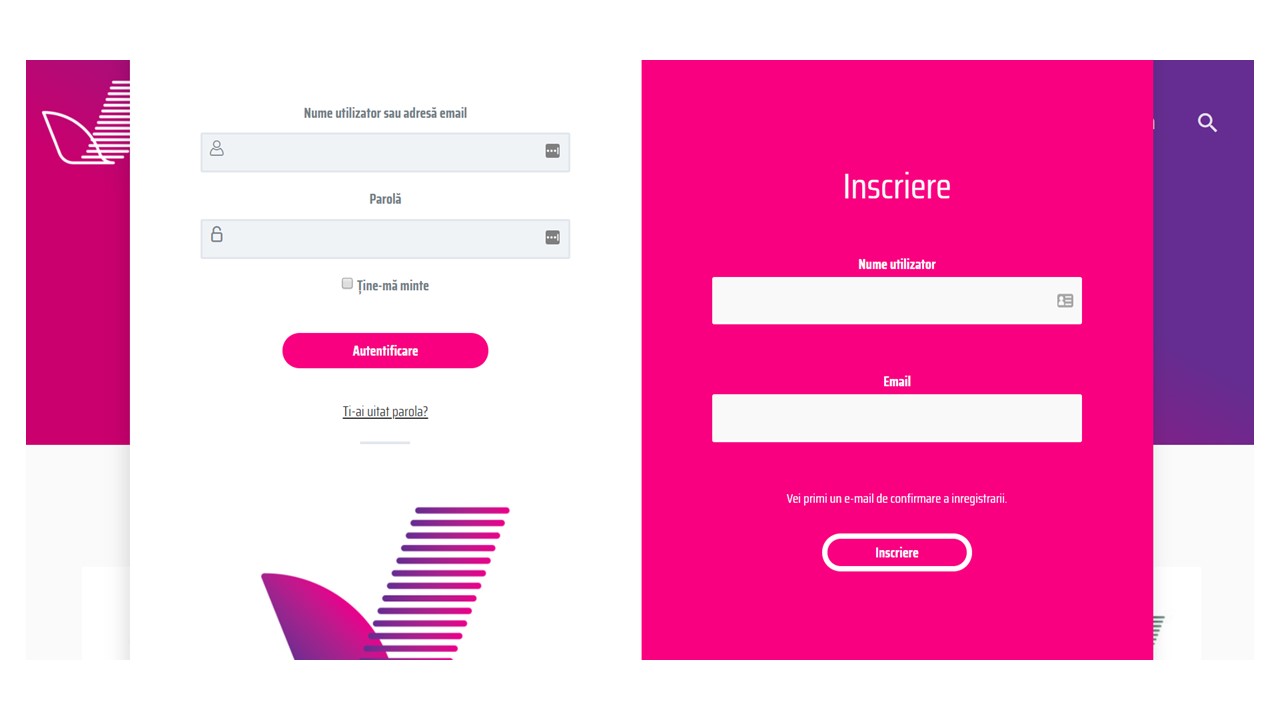
login for the beta version of the e-learning plafrom used for the project
-
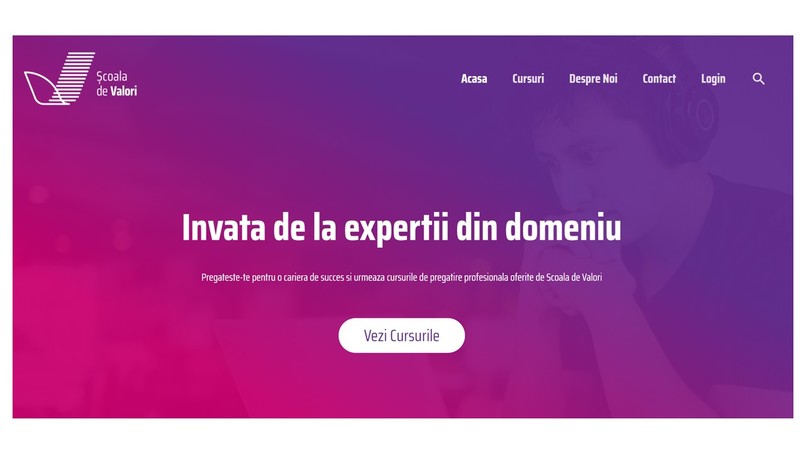
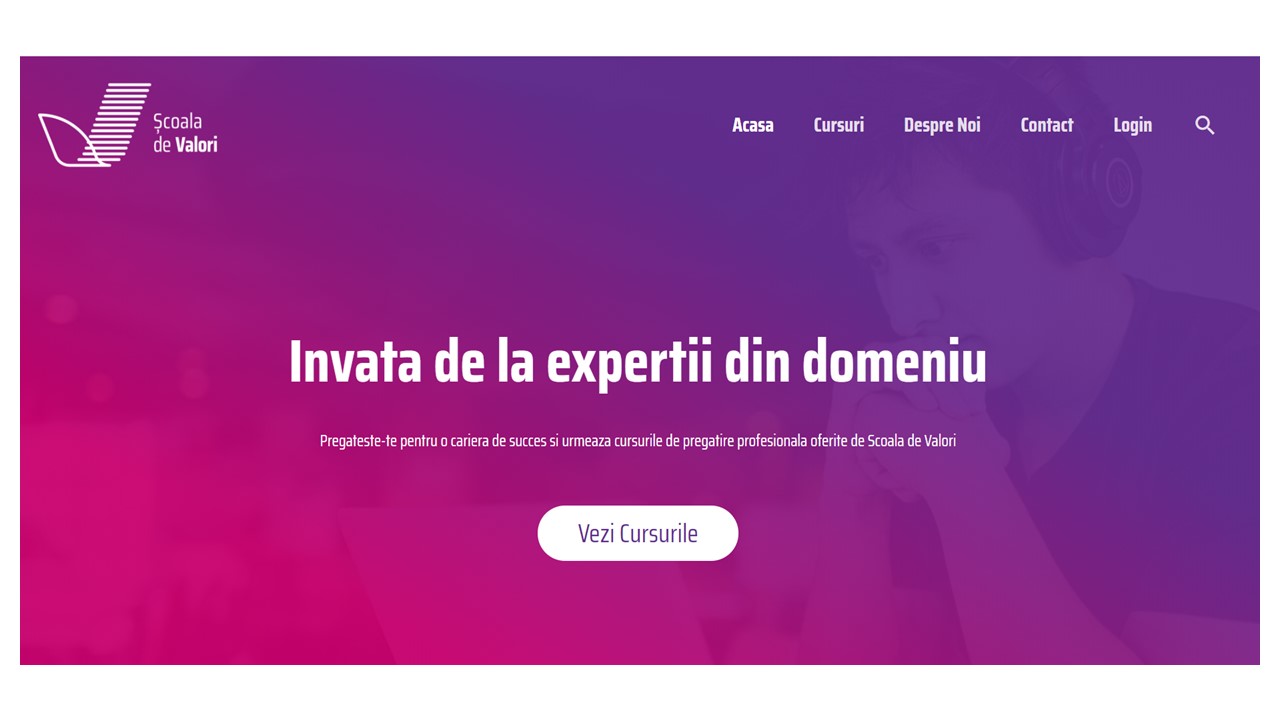
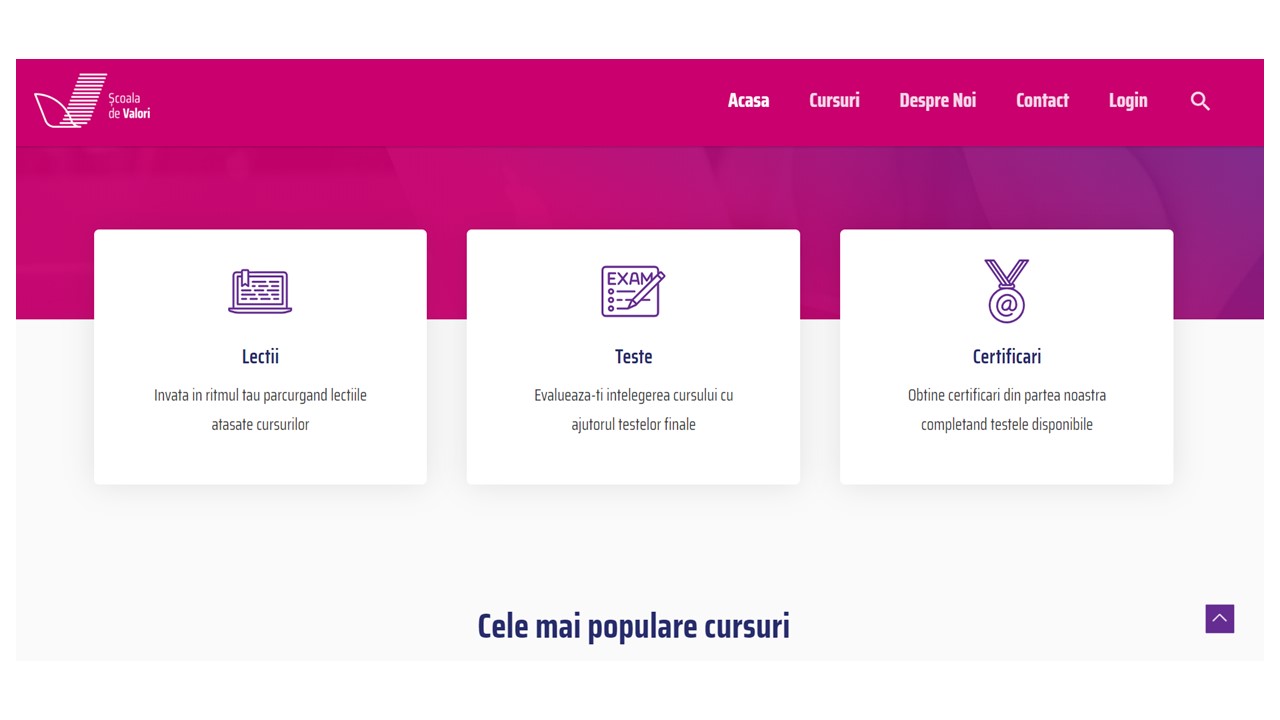
home page of the beta version of the e-learning plaftom used fot the proect
-
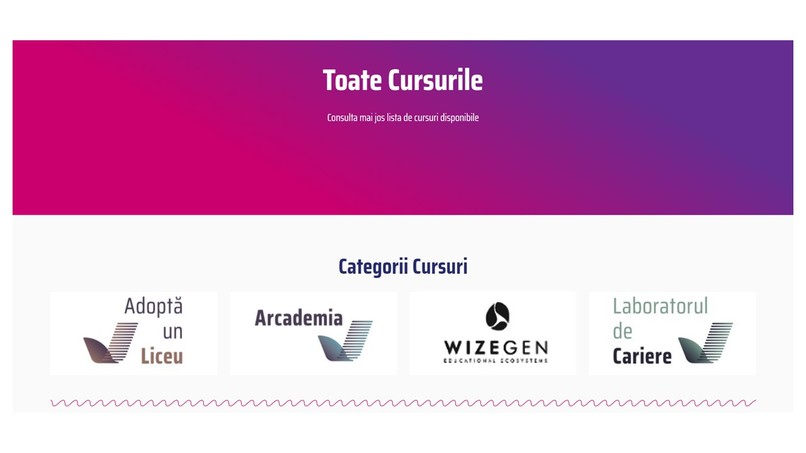
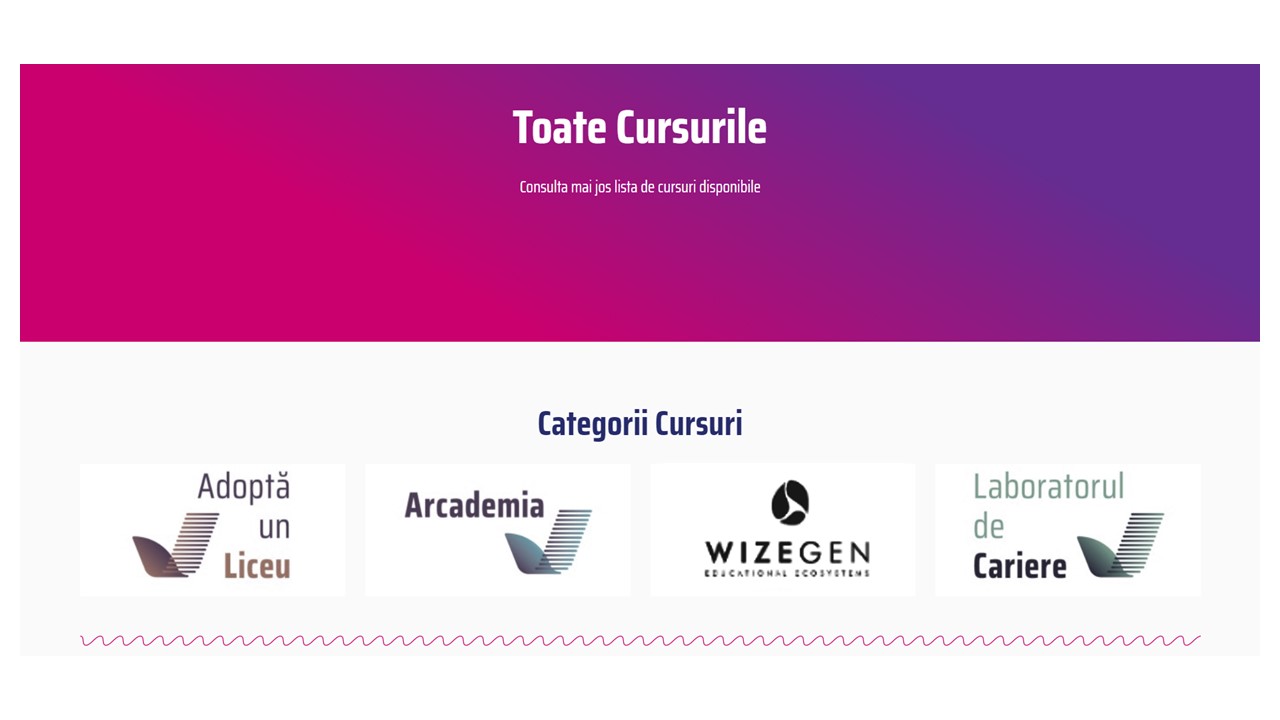
tipe of e-learning topics found on the e-learning platform
-
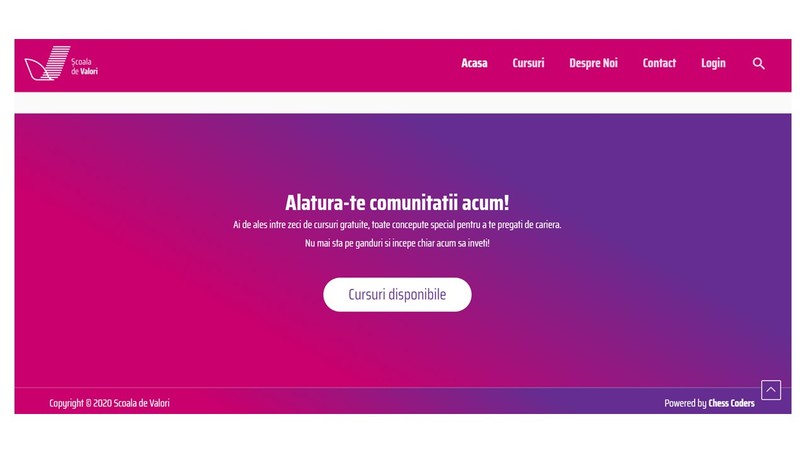
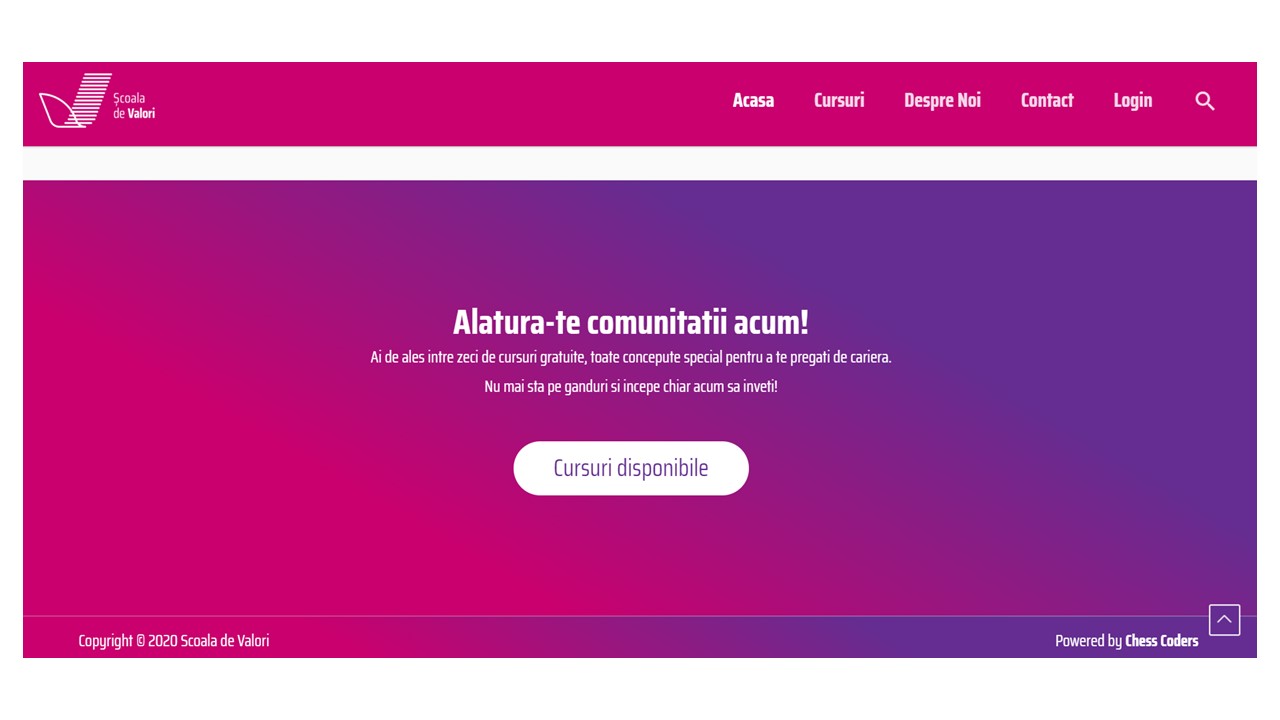
call to action for enrolment in the platform
-
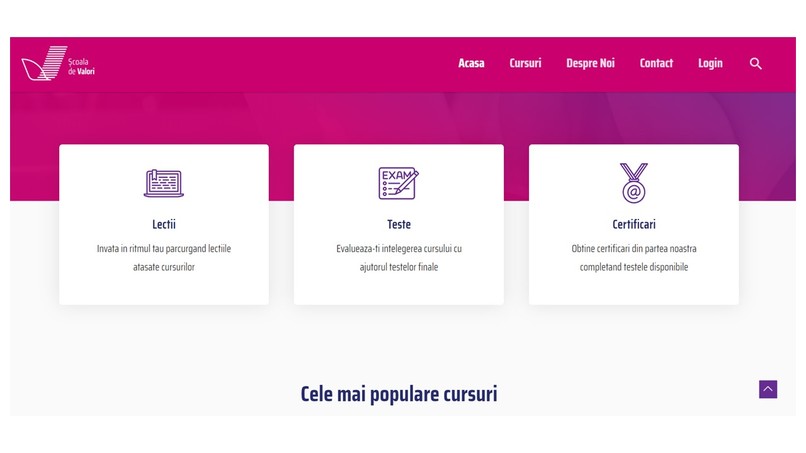
tipe of learning experiences found on the platform
-
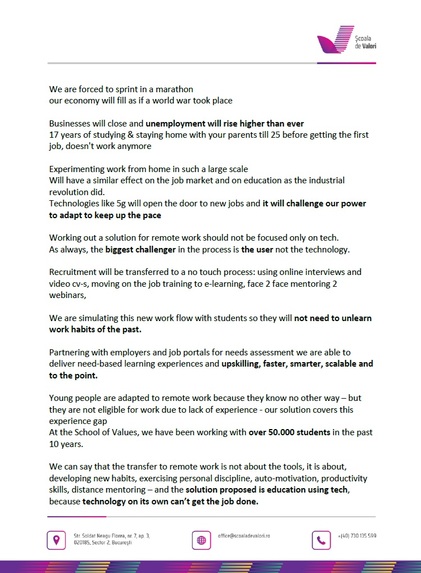
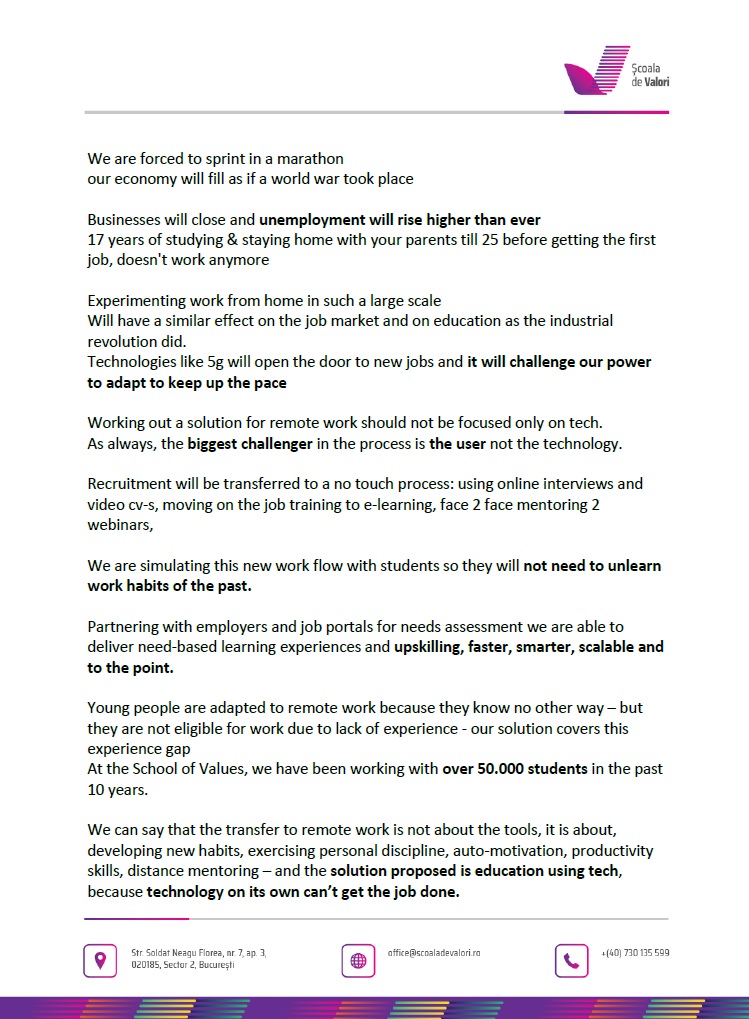
our ptich text - unfrotunately making another video did not work out with the rescources that we had
Inspiration
We expect an accelerated increase in the number of young people between the ages of 16 to 21, who have to stop their educational path from financial reasons. Increasing school dropout, especially at the high school level, will have a significant effect on the economy and an overwhelming one on each family and individual, the level of education being the only way to increase the immunity of the population in the face of an economic, political and even sanitary crisis.
We also found 3 different project similar to ours in, the US, Germany and the Philippines – on different target groups – but their experience gave us some ideas on how to approach our own project.
What it does
The Wizegen project aims to open the labor market for young people from disadvantaged backgrounds through a structured educational program correlated with the needs of the labor market. The graduates of the project, high school students between the ages of 16 and 19 and students 19 – 21 will be able to employ in a company on one of the entry level jobs identified in the market. The Wizegen solution addresses as primary focus 3 domains: E-Learning methods & tools, Efficient remote working, Students' challenges - and secondary the domain of business-continuity
How I built it
There are the following 6 stages for implementing the solution:
- build the e-learning platform in order to sustain the online educational path (the platform should be launched by the middle of May – we have it in beta version)
- identifying potential industries for employment and company partners – and a process to keep up to date with the changes in the hiring opportunities for junior roles and entry level opportunities
- skills mapping – and developing a blended learning path for the beneficiaries
- recruitment of young people and piloting with employers
- accompanying and mediating the employer-employee relationship
- supporting further employment and monitoring the professional career of the young people On top of this we plan to have a close account management process with each employer in order to develop a long-term partnership.
In 2020 we have planed the pilot project. In 2021 national expansion in urban aeras. In 2022 national expansion in rural areas. The expansion would be encouraged by the adoption of remote working at a large scale, and at a faster rate than we have expected initially. Our vision is to become a solution that would bring a stable income to young people in rural areas in order to impact also the exodus of young people form the rural parts and even encourage them to become local entrepreneurs on the long run having the financial safety provided by a remote job. In 2021 we will test the idea of expansion to Bulgaria due to the similar reality, and form this experience try to expand on an EU – level – our platform being, bilingual from the beginning – Romanian and English.
Challenges I ran into
The idea of the project started in 2019, the launch of the pilot project with direct beneficiary was planned for May 2020. Due to Corona Virus, some stages of the project need to be restarted, one of this steps is: identifying the cross sectorial juniors entry level jobs and mapping the job description that involve basic technology use. For the project to be successful we need to create a very simple hard skills curriculum that can be uploaded on an e-learning platform for the young people to go gain the necessary skills for employment. Another challenge is optimizing the process of identifying employment opportunities and matching them just in time with the young people in our program.
The challenge brought by the COVID Pandemic is finding the necessary budget to pilot the project and cover the preparation cost for the participants that before the pandemic were planned to be in and intensive in class face to face preparation format.
Accomplishments that I'm proud of
One big accomplishment outside the hackathon is developing the e-learning platform that would be used by Wizegen and other education projects that The School of Values is implementing.
During the hackathon we had a brainstorming on the challenges regarding employment opportunities, and we fond a solution based on partnership with job portals and staffing companies – and idea that would bring a different revenue stream for the project.
Be optimizing the young people development process and taking it form offline in class development, to online blended learning we will reduce the initial piloting costs with 50%.
During the hackathon we also identified opportunities for partnership and international expansion.
What I learned
Due to the Pandemic the challenges in remote work have changed, we tend to think that the main challenge is technology but it is actually not, that is the easiest thing to solve, and you can do it with money. The hardest thing is reimaging our lives, and our work flow, it is about unlearning habits, ways of working and learning new ones. It is also about a new concept of work life balance, about staying self-motivated, acquiring a new discipline to be productive in a new set-up of work and remaining mentally healthy in such and uncertain time.
At this point in time no one knows how the employment market in the next 2 months – we suffer of a globally uncertainty paralysis – the good news is that more and more people are open to contribute and be part of making good solutions to get out of this paralysis.
For systemic employment solutions we need EU support and coordination, but in order not to develop large scale and hard to implement programs in uncertain times – like with the hackathon grass root employment initiatives should be encouraged and the ones that have proof of concept should be helped to scale – this hackathon is a great example on how to identify ideas.
Working with mentors and open-minded people outside your close bubble is a great way to make your ideas better and refine them
What's next for Wizegen
We look at the project on a 6 moths short term view. Identifying the suitable jd’s & developing the curriculum, recruiting the young people & fining the financial support in order to train them.
- fundraising
- lunching the e-learning platform escoaladevalori.ro in the next 2-3 weeks
- partnerships for identifying employment opportunities
- developing the educational path and content
- lunching the pilot project for 40 to 60 beneficiaries There is also a longer term vision but at this point we think is best to focus on execution rather than on planning.





Log in or sign up for Devpost to join the conversation.