Inspiration
Most VR mystery games treat magic as a passive cutscene—you touch a clue and watch a holographic movie play out. We wanted to flip that on its head: what if physical objects were unreliable, incomplete witnesses?
Inspired by classic locked-room detective fiction (Knives Out, Return of the Obra Dinn) and the tactile immediacy of Meta Quest 3 / 3S mixed reality, we designed WizardCrime: The Silent Hour around one core promise:
Every object witnessed something. None witnessed everything.
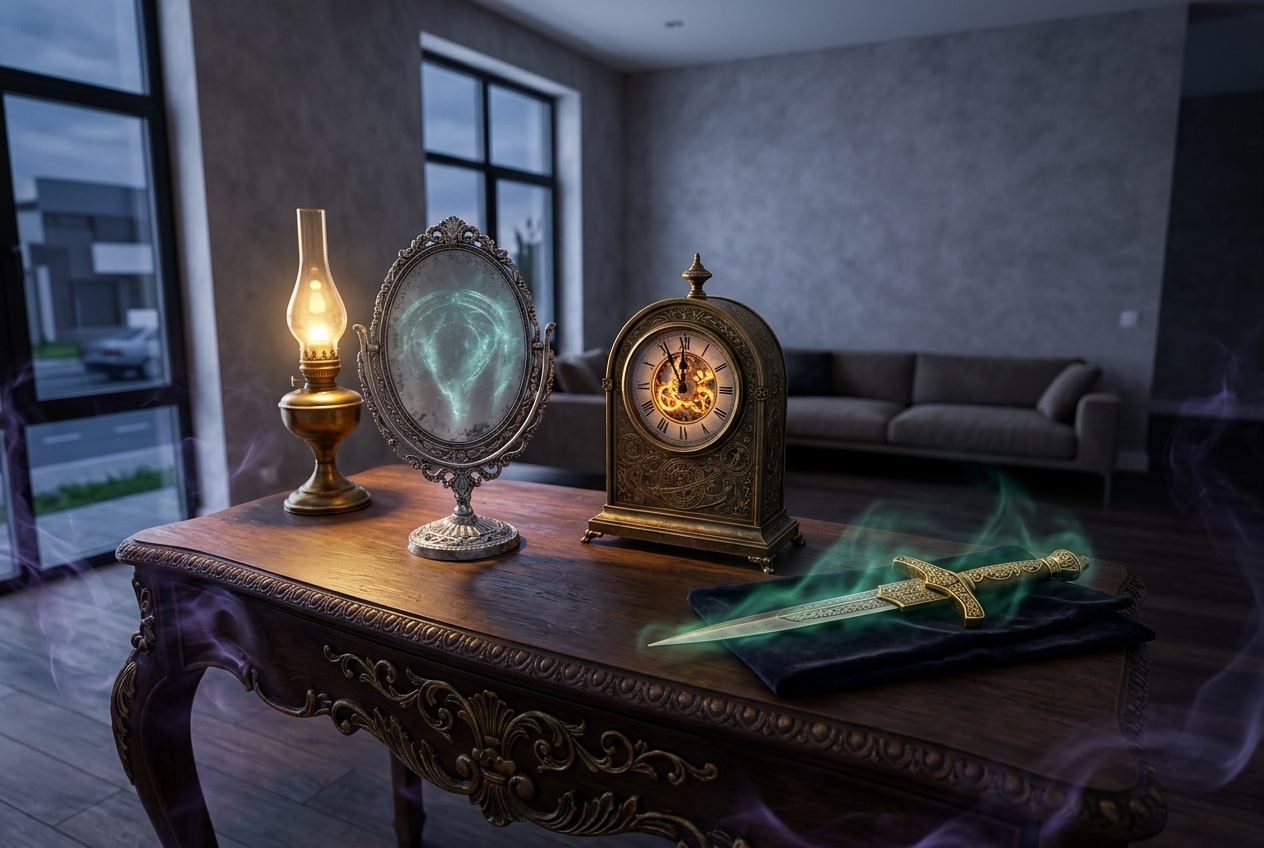
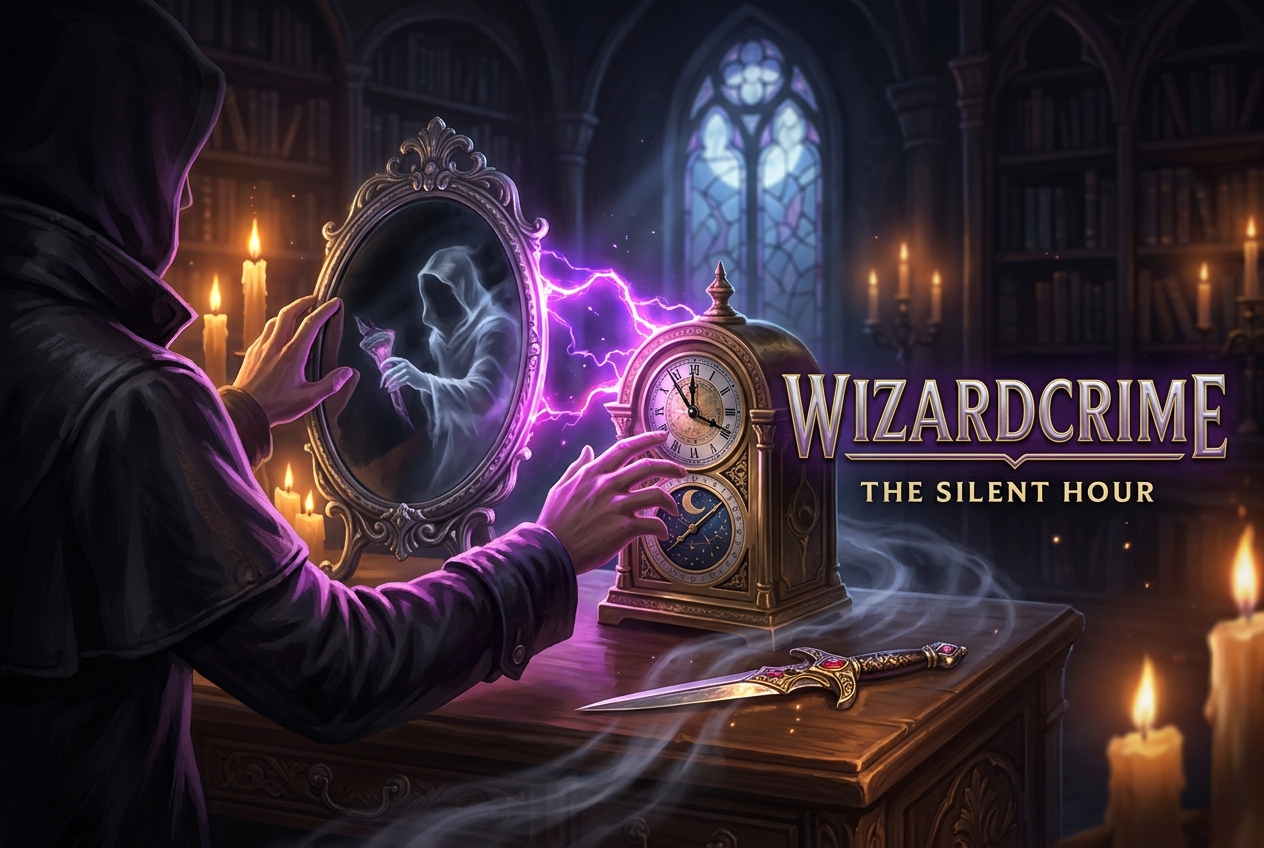
Archmage Veylan’s Astral Chronosphere has vanished from his locked study, yet the tower clock chimed midnight as if nothing happened until 12:00 AM. To solve the case, you don't just inspect clues—you hold them in both hands to cross-examine their memories against each other.
How it works
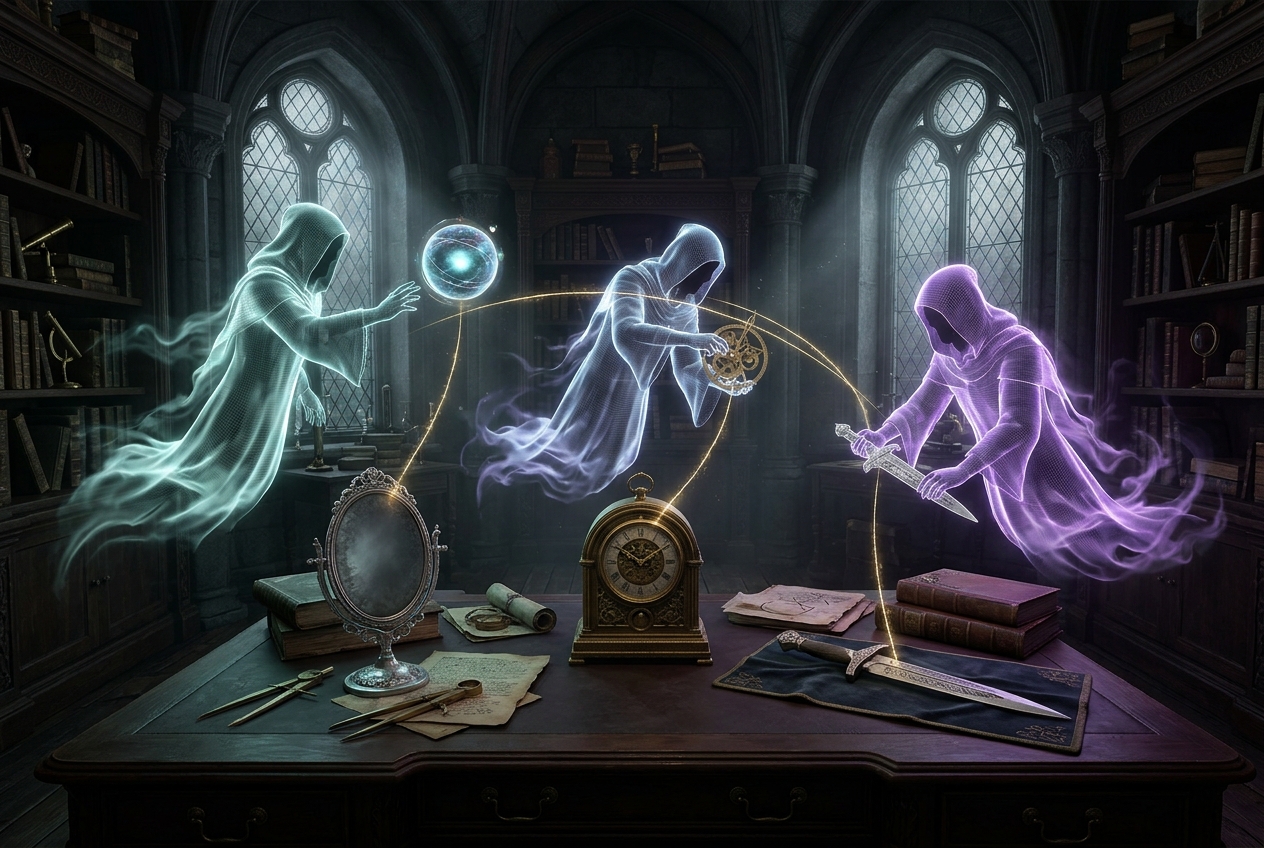
Each piece of evidence in your study is bound by a strict Perception Modality—it can only remember what its physical nature allowed it to sense:
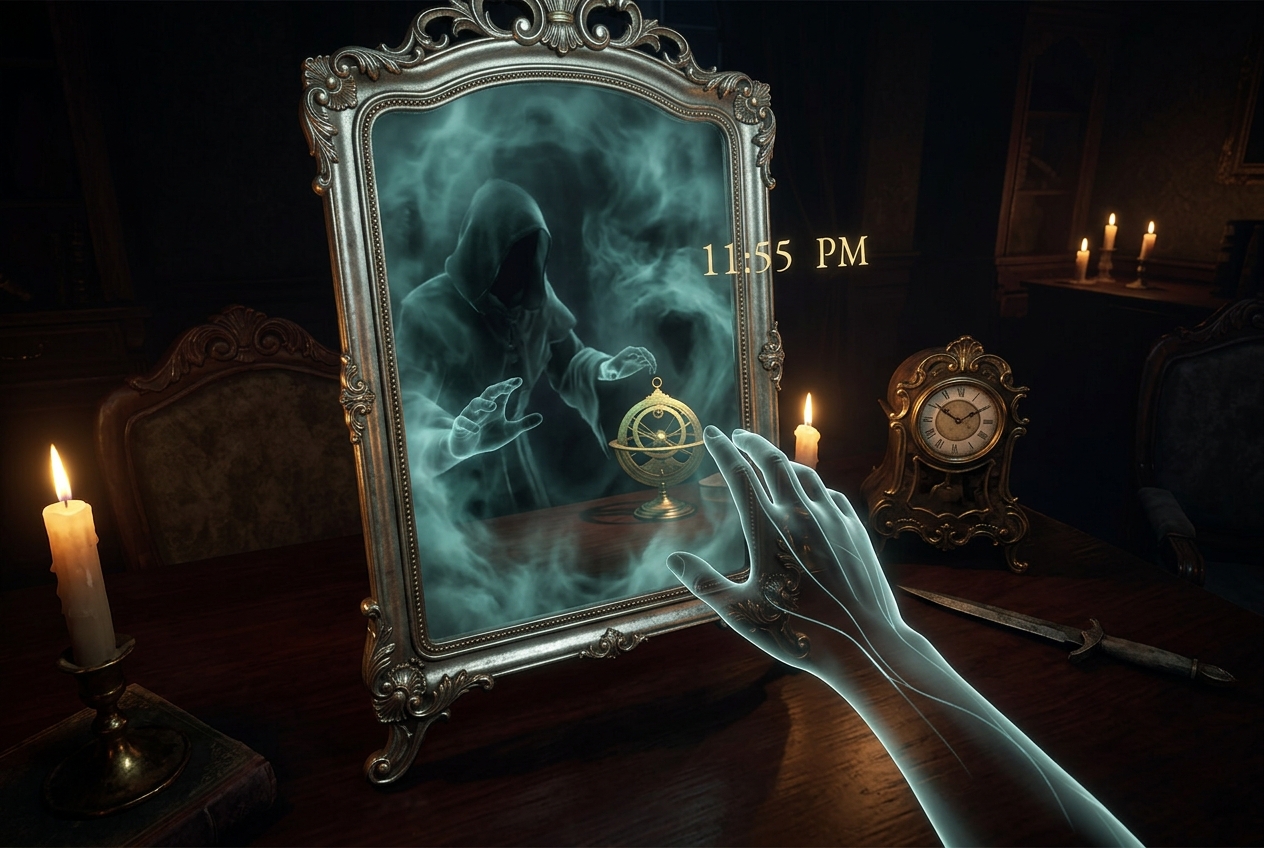
- The Antique Mirror (Reflection Witness) — Sees a robed silhouette at
11:55 PMstrictly inside its silvered frame, but hears nothing. - The Astral Clock (Sound & Time Witness) — Hears
11:55 PMfootsteps, a stopped brass escapement at11:57 PM, and a12:00 AMchime (with full English captions), but is blind to who stood there. - The Ceremonial Dagger (Contact Witness) — Remembers a calm apprentice ward-ring grip laying the blade on the desk at
11:59 PM, but perceives nothing when untouched.
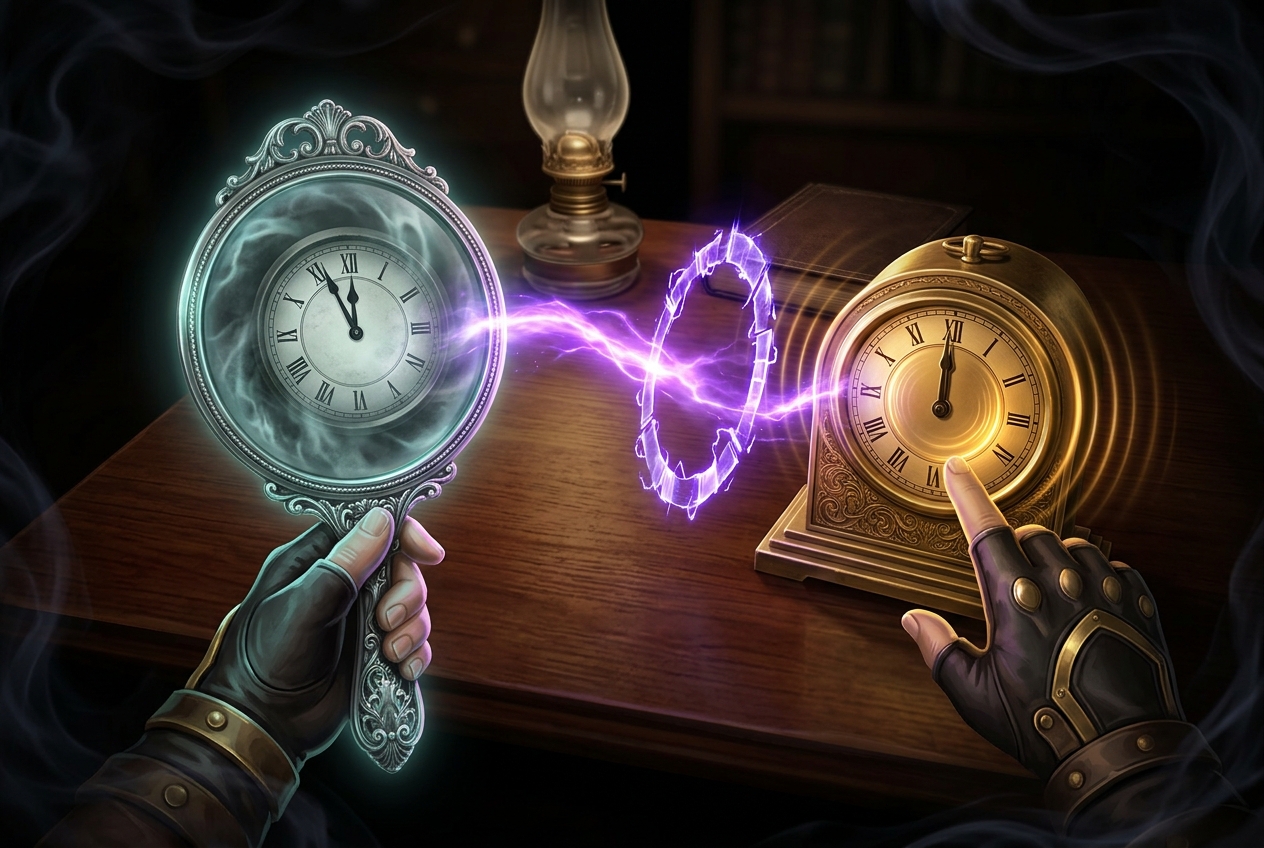
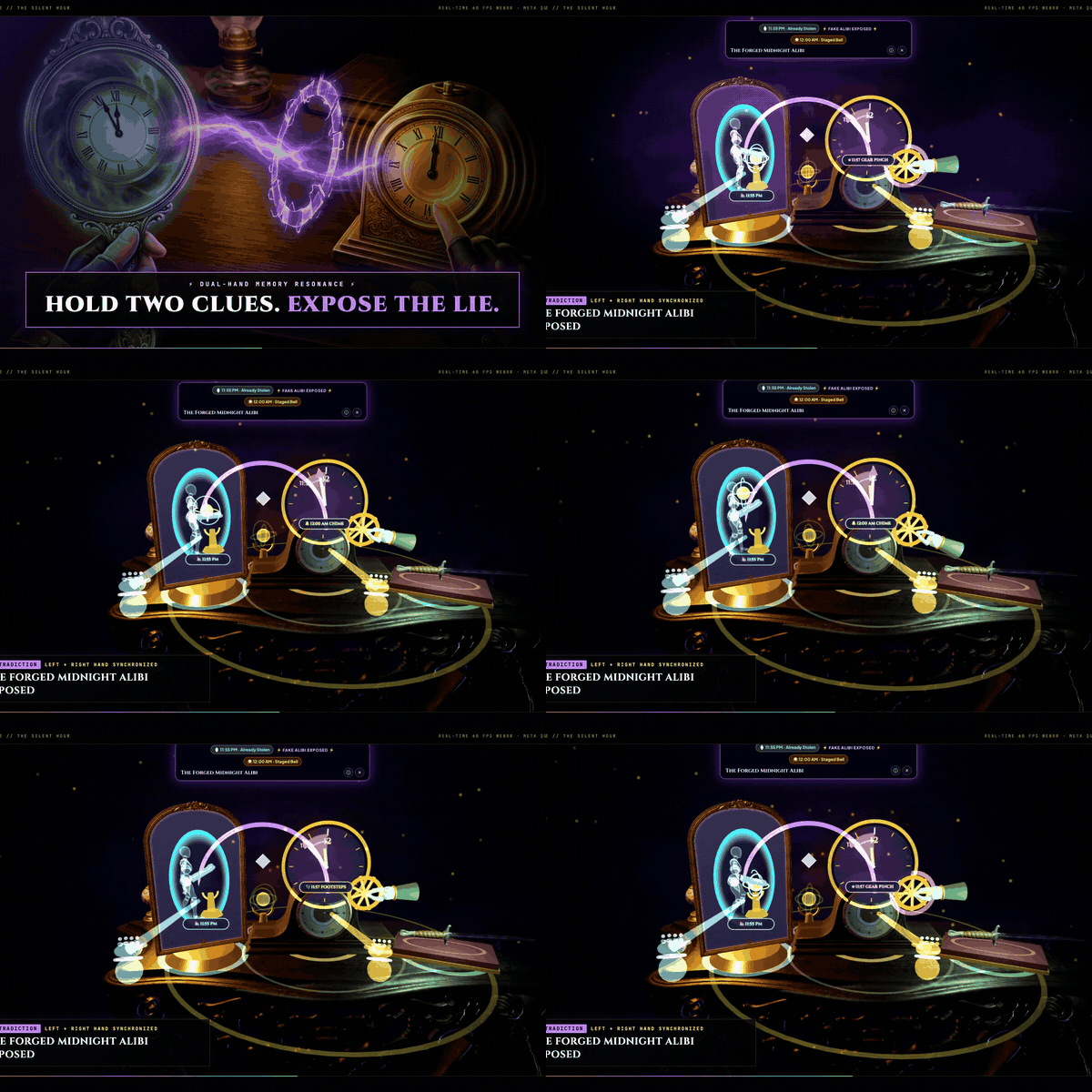
Touch one witness with your Left Hand and another with your Right Hand simultaneously to enter Memory Resonance. Both memories synchronize onto a shared spatial timeline—exposing a violet Contradiction Pulse when two witnesses disagree (11:55 PM theft vs. manipulated 12:00 AM chime) and unlocking the Spectral Reconstruction of the crime.
How we built it
- Mixed-Reality & WebXR Runtime: Built with Meta Immersive Web SDK (
@iwsdk/core), Three.js (super-three), and TypeScript inside a single shared WebGL/WebXR passthrough session, with seated reach ergonomics and desktop WebXR simulation fallback. - Hexagonal Architecture (Ports & Adapters): We isolated the entire mystery state machine, witness perception rules, and timeline contradiction logic inside a pure TypeScript domain core (
src/core/) with zero imports from Three.js, IWSDK, or the DOM. This let us unit-test every deduction rule deterministically before touching 3D rendering. - Spatial Audio & Custom Shaders: Implemented procedural Web Audio HRTF synthesis (
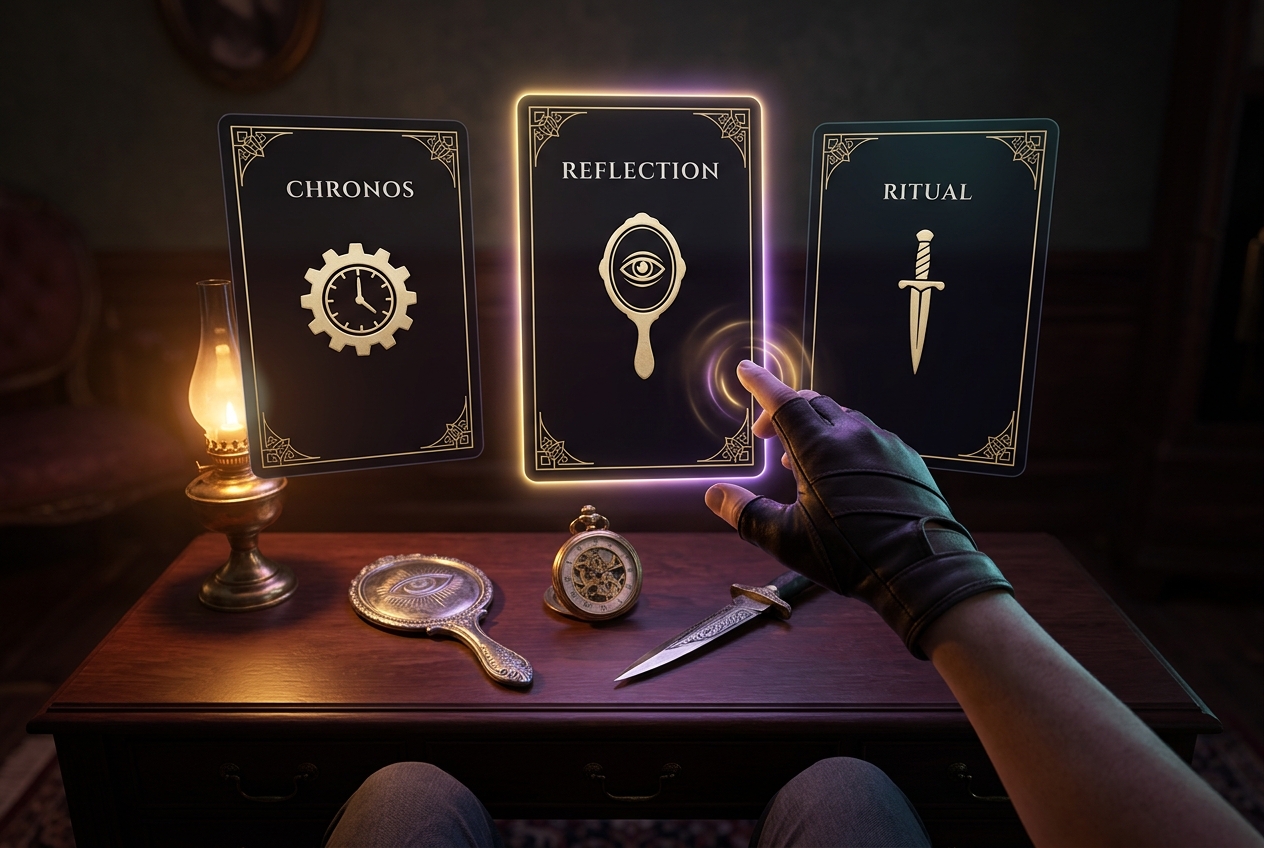
WebAudioSynthesizerAdapter) for directional chimes, footsteps, and resonance cues, paired with custom GLSL volumetric dream-smoke and Fresnel ghost shaders for the spectral reconstruction. - Spatial UI: Built diegetic seated-reach hypothesis cards and captions using
@pmndrs/uikit,@pmndrs/uikit-horizon, and@pmndrs/uikit-lucide. - Verification & Testing: Backed by Vitest for pure domain logic and Playwright slow-motion E2E acceptance simulations covering the full investigation, contradiction discovery, and replay flows.
Challenges we faced
- Making "invisible" sensory limits legible without text walls: Early on, players didn't immediately realize why the Mirror had no audio or why the Clock showed no silhouette. We solved this through diegetic visual cues, distinct modality iconography, and synchronized spatial captions rather than tutorial popups.
- Dual-hand resonance ergonomics while seated: Triggering simultaneous left + right hand resonance needed to feel natural without arm fatigue. We tuned comfortable seated reach zones and clear latch/hold feedback so players can compare clues effortlessly.
- Decoupling WebXR rendering from puzzle state: Running WebXR physics/rendering alongside deterministic puzzle state transitions can easily turn into spaghetti code. Enforcing strict Hexagonal boundaries kept our 3D stage (
IwsdkThreeStageAdapter) cleanly separated from the deduction engine.
What we learned
- Constraints create better puzzles than spectacle: Limiting each object to a single sense ($\text{Witness} = \text{Modality} \cap \text{Timeline}$) forced every clue to earn its place and made the "aha!" moment of catching a timeline lie genuinely rewarding.
- Pure domain cores pay off even at hackathon speed: Keeping game rules decoupled from Three.js and WebXR meant we could iterate on pacing, accessibility captions, and state resilience rapidly with fast automated tests.
What's next for WizardCrime
- Episodic Case Packs: Expand beyond The Silent Hour with new arcane crimes introducing smell, temperature, and weight-sensitive witnesses.
- Deeper Room-Aware Anchoring: Persist evidence placements across real-world furniture surfaces for replayable study layouts on Meta Quest 3 / 3S.
Built With
- express.js
- glsl
- meta-iwsdk
- meta-quest
- mixed-reality
- playwright
- three.js
- typescript
- uikit
- vite
- vitest
- web-audio-api
- webxr
- zod
