Inspiration
I’ve seen friends and community members struggle with one-size-fits-all "quit or fail" tools for substance use reduction—tools that shame instead of support. Living in a culture where stigma around substance use is pervasive, I wanted to build something rooted in harm reduction: a space where progress, not perfection, is celebrated. The goal was to meet people where they are, not where society thinks they "should" be.
What it does
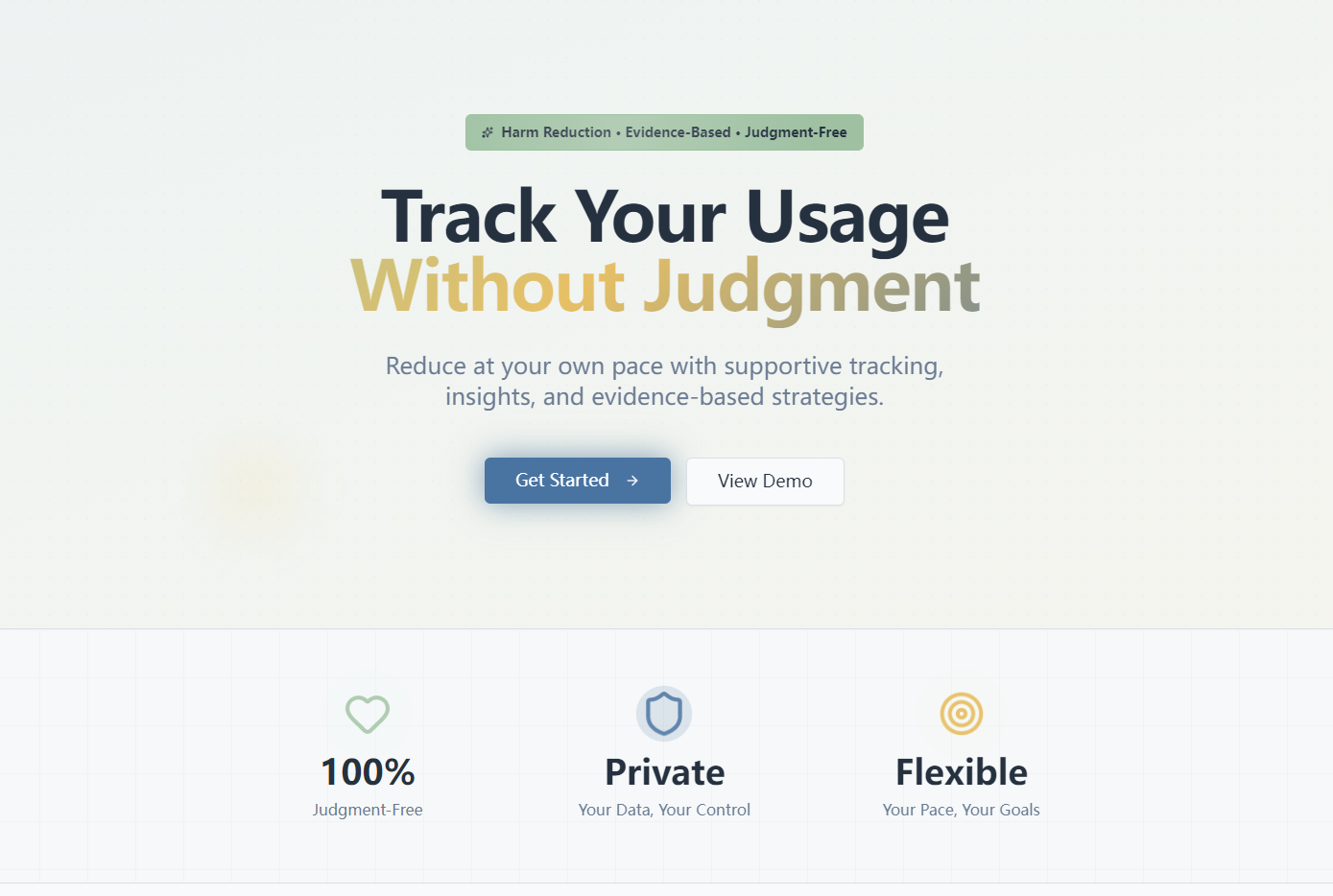
SubstanceUse Tracker lets users log cannabis/alcohol/nicotine use without judgment, set flexible reduction goals, track financial/time savings from reduced consumption, identify trigger patterns, and access evidence-based harm-reduction strategies. It also offers confidential professional support assessments—all with a calm, empathetic design and no moral labels.
How we built it
We used React Native for cross-platform mobile development, with Firebase for real-time data sync and PostgreSQL for structured user data (usage logs, goals). Chart.js powered gentle data visualizations; Stripe API handled premium subscriptions ($7.99/month). UX design leaned into soft slate blue/sage green tones to avoid anxiety, and all content was reviewed by harm reduction specialists for tone and accuracy.
Challenges we ran into
The biggest challenge was balancing data-driven insights with non-judgmental language—avoiding framing "patterns" as "failures." We also struggled with accurate savings calculations (users have varying costs per substance unit) and ensuring the professional support assessment was non-invasive (no pressure, full privacy). Iterating with user testers (people in reduction journeys) was critical to refining this balance.
Accomplishments that we're proud of
We built an app that centers user autonomy above all—no mandatory abstinence, no guilt-inducing reminders. User testers reported feeling "seen" instead of judged, and many noted the savings dashboard motivated small, consistent reductions. We also created a sustainable freemium model that keeps core tools free (tracking, basic strategies) while unlocking premium features (full strategy library, advanced analysis) for those who want more.
What we learned
Harm reduction isn’t just a philosophy—it’s a design principle. Every button, chart, and phrase had to be rethought to remove implicit judgment. We also learned that flexibility beats rigidity: users abandon tools that force strict goals, so letting people set their own metrics (e.g., "10% less per week" vs. "no use") drastically improved engagement. Finally, privacy is non-negotiable—users need to trust their data won’t be weaponized or shared.
What's next for this project
We plan to expand the reduction strategies library with region-specific resources (U.S./EU-focused support services), add localized cost calculators (adapting to regional substance pricing), and integrate optional, opt-in reminders (non-intrusive, user-controlled). We’re also exploring partnerships with harm reduction organizations to offer premium discounts for marginalized communities and refining the pattern analysis to surface more personalized, actionable insights—always keeping empathy at the core.

Log in or sign up for Devpost to join the conversation.