-
-
Within Reach
Inspiration
Indoor cameras are already common in our homes, mostly for pets, security, or babies. So we asked: what if that same camera could also look out for the people we love most?
Many older adults live alone, while their families have work, responsibilities, and their own daily lives, making it difficult to always be there to check on them. If a fall happens, they could be left on the floor for hours, unable to reach a phone or call for help. We wanted to design for that moment, when someone cannot ask for help themselves, and give their family a way to know something is wrong and act right away.
What it does
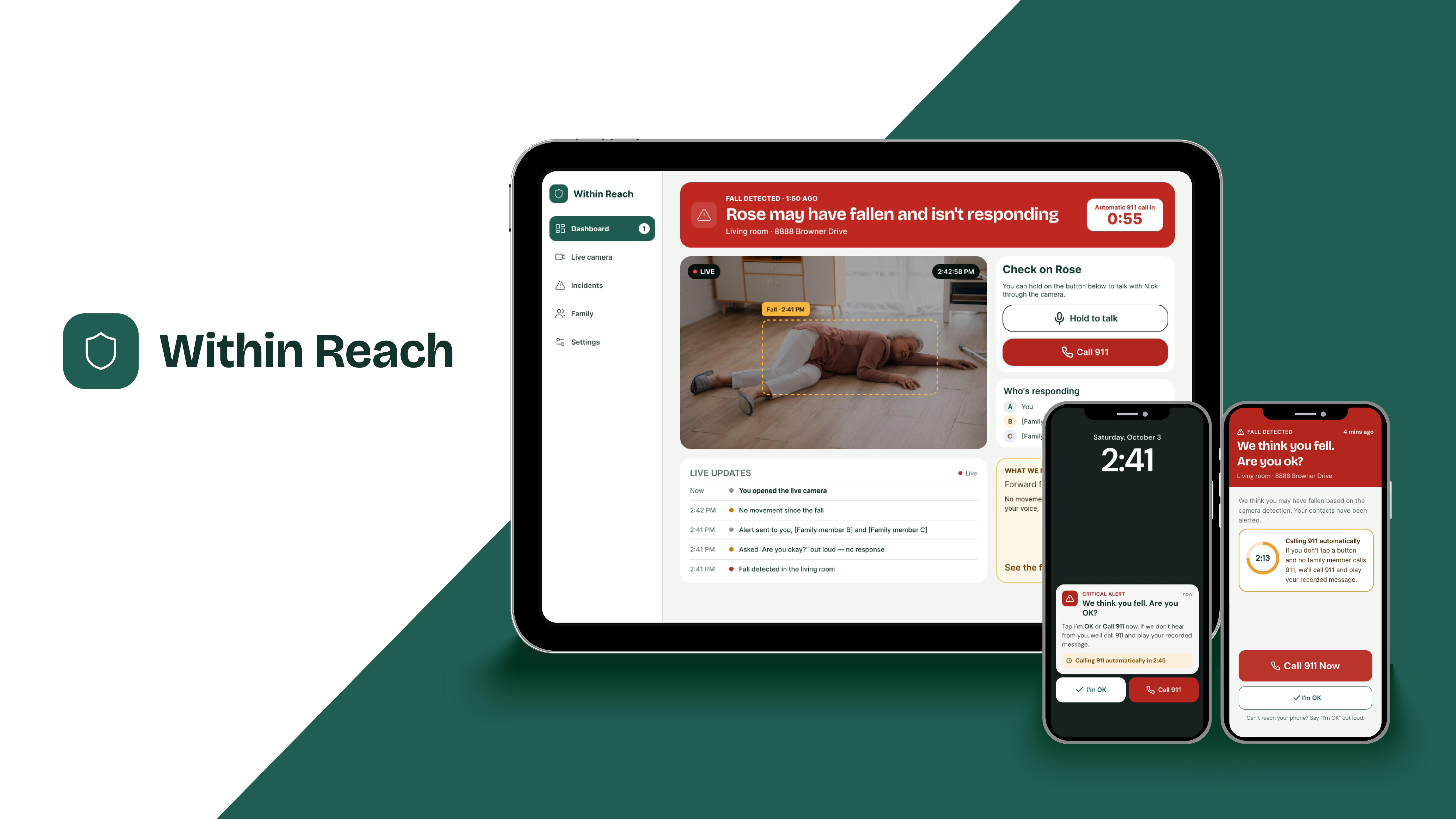
The home camera detects falls and read possible medical signs through changes in motion and posture. When it detects a possible fall, it immediately sends an alert to both the person and their family. From there, family members can check the live view and speak directly through the camera to understand what happened and decide whether emergency help is needed. The person can also call 911 themselves if they are able to, or dismiss the alert if they are okay.
If no one responds, the system can automatically call 911 and use the person’s pre-recorded name and address to help emergency responders assess the situation.
How we built it
We designed and prototyped the full experience across mobile and desktop, from onboarding and voice recording to emergency alerts, live dashboards, incident reports, and fall analysis. Behind the experience, a mathematical posture model tracks key points on the body to distinguish a real fall from everyday movement. Gemini then translates what the camera sees into simple, easy-to-understand updates and captures the incident as a short clip for context. Everything is connected through a multi-device alert system, so the person and their family can be notified right away, with 911 as the next step if no one is able to respond.
Challenges we ran into
One challenge is telling the difference between a real fall and someone intentionally lying down, since their body posture can look very similar; whether they are on a sofa, in bed, or even on the floor. The system can currently send alerts beyond the home, but its network reach is still limited. For example, it cannot yet reliably connect family members who are much farther away or in another country. Expanding that reach would be an important next step.
Accomplishments that we're proud of
We successfully built a working multi-device communication system that can detect motion and falls through camera, then alert both the person and their family across different devices in real time.
What we learned
With limited time, we learned to focus on the most important part of the experience: detecting a fall and getting help as quickly as possible. Features like stroke detection and fall prevention could then be explored further in future iterations.
Quickly brainstorming different types of falls and possible responses also helped us think through different scenarios early and decide which ones were most important to design for.
What's next for Within Reach
- Improve fall detection by distinguishing different fall postures, such as face-down or head-down positions.
- Streamline the user flow to make the experience simpler and more intuitive.
- Polish and user-test the prototype and connect the full experience from detection to response.

Log in or sign up for Devpost to join the conversation.